Impact of Social Media on Businesses, Society, and Careers
By Dilip Guru
Updated on Nov 10, 2025 | 16 min read | 16.62K+ views
Share:

All courses
Certifications
More
By Dilip Guru
Updated on Nov 10, 2025 | 16 min read | 16.62K+ views
Share:
Social media has transformed how businesses operate, how society communicates, and how careers develop. Its reach is global, influencing consumer behavior, workplace dynamics, and social interactions. Companies use social media to market products, engage customers, and gather insights. At the same time, individuals rely on it for networking, learning, and career growth.
Society experiences faster information sharing, awareness campaigns, and new forms of communication. Understanding the impact of social media is essential for navigating these changes effectively.
This blog explores the impact of social media on businesses, society, and careers. It examines both positive and negative effects. It discusses business opportunities, social behavior, career growth, challenges, and strategies to use social media responsibly for maximum benefit.
Looking to enhance your digital marketing career and stand out in the digital space? upGrad’s online management courses offers specialized courses in SEO, digital marketing, and data analytics that can amplify your career growth. Enroll today!
Social media’s pervasive influence brings both benefits and challenges. Businesses and individuals must understand these dynamics to harness their full potential.
Advantages of Social Media
Must Read: How to Create Social Media Campaigns? 6 Steps To Create Successful Campaigns
Disadvantages of Social Media
Also Read: Best Digital Marketing Ads: Top Campaigns That Nailed Online Engagement
Free Courses
Social media shapes societal norms, cultural behavior, and interpersonal interactions.
Positive Social Impacts
Negative Social Impacts
Must Read: What is Social Media Marketing? Overview, Key Features, and How It Works
Digital Marketing Courses to upskill
Explore Digital Marketing Courses for Career Progression
MICA Executive Alumni Status
Social media has transformed how citizens, politicians, and organizations participate in political and civic activities.
Positive Impacts
Negative Impacts
Also Read: How to Create Social Media Content Strategy? Everything You Need to Know
Social media is central to modern business strategy, driving growth, engagement, and revenue.
Positive Impacts
Negative Impacts
Must Read: 15 Major Social Media Trends in 2025
Subscribe to upGrad's Newsletter
Join thousands of learners who receive useful tips
Social media has reshaped professional landscapes, providing both opportunities and challenges.
Opportunities
Challenges
Must Read: Building a Career in Social Media: Roles, Skills, and Future Opportunities
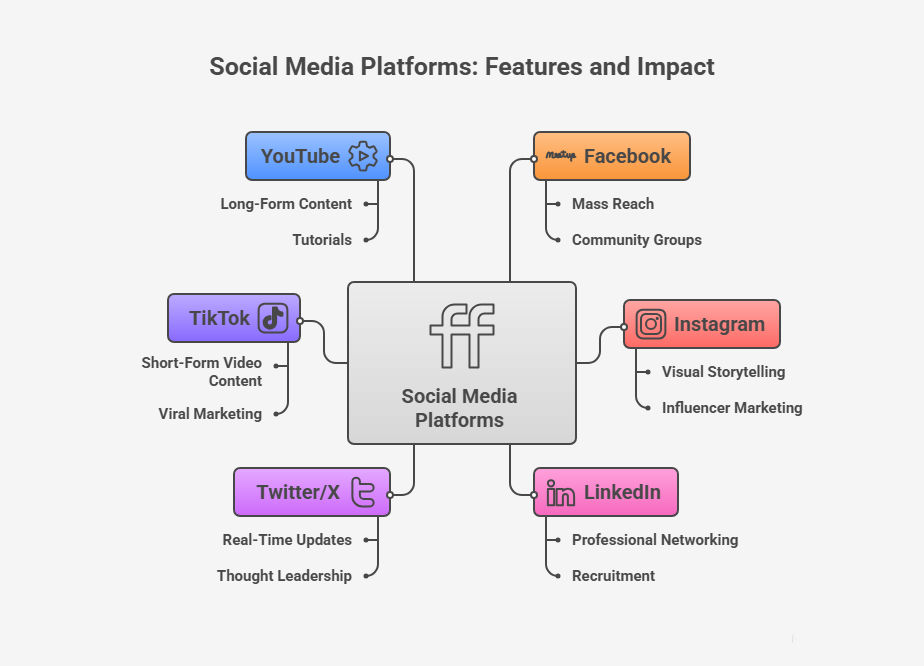
Each social media platform has unique features that affect businesses, society, and careers. Understanding these strengths and limitations helps organizations and individuals use them effectively.
Each platform’s effectiveness depends on business objectives, target audience, and content strategy. Selecting the right platform and aligning messaging with audience behavior maximizes the impact of social media.
Must Read: Top 16 Social Media Benefits in the Digital Era
Managing the negative impact of social media is critical for businesses to protect their reputation and maintain productivity.
Also Read: How Social Media Marketing Works? Why SMM, Advantages & Trends
Compliance and ethics are vital to ensure social media drives growth without legal or reputational harm.
The impact of social media on businesses, society, and careers is significant and far-reaching. It offers opportunities for brand growth, customer engagement, networking, and professional development. Businesses can reach wider audiences, gather insights, and strengthen their reputation. Individuals benefit from skill development, career growth, and knowledge sharing. Society experiences faster communication, awareness campaigns, and community engagement.
At the same time, social media carries risks. Misinformation, privacy concerns, and mental health challenges can affect businesses and individuals. Managing these risks requires strategic planning, clear policies, and ethical practices. Understanding the impact of social media helps businesses, professionals, and society use it effectively while minimizing negative effects.
For those who prefer a more personalized digital marketing learning experience, upGrad’s offline centers offer hands-on training and direct interaction with industry experts. Contact our advisors today to learn more!
The impact of social media on youth includes increased access to information, networking, and career development opportunities. It helps students and young professionals build skills and connect with peers. However, excessive use can cause distractions, anxiety, cyberbullying, and reduced face-to-face social interaction. Balancing engagement ensures positive personal and professional growth while minimizing risks.
The impact of social media on mental health can be both positive and negative. While it offers support networks and educational content, overuse can lead to stress, anxiety, depression, and low self-esteem. Continuous comparison with peers or exposure to negative content may exacerbate mental health issues, making mindful use and digital well-being strategies essential.
The negative impact of social media includes privacy risks, misinformation, cyberbullying, and reputational damage for individuals and businesses. Excessive use can reduce productivity, create stress, and amplify societal polarization. Organizations and users must implement ethical practices, clear policies, and responsible engagement strategies to minimize these adverse effects while leveraging the platform for growth.
The impact of social media on consumer behavior is significant. Users rely on reviews, influencer recommendations, and targeted advertisements to make purchase decisions. Businesses can influence buying patterns by creating engaging content, personalized campaigns, and interactive experiences. Properly managed social media strategies can drive sales, increase brand loyalty, and build long-term customer relationships.
The impact of social media on businesses is evident in marketing, customer engagement, and brand visibility. Companies can run targeted campaigns, gather analytics, and interact directly with audiences. Platforms like Instagram, LinkedIn, and Facebook allow businesses to reach specific demographics efficiently, enhance brand awareness, and make data-driven decisions to optimize marketing ROI.
The negative impact of social media on brands includes reputational threats, misinformation, viral backlash, and competitive pressure. Mismanaged campaigns or negative comments can spread quickly, affecting brand credibility. Businesses must implement proactive monitoring, crisis management plans, and transparent communication to protect their image while maintaining engagement.
Employees can reduce the negative impact of social media by following clear policies, practicing digital detox, and prioritizing tasks. Mindful content consumption, time management, and separating personal and professional use help maintain productivity and mental well-being. Organizations should provide training and guidelines to ensure responsible and effective social media engagement.
The impact of social media on society includes increased civic engagement. Platforms enable communities to participate in petitions, awareness campaigns, and social initiatives. They also facilitate public discussions, voter education, and mobilization for social causes. Responsible use ensures positive outcomes while minimizing the risks of misinformation or polarized debates.
The impact of social media on businesses varies by platform. LinkedIn supports B2B marketing and professional networking, Instagram and Facebook drive brand engagement and consumer marketing, while TikTok targets younger audiences with viral content. Choosing the right platform based on audience, content type, and marketing objectives ensures better engagement and ROI.
The impact of social media on careers is profound. It enables networking, personal branding, skill development, and global job opportunities. Professionals can showcase expertise, connect with recruiters, and access remote work or freelance projects. Responsible and strategic use helps improve career growth while minimizing distractions or reputation risks.
The negative impact of social media can be mitigated through proper feedback management. Brands should respond promptly, maintain transparency, and implement corrective actions. Addressing concerns professionally helps protect reputation, enhance customer trust, and convert negative experiences into opportunities for engagement and loyalty.
Responsible use of social media data ensures compliance with regulations and ethical standards. Businesses should anonymize user information, avoid manipulative targeting, and adhere to data privacy laws like GDPR and DPDP. Proper data management enhances marketing effectiveness while protecting user trust and minimizing the negative impact of social media misuse.
Social media campaigns can create meaningful societal impact. Awareness initiatives, social movements, and advocacy campaigns reach wide audiences, influence public opinion, and drive community action. When used responsibly, social media fosters positive social change, engagement, and education while minimizing misinformation or polarized discourse.
The impact of social media on daily life includes shaping lifestyle habits, consumption patterns, and entertainment choices. Users gain access to trends, health information, and learning resources. Overuse, however, can encourage comparison, unhealthy behaviors, or excessive screen time. Mindful engagement balances benefits with potential risks.
The impact of social media on businesses can be measured using analytics tools. Metrics like engagement rates, reach, conversions, sentiment analysis, and ROI help assess campaign effectiveness. Tracking these indicators allows companies to refine strategies, optimize content, and ensure social media efforts align with business objectives.
Social media facilitates collaboration through professional networks, knowledge sharing, and real-time communication. Teams can coordinate projects, share insights, and stay updated on industry trends. However, overuse or distraction may reduce productivity, highlighting the importance of structured policies and responsible engagement.
Businesses must consider transparency, privacy, misinformation, and fair advertising when using social media. Ethical use minimizes the negative impact of social media, builds consumer trust, and protects brand reputation. Clear guidelines and compliance with regulations ensure responsible and sustainable digital practices.
The impact of social media on careers includes access to educational resources, industry insights, and professional communities. Platforms like LinkedIn and YouTube support skill development, networking, and knowledge sharing. Using social media strategically enhances learning while avoiding distractions or negative effects on focus.
Social media shapes public perception by amplifying information, campaigns, and brand messaging. Positive content builds trust and engagement, while misinformation or negative publicity can harm credibility. Strategic communication, monitoring, and ethical content ensure businesses and individuals maintain a favorable impact of social media on perception.
While complete risk elimination is impossible, businesses can reduce the negative impact of social media through strategic planning, ethical practices, monitoring, and employee training. Clear policies, crisis management plans, and responsible content use ensure that social media drives growth without compromising reputation or operational stability.
119 articles published
Dilip Guru is the Deputy General Manager, Marketing and a prolific content creator. Dilip has 12+ years of experience leading major marketing initiatives, aligning content strategy with market trends ...
Get Free Consultation
By submitting, I accept the T&C and
Privacy Policy
Level Up Your Digital Marketing Career Today!
Top Resources
MICA
Advanced Certificate in AI-Powered Digital Marketing & Communication from MICAMICA Executive Alumni Status
Certification
5 Specialisation
Classroom
4 Months
Certification
2 Months