Types of HR (Human Resources) Roles in 2026: Salary and Job Role Insights
By upGrad
Updated on Jul 29, 2026 | 7 min read | 922.13K+ views
Share:

All courses
Certifications
More
By upGrad
Updated on Jul 29, 2026 | 7 min read | 922.13K+ views
Share:
Table of Contents
Quick Overview:
Explore top online MBA programs from upGrad to build expertise in HR, leadership, and business management while preparing for senior management roles.
Popular Management Programs
Different types of HR roles in today's work culture go beyond the conventional administrative and hiring duties. HR specialists assist in establishing the company culture, promoting employee development, ensuring legal compliance, and coordinating people strategies with corporate goals.
Advance your career with the MBA from Liverpool Business School with IIM Udaipur Certification by upGrad and build expertise in HR, leadership, and strategic business management.
Here are the top different types of HR jobs, along with their average salaries, and what they generally involve:
| Jobs | Average Annual Salary (INR) | Key Duties |
| Human Resources Manager | INR 11.4L | Oversee HR operations, develop policies, guide strategic planning, and manage teams. |
| Human Resources Assistant | INR 3.0L | Handle employee records, assist in hiring processes, and support daily HR tasks. |
| Human Resources Generalist | INR 5.5L | Manage benefits, handle employee relations, ensure compliance, and support HR programs. |
| Employee Relations Specialist | INR 8.3L | Screen candidates, coordinate interviews, and assist with recruitment efforts. |
| Benefits Administrator | INR 4.4L | Manage employee benefits plans, liaise with vendors, and ensure legal compliance. |
| Employee Relations Manager | INR 12L | Resolve conflicts, manage grievances, and promote a positive workplace culture. |
| HRIS Analyst | INR 9.1L | Maintain HR software systems, analyze employee data, and ensure data privacy. |
| Employee Relations Specialist | INR 8.3L | Handle union negotiations, interpret contracts, and manage labor disputes. |
| Training & Development Manager | INR 8.3L | Design training programs, assess employee needs, and boost performance. |
| Director of Employee Experience | INR 20L | Improve engagement, lead wellness programs, and shape the employee journey. |
| Recruitment Manager | INR 11L | Source talent, lead interviews, and coordinate hiring strategies. |
| HR Specialist | INR 8L | Support HR projects, ensure compliance, and address employee concerns. |
| HR Officer | INR 4.3L | Carry out policy execution, handle documentation, and assist with employee issues. |
| Talent Acquisition Specialist | INR 5.4L | Find skilled candidates, build employer branding, and support hiring needs. |
| Risk and Compliance Specialist | INR 16L | Ensure HR practices meet legal standards, manage audits, and monitor documentation. |
| Payroll Specialist | INR 5.7L | Process salaries, manage tax deductions, and maintain confidentiality. |
| HR Business Partner | INR 13L | Align HR initiatives with business goals, advise leadership, and support performance. |
| Chief Human Resources Officer (CHRO) | INR 80.4L | Lead HR strategy, manage organizational change, and drive long-term HR planning. |
Sourced By: Ambition Box
Note: The average annual salaries mentioned in the table are approximate and may vary as per the location, experience, and employer.
Also Read: How to become an HR Manager
Free Courses
Human Resource Management (HRM) is the process of managing an organization's workforce to achieve business goals while supporting employee growth and well-being. It includes activities such as recruitment, training, performance management, compensation, compliance, and employee engagement. Effective HRM helps organizations attract skilled talent, improve productivity, and build a positive workplace culture.
The HR department performs several essential functions that support employees throughout their lifecycle in an organization. These responsibilities help businesses attract, develop, and retain talent while ensuring compliance with labor laws.
The primary functions of HR include:
If you're wondering how many types of HR exist, the answer depends on the organization's size and structure. However, most companies have several specialized HR departments, each responsible for a specific function. Understanding the different types of HR can help you explore career opportunities and identify the types of HR roles that match your interests.
Some of the most common HR types include:
HR Function |
Primary Responsibility |
| HR Operations | Manages employee records, payroll, attendance, and HR administration. |
| Talent Acquisition | Handles recruitment, hiring, employer branding, and onboarding. |
| HR Business Partner (HRBP) | Aligns HR strategies with business objectives and supports leadership. |
| Learning and Development (L&D) | Designs training programs and supports employee skill development. |
| Compensation and Benefits | Develops salary structures, rewards, and employee benefit programs. |
| HR Analytics | Uses workforce data to improve hiring, retention, and performance decisions. |
| Compliance and Employee Relations | Ensures legal compliance and resolves workplace conflicts. |
| Diversity, Equity, and Inclusion (DEI) | Builds an inclusive workplace and promotes equal opportunities. |
| Workforce Planning | Forecasts staffing needs and supports long-term talent planning. |
These types of HR jobs require different skills and responsibilities, ranging from recruitment and payroll to analytics and strategic workforce planning. Learning about the different types of HR can help aspiring HR professionals choose the right specialization and career path.
Management Courses to upskill
Explore Management Courses for Career Progression
IIIT-B & IIM, Udaipur
Chief Technology Officer & AI Leadership ProgrammeThe responsibilities of HR vary across industries depending on business goals, workforce requirements, and compliance needs. Understanding the different types of HR across sectors helps you explore various types of HR jobs and choose the types of HR roles that best match your career interests.
HR professionals in IT companies focus on attracting and retaining skilled technology talent while supporting employee growth.
Key responsibilities include:
Manufacturing organizations require HR teams to manage both operational efficiency and workforce compliance.
Key responsibilities include:
Among the different types of HR, healthcare HR focuses on hiring qualified professionals while ensuring regulatory compliance.
Key responsibilities include:
In addition to managing payroll and developing policies, an HR department handles many other tasks as well. From organising fundays in the company, festival celebrations to employee wellbeing, promotions, and employee training for their development. All these activities run under different types of HR in an organisation.
An HR professional addresses problems early and boosts team confidence by monitoring employee satisfaction and performance on a daily basis.
Here are some reasons why having a competent HR staff is necessary:
Also Read: What is Human Resource Management? Overview, Functions, Career Options
Professionals require more than just people skills to be successful in the different types of HR roles. Learning the perfect combination of soft and technical skills can help you develop and lead successfully in your company.
Here are some essential skills that you should develop for a career in Human Resources:
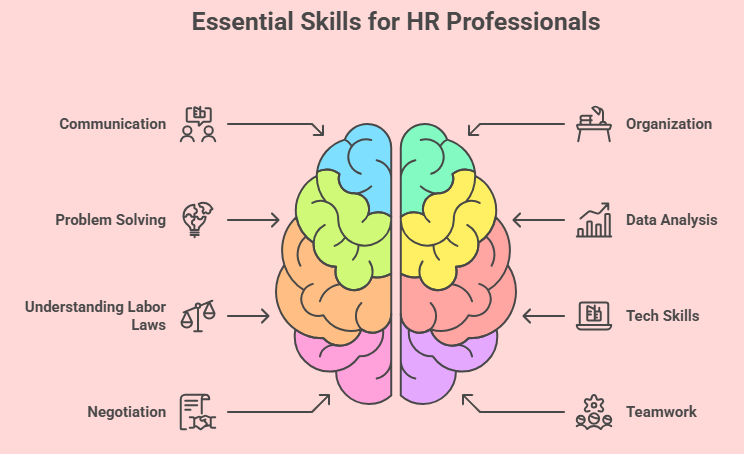
As we have explored the required skills for different types of HR jobs above, getting to know what qualifications are required to start a career in HR is also very essential. Different levels of education and certifications are required for different types of HR jobs.
Here are the common qualifications needed for different types of HR positions:
Professional certifications help HR professionals develop specialized skills, stay updated with industry practices, and improve career opportunities across different types of HR jobs. Whether you're exploring different types of HR or planning to specialize in a specific domain, the right certification can strengthen your expertise and prepare you for diverse types of HR roles.
Some of the most recognized HR certifications include:
These certifications can help you qualify for a wide range of types of HR jobs, from recruitment and employee relations to HR analytics, compensation and benefits, and strategic HR leadership.
Human Resource Management (HRM) is essential for building a skilled, motivated, and productive workforce. From understanding the different types of HR and core HR functions to exploring types of HR jobs across industries, HR offers diverse career opportunities.
By developing relevant skills and earning recognized certifications, you can prepare for various types of HR roles and build a successful career in this dynamic and growing field.
Need help on how to start a career in HR? Book a free 1:1 counseling session with us, and our experts will help you start your career journey today!
Elevate your leadership and strategic thinking with our popular management courses, designed to shape you into a dynamic and effective leader in today's competitive business world.
Discover actionable insights and expert strategies in our top management articles, crafted to inspire and empower your journey to leadership excellence.
There’s no single answer since each role caters to different strengths. Someone who likes variety may choose an HR Generalist, while a more strategic mindset might prefer an HR Business Partner or Chief Human Resources Officer. It depends on your interests, experience, and career aspirations.
HR oversees the entire employee cycle, from recruitment and onboarding to performance reviews and retirement. It also involves setting guidelines for fair treatment, managing benefits, and staying current with legal requirements.
Many experts group HR duties into these categories:
Common models cite these primary pillars:
It’s a long-term plan that ensures the workforce grows in line with an organization’s goals. This includes forecasting staffing needs, mapping out training programs, and planning ways to keep employees motivated and productive.
Some refer to four core responsibilities: Attraction (hiring), Development (training), Retention (rewards and recognition), and Separation (retirement or resignation). Others use it to describe major consulting firms that advise on HR matters.
Yes. Several top executives started their careers in HR. Adding expertise in finance, operations, and strategic management helps open that path.
Payroll covers calculating salaries, managing tax deductions, and issuing pay on schedule. Specialists in this area also handle queries about compensation structures and keep precise records.
You can begin with a bachelor’s degree in business or human resources. Many seek internships or certifications like PHR or SHRM-CP to gain practical insights. Ongoing learning about labor laws and technology is equally important.
Handling conflicts and tough conversations can be challenging. Balancing empathy with fairness while complying with legal obligations is often cited as the toughest aspect.
HRBP stands for Human Resources Business Partner. This person collaborates with senior leaders to align HR initiatives with broader objectives. Responsibilities may include workforce planning, change management, and advising on performance metrics.
Reference Links:
https://www.ambitionbox.com/profile/hr-manager-salary
https://www.ambitionbox.com/profile/hr-assistant-salary
https://www.ambitionbox.com/profile/hr-generalist-salary
https://www.ambitionbox.com/profile/employee-relations-specialist-salary
https://www.ambitionbox.com/profile/benefits-administrator-salary
https://www.ambitionbox.com/profile/employee-relations-manager-salary
https://www.ambitionbox.com/profile/hris-analyst-salary
https://www.ambitionbox.com/profile/manager-training-and-development-salary
https://www.ambitionbox.com/profile/recruitment-manager-salary
https://www.ambitionbox.com/profile/hr-specialist-salary
https://www.ambitionbox.com/profile/hr-officer-salary
https://www.ambitionbox.com/profile/talent-acquisition-specialist-salary
https://www.ambitionbox.com/profile/risk-and-compliance-specialist-salary
https://www.ambitionbox.com/profile/payroll-specialist-salary
https://www.ambitionbox.com/profile/hr-business-partner-salary
https://www.ambitionbox.com/profile/chief-human-resource-officer-salary
987 articles published
We are an online education platform providing industry-relevant programs for professionals, designed and delivered in collaboration with world-class faculty and businesses. Merging the latest technolo...
Get Free Consultation
By submitting, I accept the T&C and
Privacy Policy
Top Resources
Certification
3 Months
Certification
6 Months
O.P. Jindal Global University
Masters in International Accounting and Finance (Accredited by ACCA, UK)Master's Degree
12 Months