Indian students have generally 3 main intake periods at Australian universities. The main intake is in February with the widest choice of courses. Another big intake is in July, with some universities also having selected courses from September to November.
Depending on your eligibility, the course you prefer and how ready you are to apply, you can choose your intake. Checking the intake dates early means you’ll have enough time to prepare your documents, meet admission requirements and plan your finances and visa processing.
In the sections below, you can find more details about Australia intakes, application timelines, universities offering different intakes and the key things to consider before applying.
Fall/ Autumn Intake in Australia
Fall intake usually refers to the February or March intake in Australia. This is what Australian universities commonly call Semester 1 or Autumn intake. It is one of the main intakes of the year and there are many courses available for Indian students.
The exact start date and application deadline may vary according to the university and the course, so do check these details before applying.
Here’s a quick look at the Autumn intake in Australia:
What to check
Fall intake in Australia
Usual start
February or March
Course availability
A wide range of undergraduate and postgraduate courses
University options
40+ universities
Popular study options
Business, engineering, IT, healthcare, accounting and more
Universities Offering Fall Intake in Australia
Most universities in Australia have their main intake in February or March. The deadline, however, can be different for each university. Some courses may also close earlier, so check the course page before you start your application.
Here are some examples of universities offering a Semester 1 start in 2027:
University Name
2027 Fall Application Deadline
University of Melbourne
30 November 2026 for direct international undergraduate applications for the February 2027 start
Australian National University (ANU)
15 December 2026 for most Semester 1, 2027 international applications
University of Western Australia (UWA)
11 January 2027 for applicants from India and selected South Asian countries
Charles Sturt University
15 January 2027 for offshore international applications; 29 January 2027 is the final offer acceptance and payment deadline
University of Tasmania
18 January 2027 for South Asian students to accept the offer and complete payment for Semester 1
These dates are based on published university information and may apply to specific courses or applicant groups. Before applying, check the official university website for the latest deadline for your course.
The Spring intake in Australia usually starts in July and is also called the Semester 2 or mid-year intake. It gives students another chance to start their studies without waiting for the next February intake.
However, fewer courses may be available in July, so check your preferred course and university before applying.
Here are the key highlights of the Spring intake in Australia:
What to check
Spring intake in Australia
Usual start
July
Course availability
Selected undergraduate and postgraduate courses
University options
35+ universities
Popular study options
Business, IT, engineering, management, healthcare and more
Suitable for
Students who want a mid-year start or need more time to prepare
Universities Offering Spring Intake in Australia
Many Australian universities offer selected courses for the July intake. The courses available and application deadlines can vary by university and course.
Some universities may also have separate dates for different types of applicants, so check the official course page before applying.
Here are some universities with 2027 Spring intake options:
University Name
2027 Spring Application Deadline
University of Melbourne
31 May 2027 for direct international undergraduate applications for the July intake
Monash University
1 April 2027 for exchange applicants; 1 May 2027 for study abroad applicants
Deakin University
15 January 2027 for Trimester 2 exchange applications
University of Queensland (UQ)
31 May 2027 for international applications for Semester 2
RMIT University
Semester 2 classes begin on 19 July 2027; application deadlines vary by course
These are examples of published dates for 2027 and may apply to specific courses or applicant types. Always check the official university website for the deadline for your course.
The Summer intake in Australia usually covers the September to November period. Some universities call it Trimester 3, Semester 3 or November intake. This intake is available only for selected courses, so students should check whether their preferred programme accepts applications during this period.
However, if your course is available, this intake can give you another option to start your studies without waiting for the next main intake.
What to check
Summer intake in Australia
Usual start
September to November
Course availability
Limited courses
University options
10 to 15 universities
Popular study options
Selected business, IT and postgraduate courses
Universities Offering Summer/ November Intake in Australia
Some Australian universities offer selected courses for a September, October or November start. The application window can vary by university, course and country, so check the official university website before applying.
Here are some universities offering November Intake in Australia in 2027:
University
2027 Summer Application Deadline
Deakin University
Late September to mid-October 2027, depending on the applicant's country
Griffith University
Early to mid-October 2027
Monash University
September to early October 2027
RMIT University
Mid-October 2027, depending on the course
Torrens University Australia
Rolling admissions until late October 2027
These dates are indicative 2027 application windows and can vary by course, applicant location, and available places. Always check the official university website for the latest deadline before applying.
When to Apply for Australia Intake?
Ideally, your application process should be done 6-9 months before your preferred intake. This gives you time to shortlist universities, check course requirements, take an English language test if necessary and prepare your documents.
You should also allow enough time for your offer letter, finances, accommodation and the Australian student Visa.
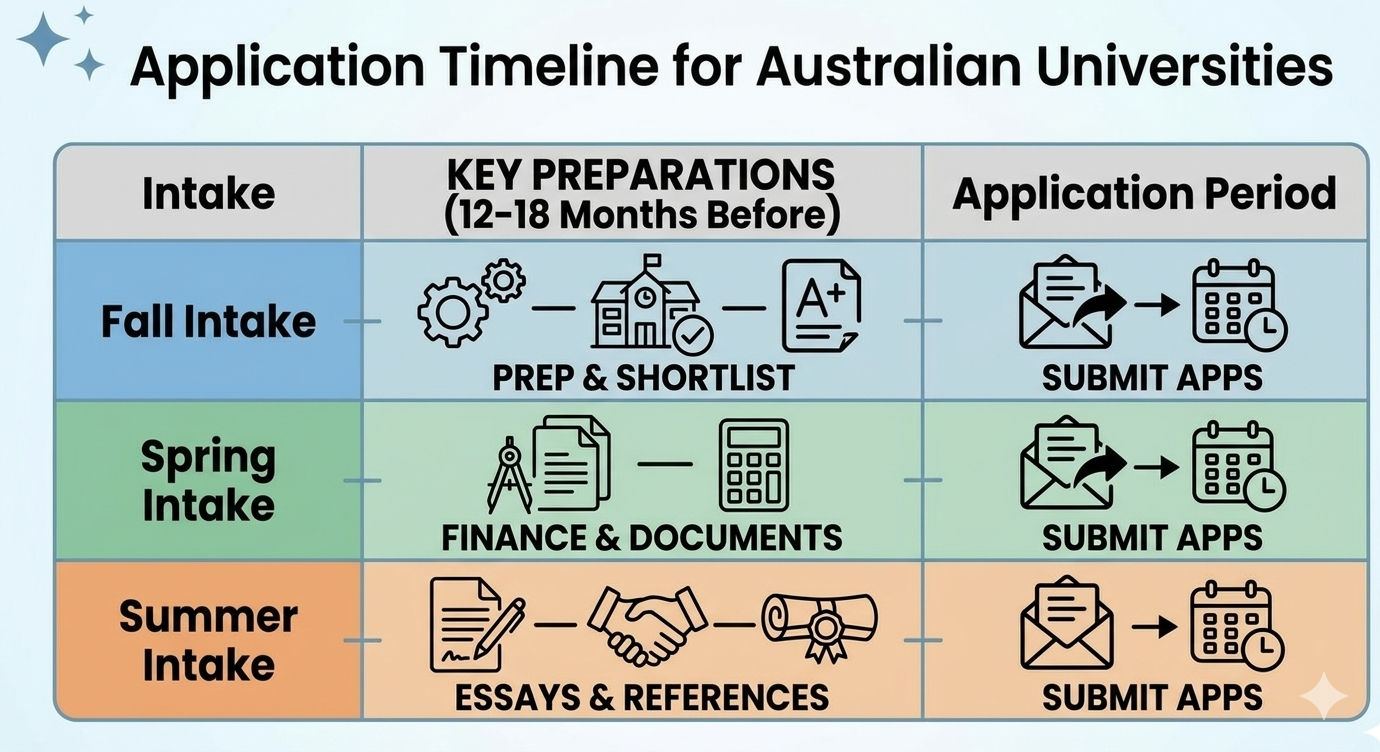
Here’s a timeline to help you plan your application to an Australian university:
Intake
Begin to prepare
Regular application period
Fall
May–August last year
August–November
Spring
November–January
January–April
Summer
February–May
May–October
These are general planning timelines and may differ by university, course and applicant location. It is always best to check the exact application deadline for your chosen course on the official university website.
How to Choose the Right Intake in Australia?
The intake you choose will depend on your course, university, when you are ready to apply and when you want to start your studies in Australia.
Here are a few things you should make sure of before you pick an intake:
Availability of courses - Find out if the course you want to study is available in the intake you want to study in. Some courses do not start in February, July or later in the year.
University options – There are usually more university and course options in February. If you are applying for July or later intakes, you must check the universities and courses available before you decide.
Application period – Select an intake that allows you sufficient time to prepare your documents, meet the entry requirements and submit your application.
Money and Budget – Give yourself time to budget for tuition fees, accommodation costs and other expenses required during your studies.
Visa preparation – If you are applying for an Australian Student visa, allow yourself plenty of time to complete the visa process once you have received your offer.
Personal plans – Consider when you want to move to Australia and if the intake works with your academic, work or personal plans.
Before applying, check the start date, deadline, fees and entry requirements of the universities on your shortlist. This means you should select an intake based on the course you want to study, not just the month you would like to start.
5 Things to Know Before Applying to Australian Universities
Applying to an Australian university is more than just choosing a course and sending off your application. You will also need to check the intake, availability of the course, deadline, fees and documents needed for your application.
A few things to remember before you apply for the next intake are:
1. Is the course available in the intake you have selected?
Before you apply, please check the course you want tostudy in Australia actually starts in the intake you are applying for. A course that is offered in February may not be available in July or later in the year. Always check the official course page for the start date.
2. Do You Have Time To Apply?
Check the deadline before you begin your application. Allow yourself enough time to prepare your documents, take an English language test if required and submit your application before the deadline.
3. Do you qualify for the course?
Verify academic qualifications, marks, English language score and other entry requirements. Some courses may also ask for relevant subjects, work experience, an interview or a portfolio.
4. Are you Prepared for the costs?
Before you apply for your preferred course, look into the tuition fees and other living costs, as these will form part of your total expenditure. Alternatively, you can search for scholarships available for your chosen course and intake.
5. Are you prepared for the visa process?
Make sure you have enough time to go through the Australian Student visa process. Please ensure you have your financial and other supporting documents ready and check the latest visa requirements.
Conclusion
Choose the intake in Australia that suits not only your entry requirements but also provides you with the course and university of your choice. Remember that although the February intake has the highest number of courses available, the intakes can be equally valuable for you if your preferred study options are available there.
So, before coming to any decision, make a clear choice of your desired course along with knowing the university application deadline, entry requirements and fees. When you start your research early, you have enough time to prepare your documents and complete the application process.
Australian universities typically have three intakes for international students which are February, July and another intake between September and November. However, the number of courses offered may differ between universities.
2. What is the main intake in Australia?
Australia has its main intake in February. Usually at this time, there are more universities and courses on offer, giving students more choice when planning their studies.
3. What if I miss the February intake, can I still apply to study in Australia?
Yes, you can look at the July intake or later-year intake if your chosen course is available. Please check the university website for the next available start date and application deadline.
4. Is July intake in Australia good for overseas students?
Yes, July can be a good option for students who are not ready for the February intake. Please note some courses may not be available, so check your preferred course before applying.
5. Can I start a Masters degree in Australia in July?
Yes, many universities offer some selected Master’s courses in July. The courses available may differ from institution to institution, so please check the course page for intake dates before applying.
6. Do all courses run in all Australian intakes?
No. A university may offer a course in February, but not in July or later in the year. Please always refer to the specific course page to see which start dates are available.
7. When to begin preparing to study in Australia?
It is best to begin preparing about 6–9 months before you want to start. This will help you shortlist courses, take any required English test, prepare documents and complete your application.
8. Is it possible to apply to multiple Australian universities for the same intake?
Yes, you can apply to more than one university if you fulfill their requirements. By applying to different universities, you can have more options to consider in terms of courses and intakes.
9. Do Australian universities have the same deadline for applications?
No. Each university can have its own deadline and some courses may close earlier than others. Deadlines can also vary, depending on the applicant’s country and course.
10. What to check before selecting an intake in Australia?
Check the course start date, entry requirements, application deadline, tuition fees and the options of universities available. You should also make sure you allow yourself enough time for your Student visa process.
11. Is there an intake available to apply for a PhD in Australia?
PhD applications and start dates may not align with regular course intakes. Some universities will accept research applications at different times of the year, so check the specific university and research programme for its available start dates.
upGrad Abroad Editorial Team |5019 articles published
We are a dedicated team of study-abroad experts, ensuring intensive research and comprehensive information in each of our blogs. With every piece written, we aim at simplifying the overseas education ...
Refer Your Friend & Earn upto ₹15000
Help your friend upgrade to a Global Career and earn rewards together.