Destinations
Exams
Resources
More
Destinations
Exams
Resources
More
Join world-renowned universities, high-quality programs, and gain post-study work rights in Europe’s #1 economy.
-bd758e31628f498897b6cefdb655e7a5.webp)
Quick facts, key domains and top programs.
Finance, Sustainability, Supply Chain, Marketing
Analytics, AI/ML, Informatics
Computer Science, IT, Cybersecurity, Software Dev
Robotics, Automobile, Industrial, Construction
Psychology, MBA Healthcare, Bioinformatics
Most students take the traditional path but what if you can earn the same degree, only faster and flexibly?
Lesser cost, shorter duration, and greater flexibility.

98% admit rate because of established credit-record. No requirement of GRE/GMAT/SAT.
Higher on-campus scholarships, shorter on-campus duration, early internships, same degree.
Earn the same Job Seeker Visa with faster career outcomes and easier career transition.
University & program selection.
Online cohort starts with IELTS prep.
Apply to university + secure APS.
Block account creation + apply for visa.
Transfer on-campus to Germany.
Explore globally coveted programs designed to empower your success. Start online, complete your degree on-campus abroad.
Select your ideal city and institution for your on-campus transfer.
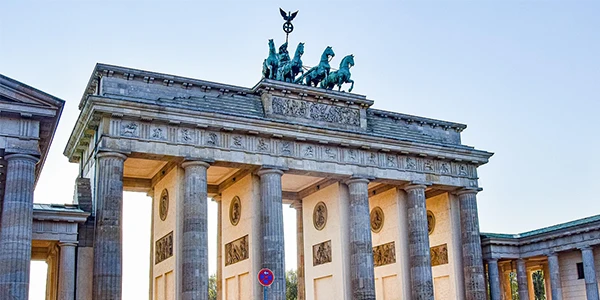
Berlin
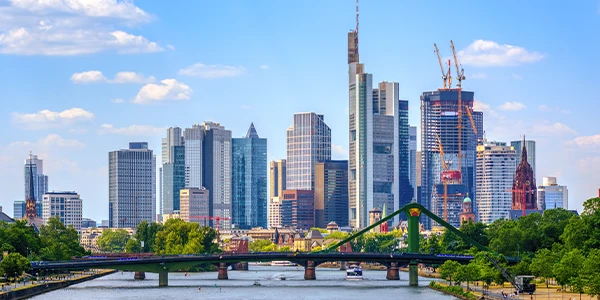
Frankfurt
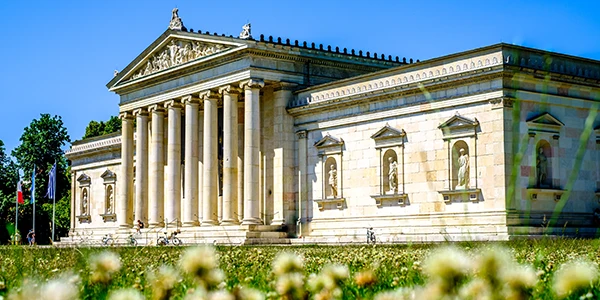
Munich
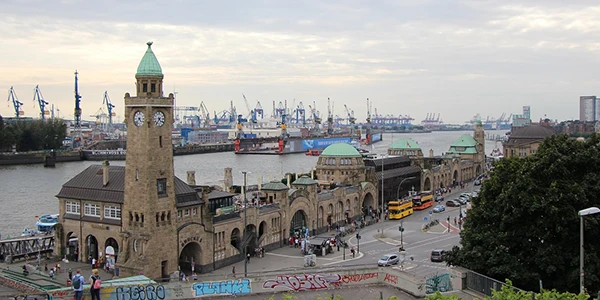
Hamburg

Köln
Get ahead with exam waivers, top scholarships, savings & internships.
Total Expense
Over 1 year
₹23 Lac
Total Earnings
In 3 years
₹1.1 Cr
When on-campus, immerse in research, internships & global community.
Research-driven learning & university internships.
Clubs, networking events & top-notch facilities.
Affordable housing, diversity and inclusivity.
Hear from our learners who turned their study-abroad dreams into reality.
Read expert guides, blogs, FAQs, and resources for every step.
-6028e387e46640ba8e5d5c5a1b37891a.webp)
Cost of Living in Germany
Cost of Study in Germany

Scholarships in Germany

Germany Post Study Work Visa

Study in Germany for Free

Packing List for Intl. Students Going to Germany
Pivot to other study destinations flexibly with upGrad.

#1 Economy with 3.5M STEM Jobs

Up to 5 Years of PSW Visa

Europe's #1 Tech & Gaming Hub
1 year Masters at Top Universities

Top Study Hub with 3 Year PGWP
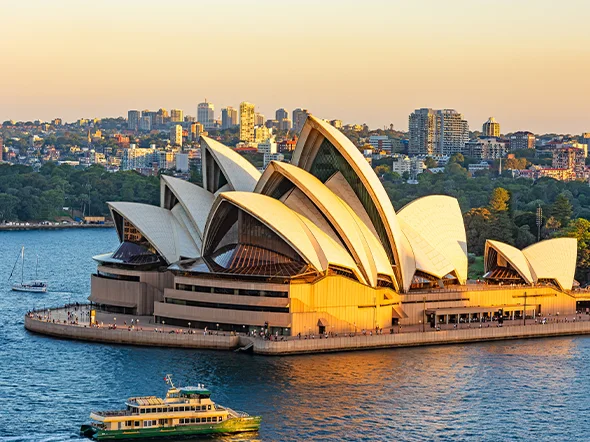
Up to 5 Years of PSW Visa
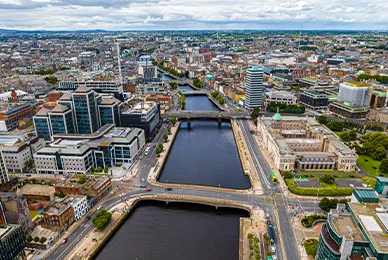
Thriving $19B+ ICT market
Check out articles on IELTS, TOEFL, PTE, Duolingo, GRE, and GMAT
Everything you need to know about studying in Germany
GRE or GMAT is not always required to study MBA or MS programs in Germany, but it depends on the university and program type. Many German universities focus more on your academic background, work experience, and overall profile rather than just test scores.
Here’s how it works:
With upGrad study abroad, students can explore MBA and MS programs in Germany with or without GMAT/GRE and get support with applications.
Yes, Indian students need a German National Visa (Type D) to study in Germany. You will need to submit a completed visa form, passport-size photos, a valid passport, admission letter, proof of a blocked account of €11,904 (around INR 10.7 lakh), health insurance, and academic records.
Yes, the APS certificate is now mandatory for all Indian students applying for a student visa to Germany. It verifies and validates academic documents and must be obtained before scheduling a visa appointment at the German Embassy. No student visa application is accepted without it.
Public universities in Germany are more research-focused with strict entry criteria—minimum 75-80% in Bachelor's, 2–3 years of work experience for technical or management programs, and GRE/GMAT scores. The programs are longer (2–3 years), and career support is minimal. Students also face higher living costs due to extended course duration and large class sizes (1:250).
Private universities, on the other hand, offer more flexibility - flexible GPA requirements, no GRE/GMAT, and higher backlog tolerance. Courses are shorter (1–2 years), career support is extensive (94%+ placements), and the student-faculty ratio is much better (1:30), saving students both time and living expenses.
To apply for a German student visa, Indian students must show proof of funds through a blocked account (Sperrkonto). This ensures you can cover your living expenses while studying in Germany.
Here’s the required amount:
German universities have two main intakes: Winter (October–March) and Summer (April–September). Winter is the primary intake, offering more courses and higher chances of admission. Summer intake is less common, but available for all upGrad programs.
Yes, knowing basic German helps a lot when applying for part-time jobs in Germany. While some roles in Technology, International Business or other English-speaking environments may not require it, most service jobs prefer at least A2–B1 level German to interact with natives. German language training is available for all upGrad students before they transfer on-campus.
No, upGrad students do not need to pursue a Studienkolleg. upGrad offers flexible undergraduate programs that waive off this requirement, allowing eligible students to skip the one-year foundation course and start the Year 1 of their degree program in with upGrad and later transfer on-campus to Germany in Year II.
Yes, studying at public universities in Germany is largely tuition-free for international students, including Indians. Most public universities do not charge tuition fees, but students must pay a small semester contribution.
Here’s how it works:
Even with low tuition, students must still show €11,904 (₹10L) in a blocked account for visa purposes.
On average, it takes 6–12 weeks to process a German student visa. Timelines vary depending on the embassy and the completeness of your documents. Applying early ensures you don’t face delays before your semester begins.
Yes, many master’s programs and some bachelor’s courses are offered entirely in English. However, learning German is highly recommended for daily life and better job opportunities after graduation.
The APS certificate verifies your academic documents for German universities. It is mandatory for Indian students applying from 2023 onwards. Getting it early speeds up your admission and visa process.
International students in Germany can earn competitive salaries after graduation, especially during the 18-month post-study work visa period, which allows them to find full-time jobs related to their field. Earnings depend on the industry, role, and experience level.
Here’s what you can expect:
Many graduates secure jobs within 3–6 months of completing their degree, especially in high-demand fields like engineering, IT, and analytics.
Yes, health insurance is mandatory for all students. Public student insurance costs around €110–€120 per month (≈ ₹9,500–₹10,500). It covers medical care, emergencies, and is required for visa approval.
Yes, you can apply for an 18-month job-seeking visa after graduation. This allows you to find a job related to your field of study. Once employed, you can transition to an EU Blue Card or permanent residence.
Admission to top German universities like TU Munich and RWTH Aachen is competitive, especially for high-demand programs in engineering, data science, and technology. These universities receive a large number of international applications, and acceptance rates can range from 10–30% depending on the course.
Here’s what makes admission competitive:
The total cost to study in Germany for Indian students is relatively affordable compared to countries like the USA or UK. On average, students should plan around €11,000–€25,000 per year (₹9.5L–₹21.5L), including tuition, living expenses, and visa requirements.
Here’s a clear breakdown:
Cities like Munich and Frankfurt are 30–40% more expensive, while Leipzig and Dresden are more affordable. Sharing accommodation can reduce costs by 25–35%.
For masters in Germany, international students usually need to prove English proficiency through IELTS or TOEFL scores, especially for English-taught courses.
Here’s the score range:
The exact requirement varies by university and program.
With upGrad study abroad, students can check exact score requirements, prepare for tests, and apply to suitable universities in Germany.
The admission requirements for Indian students applying to universities in Germany depend on the course and university, but most institutions follow a standard set of academic and application criteria. Meeting these requirements is essential for both admission and visa approval.
Here are the key requirements:
With upGrad study abroad, students can check eligibility, prepare documents, and get support with applications and admissions.
The average salary after completing a master’s degree in Germany is quite competitive, especially in fields like technology, data science, and engineering. On average, graduates can earn between €40,000–€80,000 per year (₹35L–₹70.5L), depending on their role, experience, and industry.
Here are some common job roles and salaries:
Fields like AI, data science, and engineering offer the highest earning potential due to strong demand in Germany.
Indian students can access several scholarships in Germany, which can cover tuition, living expenses, or monthly stipends. These scholarships are offered by the German government, universities, and private organizations.
Here are some popular options:
With upGrad study abroad, students can identify suitable scholarships, prepare applications, and get support throughout the admission process.
Yes, studying in Germany can lead to an EU Blue Card and eventually permanent residency, making it a strong option for long-term career plans in Europe. After graduation, students can stay back and transition into full-time work.
Here’s how the pathway works:
Yes, Germany is considered a high-ROI study abroad destination compared to the USA or UK, mainly because of its low tuition fees and strong job market. Students can achieve good returns with a lower initial investment.
Here’s why Germany offers strong ROI:
Compared to high-cost countries, Germany offers better value for money with strong career outcomes.
Several cities in Germany offer strong job opportunities for international students after graduation, especially in industries like technology, automotive, finance, and engineering. Choosing the right city can improve your chances of finding jobs quickly.
Here are some of the best cities:
Cities like Munich and Frankfurt offer higher salaries, while Berlin provides more startup and tech opportunities.

Advance your career with our expert guidance & global programs.
Germany has stopped being just an alternative. Every year, more Indian students choose to study in Germany and it's not hard to see why. Most public universities charge zero tuition fees, just a small semester contribution of €150–€400. Total annual costs, living included, sit around €10,000–€15,000 (roughly ₹11.1–16.65 lakh at ₹111/€ in June 2026). Compare that to ₹30–55 lakh a year in the USA, and the decision gets easier.
Engineering, computer science, management, and healthcare are the most popular fields, all backed by Germany's powerhouse industries in automotive, IT, and finance. Germany's strongest industries line up directly with what Indian students come here to study. A post-study work visa, the EU Blue Card, and scholarships like DAAD make the path forward clear.
Key Highlights (2026):
Category | Key Stats |
Universities | 400 public and private; 40+ in global top rankings |
TU Munich, Heidelberg, LMU Munich, RWTH Aachen, Humboldt Berlin | |
Top Courses | Engineering, Computer Science, Data Science, Business, Medicine |
Approx. Tuition/Year | Public: Tuition-free; Semester fee €250–€350 (approx. ₹27,500–₹38,500); Private: €10K–20K (approx. ₹11–22 lakh) |
Living Costs/Year | €10K–12K (approx. ₹11–13.2 lakh) |
Visa Fees | €75 application (approx. ₹8,250) + APS certificate fee (approx. ₹18,000 for Indians) |
Work Permit | Part-time work allowed up to 20 hrs/week |
Post‑Study Work | 18-month job-seeking visa; EU Blue Card pathways to PR |
Germany makes sense for Indian students in 2026 for reasons that go beyond just free tuition. Yes, most public universities charge nothing in tuition fees. But what keeps Germany at the top of the list is what comes after the degree too. An 18-month job-seeking visa, a strong hiring market in engineering and tech, and a clear path to permanent residency through the EU Blue Card. That full picture is hard to find elsewhere at this price.
1. Why Germany is Still a Top Choice:
Free tuition at public universities, globally ranked degrees, lower living costs than the USA/UK, strong hiring in engineering and IT, and an 18-month post-study visa with a clear path to PR. Hard to find that package anywhere else.
2. Number of Students and Acceptance Rate Summary:
Over 400,000 international students study in Germany, with 42,000+ from India, the largest non-EU group per DAAD 2025/26. Medicine and engineering are competitive. Applied sciences have more room. Your grades and language scores matter more than the acceptance rate number.
3. Education System in Germany:
Three types of institutions: research-focused Universitäten, industry-linked Fachhochschulen, and specialized arts and music colleges. Over 422 institutions across the country.
4. Popular Courses in Germany:
Engineering, computer science, business, medicine, and renewable energy lead the demand. These fields connect directly to Germany's strongest industries.
5. Main Admission Requirements:
12th grade for bachelor's, four-year degree for master's, language proof in English or German, application via Uni-Assist or university portal, and a blocked account of €11,904/year (approx. ₹13.1 lakh) for the student visa.
German education system does not have associate degrees or community colleges. You apply directly into a bachelor's, master's, or PhD program based on your existing qualifications. Bachelor's programs run three years, master's programs two years, and a PhD typically takes three to five years depending on the research.
Public universities are tuition-free. Universities of Applied Sciences are more practical and industry-connected. Specialized colleges focus on creative disciplines. Each type serves a different purpose, so choosing the right one matters as much as choosing the right course.
German higher education levels build progressively from foundational knowledge to advanced research leadership.
Level | Duration | Credits Required |
3 years | 180 ECTS | |
2 years | 120 ECTS | |
3–5 years | Varies (research + dissertation) |
German credit system uses ECTS credits where one credit equals 25 to 30 hours of total work. Full-time students carry 30 ECTS per semester, which is also a visa requirement. Grades run from 1.0 to 5.0, with 1.0 being the best and 4.0 the minimum pass. It is the reverse of what Indian students are used to.
Aspect | Details |
Credit Points (ECTS) | 1 ECTS = 25–30 hours of total workload; full-time load: 30 ECTS/semester; bachelor's requires 180 ECTS |
Grading Scale | 1.0–1.5 = Very Good; 1.6–2.5 = Good; 2.6–3.5 = Satisfactory; 3.6–4.0 = Sufficient; 5.0 = Fail |
Full Load | 30 ECTS/semester required for visa compliance |
German institutions vary by focus and funding, offering options for different academic and career goals.
Type | Key Features | Examples |
Public Universities (Universitäten) | State-funded, tuition-free, research-oriented, broad academic programs | LMU Munich, Heidelberg University, University of Hamburg |
Universities of Applied Sciences (Fachhochschulen) | Practice-oriented, strong industry links, focus on engineering, business, IT | Hochschule München, HTW Berlin |
Private Universities | Tuition-based (€5,000–€20,000/year, approx. ₹5.5–22 lakh), smaller classes, specialized programs | WHU – Otto Beisheim School of Management, Jacobs University Bremen |
Specialized Colleges | Focus on arts, music, film, design | Hochschule für Musik und Theater München, Filmakademie Baden-Württemberg |
When it comes to value for money, German public universities are hard to beat. Tuition is free, and the semester fee only runs between €250 and €350 (approximately ₹27,500 to ₹38,500). Private institutions charge more, typically between €5,000 and €20,000 per year (approximately ₹5.5 to 22 lakh). When you factor in living costs, the total annual spend for an Indian student usually lands between €10,000 and €15,000 (approximately ₹11 to 16.5 lakh).
The rankings below are drawn from QS and THE 2026 data, with a focus on programs that are popular among Indian students studying in Germany.
Top engineering programs in Germany suit Indian STEM students with strong industry ties, especially in automotive, mechanical, and renewable energy sectors.
Rank QS Subject 2025 – Engineering & Technology | University | Annual Tuition (Approx.) |
19 | €250–€350 ≈ ₹22,000–₹31,000 | |
57 | €280–€350 ≈ ₹24,500–₹31,000 | |
132 | €280–€350 ≈ ₹24,500–₹31,000 | |
154 | €280–€320 ≈ ₹24,500–₹28,000 | |
179 | €250–€300 ≈ ₹22,000–₹26,000 |
MBA and management programs in Germany accelerate careers through global networks and Europe’s finance hubs.
Rank (QS Business 2025) | University | Annual Tuition (Approx.) |
Top 100 | €39,000–€41,000 ≈ ₹35–₹36.5 lakh | |
Top 100 | WHU – Otto Beisheim School of Management | €42,000–€44,000 ≈ ₹38–₹39 lakh |
Top 100 | ESMT Berlin | €48,000–€50,000 ≈ ₹43–₹45 lakh |
Top 100 | €38,000–€40,000 ≈ ₹34–₹36 lakh | |
Top 100 | HHL Leipzig Graduate School of Management | €33,000–€35,000 ≈ ₹29–₹31 lakh |
Germany’s MS programs in Computer Science and Data Science prepare students for AI/ML roles with strong industry connections.
Rank (QS CS 2025) | University | Annual Tuition (Approx.) |
30 | €250–€350 ≈ ₹22,000–₹31,000 | |
43 | €280–€320 ≈ ₹24,500–₹28,000 | |
64 | €280–€350 ≈ ₹24,500–₹31,000 | |
101–150 | €280–€350 ≈ ₹24,500–₹31,000 | |
151–200 | €250–€300 ≈ ₹22,000–₹26,000 |
LLM programs in Germany enhance global legal practice with European law specialization and international clinics.
Rank (QS Law 2025) | University | Annual Tuition (Approx.) |
51–100 | €280–€320 ≈ ₹24,500–₹28,000 | |
51–100 | €280–€350 ≈ ₹24,500–₹31,000 | |
51–100 | €280–€320 ≈ ₹24,500–₹28,000 | |
101–150 | €250–€300 ≈ ₹22,000–₹26,000 | |
151–200 | €250–€300 ≈ ₹22,000–₹26,000 |
MIM programs in Germany build analytics and leadership skills for young professionals.
Rank (QS Mgmt 2025) | University | Annual Tuition (Approx.) |
Top 50 | €39,000–€41,000 ≈ ₹35–₹36.5 lakh | |
Top 50 | WHU – Otto Beisheim School of Management | €42,000–€44,000 ≈ ₹38–₹39 lakh |
Top 50 | ESMT Berlin | €48,000–€50,000 ≈ ₹43–₹45 lakh |
Top 60 | €38,000–€40,000 ≈ ₹34–₹36 lakh | |
Top 100 | HHL Leipzig Graduate School of Management | €33,000–€35,000 ≈ ₹29–₹31 lakh |
Getting into a German university is not a single-size experience. Acceptance rates shift quite a bit depending on the type of institution and the program you are going for. Unlike in the USA, tuition-free public universities attract a very large pool of applicants, which naturally drives up competition in popular fields like medicine, engineering, and computer science.
In 2025/26, Germany welcomed over 400,000 international students. Indians, numbering 42,000 and above, form the largest group. The real deciding factor for admission is not just how many people applied, but whether your academic profile and prerequisites match what the program demands.
Rate Breakdown by Tier:
Tier | Rate Range | Approx. Acceptance Rates |
Top | 10–20% | TU Munich (approx. 15%), LMU Munich (approx. 18%), Heidelberg (approx. 12%) |
Mid | 30–50% | RWTH Aachen (approx. 40%), University of Freiburg (approx. 35%), University of Hamburg (approx. 45%) |
Base | 60–90% | University of Cologne (approx. 70%), University of Leipzig (approx. 75%), University of Duisburg-Essen (approx. 80%) |
Key Influencing Factors:
Picking the right course in Germany is not just about what you enjoy studying. It is also about what gives you the best return on your time and money. Most public universities charge only a semester contribution of €250–€350 (approximately ₹27,500–₹38,500), while private universities charge between €5,000 and €20,000 per year (approximately ₹5.5 to 22 lakh). That kind of affordability, combined with strong career outcomes, is why Germany keeps attracting Indian students in 2026.
Top 10 Courses and Universities:
Course | University Examples | Tuition (Approx. Total) |
MS Computer Science | TU Munich, LMU Munich, RWTH Aachen | €250–€350/semester (approx. ₹27,500–₹38,500) |
MS Data Science | University of Mannheim, University of Potsdam | €5,000–€10,000/year (approx. ₹5.5–11 lakh) |
MS Engineering Management | RWTH Aachen, TU Berlin | €250–€350/semester (approx. ₹27,500–₹38,500) |
MS Business Analytics | Frankfurt School of Finance, ESMT Berlin | €15,000–€20,000/year (approx. ₹16.5–22 lakh) |
MBA | Mannheim Business School, WHU, ESMT Berlin | €39,000–€50,000 total (approx. ₹42.9–55 lakh) |
MS Mechanical Engineering | TU Munich, University of Stuttgart | €250–€350/semester (approx. ₹27,500–₹38,500) |
MS Electrical Engineering | Karlsruhe Institute of Technology, TU Dresden | €250–€350/semester (approx. ₹27,500–₹38,500) |
MS Finance | Frankfurt School of Finance, WHU | €15,000–€20,000/year (approx. ₹16.5–22 lakh) |
Public Health (MPH) | Heidelberg University, Charité Berlin | €250–€350/semester (approx. ₹27,500–₹38,500) |
Biotechnology MS | University of Freiburg, TU Braunschweig | €250–€350/semester (approx. ₹27,500–₹38,500) |
Note: All amounts are approximate and may vary depending on the university and prevailing exchange rates.
To study in Germany, you need a recognized academic qualification, proof of language ability in English or German, and a student visa obtained through German Missions abroad. Most applications go through Uni-Assist, which handles admissions for over 180 universities, or directly through a university's own portal. Indian students also need to show proof of funds through a blocked account worth €11,904 per year (approximately ₹13.1 lakh at June 2026 rates) as part of the visa process.
Requirements go up as you move from undergraduate to doctoral studies. A bachelor's program asks for completed schooling, a master's needs a full bachelor's degree, and a PhD requires prior research experience.
Level | GPA Equivalent | Key Requirements |
Bachelor's | 2.5–3.0 (approx. 70–80% in CBSE/ISC) | 12th grade completion + Studienkolleg (if required) |
Master's | 3.0+ (approx. 75%+) | 4-year Bachelor's degree |
Doctorate (PhD) | 3.5+ (approx. 80%+) | Master's degree + research proposal |
Your documents need to cover three areas: academics, personal background, and finances. These are checked at both the admission stage and during the visa process, so getting them in order early saves a lot of headache later.
Category | Items Needed |
Academic | Transcripts, diplomas, and degree certificates |
Personal | Passport, Statement of Purpose (SOP), 2–3 Letters of Recommendation (LORs) |
Financial | Blocked account proof (~€11,904/year ≈ ₹10 lakh), sponsor letter, bank statements |
Germany does not require GRE or GMAT for most programs, which is a relief for many applicants. That said, certain private universities or highly competitive programs do ask for them.
Exam | Level | Competitive Scores |
TestAS | UG | High percentile for selective programs |
MS/PhD | Optional, program-specific | |
MBA | Required by business schools (e.g., Mannheim, WHU) |
Language requirements are non-negotiable. For most bachelor's programs, you need German proficiency. English is widely accepted for master's programs, especially at public universities.
Test | Elite Unis | Mid-Tier |
6.5–7.0+ | 6.0–6.5 | |
TOEFL iBT | 90–100+ | 80–90 |
TestDaF/DSH | TDN 4+ | TDN 3 |
The student visa process has a clear sequence of steps. If you follow them in order and keep your documents ready, the process is much less stressful than it sounds.
Step | Requirement | Details |
1 | Secure Admission Letter | From a recognized German university |
2 | Blocked Account | Proof of €11,904/year (approx. ₹13.1 lakh) |
3 | Visa Fee | €75 (approx. ₹8,250) |
4 | Interview | Show intent, academic readiness, and financial proof |
The cost of studying in Germany for Indian students is significantly lower than in the USA or UK. You only pay a semester contribution of €250–€350 (approximately ₹27,500–₹38,500). Private universities are a different story, charging anywhere from €5,000 to €20,000 per year (approximately ₹5.5 to 22 lakh). The German student visa fee is €75 (approximately ₹8,250), and the blocked account requirement of around €11,904 per year (approximately ₹13.1 lakh) is mandatory to prove you can support yourself financially.
The figures below give you a realistic picture of what to budget for. Keep in mind that cities like Munich and Frankfurt tend to run about 30 to 40 percent more expensive than smaller cities like Leipzig or Dresden.
Category | Annual Cost (EUR/INR) |
Tuition (Public) | €250–€700 (approx. ₹27,500–₹77,000) |
Tuition (Private) | €5,000–€20,000 (approx. ₹5.5–22 lakh) |
Rent | €4,800–€8,400 (approx. ₹5.3–9.2 lakh) |
Insurance | €1,200–€1,500 (approx. ₹1.3–1.65 lakh) |
Services/Amenities | €1,000–€2,000 (approx. ₹1.1–2.2 lakh) |
Study Materials | €300–€500 (approx. ₹33,000–₹55,000) |
Visa Fee | €75 (approx. ₹8,250) |
Blocked Account (Proof of Funds) | €11,904 (approx. ₹13.1 lakh) |
Note: All amounts are approximate and may vary depending on the city and exchange rates.
Public universities charge per semester, and you need to be enrolled full-time to stay visa-compliant.
Type | Per Semester (EUR) | Annual (EUR/INR) |
Public Universities | €250–€350 | €500–€700 (approx. ₹55,000–₹77,000) |
Private Universities | €2,500–€10,000 | €5,000–€20,000 (approx. ₹5.5–22 lakh) |
Note: Public universities are tuition-free except for semester contributions; private universities charge full tuition.
At public universities, the cost stays the same no matter what you study. Private university programs in STEM and business cost significantly more.
Course | Annual Tuition (EUR/INR) |
MS Computer Science | €250–€350 semester fee (approx. ₹27,500–₹38,500) |
MS Engineering | €250–€350 semester fee (approx. ₹27,500–₹38,500) |
MBA (Private) | €39,000–€50,000 total (approx. ₹42.9–55 lakh) |
MS Data Science (Private) | €5,000–€10,000/year (approx. ₹5.5–11 lakh) |
Note: Public universities charge only semester contributions; private institutions set their own full tuition fees.
After tuition, the next big thing on your checklist is figuring out how much people spend each month. For most Indian students in Germany, monthly cost of living in Germany sit somewhere between €850 and €1,200 (₹94,350 to ₹1,33,200).
The range moves a lot depending on which city you pick. Munich and Frankfurt are noticeably expensive, easily 30–40% above the national average. Cities like Leipzig and Dresden, on the other hand, are far more student-friendly on the wallet and genuinely worth a look if you're watching your budget closely.
Expense | Monthly Cost (EUR) | Approx. in INR (@ ₹111/€) |
Housing – Single Room/Studio | €500–€800 | ₹55,500–₹88,800 |
Housing – Shared Apartment | €300–€500 | ₹33,300–₹55,500 |
Utilities | €100–€150 | ₹11,100–₹16,650 |
Groceries | €200–€300 | ₹22,200–₹33,300 |
Transportation (Semester Ticket) | €80–€120 | ₹8,880–₹13,320 |
Health Insurance | €110–€120 | ₹12,210–₹13,320 |
Dining Out | €100–€150 | ₹11,100–₹16,650 |
Internet/Phone | €40–€60 | ₹4,440–₹6,660 |
Entertainment | €50–€100 | ₹5,550–₹11,100 |
Total Monthly | Shared: ~€850 / Single: ~€1,200 | ~₹94,350 / ~₹1,33,200 |
Note: INR figures are calculated at approximately ₹111 per euro the mid-market rate as of early June 2026 (source: Wise). Actual costs vary by city and personal lifestyle.
With over 42,000 Indian students now studying across Germany, a handful of cities have turned into natural gathering points. Some of that is driven by which universities are there, some by job opportunities nearby, and some simply by the fact that a large Indian community already exists in those places; which makes settling in a whole lot easier.
1. Munich: Engineering and Tech Hub
If you're going into engineering, IT, or management, Munich is hard to ignore. TU Munich is right there, and so are the headquarters of companies like BMW and Siemens. The industry connections are genuinely strong. Munich is also one of the most expensive cities in Germany, so your monthly budget will feel it.
2. Berlin: Startup and Cultural Capital
Berlin has a completely different energy. The city has a buzzing startup scene, a much more mixed student crowd, and living costs that are noticeably lower than Munich. Humboldt University and TU Berlin are both solid choices here especially for students in computer science, business, or the arts.
3. Heidelberg: Research and Medicine Cluster
Heidelberg is small, but it punches well above its size academically. Heidelberg University is one of the oldest universities in Europe and attracts students who are serious about medicine, life sciences, or research-intensive programs. If a strong academic environment matters more to you than city life, this one deserves a close look.
4. Frankfurt: Finance and Business Hub
Frankfurt is where Germany's financial world lives. The Frankfurt School of Finance and Management is based here, and so are a whole cluster of global banks and financial institutions. For students targeting careers in finance, banking, or international business, the access to industry here is unmatched. Living costs are on the higher side, similar to Munich.
5. Aachen: Engineering and Applied Sciences Leader
Aachen's entire identity is shaped by RWTH Aachen University; one of the top engineering schools in Europe. It's a focused, campus-driven city with reasonable living costs. If you're studying mechanical or automotive engineering and want a world-class degree without paying big-city prices, Aachen is a genuinely smart choice.
The low tuition costs at public universities already make Germany affordable, but the semester contribution of €250–€350 (approximately ₹27,500–₹38,500) and monthly living costs of €850–€1,200 (approximately ₹93,500–₹1.32 lakh) can still add up over a two-year program. Scholarships in Germany help close that gap, and according to DAAD, thousands of Indian students receive funding every year through merit-based and need-based programs.
Major Scholarships for Indian Students Studying in Germany (2026):
Name | Main Eligibility | Scholarship Amount and Duration |
DAAD International Postgraduate Scholarships | Indian graduates applying for Master's/MPhil/short PG courses | Tuition + living costs; full program duration |
Students in joint EU programs | €8,000–€25,000 (approx. ₹8.8–27.5 lakh); 1–2 years | |
Strong academics + social/political engagement | Monthly stipend + living allowance; full program | |
Konrad‑Adenauer Stiftung Scholarships | Indian postgraduates with leadership potential | €850/month + tuition + travel; 2 years |
Socially committed students | €750/month + health insurance; full program | |
Bayer Foundation Fellowships | Research in science, medicine, engineering | €5,000–€10,000 (approx. ₹5.5–11 lakh); 6–12 months |
Merit-based, open to all disciplines | €300/month (shared funding); 1 year | |
DAAD University Summer Courses (HSK) | UG/PG students for German language courses | Tuition + living costs; 2–3 months |
Starting early is the most important thing here. DAAD opens its application window in September to October each year, Erasmus+ aligns with EU program deadlines, and foundation scholarships have their own schedules. Giving yourself 12 to 18 months of lead time puts you in a much better position.
Application Steps:
Step | Action | Timeline |
1. Research | DAAD.in, funding-guide.de, foundation sites | 12–18 months before |
2. Gather Docs | Transcripts, SOP, 2–3 LORs, CV, proof of language proficiency | 6–9 months before |
3. Submit Online | DAAD portal, Erasmus+ portal, foundation websites | Deadlines vary |
4. Interviews | German consulate/foundation panels | Shortlisted only |
Key Deadlines (2026 Cycle):
DAAD Postgraduate Scholarships: September to October 2025. Erasmus+ Programs: January to March 2026. Foundation Scholarships (Heinrich Böll, Konrad-Adenauer): February to April 2026.
Getting a German student visa is one of those things that feels more complicated than it actually is. Once you break it down into four clear stages, preparing documents, paying the fee and booking your slot, getting ready for the interview, and attending the interview itself, it becomes a lot more manageable. Knowing what each step involves helps you move through the process without last-minute surprises.
1. Before the Interview: Documents You Need
Make sure you have these ready before booking your interview:
2. Visa Fee Payment & Slot Booking
3. Preparing for the Visa Interview
4. On the Visa Interview Day
A German degree opens doors that are genuinely hard to find elsewhere. Students get to intern at companies like Siemens, BMW, SAP, Volkswagen, and Deutsche Bank while still studying, which means many of them already have strong professional experience by the time they graduate. A large share of international students who do internships during their studies end up converting those connections into full-time roles after completing their degrees.
The Jobs in Germany for Indians are constantly evolving. Currently, the sectors with high demand for skilled professionals include:
Indian students who graduate in these fields often land roles with competitive packages. The figures below reflect approximate ranges for June 2026.
Job Role/Title | Approximate Annual Salary (EUR) | Approximate Annual Salary (INR) |
Data Scientist | €55,000–€80,000 | approx. ₹60.5–88 lakh |
Data Engineer | €50,000–€70,000 | approx. ₹55–77 lakh |
Software Engineer/Developer (mid-level) | €60,000–€75,000 | approx. ₹66–82.5 lakh |
Senior Software/Data Engineer (lead roles) | €80,000–€100,000 | approx. ₹88–1.1 crore |
Data Analyst (average) | €40,000–€50,000 | approx. ₹44–55 lakh |
Data Analyst (entry to mid-level) | €35,000–€45,000 | approx. ₹38.5–49.5 lakh |
Note: Figures are approximate ranges and may vary depending on the city, company, and exchange rates. Source: Glassdoor Germany. INR conversions rate of 1 EUR = approx. ₹110.









 (1)-ceedcb2dbec742f48ff3bda76d3cb05f.svg)