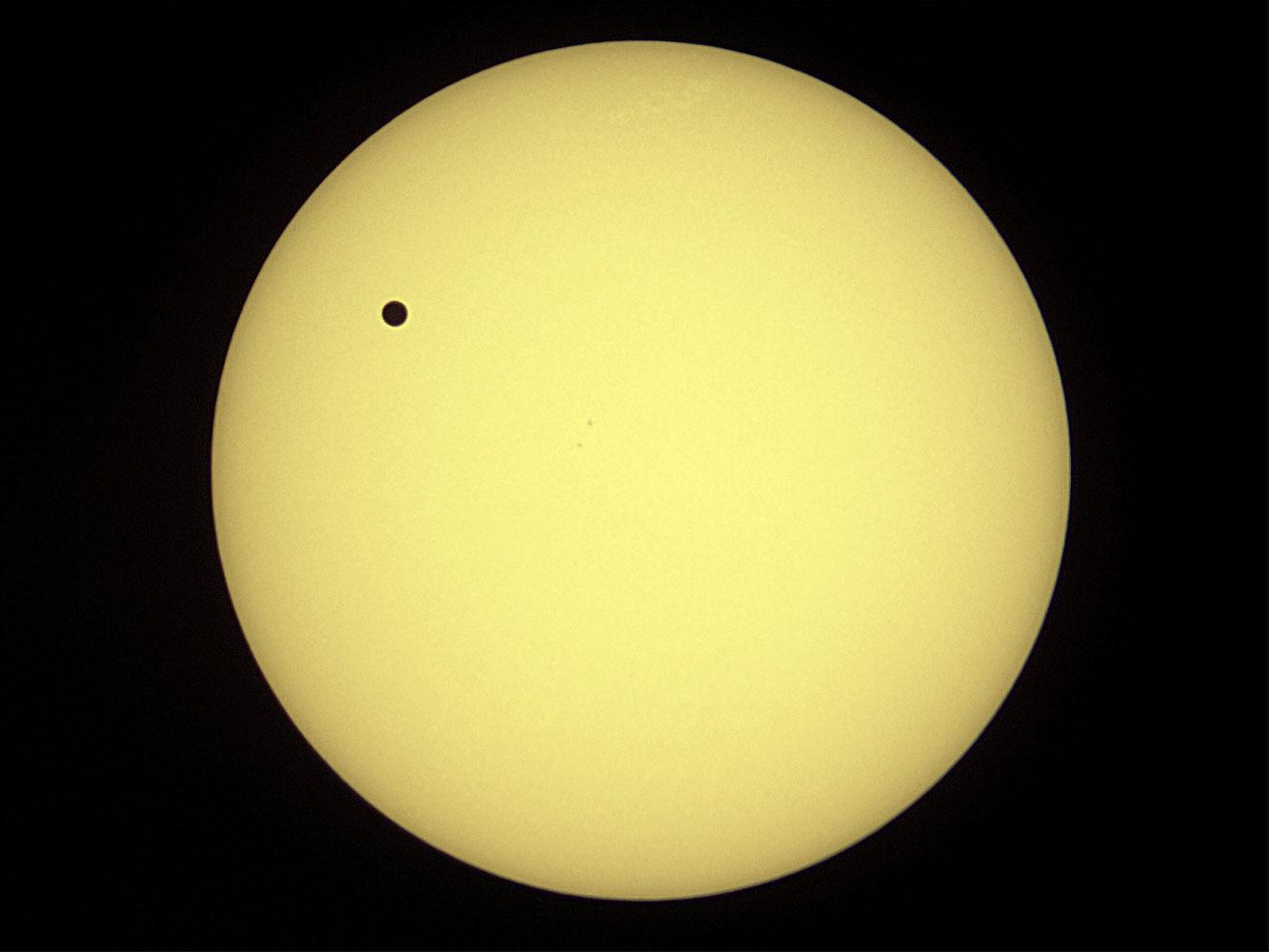
The IELTS Reading section includes passages that test your ability to find specific information, understand historical events, and recognise ideas expressed in different words. Venus in Transit Reading Answers is based on a passage about the history of Venus transits and their importance in astronomy.
The passage explains how astronomers observed Venus passing across the Sun, beginning with the work of Edmond Halley. It discusses the use of the parallax principle to estimate the distance between the Earth and the Sun, the difficulties faced by early astronomers, and the expeditions organised to observe Venus transits. It also explains how these observations contributed to modern astronomy and the study of distant stars and planets.
The passage contains Matching Information, Matching Features, and True/False/Not Given questions. These questions test your ability to locate specific details, connect information with the correct scientist or paragraph, understand paraphrases, and distinguish between information that agrees with the passage, contradicts it, or is not mentioned.
Venus in Transit Reading Passage
The Venus in Transit reading passage for the IELTS exam describes how observations of Venus crossing the Sun helped astronomers understand the scale of the solar system. It moves from the 2004 transit and early astronomical observations to Halley's ideas, scientific expeditions, problems with observations, and the wider importance of the parallax principle.
Venus in Transit
Paragraph 1
On 8 June 2004, more than 50% of the world's population experienced a rare event in astronomy. For more than six hours, the planet Venus moved from its way towards the Sun. This Venus “transit” occured for the first time since 6 December 1882. During that time, the American astronomer Professor Simon Newcomb took some people to South Africa to witness the occasion. Here, the mixed forces of three school mistresses at a girl's school allegedly excelled the other experts with their observation's accuracy.
Paragraph 2
For more than a century, the Venus transit has seeked explorers' attention of explorers and astronomers alike to all corners of the planet. Moreover, you can keep it to the enormous polymath Edmond Halley. In November 1677, Edmond Halley encountered a transit of the innermost planet Mercury, from the St Helena (empty island) in the South Pacific ocean. He noticed that from various latitude positions, the transit of the planet across the Sun’s disc might seem to differ. By locating the Venus transit from two different places, a team of astronomers would measure the parallax angle the difference from the position of an astronomical body because of a difference in the observer’s position. Astronomers would know the main objective by calculating this angle between the distance of the Sun from the Earth, which is called the Astronomical Unit or AU.
Paragraph 3
Haley was pretty sure that the AU was considered one of the most fundamental astronomical measurements of all time. In the beginning of the 17th century, Johannes Kepler revealed that the planet's individual distance from the Sun is based on their orbital speeds that are measurable. However, no one ever found a path to measure the accurate distance from the planets to the Earth. The actual aim was to calculate the AU; aware of the orbital speeds of all the other planets revolving around the Sun, the entire solar system might diminish in pieces. But, Halley observed that the planet Mercury was farther than others that its parallax angle might be hard to measure. Since Venus was nearer to the Earth, its parallax angle would be larger, and Halley determined that with the help of Venus, he would probably measure the Sun's actual distance to 1 part in 500. But, there is one problem here. Unlike Mercury, the Venus transit is very rare, coming in pairs roughly eight years other than every hundred or so years. Besides that, he predicted accurately that Venus would transit over the face of the Sun during 1761 and 1769 - though he wasn't alive to see either transit.
Paragraph 4
Based on Halley's recommendations of a way to drop down the Solar System, a team of astronomers from England and France called out for expeditions to locations as diverse as India and Siberia. However, these aspects didn't rescue Britain and France during the war. In this, the most sympathetic person would be the French astronomer Guillaume Le Gentil. He was suddenly stopped because of the fact that the British were taking control of his observation site at Pondicherry, a union territory in India. While travelling on a French warship over the Indian Ocean, Le Gentil was fortunate enough to see a transit - where the ship's pitching and rolling made the observations inaccurate for many attempts. Though he was still South to the Equator, he kept himself occupied by exploring the Mauritius and Madagascar islands before witnessing the next transit observation in the Philippines. Apparently, after going through a rough ride for 50,000 kilometres, his view was clouded out at the last moment, a mere sad and disappointing experience.
Paragraph 5
Even though the previous transit timings seemed precise as far as the instruments are concerned, the measurements varied due to the other components like a ‘black drop’ effect. When Venus was crossing the Sun’s disc, it appeared to be smeared, not circular in shape, which made the observers perfect the timings. This difficulty is mainly due to diffraction of light. In addition to that, the second problem includes Venus transforming a halo of light when it is viewed away from the Sun’s disc. This clearly revealed by astronomers that Venus is encircled by a thick layer of gas refracting the sun rays around it. It made both effects impossible to measure the accurate timings.
Paragraph 6
Considerably accurate for the time, that is very near to today's measurement of 149,597,870 km, observed by radar. It's now superseded by transits and all other forms of calculation in accuracy. The AU is a cosmic measuring rod, and depending on how we analyse the Universe in this present time. The parallax principle can be expanded to calculate the distances between the planets and the stars. For instance, if we see a star in the month of January - when Earth is at a particular point in its orbit - it will look like it is in a new position from where it appeared a year ago. Since it is aware of the width of Earth's orbit, the parallax change enables astronomers to calculate the distance.
Paragraph 7
June 2004’s transit of Venus was thus more of an astronomical spectacle than a scientifically important event. But such transits have paved the way for what might prove to be one of the most vital breakthroughs in the cosmos-detecting Earth-sized planets orbiting other stars.
Venus in Transit Reading Answers: Questions 1–13
The questions below cover three commonIELTS Reading formats: Matching Information, Matching Features, and True/False/Not Given. Before checking the answers, identify the key idea in each question and scan the passage for names, dates, scientific terms, and related information. Remember that the passage may use different wording from the question.
Questions 1–4: Matching Information
For Questions 1–4, match each statement with the paragraph where the information appears. The answers are taken from Paragraphs 1–7.
Q1: Which paragraph gives examples of how the parallax principle can be used?
Answer: Paragraph 6
Explanation: Paragraph 6 explains that the parallax principle can be extended beyond the original Venus observations. It describes how astronomers can use the apparent change in a star's position at different points in Earth's orbit to calculate its distance.
Answer Location: Paragraph 6
Keywords: parallax principle, stars, distance
Paraphrase: “parallax principle can be expanded” → “parallax principle can be used in other ways”
Q2: Which paragraph describes an event that prevented an accurate transit observation?
Answer: Paragraph 4
Explanation: Paragraph 4 describes Guillaume Le Gentil's journey to observe a Venus transit. Although he managed to see the transit, the movement of the ship made accurate observations difficult. Later, his view was blocked by clouds.
Answer Location: Paragraph 4
Keywords: transit, observation, ship, clouded
Paraphrase: “observations inaccurate” and “view was clouded out” indicate events that prevented successful observation.
Q3: Which paragraph discusses possible future discoveries resulting from transit observations?
Answer: Paragraph 7
Explanation: The final paragraph explains that Venus transits may have contributed to an important future development: detecting Earth-sized planets orbiting other stars.
Answer Location: Paragraph 7
Keywords: future discoveries, Earth-sized planets, other stars
Paraphrase: “paved the way” → “contributed to future discoveries”
Q4: Which paragraph describes physical effects that made accurate early observations difficult?
Answer: Paragraph 5
Explanation: Paragraph 5 describes the black drop effect, diffraction of light, and the halo surrounding Venus. These effects made it difficult for early astronomers to determine the exact timing of the transit.
Answer Location: Paragraph 5
Keywords: physical effects, Venus, accurate timings
Paraphrase: “black drop effect” and “halo of light” → physical effects affecting observations.
Questions 5–8: Matching Features
For Questions 5–8, match each statement with the correct scientist. The four scientists mentioned in this section are Edmond Halley, Johannes Kepler, Guillaume Le Gentil, and Johann Franz Encke.
Q5: Which scientist calculated the Earth–Sun distance using observations of Venus with reasonable accuracy?
Answer: Johann Franz Encke
Explanation: Paragraph 6 refers to the final calculation of the astronomical unit based on the parallax measurements. This relates to Johann Franz Encke, who determined a value for the AU from the observations.
Answer Location: Paragraph 6
Keywords: calculated, distance, Venus, accuracy
Paraphrase: “considerably accurate for the time” → “reasonable accuracy”
Q6: Which scientist understood that observations of a transit from different locations could help calculate the distance between the Earth and Sun?
Answer: Edmond Halley
Explanation: Paragraph 2 explains Halley's idea that observing a transit from different locations could reveal a parallax angle. This could then be used to calculate the distance between the Earth and the Sun.
Answer Location: Paragraph 2
Keywords: different places, parallax, Sun, Earth
Paraphrase: “from two different places” → “comparing observations from different locations”
Q7: Which scientist established the relationship between a planet's distance from the Sun and its orbital speed?
Answer: Johannes Kepler
Explanation: Paragraph 3 states that Johannes Kepler showed that the distances of planets from the Sun were related to their orbital speeds. This information helped astronomers understand the relative scale of the solar system.
Answer Location: Paragraph 3
Keywords: Kepler, distance, Sun, orbital speeds
Paraphrase: “individual distance from the Sun is based on their orbital speeds” → relationship between distance and orbital motion.
Q8: Which scientist witnessed a Venus transit but could not obtain accurate observations?
Answer: Guillaume Le Gentil
Explanation: Paragraph 4 discusses Guillaume Le Gentil's difficult journey to observe a Venus transit. Although he saw a transit from a ship, its movement made accurate observations impossible. His later attempt was also unsuccessful because clouds blocked his view.
Paraphrase: “saw a transit” → “witnessed a Venus transit”; “observations inaccurate” → inability to obtain useful measurements.
Questions 9–13: True/False/Not Given
For Questions 9–13, decide whether each statement agrees with the passage.
Write TRUE if the statement agrees with the passage, FALSE if it contradicts the passage, and NOT GIVEN if the passage does not provide enough information.
Q9: Halley personally observed a transit of Venus.
Answer: FALSE
Explanation: Paragraph 2 states that Halley encountered a transit of Mercury, not Venus. Paragraph 3 also explains that he predicted Venus transits in 1761 and 1769 but was not alive to see either of them.
Answer Location: Paragraphs 2–3
Keywords: Halley, observed, Venus
Paraphrase: “encountered a transit of the innermost planet Mercury” contradicts the claim that he observed Venus.
Q10: Guillaume Le Gentil successfully observed a second Venus transit.
Answer: FALSE
Explanation: Paragraph 4 says that Le Gentil travelled a very long distance and reached the location for another transit observation, but his view was clouded out at the last moment. Therefore, he did not successfully complete the second observation.
Answer Location: Paragraph 4
Keywords: second transit, Le Gentil, clouded
Paraphrase: “view was clouded out” → unsuccessful observation.
Q11: Venus appeared distorted rather than completely circular while crossing the Sun.
Answer: TRUE
Explanation: Paragraph 5 explains that Venus appeared smeared rather than circular while crossing the Sun's disc. This effect made it difficult to determine the exact timing of the transit.
Answer Location: Paragraph 5
Keywords: Venus, distorted, Sun's disc
Paraphrase: “appeared to be smeared, not circular” → “appeared distorted”.
Q12: Early astronomers believed that the gases around Venus were poisonous.
Answer: NOT GIVEN
Explanation: Paragraph 5 states that Venus is surrounded by a thick layer of gas that refracts sunlight. However, the passage does not say that early astronomers believed the gas was poisonous or toxic.
Answer Location: Paragraph 5
Keywords: gases, Venus, poisonous
Why not FALSE? The passage does not contradict the statement; it simply does not provide information about whether the gas was considered poisonous.
Q13: The parallax principle can help astronomers calculate the distance of stars from Earth.
Answer: TRUE
Explanation: Paragraph 6 directly explains that the parallax principle can be extended to calculate distances to stars. It gives the example of observing a star from different positions in Earth's orbit.
Answer Location: Paragraph 6
Keywords: parallax, stars, distance
Paraphrase: “calculate the distances between ... stars” → “work out how far away stars are”.
Reading Answers of Venus in Transit are useful practice for passages that combine history, science, technical information, and a sequence of discoveries. The passage moves from the 2004 transit to earlier observations and then explains how those observations contributed to astronomy.
Identify Names, Dates and Scientific Events
Names and dates are particularly useful in this passage. Look for people such as Edmond Halley, Johannes Kepler, Guillaume Le Gentil, and Johann Franz Encke.
Dates such as 1677, 1761, 1769, 1882, and 2004 can also help you locate information quickly.
Instead of repeatedly reading the complete passage, use these details as scanning anchors. Once you find the relevant name or date, read the surrounding sentences carefully.
Follow the Chronological Order
The passage covers several centuries of astronomical observations. Understanding the sequence makes the information easier to organise.
A simple timeline can help:
1677 → Halley's observation of Mercury → 1761/1769 predicted Venus transits → scientific expeditions → later AU calculations → 2004 Venus transit
This timeline helps you distinguish between an astronomer's prediction, an actual observation, and later scientific calculations.
Watch for Paraphrased Information
IELTS questions often use different words from the passage. This means you should focus on the meaning rather than search for exact matches.
For example:
“two different places” can relate to comparing observations from different locations.
“parallax angle” can be described as an apparent change in position.
“clouded out” can indicate that an observation was unsuccessful.
“paved the way” can indicate that something contributed to a later development.
Understanding these relationships is important when solving Reading Answers Venus in Transit questions.
Common Mistakes to Avoid in Venus in Transit Reading
Scientific and historical passages can be challenging because they often contain unfamiliar terminology, several scientists, and events separated by many years. Avoiding a few common mistakes can make the questions much easier.
Relying Only on Exact Keywords
Finding the same word in the question and passage does not necessarily mean that you have found the answer.
For example, the word “transit” appears throughout the passage. You still need to understand whether the question refers to Halley, Le Gentil, the 2004 event, or another observation.
Always read the complete sentence and compare the meaning.
Confusing Scientists and Historical Events
Several scientists appear in the passage, and each contributed differently.
Students may confuse Halley's ideas with Kepler's work or Le Gentil's observations. Pay attention to who did what, not just where the person's name appears.
A quick list of each scientist's contribution can help you avoid this mistake.
Ignoring the Sequence of Events
The passage covers events from the 17th century through 2004. If you ignore the sequence, it is easy to confuse predictions with actual observations.
For example, Halley predicted the 1761 and 1769 Venus transits but did not live to observe them. This detail is important for answering questions about his observations.
Exceeding the Word Limit
Always read the instructions before answering completion questions. If the question asks for NO MORE THAN TWO WORDS, adding an unnecessary third word can make the answer incorrect.
Even when the answer seems obvious, check the required word limit before moving on.
Looking for more IELTS Reading practice? Read these answer guides to practise different passage topics and question types:
The Venus in Transit Reading Answers passage provides useful IELTS Reading practice because it combines scientific information with historical events, famous astronomers, technical concepts, and chronological details.
Working through this passage can help you improve your ability to locate specific information, match scientists with their contributions, recognise paraphrased ideas, and distinguish between TRUE, FALSE, and NOT GIVEN statements.
When preparing for IELTS Reading Answers Venus in Transit, focus on names, dates, scientific terms, and the sequence of discoveries. After completing the questions, review your mistakes carefully and practise similar passages under timed conditions.
1. What is the Venus in Transit reading passage about?
The passage explains the history and scientific importance of Venus transits. It focuses on how astronomers observed Venus crossing the Sun and how these observations helped scientists estimate the Earth–Sun distance and develop broader astronomical methods.
2. Why is the Venus transit important in astronomy?
Venus transits were historically important because astronomers could use them to study parallax and estimate the distance between Earth and the Sun. The passage also connects these observations with later developments in understanding the wider Universe.
3. What is a transit of Venus?
A transit of Venus occurs when Venus passes across the face of the Sun as viewed from Earth. It is a rare astronomical event, and historically astronomers travelled to different parts of the world to observe it.
4. What is the parallax principle in the Venus in Transit passage?
Parallax refers to the apparent change in an object's position when viewed from different locations. Astronomers used this principle with Venus transits to estimate the distance between the Earth and the Sun.
5. Why are names important in Venus in Transit IELTS Reading?
Names such as Edmond Halley, Johannes Kepler, Guillaume Le Gentil, and Johann Franz Encke act as useful scanning clues. Knowing what each scientist contributed also helps you answer Matching Features questions more accurately.
6. How can I solve Matching Information questions in this passage?
Focus on the main idea of each statement rather than individual words. Scan for distinctive concepts, such as unsuccessful observations, parallax applications, or future discoveries, and then confirm the answer by reading the surrounding sentences.
7. How should I approach Matching Features questions?
First identify the people in the list and understand their contributions. Then scan the passage for their names and read the related information carefully. Pay attention to what each person actually did because several scientists appear in similar historical contexts.
8. What is the difference between FALSE and NOT GIVEN?
FALSE means the passage gives information that contradicts the statement. NOT GIVEN means there is not enough information in the passage to decide whether the statement is correct or incorrect. This distinction is important in True/False/Not Given questions.
9. Why was Guillaume Le Gentil unsuccessful in observing the transit accurately?
Le Gentil faced several difficulties. During one observation, the movement of his ship made accurate measurements difficult. During another attempt, clouds blocked his view at the last moment, preventing a successful observation.
10. How can dates improve my IELTS Reading performance?
Dates act as strong scanning clues and help you follow the order of historical events. In this passage, dates such as 1677, 1761, 1769, 1882, and 2004 help separate different observations and developments.
11. Can Venus in Transit Reading Answers help with IELTS Academic Reading preparation?
Yes. The passage provides practice with Matching Information, Matching Features, and True/False/Not Given questions. It also helps develop skills such as scanning, recognising paraphrases, following chronology, and identifying information about scientific discoveries.
upGrad Abroad Editorial Team |5020 articles published
We are a dedicated team of study-abroad experts, ensuring intensive research and comprehensive information in each of our blogs. With every piece written, we aim at simplifying the overseas education ...
Refer Your Friend & Earn upto ₹15000
Help your friend upgrade to a Global Career and earn rewards together.