IELTS consists of four sections: Reading, Listening, Writing, and Speaking. The IELTS Reading test checks your ability to understand key ideas, find specific information, and follow how ideas develop throughout a passage.
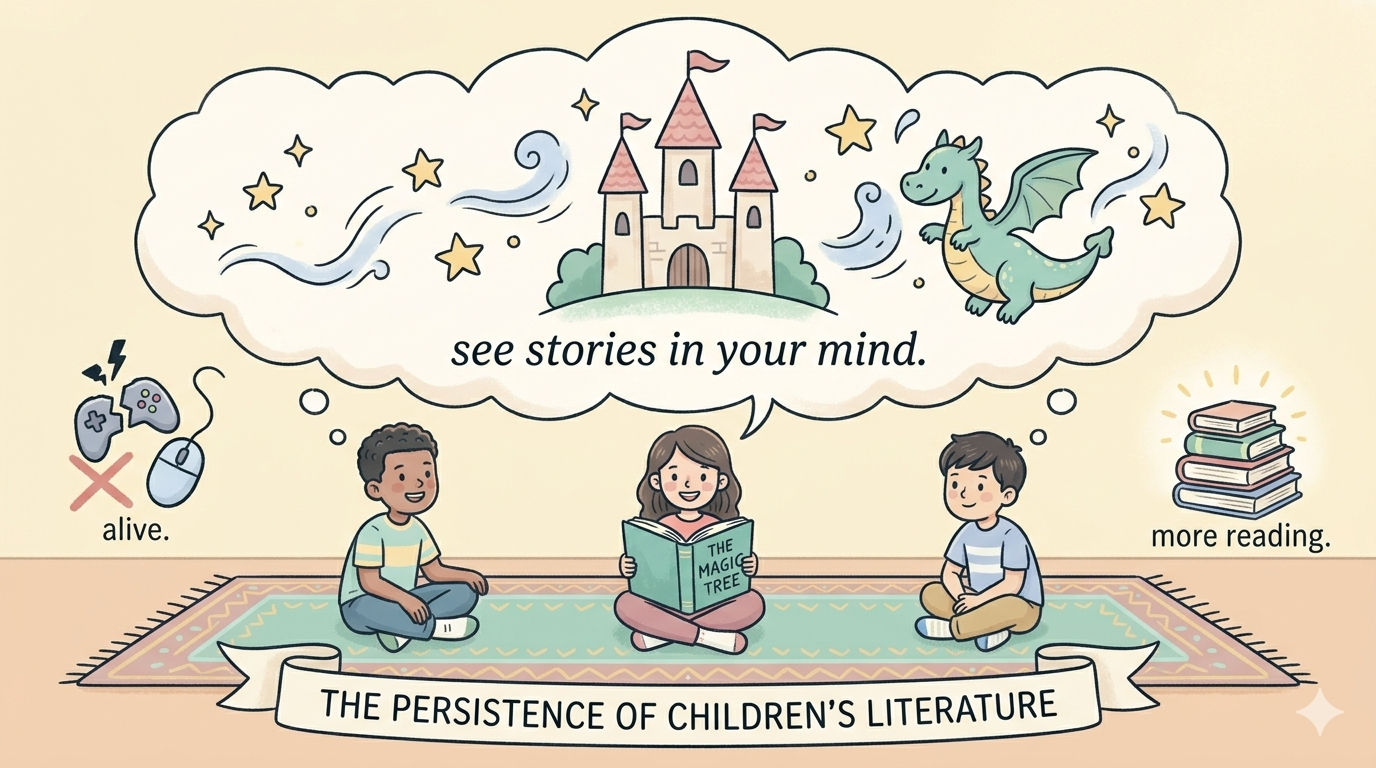
Twist in the Tale looks at the growing popularity of children's books and the changing children's book market. It discusses the influence of popular authors, the reading habits of young people, and how children's literature is viewed by publishers, critics, and the wider literary world.
The passage includes Questions 1–14, covering Matching Information to People, Short Answer Questions, and Matching Information to Paragraphs.
For reference, here is the official Twist in the Tale IELTS Reading answer key:
Question Number
Twist in the Tale IELTS Reading Answers
1
D
2
A
3
B
4
C
5
D
6
B
7
A
8
8–14 years / yrs / year-olds
9
Orion
10
J.K. Rowling
11
D
12
H
13
C
14
A
These are the answers for the Twist in the Tale IELTS Reading passage. You can now attempt a similar practice test below and then check the answers with explanations to understand how each response is supported by the passage.
Twist in the Tale IELTS Reading Passage for Practice
Twist in the TaleIELTS Reading Test passage examines how children's books have increased in popularity over the past few years. It provides a rationale for children's continued reading, even as television, video games and the Internet have become increasingly common, and for the success of the children's book market.
Popular authors are also mentioned, along with the impact of Harry Potter, and how young readers select and share books. It also examines the perception of children's literature in the present day and the increased focus on children's authors.
Now, we have a practice version inspired by the original IELTS Reading passage. Read it carefully before attempting the questions.
Twist in the Tale IELTS Reading Passage
A. Less than three years ago, doom merchants were predicting that the growth in video games and the rise of the Internet would sound the death knell for children’s literature. But, contrary to popular belief, the volume of children reading books is more than ever. According to a new survey by Books Marketing, children up to 11 years old read on an average of four hours per week, and especially girls.
B. Moreover, the children’s book market, which traditionally was seen as a poor cousin to the more lucrative and successful adult market, has come into its own. New children's books are now publishing houses' bread and butter and children's authors can now command significant advances. Wendy Cooling, children's literature consultant, says 'children's books are in an incredibly fertile period'. They seem to be hot! Book clubs are taking place, sales are looking up and people are much freer to listen to children's authors.
C. The biggest growth segment has been among the eight- to fourteen-year-old demographic and it's hard to say whether Harry Potter, the bespectacled apprentice, is the culprit behind this boom. So influential has J. K. Rowling’s series of books been that they have helped to make reading fashionable for pre-teens. ‘Harry made it OK to be seen on a bus reading a book,' says Cooling. ‘A kid cares for that is important. The current buzz around the publication of the fourth Harry Potter beats anything in the world of adult literature.
D. Award-winning author of children's books David Almond says that people keep telling him children don't read these days. In reality, they are adept and imaginative readers. If I visit them in the classroom, they ask me very sophisticated questions regarding the use of language, the structure of the story, chapters and dialogue.’ While no one is claiming that books are not competing with other modes of entertainment for children's attention, it appears as though children get a special kind of mental food in a book.
E. Children's book critic Julia Eccleshare says, ‘A few years ago publishers lost faith and wanted to do books like television, which they feared the most. ‘But books aren’t TV, and you will find that children always say that the good thing about books is that you can see them in your head. “They're demanding readers,” she says, “kids.” ‘If they don’t get it in two pages, they’ll drop it.’
F. Children's authors are no longer thought of as just sentimentalists or unsuccessful adult writers. Almond, whose Skellig alone sold 42,392 copies in 1999, says that ‘some feted adult writers would kill for the sales'. UK publisher Orion also struck a deal with Scholastic in the United States for the Kevin Crossley-Holland children's novel The Seeing Stone, and advances appear to be increasing, too: UK publisher Orion recently struck the six figure mark in a deal with Scholastic in the United States, the majority of which will go to the writer of The Seeing Stone.
G. It helps that once smitten, children are loyal and even fanatical consumers. Children take to talking about Jacqueline Wilson's books like a bush fire, according to her author. ‘I think my average reader is a ten-year-old girl,' she says. ‘They’re sociable and acquisitive. They collect. They have parties – a good present is books. They have to pass it on if they like it.' After Rowling, Wilson is currently the best-selling children’s writer, and her sales have boomed over the past three years. She's been a bestseller with over three million copies sold, but is almost impossible to find for adults, though most 10 year old girls are aware of her.
H. It is impossible to predict the relevance of children's books to today's life. With careful handling few subjects are taboo for the children. Children's writers enjoy the opportunity to talk about the full spectrum of the children's field, of topics, language. But Anne Fine, author of many awardwinning children’s books is concerned that the British literati still ignore children’s culture. ‘It's just a nice thing to do but not very interesting,' she says.
I. I believe there's still a long way to go’ says Almond, who hopes that children's books are viewed more seriously as literature. However, he gets great satisfaction from his child readers. ‘They have a very strong literary culture,’ he says. ‘It feels like you're able to step into the store of all mythologies and ancient stories that run through all societies and meet the great themes: love and loss and death and redemption.’
J. At the moment, the race is on to find the next Harry Potter. It was one of the most competitive bidding processes I have ever witnessed for new books at Bologna this year - and the children's version of the Frankfurt Book Fair. It is good news for the market's future - and of children's authors, who have been the least visible group in literature despite their role and responsibilities.
Looking to strengthen your IELTS preparation before you take the test? Get practical guidance with upGrad’sfree IELTS course and work on your skills at your own pace.
Twist in the Tale Reading Questions
In recent years, the world of children's books has undergone many changes, and Twist in the Tale explores their causes. As you read, you will discover how young readers have continued to love books, why some authors have become very successful, and how popular books can affect children's reading habits.
In the following questions, you will be asked to link these ideas to the people and paragraphs in the passage.
Questions 1–7: Matching Information to People
Look at the following people (A–E) and the statements below.
A. Wendy Cooling B. David Almond C. Julia Eccleshare D. Jacqueline Wilson E. Anne Fine
Match each statement with the correct person, A–E.
1. Children often recommend books they enjoy to other children.
2. Children's books are currently enjoying a particularly successful period.
3. Some well-known adult authors would like to achieve the level of sales reached by children's writers.
4. Young readers may stop reading a book if they are not interested in it within the first few pages.
5. Children can become very loyal to authors whose books they enjoy.
6. The idea that children do not read is not supported by what this author sees in the classroom.
7. The literary establishment still does not give enough attention to children's culture.
Questions 8–10: Short Answer Questions
Answer the questions below.
Choose NO MORE THAN THREE WORDS from the passage for each answer.
8. Which age group has recorded the greatest growth in the children's book market?
9. Which UK publisher was involved in the six-figure deal for The Seeing Stone?
10. Which author is described as the best-selling children's writer before Jacqueline Wilson?
Questions 11–14: Matching Information to Paragraphs
The passage has ten paragraphs, A–J.
Which paragraph contains the following information?
Write the correct letter, A–J, in boxes 11–14.
11. Children ask detailed questions about language, story structure, and dialogue.
12. A children's author says that the literary establishment continues to overlook children's culture.
13. The popularity of a fictional character helped make reading fashionable among pre-teen readers.
14. A prediction that children's reading would decline was shown to be incorrect.
Twist in the Tale Reading Answers with Explanation
Once you have attempted the questions, check your responses with the Twist in the Tale Reading Answers with location below.
The explanations will help you see where to find each answer in the passage and understand how the information is paraphrased in the questions.
Answers 1–7: Matching Information to People
Answer 1: D. Jacqueline Wilson
Answer location: Paragraph G
Explanation: You might think this refers to any author talking about popular books. However, Wilson specifically says children pass books on when they like them. The mention of books as presents and sharing them with others confirms that this answer is D.
Answer 2: A. Wendy Cooling
Answer location: Paragraph B
Explanation: It is easy to focus on the sales figures and miss the person connected with them. Look for the wider comment about children's books doing well. Wendy Cooling calls this an “incredibly fertile period”, which matches the statement.
Answer 3: B. David Almond
Answer location: Paragraph F
Explanation: The question may make you look for a specific sales figure, but the key idea is the comparison with adult writers. Almond says some highly regarded adult writers would love to have the sales achieved by children's authors.
Answer 4: C. Julia Eccleshare
Answer location: Paragraph E
Explanation: You might connect this statement with children being loyal to favourite books, but that idea appears later. Eccleshare specifically says children will drop a book if they do not get what they want within two pages.
Answer 5: D. Jacqueline Wilson
Answer location: Paragraph G
Explanation: This can look similar to Question 1 because both statements are about children's behaviour with books. Here, focus on the word loyal. Wilson describes children as loyal and even fanatical once they become interested in a book or author.
Answer 6: B. David Almond
Answer location: Paragraph D
Explanation: You might think the answer should come from the paragraph about children's reading habits in general. However, the question asks about someone challenging the belief that children do not read. Almond directly disagrees with this view and gives classroom examples.
Answer 7: E. Anne Fine
Answer location: Paragraph H
Explanation: Look carefully at the phrase literary establishment. Anne Fine says that the British literary world still ignores children's culture. The wording is slightly different in the question, but “does not give enough attention” carries the same meaning.
Answers 8–10: Short Answer Questions
Answer 8: Eight to fourteen
Answer location: Paragraph C
Explanation: There are several ages mentioned in the passage, so this is easy to mix up. Paragraph A mentions children up to 11, while Paragraph C identifies eight- to fourteen-year-olds as the biggest growth segment. The question asks about market growth, so C is the key.
Answer 9: Orion
Answer location: Paragraph F
Explanation: You may notice both Orion and Scholastic in this paragraph and confuse which one the question wants. The question asks for the UK publisher, so look at who made the deal with Scholastic. That publisher was Orion.
Answer 10: J. K. Rowling
Answer location: Paragraph G
Explanation: This question can be slightly confusing because the paragraph focuses heavily on Jacqueline Wilson. However, it says Wilson is the best-selling children's writer after Rowling. This means Rowling is the author referred to before Wilson in the ranking.
Answers 11–14: Matching Information to Paragraphs
Answer 11: D
Answer location: Paragraph D
Explanation: You might look for the word “questions” elsewhere in the passage, but Paragraph D gives the exact context. Almond describes children asking sophisticated questions about language, story structure, chapters, and dialogue in the classroom.
Answer 12: H
Answer location: Paragraph H
Explanation: The key clue here is literary establishment. Paragraph H introduces Anne Fine's concern that the British literati still ignore children's culture. The question uses “overlook” instead of “ignore”, so focus on the meaning rather than exact words.
Answer 13: C
Answer location: Paragraph C
Explanation: You might search for a reference to a popular children's author, but the question asks about a fictional character. Paragraph C explains that Harry Potter helped make reading fashionable for pre-teens, making this the paragraph you need.
Answer 14: A
Answer location: Paragraph A
Explanation: The passage first mentions predictions that children's literature would decline because of video games and the Internet. You might stop there and think the prediction was correct, but the paragraph then clearly says that children are actually reading more than before.
How to Approach Twist in the Tale IELTS Reading Questions?
Twist in the Tale has three question types, and each one needs a slightly different approach. The passage also mentions several authors, book titles, age groups, and similar ideas, so it can be easy to find the right paragraph but choose the wrong detail.
Here are a few ways to approach the Twist in the Tale IELTS reading answers and avoid these common traps.
Start with the People, Not the Statements
For Questions 1–7, you are given five names and need to match each statement to the right person. A good place to start is the names, because each person appears in a specific part of the passage.
Try this:
If the question mentions...
Look for...
Children's books having a successful period
Wendy Cooling
Sophisticated questions in the classroom
David Almond
Children dropping a book quickly
Julia Eccleshare
Children sharing and collecting books
Jacqueline Wilson
Children's culture being overlooked
Anne Fine
This can save time because you do not need to search every paragraph for every statement. Once you find a person's name, read a few lines around it and match the idea.
Look for the Detail That Makes the Answer Unique
Some questions contain a detail that can take you straight to the answer. Names such as Orion, Scholastic, and J. K. Rowling, as well as The Seeing Stone, are much easier to locate than general words such as books or children.
A useful insight: When several options seem possible, look for the detail that appears only once in the passage. It usually gives you a much clearer starting point.
For example, Question 9 asks about the UK publisher involved in the The Seeing Stone deal. The paragraph mentions two publishers, so you need to read the sentence carefully rather than choosing the first name you see.
For Short Answers, Read What Comes After the Question Word
Questions 8–10 ask for specific details, but the important part is understanding what type of information you need.
Look at the question:
Which UK publisher was involved in the six-figure deal?
You are looking for a publisher, not a book title, author, or another company mentioned nearby.
This small check can prevent a common mistake: finding the correct paragraph but copying the wrong detail from it.
When the Words Change, Follow the Meaning
You will not always find the exact words from the question in the passage. This is particularly common in Twist in the Tale.
For example:
Question: Young readers may stop reading a book if they lose interest quickly.
Passage: Julia Eccleshare says that if children do not “get it” in two pages, they will “drop it”.
The wording is different, but the idea is the same. Think meaning first, keywords second.
Use the Paragraph as Your Map
Questions 11–14 ask you to match information to paragraphs A–J. You do not need to read every paragraph in the same level of detail.
Instead, pick out the most distinctive part of the statement and use it as your clue.
Here are the key clues:
Language, story structure and dialogue → classroom discussion
Children's culture being overlooked → literary establishment
Reading becoming fashionable → Harry Potter
Predictions about children's literature declining → video games and the Internet
Once you find a likely paragraph, read the complete sentence or idea around the clue. This helps you confirm the answer instead of relying on one matching word.
Be Careful When Two Questions Feel Similar
This passage has a few ideas that can easily blur together. For example, Jacqueline Wilson talks about children being loyal and fanatical, while she also mentions that they share and collect books.
These ideas appear close together, but they are not exactly the same.
Quick check: Ask yourself, What exactly is the question describing? Then match that specific idea to the passage.
Keep the Word Limit in Sight
For Questions 8–10, you can use NO MORE THAN THREE WORDS from the passage.
You do not need to write a complete sentence. Just give the words that answer the question.
Before you move on, check:
✓ Does the answer come from the passage? ✓ Does it answer exactly what the question asks? ✓ Is it within three words?
A quick final check like this can catch an otherwise avoidable mistake.
different biometric uses, so the exact situation in the question matters.
Looking for more IELTS Reading practice? Read these answer guides to practise different passage topics and question types:
For Twist in the Tale, accuracy comes from following who says what and where each idea appears in the passage. Names, book titles, age groups, and specific details can help you find the right section, but you still need to read the surrounding information carefully.
As you practise, take a moment to review why an answer is correct instead of only checking it against the answer key. This can help you recognise paraphrased information, avoid similar-answer traps, and feel more confident with different IELTS Reading question types.
1. What is Twist in the Tale IELTS Reading passage about?
Twist in the Tale looks at the growing popularity of children's books and the changing children's book market. It discusses young readers, successful children's authors, popular books, and the growing recognition of children's literature.
2. How can I use Twist in the Tale Reading Answers for IELTS practice?
Read the passage and complete the questions before checking the answers. Then use the Twist in the Tale Reading Answers to see where each response comes from and understand how the information in the passage supports it.
3. What question types are included in Twist in the Tale IELTS Reading?
The practice test includes Matching Information to People, Short Answer Questions, and Matching Information to Paragraphs. Each type requires a different approach, so read the instructions carefully before you begin.
4. How can Twist in the Tale Reading Answers help me improve?
Use the answers to understand your mistakes, not just to check your score. Compare the question with the relevant part of the passage and notice how names, ideas, and details may be expressed differently.
5. How should I approach Matching Information to People in Twist in the Tale?
Start by locating the names mentioned in the questions. Read the information around each person carefully, because different authors may discuss related ideas. Focus on the specific point made by each person rather than matching a familiar name.
6. Can the same person be used more than once in Twist in the Tale?
Yes. If the instructions allow an option to be used more than once, the same person can be the answer to multiple questions. For example, David Almond is connected with more than one idea in the passage.
7. How can I find answers faster in Twist in the Tale IELTS Reading?
Use distinctive details as scanning clues. Names of authors, book titles, publishers, and age groups can help you reach the right part of the passage quickly. Once you find the clue, read the surrounding information before choosing your answer.
8. Why are some answers easy to confuse in Twist in the Tale Reading Answers?
Some ideas are closely related, especially those about children's reading habits, authors, and the success of children's books. For example, several authors discuss young readers, but they make different points. Always check exactly who is associated with the idea in the question.
9. How important is paraphrasing in Twist in the Tale IELTS Reading?
Paraphrasing is important because the questions may use different words from the passage. For example, a question may refer to children stopping a book when they lose interest, while the passage describes children who “drop it” if they do not get it within two pages. Focus on the meaning rather than exact wording.
10. Should I check Twist in the Tale Reading Answers after every question?
It is better to complete the questions first and check the answers afterwards. This gives you a clearer idea of how well you can locate and understand information without relying on the answer key.
11. How should I review my mistakes in Twist in the Tale IELTS Reading?
Go back to the relevant part of the passage and compare it with the question. Check whether you missed a name, confused two similar ideas, overlooked a detail, or failed to recognise a paraphrased expression.
upGrad Abroad Editorial Team |5039 articles published
We are a dedicated team of study-abroad experts, ensuring intensive research and comprehensive information in each of our blogs. With every piece written, we aim at simplifying the overseas education ...
Refer Your Friend & Earn upto ₹15000
Help your friend upgrade to a Global Career and earn rewards together.