IELTS is the world’s most trusted English language test, supporting millions of people to study and work abroad.
Over 12,500 organizations worldwide recognize IELTS scores, including more than 3,400 institutions in the USA.
If you’re preparing for the IELTS exam, knowing the Esperanto IELTS reading passage and understanding the IELTS reading answers: "Esperanto Language" is key to improving your score. You’ll find must-know practice questions and detailed explanations to help you confidently tackle this passage.
With over 35 years of experience, IELTS has helped millions like you prove their English proficiency for study or work in countries such as the US, UK, Canada, Australia, and beyond.
Here, you'll learn about Language Proficiency Levels for English to better understand your IELTS band score, along with passage summaries, answer guides, vocabulary tips, common mistakes to avoid, and resources to boost your reading skills.
Esperanto IELTS: Summary and Key Insights
The Esperanto IELTS reading passage contains approximately 700 words divided into three paragraphs. It primarily focuses on the historical development and purpose of the Esperanto language, exploring its origins, features, and global relevance. To achieve a high IELTS band score, the passage challenges you to apply key reading skills such as scanning for details, making inferences, and understanding the author’s tone.
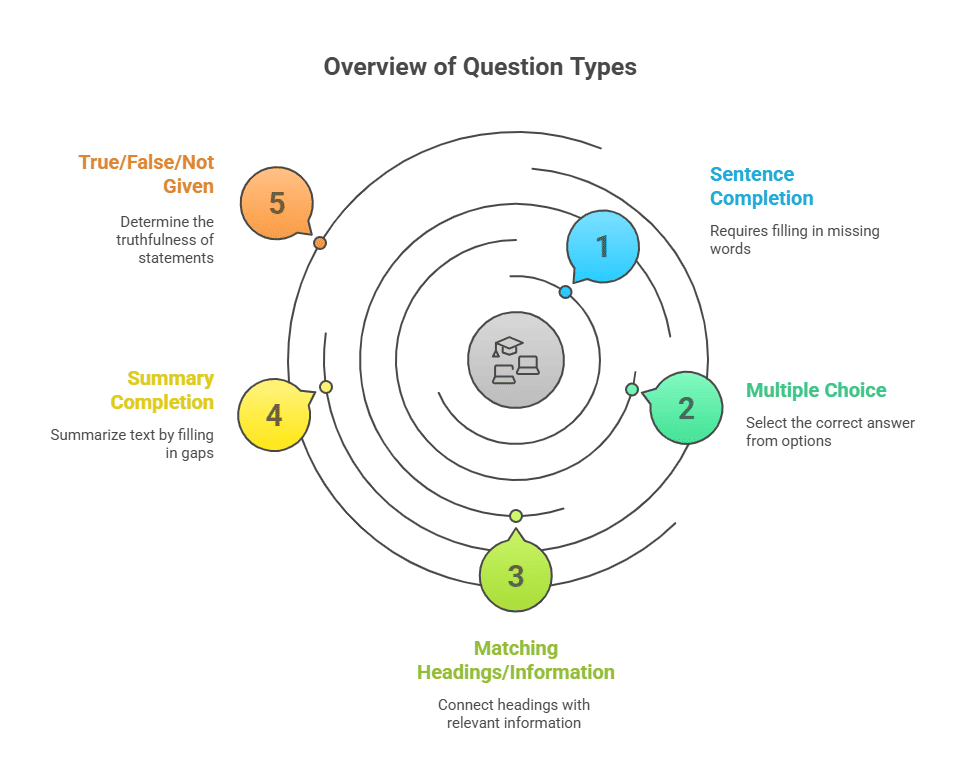
Below is a table summarizing common IELTS reading question types related to this passage, along with the skills each tests:
IELTS Reading Question Type
Skill Assessed
Sentence Completion
Identifying specific information and completing ideas accurately within context.
Multiple Choice
Evaluating detailed content and making logical inferences to choose the best answer.
Matching Headings/Information
Connecting paragraphs or sections with their main concepts or supporting facts.
Summary Completion
Summarizing core points about the Esperanto language using information from the passage.
True/False/Not Given
Assessing whether statements are supported, contradicted, or not addressed by the text.
Now that you know the passage structure, question types, and the importance of time management, let’s look into the Esperanto Language reading passage and how it fits within the IELTS Reading section and IELTS test formats.
Avail ₹1000 Off on IELTS – Book Now with upGrad!
Planning to study abroad? IELTS is your essential first step - and upGrad is here to make it easier and more affordable.
Why Book Your IELTS Exam with upGrad?
Accepted by over 10,000 universities, employers, and immigration bodies worldwide
High IELTS scores can make you eligible for securing scholarships, strengthening your student and post-study visa applications.
₹1000 instant discount when you book through upGrad
Claim Your Discount – Offer Valid for a Limited Time!
Detailed Overview of the Esperanto Language Reading Passage
The Esperanto Language reading passage, featured in the IELTS General Training Reading section, spans approximately 700 words across seven paragraphs. It explores the origins, structure, and global significance of Esperanto, assessing your IELTS reading skills such as comprehension, inference, and vocabulary recognition.
In the late 19th century, Dr. Ludwik Lejzer Zamenhof, a Polish-Jewish ophthalmologist, grew up in a multilingual city where communication was often difficult due to many different native languages. Witnessing the misunderstandings and conflicts caused by these language barriers, he set out to create a universal language that would be easy to learn and neutral for all cultures. In 1887, he published the first book on Esperanto, which introduced this constructed language designed to promote peace and mutual understanding among people worldwide. His vision was that Esperanto could become a common second language, helping to reduce cultural tensions and foster international friendship.
Passage 2:
Esperanto’s grammar is known for its simplicity and regularity, making it accessible to learners from diverse backgrounds. Unlike many natural languages, Esperanto has no irregular verbs or exceptions in its rules. For instance, every noun ends with the letter “-o,” while adjectives end with “-a,” allowing speakers to predictably form sentences. The language’s phonetic spelling means words are pronounced exactly as they are written, which further aids learning. These features have made Esperanto popular among language enthusiasts worldwide, as it allows for quick acquisition compared to other languages that often have complicated rules and exceptions.
Passage 3:
Although Esperanto was first developed in Europe, its popularity has since spread globally, including to countries like India. In the early 2000s, Anil Kumar founded the Indian Esperanto Institute with the goal of promoting the language across the country. He organized annual conferences and workshops in cities such as Mumbai and Bangalore to introduce Esperanto to students, teachers, and professionals. These events provided a platform for speakers to practice, exchange ideas, and advocate for Esperanto’s usefulness in international communication. Over time, this movement has grown steadily, fostering a close-knit community of Esperanto enthusiasts in India.
Passage 4:
Esperanto is more than just a practical communication tool; it has developed its own cultural identity. The language has a rich literary tradition, including original poetry, novels, and plays written by speakers worldwide. Indian poet Meera Sharma, for example, has published several collections of poems in Esperanto, focusing on themes of global unity and cultural diversity. Additionally, Esperanto has inspired music festivals, films, and theatrical performances, which have helped strengthen the language’s cultural presence. This vibrant cultural scene highlights Esperanto’s role not only as a linguistic tool but also as a living, creative medium.
Passage 5:
Despite its noble goals, Esperanto has faced criticism and obstacles. Many critics argue that because English has become the dominant global language, Esperanto is no longer necessary. Others point out that very few people speak Esperanto as their first language, which limits its practicality. Furthermore, some view Esperanto as an artificial construct lacking the cultural depth of natural languages. However, supporters argue that Esperanto’s neutrality makes it a fairer choice in multilingual settings, especially in countries with many local languages where no single language is universally spoken. Its ease of learning is also seen as a major advantage over more complex languages.
Passage 6:
The rise of the internet has significantly boosted Esperanto’s reach and accessibility. Online platforms like Lernu.net and Duolingo offer free courses that allow learners from around the world to study Esperanto at their own pace. Indian student Ravi Patel is one example of someone who used these digital resources to learn the language effectively. He now participates in international Esperanto forums and online communities, where speakers discuss topics ranging from travel to literature. This digital presence has revitalized interest in Esperanto, making it easier than ever to connect with others and practice the language regardless of geographical location.
Passage 7:
Looking toward the future, many linguists and Esperantists remain hopeful about the language’s role in fostering global communication. Dr. Sunita Joshi, a linguist specializing in constructed languages, believes that while Esperanto may never replace major world languages like English or Mandarin, it can still serve as an important diplomatic and educational tool. Esperanto’s ideals of equality and mutual respect continue to attract new learners worldwide, who see it as a symbol of international cooperation. The language’s enduring appeal lies in its promise of bridging divides and creating a more understanding global community.
With this understanding, you’re ready to move on to the next section, where you’ll explore the IELTS Reading Answers: "Esperanto Language" and get practical strategies to tackle the questions confidently.
This passage consists of 13 questions divided into two main types: Sentence Completion (Questions 1–7) and Multiple Choice (Questions 8–13). Each question is designed to test your ability to locate precise information, understand meanings, and distinguish between closely related options.
Common errors usually occur when test takers overlook keywords or misinterpret nuanced phrases. Performing well in these question types is essential for achieving a high IELTS band score. The first set of questions focuses on extracting exact words or phrases from the passage to complete sentences accurately.
Below is a detailed explanation of each question type as applied to the Esperanto Language reading passage.
Sentence Completion (Questions 1-7)
These 7 questions require you to complete sentences by selecting words or phrases directly from the passage. This task assesses your ability to identify specific facts and transfer them accurately.
Performing well here demonstrates strong comprehension skills. Let’s examine each sentence completion question with its focus, strategy, and answer:
Q1: Dr. Ludwik Lejzer Zamenhof created Esperanto to promote ______ and ______ among different cultures.
Focus: Understanding the purpose behind creating Esperanto
Strategy: Look for Zamenhof’s goals described in Passage 1
Impact: Tests your ability to identify the main reason for Esperanto’s creation
Answer: peace, understanding
Explanation:
Passage 1 explains that Zamenhof’s motivation was to foster “peace and understanding” between diverse cultures by creating a neutral, easy-to-learn language. Recognizing this purpose helps you grasp the foundational goal of Esperanto and its role in bridging cultural gaps.
Q2: Esperanto’s grammar is simple because it uses consistent word endings and has no ______ verbs.
Focus: Identifying key features of Esperanto grammar
Strategy: Refer to Passage 2 where grammar rules are detailed
Impact: Tests understanding of grammatical simplicity in constructed languages
Answer: irregular
Explanation:
Passage 2 highlights Esperanto’s grammar as notably straightforward, emphasizing the absence of “irregular verbs” and the use of consistent endings. Understanding these features is essential to appreciating why Esperanto is easier to learn than many natural languages.
Q3: Anil Kumar helped spread Esperanto in India by founding the ______ and organizing ______ in cities like Mumbai and Bangalore.
Focus: Recognizing important contributors to the Esperanto movement in India
Strategy: Find details about Indian efforts promoting Esperanto in Passage 3
Impact: Tests knowledge of real-world language promotion activities
Answer: Indian Esperanto Institute, annual events
Explanation:
Passage 3 credits Anil Kumar with establishing the Indian Esperanto Institute and organizing “annual events” to raise awareness and foster community among Esperanto speakers. This highlights the practical efforts behind the language’s spread in India.
Q4: Poet Meera Sharma’s Esperanto works focus on themes of ______ and ______.
Focus: Understanding cultural contributions in Esperanto literature
Strategy: Check Passage 4 for references to literary themes
Impact: Tests ability to identify thematic content in cultural texts
Answer: unity, diversity
Explanation:
Passage 4 illustrates how Sharma’s poetry embraces “unity and diversity,” reflecting Esperanto’s broader cultural goal of bringing people together while celebrating differences. Recognizing these themes helps you understand the language’s role beyond mere communication.
Q5: Critics argue that Esperanto’s practicality is limited due to the dominance of ______ and a low number of ______ speakers.
Focus: Identifying common criticisms of Esperanto
Strategy: Review Passage 5 for arguments against Esperanto’s widespread use
Impact: Tests comprehension of opposing viewpoints
Answer: English, native
Explanation:
Passage 5 outlines key criticisms, particularly the overwhelming global presence of English and Esperanto’s relatively small native-speaking population. Understanding these concerns allows you to distinguish factual limitations from the language’s ideals.
Q6: Digital platforms like ______ and ______ have expanded access to learning Esperanto worldwide.
Focus: Recognizing modern tools for language learning
Strategy: Locate mentions of technology and resources in Passage 6
Impact: Tests knowledge of current trends in language education
Answer: Lernu.net, Duolingo
Explanation:
Passage 6 details how online platforms such as Lernu.net and Duolingo have made Esperanto learning widely accessible, enabling learners worldwide to study the language at their convenience. This shows the modern adaptation of Esperanto education.
Q7: Linguist Dr. Sunita Joshi believes Esperanto embodies ideals of ______ and ______ for its future potential.
Focus: Understanding expert perspectives on Esperanto’s role
Strategy: Look in Passage 7 for views on Esperanto’s future
Impact: Tests grasp of author’s or expert opinions
Answer: equality, mutual understanding
Explanation:
Passage 7 presents Dr. Joshi’s view that Esperanto symbolizes “equality and mutual understanding,” emphasizing its continuing relevance as a language of inclusivity and global cooperation. This reflects the hopeful vision for Esperanto’s role going forward.
Having completed the Sentence Completion questions, you’ll now shift focus to the Multiple Choice questions, which challenge your ability to interpret meaning, analyze details, and distinguish subtle differences in the passage.
Download E-Books for IELTS Preparation
Multiple-Choice Questions (Questions 8-13)
Multiple-choice questions account for nearly half of the 13 total questions in this passage. These require you to interpret meaning, tone, and specific details from complex sentences, with answer options often closely similar. Knowing this skill is key for effective IELTS exam preparation and success in the IELTS reading section.
Here’s a detailed explanation of each of the six multiple-choice questions:
Q8: What motivated Dr. Ludwik Lejzer Zamenhof to create Esperanto?
A) The need for a national language in Poland
B) The desire to promote peace and understanding among cultures
C) The popularity of Latin as a universal language
D) Economic trade between European countries
Focus: Understanding Zamenhof’s motivation
Strategy: Look for the reasons mentioned in Passage 1
Impact: Helps avoid confusion about the language’s purpose
Answer: B
Explanation:
Passage 1 clearly states that Zamenhof’s primary goal was to promote peace and understanding among different cultures by creating a neutral and easy-to-learn language. This motivation was aimed at reducing cultural conflicts caused by language barriers.
Q9: What is a key grammatical feature that makes Esperanto easier to learn than many natural languages?
A) It uses irregular verbs common in many languages
B) It has fixed word endings and no irregular verbs
C) It has complicated pronunciation rules
D) It borrows vocabulary mainly from English
Focus: Recognizing grammatical simplicity
Strategy: Refer to Passage 2’s description of grammar
Impact: Clarifies why Esperanto is accessible to learners
Answer: B
Explanation:
Passage 2 highlights that Esperanto’s grammar is simple due to consistent word endings and the absence of irregular verbs. This regularity makes it easier to learn compared to many natural languages that often have complex and irregular grammatical rules.
Q10: How did Anil Kumar contribute to the Esperanto movement in India?
A) By publishing Esperanto poetry
B) By founding the Indian Esperanto Institute and organizing events
C) By creating online courses for Esperanto
D) By translating works from Esperanto to Hindi
Focus: Identifying real-world contributions
Strategy: Check Passage 3 for Kumar’s activities
Impact: Demonstrates knowledge of community-building efforts
Answer: B
Explanation:
Passage 3 describes Anil Kumar’s significant role in promoting Esperanto by establishing the Indian Esperanto Institute and organizing annual events. These initiatives helped build a stronger Esperanto community in India.
Q11: What themes does Meera Sharma emphasize in her Esperanto poetry?
A) Economic progress and technology
B) Unity and cultural diversity
C) Political history
D) Scientific discoveries
Focus: Understanding thematic content
Strategy: Look in Passage 4 for literary themes
Impact: Recognizes cultural aspects of Esperanto
Answer: B
Explanation:
Passage 4 emphasizes that Meera Sharma’s poetry celebrates themes of unity and cultural diversity, highlighting Esperanto’s role in fostering a sense of global community and respect for differences.
Q12:What criticism is mentioned regarding Esperanto’s practicality?
A) It has too many exceptions in grammar
B) It is less practical due to English dominance and few native speakers
C) It is difficult to pronounce
D) It has no cultural relevance
Focus: Understanding criticisms
Strategy: Review Passage 5’s discussion of challenges
Impact: Helps differentiate between support and criticism
Answer: B
Explanation:
Passage 5 discusses criticisms of Esperanto focusing on the global dominance of English and the relatively small number of native Esperanto speakers, which limits its practical use as a universal language.
Q13: How have online platforms impacted Esperanto learning?
A) They restrict learner access
B) They have made learning Esperanto widely accessible
C) They focus only on experienced speakers
D) They promote other languages instead
Focus: Recognizing the role of technology
Strategy: Look in Passage 6 for mentions of online resources
Impact: Understands modern language learning trends
Answer: B
Explanation:
Passage 6 points out that platforms like Lernu.net and Duolingo have significantly increased access to Esperanto education, allowing learners worldwide to study the language conveniently and interactively.
Understanding these questions and answers will help you interpret details, grasp subtle meanings, and pick the right answers confidently. Next, let's explore key vocabulary to boost your comprehension.
Vocabulary Insights from the Esperanto Language IELTS Reading Passage
The Esperanto Language passage introduces several specialized terms and phrases essential for understanding the text fully. Grasping these vocabulary words helps you comprehend complex ideas and answer questions accurately. Reviewing these important vocabulary will improve your ability to decode similar IELTS passages.
Below is a table featuring key terms, their meanings, and how they’re used in context to clarify their relevance:
Term
Meaning
Contextual Usage
Constructed language
A language intentionally created rather than naturally evolved
Esperanto is a constructed language designed for easy learning.
Neutral
Not favoring any side or group
Esperanto was created as a neutral language for all cultures.
Regularity
Consistency or uniformity in rules
The grammar of Esperanto is praised for its regularity.
Native speaker
A person who has spoken a language since early childhood
Few people are native speakers of Esperanto.
Cultural diversity
The existence of varied cultural or ethnic groups
Esperanto promotes cultural diversity through its global use.
Digital platform
Online software or websites for specific uses
Lernu.net is a popular digital platform for learning Esperanto.
Language barrier
Obstacles to communication between people speaking different languages
Esperanto aims to break down language barriers worldwide.
Linguist
A person who studies languages and their structure
Dr. Sunita Joshi is a linguist specializing in constructed languages like Esperanto.
With a solid grasp of these key vocabulary terms, let’s explore important collocations and phrases used in the passage to further enhance your understanding.
Collocations and Phrases
The passage includes a variety of collocations and phrases that carry specific meanings within the context of Esperanto and language learning. Familiarity with these combinations will help you recognize patterns and improve your reading fluency. Understanding these collocations and phrases will prepare you to tackle related questions with greater ease.
The following table lists common collocations and their meanings to assist your comprehension:
Collocation / Phrase
Meaning
Promote peace
To encourage or advance harmony between groups
Neutral language
A language that does not belong to any nation
Language barrier
Difficulties in communication due to different languages
Language enthusiasts
People passionate about learning languages
Cross-cultural communication
Interaction between people of different cultures
Learning resources
Materials or tools used for education
Language proficiency
The ability to use a language effectively
Cultural exchange
The sharing of ideas, customs, and traditions between cultures
Linguistic diversity
The variety of languages spoken within a community or region
Now that you know the key vocabulary and collocations, let’s move on to common mistakes to avoid to help you achieve a good IELTS score when answering questions on the Esperanto Language passage.
Common Mistakes in the Esperanto Language IELTS Reading Passage
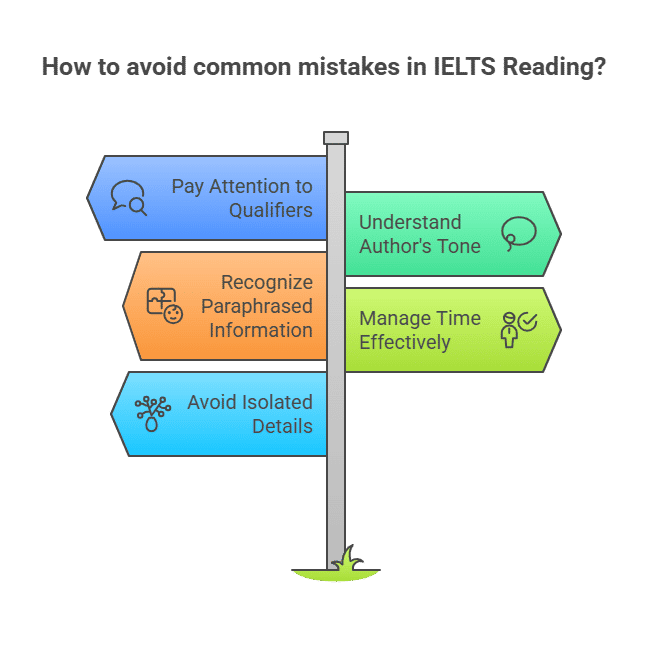
When tackling the Esperanto Language IELTS reading passage, common traps like misinterpreting details or focusing too much on isolated facts can lower your score. Time pressure may also cause rushed answers. To succeed in the IELTS reading answers: "Esperanto Language," staying focused and avoiding these mistakes is essential.
Here are some common pitfalls to watch out for:
Overlooking subtle qualifiers: Words like “some,” “often,” or “may” significantly affect the meaning of statements. For example, "may" suggests possibility, not certainty. Tip: Pay close attention to qualifiers, they change the truth value. Reread sentences containing them to ensure your answer reflects their meaning precisely.
Focusing on isolated details: Avoid concentrating too much on one detail, such as a specific fact, when it could distort your understanding of the passage’s main idea. Tip: After reading a paragraph, pause and mentally summarize the main point before moving on to the questions.
Ignoring the author’s tone: Pay attention to the writer’s perspective, especially in opinion-based or inferred questions. For example, a sentence might seem neutral, but the tone could suggest criticism or support. Tip: Look for emotional cues or contrasting words that hint at approval, doubt, or criticism to capture the author’s attitude correctly.
Missing paraphrased information: IELTS often uses synonyms or paraphrasing to test your comprehension. For example, “increase” might be rephrased as “boost” in another part of the text. Tip: Practice recognizing synonyms and paraphrases by reading widely and making a list of common alternatives to key words.
Spending too much time on one question: Prioritize pacing, as lingering on a tough question can leave you with insufficient time for others. For example, don't dwell on a single question if it’s taking too long, move on and come back later if needed. Tip: Set a time limit per question and mark difficult ones. Trust your first instinct and return only if time allows.
Now that you’re aware of the common pitfalls to avoid, let’s move on to review some of the best practice resources to help you prepare effectively for the Esperanto Language IELTS reading passage.
Best Practice Resources for the Esperanto Language Passage
To effectively prepare for IELTS reading passages like the Esperanto Language, it’s important to practice with exam materials and resources that introduce not only the language but also cultural and historical contexts. These resources will help you improve your reading comprehension, particularly when handling passages that involve specialized vocabulary and complex ideas.
Here are some top resources to guide your preparation:
While these resources will provide a solid foundation, upGrad’s expert-led training can further refine your approach, helping you tackle IELTS reading passages more effectively.
How upGrad Supports Your IELTS Reading Preparation
upGrad offers focused IELTS reading training designed to prepare you for the real exam’s challenges, including passages like the Esperanto Language and other topics such as architecture and history. Their expert guidance helps you develop the skills needed to improve accuracy, speed, and comprehension.
Here’s how upGrad supports your IELTS reading journey:
Expert-led lessons: Understand strategies to approach complex passages effectively and confidently.
Timed practice sessions: Learn to manage your time efficiently, so you can complete all questions within the exam limits.
Personalized feedback: Receive detailed reviews of your practice tests to pinpoint areas needing improvement.
Custom study plans: Get personalized advice based on your current level and target band score to optimize your prep.
How can practicing the Esperanto IELTS passage improve my overall reading skills for the exam?
Practicing the Esperanto IELTS passage helps you familiarize yourself with the type of vocabulary, sentence structure, and question styles typical in the exam. This targeted practice builds your ability to quickly locate information and understand nuanced ideas, sharpening essential skills for all IELTS reading sections.
Are there specific strategies to handle unfamiliar vocabulary in the Esperanto IELTS reading passage?
When you encounter unfamiliar words, try to infer their meaning from the surrounding context instead of pausing to look them up. Identifying synonyms or related phrases elsewhere in the passage can also clarify meanings, helping you answer questions without getting stuck.
How important is time management when attempting the Esperanto IELTS reading section?
Time management is critical because the reading section has many questions but limited time. Allocate your time wisely, spending only a couple of minutes per question initially, and return to tougher ones later. This ensures you answer as many questions as possible accurately.
What types of question formats are most commonly found in passages like the Esperanto IELTS?
Common question formats include sentence completion, multiple-choice, matching headings, and true/false/not given. These require skills like detail recognition, inference, and identifying the author's opinion, so practicing each type improves your overall performance.
Can understanding the historical context of Esperanto help in answering reading questions more accurately?
Yes, knowing the historical background provides clues about the passage’s main ideas and helps you interpret details correctly. It also aids in understanding the author’s tone and the significance of events, which is useful for opinion and inference questions.
How should I approach questions that ask for the author’s opinion in the Esperanto IELTS passage?
Look for language that expresses judgment, such as “suggests,” “believes,” or “argues.” These questions require you to distinguish between facts and the author’s viewpoint, so focus on subjective phrases and implied attitudes in the passage.
Are there particular grammar structures I should focus on when preparing for the Esperanto IELTS reading?
Pay attention to complex sentences with clauses expressing cause, contrast, or condition, such as “although,” “because,” or “if.” Understanding these helps in comprehending relationships between ideas and answering questions that require inference.
What role does skimming and scanning play in effectively completing the Esperanto IELTS reading section?
Skimming helps you get a general understanding of the passage quickly, while scanning allows you to locate specific information needed for questions. Combining both techniques lets you save time and improve accuracy when answering.
How can I identify distractors or misleading options in multiple-choice questions for the Esperanto passage?
Distractors often use words or phrases that are partially true but don’t fully answer the question. Carefully compare each option with the passage text, watching for extremes or generalizations that aren’t supported by the passage.
Is it useful to make notes or underline text while reading the Esperanto IELTS passage?
Yes, jotting down key points or underlining important details can help you remember information and locate answers faster. However, be mindful not to spend too much time on this, as it can slow you down during the test.
How can I build confidence in tackling difficult passages like the Esperanto Language on test day?
Consistent practice with similar passages, timed mock tests, and reviewing explanations for mistakes build familiarity and reduce anxiety. Developing strategies for question types and pacing yourself will also boost your confidence and performance.
Sr. Content Writer & Study Abroad Expert |109 articles published
Kanika has 5+ years of experience as a writer and content developer. She has written for a wide range of industry verticals, including hospitality, restaurants, non-profits, finance, IT, HR, technolog...
Download Reading Topics PDF
Refer Your Friend & Earn upto ₹15000
Help your friend upgrade to a Global Career and earn rewards together.