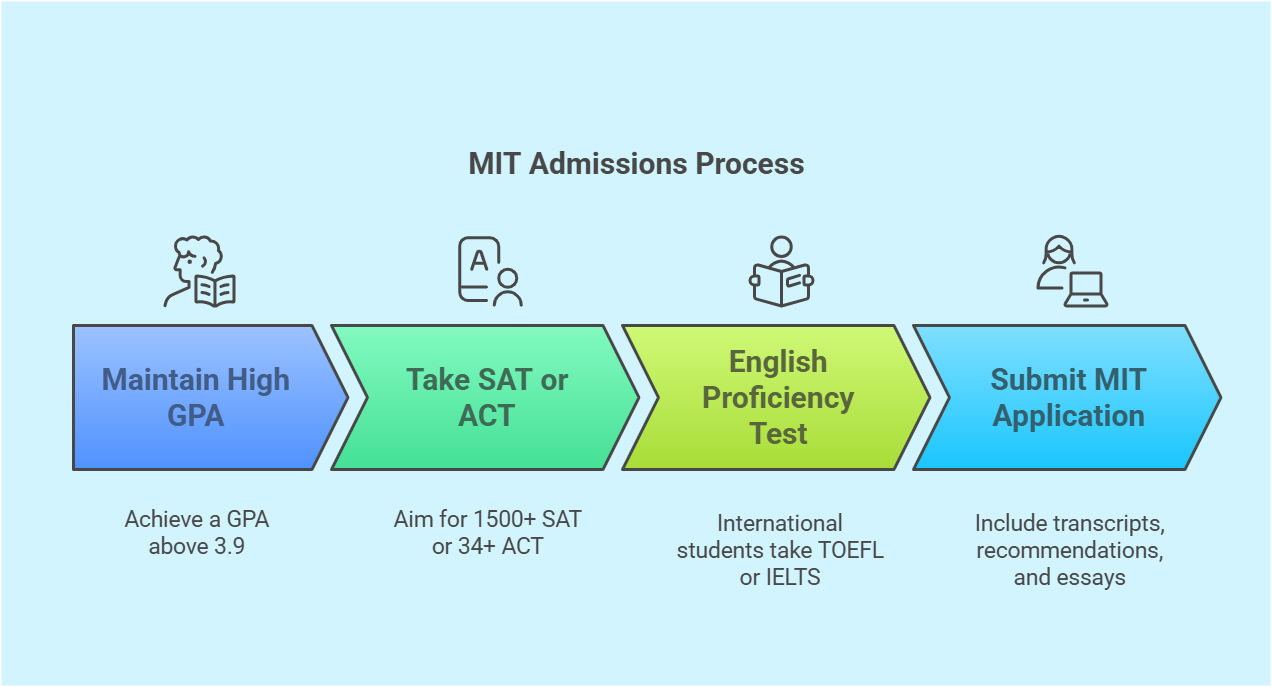
MIT and the IITs sit on opposite ends of how a university can choose its students. MIT builds its admit pool around research initiative, essays and a holistic read of who a student is beyond their scores, while IITs strip all of that away and decide almost entirely on a single high stakes exam, JEE Advanced, that tests raw theoretical depth. The two aren't harder or easier versions of each other, they're measuring completely different things.
Both institutions sit at the top of their respective systems for a reason. IITs remain the gold standard for engineering in India, known for turning out founders, CEOs and policymakers through one of the toughest entrance exams in the world. MIT has held the number one spot in the QS World University Rankings for 14 straight years and continues to define what cutting edge research looks like in AI, robotics and biotech.
This piece breaks down how the two actually compare on admissions, cost, rankings and career outcomes, so you know which one lines up with what you're actually looking for.
IIT vs MIT: Quick Comparison Table
Numbers tell this story faster than paragraphs can. Here's how IIT and MIT actually stack up on cost, selectivity and outcomes.
Particulars
IIT
MIT
Full form
Indian Institute of Technology
Massachusetts Institute of Technology
Location
23 campuses across India
Cambridge, Massachusetts, USA
Entrance route
JEE Advanced
SAT/ACT plus holistic review
Acceptance rate
Around 10% of JEE Advanced appearers get a seat
Around 4.5%
Annual fee (BTech/undergrad)
₹2L to ₹3.5L tuition per year
$64,719 tuition (₹61.16L)
Total cost per year (with living)
₹3L to ₹4.5L
$92,760 (₹87.66L) full cost of attendance
QS World Ranking 2027
IIT Delhi #118, IIT Bombay #134
#1
Average starting salary
₹20L to ₹28L (varies by IIT and branch)
$145,820 (₹1.38Cr)
Admissions and Selectivity
Getting into IIT and getting into MIT test almost nothing in common, and that's exactly why comparing "difficulty" between them gets messy. One is a single exam with a brutal cutoff. The other is a slow, holistic read of who you are beyond a scorecard. Here's how each one actually filters candidates.
How Hard Is It to Get Into IIT?
Getting into an IIT means clearing JEE Advanced, and the funnel is unforgiving.
Around 1.8 lakh candidates sat for JEE Advanced in 2025, of which 54,378 qualified.
Qualifying isn't the same as getting a seat. Only 18,188 BTech seats exist across all 23 IITs.
Roughly one in three qualifiers actually gets admitted, and that's after clearing one of the toughest entrance tests in the world in the first place.
How Hard Is It to Get Into MIT?
MIT works completely differently. There's no single exam that decides everything.
Students submitSAT or ACT scores, essays, letters of recommendation and a record of what they've built or researched.
For the Class of 2029, MIT received 29,281 applications and admitted 1,334 students, landing at a 4.5 to 4.6 percent acceptance rate.
Regular Decision alone runs closer to 3.5 percent, tighter than early action.
The comparison isn't apples to apples. IIT tests how well you can solve physics, chemistry and math problems under pressure. MIT tests whether you've built something interesting and can explain why it matters.
Cost of Studying: IIT vs MIT
This is where the two paths diverge the most, and it's often the deciding factor for families weighing both options seriously.
What an IIT Degree Actually Costs
An IIT BTech costs Indian families relatively little.
Tuition sits at ₹1 lakh per semester for most general category students with family income above ₹5 lakh a year, working out to roughly ₹2 lakh annually.
Add hostel, mess and other charges, and the full four-year degree usually lands between ₹8 lakh and ₹13.5 lakh, all in.
Students from families earning under ₹1 lakh a year get a full tuition waiver, and SC/ST/PwD students get a 100 percent waiver regardless of income.
What an MIT Degree Actually Costs
MIT is a different order of magnitude on paper, though the real number most families pay looks nothing like the sticker price.
The full cost of attendance for 2026-27 is $92,760 (₹87.66L), covering tuition, housing, food and fees. Tuition alone is $64,719 (₹61.16L).
MIT meets 100 percent of demonstrated financial need. Families earning under $200,000 a year get an MIT Scholarship covering at least full tuition, and those under $100,000 pay nothing toward the degree at all.
The median price actually paid by scholarship recipients was just $10,268 in 2024-25.
Rankings move slower than admission numbers, but they matter just as much when you're weighing global reputation against domestic strength.
MIT has topped the QS World University Rankings for 14 consecutive years, holding the number one global spot again in the 2027 edition.
Indian institutions have climbed steadily too.
IIT Delhi is now India's highest ranked institution at 118th globally, up five places from 123rd the year before, the best position any Indian university has ever hit.
IIT Bombay follows at 134th.
IIT Madras rounds out the top three Indian entries at 170th.
None of the IITs have cracked the global top 100 yet, but the gap has been closing year over year.
Placements and Salary Packages
Placement season is where all the preparation and cost finally shows a return, and the two systems produce very different looking outcomes.
MIT Salary Outcomes
MIT graduates entering industry straight out of undergrad report an average starting salary of $145,820 (₹1.38Cr), based on the institute's most recent graduating student survey. Most students carry little to no debt at graduation, and 88 percent of the Class of 2025 left MIT debt free entirely.
IIT Salary Outcomes
IIT placements vary a lot depending on branch and institute, and the headline numbers you see quoted often mix domestic and international offers together.
IIT Bombay's overall average package across all branches came in around ₹23.5 lakh for 2024-25, with computer science graduates averaging closer to ₹35 lakh to ₹50 lakh.
IIT Delhi reported median packages of ₹20 lakh for four-year UG students and ₹30 lakh for five-year UG students in its latest NIRF report.
Highest packages, the crore-plus offers you'll see in headlines, are almost always outliers tied to a handful of international quant or tech roles, not the typical outcome.
Top Recruiters
Both institutions pull from strong, overlapping talent pools that global and domestic companies actively compete for.
MIT graduates are picked up by Google, Amazon, Apple, McKinsey, Goldman Sachs, Microsoft and Tesla, among others. IIT graduates see similar interest from Microsoft, Google, Goldman Sachs, Intel India, Qualcomm, Oracle and Barclays, alongside a growing number of international offers from Japan, South Korea, UAE and UK employers each year.
Conclusion: Which One Should You Actually Aim For?
Both IIT and MIT sit at the top of their systems, but they reward very different kinds of preparation and suit very different goals. Here's the honest breakdown.
If you want a low cost, high return engineering degree in India with strong domestic placements and don't want to move abroad right after school, IIT is the stronger fit. The cost to outcome ratio is hard to beat anywhere in the world.
If your goal is global research exposure, Silicon Valley or East Coast networks, and you can access financial aid, MIT opens doors that are genuinely harder to open from India, especially in AI, robotics and interdisciplinary research.
If you're deciding based on acceptance rate alone, remember the two aren't really comparable. IIT tests exam performance under pressure. MIT evaluates a broader profile including essays, projects and recommendations.
If finances are a real constraint, don't rule out MIT purely on sticker price. Its need blind, full need aid policy for international students means the real cost for many admitted students ends up far lower than the headline $92,760 figure.
If you're weighing this as part of a bigger decision on undergrad abroad, it's worth exploring the full range of options in US beyond MIT alone, since fit often matters more than name recognition for career outcomes.
Everything else in the comparison, rankings, recruiters, campus culture, comes down to personal priorities rather than one school being objectively "better." Both are exceptional. The right one depends on what you're optimizing for.
Neither is objectively better, they serve different goals. MIT leads globally in rankings, research funding and interdisciplinary exposure, while IITs offer far lower cost, strong domestic placements and a curriculum built around deep engineering fundamentals. The right choice depends on whether you're optimizing for global research access or affordable, high ROI engineering education in India.
Is IIT tougher than Harvard?
IIT entrance is arguably more mechanically brutal since JEE Advanced is a single high stakes exam with a razor thin seat to qualifier ratio. Harvard, like MIT, evaluates a broader profile including essays, extracurriculars and recommendations rather than one test alone. Comparing "toughness" across the two systems is difficult because they're testing fundamentally different things.
Is JEE harder than MIT's admission process?
JEE Advanced is harder in a narrow, technical sense, it demands mastery of physics, chemistry and math under intense time pressure with almost no room for error. MIT's process is harder to predict since it weighs essays, research projects and extracurriculars alongside test scores. Most students who've attempted both describe JEE as more academically punishing and MIT admissions as more holistically unpredictable.
How many Indian students get into MIT each year?
MIT doesn't publish India specific admission numbers, but Indian students make up a meaningful share of its international applicant pool. Overall international admits for the Class of 2029 numbered 136 out of 6,926 international applications, a roughly 2 percent acceptance rate for international students. Indian applicants compete within this international pool alongside students from other countries, making it even more selective than the overall 4.5 percent rate.
Can an IIT student get into MIT for further studies?
Yes, IIT graduates regularly get into MIT for master's or PhD programs, especially in engineering, computer science and applied sciences. A strong CGPA, competitive GRE scores, relevant research experience and solid recommendation letters make the biggest difference. Several IIT alumni have gone on to MIT for graduate research, particularly in AI, robotics and core engineering fields.
Do IITs offer any exchange programs with MIT?
Some IITs run limited exchange or joint research collaborations with MIT, usually through specific departmental partnerships or funded research programs rather than open general exchange. These opportunities are competitive and typically require strong academic standing and faculty recommendations. Interested students should check directly with their IIT's international relations office for current programs.
Which is more affordable for a middle class Indian family, IIT or MIT?
IIT is significantly more affordable upfront, with total four year costs typically under ₹13.5 lakh compared to MIT's cost of attendance of $92,760 (₹87.66L) a year. That said, MIT's need blind admission and full need financial aid policy for international students means the real cost after aid can drop far lower for admitted students from middle income families. Families should compare net cost after aid rather than sticker price alone before ruling MIT out.
Do IIT graduates get the same job opportunities as MIT graduates?
Both produce graduates who are heavily recruited, but the pools differ. IIT graduates dominate India's tech, consulting and analytics hiring with a growing number of international offers each year. MIT graduates have more direct access to Silicon Valley, Wall Street and global research labs right out of undergrad, largely due to campus proximity and employer relationships built over decades.
Is it easier to get a US visa after studying at MIT compared to an Indian degree?
Studying at MIT doesn't guarantee easier visa outcomes, but it does open access to OPT, the Optional Practical Training period that lets international graduates work in US for up to 12 months, extendable to 36 months for STEM fields like most MIT programs. This gives MIT graduates a structured path to gain US work experience before needing employer sponsored visas. IIT graduates pursuing US jobs typically need a master's degree first or direct employer sponsorship.
What GPA or percentage is needed to get into MIT after an Indian high school?
MIT doesn't publish a fixed minimum GPA, but competitive applicants typically show top marks in the hardest math and science courses available to them. For Indian students, this usually means excelling in CBSE, ICSE or IB coursework alongside strong SAT or ACT scores. Academic strength alone isn't enough though, MIT weighs demonstrated project work and initiative just as heavily.
Does clearing JEE Advanced guarantee admission into an IIT?
No, qualifying JEE Advanced only makes a student eligible for JoSAA counselling, it doesn't guarantee a seat. In 2025, 54,378 candidates qualified but only 18,188 seats were available across all 23 IITs, meaning roughly one in three qualifiers actually got admitted. Seat allotment depends on All India Rank, category and branch preference during counselling.
upGrad Abroad Editorial Team |5034 articles published
We are a dedicated team of study-abroad experts, ensuring intensive research and comprehensive information in each of our blogs. With every piece written, we aim at simplifying the overseas education ...
Talk to Our Counselor
Refer Your Friend & Earn upto ₹15000
Help your friend upgrade to a Global Career and earn rewards together.