What Is Java Used For? Applications, Features, Benefits, and Examples Explained
By upGrad
Updated on Oct 12, 2026 | 6 min read | 2K+ views
Share:

All courses
Certifications
More
By upGrad
Updated on Oct 12, 2026 | 6 min read | 2K+ views
Share:
Key Points:
Looking to get into the field of Data Science? Explore our best in class Data Science courses to learn the top skills like Python, SQL, Machine Learning, Data Visualization, and Artificial Intelligence.
Popular Data Science Programs
Java applications are used in various industries such as IT, finance, and software development, just because of their high security, reliability, and easy maintenance. They run everything from online websites and apps to secure banking solutions and cloud-based platforms, which allows developers to make strong functional software.
Key Uses of Java Applications:
Java is extensively utilized for developing websites and web platforms.
How it is used:
Java is one of the most popular languages for developing mobile applications.
How it is used:
Also Read: How to Become a Mobile App Developer?
Various big MNCs use Java applications for their internal business processes.
How it is used:
Banking sector and financial institutions use Java for smooth operations.
How it is used:
Java is used to build software that runs directly on computers.
How it is used:
Java is utilized to develop software that can run on personal computers.
How it is used:
Explore More: Top Cloud Platforms
Java is commonly used in data processing and analytics projects.
How it is used:
Java is also used in game development.
How it is used:
Ready to start your career in Data Science and AI? Enroll in the Professional Certificate Programme in Data Science & Agentic AI and learn top skills in Python, Machine Learning, and Agentic AI.
Free Courses
Java applications are so much popular because they are secure, reliable, and easy to use. These Java application features help developers to make software that can works without any problem in different devices and industries.
Key Features of Java Applications:
Dive Deeper: Java 8 Features Explained with Suitable Examples
Data Science Courses to upskill
Explore Data Science Courses for Career Progression
IIIT Bangalore
Executive Post Graduate Certificate in Data Science & AIPlacement Assistance
Java applications are used by various online platforms and many multinational companies. Java helps millions of users in online shopping and video streaming to banking and social media. It also helps businesses to make fast, secure, and reliable systems that can improve their efficiency and give maximum results.
Examples of Java Applications in the Real World
Java helps Amazon to manage many of its backend systems and online services.
How Java helps:
LinkedIn’s business operations and services heavily depends on Java
How Java helps:
Uber's ride booking and backend system are supported by Java.
How Java helps:
Many Android apps are created with the help of Java.
How Java helps:
Airline companies use Java applications for online ticket bookings and customer support services.
How Java helps:
Don’t Miss: 50+ Java Projects With Source Code for Beginners
Java applications are used broadly, just because of their numerous advantages to the users. Java applications are more secure and dependable while providing various functionalities needed for different purposes.
Advantages of a Java Application
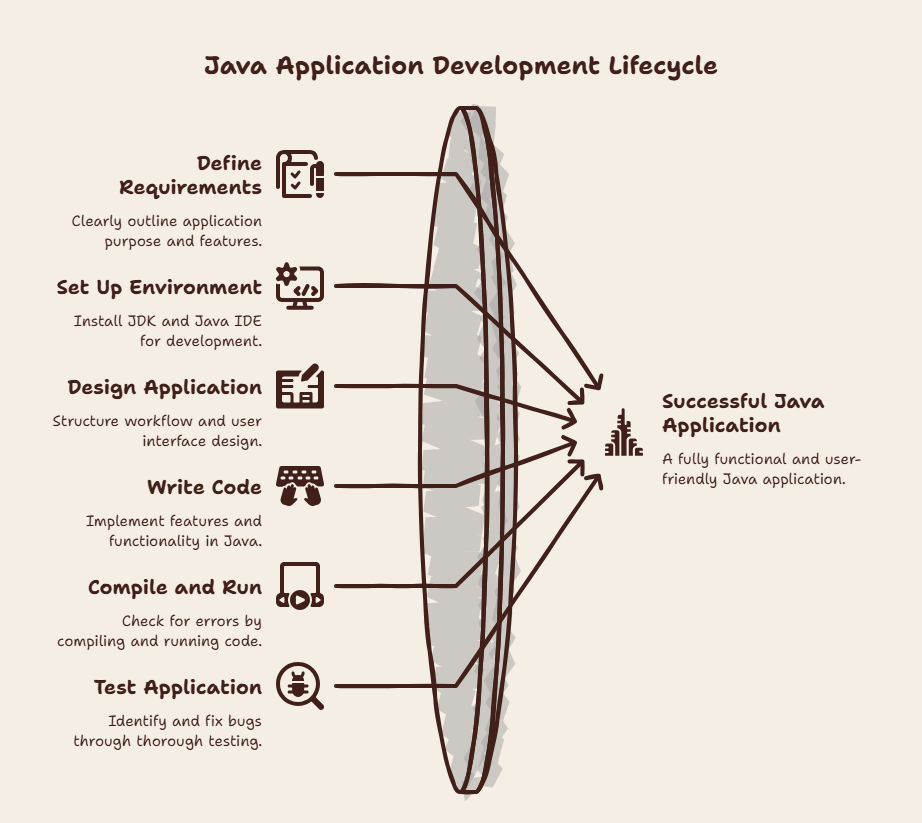
Developing a Java application involves some simple steps, from planning the application to launching it for users. Following a structured process can ensure the application works smoothly and meets required needs.
Here are the steps to develop a java application:
Conclusion
Java is one of the most popular programming languages used by developers today to create secure and reliable applications that fulfill specific business needs and have a set of required functionalities. Java applications can run all kinds of businesses, from banking and cloud platforms to social networks to mobile apps, and websites. Java ensures the safety of each application.
Therefore, learning Java may be an excellent idea if someone wants to make a great career in the software development industry.
To get personalized career guidance, schedule a free counseling session with our experts and explore the best learning path for your goals.
Java can be used to develop a wide range of applications in various industries. Java programming language is used to develop web applications, Android applications, enterprise applications, banking applications, cloud-enabled applications, and big data applications. Due to its security and scalability features, Java is the most preferred programming language for developing business critical applications.
Java might be needed to run specific computer applications, business applications, and web applications. Some applications and web applications require Java Runtime Environment to function correctly. Some applications and scripts need Java to be installed and configured before installing the application or running the script.
Java was initially developed to address the challenges of creating reliable, secure, and scalable software. Java is a general programming language that allows applications to run on any platform, including Windows, Linux, and Mac operating system.
Java and Python are different programming languages with different purposes and preferences. Java is a preferred programming language for application development, android application development, and high-performance applications. Python is mainly used for data science, machine learning, and automation applications. However, the best programming language is determined by an individual’s preferences, the project at hand, or the intended purpose.
A Java application is a software program written in Java that runs on a computer, mobile device, or server. Java applications can perform different tasks, such as managing business operations, processing data, handling transactions, or providing online services.
Various business applications and websites are created using Java as the primary programming language. A Java application example includes business software, banking software, social media forums, airline booking systems, and android applications. Java is used by businesses and companies to deliver web applications and services that are highly secure, reliable, and scalable.
Java programming language has essential security features that make Java applications more secure than any other applications. Java security features make it difficult to corrupt files and system resources. Java Applications are widely used in the finance industry to develop reliable and secure applications. There are several security features that are available in Java such as error reporting, memory management, and secure runtime environment.
Java application framework contains generic tools and modules that can be used to develop Java applications easily and faster. Some java application frameworks come with inbuilt tools that allow developers to develop enterprise java applications.
Popular java application frameworks:
Java applications and applets are different programming concepts and should not be mixed. A java application is a stand-alone application that runs on a local computer or a remote server. Java applets were small applications that could run on web browsers. However, java applets have been deprecated, and modern browsers no longer support it.
Java programming language is suitable for beginners because it has simple syntax, strong documentation, and a large learning community. Anyone interested in learning programming can start with Java. Java programming concepts can be learned using online resources or books. The java programming language also supports Object-oriented Programming concepts and helps individuals learn essential coding concepts like classes, objects, and inheritance.
1021 articles published
We are an online education platform providing industry-relevant programs for professionals, designed and delivered in collaboration with world-class faculty and businesses. Merging the latest technolo...
Speak with Data Science Expert
By submitting, I accept the T&C and
Privacy Policy
Start Your Career in Data Science Today
Top Resources
Executive Diploma
12 Months
Master's Degree
18 Months
Bootcamp
6 Months