
All courses
Agentic AI
Agentic AI

IIIT Bangalore
Executive Programme in Generative AI for LeadersArtificial Intelligence
Degree / Exec. PG

IIIT Bangalore
Executive Diploma in Machine Learning and AI
OPJ Global University
Master’s Degree in Artificial Intelligence and Data Science
Liverpool John Moores University
Master of Science in Machine Learning & AI
Golden Gate University
DBA in Emerging Technologies with Concentration in Generative AIExecutive Certificate

IIITB & IIM, Udaipur
Chief Technology Officer & AI Leadership Programme
IIIT-B & IIM, Udaipur
Chief Data and AI Officer ProgrammeOffline Bootcamps

upGrad
Data Science and AI-MLDoctorate
For All Domains
IIITB & IIM, Udaipur
Chief Technology Officer & AI Leadership Programme
Swiss School of Business and Management
Global Doctor of Business Administration from SSBM
Edgewood University
Doctorate in Business Administration by Edgewood UniversityGolden Gate University
Doctor of Business Administration From Golden Gate University
Rushford Business School
Doctor of Business Administration from Rushford Business School, SwitzerlandGolden Gate University
Doctor of Technology in Applied & Agentic AI-d9bdeff6165f4eb1ba2adcebde78e961.svg)
University of Waterloo
Chief Technology and AI Officer ProgramLeadership / AI
Golden Gate University
DBA in Emerging Technologies with a concentration in Generative and Agentic AIMachine Learning
Machine Learning
Data Science
Degree / Exec. PG
O.P Jindal Global University
Master’s Degree in Artificial Intelligence and Data ScienceIIIT Bangalore
Executive Diploma in Data Science & AILiverpool John Moores University
Master of Science in Data ScienceExecutive Certificate

upGrad | Microsoft
Gen AI Foundations Certificate Program from MicrosoftIIIT-B & IIM, Udaipur
Chief Data and AI Officer ProgrammeupGrad | Microsoft
Gen AI Mastery Certificate for Data AnalysisupGrad | Microsoft
Gen AI Mastery Certificate for Software DevelopmentupGrad | Microsoft
Gen AI Mastery Certificate for Managerial ExcellenceupGrad | Microsoft
Gen AI Mastery Certificate for Content CreationBootcamp
Offline Bootcamps
upGrad
Data Science and AI-MLMBA
Masters

Liverpool John Moores University
Master of Business Administration from Liverpool John Moores University (LJMU) with IIM Udaipur CertificationO.P.Jindal Global University
MBA (with Career Acceleration Program by upGrad)Edgewood University
MBA from Edgewood UniversityO.P.Jindal Global University
MBA from O.P.Jindal Global UniversityExecutive Certificate
Marketing
Executive Certificate
Offline Bootcamps
upGrad
Digital MarketingManagement
Degree
O.P Jindal Global University
MSc in International Accounting & Finance (ACCA integrated)
Golden Gate University
Master of Arts in Industrial-Organizational PsychologyExecutive Certificate
IIIT-B & IIM, Udaipur
Chief Technology Officer & AI Leadership ProgrammeIIIT-B & IIM, Udaipur
Chief Data and AI Officer Programme
IIM Kozhikode
Human Resource Analytics Course from IIM-KupGrad | Microsoft
Gen AI Foundations Certificate Program from MicrosoftBootcamp
HDFC Life
Insurance Fundamentals ProgramEducation
Education

Northeastern University
Master of Education (M.Ed.) from Northeastern UniversityEdgewood University
Doctor of Education (Ed.D.)Edgewood University
Master of Education (M.Ed.) from Edgewood UniversityCertifications
Project Management
Certification

Knowledgehut
Leadership And Communications In ProjectsKnowledgehut
Microsoft Project 2007/2010-ae8d039bbd2a41318308f8d26b52ac8f.svg)
Knowledgehut
Financial Management For Project ManagersKnowledgehut
Fundamentals of Earned Value Management (EVM)Knowledgehut
Fundamentals of Portfolio ManagementKnowledgehut
Fundamentals of Program Management-35c169da468a4cc481c6a8505a74826d.webp&w=128&q=75)
Knowledgehut
CAPM® CertificationsKnowledgehut
Microsoft® Project 2016Certifications & Trainings
-7f4b4f34e09d42bfa73b58f4a230cffa.webp&w=128&q=75)
Knowledgehut
PMP® CertificationKnowledgehut
PMI-RMP® CertificationKnowledgehut
PMP Renewal Learning PathKnowledgehut
Oracle Primavera P6 V18.8Knowledgehut
Microsoft® Project 2013Knowledgehut
PfMP® Certification CourseKnowledgehut
Project Planning and MonitoringPrince2 Certifications

Knowledgehut
PRINCE2® FoundationKnowledgehut
PRINCE2® PractitionerKnowledgehut
PRINCE2 Agile Foundation and PractitionerKnowledgehut
PRINCE2 Agile® Foundation CertificationKnowledgehut
PRINCE2 Agile® Practitioner CertificationManagement Certifications
Knowledgehut
Project Management Masters Certification ProgramKnowledgehut
Change ManagementKnowledgehut
Project Management TechniquesKnowledgehut
Product Management Certification ProgramKnowledgehut
Project Risk Management- Study abroad
- Offline centres
- uGSOT - B.Tech
More

%20(2)-db0b6f38da9c485faf76e366793c9b9e.webp&w=128&q=75)



POPULAR
IIT Kharagpur - Executive Post Graduate Certificate in Building AI Products, Systems & Services
Where India's next AI Product Leaders are built. An AI product-first postgraduate programme designed for professionals preparing for the next era of Product Management.
-18caa86765264137baec6895146b1b10.jpg&w=3840&q=75)
IIT Kharagpur: Legacy That Nurtures Excellence
India’s First IIT
Established in 1951, IIT Kharagpur is India’s oldest Indian Institute of Technology. For over seven decades, it has shaped engineers and researchers who lead innovation across industry, academia, and technology worldwide.
National and Global Standing
Ranked 5th in Engineering by NIRF 2025, IIT Kharagpur consistently ranked among Asia’s top universities by QS Asia Rankings.
Research That Drives Real-World Impact
Known for high-impact research and strong global citation performance, IIT Kharagpur plays a defining role in advancing areas such as artificial intelligence, computing, and emerging technologies.
-04cbae9f32a24d6198dd353acbe1d64b.webp&w=3840&q=75)
The Product Role Has Changed Forever: A Programme to Prepare the Next Gen of AI Product Leaders
Built for the Next Generation of AI Product Leaders
This programme is designed for professionals who want to stay ahead as products become increasingly AI-native.
-ab745f1a03b24c6d8442ea0335da9810.svg)
-44c9449454d849bb999a7603dac8bb4b.svg)
-1c19dae90dc84e8fb6221e416d7954d0.svg)
-681f82a86ba942da895e633e5c6bbf26.svg)
The AI Product Management Curriculum for the Next Generation of Product Leaders
24
Weeks
9
Modules
1
AI Product
Build One AI Product, End-to-End - From AI opportunity to deployment.
AI-Native Product Management -Product design, LLMs, RAG & Agentic AI.
Evaluate AI Like a Product Leader - Red teaming, AI metrics & model evaluation.
AI Economics & GTM - Pricing, token economics & go-to-market.
India-First AI Product Design - DPDP, India Stack & AI compliance.
Graduate with Proof - Working prototype + 7 portfolio artefacts.

Certification: IIT Kharagpur
A Credential That Carries Weight
Recognised Academic Credential
Earn an Executive Post Graduate Certificate from IIT Kharagpur.
Certificate with Distinction
The top 10 percentile performers in each cohort receive a Certificate with Distinction, formally recognised on the credential.
Academic Credibility with Industry Relevance
An IIT-issued credential that signals rigorous training and readiness for advanced AI roles.
-f1d4c79774234e0d9554081dfee63491.png&w=3840&q=75)
The Complete Curriculum
Journey to becoming an AI Product Leader
AI Product Opportunity Discovery
Module 1
Topics covered
AI product landscape - categories, business models, AI-native vs. AI-enhanced
AI Suitability Matrix - probabilistic, learnable, recoverable, data-rich dimensions
TASQ Checklist - Task ambiguity, Scale, Quality tolerance as first-pass filter
AI Opportunity Canvas - data richness, failure recoverability, feedback loop potential
Feasibility assessment - data availability, model capability, cost viability, regulatory risk
Build vs. buy vs. prompt decision framework
AI-Native Product Design
Module 2
Topics covered
Behaviour specifications - constraints, failure modes, fallback paths, confidence thresholds
AI PRD - eval criteria, hallucination risk tiers, data requirements, guardrail specifications
Trust architecture - transparency, confidence calibration, user control
Copilot-Autopilot spectrum as product design decisions
AI UX/UI - chat, inline suggestions, ambient intelligence, co-creation canvas
AI products vs. services vs. platforms - platform readiness decision
AI & GenAI Fluency
Module 3
Topics covered
LLM architecture intuition - transformers, embeddings, tokenisation for product decisions
Foundation model landscape - GPT-4o, Claude, Gemini, Sarvam AI, Llama
Token economics in INR - cost-per-query at 1K, 10K, 100K users
Prompt engineering as product design - system prompts, few-shot, chain-of-thought
Build vs. buy vs. prompt vs. fine-tune decision framework
Multimodal AI - vision, voice, and document models in product context
AI Prototyping & Rapid Validation
Module 4
Topics covered
Prompt-to-app prototyping - Bolt.new, Lovable, v0 with live LLM API integration
Multi-turn conversation design and structured output handling
Structured peer review using the AI product review rubric
Prototype audit - documenting 10+ production gaps
Production handoff specification - architecture, security, engineering effort
Prototype-to-production gap analysis and stakeholder presentation
AI Systems & Agentic Design
Module 5
Topics covered
RAG architecture - chunking strategy, vector databases, retrieval failure modes
Agentic workflows - tool use, planning, multi-agent orchestration
MCP (Model Context Protocol) as an integration standard
HITL / HOTL / HOOTL autonomy taxonomy - designing agent boundaries
India Stack as agent infrastructure - UPI, Aadhaar, Account Aggregator
Data flywheel design and infrastructure literacy for PMs
AI Evaluation & Red Teaming
Module 6
Topics covered
Test dataset construction - Gold, Operational, Adversarial, Safety datasets
RAGAS metrics and LLM-as-judge methodology
Quality gates - launch, target, and aspirational thresholds
Adversarial red teaming - prompt injection, jailbreaks, Hinglish adversarial inputs
Hallucination classification - factual, contextual, logical risk tiers
Ship / No-Ship decision protocol based on evaluation evidence
AI Analytics & Experimentation
Module 7
Topics covered
4-Tier AI Metrics Model - model, system, product, and business metrics
AI-native metrics - acceptance rate, override rate, cost-per-correct-output
A/B testing for non-deterministic outputs - shadow deployment, interleaving
Model drift detection - performance monitoring and retraining triggers
Feedback loop design as product operations
Instrumentation spec and experiment design for AI products
AI Product Economics & Go-to-Market
Module 8
Topics covered
LLM unit economics - token + infrastructure + orchestration costs in INR
The whale user problem and cost governance strategy
AI pricing playbook - consumption-based, outcome-based, seat-based models
GTM for AI trust challenges - trust-first positioning and enterprise AI sales
India market channels - WhatsApp, ONDC, GeM, IndiaAI Mission
Change management and stakeholder alignment for AI products
AI Operations, Safety & Compliance
Module 9
Topics covered
DPDP Act 2023 - consent architecture, data minimisation, purpose limitation
NIST AI RMF - risk tiering, documentation, governance framework
EU AI Act risk tiers and prohibited use cases
RBI FREE-AI framework for financial AI products
Production monitoring, model drift response, go/no-go escalation
AI incident response protocol and regulatory notification
Capstone - IIT Faculty Defence
The Proof
Topics covered
AI Opportunity Brief - problem, suitability, feasibility, competitive landscape
AI Product Specification Pack - behaviour spec, AI PRD, trust architecture
Model Selection Brief - 3+ candidates evaluated with INR cost projections
Working AI Prototype + Production Handoff Specification
AI System Architecture + Evaluation Framework + Red Teaming Evidence
AI Product Business Case + GTM Plan
Live model drift crisis injection - go/no-go decision before faculty panel
Faculty
Experts Shaping the Academic Direction
-99ab036beeb7421199f6b4fbc36a229b.svg)
-bcc2ffdda17e43908c2052faab2fe513.png&w=128&q=75)
-3239053b9815453c860b99af1313ca56.png&w=3840&q=75)
-6d28a9dafe3e4f1c978ed198fa585172.svg)


-0b321dc488db45bca677167f80892151.svg)

A Portfolio of Real AI Products
Portfolio of real AI systems you can demonstrate, explain, and extend

-f4e224c7150148d5afd0e48034783fcd.webp&w=3840&q=75)

-934823ae68c740feaf7886719179cc7f.webp&w=3840&q=75)


Capstone: Build, Defend & Launch an AI Product
Your signature AI product portfolio, built and Shipped by You
1
AI Product
7
Portfolio Artefacts
IIT
Faculty Defence
Discover - Validate an AI opportunity and define the product vision.
Design -Create AI PRDs, behaviour specs, and system architecture.
Build - Develop a working AI prototype with LLMs and agentic workflows.
Evaluate - Test quality, safety, performance, and AI metrics.
Launch - Build the business case, GTM strategy, and governance plan.
Defend - Present your AI product before an IIT Kharagpur faculty panel.

Graduation Ceremony: Culmination at the IIT Kharagpur Campus
1
Award Ceremony
Certificate conferred by IIT Kharagpur leadership
Interact with the professors who taught you
On-campus academic recognition with your cohort
Experience the legacy of India’s first IIT
Disclaimer: Images are indicative and for illustrative purposes only
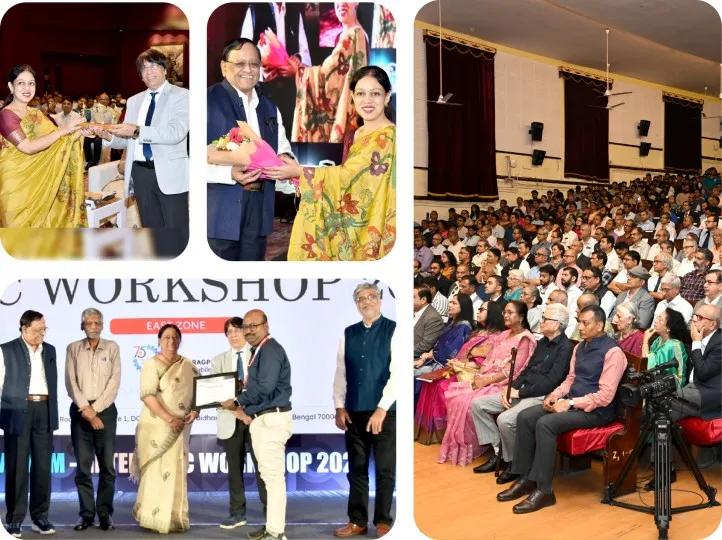
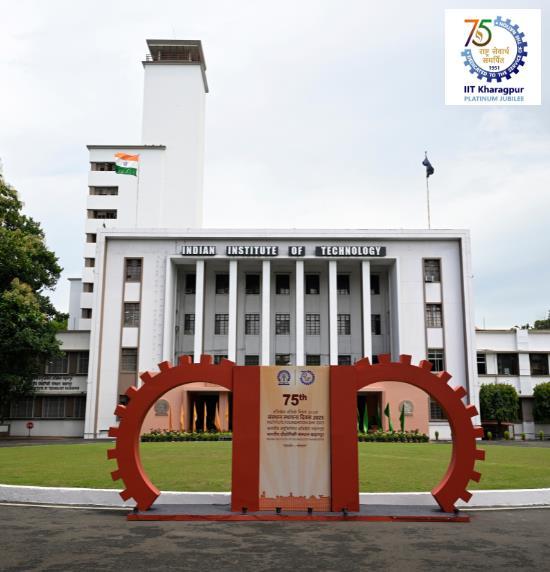
IIT Kharagpur marks 75 years of shaping India’s engineering and technology leadership
As India’s first IIT, the institute’s Platinum Jubilee celebrates seven and a half decades of academic rigour, research excellence, and nation-building impact. This milestone reflects IIT Kharagpur’s enduring legacy of producing world-class engineers, researchers, and innovators who continue to influence industry, academia, and society globally.

How will upGrad support you?
100% Live Sessions by IIT Kharagpur faculty & Industry Experts
Live Session Schedule: Weekend classes
Built-in practice and coding console
Industry oriented projects for real world exposure
Doubt-resolution sessions through discussion forum
EPGC in Building AI Products, Systems & Services
How To Apply
Complete your application and enrol in the program with three easy steps!
Eligibility
Graduation with a minimum of 50% marks.


EPGC in AI Products & Services Course Fee
Reserve your seat

IIT Kharagpur - Executive Post Graduate Certificate in Building AI Products, Systems & Services
Frequently Asked Questions
1. What is IIT Kharagpur – Executive Post Graduate Certificate in Building AI Products, Systems & Services?
The Executive Post Graduate Certificate in Building AI Products, Systems & Services from IIT Kharagpur is a 24-week executive program designed for professionals who want to build AI-powered products. Participants create a complete AI product across nine modules and a capstone evaluated by IIT Kharagpur faculty.
2. Who should enroll in this IIT Kharagpur Executive Post Graduate Certificate?
The IIT Kharagpur Executive Post Graduate Certificate is ideal for current and aspiring product managers, founders, technology professionals, and business leaders. It also suits professionals in growth, analytics, and business operations looking to transition into AI product leadership.
3. What is the Eligibility of IIT Kharagpur – Executive Post Graduate Certificate in Building AI Products, Systems & Services?
The Eligibility of IIT Kharagpur – Executive Post Graduate Certificate in Building AI Products, Systems & Services requires applicants to hold a bachelor's degree in any discipline with at least 50% marks. No coding background is required to apply for the program.
4. What are the IIT Kharagpur – Executive Post Graduate Certificate in Building AI Products, Systems & Services Fees?
The IIT Kharagpur – Executive Post Graduate Certificate in Building AI Products, Systems & Services Fees are INR 1,99,000. Learners can also choose EMI options starting from INR 6,825 per month after paying a seat-blocking amount of INR 10,000.
5. How long does this IIT Kharagpur Executive AI Course take?
The IIT Kharagpur Executive AI Course spans 24 weeks, or approximately six months. The program includes more than 72 hours of live instruction across nine modules, along with a hands-on capstone project focused on AI product development.
6. What is the learning format for this IIT Kharagpur Executive Post Graduate Certificate Program?
The program is delivered entirely through live online weekend classes taught by IIT Kharagpur faculty and industry AI experts. It is designed for working professionals and does not require prior coding experience to participate effectively.
7. What will I build during the capstone?
During the capstone, participants build a complete AI product covering opportunity discovery, product design, working prototypes, evaluation frameworks, and business case development. The final project is presented and defended before an IIT Kharagpur faculty evaluation panel.
8. Does this program cover India-specific AI product challenges?
Yes. The curriculum includes India-specific AI product use cases such as INR unit economics, DPDP Act 2023 compliance, India Stack technologies including UPI, Aadhaar, and Account Aggregator, along with go-to-market channels like WhatsApp and ONDC.
9. What certificate do I receive after completing this Executive Post Graduate Certificate Program?
Upon successful completion, learners receive an Executive Post Graduate Certificate from IIT Kharagpur. The top 10% of participants earn a Certificate with Distinction, and all graduates become part of the IIT Kharagpur Executive Education alumni network.
10. Does this course require a technical or engineering background?
No. The program is designed primarily for business and product professionals, so a technical or engineering background is not mandatory. However, familiarity with technology concepts can be beneficial for understanding AI systems and agentic product design.
11. How to Apply for IIT Kharagpur – Executive Post Graduate Certificate in Building AI Products, Systems & Services?
To Apply for IIT Kharagpur – Executive Post Graduate Certificate in Building AI Products, Systems & Services, complete the online application, receive your offer after shortlisting, and confirm your admission by paying the INR 10,000 seat-blocking amount and completing the required formalities.
upGrad Learner Support
Talk to our experts. We are available 7 days a week, 10 AM to 7 PM

Indian Nationals

Foreign Nationals
Disclaimer
The above statistics depend on various factors and individual results may vary. Past performance is no guarantee of future results.
The student assumes full responsibility for all expenses associated with visas, travel, & related costs. upGrad does not .