5 Essential Data Science Topics Every Beginner Should Learn
By Sriram
Updated on Jun 29, 2026 | 5 min read | 4.5K+ views
Share:

All courses
Certifications
More
By Sriram
Updated on Jun 29, 2026 | 5 min read | 4.5K+ views
Share:
Table of Contents
Data science is a multidisciplinary field that combines mathematics, statistics, programming, and domain knowledge to analyze data and solve real-world problems. It helps organizations uncover patterns, make predictions, and support data-driven decisions across industries.
A data science curriculum typically covers programming, statistics, machine learning, data visualization, databases, big data technologies, and ethical AI. Together, these subjects build the practical skills needed to work with data from collection to deployment.
In this blog, you will learn what data science topics are, why they are important, and the five essential topics every beginner should master to build a strong foundation in data science.
Build upGrad's Data Science and Machine Learning programs to develop in-demand skills in data analysis, statistical modeling, machine learning, data visualisation, and predictive analytics.
Popular Data Science Programs
Data science topics are the core concepts, techniques, and skills that help professionals collect, process, analyze, and interpret data to solve real-world problems. Together, these topics form the foundation of data science and enable businesses to make informed, data-driven decisions.
Instead of focusing on a single discipline, data science topics combine programming, mathematics, statistics, database management, and machine learning. Each topic plays a unique role, from cleaning raw data and identifying patterns to building predictive models and presenting insights through visualizations.
The table below provides a quick overview of the essential topics every beginner should learn.
Data Science Topic |
Purpose |
| Statistics and Probability | Analyze data and make reliable predictions |
| Programming (Python/R) & SQL | Collect, manipulate, and query data efficiently |
| Machine Learning | Build predictive models from historical data |
| Data Wrangling (Cleaning) | Prepare and transform raw data for analysis |
| Data Visualization | Present insights using charts and dashboards |
Mastering these fundamental topics creates a strong learning path for advanced areas such as deep learning, artificial intelligence, natural language processing (NLP), and big data analytics.
Also read: Top Machine Learning APIs for Data Science Projects in 2026
Statistics and probability form the mathematical foundation of data science. They help you understand how data behaves, identify trends, and make decisions based on evidence rather than assumptions. Most machine learning algorithms rely on statistical concepts, so this topic is essential before moving into advanced modeling.
The key concepts include:
Understanding these ideas helps you interpret datasets correctly and evaluate whether patterns are meaningful or simply due to chance.
Must read: Career in Data Science: Jobs, Salary, and Skills Required
Programming is the practical tool that allows data scientists to work with data efficiently. Python is the most popular language in the industry, while R is also widely used for statistical analysis and research.
SQL is equally important because most business data is stored in databases and must be retrieved before analysis.
A beginner should learn:
Must read: Data Science Course Eligibility
Start Your Data Science Journey with these upGrad's program:
Master of Science in Data Science from Liverpool John Moores University
Professional Certificate Programme in Data Science with Generative AI
Machine learning enables computers to learn patterns from data and make predictions. This is the area that powers recommendation systems, fraud detection, forecasting, and many AI applications.Beginners should first understand the difference between supervised and unsupervised learning.
Popular beginner algorithms include:
Algorithm |
Common Use |
| Linear Regression | Predicting numerical values |
| Logistic Regression | Classification problems |
| Decision Trees | Rule-based predictions |
| Random Forest | Improved predictive accuracy |
| K-Means | Customer segmentation |
Learning machine learning becomes much easier once you are comfortable with statistics and programming.
Real-world data is rarely perfect. It often contains missing values, duplicates, inconsistent formats, and errors. Data wrangling is the process of cleaning and preparing that data for analysis.
Many data professionals spend a large portion of their time on this step because model quality depends heavily on data quality.
Common cleaning tasks include:
Good data cleaning skills often have a bigger impact on results than using a more complex algorithm.
Data visualization helps transform numbers into clear insights that people can understand quickly. A good chart can reveal trends, patterns, and anomalies that are difficult to spot in raw tables. This topic is especially important because data scientists frequently communicate findings to managers, clients, and non-technical teams.
Common visualization tools are:
Different charts serve different purposes:
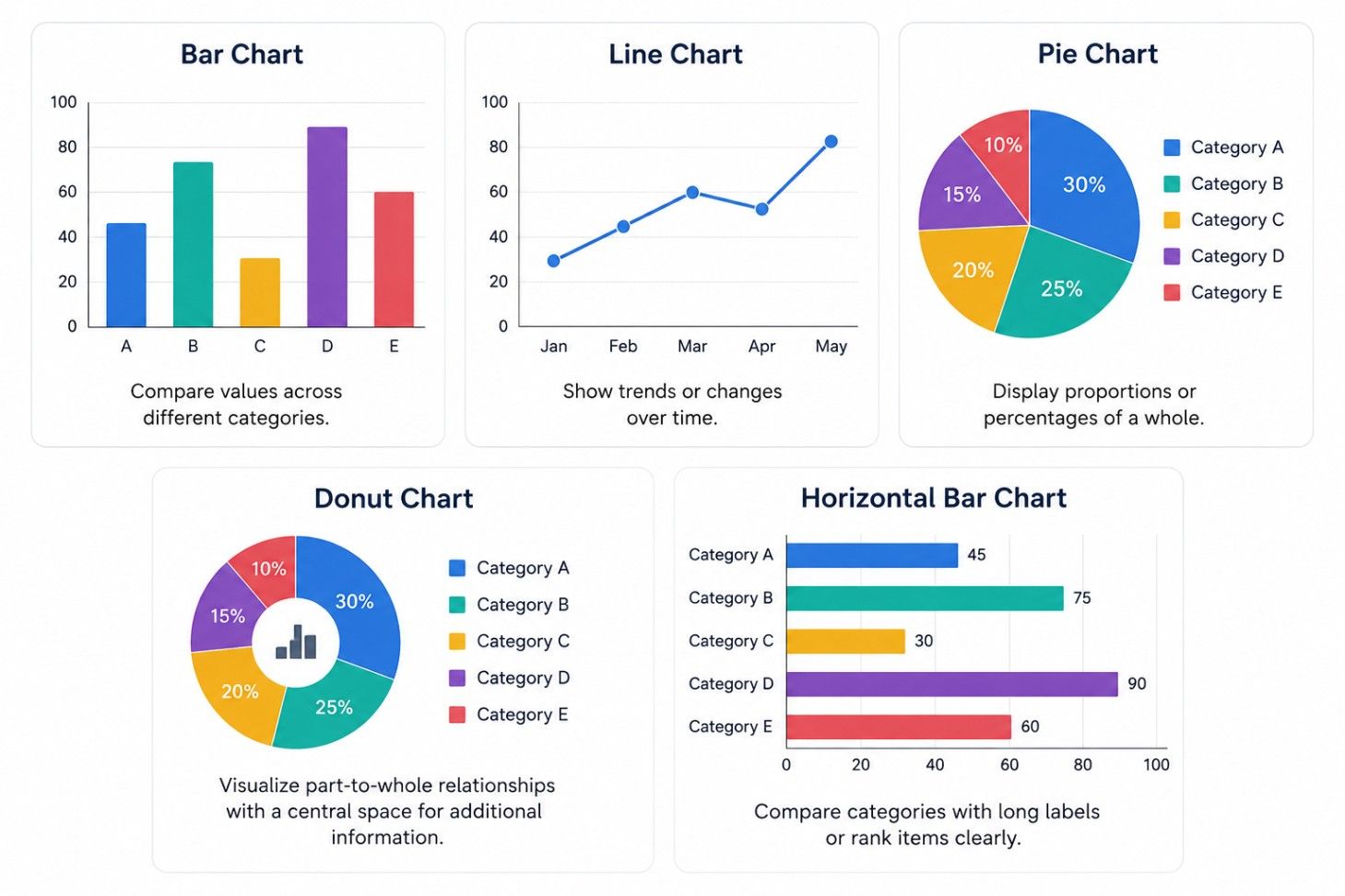
Chart Name |
Purpose |
| Bar Chart | Compares values across different categories. |
| Line Chart | Shows trends and changes over time. |
| Pie Chart | Displays the proportion of each category as part of a whole. |
| Donut Chart | Visualizes part-to-whole relationships with space for additional information in the center. |
| Horizontal Bar Chart | Compares categories with long labels or ranks items clearly. |
Effective visualisation turns technical analysis into actionable business decisions.
Free Courses
Many beginners try to learn advanced artificial intelligence before understanding the basics, which often leads to confusion.
Following a structured roadmap helps you build knowledge gradually while reinforcing previous concepts.
The recommended learning sequence is outlined below.
Following this progression helps you understand how different concepts connect rather than learning them in isolation.
Data Science Courses to upskill
Explore Data Science Courses for Career Progression
IIIT Bangalore
Executive Post Graduate Certificate in Data Science & AIPlacement Assistance
Every beginner faces challenges while learning data science. Recognizing common mistakes early can save time and improve your learning experience.
The following mistakes are worth avoiding.
Building practical projects alongside theoretical learning is one of the fastest ways to strengthen your understanding of data science topics and prepare for real-world applications.
Also read: Data Science Roadmap: A 10-Step Guide to Success for Beginners and Aspiring Professionals
For beginners, the best approach is to master a few core data science topics before exploring advanced AI and deep learning. Start with Statistics and Probability, then learn Programming (Python/R) & SQL, followed by Machine Learning, Data Wrangling (Cleaning), and Data Visualization.
These five areas work together to help you collect, prepare, analyze, model, and communicate data effectively. Once you build confidence in these fundamentals, moving into advanced data science and artificial intelligence becomes much more manageable.
Ready to start your journey? Book a free consultation with upGrad today to find the best path for your career.
If you're just starting, begin with Python programming and basic statistics. Python helps you work with datasets, while statistics teaches you how to interpret data correctly. Once you're comfortable with these fundamentals, move on to SQL, data cleaning, and machine learning. Following this sequence makes learning easier and prepares you for more advanced data science concepts.
The time depends on your background and learning pace. Most beginners can understand the fundamental data science topics within three to six months through consistent study and practical projects. Spending time solving real-world problems and practicing with datasets is usually more valuable than simply completing online lessons.
The four major areas of data science are descriptive analytics, diagnostic analytics, predictive analytics, and prescriptive analytics.
Together, these approaches help organizations make informed business decisions from data.
Yes, but you don't need advanced mathematics to get started. A solid understanding of probability, statistics, algebra, and basic calculus is enough for most beginner-level projects. As you progress into machine learning and deep learning, you'll naturally learn more mathematical concepts through practical applications rather than memorization.
The seven commonly recognized types of data are:
Each type requires different techniques for storage, processing, and analysis. Understanding these formats helps you choose suitable tools, visualization methods, and machine learning algorithms for your project.
The 5 C's of data science describe the key stages involved in working with data:
These stages ensure that raw data is transformed into meaningful insights. Many real-world projects spend more time collecting and cleaning data than building predictive models.
Coding is an important part of data science, but it is only one aspect of the job. Professionals also spend time understanding business problems, cleaning datasets, creating visualizations, and explaining results to stakeholders. Many beginner projects require only basic Python and SQL skills, making the field approachable for learners with no programming experience.
Absolutely. Many successful professionals come from backgrounds such as mathematics, engineering, economics, business, and even healthcare. What matters most is your ability to solve problems, analyze data, and build practical projects. A strong portfolio often carries more weight than your academic background.
Start with beginner-friendly tools that are widely used in the industry.
These tools cover most beginner projects and help you build practical experience before moving to advanced frameworks.
The best way is to work on public datasets related to industries that interest you. Analyze sales data, customer reviews, financial records, or healthcare datasets to practice cleaning, visualization, and predictive modeling. Each project strengthens your understanding of data science topics while building a portfolio that showcases your practical skills.
Learning the core data science topics is an excellent start, but employers also value practical experience. Build projects, participate in data competitions, practice SQL regularly, and create a GitHub portfolio that demonstrates your skills. Combining theoretical knowledge with hands-on work significantly improves your chances of securing an entry-level data science role.
730 articles published
Sriram K is a Senior SEO Executive with a B.Tech in Information Technology from Dr. M.G.R. Educational and Research Institute, Chennai. With over a decade of experience in digital marketing, he specia...
Speak with Data Science Expert
By submitting, I accept the T&C and
Privacy Policy
Start Your Career in Data Science Today
Top Resources
Master's Degree
18 Months
Executive Diploma
12 Months
Bootcamp
6 Months