8 Cost Effective Digital Marketing Strategies for Businesses in 2026
By upGrad
Updated on Sep 10, 2026 | 9 min read | 3.47K+ views
Share:

All courses
Certifications
More
By upGrad
Updated on Sep 10, 2026 | 9 min read | 3.47K+ views
Share:
Table of Contents
Key Highlights
Turn marketing theory into practical skills. Explore our Digital Marketing Courses and get started today.
SEO is still the cheapest channel per lead if you have patience. Most businesses do not put efforts in building SEO because it takes 6 to 9 months minimum to show real results.
These are some ways you can follow to do SEO marketing.
Free Courses
Social media marketing costs only time, which makes it one of the strongest cost effective online marketing options available. Other channels need an ad budget to start.
Pick one platform instead of putting efforts in multiple channels. A B2B service business posting three times a week on LinkedIn gets more leads than the same effort split across Instagram, Facebook, and Twitter. Simple content, like a founder speaking on camera or a client screenshot, often performs better than designed graphics because platforms reward watch time and comments, not production quality.
The real cost is not money, it is consistency. Do not stop posting after sometime because results take a few weeks to show.
Digital Marketing Courses to upskill
Explore Digital Marketing Courses for Career Progression
MICA Executive Alumni Status
Most businesses ignore email because it feels outdated, yet it remains one of the highest return channels in digital marketing. A single email to a list of 500 people costs the same as sending it to five, so the price per lead keeps dropping as the list grows.
Building the list is the real work here. A few low cost ways to grow it:
Once someone joins, automated sequences do the selling without manual effort:
Segmentation decides whether an email gets opened or ignored. A returning customer and a first time visitor should never get the same message. Splitting the list into just two or three groups, based on purchase history or signup source, usually improves open rates more than rewriting the subject line ever will.
In content marketing and repurposing, creating content once and using it five different ways is where the actual cost saving happens. Most businesses write a blog post, publish it, and move on, missing most of the value sitting inside that one piece.
A single blog post can turn into:
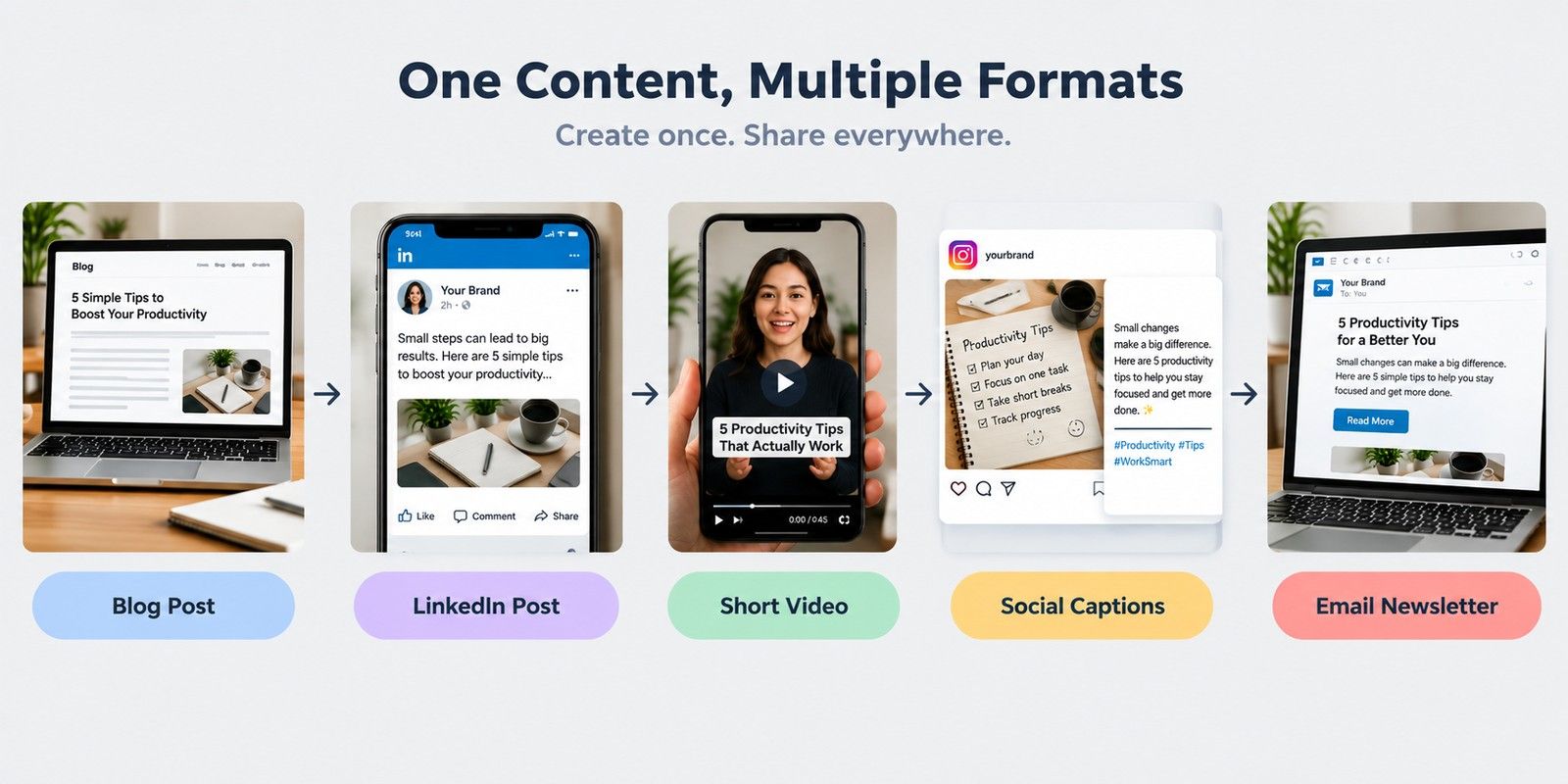
Evergreen topics make this repurposing worth the effort. A guide on "how to choose [product category]" keeps bringing in traffic two years later, while a post about a trending news event stops working within a week. Businesses with tight budgets should spend most of their content time on evergreen topics and save trending content for slow weeks.
The content does not need to be original every time either. Answering the same five questions customers always ask, in different formats, works better than constantly chasing new topics.
PPC is the one channel on this list that actually costs money, yet it still fits into cost effective digital marketing when it is run with a tight budget and clear limits. The mistake most businesses make is treating it like a big spend channel from day one.
Action |
Why It Keeps Costs Low |
| Start with a daily budget | Limits spending while testing what works |
| Target a specific location, age, or interest | Avoids paying for clicks outside the target buyer group |
| Run search ads before display or video | Reaches people who are already looking to buy |
| Review performance weekly | Helps catch wasted spending before it adds up |
| Pause underperforming ads after the first week | Stops the budget from going toward clicks that do not convert |
Tracking matters more in pay-per-click (PPC) than in any other channel here, because every rupee spent needs to be checked against what it brought back. A campaign left unchecked usually burns budget on clicks that never convert.
Small budgets work best when they stay narrow. Five keywords tested properly beat fifty keywords tested loosely.
Customer reviews and user-generated content work as one of the cost effective digital advertising channels, because people trust other customers more than they trust a brand talking about itself. A business does not need to create this content, it only needs to ask for it and put it in the right place.
Ways to collect it without spending money:
Ways to use it once collected:
None of this needs a budget. It only needs a system for asking and a place to show what comes back.
Ready to lead with AI in marketing? Enroll in the Advanced Certificate in AI-Powered Digital Marketing & Communication from MICA and get future-ready skills.
Free tools remove one of the biggest barriers to cost effective online marketing, since most businesses assume good marketing needs expensive software. In reality, the free version of most tools covers everything a small or mid-size business needs for the first year or two.
1) Free SEO tools
2) Free analytics and reporting tools
3) Free marketing platforms
The goal is not to collect every free tool available. Three or four tools used consistently do more than ten tools opened once and forgotten.
Local marketing works for cost effective digital marketing because it targets nearby customers who are already likely to buy, and most of it costs nothing beyond setting up a few profiles correctly.
Local visibility starts with the Google Business Profile. Claiming it, adding accurate hours and photos, and picking the right category helps the business show up in nearby searches. The name, address, and phone number should match exactly across every directory, since mismatches hurt ranking. Reviews add to this too, a happy customer's Google review does more for local visibility than most paid efforts.
Being active in local online communities builds trust for free. Answering questions in a neighborhood Facebook group or a local subreddit, without pitching, puts the business in front of the right people naturally.
Partnerships close the loop. A nearby, non-competing business can offer free reach through a shared post or bundled offer, and showing up at a small local event brings visibility no ad budget could match at the same cost.
Also read: Lead Generation in Digital Marketing: Strategies That Actually Work
1. Small E-commerce Business
A handmade candle store grows an Instagram following through daily behind-the-scenes content and customer photos. Ten dollars a day goes into retargeting ads for cart abandoners, and a weekly email goes out with a discount code.
Monthly cost stays under two hundred dollars, and repeat customers from email end up driving most of the revenue.
2. Local Service Business
A local plumber claims and optimizes their Google Business Profile, asks every satisfied customer for a review, and joins two neighborhood Facebook groups to answer plumbing questions without pitching.
Within a few months, most new calls come from Google Maps searches, with no ad spend involved.
3. B2B Business
A B2B software company publishes one detailed LinkedIn post a week from the founder, breaking down a problem their software solves, then repurposes it into a short email for their list.
No paid ads run in the first six months, yet inbound demo requests grow steadily as the founder builds recognition in the niche.
Also read: Digital Marketing for Startups
A good plan is what turns these individual tactics into consistent results, instead of random posting with no direction.
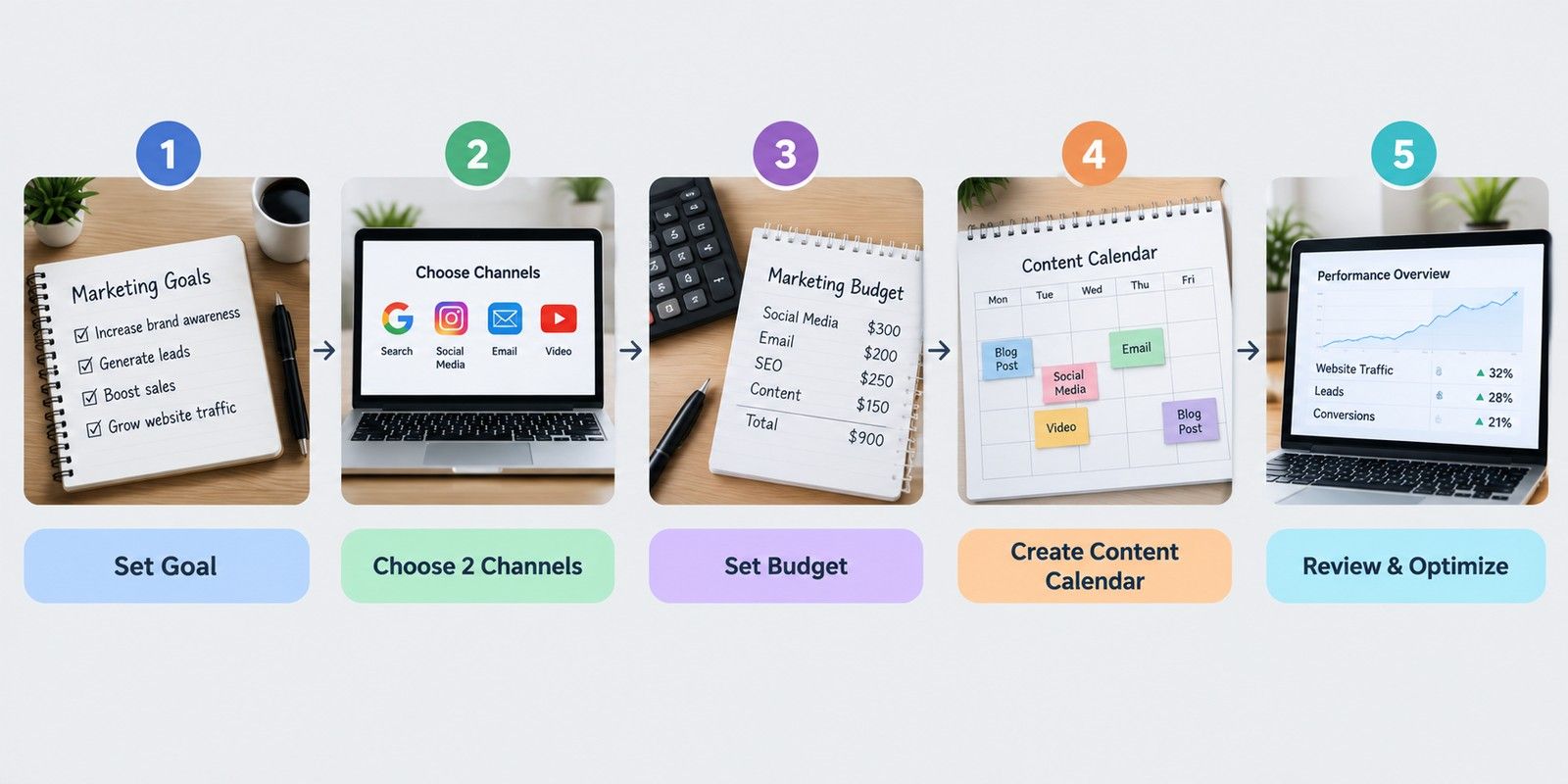
Step 1: Start with one clear goal
Pick a single outcome to chase first, like more calls, more email signups, or more repeat purchases. A plan built around one goal stays focused, while a plan chasing five goals at once usually delivers none of them well.
Step 2: Pick two channels, not six
Choose the two channels most likely to reach the target customer, based on where they already spend time.
Two channels done well beat six channels done poorly.
Step 3: Set a real budget, even if it is small
Decide a monthly number, even if it is mostly time and fifty dollars for ads. A defined budget forces prioritization, while an undefined one leads to random spending on whatever looks appealing that week. Split it loosely across content creation, tools, and paid ads, and keep the ad portion small until organic content shows what actually works.
Step 4: Create a simple content calendar
List out what gets posted or sent each week, tied directly back to the goal from step one. Three planned posts a week, batched into one sitting, beat ten random ones written in a rush. Reusing one piece of content across formats saves more time than creating something new every day.
Step 5: Review monthly and cut what does not work
Check numbers every month, not every day, since daily checking leads to reacting on noise instead of trends. Drop the channel or content type bringing the least return, move that time and budget into whatever is already working, and test one new idea a month instead of overhauling everything at once.
Also read: Google Ads vs Meta Ads: Key Differences and Best Uses
Tracking cost per result is what separates cost effective digital marketing from marketing that just feels productive. Without measurement, it is impossible to know which channel is worth the time or money going into it.
Also read: Top Digital Marketing Channels for Maximum Reach and ROI
Following the zero cost marketing strategies does not mean spending nothing, it means spending only where it brings back a clear return. SEO, social media, email, and community engagement cost mostly time, while PPC works best when kept small and tracked closely.
The businesses that see results are not the ones with the biggest budgets, but the ones that pick a few channels, stay consistent for months, and check what is actually working. Starting small, tracking cost per lead, and doubling down on what performs builds a marketing system that grows without needing a large budget behind it.
Looking for direction in your marketing career? Book a free one-on-one consultation with upGrad’s team today.
Most small businesses start with 5-10% of revenue for marketing, but a business with zero budget can still get results by focusing entirely on organic channels first and adding paid spend only once something is already working.
Yes, in most cases. Traditional channels like print, TV, and radio require large upfront spends with no targeting, while digital channels let a business start with a few dollars a day and target only the people likely to buy.
Organic channels like SEO and social media usually take 3 to 9 months to show consistent results, while paid channels like PPC can show results within the first few weeks if set up correctly.
Yes, most of these strategies do not require technical skills. Tools like Canva, Google Business Profile, and email platforms are built for non-marketers, though outsourcing specific tasks like PPC management can save time as the business grows.
Spreading effort across too many channels at once. Trying to run SEO, social media, email, and ads simultaneously with limited time usually means none of them get done well enough to work.
Most strategies apply broadly, but the right channel mix changes by industry. A B2C brand may lean on social media and influencer content, while a B2B company usually gets better returns from LinkedIn and email.
Consistency matters more than frequency. Three well-thought-out posts a week on one platform typically outperform daily posting across multiple platforms without a clear plan.
It depends on time and budget. In-house works well when someone can dedicate consistent hours weekly, while an agency or freelancer makes sense for specialized tasks like PPC or SEO audits where expertise speeds up results.
A single, measurable goal like ten email signups a week or five customer reviews a month works well as a starting point, since it is easier to track and build momentum around one number.
AI tools now help with content drafts, ad copy variations, basic design, and campaign reporting, cutting down the time and cost that used to require a larger team or bigger budget.
Organic marketing, like SEO and social media, relies on time and consistency without direct payment for reach. Paid marketing, like PPC and boosted posts, pays for guaranteed visibility and usually delivers faster but less lasting results.
964 articles published
We are an online education platform providing industry-relevant programs for professionals, designed and delivered in collaboration with world-class faculty and businesses. Merging the latest technolo...
Get Free Consultation
By submitting, I accept the T&C and
Privacy Policy
Level Up Your Digital Marketing Career Today!
Top Resources
MICA
Advanced Certificate in AI-Powered Digital Marketing & Communication from MICAMICA Executive Alumni Status
Certification
5 Specialisation
Classroom
4 Months
Certification
2 Months