Retargeting Ads: A Complete Beginner’s Guide
By upGrad
Updated on May 14, 2026 | 7 min read | 4.7K+ views
Share:

All courses
Certifications
More
By upGrad
Updated on May 14, 2026 | 7 min read | 4.7K+ views
Share:
Table of Contents
Retargeting ads help businesses reconnect with users who have previously interacted with their website, app, or digital content but left without taking action. These ads keep your brand visible across platforms like social media, search engines, and partner websites.
Targeting warm audiences who already showed interest, retargeting campaigns to improve customer engagement, increase conversion opportunities, and deliver better return on investment (ROI). They are widely used by brands to strengthen recall and encourage users to complete purchases or sign-ups.
Explore Online Digital Marketing Courses from upGrad to build expertise in retargeting ads and performance marketing strategies.
Retargeting ads are digital ads shown to people who have already interacted with your business online. This interaction can include visiting your website, viewing a product, adding items to a cart, or engaging with your social media content.
Simply put, retargeting is a digital marketing strategy that helps businesses reconnect with users who showed interest in their brand but left without completing a purchase or acting.
These ads act as reminders, keeping your brand visible and encouraging users to return to your website and convert.
Also Read: Digital Marketing for Startups
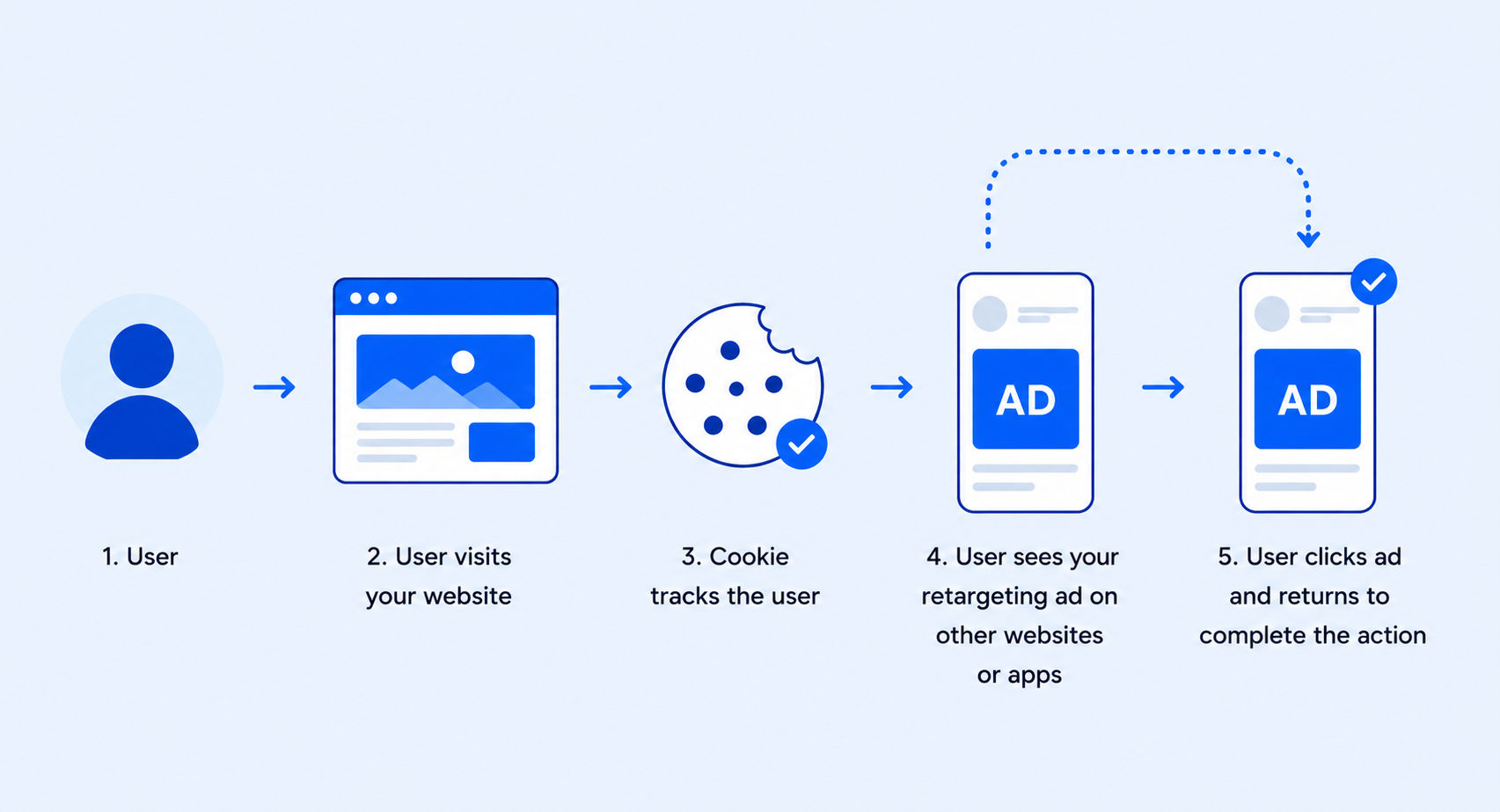
Retargeting ads follow a simple process that helps businesses reconnect with users who visited their website but left without acting.
Free Courses
Digital Marketing Courses to upskill
Explore Digital Marketing Courses for Career Progression
MICA Executive Alumni Status
Getting traffic to a website is hard. Losing those visitors without a second chance is even harder. That’s where retargeting ads makes a real difference. Instead of only focusing on new users, businesses can reconnect with people who already showed interest in their products or services.
Since these users already know your brand, they are more likely to engage, return, and convert. This makes retargeting one of the most practical and cost-effective digital advertising strategies today.
Most visitors do not make a purchase during their first visit. They may still be exploring options, comparing prices, or simply browsing casually.
Retargeting helps businesses stay in front of those users after they leave the website. When people repeatedly see a familiar brand, they feel more comfortable coming back.
For example:
Online users move quickly from one website to another. Brands can easily be forgotten within minutes. Retargeting ads solve this problem by reminding users about your business across different platforms and websites.
This becomes even more important in crowded industries where customers compare multiple brands before making a decision.
These ads help reinforce:
Bringing completely new users to a website usually costs more than re-engaging existing visitors.
Retargeting focuses on audiences that have already interacted with your business. Because of this, businesses often see:
One major advantage of retargeting ads is personalization. Businesses can create ads based on specific user actions and interests.
For example, brands can show:
Retargeting is not limited to driving sales alone. It can support users throughout the entire decision-making process. This flexibility makes retargeting useful for both small and large businesses.
Customer Stage |
How Retargeting Helps |
| Awareness | Reminds users about the brand |
| Consideration | Highlights product benefits or reviews |
| Decision | Encourages action with offers or urgency |
| Retention | Promotes repeat purchases or loyalty |
Ecommerce businesses benefit heavily from retargeting because online shoppers often leave websites without completing purchases. Retargeting ads help bring those shoppers back at the right time with relevant reminders and offers.
Common reasons include:
Small businesses may not have massive advertising budgets. Competing with bigger brands for new customers can be difficult. Retargeting helps smaller businesses stay visible without spending aggressively on broad targeting campaigns.
By focusing on users who already visited their website, startups and growing brands can improve results while controlling costs.
Tracking helps improve campaign performance over time. Businesses should monitor these metrics:
Subscribe to upGrad's Newsletter
Join thousands of learners who receive useful tips
Choosing the right platform can directly impact how well your retargeting ads perform. Some tools are better for ecommerce brands, while others work best for B2B lead generation or social media engagement.
Here are some of the most popular retargeting platform businesses use today.
Google Ads is one of the most widely used platforms for retargeting campaigns. It allows businesses to reconnect with users across Google’s massive advertising network.
With Google Ads, businesses can show retargeting ads on:
Google Ads works well for brands that want large-scale visibility across different channels.
Meta Ads includes advertising across Facebook and Instagram. It is one of the strongest platforms for visual and social retargeting.
Businesses commonly use Meta for:
Also Read: Google Ads vs Meta Ads: Key Differences and Best Uses
LinkedIn is ideal for B2B retargeting campaigns. It helps businesses reconnect with professionals and decision-makers. It works best for SaaS companies, consultants, agencies, and enterprise brands.
LinkedIn retargeting can target users who:
Why B2B companies use LinkedIn Ads:
AdRoll is a dedicated retargeting platform designed for multi-channel campaigns. It helps businesses manage advertising across several platforms from one dashboard. AdRoll is useful for businesses that want centralized campaign management without depending on a single advertising platform.
Criteo focuses heavily on ecommerce retargeting. It is known for showing highly personalized product recommendations to users. It is particularly effective for online retailers and large ecommerce marketplaces.
Many businesses combine multiple tools to improve overall performance and reach users across different channels. The best platform depends on your business goals, audience, and marketing budget.
Consider these factors before choosing a platform:
Also Read: Top Digital Marketing Channels for Maximum Reach and ROI
Launching retargeting ads is simple, but getting consistent results requires the right strategy. Many businesses lose money by targeting the wrong audience, overexposing users to ads, or creating generic campaigns that fail to connect.
Here are some practical ways to improve the performance of your retargeting ads.
Elements worth testing include:
Ad Element |
Variations to Test |
| Headlines | Direct vs emotional |
| Images | Product-focused vs lifestyle |
| CTA buttons | Shop Now vs Learn More |
| Offers | Discounts vs free shipping |
| Ad copy | Short copy vs detailed copy |
Retargeting ads has become one of the most valuable tools in digital marketing. They help businesses reconnect with users who already showed interest but left before converting. Instead of losing those visitors forever, brands can bring them back through relevant and personalized advertising.
For beginners, the biggest advantage of retargeting is efficiency. You are targeting warm audiences instead of starting from zero. With the right strategy, platforms, creatives, and audience segmentation, retargeting can improve conversions, reduce wasted ad spend, and strengthen customer relationships.
As privacy rules and advertising technology continue to evolve, businesses that focus on relevant and user-friendly retargeting campaigns will stay ahead.
Retargeting ads are ads shown to people who previously visited a website or interacted with a brand online. These ads remind users about products, services, or content they viewed earlier. Businesses use retargeting to improve conversions and bring users back to complete an action.
Retargeting ads usually work through cookies, tracking pixels, or website tags. When users visit a website, the tracking code collects behavioral data. Advertising platforms then use this information to show relevant ads to those users across websites and social media.
Yes, retargeting ads are highly effective for small businesses because they focus on people who already know the brand. This improves conversion potential while keeping advertising costs lower than cold audience campaigns. Even smaller budgets can generate strong returns through smart retargeting.
Retargeting mainly refers to online ads shown to past website visitors. Remarketing often focuses on email campaigns sent to previous customers or leads. Both strategies aim to re-engage users who interacted with the business but did not convert initially.
The best platform depends on business goals. Google Ads works well for broad reach, Meta is strong for social engagement, and LinkedIn is ideal for B2B marketing. Ecommerce brands often combine multiple platforms for better visibility and conversions.
Campaign duration depends on the buying cycle and audience behavior. Short purchase cycles may only need a few days, while high-ticket products may require several weeks. Businesses should monitor ad fatigue and performance metrics regularly to adjust timing.
Ecommerce, SaaS, education, finance, travel, and real estate industries benefit heavily from retargeting. These industries often have longer decision-making processes. Retargeting helps maintain visibility while users compare options before making final decisions.
This happens when advertisers do not set proper frequency limits. Without caps, platforms may continue showing ads too often. Excessive repetition can annoy users and reduce campaign effectiveness, so businesses should manage ad frequency carefully.
Yes, but strategies are changing. Many platforms now rely more on first-party data, customer lists, and privacy-friendly tracking methods. As cookie restrictions increase, businesses are adapting by collecting direct customer data more responsibly.
Dynamic retargeting automatically displays the exact products users viewed on a website. For example, if someone browses a laptop but leaves, they may later see ads featuring that same laptop. This improves relevance and increases purchase intent.
Beginners should start with audience segmentation, strong creatives, and proper tracking setup. They should also test different ad formats and monitor conversion metrics regularly. Simple optimization steps often lead to noticeable improvements in campaign results.
1011 articles published
We are an online education platform providing industry-relevant programs for professionals, designed and delivered in collaboration with world-class faculty and businesses. Merging the latest technolo...
Get Free Consultation
By submitting, I accept the T&C and
Privacy Policy
Level Up Your Digital Marketing Career Today!
Top Resources
MICA
Advanced Certificate in AI-Powered Digital Marketing & Communication from MICAMICA Executive Alumni Status
Certification
5 Specialisation
Classroom
4 Months
Certification
2 Months