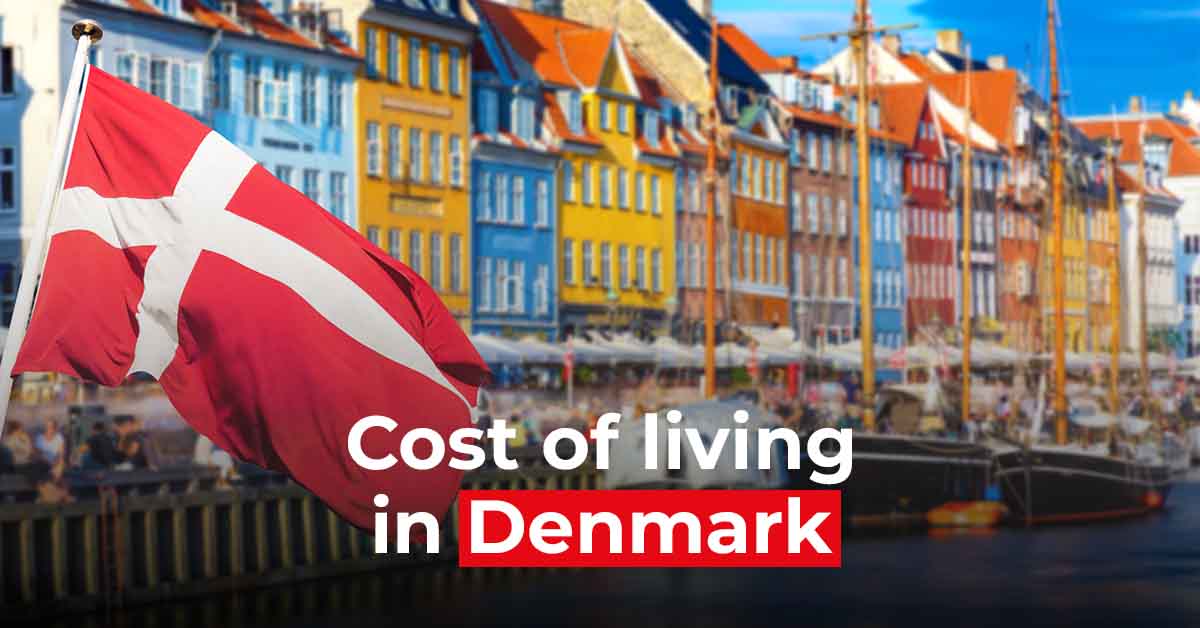
Denmark is known for its high cost of living and is among the more expensive countries in Europe. A single person may spend around $1,000–$1,300 USD (INR 94K–1.22L) per month, excluding rent, while a family of four may spend approximately $3,000–$4,900 USD (INR 2.82L–4.61L). Higher salaries and access to public healthcare can help balance some of these expenses.
The cost of living in Denmark is relatively high compared with many European destinations, with expenses varying by city, accommodation, and lifestyle. Copenhagen has the highest cost of living among the major Danish cities listed by Numbeo, while cities such as Odense and Aalborg have lower overall indices.
Cost of Living in Denmark by Profile
Monthly expenses in Denmark depend on household size, housing choices, food habits, and discretionary spending. Students can reduce their expenses by choosing shared accommodation, cooking at home, cycling, and using student-friendly transport options.
The following are indicative monthly estimates excluding rent:
Profile
Estimated Monthly Cost (Excluding Rent)
Single Person
DKK 8,254.3 (INR 1.21L)
Student
DKK 7,000–10,000 (INR 1.03L–1.47L)
Working Professional
DKK 10,000–14,000 (INR 1.47L–2.06L)
Couple
DKK 18,000–22,000 (INR 2.65L–3.23L)
Family of Four
DKK 30,141.7 (INR 4.44L)
Source: Numbeo
Cost of Living in Denmark by Cities
Living expenses differ across Danish cities. Copenhagen has the highest Cost of Living Index among the major cities listed by Numbeo, followed by Aarhus, Aalborg, and Odense. The difference is particularly noticeable in rent, restaurants, and some everyday services.
City
Cost of Living Index
Estimated Monthly Cost*
Copenhagen
90.2
DKK 9,000–11,000 (INR 1.32L–1.62L)
Aarhus
83.4
DKK 8,500–10,500 (INR 1.25L–1.54L)
Aalborg
81.5
DKK 7,500–9,500 (INR 1.10L–1.40L)
Odense
77.1
DKK 7,500–9,500 (INR 1.10L–1.40L)
Source: Numbeo
Estimated everyday expenses excluding rent. Actual costs depend on accommodation, lifestyle, and individual spending.
Accommodation is one of the largest expenses for international students and other residents in Denmark. Rent depends on the city, apartment size, location, and whether the property is in or outside the city centre.
Accommodation
Monthly Cost
1 Bedroom Apartment – City Centre
DKK 5,000–12,932 (INR 73.5K–1.90L)
1 Bedroom Apartment – Outside City Centre
DKK 3,738–10,500 (INR 54.9K–1.54L)
3 Bedroom Apartment – City Centre
DKK 8,500–21,422 (INR 1.25L–3.15L)
3 Bedroom Apartment – Outside City Centre
DKK 7,000–15,000 (INR 1.03L–2.21L)
For students, renting a room, sharing an apartment, or applying for student residence accommodation can help reduce housing expenses. Study in Denmark notes that student accommodation can be competitive, particularly in larger cities, so students are advised to start looking well before arrival.
Monthly Food and Grocery Expenses in Denmark
Food is an important part of a student's monthly budget. Cooking at home and shopping at supermarkets can help reduce spending, while frequent restaurant and café visits can increase monthly expenses.
Eating Out
Meal at an inexpensive restaurant: DKK 150 (INR 2,205)
Meal for two at a mid-range restaurant: DKK 700 (INR 10,290)
Fast-food combo meal: DKK 90 (INR 1,323)
Cappuccino: DKK 42.86 (INR 630)
Soft drink: DKK 27.99 (INR 412)
Bottled water: DKK 21.39 (INR 314)
Common Grocery Items
Food is a significant part of the monthly budget in Denmark. Students can manage expenses by cooking at home, comparing supermarket prices, and choosing local or seasonal produce. Eating out regularly can increase the overall monthly spending.
Item
Approximate Cost
Milk (1 litre)
DKK 11–16 (INR 162–235)
Fresh White Bread (500 g loaf)
DKK 11.50–40 (INR 169–588)
Rice (1 kg)
DKK 10–25 (INR 147–368)
Eggs (12, large)
DKK 22.80–42 (INR 335–617)
Local Cheese (1 kg)
DKK 50–170 (INR 735–2,499)
Chicken Fillets (1 kg)
DKK 40–120 (INR 588–1,764)
Beef (1 kg)
DKK 65–229 (INR 956–3,366)
Apples (1 kg)
DKK 12–30 (INR 176–441)
Bananas (1 kg)
DKK 14–35 (INR 206–515)
Oranges (1 kg)
DKK 12.50–40 (INR 184–588)
Tomatoes (1 kg)
DKK 15–50 (INR 221–735)
Potatoes (1 kg)
DKK 9–20 (INR 132–294)
Onions (1 kg)
DKK 9–20 (INR 132–294)
Students can lower their grocery bills by preparing meals at home, comparing supermarket prices, and choosing seasonal products. The Danish government also specifically recommends eating at home as one way to manage living costs.
Transportation Costs in Denmark
Denmark has extensive public transportation, including buses and trains, while cycling is also a common and economical way to travel. For students living close to their university, cycling can significantly reduce daily transport expenses.
Numbeo's country-level figures put a one-way local transport ticket at DKK 24 (INR 353) and a regular monthly public transport pass at DKK 600 (INR 8,820).
Transport Type
Approximate Cost
One-Way Local Transport Ticket
DKK 20–30 (INR 294–441)
Monthly Public Transport Pass
DKK 400–850 (INR 5,880–12,495)
Taxi Start Fare
DKK 39–77 (INR 573–1,132)
Taxi per km
DKK 11.33–25 (INR 167–368)
Taxi Waiting, 1 hour
DKK 400–600 (INR 5,880–8,820)
Gasoline, 1 litre
DKK 13.77–17.42 (INR 202–256)
For students, cycling and public transportation can be more economical than regular taxi use or owning a car. Study in Denmark also highlights cycling to university as a practical way to keep living costs manageable.
Utilities and Internet Costs in Denmark
Utility expenses depend on the size of the accommodation, heating requirements, electricity consumption, and whether some services are included in the rent. Students sharing accommodation may be able to divide certain household costs with roommates.
Utility
Monthly Cost
Basic Utilities – 85 m² Apartment
DKK 1,000–2,500 (INR 14.7K–36.75K)
Mobile Phone Plan
DKK 50–179 (INR 735–2,631)
Broadband Internet
DKK 199–378 (INR 2.93K–5.56K)
The actual amount paid by a student may be lower when utilities or internet are included in the accommodation cost or shared between several residents.
Healthcare and Insurance Costs in Denmark
Healthcare expenses for international students depend on their residence status, healthcare coverage, and whether they use public or private services. Students should also budget for medicines and dental care, as these expenses may involve out-of-pocket payments. Prescription medicine prices and reimbursements vary depending on the medicine and applicable reimbursement rules.
Healthcare / Insurance Expense
Approximate Cost
Health / Travel Insurance
DKK 200–500 (INR 2,940–7,350) per month
Private Doctor Consultation
DKK 2,000–3,200 (INR 29.4K–47K) per visit
Prescription Medicines
DKK 100–1,000+ (INR 1,470–14.7K+) depending on medicine and reimbursement
Dental Check-up / Basic Treatment
DKK 200–600 (INR 2,940–8,820)
Dental Treatment
DKK 500–5,000+ (INR 7,350–73.5K+) depending on treatment
A private doctor visit can be considerably more expensive than treatment through the public healthcare system; one private provider currently lists DKK 2,000–3,200 for a visit.
Note: Healthcare costs should not be treated as a fixed monthly expense. Students may have little or no routine medical spending in some months, while insurance, dental treatment, or medicines can create additional costs when needed.
Leisure and Miscellaneous Costs in Denmark
Personal spending depends on how often students participate in recreational activities, go to restaurants, shop, or attend cultural events. Denmark offers many outdoor activities, and cycling and free public spaces can provide low-cost leisure options.
Activity / Item
Cost
Fitness Club Membership
DKK 195–450 (INR 2.87K–6.62K)
Cinema Ticket
DKK 110–150 (INR 1.62K–2.21K)
Tennis Court Rental
DKK 120–250 (INR 1.76K–3.68K)
Jeans
DKK 425–1,000 (INR 6.25K–14.7K)
Summer Dress
DKK 200–500 (INR 2.94K–7.35K)
Running Shoes
DKK 500–1,200 (INR 7.35K–17.64K)
Students can manage discretionary spending by taking advantage of university activities, cycling, exploring free outdoor spaces, and setting a monthly limit for shopping and entertainment.
Education Costs for International Students in Denmark
Tuition fees in Denmark depend on nationality, institution, and programme. Higher education is generally free for EU/EEA and Swiss students who meet the applicable conditions, while students from outside the EU/EEA/Switzerland generally pay tuition for full-degree programmes.
According to the official Study in Denmark portal, annual tuition for full-degree international students is around DKK 45,000–120,000 (INR 6.62L–17.64L).
Program Type
Indicative Annual Tuition Fee
Bachelor's Programmes
DKK 45,000–120,000 (INR 6.62L–17.64L)
Master's Programmes
DKK 45,000–120,000 (INR 6.62L–17.64L)
Other Full-Degree Programmes
DKK 45,000–120,000 (INR 6.62L–17.64L)
The exact tuition fee is set by the individual institution and programme. Students should check the university's official website before applying.
For Indian students, comparing everyday prices before travelling can help create a realistic study-abroad budget. Denmark has a substantially higher overall cost level than India.
Category
Denmark Cost
India Cost
Meal at an Inexpensive Restaurant
DKK 150 (INR 2,205)
INR 150–400
Meal for Two at Mid-Range Restaurant
DKK 700 (INR 10,290)
INR 800–2,500
Monthly Public Transport Pass
DKK 600 (INR 8,820)
INR 500–2,000
Milk (1 litre)
DKK 11.50–16 (INR 169–235)
INR 55–75
Eggs (12)
DKK 21.60–40 (INR 318–588)
INR 70–120
1 Bedroom Apartment – City Centre
DKK 5,000–12,500 (INR 73.5K–1.84L)
INR 10K–30K
Basic Utilities – 85 m²
DKK 896.74–2,223.08 (INR 13.18K–32.68K)
INR 2K–5K
For Indian students, accommodation is likely to have the biggest impact on the final monthly budget. Shared housing, student residences, and living outside central areas can help control rent.
Budgeting Tips for Students and Expats in Denmark
A clear monthly budget can help international students manage Denmark's relatively high everyday expenses. Housing, food, transportation, and personal spending should be tracked separately so that unexpected expenses do not affect essential costs.
How to Save on Rent in Denmark?
Apply for student accommodation as early as possible.
Consider renting a room instead of an entire apartment.
Share an apartment with other students.
Compare accommodation in central and outer neighbourhoods.
Check whether utilities are included in the advertised rent.
Consider commute time before choosing cheaper housing farther from campus.
How to Save on Food in Denmark?
Cook meals at home regularly.
Compare prices across supermarkets.
Buy seasonal fruits and vegetables.
Prepare a weekly grocery list.
Carry packed meals to university.
Limit frequent café and restaurant visits.
How to Save on Transport in Denmark?
Cycle for short and regular journeys.
Use public transportation for longer commutes.
Check whether a monthly pass is cheaper for your travel pattern.
Choose accommodation with convenient access to your university.
Consider buying a second-hand bicycle.
Useful Budgeting Tools for Students in Denmark
Splitwise – Useful for dividing rent, utilities, and grocery costs among roommates.
Google Sheets – Can be used to maintain a monthly expense tracker.
Money Manager – Helps monitor daily spending and recurring expenses.
XE Currency – Useful for checking DKK-to-INR exchange rates while planning finances.
Conclusion
Denmark offers a high standard of living, but students should prepare for relatively high housing, food, transportation, and leisure expenses. Copenhagen generally has the highest living costs among the major cities listed by Numbeo, while Odense and Aalborg can offer comparatively lower everyday expenses.
For international students, choosing shared accommodation, cooking at home, cycling, and tracking discretionary expenses can make the monthly budget easier to manage. Along with living expenses, students should plan separately for tuition fees, accommodation deposits, insurance, travel, and other initial costs.
1. Is Denmark a good country for international students?
Yes. Denmark offers globally recognised universities, English-taught programmes, a safe environment, and strong links between education and industry. Students should consider tuition, accommodation, lifestyle, and other expenses when assessing the overall cost of living in Denmark.
2. Can international students work while studying in Denmark?
Yes. International students may work alongside their studies, subject to the conditions of their residence permit. Part-time employment can help students manage the average cost of living in Denmark per month, although it should not replace proper financial planning.
3. What is the average salary in Denmark for international graduates?
Graduate salaries in Denmark vary by industry, qualification, experience, and location. Fields such as technology, engineering, finance, and life sciences can offer competitive opportunities. Comparing expected earnings with the average monthly cost of living in Denmark can help with financial planning.
4. Is Denmark expensive for Indian students?
Yes. The cost of living in Denmark for Indians is generally higher than in India, particularly for housing, dining, and services. Students can manage expenses by sharing accommodation, cooking at home, using public transport, and taking advantage of student discounts.
5. What is the cheapest way to live in Denmark as a student?
Students can reduce their cost of living in Denmark by choosing university accommodation or shared housing instead of a private apartment. Cooking at home, comparing grocery prices, limiting dining out, and using student discounts can also lower discretionary expenses.
What is the average monthly grocery expense for a resident living in Denmark?
Residents spend 2,000–3,500 DKK (INR 28.6K–50.1K) each month on groceries. Staples like milk cost 13–19 DKK (INR 187–272), bread 11–44 DKK (INR 157–630), and eggs 23–49 DKK (INR 329–701) depending on region and supermarket.
6. Are student discounts available in Denmark?
Yes. Students can access discounts on selected transport services, entertainment, cultural activities, shops, and other services. Using these benefits can help reduce the average cost of living in Denmark, particularly for leisure and other non-essential monthly expenses.
7. Which supermarkets are popular in Denmark for students?
Students commonly shop at discount and supermarket chains such as Netto, Rema 1000, Lidl, and 365discount. Comparing weekly offers and choosing seasonal products can help manage grocery spending and keep the average monthly cost of living in Denmark within budget.
8. Do international students need a Danish bank account?
A Danish bank account can make it easier to receive payments, manage regular expenses, and access local payment services. Requirements depend on residence status and the bank. Students should check applicable requirements after arriving in Denmark and registering locally.
9. What payment methods are commonly used in Denmark?
Card and contactless payments are widely accepted across Denmark, while mobile payment services are also popular. International students may need a Danish bank account for certain local payment solutions. Planning these practical arrangements can make everyday spending easier to manage.
10. What should Indian students consider before moving to Denmark?
Students should budget for tuition, accommodation, food, transport, insurance, travel, residence-related expenses, and emergencies. Understanding the cost of living in Denmark for Indians before departure can help students estimate their financial requirements and prepare a realistic study-abroad budget.
11. How can students manage their monthly budget in Denmark?
Students can manage expenses by separating fixed and variable costs, setting weekly spending limits, cooking regularly, sharing accommodation, and using student discounts. Comparing personal expenses with the average cost of living in Denmark can also help identify areas where they can save.
Ireland( study abroad expert) |50 articles published
Honey Gupta is a leading consultant with over 10 years of experience in helping students navigate the complexities of studying overseas, with a specialized focus on Ireland. Honey brings a wealth of a...
Refer Your Friend & Earn upto ₹15000
Help your friend upgrade to a Global Career and earn rewards together.