What is Online Marketing? How Businesses Use It to Reach the Right Audience
By upGrad
Updated on Oct 09, 2026 | 8 min read | 4.36K+ views
Share:

All courses
Certifications
More
By upGrad
Updated on Oct 09, 2026 | 8 min read | 4.36K+ views
Share:
Table of Contents
Key Highlights
Ready to turn this knowledge into a skill? Check out upGrad's digital marketing courses and learn to run campaigns that reach the right audience.
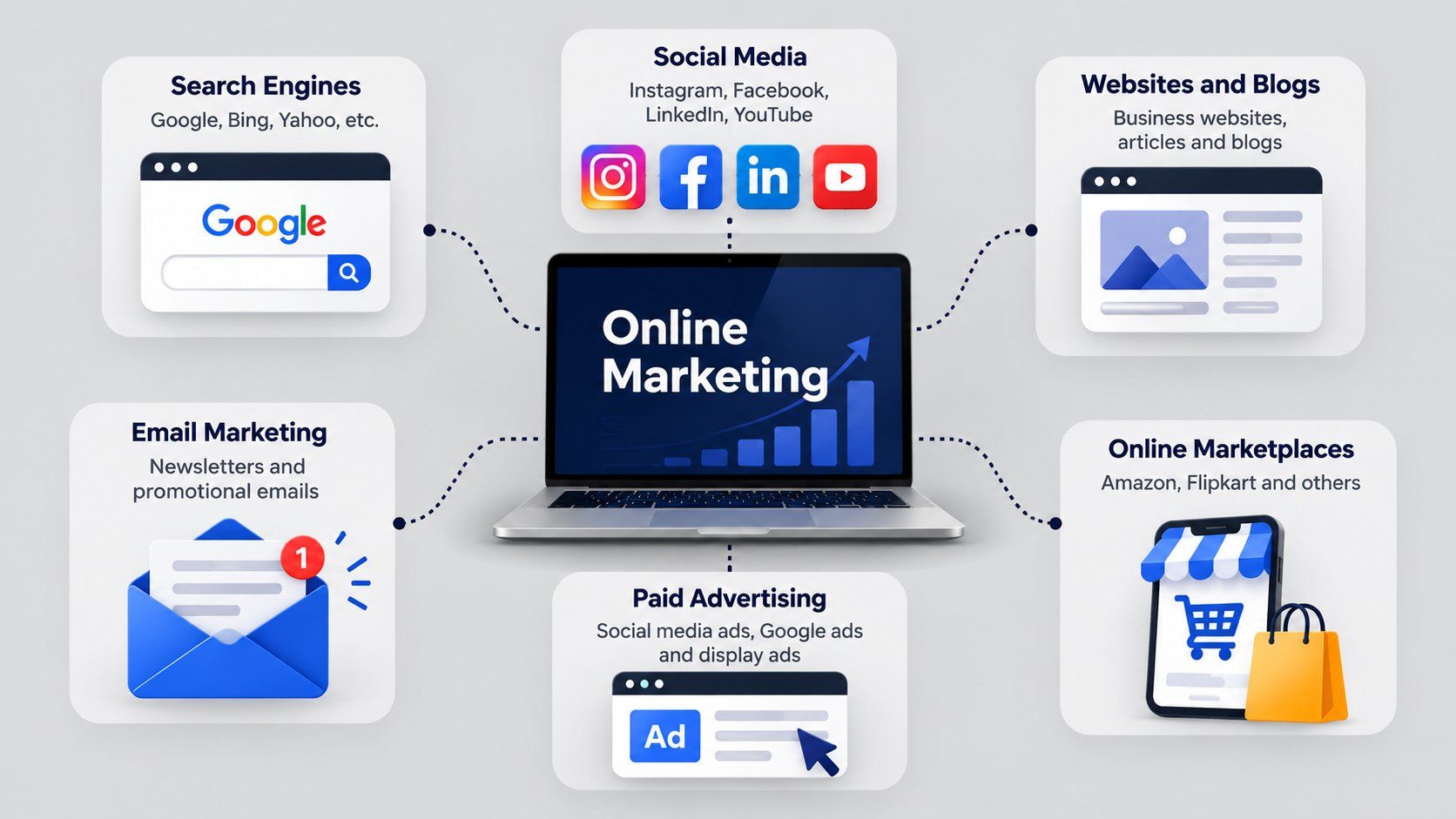
Online marketing is any effort to promote a product, service, or brand on the internet. If a business is trying to win customers through Google, Instagram, email, or its own website, that counts.
Most all are a part of online marketing; we see it in our daily lives. As you search for a plumber, a few listings show up at the top. You look at a pair of shoes once, and they follow you around Instagram for a week. You leave something in your cart, and the next morning an email asks if you forgot.
Some of the most used channels for online marketing are:
The biggest reason is that you can see what's working. You know how many people clicked your ad, how many bought, and what each sale cost you. With a newspaper ad, you never really find out.
A few other reasons for businesses to use online marketing:
Also read: Creative Digital Marketing: What It Is and How to Get Started
Free Courses
Getting seen online is easy. Getting seen by the right person is the hard part.
Say a business spends ₹20,000 on ads. The ads get 50,000 views, but only a handful of people enquire. The product was fine and so was the ad. Most of those viewers just had no reason to care.
This happens a lot. Here is why.
Your ad shows up between a friend's holiday photo and a cricket clip. You get a second, maybe less. If it looks like every other ad, it gets skipped.
Some people find brands on Instagram. Others only use YouTube or LinkedIn. Many check Google reviews or ask a friend on WhatsApp before they buy.
So there is no single spot to show up. You have to find out where your own customers spend time. That takes research.
Ad platforms let you pick age, city, interests, and more. But you need to know what to pick.
Many small businesses go broad. "Women, 25 to 45, Delhi." Done. A bakery doing that ends up paying to reach people who live too far away, never order cakes online, or just don't care. Every one of those views costs money.
Phones and browsers now let people limit how much they are tracked. That is good for users. It is tough for advertisers, because platforms have less data to work with.
This is why email lists, website visitors, and customer feedback matter more now. You own that data.
What is the difference between traditional marketing and online marketing? Mainly, control.
A newspaper ad or a roadside hoarding is seen by whoever happens to pass by. You can't choose the viewer. You can't tell who acted on it either.
Online, you pick the audience and see the results. The catch is that you now have more choices to make, and each wrong one costs money.
Traditional marketing |
Online marketing |
|
| Who sees it | Whoever reads, watches, or passes by | A group you choose |
| Tracking | Hard to measure | Clicks, sign-ups and sales are visible |
| Budget | Usually paid upfront | Can start small and grow |
| Changes | Slow, often needs a reprint | Can be done the same day |
| Main challenge | Paying to reach people who don't care | Standing out in a crowded space |
Neither wins every time. A local clinic may do well with a board outside the building. But if you want the right people and proof of what worked, online gives you more control.
Digital Marketing Courses to upskill
Explore Digital Marketing Courses for Career Progression
MICA Executive Alumni Status
To reach the target audience, businesses use two or three channels and then add more channels later in their strategy. All the channels that you use are called the online marketing mix.
The easiest way to build a mix is to think about where your customer is in the buying journey. Some people are ready to buy today, some have never heard of you, and some have already bought once. SEO and search ads suit the first group. Social media and influencers suit the second. Email suits the third.
Here is how each channel works.
SEO means making your website show up higher on search engines. It is a good place to start. People who search on Google already want something, so they are more likely to buy. SEO has three parts:
Social media is a great way to spread awareness in an organic way. There are multiple social media platforms available in the market. You need to choose the platforms that suit your business requirements.
The post format matters too. Reels and Shorts reach people who don't follow you, so they bring in new viewers. Carousels get saved and shared. Stories keep your followers interested.
SEO and social media take time to show results, but paid ads are faster. You pay the platform, and your ad starts showing the same day.
There are two main types of ads:
Retargeting is also worth knowing. It shows your ads only to people who have already visited your site. They know your brand, so they cost less to win over. Online retail marketing uses this a lot. During sales like Diwali, stores show a product ad to people who looked at that same product.
Paid ads stop the day you stop paying. Content keeps working after you publish it. Content marketing means making blog posts, videos, guides, and case studies. They answer the questions buyers ask before they buy.
Plan your content around the buyer's stage:
Buyer stage |
Example search |
Content that fits |
| Learning | "How to choose a laptop for video editing" | Guide or video |
| Comparing | "Dell vs HP for students" | Comparison page |
| Ready to buy | "Best laptop under 60,000" | Buying guide |
Most of the visitors leave your website without buying. Email marketing is the best way to keep them in touch with the business. Online stores make most of their email sales from three automated emails:
Split your list into groups. Someone who bought last week needs a different email from someone who hasn't opened one in six months.
Don't trust open rates. Apple Mail Privacy Protection, launched in 2021, opens emails automatically. This makes open rates higher. Instead, track clicks, sales, and unsubscribe rate.
Email reaches people who already know you. Influencers help you reach new people. You pay a creator to promote your product to their followers. Followers trust the creator, so the recommendation feels more real than an ad.
Creators come in rough tiers:
Tier |
Followers |
What to expect |
| Nano and micro | 1,000 to 100,000 | Lower fees, closer bond with followers |
| Mid-tier and larger | 100,000 and above | Wider reach, higher fees, often lower engagement |
Before you hire anyone, ask for their audience insights. Check where their followers live, their age, and their gender. A creator with mostly overseas followers won't help a local shop.
Read their comments too. Real replies are a good sign. The same one-word comment from random accounts can mean bought engagement. Give each creator a unique discount code or tracking link. Then you know who brought the sales.
Practice on real budgets, not just theory. In upGrad's MICA Advanced Certificate in AI-Powered Digital Marketing & Communication, you run upGrad-funded campaigns on Google and Meta and work on live projects.
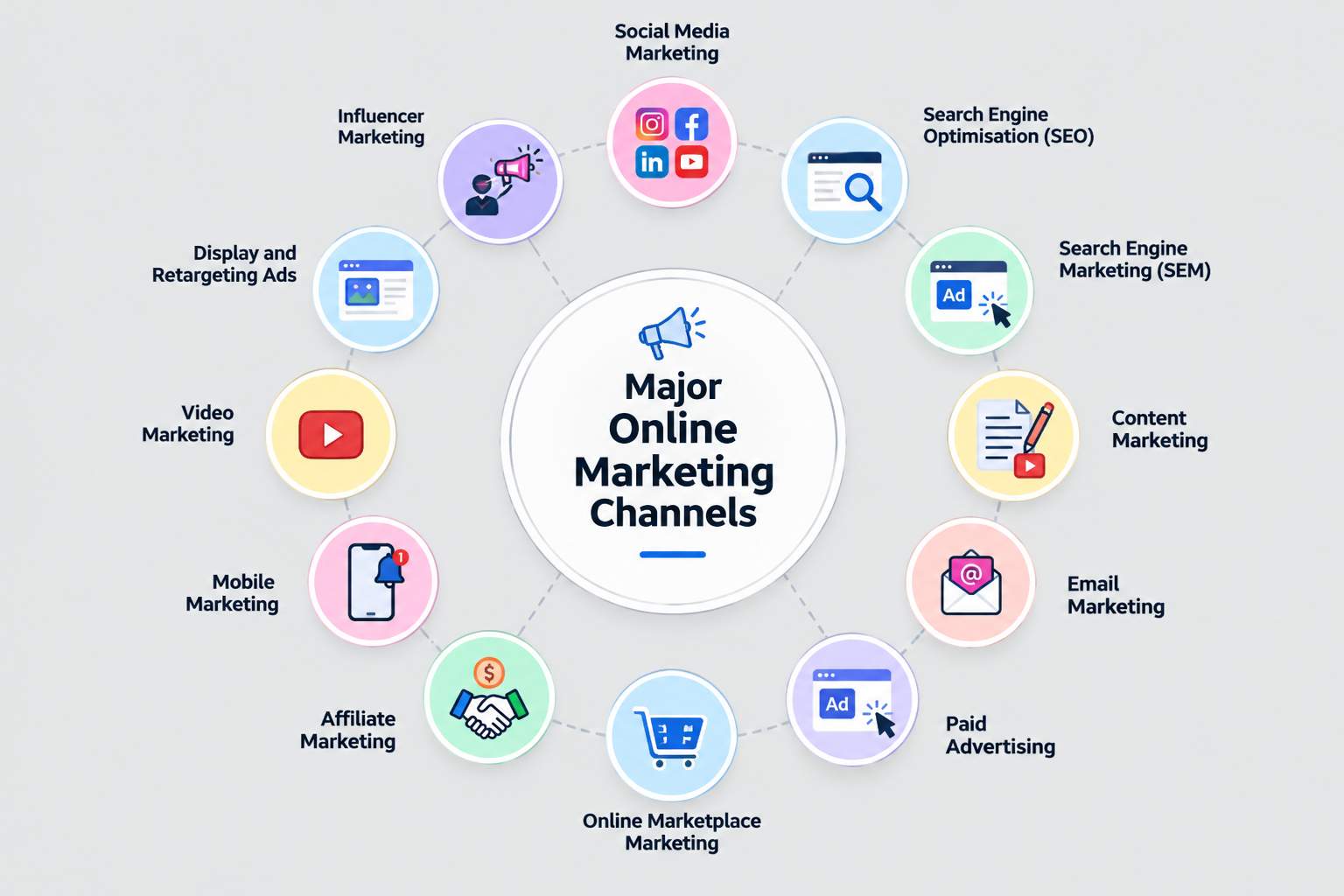
The six channels above only work when you know who you are talking to. A good ad shown to the wrong people still fails. So before you spend on any channel, spend a few days finding out who your buyers really are.
You don't need costly tools for this. Most of the data is already sitting in your business accounts. Here is where to look.
Check the data of your previous customers from your order history to look for their buying patterns and other detailed insights.
Then you can ask them a few questions related to your business. You can call them or send a Google Form. Ask how they found you, why they chose you, and more.
Your website shows who is already interested, even if they have not bought yet.
Two free Google tools do most of the work:
Tool |
What it tells you |
| Google Analytics | Age group, gender, city, device and which channel brought each visitor |
| Google Search Console | The exact phrases people typed before landing on your site |
The search phrases are the most useful part. They tell you what problem the visitor is trying to solve. Someone who typed "eggless cake for diabetic father" has a very different need from someone who typed "cake for 1st birthday."
Also check which pages keep visitors the longest. That shows what your audience cares about.
On social media, checking the insights of your profile is easy. To analyze the insights, look for:
Competitors have often spent years learning what works. You can follow what they are doing, not exactly copying.
Check what people are asking on their profile and their reviews on e-commerce platforms. These platforms are a good way to check what customers are finding good about them and what they dislike.
Two other free sources worth a visit are:
Note the words buyers use. If they say "value for money" again and again, your messaging should say it too.
By now you have a lot of notes. Turn them into one short profile. This is often called a buyer persona. Keep it to a few lines so your whole team can use it.
Here is what to include:
A short example for a bakery: "Working mothers aged 28 to 40 in West Delhi. They want a cake that looks good and arrives on time. They worry about quality, so they check Google reviews first. They find us through Instagram and order on WhatsApp."
That is far more useful than "women aged 25 to 45."
A profile is only an educated guess until real people respond to it. So test it before you commit a large budget.
Run two small ad sets for a week, each aimed at a different group. Keep the budget the same and the ad the same. Then compare cost per enquiry or cost per sale, not just clicks.
The group with the lower cost is closer to your real audience. Put more money there, then repeat the test with a new group. Over a few rounds, your targeting gets sharper and your cost per customer drops.
Also read: A Complete Guide to Crafting an Impactful Digital Marketing Strategy
Subscribe to upGrad's Newsletter
Join thousands of learners who receive useful tips
Testing a small budget showed you how fast targeting can change your costs. Now look at the other side. When the audience is wrong, the damage goes beyond a bad week of ads. It spreads into your money, your data, and your brand.
Here is what usually goes wrong.
This is the first and most visible loss. You pay for every click or view, whether the person is a buyer or not.
Take a business that spends ₹30,000 a month on ads. If half of that reaches people who will never buy, ₹15,000 is gone. And most owners never see the number, because the dashboard only shows clicks.
Watch for these signs:
Wrong-audience traffic does not just waste money. It also spoils the numbers you use to make decisions.
Say a page has a 90% bounce rate because the visitors came from the wrong ad. You might decide the page is bad and rewrite it. The page was fine. The traffic was wrong.
The same happens with email. If you build a list by running a giveaway, you collect people who wanted the prize, not your product. Your open rates fall, your unsubscribes rise, and your list looks unhealthy.
Over time, you start fixing the wrong things.
Google and Meta use machine learning to find more people like the ones who respond to your ads. If the first responders are the wrong crowd, the platform keeps finding more of them.
This is why a bad start is hard to undo. Platforms need time and conversions to learn. Feed them poor data, and your costs stay high even after you fix the targeting.
If this happens, pause the campaign, correct the audience, and restart with a fresh ad set. Do not just edit the old one.
When you try to speak to everyone, your message becomes vague. A skincare brand that talks to teenagers, new mothers, and men over 50 in the same post ends up connecting with none of them.
It also confuses your existing customers. They follow you for one reason, then see content that has nothing to do with them. Some unfollow. Others stop paying attention.
A clear audience gives you a clear voice.
The wrong audience often means the wrong expectations. If an ad promises a premium product at a price point meant for budget shoppers, the buyers who click expect something else.
Here is what that looks like:
Mismatch |
What happens |
| Ad reaches price-sensitive shoppers for a premium product | Cart abandonment and cancellations |
| Ad reaches people outside your delivery area | Frustration and unanswered enquiries |
| Ad promises more than the product delivers | Bad reviews and returns |
One bad review on Google or Flipkart can reduce the trust of many future buyers. That cost is much harder to measure than a wasted ad budget.
For service businesses and B2B companies, this hurts quietly. Your sales team calls every enquiry. If most of them are not a fit, hours disappear into calls that go nowhere.
Over a month, that is time not spent on leads who might have bought. Morale drops too, because the team feels they are chasing people who were never interested.
A simple fix is to add one or two qualifying questions to your enquiry form, like budget range or city. It filters out poor fits before anyone picks up the phone.
Also read: Features of Digital Marketing: What Actually Makes It Work
The last section covered what goes wrong when targeting is off. Now flip it. When the right people see your ads, you don't need a bigger budget or a better product to get better results.
Right-audience ads get more enquiries and sales from the same number of views. So your cost per sale falls.
Say you spend ₹30,000 a month and each sale costs ₹600. That gives you 50 customers. If better targeting brings the cost down to ₹400, the same money gets you 75.
Retargeting helps a lot here. People who have already visited your site are cheaper to convert than strangers.
A conversion is any action you want a visitor to take, like buying, signing up or filling an enquiry form. People who need what you sell are far more likely to take it.
You will see it in the numbers:
You haven't touched the website. Only the visitors are different.
Wrong-audience traffic makes good pages look bad. With the right visitors, a low-performing page really is a weak page, and you know what to fix.
That also makes testing worth the effort. Change a headline or an offer and the result tells you something real.
Both platforms study the people who respond to your ads and then look for more people like them. If your first responders are real buyers, the platform keeps finding the same kind of person.
This is why the first few weeks of a campaign matter so much. A good start sets the pattern. Costs also tend to stay steadier when you raise the budget later.
Once you know your buyer, you can write in their words and answer their doubts. Compare these two lines for a bakery:
Vague |
Specific |
| "Delicious cakes for every occasion" | "Eggless birthday cakes, delivered in West Delhi within 3 hours" |
The first line could be about any bakery. The second tells a worried parent exactly what they need to know. It gets more clicks and more orders.
Someone who finds exactly what they wanted comes back. They also leave good reviews and tell friends.
This matters for profit because winning a new customer costs more than keeping an old one. Your email list and WhatsApp broadcasts become more useful too, since the people on them actually want your updates.
Good reviews help your SEO and your Google Business Profile as well. One benefit feeds the other channels.
Leads that suit your business are easier to handle:
Your team can spend its time on customers who will stay, not on people who were never going to buy.
Also read: Top Digital Marketing Channels for Maximum Reach and ROI
Conclusion
Online marketing is not about being everywhere. It is about being in front of the right people with the right message.
Start by learning who your buyers are. Look at your existing customers, your website data, and your social insights. Then pick two or three channels that match where those buyers spend time, and test with a small budget before you scale.
Search, social, paid ads, content, email, and influencers all work. But each one works better when it is aimed at a clear audience. Get that part right first, and everything else gets easier and cheaper.
Have questions about the digital marketing course? Book a consultation call and find the right path for your career.
Not always, but it helps. You can begin with an Instagram page, a Google Business Profile or a WhatsApp Business account and take orders from there. A website gives you more control, lets you collect emails, and makes SEO possible. Many businesses start small on social media and build a website once sales begin.
No. A clinic, a coaching centre, or a local salon can use it to bring people through the door. Customers search "dentist near me" before they visit. Your Google listing, reviews, and a simple Instagram page can bring in offline footfall.
You can handle the basics yourself, such as posting on social media, setting up a Google Business Profile, and sending emails. Hire help when you start running paid ads or need technical SEO, since mistakes there cost money. A freelancer suits one channel. An agency suits a full plan across several channels.
Compare what you earn with what you spend. The basic formula is:
ROI = (Revenue from marketing − Marketing cost) ÷ Marketing cost × 100
If you spend ₹30,000 and earn ₹90,000 in sales, your ROI is 200%. Also watch cost per sale and the number of enquiries each month. If these improve over time, the work is paying off.
Online advertising is one part of online marketing. It covers paid placements such as Google Ads and Meta Ads. Online marketing also includes unpaid work like SEO, content, and email. Advertising buys attention. The rest of marketing earns it.
Yes. In affiliate marketing, a partner promotes your product and earns a commission on every sale they bring. You pay only when a sale happens, which lowers your risk. Amazon Associates and Flipkart Affiliate are common examples. It is often counted as a seventh channel beyond the six in this guide.
It does, but the approach changes. B2B buyers take longer to decide, and several people are involved. LinkedIn, case studies, webinars, and email follow-ups work better than flashy social ads. The goal is usually to get a qualified enquiry or a demo request, not an instant sale.
Inbound marketing pulls people towards you. Blog posts, SEO and videos are examples, because the customer finds you while looking for answers. Outbound marketing pushes your message to people who did not ask for it, like cold emails and display ads. Most businesses use a mix of both.
You can start with free tools: Google Analytics shows who visits your website, Google Search Console shows which searches bring visitors, and Google Business Profile manages your local listing. Canva makes social posts and ad images, while Mailchimp or Brevo sends emails and offers free plans for small lists. Add paid tools later, when you know what you need.
The most common mistakes include running ads without installing tracking tools, targeting too broad an audience, and judging results after only one week. Others are posting on five platforms and keeping none of them up, and sending people to the homepage instead of a page built for the offer. Most of these come from skipping the planning step, not from a lack of budget.
Yes. Almost every business now needs someone who can manage search, social media, or ads. Roles include SEO executive, performance marketer, content strategist, and email marketer. You can learn the basics through free Google and Meta courses, then build skills by running small campaigns for a local shop or your own project.
1017 articles published
We are an online education platform providing industry-relevant programs for professionals, designed and delivered in collaboration with world-class faculty and businesses. Merging the latest technolo...
Get Free Consultation
By submitting, I accept the T&C and
Privacy Policy
Level Up Your Digital Marketing Career Today!
Top Resources
MICA
Advanced Certificate in AI-Powered Digital Marketing & Communication from MICAMICA Executive Alumni Status
Certification
5 Specialisation
Classroom
4 Months
Certification
2 Months