Web Developer Roadmap: Beginner-to-Professional Guide
By Sriram
Updated on Jun 17, 2026 | 8 min read | 2.62K+ views
Share:

All courses
Certifications
More
By Sriram
Updated on Jun 17, 2026 | 8 min read | 2.62K+ views
Share:
Table of Contents
Web developer roadmap helps new developers know what to learn and when. It shows how different technologies work together. Without a clear plan, beginners often switch between tutorials to learn tools and struggle to build projects. A clear learning path removes confusion. Makes progress easy to track.
In this blog you'll learn the complete web developer roadmap from beginner fundamentals to advanced skills covering the web developer roadmap. Starting with basic and moving towards advanced skills.
Explore Data Science Courses from upGrad and chart your path into a high-demand tech career.
Popular Data Science Programs
A “web developer roadmap” is a step-by-step plan that shows you what you need to learn to become a web developer. It lists the skills, technologies, and tools you need to know. It serves as a guide that helps learners understand which topics to study first and which advanced concepts to learn later.
Many beginners make mistakes. They try to learn many things at the same time. A web development roadmap helps you avoid this problem. It shows you what to learn and when.
Instead of randomly watching tutorials, you focus on building practical skills that employers actually need.
When it comes to learning, people usually watch a lot of tutorials without a plan. Instead of doing this, focus on building skills that are useful to companies. Skills that employers actually need when they are looking for someone to hire.
A roadmap provides:
Frontend development is what most beginners start with before they move on to backend technologies.
Type |
Main Responsibility |
| Frontend Developer | Builds the user interface |
| Backend Developer | Handles server-side logic |
| Full Stack Developer | Works on frontend and backend |
| DevOps Engineer | Manages deployment and infrastructure |
The project experience and the learning style and consistency all play a role in the timeline.
Stage |
Estimated Duration |
| HTML & CSS | 1–2 Months |
| JavaScript | 2–3 Months |
| Frontend Frameworks | 2 Months |
| Backend Development | 2–4 Months |
| Databases & Deployment | 1–2 Months |
| Projects & Portfolio | Ongoing |
Today's web development field is moving fast. New frameworks appear regularly while the basics remain the same. Knowing HTML, CSS, and JavaScript is key. Understanding databases, APIs, and how to deploy a site is also crucial.
That's why a successful web developer roadmap starts with learning the basics. You need to have a foundation before you can use advanced tools.
Also Read: What Does a Web Developer Do? A Complete Guide to the Role
Free Courses
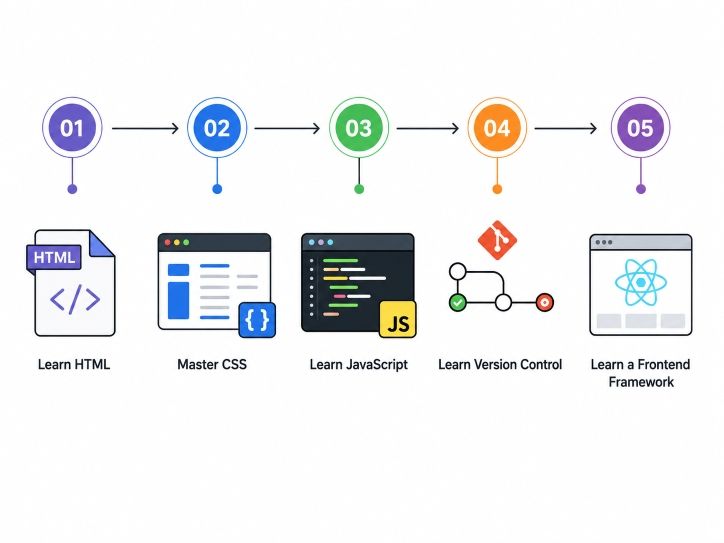
When we talk about front-end development, we are talking about everything that people see and use on a website. Frontend development is a part of making a full stack website.
HTML structures web pages.
Key concepts include:
Example elements:
Understanding semantic HTML improves both SEO and accessibility.
CSS controls appearance and layout.
Important topics include:
JavaScript adds interactivity.
Focus on:
Skill |
Importance |
| HTML | High |
| CSS | High |
| JavaScript | High |
| Responsive Design | High |
| Accessibility | Medium |
| Browser DevTools | High |
Also Read: 10 Practical Applications of JavaScript And Career Tips
Git is essential for collaboration.
Learn:
Most development teams use Git-based workflows.
After mastering JavaScript, learn:
React remains the most popular choice in many organizations.
Also Read: 20+ Top Front-End Developer Tools in 2025: Uses, Benefits, and More
Projects reinforce learning far better than passive tutorials.
A strong frontend foundation is a critical step in any web developer roadmap because every web application depends on an effective user experience.
Beginner projects:
Data Science Courses to upskill
Explore Data Science Courses for Career Progression
IIIT Bangalore
Executive Post Graduate Certificate in Data Science & AIPlacement Assistance
Once you have a grasp of frontend basics, it's time to learn more about full stack web development. You should dive deeper into the stack web developer roadmap.
Backend development powers the functionality users cannot see.
The backend handles:
Popular choices include:
Language |
Common Framework |
| JavaScript | Node.js |
| Python | Django, Flask |
| Java | Spring Boot |
| PHP | Laravel |
| C# | ASP.NET |
Node.js is often recommended because it lets developers work with JavaScript on the frontend and the backend of a website.
Also Read: 20 Essential Back-End Developer Skills to Build Scalable Apps in 2025
APIs allow systems to communicate.
Key concepts:
Common HTTP methods:
Data storage is a core part of the roadmap for web development.
Two major database categories exist.
Examples:
Examples:
Every developer should understand:
Try building:
These projects combine APIs, databases, and authentication into real-world solutions.
The backend stage is often where developers start understanding how complete web applications function.
A full stack developer can build both frontend and backend systems. This makes them highly versatile and valuable across startups and large organizations.
A full stack developer works across:
This combination forms the basis of the full stack web developer roadmap.
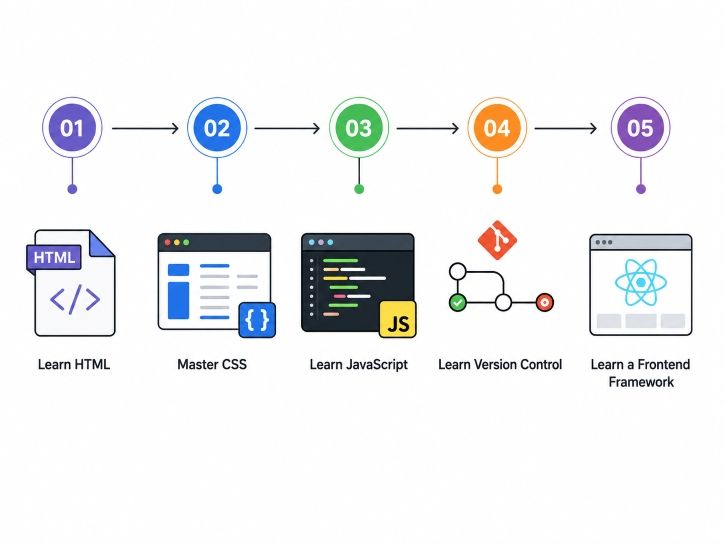
Stage |
Technologies |
| Frontend | HTML, CSS, JavaScript |
| Framework | React |
| Backend | Node.js |
| Database | MongoDB/PostgreSQL |
| Version Control | Git |
| Deployment | Vercel, Netlify, AWS |
Many beginners ignore deployment, but employers value developers who can launch applications.
Popular platforms include:
Cloud knowledge is increasingly important.
Learn:
Your portfolio should showcase:
Employers often evaluate projects before resumes.
Technical skills alone are not enough.
Develop:
As much as it is important to follow the right path, it is also important to avoid mistakes equally.
Many learners consume endless tutorials without building projects.
A better approach:
Beginners often try learning:
all at the same time.
Choose one stack and master it first.
Frameworks change, but fundamentals remain valuable.
Never skip:
Debugging is a core development skill.
Use:
Projects demonstrate capability. Employers trust working applications more than certificates.
Version control is a professional requirement. Every serious roadmap for web development should include Git early in the learning journey.
Following a structured web developer roadmap helps you avoid mistakes. It also helps to learn faster. And it guides you through the process.
You can achieve your goal with trouble.
Priority |
Topic |
| 1 | HTML |
| 2 | CSS |
| 3 | JavaScript |
| 4 | Git |
| 5 | React |
| 6 | Backend |
| 7 | Databases |
| 8 | Deployment |
| 9 | Advanced Topics |
Subscribe to upGrad's Newsletter
Join thousands of learners who receive useful tips
The journey to becoming a web developer is much easier when you follow a structured learning path. Start with HTML, CSS, and JavaScript. Then move into front-end frameworks, backend development, databases, deployment, and project building.
The most effective web developer roadmap is not about learning every technology available. It is about mastering fundamentals, building practical projects, and consistently improving your skills. Whether you choose a frontend path, backend specialization, or a complete full stack web developer, roadmap, steady progress and hands-on experience will always matter more than chasing trends.
Want to explore more about web developer roadmap? Book your free 1:1 personal consultation with our expert today.
The best web developer roadmap starts with HTML, CSS, and JavaScript before moving into frameworks, backend technologies, databases, and deployment. Beginners should focus on mastering fundamentals first and build projects alongside learning. This approach creates stronger long-term development skills.
Most learners need between 6 and 12 months to complete a basic web developer roadmap. The timeline depends on learning consistency, available study time, and project experience. Building real-world applications can significantly improve understanding and job readiness.
No, a formal degree is not always required. Many successful developers are self-taught or learned through online courses and bootcamps. Employers often prioritize practical skills, portfolios, and problem-solving abilities over academic qualifications.
JavaScript is often the best starting point because it powers frontend development and can also be used for backend development through Node.js. Learning JavaScript early supports a smoother transition into a full stack web development roadmap.
Technically yes, but it is not recommended. Frontend development helps you understand how users interact with applications. Most successful developers begin with frontend fundamentals before progressing through a full stack web developer roadmap.
Beginners should build projects like portfolio websites, calculators, weather applications, blogs, task managers, and authentication systems. These projects help reinforce technical concepts and demonstrate practical skills to recruiters.
Frontend development focuses on the visual interface users interact with, while backend development manages servers, databases, and application logic. Together they form the foundation of modern web applications and the broader web developer roadmap.
Yes. React helps build strong frontend skills and improves understanding of user interfaces. Once frontend fundamentals are clear, learning Node.js becomes easier because you already understand JavaScript and application workflows.
Yes. Git is an industry-standard version control system used by development teams worldwide. It helps track changes, manage collaboration, and maintain project history, making it an essential part of any roadmap for web development.
Deployment is extremely important because it allows developers to publish and maintain applications online. Understanding hosting, domains, cloud services, and deployment workflows makes candidates more attractive to employers.
The most sought-after skills include JavaScript, React, Node.js, APIs, cloud deployment, database management, Git, and problem-solving. Employers increasingly value developers who can build, deploy, and maintain complete web applications efficiently.
727 articles published
Sriram K is a Senior SEO Executive with a B.Tech in Information Technology from Dr. M.G.R. Educational and Research Institute, Chennai. With over a decade of experience in digital marketing, he specia...
Speak with Data Science Expert
By submitting, I accept the T&C and
Privacy Policy
Start Your Career in Data Science Today
Top Resources
Executive Diploma
12 Months
Master's Degree
18 Months
Bootcamp
6 Months