Team Leader Skills: Essential Skills, Examples and How to Develop Them
By Sriram
Updated on Jul 06, 2026 | 7 min read | 7.17K+ views
Share:

All courses
Certifications
More
By Sriram
Updated on Jul 06, 2026 | 7 min read | 7.17K+ views
Share:
Table of Contents
This blog covers the essential team leader skills, why they matter, practical team leader skills examples, and simple ways to improve them. You'll also learn what employers look for and how to highlight these skills for career growth and your skills for team leader resume.
Build on your team leader skills with upGrad's MBA course. Develop expertise in business strategy, people management, and decision-making while learning from leading universities. Gain industry-relevant skills through flexible online learning and prepare for leadership and management roles.
Popular MBA Programs
Every team has different personalities, goals, and challenges. A team leader must balance business objectives while helping individuals perform well together. That's why team leader skills are much more than technical knowledge or job experience.
Team leader skills are the abilities that help someone guide, support, and coordinate a team toward shared goals.
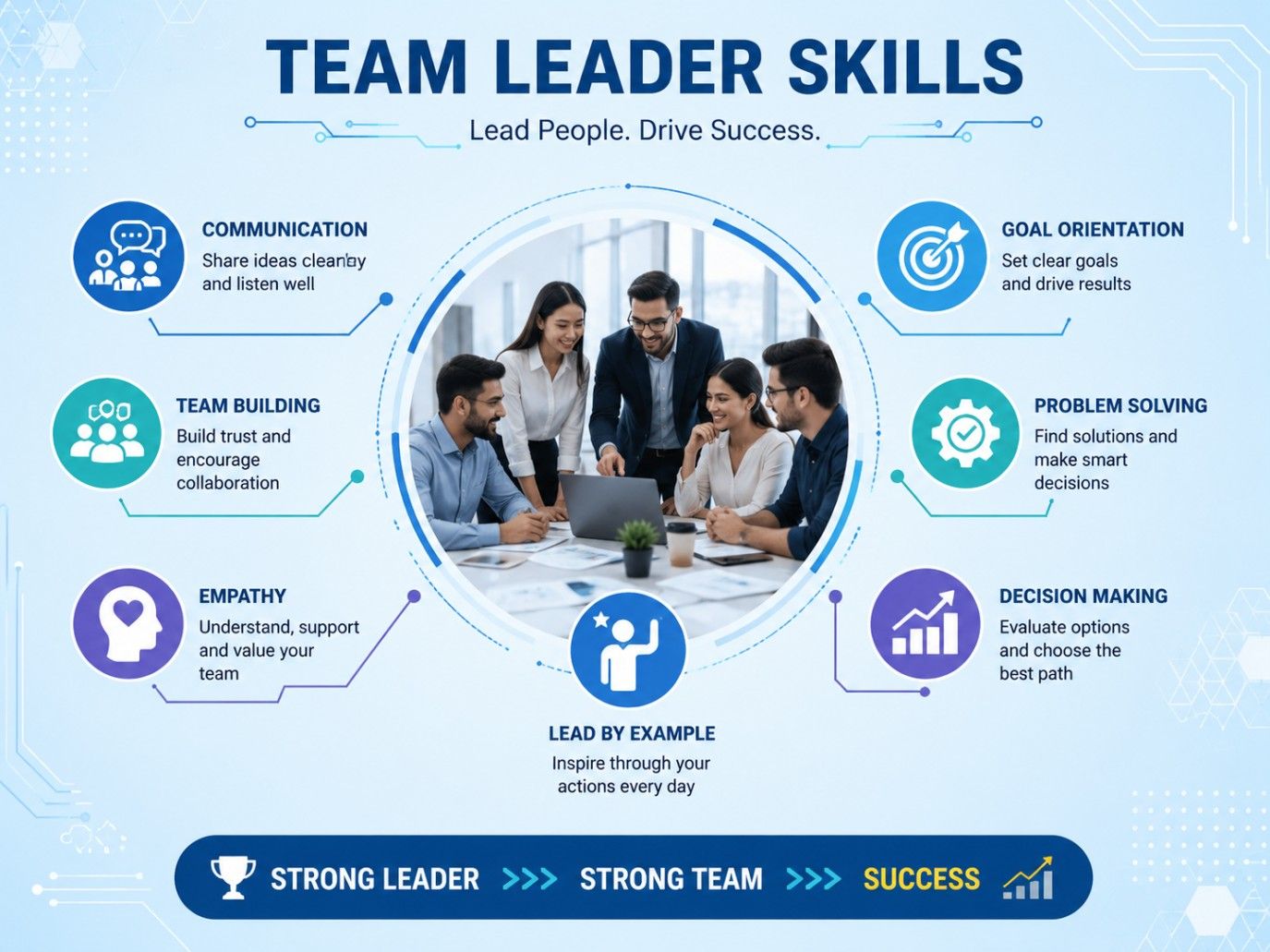
These skills combine communication, decision-making, emotional intelligence, planning, problem-solving, and people management.
Unlike managers who often focus on strategy and organizational planning, team leaders work closely with employees every day. They answer questions, remove obstacles, encourage collaboration, and help maintain momentum during projects.
It's usually consistent. Good team leader skills combine communication, accountability, emotional intelligence, adaptability, and decision-making. Leaders who practice these skills consistently earn their team's trust and create an environment where people can perform at their best.
The table below summarizes the core abilities every leader should develop.
Skill |
Why It Matters |
Workplace Example |
| Communication | Creates clarity | Explaining project expectations |
| Decision-making | Solves problems quickly | Choosing between project priorities |
| Delegation | Improves efficiency | Assigning tasks based on strengths |
| Emotional intelligence | Builds trust | Handling employee concerns respectfully |
| Conflict resolution | Maintains teamwork | Mediating disagreements between colleagues |
| Time management | Keeps work on schedule | Meeting project deadlines |
| Strategic thinking | Aligns daily work with goals | Planning future project milestones |
| Coaching | Helps employees grow | Training new team members |
Must read : Online MBA Program – Is It Worth the Cost?
Free Courses
Strong team leader skills help individuals, teams, and organizations perform better. Effective leaders provide clear direction, build trust, solve problems, and keep employees motivated, resulting in improved productivity and stronger collaboration.
Leadership Practice |
Business Benefit |
| Clear communication | Better project coordination |
| Effective delegation | Higher productivity |
| Strong coaching | Improved employee retention |
| Quick decision-making | Faster problem resolution |
Also read : A Guide to Training Management System
MBA Courses to upskill
Explore MBA Courses for Career Progression
O.P.Jindal Global University
MBA (with Career Acceleration Program by upGrad)Become interview ready with Career Services
PSB MBA + IIML Certification
MBA from Paris School of Business with Certification from IIM LucknowEvery successful leader has a unique style, but the best leaders share a common set of team leader skills that help them guide people, solve problems, and achieve results.
Focus on improving one skill at a time, practice consistently, and you'll build lasting leadership confidence.
If team members don't understand expectations, even talented employees struggle to deliver good work. A leader's job isn't simply to speak clearly. It's also to listen carefully, ask questions, and make sure everyone stays aligned.
Good communication includes:
Imagine assigning a project without explaining priorities. One employee focuses on speed, another focuses on quality, and someone else waits for clarification. Confusion spreads quickly.
Some decisions involve deadlines. Others affect budgets, customer satisfaction, or employee workloads. Delaying every decision can frustrate the team and slow progress.
Good decision-making involves:
Strong leaders accept responsibility, learn from mistakes, and adjust their approach instead of avoiding future decisions.
A supplier misses a delivery. A project falls behind schedule. Two employees disagree on priorities. The way a leader responds often determines whether the problem grows or gets resolved quickly.
Effective problem-solvers usually:
Disagreements happen in every workplace.
Different opinions aren't necessarily bad. Healthy discussions often produce better ideas. Problems begin when disagreements become personal or remain unresolved.
Strong leaders address conflicts early.
They:
They believe doing everything themselves guarantees better results. It doesn't. Eventually, workloads increase, deadlines slip, and employees lose opportunities to grow.
Delegation means assigning responsibility while providing enough support for success.
Good delegation involves:
Delegation builds confidence across the entire team.
Emotional intelligence allows leaders to recognize emotions, respond thoughtfully, and maintain healthy working relationships. Employees don't expect leaders to solve every personal problem. They do appreciate empathy, fairness, and respect.
Leaders with strong emotional intelligence often:
Daily tasks are important.Long-term direction matters too.
Strategic thinking helps leaders connect today's work with tomorrow's goals. Rather than reacting to every issue, strategic leaders prioritize activities that create lasting value.
They regularly ask:
A team working on multiple client projects, for instance, may need to delay lower-impact work so critical deadlines stay on track. Strategic thinking helps leaders make those decisions with confidence.
Every leader has the same twenty-four hours.
The difference lies in how those hours are used.
Poor time management affects the entire team. Meetings become longer than necessary, deadlines get pushed back, and urgent work replaces important planning.
Leaders who manage time well usually:
Good planning doesn't eliminate surprises. It simply leaves room to handle them.
Also read : Performance Management System: Complete Guide
Great leaders don't create followers.They develop future leaders.
Coaching focuses on improving current performance, while mentoring supports long-term growth. Both play an important role in building stronger teams.
Effective coaching includes:
Imagine a junior employee preparing to lead their first client presentation. Instead of taking over, the team leader practices with them, provides suggestions, and offers encouragement. That experience helps build confidence far beyond a single meeting.
Without clear goals, teams lose direction. People need to know what success looks like before they can achieve it.
Strong leaders set goals that are:
When expectations remain clear, employees spend less time guessing and more time delivering results.
People perform better when they trust each other.Team building isn't limited to workshops or social events. It happens through everyday leadership.
Leaders strengthen teams by:
Projects, deadlines, meetings, and employee needs all compete for attention. Staying organized helps leaders maintain focus without becoming overwhelmed.
Simple habits make a difference.Use shared project trackers, review priorities weekly, and identify potential delays before they become larger problems. Organized leaders create organized teams.
Leadership is built on relationships.
Employees are more likely to share ideas, report challenges, and accept feedback when they trust their leader.
Relationship building happens through everyday actions.
Trust isn't built in one meeting. It's earned over hundreds of small interactions.
People notice consistency.
Leaders who admit mistakes, keep commitments, and treat everyone fairly build credibility over time. Accountability also sets the standard for the rest of the team.
When leaders accept responsibility, employees are more likely to do the same.
Customer needs shift, priorities evolve, and unexpected challenges appear. Leaders who adapt quickly help their teams remain productive instead of becoming frustrated.
Flexibility doesn't mean abandoning goals. It means adjusting the path while keeping the destination clear.
Sometimes the best ideas come from trying a different approach or encouraging team members to think beyond established processes.
Creative leaders ask thoughtful questions.
"What if we tried another approach?"
That simple question often starts meaningful improvements.
Feedback helps people improve.
Poor feedback discourages employees. Helpful feedback explains what happened, why it matters, and what can be done differently next time.
Good feedback is:
A short coaching conversation after a project often delivers more value than waiting for an annual performance review.
Turn your team leader skills into stronger business leadership capabilities. Explore upGrad's
MBA in Business and Law from O.P. Jindal Global University to build expertise in strategy,
decision-making, and people management while preparing for leadership roles across industries.
Understanding leadership concepts is important, but seeing how they work in real situations makes them easier to apply. The following team leader skills examples show how effective leaders handle common workplace challenges.
Situation |
How a Team Leader Applies Their Skills |
| Leading a New Project | Clearly defines goals, assigns responsibilities, sets realistic deadlines, identifies potential risks, and conducts regular progress reviews to keep the project on track. |
| Managing Remote or Hybrid Teams | Schedules regular check-ins, documents important updates, sets communication expectations, and uses collaboration tools to keep everyone connected. |
| Resolving Workplace Conflicts | Listens to all viewpoints, stays neutral, focuses on facts, encourages respectful discussions, and works with the team to reach a fair solution. |
| Motivating Low-Performing Employees | Identifies the root cause of poor performance, provides coaching, offers additional training, and supports employees instead of assigning blame. |
| Managing Tight Deadlines | Prioritizes critical tasks, delegates work effectively, communicates with stakeholders, and keeps the team focused during high-pressure situations. |
| Delegating Work Effectively | Assigns tasks based on employees' strengths, explains expectations clearly, provides support when needed, and reviews progress through regular feedback. |
Also Read: Performance Management: Definition, Process, Benefits & Best Practices (2026 Guide)
Strong leadership isn't built overnight. Every leader improves through practice, feedback, and continuous learning. Developing good team leader skills takes consistent effort, self-awareness, and a willingness to learn from everyday experiences. Focus on improving one skill at a time and apply it consistently in your daily work.
Simple Ways to Improve Your Team Leader Skills
Developing good team leader skills helps you become more confident, earn your team's trust, and handle workplace challenges more effectively.
Also Read: Why Organizational Skills Matter in the Workplace and How to Improve Them
Subscribe to upGrad's Newsletter
Join thousands of learners who receive useful tips
Although both roles involve leading people and achieving business goals, their responsibilities and focus areas differ.
Aspect |
Team Leader |
Manager |
| Primary Focus | Oversees the day-to-day work of a team | Manages departments and long-term business objectives |
| Main Responsibility | Coordinates tasks and supports team members | Plans strategy, budgets, and organizational goals |
| Decision-Making | Handles operational and daily decisions | Makes strategic and organizational decisions |
| Team Interaction | Works closely with employees on a daily basis | Oversees multiple teams or departments |
| Performance Management | Monitors project progress and provides coaching | Evaluates overall team and business performance |
| Resource Management | Allocates tasks and manages workloads | Manages budgets, staffing, and organizational resources |
| Employee Development | Coaches, mentors, and provides regular feedback | Develops talent strategies and performance plans |
| Goal Setting | Focuses on achieving team goals | Aligns departmental goals with business objectives |
| Typical Example | Assigns daily tasks, resolves conflicts, and supports employees | Sets policies, approves budgets, and measures department performance |
Also Read: Management Information Systems: Meaning, Components & Examples (2026)
Becoming an effective leader is about building consistent habits that help your team grow, collaborate, and perform at its best.
Following these best practices helps build trust, improve collaboration, and strengthen your overall team leader skills.
Also Read: Learning Management System (LMS): Meaning, Features & Examples (2026)
Strong leadership is built by developing a balanced set of technical, interpersonal, and management skills. Use this checklist as a quick self-assessment to identify your strengths and highlight the areas where you can continue to grow.
Essential Team Leader Skills :
Category |
Key Skills |
| Communication | Clear communication, active listening, constructive feedback |
| People Management | Delegation, coaching, conflict resolution, relationship building |
| Planning & Organization | Time management, goal setting, workload management |
| Strategic Thinking | Decision-making, problem-solving, strategic thinking |
| Personal Leadership | Integrity, accountability, adaptability, resilience, continuous learning |
Review these skills regularly and focus on improving one or two areas at a time. Consistent practice will help you become a more confident and effective team leader.
Also read : 5 Key Skills Required for Successful Management Career & How To Achieve Those Skills?
They develop them through experience, feedback, and consistent practice. The strongest team leader skills combine clear communication, sound decision-making, empathy, delegation, and the ability to guide people through both everyday tasks and unexpected challenges.
Building strong team leader skills takes time, but presenting them effectively on your resume is equally important. When selecting skills for team leader resume sections, focus on abilities you have demonstrated through real achievements. A resume backed by measurable results gives employers greater confidence in your leadership potential.
Ready to start your journey? Book a free consultation with upGrad today to find the best path for your career.
Strong team leader skills help create clear direction, improve communication, and build trust within a team. When people understand their responsibilities and receive timely support, they work more confidently and collaborate better. Over time, this leads to higher productivity, fewer misunderstandings, and better project outcomes.
Yes. Leadership starts with everyday actions rather than a job title. You can build leadership by volunteering for projects, mentoring new colleagues, improving communication, and taking responsibility for solving problems. These experiences prepare you for future leadership opportunities and demonstrate initiative to employers.
A successful team leader needs a combination of technical knowledge and people skills. The most valuable abilities include communication, active listening, decision-making, delegation, problem-solving, emotional intelligence, adaptability, and accountability. Developing these team leader skills helps leaders guide teams effectively while maintaining a positive and productive work environment.
The seven core leadership skills commonly valued by employers are communication, decision-making, problem-solving, delegation, emotional intelligence, adaptability, and strategic thinking. Together, these skills help leaders manage change, support employees, resolve workplace challenges, and keep teams focused on achieving shared business goals.
Five qualities that consistently define effective team leaders are integrity, accountability, empathy, confidence, and clear communication. These qualities help leaders earn trust, encourage teamwork, and handle difficult situations with fairness. Strong relationships often begin with these personal characteristics rather than technical expertise alone.
Good leaders communicate honestly, make thoughtful decisions, remain adaptable during change, support their teams, and take responsibility for their actions. These qualities create a positive workplace culture where employees feel respected, motivated, and comfortable contributing ideas that improve overall team performance.
Instead of simply listing leadership qualities, describe how you've applied them in real situations. Include measurable achievements, such as improving team productivity, leading successful projects, or mentoring employees. Recruiters are more likely to notice evidence of leadership than a long list of unsupported skills.
Remote teams depend heavily on communication, trust, organization, and accountability. Leaders should provide clear expectations, schedule regular check-ins, encourage collaboration through digital tools, and recognize employee contributions. Building strong relationships virtually requires consistency and open communication more than frequent meetings.
Look beyond personal opinions and focus on measurable indicators. Improved employee engagement, fewer workplace conflicts, stronger project outcomes, and positive feedback from colleagues often show leadership growth. Regular self-reflection and performance reviews also help identify areas that still need improvement.
New leaders often try to manage every detail, avoid difficult conversations, or hesitate when making decisions. Others focus too much on completing tasks and not enough on supporting people. Learning to delegate, communicate openly, and trust your team usually leads to better long-term results.
Developing strong team leader skills prepares you for greater responsibilities beyond your current role. Employers often promote professionals who can guide teams, solve problems, and make sound decisions under pressure. These abilities not only improve your daily performance but also open doors to management and senior leadership positions.
724 articles published
Sriram K is a Senior SEO Executive with a B.Tech in Information Technology from Dr. M.G.R. Educational and Research Institute, Chennai. With over a decade of experience in digital marketing, he specia...
Speak with MBA expert
By submitting, I accept the T&C and
Privacy Policy
From MBA to Dream Job - Explore Our Alumni Success Stories
Top Resources
Master's Degree
13 Months
Master's Degree
12 Months
O.P.Jindal Global University
MBA (with Career Acceleration Program by upGrad)Become interview ready with Career Services
Master's Degree
12 Months