A Guide to Training Management System
By upGrad
Updated on Jun 11, 2026 | 7 min read | 2.31K+ views
Share:

All courses
Certifications
More
By upGrad
Updated on Jun 11, 2026 | 7 min read | 2.31K+ views
Share:
Table of Contents
A training management system helps organizations plan, deliver, track, and improve employee training programs from one platform. It makes the entire process more organized and measurable whether a company is onboarding hires, managing compliance requirements, or building leadership skills with a training management system.
In today's workplace skills become outdated quickly; organizations need a way to keep employees trained and certified. That's why businesses across industries are investing in training platforms to manage learning on a large scale.
In this guide, you'll learn what a training management system is, how it works. The key benefits, features of a training management system.
Explore Management Courses from upGrad and discover how Training Management Systems streamline learning delivery, track learner progress, and enhance workforce development.
Popular Management Programs
A training management system is a software that helps manage the complete training. It helps organizations schedule courses, add learners, track learners progress, check certifications, generate reports and measure training outcomes. Think of it as a centralized hub where all training happens.
Without a structured system, organizations often use spreadsheets, emails, and manual processes. As more people join the organization, this traditional approach becomes difficult to keep track of everything.
Also Read: Management Information Systems: Meaning, Components & Examples (2026)
A typical training management system allows administrators to:
Core components and the purpose of training management system are:
Free Courses
Recent industry reports show that digital training platforms are growing fast. This is because companies want to development their workforce and make sure of compliance management.
Many companies are choosing cloud-based learning systems because they offer scalability, accessibility, and better reporting capabilities.
For instance, a manufacturing company conducting safety management systems can easily keep track of worker certifications. They also get reminders when these certifications need to be renewed. Similarly, a utility company delivering energy management systems training can monitor employee progress across multiple locations.
The same applies to government agencies that conduct national incident management system training. A central platform makes sure training is consistent and keeps records, for audits and compliance reviews.
In short, a training management system makes administrative work easier. It also helps you see what employees are learning.
Also Read: What is Corporate Training? Your Easy Guide in 2025
Management Courses to upskill
Explore Management Courses for Career Progression
IIIT-B & IIM, Udaipur
Chief Technology Officer & AI Leadership ProgrammeOrganizations spend a lot of money on training to get results, yet training only works well when it is handled correctly, and its impact is tracked.
The key is to manage training and measure its effectiveness is when organizations focus is investing on training, and they need to ensure that training leads to improvements. A training management system helps achieve both goals.
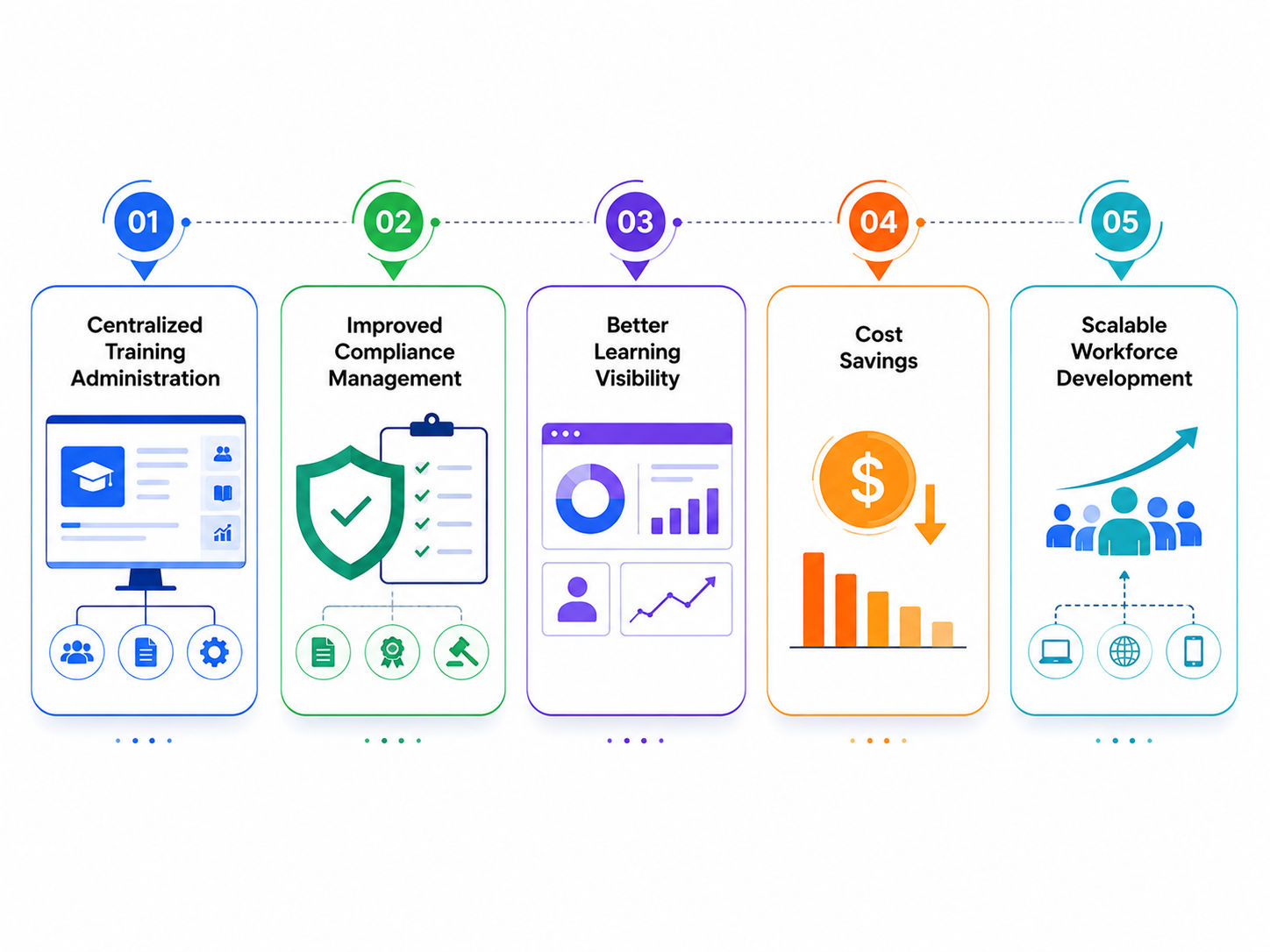
Instead of handling many spreadsheets and documents, organizations can store everything in one place. It reduces confusion, is more efficient, and saves time for the organizations by focusing on tasks that matter.
Benefits include:
Some industries, like the healthcare industry, the manufacturing industry, the energy industry, and the public safety industry have specific rules they need to follow.
This is particularly useful for safety management systems training and national incident management system training programs where accurate records are critical.
A training management system helps organizations:
Managers gain access to real-time training data.
They can see:
Manual training administration requires significant time and resources.
Organizations can reduce costs through:
As organizations grow, training demands increase.
A training management system supports:
Companies that think of training as a strategy to improve their business usually see that having a plan for training helps people learn more and makes the company work better.
Organizations that consider results from training and their daily operations to run smoothly take training very seriously.
Some benefits and its impact:
Benefit |
Impact |
| Automation | Less manual work |
| Compliance | Reduced risk |
| Reporting | Better decision-making |
| Scalability | Supports growth |
| Visibility | Improved tracking |
| Consistency | Standardized learning |
Also Read: Learning Management System (LMS): Meaning, Features & Examples (2026)
Not all platforms are the same when it comes to what they can do. While choosing a training management system, you need to think about which feature is important for your organization.
This is because choosing the right training management system is a big deal and you have to know what you want from a training management system.
The platform should make it easy to:
Effective course management includes:
Scheduling tools should support:
Data-driven training decisions require strong reporting capabilities.
Useful reports include:
Many industries depend on certifications.
A training management system should provide:
This is especially important for safety management systems training and national incident management system training programs.
Modern employees often learn on the go.
Look for:
The best systems integrate with:
Feature |
Why It Matters |
| User Management | Simplifies administration |
| Scheduling | Organizes training delivery |
| Reporting | Tracks effectiveness |
| Certification Tracking | Supports compliance |
| Mobile Access | Improves accessibility |
| Integrations | Reduces data silos |
Technology by itself is not enough to create something
Companies need a plan to make the most of a training management system and get the best results from it. The training management system should be utilized at its best efficient way.
Start by identifying the objectives for providing the training.
Examples include:
Review existing workflows.
Ask questions such as:
Consider factors such as:
Prepare learning materials before launch.
This may include:
Successful adoption requires stakeholder support.
Provide training for:
After deployment:
A successful implementation turns a training management system from a software tool into a long-term workforce development asset.
A training management system helps organizations manage learning more efficiently, improve compliance, and create measurable workforce development programs. Whether you're managing employee onboarding, energy management systems training, safety management systems training, or national incident management system training, the right platform can significantly improve training outcomes.
As workforce skills continue to evolve, organizations that invest in structured learning systems will be better positioned to stay compliant, productive, and competitive. For many businesses, exploring government grants for training management systems in target states can make implementation even more accessible and cost-effective.
Want personalized guidance on training management system? Speak with an expert for a free 1:1 counselling session today.
A training management system focuses on administration, scheduling, reporting, certifications, and compliance tracking. A learning management system primarily delivers learning content. Many organizations use both together to create a complete training ecosystem.
Any organization that manages employee training can benefit. This includes corporations, government agencies, educational institutions, healthcare providers, manufacturers, and energy companies that conduct regular training programs and compliance activities.
The system automatically tracks training completion, certifications, renewal dates, and audit records. This helps organizations maintain compliance and demonstrate training requirements during inspections or regulatory reviews.
Yes. Most modern platforms support online learning, virtual classrooms, mobile access, and cloud-based delivery. This makes training accessible regardless of employee location.
Absolutely, many cloud-based solutions are designed for small and medium-sized businesses. Organizations can start with basic features and scale as training needs grow.
Energy management systems training helps employees understand energy efficiency practices, regulatory requirements, and operational improvements. It supports sustainability goals while reducing energy-related costs and risks.
Industries such as manufacturing, construction, transportation, oil and gas, and healthcare frequently require safety management systems training. These programs help reduce workplace incidents and support regulatory compliance.
National incident management system training provides a standardized approach to emergency response and incident coordination. It helps organizations and agencies work together effectively during disasters and critical events.
Some state and regional workforce development programs offer grants that support employee training initiatives and training technology investments. Eligibility requirements vary by location and program objectives.
Key metrics include completion rates, certification status, learner engagement, assessment scores, compliance performance, and training ROI. These indicators help measure the effectiveness of training programs.
Implementation timelines vary depending on organization size, content complexity, and integration requirements. Small deployments may take a few weeks, while enterprise implementations can require several months for full deployment and adoption.
987 articles published
We are an online education platform providing industry-relevant programs for professionals, designed and delivered in collaboration with world-class faculty and businesses. Merging the latest technolo...
Get Free Consultation
By submitting, I accept the T&C and
Privacy Policy
Top Resources
Certification
3 Months
Certification
6 Months
O.P. Jindal Global University
Masters in International Accounting and Finance (Accredited by ACCA, UK)Master's Degree
12 Months