Revealed: Average Bank Manager Salary in India (2026 Latest Figures)
Updated on Jul 07, 2026 | 11 min read | 11.07K+ views
Share:

All courses
Certifications
More
Updated on Jul 07, 2026 | 11 min read | 11.07K+ views
Share:
Bank manager salaries in India typically range from ₹3 lakh to ₹6 lakh per year for entry-level professionals, ₹7 lakh to ₹15 lakh for mid-level managers, and ₹15 lakh to ₹30 lakh or more for senior leadership roles. Managers working in private, foreign, and investment-focused banks often earn higher salaries due to performance incentives, larger portfolios, and greater business responsibilities.
As banking becomes more digital and customer-centric, skilled managers are increasingly in demand across public sector banks, private banks, foreign banks, NBFCs, and fintech organizations.
This article covers key factors affecting bank manager salary in India, including top-paying banks, career paths, decision-making roles, and trends to enhance your earning potential.
Popular upGrad Programs
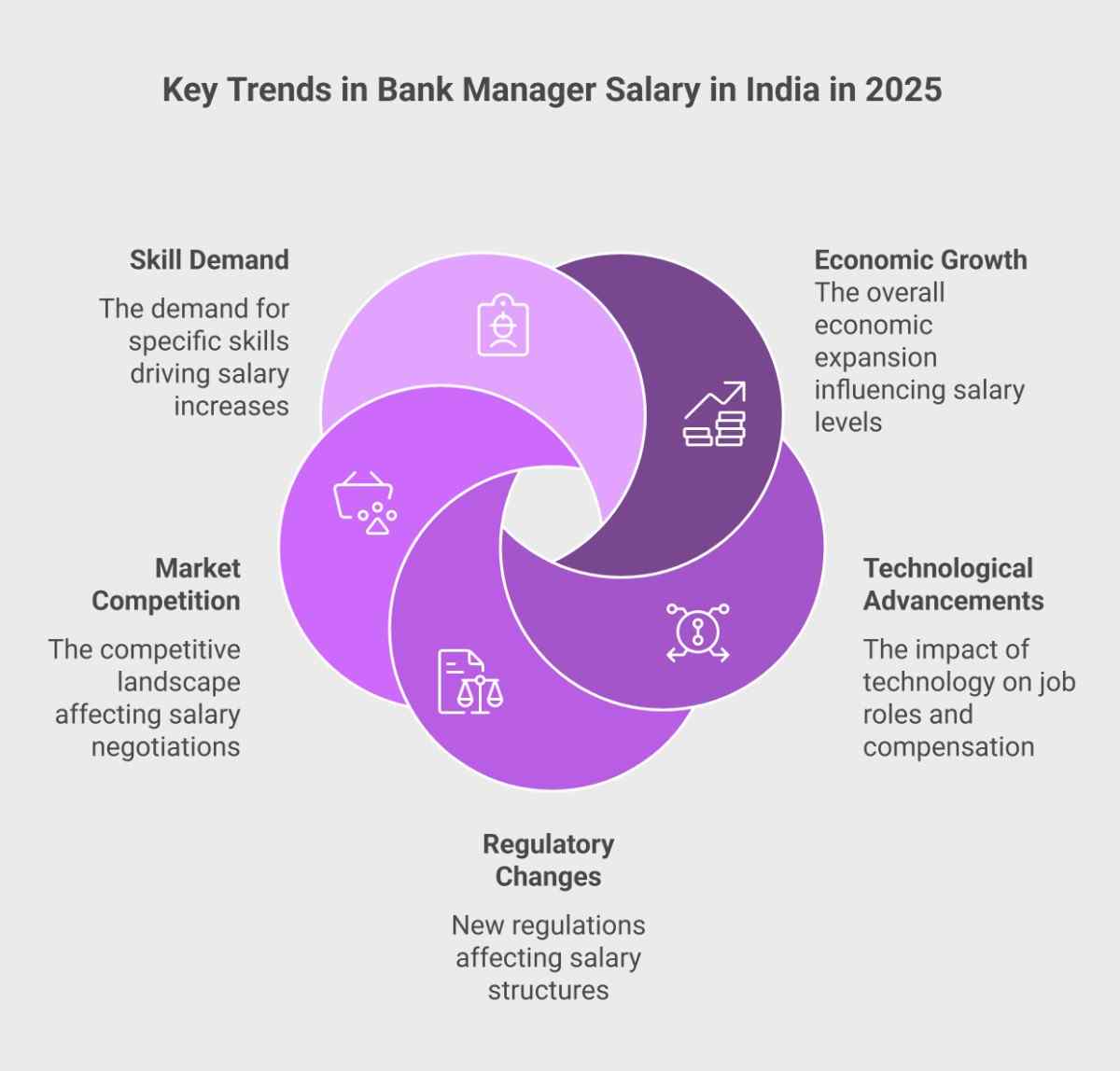
The bank manager salary in India in 2026 depends on your experience level, the type of bank you work for (public vs. private), job location, and additional certifications.
Metro cities like Mumbai, Delhi, and Bangalore offer higher salaries due to increased demand and cost of living. Private sector banks typically pay more than public sector banks, especially for roles involving sales targets and digital banking responsibilities.
To help you advance in your bank manager career, upGrad offers top courses in bank management, Investment Management, and Wealth Management. These courses are designed to equip you with the skills to excel in the finance industry and overshadow competition.
- Professional Certificate Program in Financial Modelling and Analysis in association with PwC Academy
- Business Analytics Certification Programme
- Master’s in International Accounting and Finance by JGU
Let’s break down how salaries differ based on your role, experience, and location within the Indian banking sector.
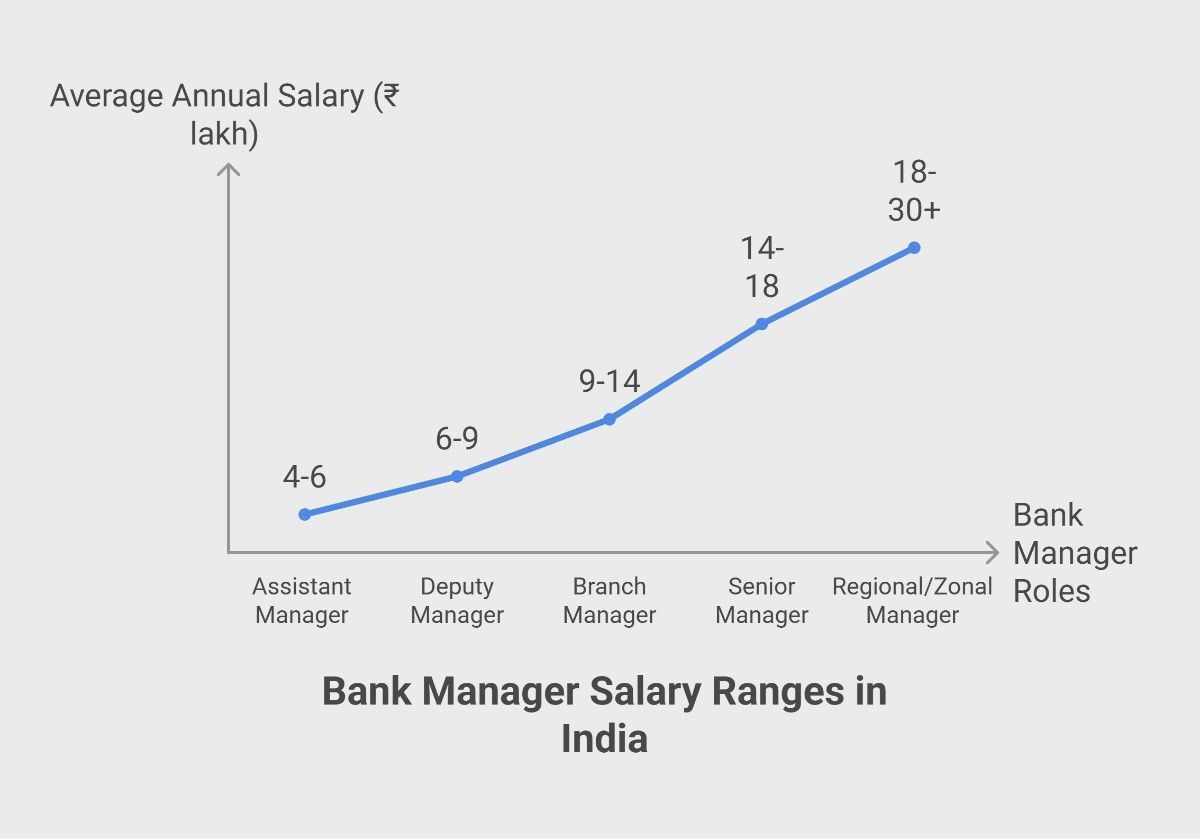
Bank manager salaries in India vary based on your role, experience level, and the type of bank you work for. Entry-level positions typically involve branch operations and customer handling, while senior roles include strategic planning, regulatory compliance, and team management.
For instance, as an Assistant Bank Manager, you might handle day-to-day banking services. As you move up to a Branch Manager or Regional Manager role, your responsibilities shift toward business growth, high-value client portfolios, and team leadership.
The table below outlines typical salary ranges across roles to help you understand where you stand and what to aim for in your career.
Role / Experience |
Average Annual Salary |
Key Responsibilities |
| Assistant Manager / 0–2 yrs | ₹4 lakh – ₹6 lakh | Cash ops, customer service, backend coordination |
| Deputy Manager / 2–5 yrs | ₹6 lakh – ₹9 lakh | Loan processing, compliance, reporting |
| Branch Manager / 5–9 yrs | ₹9 lakh – ₹14 lakh | Branch performance, team handling, and audits |
| Senior Manager / 8–12 yrs | ₹14 lakh – ₹18 lakh | Strategy, revenue growth, high-value clients |
| Regional/Zonal Manager / 12+ yrs | ₹18 lakh – ₹30 lakh+ | Multi-branch oversight, target planning, and risk management |
Source: AmbitionBox, Glassdoor
Also Read: Product Management in Banking: Driving Innovation & Customer-Centric Solutions
Now that you’ve seen how bank manager salary in India shifts by role, let’s break it down further by experience.
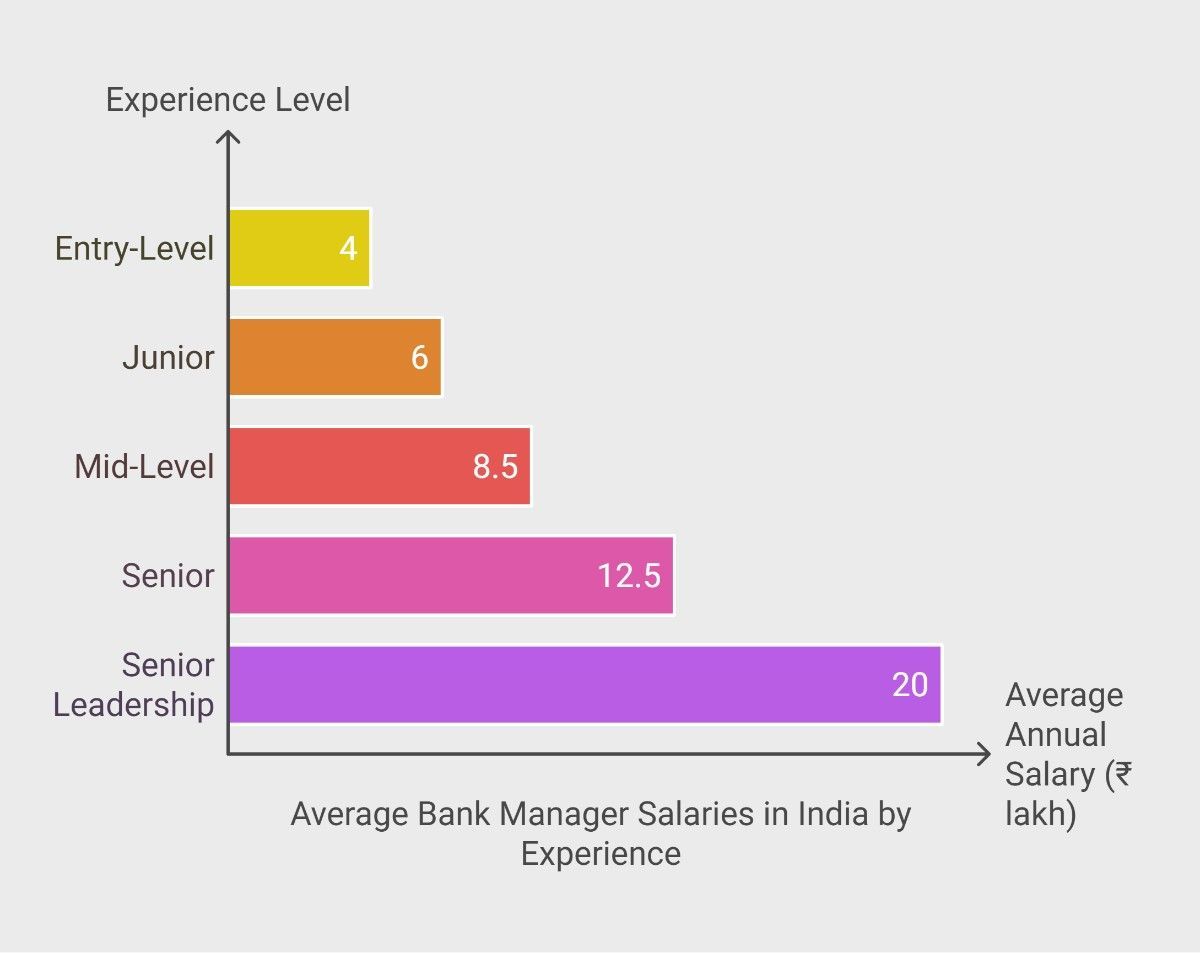
Bank manager salaries in India vary significantly depending on your experience, role, and the type of bank (public or private). Entry-level managers handle basic operations and customer service, while senior roles involve strategic planning, branch performance, and team leadership.
Here’s a breakdown of average salaries for different experience levels to help you understand what to expect as you grow in your banking career:
Role / Experience |
Average Annual Salary |
Key Responsibilities |
| Entry-Level / 0–2 yrs | ₹3 lakh – ₹5 lakh | Customer handling, account management |
| Junior / 2–5 yrs | ₹5 lakh – ₹7 lakh | Loan processing, daily branch operations |
| Mid-Level / 5–10 yrs | ₹7 lakh – ₹10 lakh | Team supervision, compliance, target management |
| Senior / 10–15 yrs | ₹10 lakh – ₹15 lakh | Branch strategy, revenue growth, risk oversight |
| Senior Leadership / 15+ yrs | ₹15 lakh – ₹25+ lakh | Regional leadership, policy execution |
Source: AmbitionBox, Glassdoor
Also Read: 5 Ways to Provide an Exceptional Customer Service
Learn to communicate professionally to grow your network and client base. Start with upGrad's free Effective Business Communication course today and build your confidence in professional settings.
Let’s now look at how bank manager salary in India varies by industry, as different sectors value managing expertise differently.
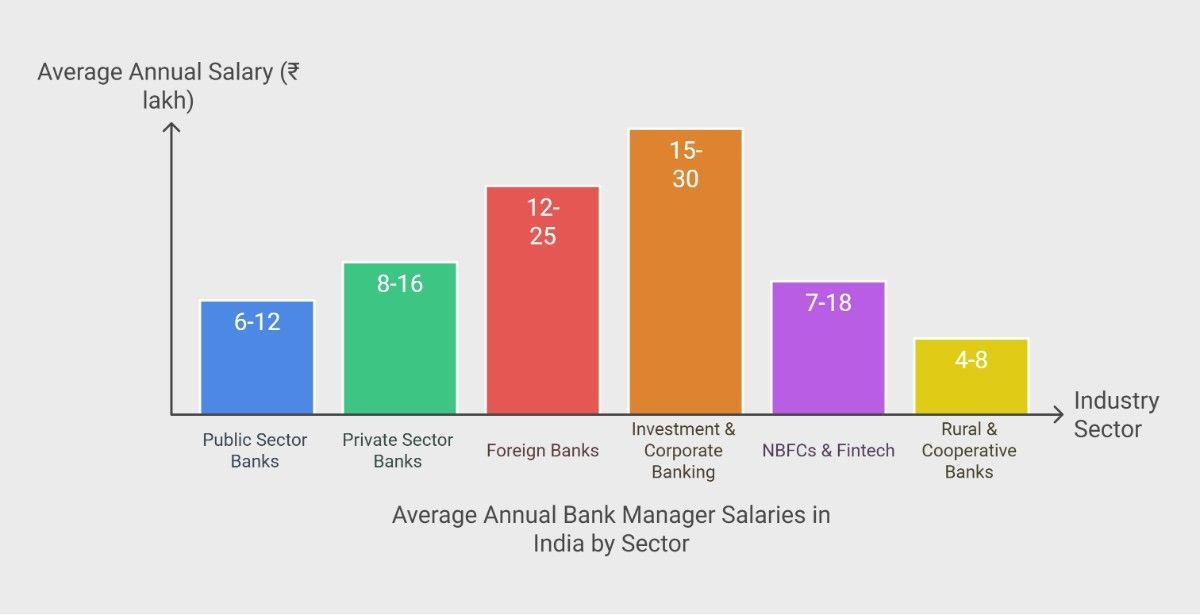
The bank manager salary in India varies based on the industry segment and the type of financial institution. While public sector banks offer stable pay and strong benefits, private and foreign banks often provide higher salaries, driven by performance and profitability. Your earning potential depends on the bank's scale, revenue model, and customer base.
Managers in investment banking, corporate banking, and wealth management tend to earn more due to the complexity and revenue impact of their roles. In contrast, retail or rural banking roles may offer comparatively lower pay but come with long-term job security and structured career paths.
Let’s break down the bank manager salary in India across different sectors:
Industry / Sector |
Average Annual Salary |
| Public Sector Banks (e.g. SBI, PNB) | ₹6 – ₹12 lakh |
| Private Sector Banks (e.g. HDFC, ICICI) | ₹8 – ₹16 lakh |
| Foreign Banks (e.g. HSBC, Citi) | ₹12 – ₹25 lakh |
| Investment & Corporate Banking | ₹15 – ₹30 lakh |
| NBFCs & Fintech | ₹7 – ₹18 lakh |
| Rural & Cooperative Banks | ₹4 – ₹8 lakh |
Source: AmbitionBox, Glassdoor
Also Read: What is Customer Relationship Management? A Beginner’s Guide
After exploring bank manager salaries in India by industry, let’s see how these compare globally to understand where India stands in the international market.
Also Read: How to Get a Job in the Banking Sector in India: A Complete Guide to Success
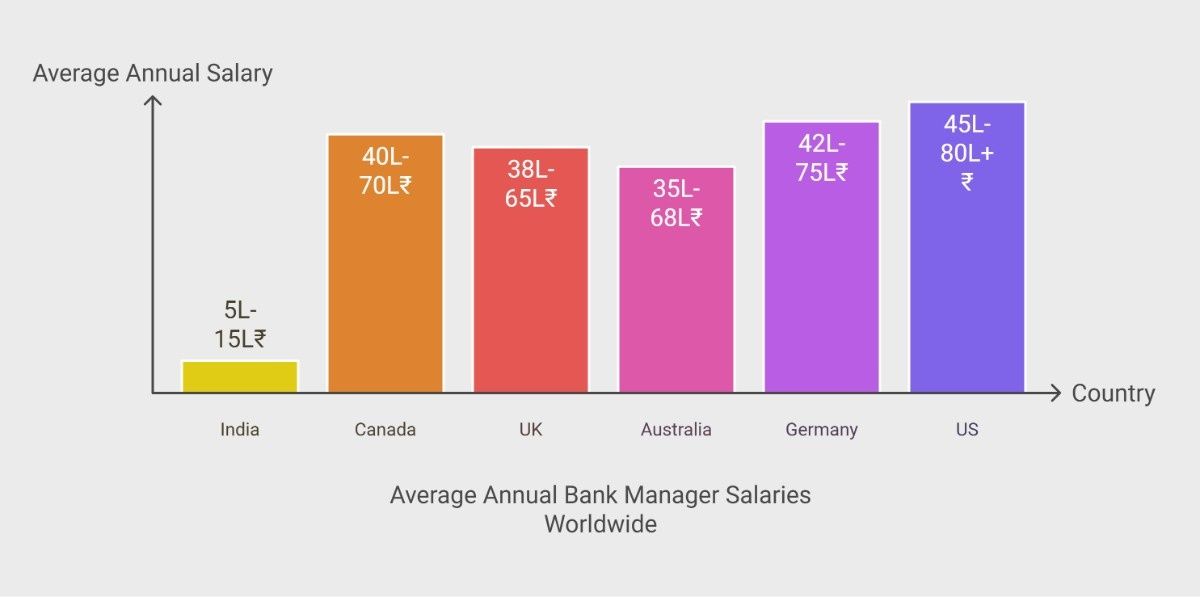
Bank manager salaries in India are notably lower than those in developed countries. This gap is driven by factors such as differences in banking infrastructure, cost of living, regulatory complexity, and economic scale.
In countries such as the U.S., the UK, and Germany, bank managers often oversee larger financial portfolios and face stricter compliance standards, which contribute to higher compensation.
Here’s a quick comparison of average annual bank manager salaries worldwide:
Country |
Average Annual Salary |
| India | ₹5L – ₹15L |
| Canada | ₹40L – ₹70L |
| UK | ₹38L – ₹65L |
| Australia | ₹35L – ₹68L |
| Germany | ₹42L – ₹75L |
| US | ₹45L – ₹80L+ |
Source: Glassdoor, Payscale, SalaryExpert
Also Read: How to Become an Investment Banker in India? Complete Guide [2026]
Next, let’s break down how you can increase your bank manager salary in India in 2026.
Free Courses
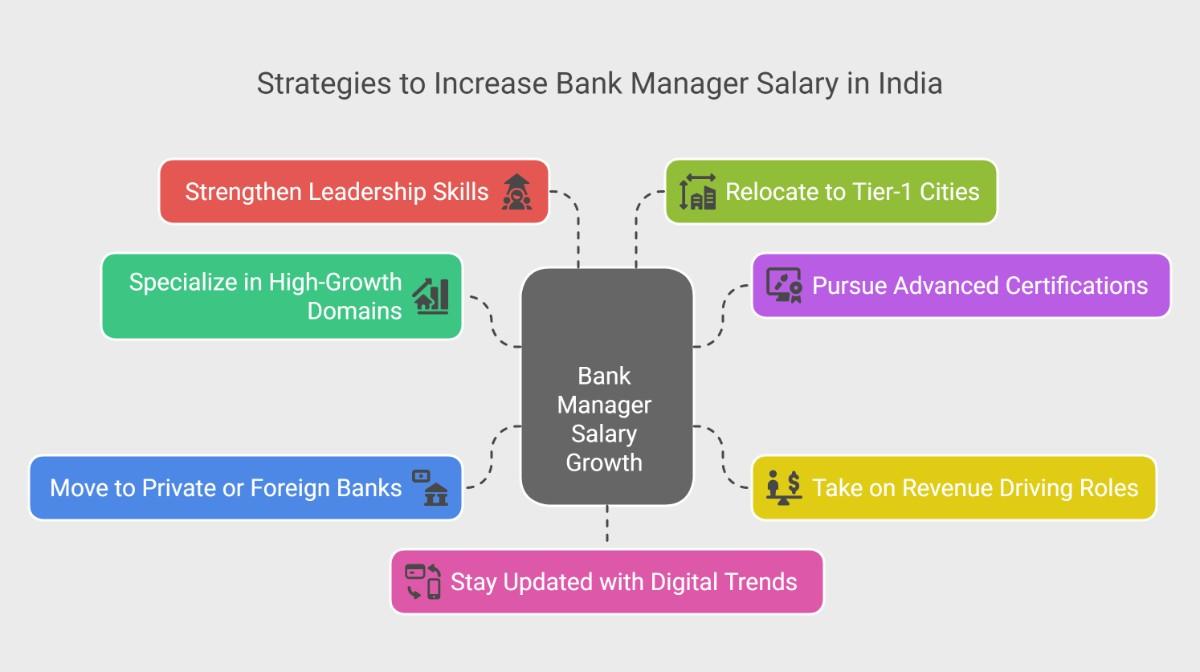
To grow your bank manager salary in India, you need to move beyond routine operations and focus on strategic leadership, client acquisition, and specialization. Expertise in corporate banking, digital transformation, or wealth management can significantly raise your earning potential.
Here's how you can accelerate your career and command a higher salary in 2026:
Roles in areas like corporate lending, digital banking, and HNI relationship management are in high demand and offer faster salary growth.
Actionable Step: Build your expertise in credit underwriting, high-value client servicing, and loan structuring. Learn digital banking platforms and client management tools to stay competitive.
Also Read: Top 15 Highest Paying Jobs in Finance in India in 2026!
Certifications increase your credibility and prepare you for high-responsibility roles with better compensation.
Actionable Step: Enroll in CAIIB, NISM, or CFA (Level 1 or 2). These certifications strengthen your financial acumen and boost your eligibility for specialized positions.
Also Read: How to Get a Job in the Banking Sector in India: A Complete Guide to Success
Bank manager salary in India rises faster when you're tied to revenue. If you're managing loan portfolios, investment products, or business banking targets, your impact is easier to measure and reward.
Actionable Step: Focus on growing your loan book, cross-selling insurance or investment products, and improving client retention. Quantify your results and present them effectively during appraisals to demonstrate your effectiveness.
Bank manager salary in India is usually higher in private and MNC banks due to performance-linked pay and quicker promotion cycles.
Actionable Step: Gain experience in fast-paced, client-focused roles to position yourself for interviews at banks like HDFC, ICICI, Citi, or HSBC.
Your ability to manage teams, drive targets, and resolve client escalations plays a crucial role in determining your salary growth.
Actionable Step: Lead team meetings, improve operational efficiency, and mentor junior staff to demonstrate your readiness for leadership promotions.
Also Read: Top Skills Required for Leadership & Management
Bank manager salary in India varies by region. Urban branches typically offer higher salaries due to greater business volumes and targets.
Actionable Step: If you're in a smaller town, consider applying for internal transfers to branches in Mumbai, Bengaluru, or Delhi, where growth opportunities are stronger.
Being tech-savvy makes you more valuable as banks shift toward digital-first models.
Actionable Step: Learn how to onboard clients digitally, promote app usage, and manage mobile-first products. Stay updated on UPI trends, digital KYC, and fintech partnerships.
As you work toward a higher salary, let’s see what the future holds for Bank manager careers.
Professional certifications can help bank managers strengthen their financial expertise, improve promotion prospects, and qualify for specialized roles in investment banking, wealth management, risk management, and compliance. These credentials also demonstrate industry knowledge and commitment to continuous learning.
| Certification | Offered By | Key Focus Area | Career Benefits |
|---|---|---|---|
| JAIIB (Junior Associate of Indian Institute of Bankers) | IIBF | Banking Fundamentals | Supports early-career growth and promotions |
| CAIIB (Certified Associate of Indian Institute of Bankers) | IIBF | Advanced Banking & Finance | Improves promotion opportunities and salary growth |
| CFA (Chartered Financial Analyst) | CFA Institute | Investment Management | Valuable for wealth management and investment banking |
| FRM (Financial Risk Manager) | GARP | Risk Management | Opens opportunities in credit and risk functions |
| NISM Certifications | NISM | Securities & Wealth Management | Useful for investment advisory and relationship management |
| CFP (Certified Financial Planner) | FPSB | Financial Planning | Suitable for wealth management and HNI banking roles |
| PMP (Project Management Professional) | PMI | Project Management | Beneficial for banking operations and leadership roles |
| Digital Banking & FinTech Certifications | Various Institutions | Digital Banking & Innovation | Supports careers in digital transformation and fintech |
Key Insight: JAIIB and CAIIB are among the most recognized certifications for banking professionals in India, while CFA, FRM, CFP, and NISM certifications are particularly valuable for managers aiming to move into investment, wealth management, and specialized financial services roles.
Recommended Courses to upskill
Explore Our Popular Courses for Career Progression
IIIT Bangalore
Executive Diploma in Machine Learning and AI360° Career Support
O.P.Jindal Global University
MBA from O.P.Jindal Global UniversityLive Case Studies and Projects
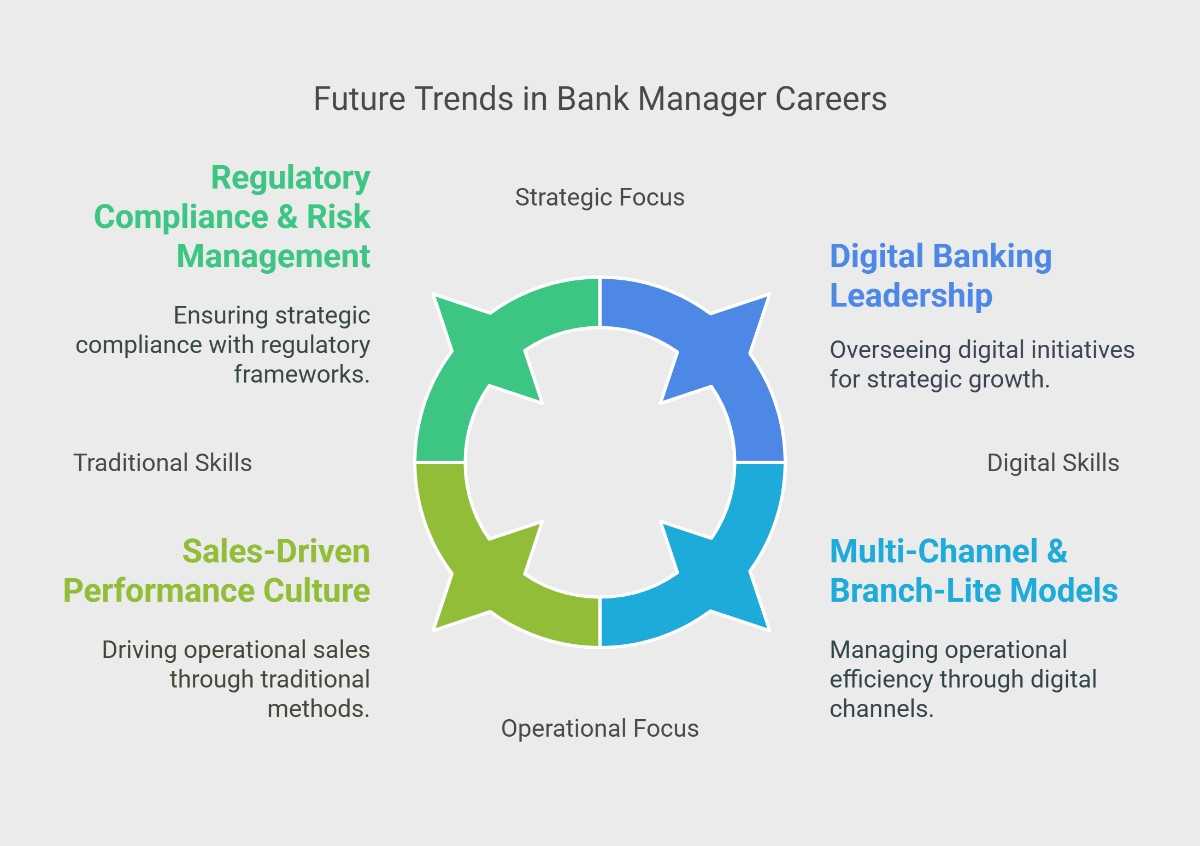
As banking continues to evolve with digital transformation, regulatory changes, and shifting customer behavior, the role of a bank manager is adapting rapidly. From managing physical branches to overseeing digital banking channels, the scope is expanding. Let’s explore the key future trends shaping bank manager salary in India and overall career growth:
1. Digital Banking Leadership
With UPI, mobile banking, and fintech competition accelerating, future bank managers will need strong digital banking skills. You’ll be expected to oversee app performance, customer experience, and data-driven personalization while aligning teams with digital-first strategies. Your ability to lead digital initiatives will have a direct impact on your growth and earning potential.
2. Regulatory Compliance & Risk Management
Banking is seeing tighter regulations and higher monitoring, especially in credit, KYC, and AML norms. You must understand regulatory frameworks and lead your teams in ensuring compliance, conducting audits, and mitigating risks. Expertise in compliance will make you a preferred candidate for high-paying roles.
3. Data-Driven Decision Making
Modern bank managers are expected to make data-backed decisions on lending, customer segmentation, and product offerings. Familiarity with analytics tools and dashboards will set you apart from traditional branch managers. Data literacy is becoming a core skill that affects both performance and promotions.
4. Sales-Driven Performance Culture
Banks are shifting toward revenue-focused branch operations. Targets around loans, credit cards, insurance, and cross-selling are becoming key performance indicators. If you're result-oriented and can build a high-performing team, you'll unlock faster salary growth.
5. Personalized Wealth & Relationship Management
As customer expectations rise, managers must evolve into relationship-focused advisors, especially in urban and HNI segments. Roles in wealth management, NRI banking, and premium services now offer some of the best bank manager salary in India. Specializing in relationship management or wealth advisory can open doors to high-end roles
6. Multi-Channel & Branch-Lite Models
With increasing automation, banks are optimizing physical branch networks. Managers must now handle hybrid teams and oversee video KYC, remote onboarding, and centralized servicing models. Adaptability to multichannel banking will be critical to long-term career success.
Top banks in India offer competitive compensation to skilled professionals, with bank manager salary in India ranging from ₹6L to ₹18L+ annually depending on experience, role, and institution. Specializing in areas like digital banking, compliance, or relationship management can unlock even faster growth.
To fast-track your career and bridge any skill gaps, upGrad’s courses provide the industry-relevant training you need. From financial analysis to leadership in digital banking, our courses are designed to help you thrive in today’s competitive banking environment.
Here are some free additional courses to help you get started.
Not sure how to grow your bank manager salary in India? Get personalized career counseling to identify the best opportunities for you. Visit upGrad’s offline centers for expert mentorship, hands-on workshops, and networking sessions to connect you with industry leaders!
Yes, it remains a strong career option due to stable employment, structured promotions, leadership opportunities, and competitive compensation. Professionals also gain exposure to finance, customer relationship management, lending, compliance, and digital banking, making it a rewarding long-term profession.
The bank manager salary in India generally ranges from ₹7 lakh to ₹12 lakh annually, though earnings vary based on experience, bank type, location, and responsibilities. Senior professionals in private, foreign, and corporate banking divisions can earn substantially higher compensation packages.
Yes, many professionals earn more than ₹1 lakh per month, particularly in private sector, foreign, and large commercial banks. Compensation increases with experience, branch size, business targets, leadership responsibilities, performance incentives, and specialization in high-value banking segments.
Both offer distinct advantages. SBI is known for job security, pension benefits, and structured career progression, while HDFC Bank is often associated with faster promotions, performance-linked incentives, and stronger exposure to digital banking and customer-focused financial services.
Foreign banks, investment banking institutions, and large private sector banks generally offer the highest compensation. These organizations often reward business development, portfolio management, wealth advisory, and leadership performance with attractive salary structures and variable pay components.
The timeline varies by institution and performance. Many professionals reach leadership positions within five to nine years after joining. Promotions depend on experience, internal assessments, certifications, business results, and the ability to manage teams effectively.
Basic pay differs by designation, location, and experience level. Entry-level banking professionals receive lower fixed compensation, while managerial positions earn significantly more through salary, allowances, incentives, and performance-based rewards tied to branch and business objectives.
Leadership, financial analysis, relationship management, digital banking expertise, risk assessment, regulatory compliance, sales management, and communication skills are highly valued. Professionals who combine technical banking knowledge with business growth capabilities often experience faster salary progression.
The role can be demanding because it involves customer service, operational responsibilities, sales targets, regulatory compliance, and branch management tasks. Work pressure may increase during audits, reporting periods, or business campaigns, though experience helps improve workload management.
Yes, certifications such as JAIIB, CAIIB, CFA, FRM, CFP, and NISM credentials can strengthen expertise and promotion prospects. These qualifications demonstrate specialized knowledge, making professionals more competitive for leadership, wealth management, and strategic banking positions.
The profession is evolving with digital transformation, fintech partnerships, AI-powered banking, and data-driven decision-making. Managers who understand technology, customer experience, compliance, and digital products will likely benefit from stronger career growth and higher compensation opportunities.
Reference:
https://kissflow.com/solutions/banking/banking-technologies/
275 articles published
Keerthi Shivakumar is an Assistant Manager - SEO with a strong background in digital marketing and content strategy. She holds an MBA in Marketing and has 4+ years of experience in SEO and digital gro...
Get Free Consultation
By submitting, I accept the T&C and
Privacy Policy
Are you being paid well enough?
Top Resources
Certification
3 Months
Certification
6 Months
O.P. Jindal Global University
Masters in International Accounting and Finance (Accredited by ACCA, UK)Master's Degree
12 Months