What is a Go-To-Market Strategy? How to Build One with Templates
By upGrad
Updated on Aug 31, 2026 | 8 min read | 3.53K+ views
Share:

All courses
Certifications
More
By upGrad
Updated on Aug 31, 2026 | 8 min read | 3.53K+ views
Share:
Table of Contents
Key Highlights
Ready to grow beyond your current role? These management courses focus on real, job-ready skills you can put to work right away, helping you take that next step in your career.
Popular Management Programs
A go-to-market strategy is prepared by a product marketing manager before a product launch, to minimize the risk and increase potential success. If a company is launching a product in a completely unfamiliar market or a new market where the company already operates, both cases come with a risk.
Without understanding the competitors and customer needs, businesses can end up with poor sales, weak customer relationships, and high costs.
A well-created go-to-market strategy helps avoid these problems. With this you can identify who your competitors are, who are the ideal customers, what makes the product valuable to buyers, build a plan for marketing, and map how the product will reach the customers through sales and distribution.
Go-to-market strategy and marketing strategy are both important for businesses to reach customers, but they are different.
A GTM strategy is a plan for launching a product or entering a new market. It is related to one specific product launch. On the other hand, a marketing strategy is a bigger plan in which the company promotes all its products. Here is the comparison between both:
| Factors | Go-To-Market Strategy | Marketing Strategy |
| Purpose | Promote one product launch | Company’s all product and branding |
| Timeframe | Short-term, required till launch only | Long-term and ongoing process |
| Target Audience | Defines the ideal customer and market segment | Studies and targets customer segments |
| Key Activities | Pricing, positioning, sales channels, launch plan, sales process | Content, SEO, social media, advertising, email marketing |
| End Point | Once the product is established in the market | Continues to evolve with the business |
Also read: Comprehensive Guide to Marketing Analytics
Free Courses
A go to market strategy process can be made for any kind of product release, whether it is a new product, an updated version of an existing product, or a rebranded version of the product already available on the market.
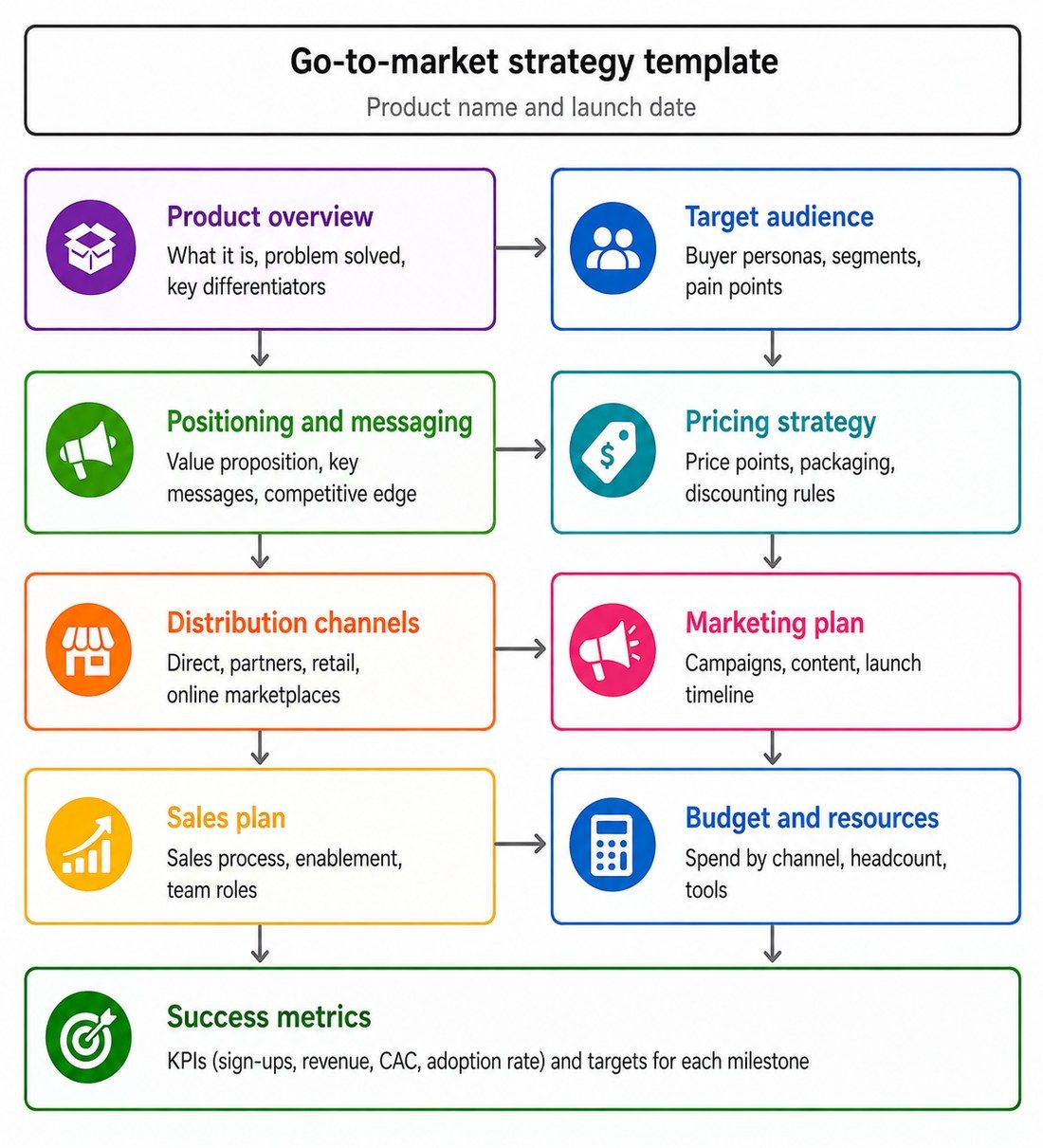
The go to market strategy plan consists of multiple factors to ensure the success of the product. These are the following steps that you should consider while creating a go-to-market strategy.
Only understanding the meaning of what is a go-to-market strategy is not enough, until and unless you create a strategy by yourself. Launching any product can feel overwhelming, and that’s why you should use a proven template as your foundation.
A good go-to-market strategy template will already have a ready-made framework that will cover the audience you should target, how to position the company, fix pricing, fix the distribution channels, marketing techniques, and much more. Also, it saves time because the structure is already prepared, and you just must fill in the strategic details.
Remember, treat these templates as a starting point and not something fixed that you have to follow in any situation. Every product marketing is different, so change the framework sections as per the requirement.
For the B2B products especially, the purchase decision is not done by a single person, it involves a buying center. This group involves some people who evaluates and approve the purchase, who these people are let’s check:
Once you have identified the different players, now create a value matrix. It maps each persona against what they care about the most, so you can craft the message that talks about their priorities instead of generic language. A value-matric includes the following:
This is a sample value matrix for a project management SaaS tool. Aiming three personas in a mid-size company's buying center:
Persona |
Pain points |
Desired outcomes |
Value proposition |
Proof points |
| End user (Project Manager) | Using five different tools to track tasks | All in one place to track everything | Reduce the status-update time from hours to minutes with automated tracking | “Saved our 6 hours a week” customer testimonial |
| IT lead / Technical evaluator | Worried about data security and integration | Tools that can fit into existing system without creating risk | SOC 2 certified, with pre-built integrations with Slack, Google Workspace, and Jira | Security whitepaper; list of 50+ native integrations |
| Economic buyer (VP Ops) | Unpredictable software spends; unclear ROI on past tool purchases | Budget certainty and measurable impact on team output | Flat per-seat pricing with no hidden fees; dashboard showing productivity gains | Case study showing 20% faster project delivery for a similar-sized company |
Once you have created a value matrix, show that to real audience. This includes launching paid campaigns with the message you had craft for each persona. Take this as a test and not final rollout. These are the three variables that you can adjust while testing.
So, instead of investing in each platform, do research like where your target audience is spending their time. The common channels include Instagram, Facebook, LinkedIn, Facebook, and X.
Once your testing is live, track the performance and add more budget on whichever is converting best. If a particular channel, audience segment, or message is performing well, that moves more budget towards it. The underperforming combinations can be paused or reworked, instead of wasting the budget.
A customer moves through multiple stages before becoming a buyer. Understand these stages, and you will know what the customers need from you at each step. From a customer perspective, the buying process is linear:
Awareness → Consideration → Decision
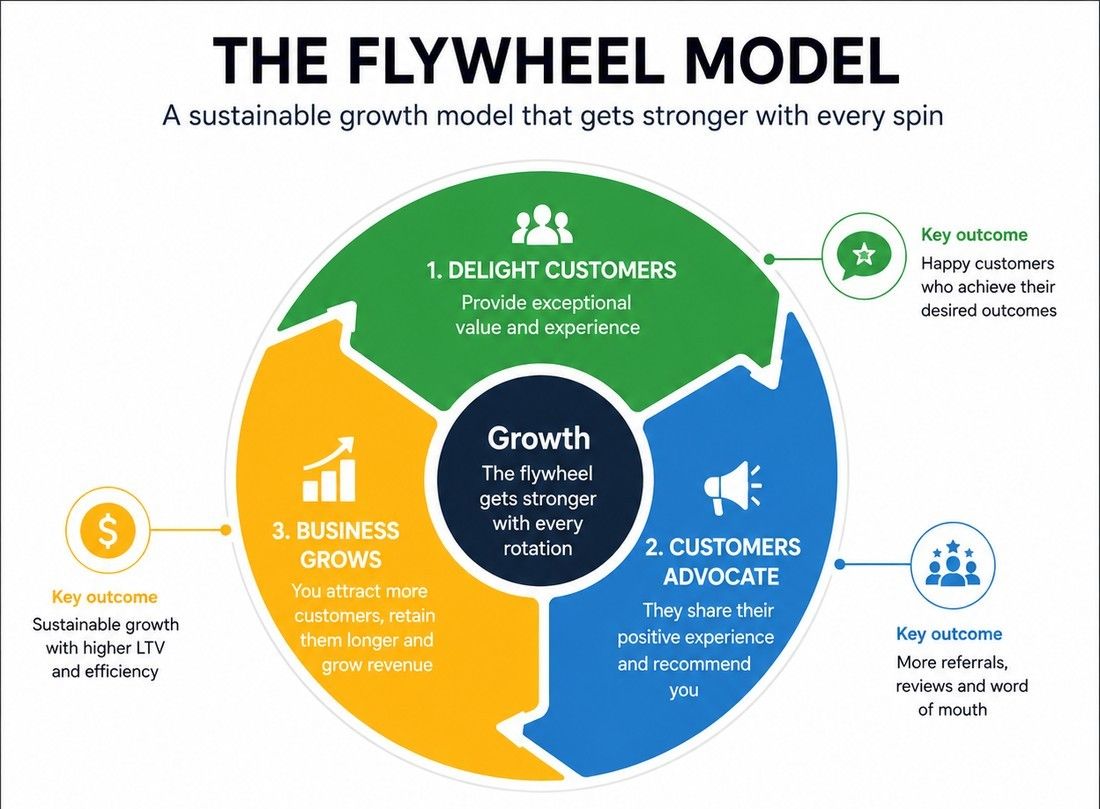
But for business it is like a funnel, and it is divided into three parts, top of the funnel, middle of the funnel, and bottom of the funnel. But this is not the best way to look at the buyer’s journey.
Flywheel Model keeps the customer at the center of the business instead of customers falling out the bottom once the purchase is done. It also has three parts, attract, engage, and delight.
Check a IIM Kozhikode Chief Revenue & Growth Officer Programme Online, it is for revenue leaders who want to scale businesses and bring growth across sales, marketing, finance, and operations.
Until now you have fixed your foundation, now choose a method that will push your product into the market. There are four sales strategies:
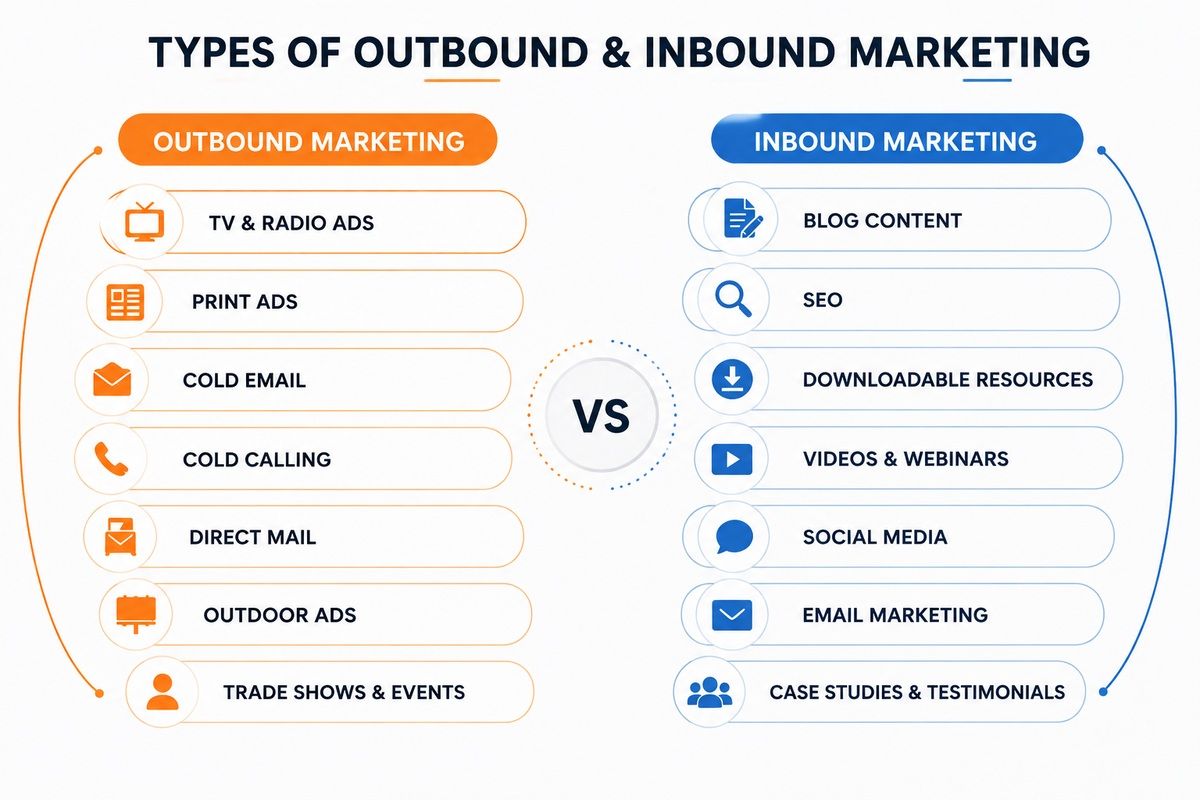
Once you choose the strategy, the next step is to fill your pipeline with audience attention. You can do this through demand generation, inbound method, outbound method, or a mix of both methods.
Once the customer shows interest, the sales conversion begins once by giving them relevant content and then moving them into the funnel.
Read: Inbound vs Outbound Marketing: Key Differences Explained
Content marketing is the base for demand generation inbound. Instead of chasing prospects through cold outreach, you create valuable content that your target audience finds through blog posts, guides, videos, webinars, tools, templates, and other ways.
The better content you create, the more it is to rank well on search engines and pull qualified traffic without outreach. This is done with the help of search engine optimization. With time you will create a content library, that will generate leads in a cost-effective manner, because you have uploaded it once and as long as it is on internet you will generate leads.
Management Courses to upskill
Explore Management Courses for Career Progression
IIIT-B & IIM, Udaipur
Chief Technology Officer & AI Leadership ProgrammeIIM Kozhikode
PCP in AI for Business ProfessionalsA go-to-market strategy framework is a model that guides a company about how to plan and execute product launch. Instead of handling each product launch from scratch, the framework gives a set of steps covering target market, audience, pricing, marketing channels, and sales approach. Because of these steps something important or critical doesn’t left and teams can work by staying aligned.
All the things we have understood above, like buyer personas, value matric, sales strategy, and demand generation must fill in the framework to make a strong plan. Few things a good GTM framework includes:
Also read: How to Build Successful Marketing Strategy in 20 Minutes
Investing time in creating a go to market strategy will pay off after the product launches. Here some of the benefits that you will get:
Also read: Customer Relationship Management: The Key to More Sales
Successfully launching a product is not luck, it is a preparation. So, a go-to-market strategy brings all the components together which are important to know before entering the market. We have discussed all the building blocks to make a strong GTM strategy in detail from understanding the target audience and buyer journey to defining positioning, pricing, sales, and demand-generation tactics.
Aligning all the team around one clear plan. Also, do the testing for what works and what not, help businesses reduce the risk, use their resources better, and build strong relationships with customers. A well-planned GTM strategy will give your business a clear path from product launch to sustainable growth.
Ready to take the next step in your career? Book a consultation call with upGrad and explore the right learning opportunity for your goals.
A go-to-market strategy is built by cross-functional teams working together, like marketing, sales, product management, and customer success. Marketing builds awareness, sales move prospects through the funnel and closes deals, product makes sure the offering fits the market, and customer success keeps customers satisfied afterward.
Ideally 3 to 6 months before launch, so there's enough time for market research, messaging tests, and sales enablement before the product actually goes live.
A business plan covers the entire company's vision, finances, and operations, while a GTM strategy is narrowly focused on how one product or offering will reach and win customers.
Businesses track customer acquisition cost (CAC), time to first sale, pipeline velocity, conversion rate by channel, and early revenue against launch targets.
This varies by product complexity. A simple B2C launch might roll out in weeks, while enterprise B2B launches can take several months to reach full market traction.
Frequent missteps include skipping competitor research, targeting too broad an audience, underestimating the sales cycle length, and not aligning marketing and sales messaging.
Yes. Startups rely on lean, low-budget tactics like founder-led sales and organic content, while established companies can invest in paid channels, partner networks, and larger sales teams.
No. Companies also use GTM strategies when entering a new geographic market, targeting a new customer segment, or repositioning an existing product for a different use case.
Common tools include CRM platforms for pipeline tracking, project management software for cross-team coordination, and analytics platforms to measure campaign and channel performance.
Most teams review performance at 30, 60, and 90 days post launch, then adjust messaging, pricing, or channels based on what the early data shows.
Without one, businesses risk launching to the wrong audience, mispricing the product, wasting budget on ineffective channels, and facing weak internal alignment between teams.
1141 articles published
We are an online education platform providing industry-relevant programs for professionals, designed and delivered in collaboration with world-class faculty and businesses. Merging the latest technolo...
Get Free Consultation
By submitting, I accept the T&C and
Privacy Policy
Top Resources
Certification
3 Months
Certification
6 Months
O.P. Jindal Global University
Masters in International Accounting and Finance (Accredited by ACCA, UK)Master's Degree
12 Months