Digital Content Marketing: Complete Guide to Strategy, Types and Benefits
By Sriram
Updated on Aug 04, 2026 | 7 min read | 4.4K+ views
Share:

All courses
Certifications
More
By Sriram
Updated on Aug 04, 2026 | 7 min read | 4.4K+ views
Share:
Table of Contents
Key Highlights
Master digital content marketing with upGrad's Digital Marketing Course Degree. Learn SEO, content strategy, analytics, and social media skills to advance your marketing career.
Digital content marketing is the creation, publication, and distribution of online content to a target audience with the goal of attracting and engaging them to take a desired action. It aims to educate, inform or entertain users so they naturally build trust in a brand, rather than pushing products directly.
Content marketing is a way for businesses to reach customers through digital channels such as websites, search engines, email and social media by providing useful information.
Digital content marketing is content marketing combined with digital distribution. The aim is simple. Create content people are searching for and distribute it on the right channels, at the right time.
Common examples include:
Content Type |
Purpose |
| Blog Articles | Share in-depth information and improve SEO. |
| Videos | Increase engagement through visual storytelling. |
| Email Newsletters | Nurture leads and retain existing customers. |
| Social Media Posts | Build brand awareness and audience engagement. |
| Podcasts | Share insights through audio content. |
| Infographics | Present complex information in a visual format. |
| eBooks | Provide detailed resources and generate leads. |
| Case Studies | Showcase real-world results and build credibility. |
Unlike paid advertising, digital content marketing continues to generate value long after the content is published.
People rarely purchase on their first visit. They often compare options and gather information before deciding what to buy.
That's where digital content marketing makes a difference.
It helps businesses:
A helpful article or video can answer a customer's question today and continue attracting visitors for months or even years.
Content is the foundation of every successful digital marketing campaign. Without useful content, channels like SEO, email marketing, and social media have very little value to offer users.
The table below shows how content supports different digital marketing activities.
| Digital Marketing Activity | How Content Supports It |
| SEO | Improves search rankings with relevant content |
| Social Media | Drives engagement and shares |
| Email Marketing | Nurtures leads through valuable information |
| Paid Advertising | Improves landing page relevance |
| Lead Generation | Encourages users to take action |
Whether you're building a new website or improving an existing one, what is content marketing in digital marketing becomes easier to understand when you see content as the fuel that powers every digital channel.
Also read : Starting A Career In Digital Marketing: All You Need To Know
Free Courses
Digital content marketing follows a structured process that turns audience insights into valuable content and measurable business results. Every stage has a purpose, and skipping one often reduces the overall impact.
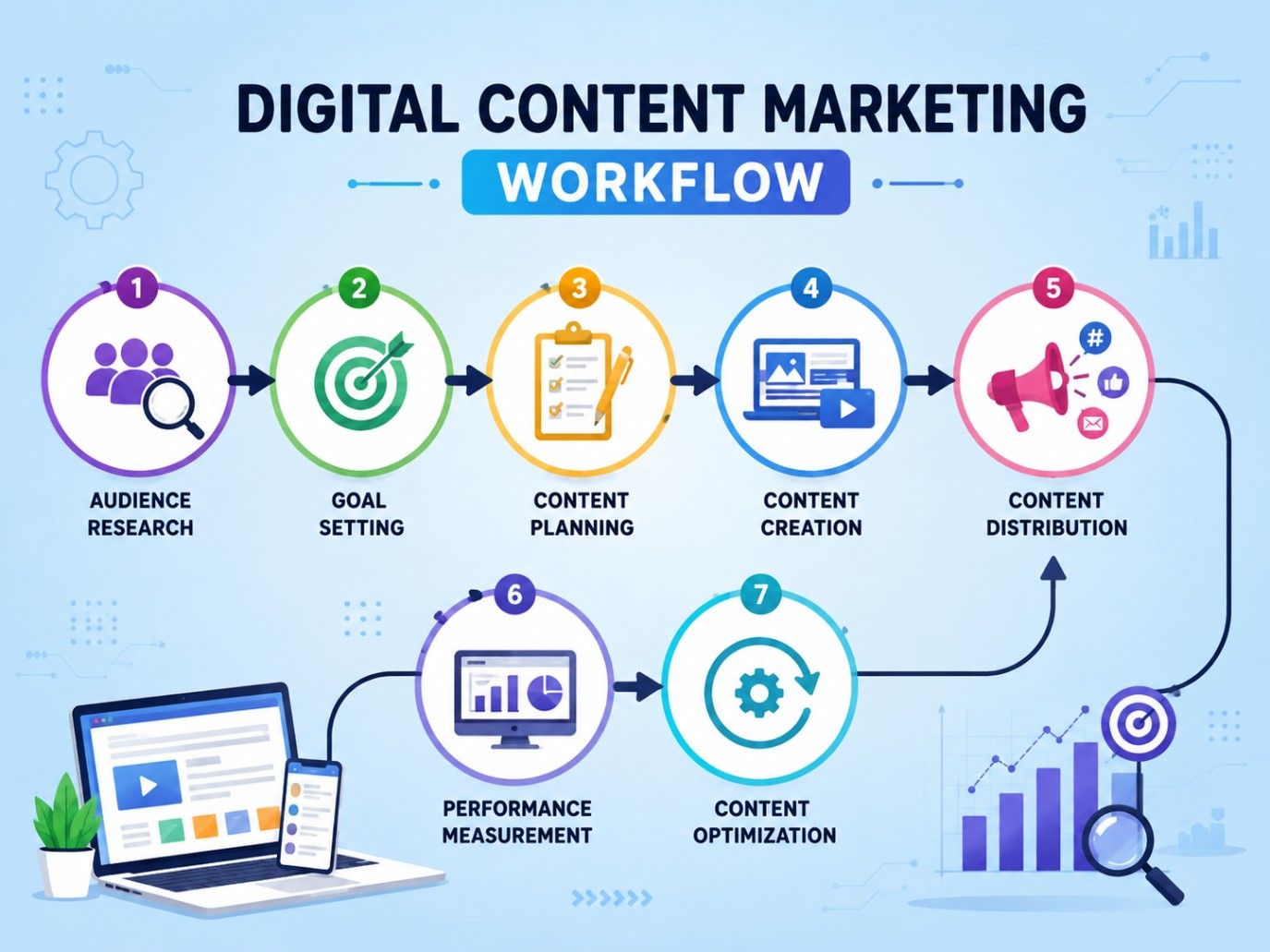
A successful digital content marketing strategy is built on more than publishing regular content. Every piece should have a clear purpose, target the right audience, and support a business goal.
When these elements work together, your content becomes more relevant, easier to discover, and more likely to drive results.
The first step to creating content that performs well is knowing your audience. When you know your customers well, you know their pain points, and you know their questions.
Figure out before you create content:
For example, a beginner searching for what is content marketing in digital marketing needs educational content, while a business owner may be looking for advanced strategy tips.
Each content marketing effort should have a measurable objective. Content publishing without a goal can be hit or miss.
Typical goals are:
When goals are clear, it's easier to measure whether your content marketing in digital marketing efforts are successful.
A content strategy outlines what you'll create, who it's for, and why it matters. It keeps your marketing focused instead of producing content randomly.
A simple strategy should include:
| Strategy Element | Purpose |
| Target audience | Identify who you're writing for |
| Content topics | Cover audience needs |
| Content formats | Blogs, videos, emails, podcasts |
| Publishing schedule | Maintain consistency |
| Success metrics | Measure performance |
A documented strategy helps teams create better content marketing for digital marketing campaigns.
Creating valuable content isn't enough if people can't find it. SEO helps your content appear in search results when users look for relevant information.
Good SEO practices include:
SEO and digital content marketing work together to increase organic visibility over time.
Consistency matters. A content calendar helps you organize topics, assign deadlines, and publish content regularly.
A typical content calendar includes:
Planning ahead also prevents duplicate topics and keeps your content aligned with business goals.
Creating excellent content is only half the job. You also need to share it where your audience spends time.
Popular distribution channels include:
Using multiple channels increases visibility and extends the reach of your content.
Performance tracking helps you understand which content delivers results and which pieces need improvement.
Monitor metrics such as:
Reviewing these metrics regularly allows you to improve future content and make smarter marketing decisions.
Also read : Starting A Career In Digital Marketing: All You Need To Know
Digital Marketing Courses to upskill
Explore Digital Marketing Courses for Career Progression
MICA Executive Alumni Status
Digital content marketing includes many content formats. Each serves a different purpose and works best at different stages of the customer journey. Choosing the right type depends on your audience, goals, and available resources.
Blogs are one of the most effective forms of digital content marketing. They help answer customer questions, improve SEO, and establish authority in your industry.
Best for:
Video content explains ideas quickly and captures attention across multiple platforms. Tutorials, product demonstrations, and customer stories are popular formats.
Best for:
Social media content helps brands to engage with their audience and enhance brand visibility.
Examples are:
Regular posting also helps with broader content marketing in your digital marketing campaigns.
Email remains one of the most effective digital marketing channels. It helps businesses generate leads and nurture customer relationships.
Common email content:
Podcasts allow brands to share knowledge through conversations and interviews. They're ideal for audiences who prefer audio content while commuting or working.
Infographics present complex information in a simple visual format. They're ideal for explaining processes, comparing ideas, highlighting statistics, and making information easier to understand and remember.
These long-form resources provide detailed information on specific topics and are often offered in exchange for contact details.
Best for:
Webinars combine education with live interaction. They allow businesses to answer questions, demonstrate expertise, and build stronger customer relationships.
Interactive content encourages users to participate instead of simply reading or watching.
Examples include:
This type of content often increases engagement and time spent on a website.
Case studies show how a product or service solved a real customer problem. They combine storytelling with measurable outcomes, making them highly persuasive for potential buyers.
Ready to put this digital content marketing into practice? Enroll in upGrad's IIMK AI for Business Professionals Certificate Program and build job-ready skills in SEO, content marketing, social media, analytics, performance marketing, and AI-driven campaigns.
Creating great content is only part of the process. Choosing the right distribution channels determines how many people actually see it. Most successful businesses use multiple channels to reach different audience segments.
Channel |
Purpose |
| Website | Central hub for blogs, landing pages, and resources. |
| Search Engines | Drive organic traffic through SEO-optimized content. |
| Social Media Platforms | Promote content and engage audiences across platforms like LinkedIn, Instagram, Facebook, and X. |
| Email Marketing | Nurture leads and retain customers with personalized content. |
| Video Platforms | Share tutorials, webinars, and product demonstrations. |
| Online Communities | Build authority by answering questions on platforms like Reddit and Quora. |
| Mobile Apps | Deliver personalized content and keep users engaged. |
Also read : Digital Marketing for Small Business: A Complete Guide to Growing Your Business Online
A clear strategy helps you create content with purpose instead of publishing randomly. It aligns your business goals with your audience's needs and gives every piece of content a defined role. The process doesn't have to be complicated. Start small, measure results, and improve over time.
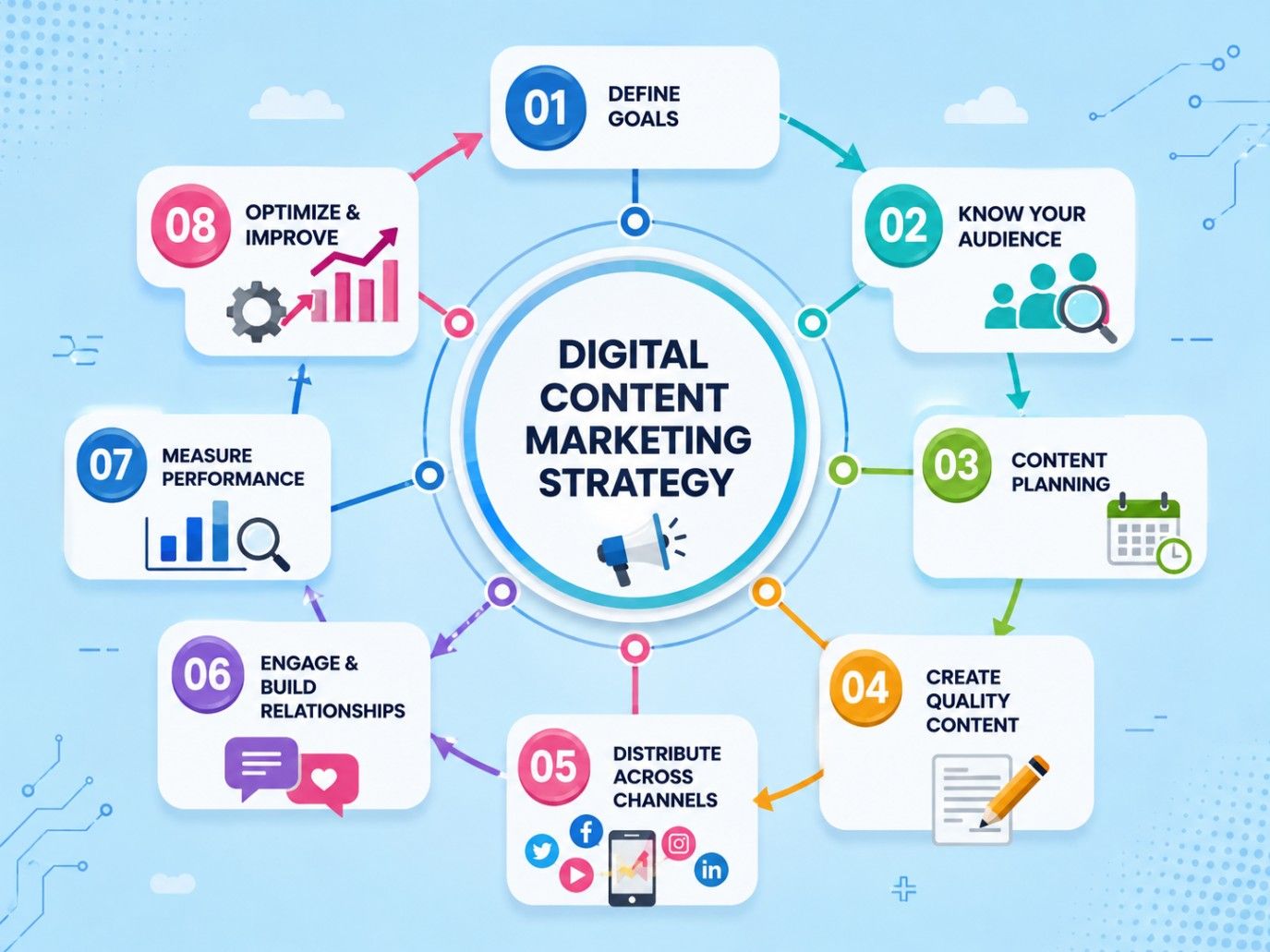
Small improvements made consistently often deliver better long-term results than frequent content rewrites.
Do read: What is Digital Marketing?
Digital content marketing helps businesses attract, engage, and retain customers while supporting sustainable growth.
Benefit |
How It Helps |
| Builds Brand Awareness | Increases brand recognition through valuable, consistent content. |
| Improves Search Visibility | Boosts SEO, rankings, and organic website traffic. |
| Generates Leads | Converts visitors using resources like eBooks, webinars, and case studies. |
| Builds Customer Trust | Establishes credibility by answering customer questions and providing useful information. |
| Increases Customer Retention | Keeps existing customers engaged through regular, valuable content. |
| Delivers Long-Term ROI | Continues generating traffic, leads, and search visibility long after publication. |
Subscribe to upGrad's Newsletter
Join thousands of learners who receive useful tips
Different businesses use digital content marketing to achieve different goals. Here are a few common examples.
Business Type |
Content Example |
Goal |
| Small Business | Recipes, blogs, and seasonal guides | Attract local customers |
| eCommerce | Product comparisons and buying guides | Increase conversions |
| B2B Company | Whitepapers, webinars, and case studies | Build authority and generate leads |
| SaaS Business | Tutorials, onboarding guides, and success stories | Improve customer retention |
| Personal Brand | Blogs, LinkedIn posts, newsletters, and videos | Establish expertise and attract clients |
Must read: Digital Marketing Objectives: Full Guide with Types and Examples [2026]
Even a strong content marketing in digital marketing strategy can fail if common mistakes are ignored. Avoid these issues to improve content performance and search visibility.
Also read: Top Digital Marketing Channels for Maximum Reach and ROI
Tracking the right metrics helps you understand whether your content is achieving its goals. Regular performance analysis allows you to optimize your strategy and improve long-term results.
Metric |
What It Measures |
| Traffic Metrics | Organic traffic, page views, and visitor sources. |
| Engagement Metrics | Time on page, bounce rate, social shares, and comments. |
| Lead Generation Metrics | Newsletter sign-ups, downloads, and demo requests. |
| Conversion Metrics | Purchases, registrations, and other business actions. |
| SEO Performance | Keyword rankings, CTR, backlinks, and organic visibility. |
| ROI | Revenue generated compared to content creation costs. |
Must read: Importance of Digital Marketing: 10 Key Benefits for Businesses
Following proven best practices helps you create valuable content, improve visibility, and achieve consistent long-term results.
Digital content marketing helps businesses build meaningful relationships with their audience through valuable, relevant, and consistent content. Whether you're publishing blogs, videos, emails, or case studies, every piece should answer real customer questions and support a clear business goal.
The most successful strategies don't rely on producing more content. They focus on creating better content, distributing it through the right channels, measuring performance, and making continuous improvements. Start with a clear plan, publish consistently, and refine your approach using data. Over time, digital content marketing becomes a reliable way to increase visibility, build trust, and drive sustainable business growth.
Ready to start your journey? Book a free consultation with upGrad today to find the best path for your career.
Digital content in marketing refers to any online material created to educate, inform, or engage an audience. This includes blogs, videos, emails, infographics, podcasts, and social media posts. Effective content marketing in digital marketing uses these formats to attract potential customers and guide them through the buying journey.
The four stages of content marketing are awareness, consideration, conversion, and retention. Each stage requires different content formats, from educational blogs to product comparisons and customer success stories. Following these stages helps businesses deliver the right information at the right time.
Digital content focuses on educating or engaging users through valuable information, while digital advertising promotes products or services through paid campaigns. A strong content marketing for digital marketing strategy often works alongside advertising to build trust before encouraging conversions.
The four major types of digital marketing are content marketing, search engine optimization (SEO), social media marketing, and email marketing. Businesses often combine these channels to increase visibility, generate leads, and improve customer engagement through an integrated marketing strategy.
Small businesses don't need expensive tools to succeed. They can start with blog posts, short videos, customer FAQs, and email newsletters. Repurposing one piece of content into multiple formats also saves time and makes content marketing in digital marketing more cost-effective.
The 3-3-3 rule encourages marketers to focus on three target audience segments, deliver three core marketing messages, and use three key distribution channels. While not a universal framework, it helps simplify planning and keeps marketing efforts consistent across campaigns.
Digital marketing isn't an IT job, although some technical skills are useful. Professionals mainly work with SEO, content creation, analytics, paid advertising, and social media. Technical roles such as website optimization or marketing automation may require closer collaboration with IT teams.
Updating important content every six to twelve months is a good practice, especially for high-traffic pages. Refreshing statistics, examples, keywords, and internal links helps maintain rankings and keeps content marketing for digital marketing relevant as search trends and user expectations evolve.
The four widely used content types are written content, visual content, audio content, and interactive content. Combining multiple formats helps businesses reach different audiences while improving engagement across websites, email campaigns, and social media platforms.
Yes. AI tools can help with keyword research, topic generation, content optimization, and performance analysis. However, human expertise is still essential for creating accurate, engaging, and original content that aligns with user intent and delivers long-term value.
A successful content marketer needs skills in writing, SEO, keyword research, audience analysis, analytics, storytelling, and content planning. Understanding what is content marketing in digital marketing also helps professionals create content that supports both business goals and user needs.
727 articles published
Sriram K is a Senior SEO Executive with a B.Tech in Information Technology from Dr. M.G.R. Educational and Research Institute, Chennai. With over a decade of experience in digital marketing, he specia...
Get Free Consultation
By submitting, I accept the T&C and
Privacy Policy
Level Up Your Digital Marketing Career Today!
Top Resources
MICA
Advanced Certificate in AI-Powered Digital Marketing & Communication from MICAMICA Executive Alumni Status
Certification
5 Specialisation
Classroom
4 Months
Certification
2 Months