Stress Management Techniques: Practical Ways
By upGrad
Updated on Jun 02, 2026 | 6 min read | 2.34K+ views
Share:

All courses
Certifications
More
By upGrad
Updated on Jun 02, 2026 | 6 min read | 2.34K+ views
Share:
Table of Contents
Stress Management Techniques is crucial in today's paced world as stress becomes part of our life whether triggered by deadlines, financial troubles, health worries, family commitments, and unexpected problems. Sometimes short-term stress can help us focus. Ongoing stress can hurt our physical health, emotions, relationships, and job performance.
This guide will help you understand what Stress Management Techniques is, its mental and behavioral strategies, practical ways in managing anxiety, relaxation tips for tough moments and long-term habits that can reduce stress and improve your overall well-being.
Explore Management Courses from upGrad and learn about effective stress management techniques.
Common Signs of Stress in table
Physical Signs |
Emotional Signs |
Behavioral Signs |
| Headaches | Irritability | Procrastination |
| Fatigue | Anxiety | Social withdrawal |
| Muscle tension | Feeling overwhelmed | Overeating |
| Poor sleep | Mood swings | Poor concentration |
| Digestive issues | Restlessness | Increased screen time |
Popular Management Programs
The body and mind are really connected. You can reduce stress quickly by taking care of your physical health.
A lot of experts believe that movement, sleep, and nutrition are the foundations of managing stress.
Exercise helps to lower stress hormones and boost endorphins. This in turn makes you feel better.
You do not need to do hard workouts to get benefits from exercise.
Good options include:
Taking a short walk can make a difference in how you feel during a long and stressful day at work. When you are feeling stressed at work, it can really help you focus better and feel less upset.
Poor sleep and stress often go hand in hand. It is often hard to sleep when you are stressed and not getting enough sleep makes you feel even more stressed.
To improve sleep:
Breathing exercises are really simple techniques. They can help you deal with stress.
A lot of people choose breathing exercises to feel better when they are stressed out.
Try this simple method:
This signals the nervous system to relax.
Nutrition affects mood more than many people realize.
Focus on:
Try limiting:
These techniques help our body and mind, and the way we act really works well when we use them consistently, not just when we're feeling stressed.
Situation |
Action |
| Feeling overwhelmed | Take a 10-minute walk |
| Muscle tension | Stretch neck and shoulders |
| Racing thoughts | Deep breathing exercise |
| Afternoon fatigue | Drink water and move |
| Poor focus | Short movement break |
Also Read: Top 10 Simple Ways to Improve Your Time Management Skills
Free Courses
A lot of people try to deal with stress by changing things themselves, but they do not think about what is going on in their own minds.
Mental stress management techniques are about changing how the mental stress management techniques work on you, so you react differently when you are in a spot instead of trying to control everything around the mental stress management techniques.
Stress often increases worst-case scenario thinking.
For example:
Instead of: "Everything is going wrong."
Try: "This situation is challenging, but I can handle one step at a time."
This small shift can reduce anxiety and improve decision-making.
Mindfulness is about being aware of what is happening right now. It means we pay attention to the moment. We do this without judging things as good or bad. We just look at the moment. Mindfulness is really, about the moment.
Studies have found that mindfulness really helps people deal with anxiety and manage their emotions. Mindfulness is something that can support people who are struggling with anxiety. It can also help with emotional regulation. People who practice mindfulness say it helps them feel better and be more in control of their emotions. Mindfulness and anxiety management go hand in hand. Mindfulness is also good, for emotional regulation.
Simple mindfulness exercises include:
Writing is really good for getting your thoughts in order and finding patterns. When you write things down, it helps you see what you are thinking about clearly. Writing is very useful for organizing your thoughts and identifying patterns in the things you write.
Record:
Over time, patterns become easier to identify.
Many stressors involve uncertainty.
Ask yourself: Can I control this?
If yes:
Take action.
If no:
Focus on adapting your response.
This mindset can significantly reduce distress.
One of the most overlooked stress management techniques is setting boundaries.
Many people become overwhelmed because they consistently overcommit.
Before saying yes, ask:
Protecting your time is a form of self-care.
Managing anxiety is really hard. It usually starts with making changes to the things we do every day, like our habit of trying to change the things that are happening to us. Changing our habits can be a good way to deal with anxiety. Managing anxiety is about making these small changes to our internal habits.
When Stress Hits |
Ask Yourself |
| Feeling overwhelmed | What is my next step? |
| Overthinking | Is this a fact or an assumption? |
| Anxiety rising | What can I control today? |
| Feeling stuck | Who can help me? |
| Emotional exhaustion | What do I need right now? |
Management Courses to upskill
Explore Management Courses for Career Progression
IIIT-B & IIM, Udaipur
Chief Technology Officer & AI Leadership ProgrammeIIM Kozhikode
PCP in AI for Business ProfessionalsWhen things get really tough, the way you act can make a difference. It can make stress better or worse.
Healthy routines are, like a safety net. They help keep things steady when everything else seems uncertain.
Poor time management is a problem that causes a lot of stress.
If we make changes to the way we organize our time, it can really help reduce the stress we feel.
Try:
Humans are social by nature. Talking to people, such as family and friends, can be very helpful for humans because humans need to talk to other humans to feel happy and safe.
Talking can provide:
Support can come from:
Getting notifications and news updates all the time can really increase our stress levels; constant notifications and news updates are not good. They Can make us feel anxious and worried.
Consider:
A lot of people wonder how to calm down when life gets really tough.
The answer is usually doing things in a regular way rather than trying to do something complicated.
Examples include:
These activities help the brain shift away from stress mode.
Avoid relying on:
Instead, choose healthier alternatives.
Behavioral change often creates the strongest long-term improvements because it directly affects daily routines.
Habit |
Benefit |
| Morning planning | Better focus |
| Regular exercise | Reduced tension |
| Social connection | Emotional support |
| Screen limits | Lower mental overload |
| Gratitude practice | Improved outlook |
Long-term distress may lead to:
Recognizing these warning signs early allows you to use stress management techniques before stress becomes overwhelming.
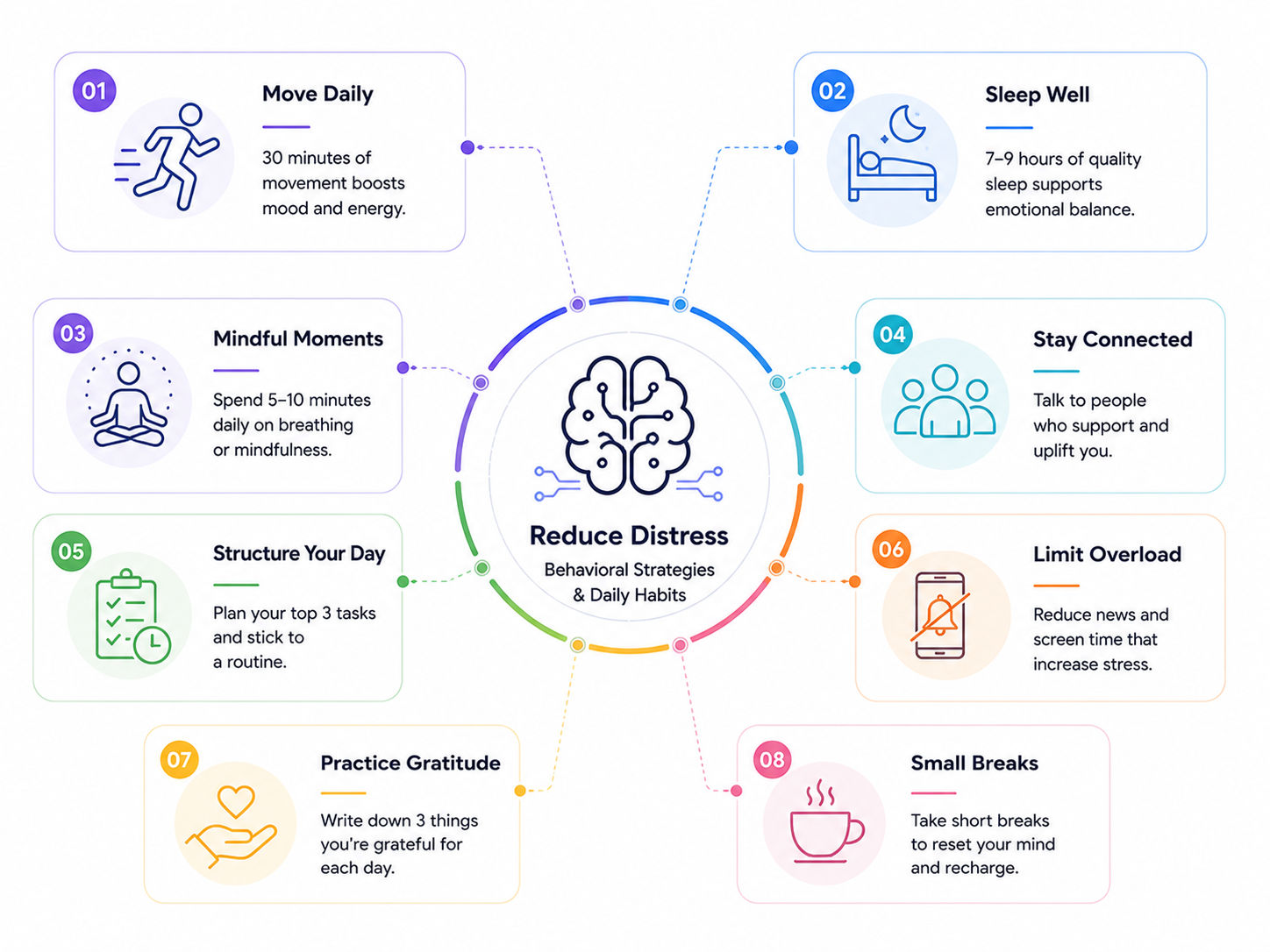
The most effective stress management techniques become habits rather than emergency responses.
A personal stress management plan helps you stay proactive.
Common triggers include:
Awareness is the first step toward improvement.
Build a list of activities that help you relax.
Examples:
Different situations may require different tools.
Many people schedule work but not recover.
Recovery activities should be planned just like meetings.
Ask yourself weekly:
If stress becomes persistent or starts affecting daily functioning, professional support can help.
Consider speaking with:
Seeking help is a practical step, not a sign of weakness.
The most successful stress management techniques combine physical, mental, and behavioral strategies rather than relying on a single solution.
Area |
Focus |
| Physical health | Sleep, exercise, nutrition |
| Mental health | Mindfulness, reflection |
| Relationships | Support systems |
| Work | Boundaries and priorities |
| Recovery | Rest and hobbies |
Stress is unavoidable, but suffering from unmanaged stress doesn't have to be. Effective stress management techniques help you build resilience, improve emotional well-being, and maintain better physical health. The key is consistency. Small actions such as exercising regularly, practicing anxiety management, improving sleep, setting boundaries, and learning how to relax can have a significant impact over time.
Start with one or two changes instead of trying everything at once. Over time, these habits can reduce distress, improve focus, and help you feel more in control of daily challenges.
Want personalized guidance on Stress Management Techniques? Speak with an expert for a free 1:1 counselling session today.
Beginners should focus on simple habits such as deep breathing, regular walking, better sleep, and mindfulness. These stress management techniques are easy to start and require little preparation. Consistency is more important than perfection when building new habits.
Take a short walk, practice deep breathing, stretch your muscles, or step away from your screen for a few minutes. These methods help calm the nervous system and can provide immediate relief during stressful situations.
Stress is usually triggered by a specific situation or challenge. Anxiety can persist even when there is no obvious trigger. While both require attention, anxiety management often involves addressing deeper emotional and cognitive patterns.
Physical, mental, and behavioral strategies address different aspects of stress. Exercise supports the body, mindfulness improves thinking patterns, and healthy habits improve daily routines. Together, they create a more balanced approach to stress management.
Yes. Chronic stress may contribute to headaches, sleep problems, fatigue, digestive issues, muscle tension, and cardiovascular concerns. This is why effective stress management techniques are important for both mental and physical well-being.
Students can benefit from time management, study schedules, regular breaks, exercise, and sufficient sleep. Avoiding last-minute preparation and maintaining realistic expectations can also help reduce distress during exams and assignments.
Reading, listening to music, exercising, journaling, meditation, and spending time with family or friends are effective ways to relax. The best method depends on personal preferences and lifestyle.
Daily practice generally produces the best results. Even spending 10 to 15 minutes each day on activities such as breathing exercises, mindfulness, or physical activity can create noticeable improvements over time.
Yes. Mindfulness encourages present-moment awareness and helps reduce excessive worry about the future. Many people find that regular mindfulness practice improves emotional regulation and supports anxiety management efforts.
If stress begins affecting sleep, relationships, work performance, physical health, or emotional well-being for an extended period, professional support may be beneficial. Early intervention often leads to better outcomes.
The best long-term approach combines physical, mental, and behavioral strategies. Regular exercise, healthy sleep habits, strong relationships, effective boundaries, and ongoing self-awareness help reduce distress and build resilience over time.
1171 articles published
We are an online education platform providing industry-relevant programs for professionals, designed and delivered in collaboration with world-class faculty and businesses. Merging the latest technolo...
Get Free Consultation
By submitting, I accept the T&C and
Privacy Policy
Top Resources
Certification
3 Months
Certification
6 Months
O.P. Jindal Global University
Masters in International Accounting and Finance (Accredited by ACCA, UK)Master's Degree
12 Months