Customer Acquisition Strategies: Attracting and Converting Customers
By upGrad
Updated on Jun 17, 2026 | 8 min read | 2.32K+ views
Share:

All courses
Certifications
More
By upGrad
Updated on Jun 17, 2026 | 8 min read | 2.32K+ views
Share:
Table of Contents
A customer acquisition strategy is a plan that helps you turn people who're interested in your product into people who pay for it. This plan shows you who to focus on, how to make your product sound good, and which ways to reach people are the best so you can get customers without wasting all your money.
Customer acquisition strategies are the foundation of business growth. It does not matter how good your product is; if you do not get customers, it is hard to grow. A good customer acquisition strategy helps businesses reach to the right audience, generate interest, building trust and turn them into paying customers.
This blog explains customer acquisition strategies in simple terms. You'll learn how it works, which channels deliver the best results, how to choose the right approach, which metrics matter most.
Looking to scale your business smartly? Explore upGrad's Online Digital Marketing Courses and gain insights on building customer acquisition strategies that actually work.
When a company wants to attract potential customers, they use customer acquisition strategies; they help businesses convert people into their buyers. They include strategies like marketing, sales, partnerships, referrals, creating content, and advertising their products. They try to keep their customers happy.
The main goal of these customer acquisition strategies is to get new customers to buy from the company without investing much and to be able to keep doing it in a scalable way.
Without getting customers, a business will grow slowly. Existing customers might stay loyal. Some will leave overtime.
Research from Harvard Business Review says getting new customers helps a business grow for new companies. New customers are key to growing a business. Companies need them to keep growing.
Effective customer acquisition helps businesses:
Also Read: What is Customer Lifetime Value and How to Calculate it?
Free Courses
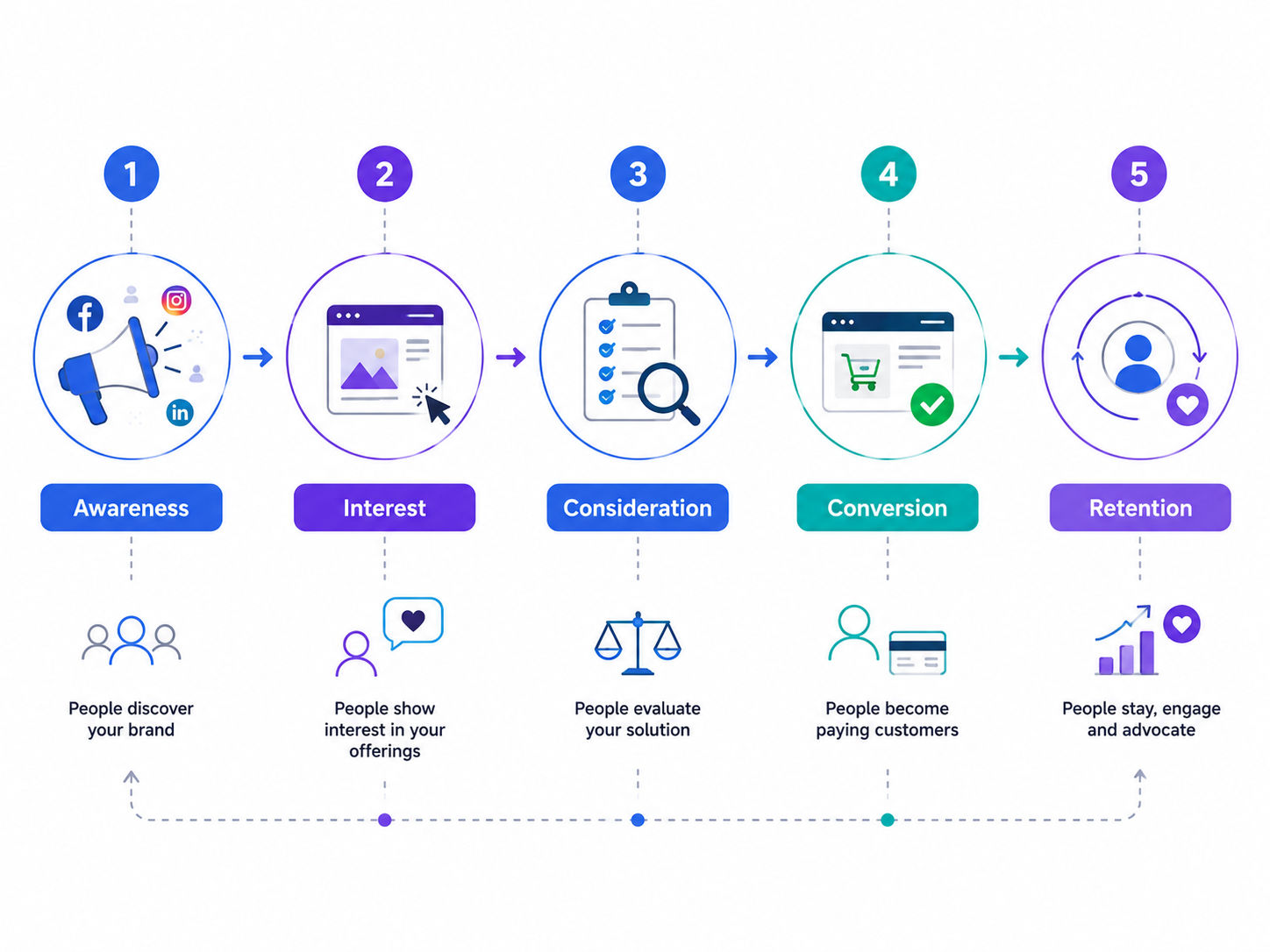
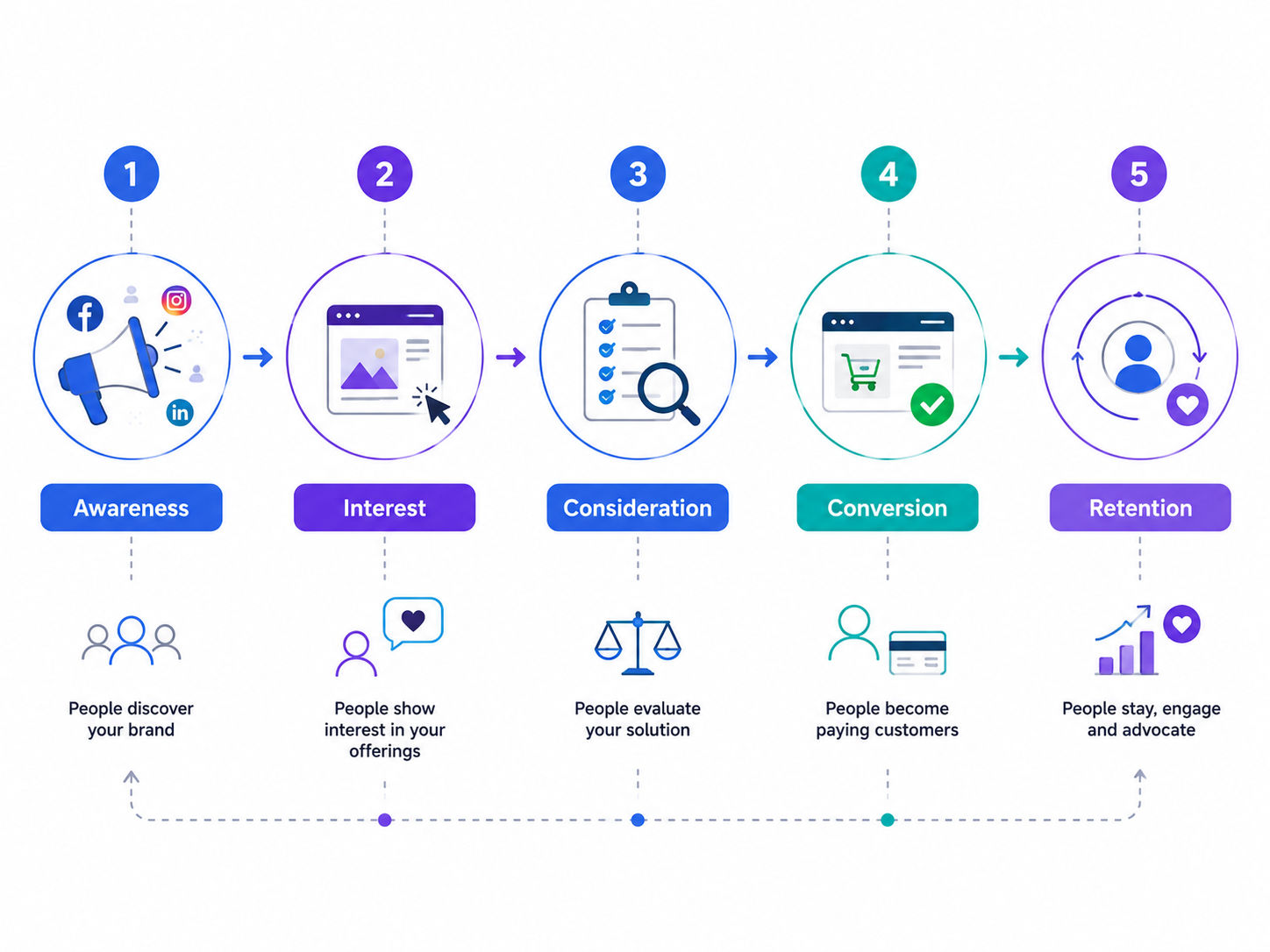
Most customer acquisition strategies follow a similar journey.
Stage |
Goal |
| Awareness | Introduce the brand |
| Interest | Generate curiosity |
| Consideration | Build trust and credibility |
| Conversion | Turn prospects into customers |
| Retention | Encourage repeat purchases |
Imagine an online learning platform.
Someone who wants to learn something finds a blog post when they search on Google. They get a free guide when they give their email address. The company sends them some educational content to learn and invites them to webinars. Eventually, the learner signs up for a course that they have to pay for.
Every step contributes to customer acquisition.
Digital Marketing Courses to upskill
Explore Digital Marketing Courses for Career Progression
MICA Executive Alumni Status
Many businesses try to follow everything that comes along in marketing. A better way to do it is to find the ways that really work to get good customers and invest in them over time.
Customer acquisition is not about getting a lot of people to show interest. It is about getting the customers who are most likely to actually buy from your business and keep coming back.
The best strategies are:
Businesses today have access to dozens of acquisition channels. However, not every channel works equally well for every company.
The most effective customer acquisition strategies combine multiple channels based on audience behavior and business goals.
Content marketing helps businesses attract customers by providing useful information.
Examples include:
High-quality content builds trust before a sales conversation begins.
SEO helps businesses show up in search engine results when people are searching for answers.
Many companies see SEO as a long-term way to get customers because the results can last a long time after you publish your content.
Benefits include:
Also Read: SEO Benefits: Why Search Engine Optimization Matters in 2026
Social media platforms are helpful for brands because they let brands talk to people directly.
The best platform for you is the one where your audience hangs out, so you need to figure out where your audience spends most of their time on media platforms.
Popular platforms include:
Also Read: How Social Media Marketing Works? Why SMM, Advantages & Trends
Paid Advertising is most effective when you have landing pages and compelling offers that people find hard to resist. This is what makes paid campaigns successful. It offers faster visibility.
Common options include:
Advertising Channel |
Best For |
| Google Ads | High-intent searches |
| Meta Ads | Audience targeting |
| LinkedIn Ads | B2B acquisition |
| YouTube Ads | Brand awareness |
Also Read: What is PPC in Digital Marketing, and How to Use It?
People trust recommendations from friends and colleagues.
Many successful businesses get a lot of their customers through referrals. Referral programs encourage existing customers to bring in customers with incentives, such as:
Email Marketing is still a great way to acquire new customers.
The best email campaigns are the ones that provide people with value instead of trying to sell them constantly.
It allows businesses to:
Also Read: Top 10 Email Marketing Tools Successful Email Marketing Experts Use
Subscribe to upGrad's Newsletter
Join thousands of learners who receive useful tips
Many businesses find it hard to get customers. This is because they jump into doing things without a plan.
A step-by-step plan actually works better. It helps businesses get customers in an effective way. Businesses need a strategy to get customers.
They should focus on planning before they start implementing; later this plan will help guide their actions.
When you know who your audience is, it is a lot easier to come up with messages that really matter to them. The more you understand your audience, the better you can make messages that are relevant to your audience.
Start by identifying who you want to attract.
Consider:
Acquisition is simple when the message you are sending out is something that the customer needs. Customers rarely buy products. They buy solutions.
Ask questions such as:
Do not try to use all the channels that're available. This can be a waste of time and resources.
Instead, you should concentrate on the channels where your audience is actively spending their time.
Business Type |
Recommended Channels |
| SaaS | SEO, content, LinkedIn |
| E-commerce | SEO, social media, paid ads |
| Education | Content, SEO, webinars |
| Local Business | Local SEO, referrals, social media |
People who are looking to purchase something will pay attention to content at every stage.
When you create content, it helps you seem like someone who knows what they are talking about, and people are more likely to interact with educational content.
Examples include:
Traffic by itself is not enough to get customers.
Businesses need to make things easy for people who visit their website so they can buy something or get in touch with the business. That is why businesses must make it easy for visitors to take action.
Key conversion elements include:
Acquiring customers is something we always have to do. We need to keep trying to see what works better.
We should always look at how we're doing and make changes based on the results of customer acquisition. We have to keep track of customer acquisition performance all the time and adjust strategy based on the results.
Related Article: Customer Retention Strategies: A Complete Guide for 2026
To acquire customers, you need to look at the facts, not just guess what will work. When you pay attention to metrics, your company can work smarter and get the best results.
CAC measures how much it costs to acquire a new customer.
Formula:
CAC = Total Marketing and Sales Spend ÷ Number of New Customers
Lower acquisition costs often indicate better efficiency.
Also Read: What is Customer Acquisition Cost (CAC) and How Can You Calculate It?
This metric shows the percentage of visitors who complete a desired action.
Examples include:
Higher conversion rates improve overall acquisition performance.
CLV estimates the total revenue generated by a customer over time.
Businesses should aim for a CLV that significantly exceeds CAC.
This measures how many leads eventually become paying customers.
A low rate may indicate poor lead quality or ineffective nurturing.
Avoid these common pitfalls:
The most successful businesses:
Customer acquisition strategies are essential for sustainable business growth. The most effective approaches focus on attracting the right audience, delivering value, building trust, and creating seamless conversion experiences.
There is no universal formula that works for every business. Start with a clear understanding of your customers, choose acquisition channels carefully, track performance, and refine your approach over time. Businesses that treat customer acquisition as an ongoing process rather than a one-time campaign are far more likely to achieve long-term growth.
Want to explore more about Customer acquisition strategies? Book your free 1:1 personal consultation with our expert today.
1003 articles published
We are an online education platform providing industry-relevant programs for professionals, designed and delivered in collaboration with world-class faculty and businesses. Merging the latest technolo...
Get Free Consultation
By submitting, I accept the T&C and
Privacy Policy
Level Up Your Digital Marketing Career Today!
Top Resources
MICA
Advanced Certificate in AI-Powered Digital Marketing & Communication from MICAMICA Executive Alumni Status
Certification
5 Specialisation
Classroom
4 Months
Certification
2 Months