Career Change at 40 Without Starting Over: A Practical Roadmap
By upGrad
Updated on Nov 02, 2026 | 7 min read | 5.91K+ views
Share:

All courses
Certifications
More
By upGrad
Updated on Nov 02, 2026 | 7 min read | 5.91K+ views
Share:
Table of Contents
Quick Insights:
Want to change careers? Explore upGrad’s Management Programs to strengthen your skills in leadership, decision-making, strategy, communication, and team management.
Popular upGrad Programs
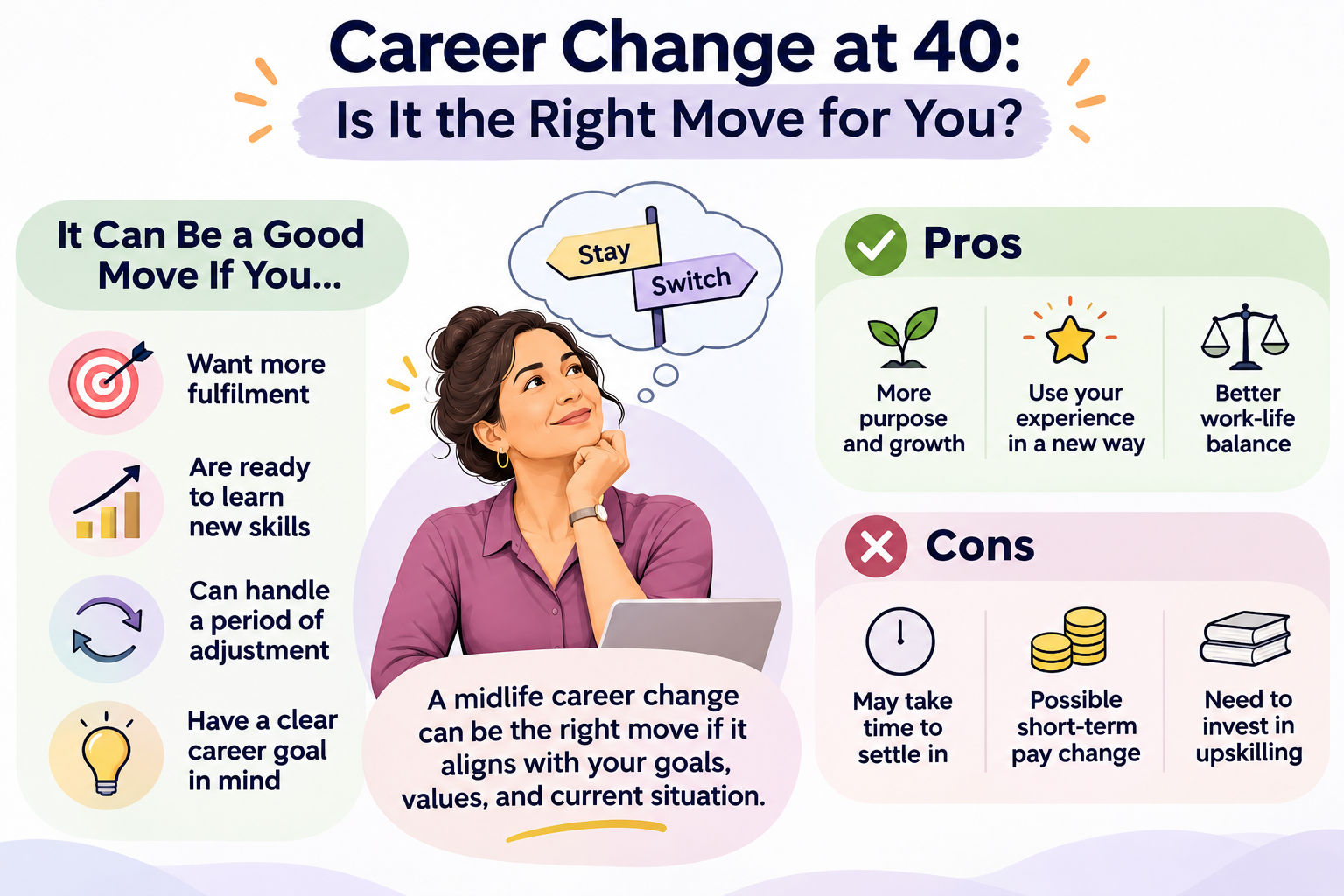
Start by considering your current situation, the reasons behind your decision, and the kind of work you want to do next. These four steps can help you make a clear plan for your career transition.
Ask yourself why you want to leave your current job or industry. Your reason can help you decide if you need a new role or a new career.
Write down your main reasons. Sometimes, changing your company or job role may be enough. You may not need to leave your industry completely.
Transferable skills are skills you can use in different jobs and industries. Your years of work experience may have helped you develop many of them.
Some common examples include:
To identify your skills, think about your previous jobs and the tasks you handled well. For example, a sales manager may have experience in client management, negotiation, team leadership, and planning.
Build a strong foundation in core management principles that every professional needs to learn with Management Essentials Program and also earn a recognised certification.
Your skills can help you understand what you are good at. Your interests and career goals can help you decide what you want to do next.
Ask yourself:
You can also speak with a career counsellor or people who know your work well. Their feedback can help you understand your strengths and explore suitable career options.
Once you have selected a career path, find out what skills and qualifications you need. Read job descriptions for roles you are interested in. Look for the skills and tools that employers mention.
Make a list of three things:
This list will help you plan your learning. It can also help you avoid spending time and money on courses that you may not need.
Explore: Skill Development Courses
If you want to move into a new industry or management role, an MBA or a master's degree can help you gain the required knowledge.
Considering a career change in your 40s? An Online MBA can help you build management skills and explore new career paths. Explore Online MBA programmes designed for working professionals and take the next step in your career.
Free Courses
You can explore multiple career options even if you have not worked in that field before. Many employers value skills like communication, problem-solving, team management, and industry knowledge. Here are six career options to consider.
Digital marketing includes SEO, social media, email marketing, online ads, and content creation. Content writing can be a good starting point if you enjoy writing and communication.
Explore: Digital Marketing Course Guide
Data analytics involves studying information to help businesses make better decisions. It can be a good option if you enjoy working with numbers, reports, and patterns.
Human resources focuses on hiring, employee support, training, and team management. Your experience in working with people can be useful in this field.
Project management involves planning tasks, managing teams, tracking budgets, and meeting deadlines. You may already have some of these skills from your previous job.
Read: How to Become a Project Manager?
If you have strong knowledge of a particular subject or industry, you can use it to teach or guide others. This can include working with students, training employees, or advising businesses.
Starting a business or working as a freelancer can help you use your existing skills in a new way. You can also test a business idea while continuing your current job.
Recommended Courses to upskill
Explore Our Popular Courses for Career Progression
IIIT Bangalore
Executive Diploma in Machine Learning and AI360° Career Support
O.P.Jindal Global University
MBA from O.P.Jindal Global UniversityLive Case Studies and Projects
A career change can bring some challenges, especially when you have financial responsibilities, family commitments, or years of experience in another field. Knowing what to expect can help you prepare for these challenges.
Moving into a new field can feel uncomfortable. You may worry about learning new skills, competing with younger candidates, or adjusting to a different work environment. Here are a few ways to handle these concerns:
Explore: Top 15 Highest-Paying Freelance Jobs in India
A career change can affect your income, especially if you need time to learn new skills or find a job. Plan your finances before making the move.
| Step | What You Can Do |
| Build savings | Save at least 3-6 months of essential expenses before leaving your job. |
| Make a gradual switch | Learn new skills or take freelance projects while keeping your current job. |
| Look for related roles | Choose a job that uses your existing skills to avoid a major drop in income. |
| Review your expenses | Track monthly spending and cut non-essential costs. |
| Seek financial advice | Speak to a qualified financial planner before making major financial decisions. |
Some employers may have concerns about hiring candidates who are changing careers later in life. You can make your application stronger by showing how your experience adds value.
Family responsibilities can make it difficult to find time for learning and job applications. A clear schedule can help you manage both.
Feeling unsure about changing careers at 40 is natural. You can have concerns about finances, learning new skills, or starting in a different field. A clear plan can help you deal with these concerns and move towards a new career. Here are seven steps to guide your transition.
Start by learning about the industry and the jobs you want to explore. Understand the skills employers expect, the salary range, and the type of work involved.
Once you understand what your target role requires, start learning those skills. Choose courses that offer practical knowledge and match current job requirements.
Explore: Online MBA Programs in India
Learning new skills is important, but employers also want to see how you can use them. Practical projects can help you build experience before applying for jobs.
Your resume should show how your previous experience connects with your new career goals. Focus on skills and achievements that are relevant to the roles you want.
Connecting with people in your target industry can help you learn about job opportunities and understand what employers expect.
Once your resume and portfolio are ready, start applying for suitable roles. Focus on jobs that match your skills and have learning opportunities.
Explore: Top 15 Most Common Interview Questions
A career change at 40 can affect your income, especially if you need time to find a new job. Planning your finances can help you manage this period.
Conclusion
A career change at 40 is an opportunity to explore work that better matches your skills, interests, and goals. You do not have to make the change all at once. Research your options, learn the skills you need, gain practical experience, and prepare for new opportunities. With a clear plan and steady effort, you can move towards a career that suits the next stage of your life.
Want to change careers at 40? Book a free consultation call with our experts and get personalized guidance to discover a good learning path for you.
Helpful Guides:
No. You can change careers at 40 and still have many working years ahead. Your work experience, professional connections, and knowledge can help you explore new opportunities.
Identify the skills you can use in another field. Look for roles that match your experience, learn any additional skills you need, and build a portfolio to show what you can do.
You can explore jobs in digital marketing, content writing, data analytics, human resources, project management, sales, consulting, and training. Your choice will depend on your skills, interests, and experience.
Digital marketing, content writing, data analytics, HR, project coordination, and corporate training are some options. Freelancing and starting a small business are also worth considering.
Yes. Some fields focus more on practical skills, work samples, and certifications than formal degrees. Digital marketing, sales, content writing, and freelancing are a few examples. However, some professions require specific qualifications.
Review your previous jobs and list the tasks you handled well. Look for skills such as communication, leadership, planning, problem-solving, and team management. Compare these skills with the requirements of your target job.
You can explore industries such as education, technology, human resources, finance, healthcare administration, consulting, and digital marketing. Choose a field that matches your experience and offers suitable job opportunities.
You can start with practical projects, freelance assignments, or volunteer work. You can also take on tasks related to your new field in your current job. Add your work and results to a portfolio.
A course or certification can help you learn the skills needed for a new role. First, check job descriptions to understand what employers expect. Choose a course that covers those skills and includes practical learning.
Create a budget and save enough to cover essential expenses during the transition. You can also learn new skills or take up freelance work while keeping your current job. This can help reduce the financial pressure of changing careers.
Explain why you are interested in the new field and how your previous experience can help you in the role. Mention relevant courses, certifications, and projects to show that you are prepared for the change.
The time depends on the career you choose and the skills you need to learn. Moving to a related role may take less time, while entering a completely new field may require more preparation. Set realistic goals and work towards them regularly.
1331 articles published
We are an online education platform providing industry-relevant programs for professionals, designed and delivered in collaboration with world-class faculty and businesses. Merging the latest technolo...
Get Free Consultation
By submitting, I accept the T&C and
Privacy Policy
Top Resources
Certification
3 Months
Certification
6 Months
O.P. Jindal Global University
Masters in International Accounting and Finance (Accredited by ACCA, UK)Master's Degree
12 Months