How to Develop Leadership Skills for Career Growth
By upGrad
Updated on May 07, 2026 | 7 min read | 2.33K+ views
Share:

All courses
Certifications
More
By upGrad
Updated on May 07, 2026 | 7 min read | 2.33K+ views
Share:
Table of Contents
Developing leadership skills is a career investment that helps you communicate clearly, make confident decisions, handle pressure, and earn the trust of the people around you. To understand how to develop leadership skills for career growth, focus on consistent habits like improving communication, practicing empathy, asking for feedback, taking initiative, and learning how to guide teams through challenges. Leadership grows through daily action, self-awareness, collaboration, and the ability to stay resilient when situations become difficult.
This blog breaks down exactly how to develop leadership skills, whether you're a student, a working professional, or a parent trying to raise a confident child. You'll get practical steps, clear habits, and honest strategies that you can start using today.
Want to go beyond theory and learn how to develop leadership skills that create real impact? Explore upGrad’s MBA, Management and Leadership programs to build practical skills for any professional environment.
Popular upGrad Programs
Leadership isn’t about authority. It's about influence, accountability, problem-solving, and the ability to guide people toward a common goal even in difficult situations. The stronger your leadership skills become, the more opportunities you create for growth, responsibility, and long-term career success.
You lead when you make a decision under pressure, when you guide a team through confusion, when you speak up in a room that's gone quiet. These moments don't require a badge.
To know how to develop leadership skills, start by knowing your strengths and weaknesses to make better decisions. What leaders do share is a consistent set of behaviours. Here's what research and real-world experience point to:
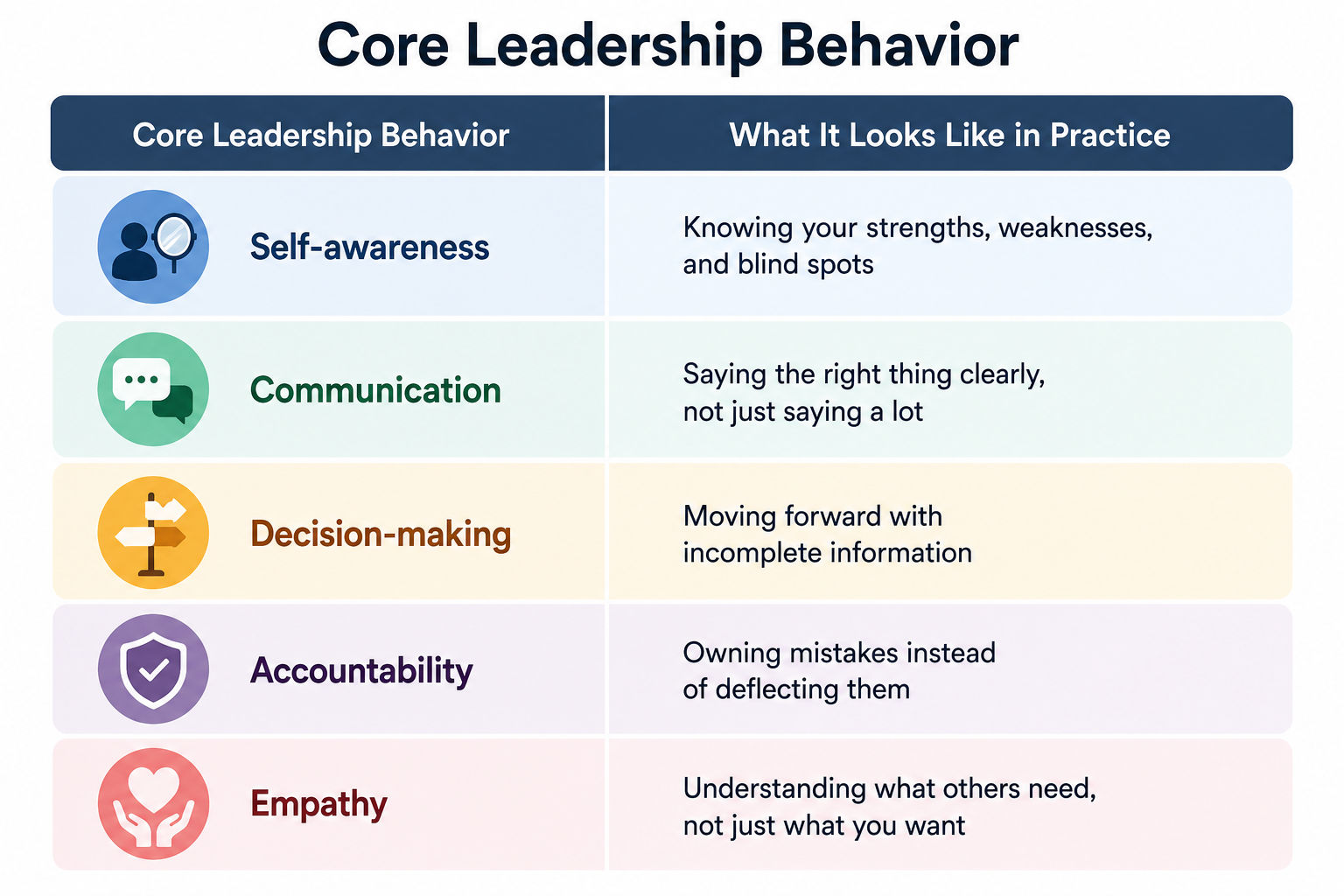
None of these are fixed traits. Every single one can be developed with deliberate practice.
Also Read: Top Skills Required for Leadership & Management in 2025
Free Courses
You don't build leadership in a weekend course. You build it in small, repeated actions. Here's a practical path you can follow:
You can't lead others well if you don't understand yourself first.
Ask yourself this:
Keep a journal. Not a diary, but a short weekly log of decisions you made, how they turned out, and what you'd do differently. That reflection habit alone puts you ahead of most people.
360-degree feedback, personality assessments (like MBTI or DISC), or even honest conversations with people who'll tell you the truth.
Clear communication means saying what you mean without overexplaining, listening without planning your next line, and adjusting how you speak based on who's in the room. Poor communication damages trust quickly, even when intentions are good.
Learn to practice this:
Practice this daily. In your next team meeting, try stating your point in one sentence before expanding. It's harder than it sounds, and it's one of the fastest ways to develop good leadership skills.
Don't wait to be asked. Volunteer for things that stretch you. Lead a small project. Coordinate a team lunch. Mentor a junior colleague. These aren't big, dramatic moves, but they build the muscle memory of ownership. Here's a simple comparison:
Weak Habit |
Leadership Habit |
| Making excuses | Accepting responsibility |
| Avoiding feedback | Asking for feedback |
| Waiting for direction | Taking initiative |
| Reacting emotionally | Staying composed |
Every time you take responsibility and follow through, you train yourself to think like a leader. That's the habit that compounds.
Indecision is one of the biggest leadership killers. Good leaders don't always have the right answer. They make a call, monitor the outcome, and adjust. That willingness to decide, even without certainty, is what separates leaders from people who wait for perfect conditions.
A useful question: "What's the best decision I can make with what I know right now?" Make that call. Then stay accountable to it.
Feedback isn't criticism. It's data.
Ask for it regularly. Not vague feedback like "how am I doing?" but specific questions like "What's one thing I could have handled better in that meeting?"
Leaders who don't seek feedback stop growing. It's that simple.
Emotional control matters a lot. People notice how leaders behave during difficult moments more than during easy ones. If you panic, explode, or shut down under stress, confidence around you drops quickly. You don’t need to be emotionless, just emotionally controlled.
Useful practices include:
Some days feel messy, that's human. But emotional maturity separates dependable leaders from unpredictable ones.
Do Read: 10 Best Leadership Courses of 2026
Recommended Courses to upskill
Explore Our Popular Courses for Career Progression
IIIT Bangalore
Executive Diploma in Machine Learning and AI360° Career Support
O.P.Jindal Global University
MBA from O.P.Jindal Global UniversityLive Case Studies and Projects
Habits are what actually change behaviour. Here are daily and weekly habits that build strong leadership over time:
Practice this daily:
Practice this daily weekly:
Practice this daily monthly:
These aren't complicated. The challenge isn't knowing them. It's doing them consistently.
Must read: Top 5 Types of Leadership in Management
The workplace gives daily opportunities to practice leadership. You don't need a manager title to start building influence. You need an actionable strategy.
Most teams have people who wait for instructions. Leaders notice problems and move early instead. Simple examples include:
Initiative creates visibility. Managers trust proactive people because they reduce friction instead of adding more to it.
Leadership requires decisions, sometimes with incomplete information. That's uncomfortable at first. Still, avoiding decisions creates bigger problems later. Leadership grows through correction, not avoidance.
Good decision-makers usually:
Strong Decision Habit |
Why It Helps |
| Gather key facts quickly | Prevents confusion |
| Consider long-term effects | Reduces risky choices |
| Stay calm under pressure | Improves judgment |
| Learn from mistakes | Builds confidence |
Conflict exists in every workplace. Strong leaders don't fuel drama or disappear during tension. They address issues directly while staying respectful.
A useful framework:
Many professionals lose leadership credibility because they react emotionally during disagreements instead of focusing on outcomes.
Trust doesn't appear automatically because someone gets promoted. It's built through repeated behaviour over time. People trust leaders who:
Some people think leadership means doing everything themselves. It doesn't. Real leadership includes trusting others with responsibility. Poor delegation creates burnout.
Good delegation improves the whole team’s performance because it allows people to contribute their strengths while freeing leaders to focus on larger priorities. Micromanagement kills motivation quickly.
When delegating:
Want a faster route to improvement? Ask people what you need to work on. Feedback reveals blind spots that self-reflection alone can't catch. Managers, coworkers, mentors, and even junior teammates can offer valuable insight if you listen without defensiveness.
Also Read: Transformational Leadership in Diversity and Inclusion
Leadership skills start early. Children who learn to lead become adults who lead well. And you don't need a special program to build these skills. You need the right environment.
Chores aren't just about tidying up. They teach ownership. Letting a child plan a family outing, manage their own schedule, or take charge of a younger sibling for an afternoon builds decision-making muscle in ways that classroom activities often don't.
Many children are taught to stay quiet and listen. That's important. But they also need practice finding their voice. Let your child disagree with you respectfully. Let them argue about their case. Ask their opinion before offering yours. These small moments teach them that their voice matters, which is the foundation of confident leadership.
One of the best things you can do is let a child fail at something low-stakes and then talk through it. Ask what happened, what they'd change, and what they learned. Don't rescue them immediately. That process of reflection after failure is exactly how to develop leadership skills in a child that transfers to adulthood.
Children don't learn leadership from books. They learn it from watching the adults around them. How you handle conflict, how you make decisions, how you take accountability. All of It's being absorbed.
Must Read: 6 Key Elements which will Make YOU a Better Leader than You Are!
Self-study and daily habits will take you far. But there are moments when structured learning makes sense. Consider a leadership development program when:
Programs range from short online certifications to full MBA tracks. The right one depends on your timeline, budget, and learning style.
upGrad offers several programs that cover management, communication, and strategic leadership, designed for working professionals who can't pause their careers to study. If structured learning is what you need, it's worth exploring what fits your situation.
Do Read: Key Qualities of Effective Managers and Leaders
Most Common Mistakes People Make When trying to Lead are:
Learning how to develop leadership skills takes consistent effort, not natural talent alone. Strong leaders improve through self-awareness, communication, decision-making, emotional control, and real-world practice over time. Start small, speak clearly, and listen better. Take responsibility faster. Ask for feedback regularly. Support people consistently even during difficult situations. Those habits create long-term leadership growth far more effectively than trying to appear authoritative overnight.
The process won't always feel smooth. Some days you'll handle situations well. Other days you'll realize what needs to work. That's part of leadership development, progress matters more than perfection
There's no fixed timeline, but consistent daily practice leads to visible change within three to six months. Deep leadership development, where your instincts and judgment mature, takes years of deliberate effort, reflection, and real-world experience across different situations and challenges.
Yes, without question. Introversion and leadership aren't opposites. Many effective leaders are introverted. They lead through preparation, deep listening, and thoughtful communication. The skills needed for leadership don't require an extroverted personality. They require clarity, consistency, and accountability.
Self-awareness. Before you can communicate well, make good decisions, or influence others, you need to understand how you behave under pressure, where your blind spots are, and how others experience you. Every other leadership skill builds on that foundation.
Take ownership of outcomes in your current role. Volunteer to lead small projects, mentor junior colleagues, and speak up in meetings with thought-out perspectives. Leadership behavior doesn't need a title. You can practice every core skill long before you have direct reports.
Remote leadership requires even clearer communication and more deliberate relationship-building. Develop habits like structured async updates, regular one-on-ones, and clear written decision-making. The skills are the same, but they need to be expressed through digital channels more intentionally than in-person settings.
A manager handles processes and tasks. A leader influences behavior and direction. You can be a manager without leading well, and you can lead without being a manager. The distinction matters because it changes how you think about your role and what skills you choose to develop.
Core skills like communication, decision-making, accountability, and empathy transfer across every industry. Technical knowledge is domain-specific, but the behavioral skills of leadership apply whether you're running a startup, a school, a hospital, or a logistics team.
Mentors are valuable but not essential. Books, case studies, structured reflection, peer feedback, and online programs can replace a lot of what formal mentorship provides. The key is creating feedback loops for yourself, whether through journaling, peer review, or structured self-assessment.
Emotional intelligence is central to it. Leaders who can't read a room, manage their own reactions, or understand what motivates others struggle to build trust. Developing EQ through active listening, self-reflection, and honest feedback is one of the fastest ways to improve leadership effectiveness.
Start with small, safe opportunities. Give them age-appropriate responsibilities, ask their opinion on family decisions, and encourage them to voice disagreement respectfully. Avoid pushing them into the spotlight too fast. Confidence grows gradually through consistent low-stakes practice, not through forced performances.
Yes, they do. Leadership skills, like any behavioral skill, require regular use to stay sharp. Leaders who stop seeking feedback, stop reflecting on their decisions, and stop challenging themselves gradually lose the edge they've built. Continued learning and practice aren't optional at any career stage.
1008 articles published
We are an online education platform providing industry-relevant programs for professionals, designed and delivered in collaboration with world-class faculty and businesses. Merging the latest technolo...
Get Free Consultation
By submitting, I accept the T&C and
Privacy Policy
Top Resources
Certification
3 Months
Certification
6 Months
O.P. Jindal Global University
Masters in International Accounting and Finance (Accredited by ACCA, UK)Master's Degree
12 Months