What is a Bootcamp? Meaning, Benefits & Career Scope in 2026
By upGrad
Updated on Sep 18, 2026 | 9 min read | 16.51K+ views
Share:

All courses
Certifications
More
By upGrad
Updated on Sep 18, 2026 | 9 min read | 16.51K+ views
Share:
Table of Contents
A bootcamp is a short, intensive training program designed to help learners build specific skills in a limited time. Originally rooted in military training, today’s bootcamps focus on areas like technology, business, and fitness, emphasizing hands‑on, practical learning rather than long theoretical study.
A bootcamp course is all about learning by doing instead of spending too much time on theory.
This blog will dive deep into what bootcamps are, the opportunities they create, and how they can be a transformative step in your career journey.
Level up your AI game with our AI & Machine learning course and excel your skills!
Popular upGrad Programs
A bootcamp is a short-term, intensive training program designed to teach practical, job-ready skills in areas like coding, AI, data science, digital marketing, and cybersecurity. Unlike traditional degree programs, bootcamps focus on hands-on learning, real-world projects, and industry-specific tools to help learners become job-ready quickly.
Key features of a bootcamp include:
Bootcamps are gaining popularity because industries now prioritize practical skills and faster hiring. They help learners quickly upskill, switch careers, and gain experience with real-world tools and technologies without spending years in a traditional academic program.
Interested in learning something new? Check out the below courses and enhance your skills today!
MICA Digital Marketing Course: Advanced Certificate in Digital Marketing and Communication

Free Courses
The duration of a bootcamp can vary depending on the program and the subject it covers. In most cases, bootcamps are designed to be intensive and focused, helping learners gain practical, job-ready skills in a shorter time compared to traditional courses. Most bootcamps typically last anywhere from a few weeks to several months.
Common bootcamp durations include:
Since bootcamps follow a fast-paced learning format, they require consistent effort and active participation. Many programs involve full-time learning schedules, hands-on projects, assignments, and collaborative activities to help participants build real-world skills quickly.
Recommended Courses to upskill
Explore Our Popular Courses for Career Progression
IIIT Bangalore
Executive Diploma in Machine Learning and AI360° Career Support
O.P.Jindal Global University
MBA from O.P.Jindal Global UniversityLive Case Studies and Projects
Preparing for a bootcamp is essential to maximise the intense learning experience. By adequately preparing for the bootcamp, you can maximise your learning experience and utilise the valuable opportunity to acquire new skills and advance your career.
Here are some steps to help you get ready:
Additionally, joining a Full Stack Software Development Bootcamp will give you an immersive experience and empower you with the sought-after skills and expertise that companies crave, opening doors to exciting job opportunities and propelling your career to new heights.
Attending a bootcamp promises an enriching and transformative experience, providing the tools required to excel in your desired field and propelling you toward new career opportunities. When joining a bootcamp, you should expect the following:
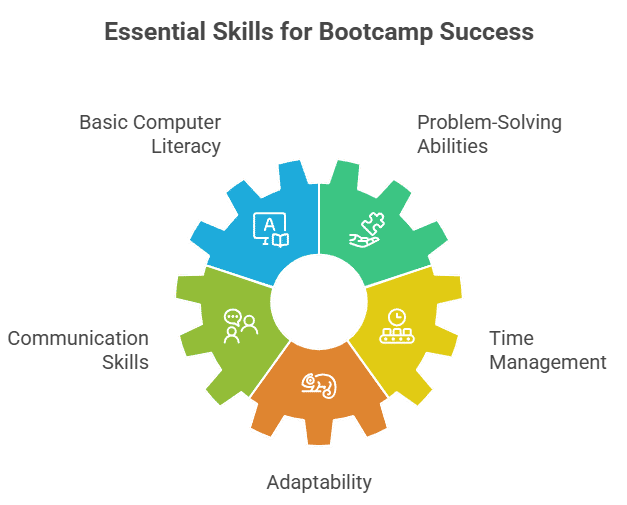
The specific skills necessary can vary depending on the bootcamp type and focus. However, some general skills that can be beneficial before joining a bootcamp include:
Learn digital marketing courses online from the World’s top Universities. Earn Masters, Executive PGP, or Advanced Certificate Programs to fast-track your career.
Subscribe to upGrad's Newsletter
Join thousands of learners who receive useful tips
Bootcamps can lead to various promising career outcomes, depending on the type of bootcamp you attend and the skills you acquire. Here are some expected career outcomes from bootcamps:
Both bootcamps and traditional degrees help learners build career skills, but they differ significantly in learning style, duration, cost, and career outcomes. Bootcamps focus on fast, practical, and job-oriented training, while traditional degrees provide broader academic and theoretical education over several years. The right choice depends on your career goals, budget, and preferred learning approach.
Feature |
Bootcamp |
Traditional Degree |
| Duration | Weeks/Months | 3–4 Years |
| Focus | Practical Skills | Theory + Concepts |
| Cost | Lower | Higher |
| Job Readiness | Immediate | Long-term |
Also Read: Online Degrees Transforming the Indian Higher Education System
Bootcamps encompass various subjects from introductory to intermediate and advanced levels. Participants may learn foundational programming principles or explore sophisticated engineering and data science expertise depending on the focus and proficiency level. In addition to coding-related proficiencies, bootcamp attendees can cultivate essential soft skills like communication, collaboration, and problem-solving abilities.
Full-Stack Web Development:
Full-stack web development involves a combination of front-end and back-end skills, enabling developers to create and implement user interfaces and website structures. Enrolling in full-stack development bootcamps equips learners with programming expertise, web frameworks, database management, and hosting platform skills.
Object-Oriented Programming (OOP):
OOP enables developers to arrange code into classes and objects, representing real-world entities that interact naturally, streamlining the coding process.
Data Structures and Algorithms:
Data structures help developers organise and store data, while algorithms enable manipulation, processing, and problem-solving with this data. Understanding data structures and algorithms empowers developers to manage large datasets and perform tasks swiftly and efficiently.
Project Management:
Developers leverage project management skills to plan, organise, and execute diverse projects. Many bootcamps cover the planning process, teaching goal-setting, resource management, and risk assessment, and may include Agile methodologies, scrum frameworks, and leadership strategies.
Conclusion
To understand the true bootcamp meaning, think of it as a career launchpad. It’s a transformative, accelerated learning path designed to make you job-ready in today’s competitive market. The bootcamp course is all about practical, hands-on experience over theory, you'll build real-world projects and gain the specific, in-demand skills that employers are looking for right now. Choosing the right program is your first step towards a more fulfilling future.

Enhance your expertise with our Popular MBA Courses. Explore the programs below to find your ideal fit.
A bootcamp is a short, intensive training program focused on practical, job-ready skills. The name comes from military “boot camps,” known for rigorous, accelerated training, reflecting the same fast-paced, immersive learning style.
In education and career growth, a bootcamp is a fast-track learning model bridging current skills with job requirements. It delivers updated, in-demand skills in weeks or months, enabling quick upskilling or career transitions.
Bootcamps have shifted from military-style training to focused, practical education. Once linked mainly to coding, they now cover fields like data science, digital marketing, and design, offering a respected alternative to traditional academic programs.
The core meaning intensive, accelerated learning remains, but focus changes by industry. Tech bootcamps emphasize coding and development, while business bootcamps teach marketing, finance, or leadership, always centering on job-ready, practical skills.
A technology bootcamp is a short-term, hands-on training program teaching in-demand skills like coding, data science, or cybersecurity. Students learn by building real-world projects, ensuring readiness for practical challenges in tech roles.
A bootcamp offers structured, skill-focused learning with real-world projects, expert instruction, and often career services like resume help and hiring networks, creating a fast, effective path to job readiness.
Expect an intense, fast-paced environment focused on building a portfolio through practical projects, guided by experienced instructors and collaboration with peers in a supportive, career-oriented atmosphere.
Bootcamps are short, practical, and affordable, focusing on job-specific skills. Traditional degrees are longer, costlier, and provide broader theoretical knowledge. Bootcamps prioritize depth in one field; degrees offer wider subject coverage.
It means committing to immersive, hands-on learning building projects, collaborating with peers, and creating a portfolio to showcase skills to employers rather than just attending lectures.
Bootcamps teach in-demand skills, guide you through real-world projects, and provide career services like mock interviews and networking, ensuring graduates are job-ready with a strong portfolio.
Motivated, self-disciplined learners' graduates, career changers, or professionals seeking to upskill who have clear goals and are ready for an intensive, fast-paced curriculum.
Yes, for many they offer quick returns by delivering job-ready skills and career support in months rather than years, often leading to higher-paying roles faster than traditional degrees.
They close the skills gap by offering fast, practical training aligned with market needs, making them ideal for career changers and professionals who can’t commit to multi-year programs.
Skills vary by program but are always job-focused on coding, frameworks, and software methods in tech, or SEO, social media, and analytics in marketing, all aligned with real job descriptions.
“Boot camp” slang refers to any short, intense training or conditioning process whether fitness, writing, or tech designed for rapid skill-building or transformation in a focused timeframe.
Yes. Employers value bootcamp grads for current skills, motivation, and practical portfolios, often considering these more useful than degrees without hands-on experience.
Not always. Many beginner bootcamps need no prior skills, while advanced ones in fields like machine learning may require programming or related experience.
A strong alumni network offers mentorship, referrals, and connections long after graduation, significantly boosting career growth and making the bootcamp more valuable overall.
You focus on job hunting finalizing resumes, portfolios, and interview prep with career coaches’ support to secure a role in your new field quickly.
No. A bootcamp offers deep, practical training for specific jobs, while a degree provides broad theoretical education. It’s an alternative, not a replacement, especially for tech roles.
1320 articles published
We are an online education platform providing industry-relevant programs for professionals, designed and delivered in collaboration with world-class faculty and businesses. Merging the latest technolo...
Get Free Consultation
By submitting, I accept the T&C and
Privacy Policy
Top Resources
Certification
3 Months
Certification
6 Months
O.P. Jindal Global University
Masters in International Accounting and Finance (Accredited by ACCA, UK)Master's Degree
12 Months