HR Manager Responsibilities: Roles,Skills, and Key Functions Explained
By Sriram
Updated on Aug 06, 2026 | 7 min read | 4.34K+ views
Share:

All courses
Certifications
More
By Sriram
Updated on Aug 06, 2026 | 7 min read | 4.34K+ views
Share:
Table of Contents
Key Highlight:
Build the leadership and business skills needed to excel in HR and management roles. Explore upGrad's Management Degree Courses and gain industry-relevant knowledge to accelerate your career growth.
Popular Management Programs
Human resource management covers every stage of an employee's journey from recruitment to career development and retention. While the specific roles and responsibilities of HR manager may vary depending on the organization's size and industry, their primary objective remains the same: attracting, developing, and retaining talent while supporting business goals.
The duties and responsibilities of HR manager combine strategic planning with day-to-day operations. They help organizations build strong teams, maintain compliance, improve employee performance, and create a workplace where employees can succeed.
Core HR Manager Responsibilities:
Responsibility |
Key Activities |
Business Impact |
| Recruitment and Staffing | Workforce planning, sourcing candidates, interviewing, hiring | Attracts qualified talent and reduces hiring time |
| Employee Onboarding and Offboarding | Orientation, documentation, exit interviews, knowledge transfer | Improves employee experience and ensures smooth transitions |
| Employee Relations | Conflict resolution, engagement initiatives, grievance handling | Builds a positive workplace culture and improves retention |
| Performance Management | Goal setting, reviews, feedback, performance improvement plans | Enhances productivity and employee development |
| Learning and Development | Training programs, leadership development, skill enhancement | Improves workforce capabilities and prepares future leaders |
| Compensation and Benefits | Salary planning, payroll coordination, benefits administration, rewards | Increases employee satisfaction and competitiveness |
| Compliance and Policy Management | Labor law compliance, HR policies, audits, documentation | Minimizes legal risks and promotes fair workplace practices |
| Workforce Planning | Headcount forecasting, succession planning, resource allocation | Aligns workforce requirements with business objectives |
| Talent Management | Career planning, employee retention, succession strategies | Develops future leaders and strengthens organizational growth |
Hiring the right people can make a real difference to how well a business performs, making recruitment one of HR's most important responsibilities. HR managers identify staffing needs, prepare job descriptions, source candidates, coordinate interviews, and support hiring decisions.
They also work on building a strong employer brand and ensuring every candidate has a positive hiring experience.
A good onboarding experience helps new employees settle into their roles faster and feel confident from day one. HR managers introduce them to company policies, workplace culture, and job expectations, helping improve engagement and productivity.
When employees leave, HR managers make the transition smooth through exit interviews, documentation, and knowledge transfer while learning from employee feedback.
Healthy workplace relationships don't happen by chance they're built through consistent HR support. HR managers resolve conflicts, handle grievances, encourage open communication, and promote employee engagement.
When employees feel heard and respected, teamwork improves and they're more likely to stay with the organization.
Also Read: Why MBA in HR? Scope, Skills, Opportunities, Salary
HR managers oversee performance management by setting goals, defining KPIs, conducting performance reviews, providing continuous feedback, and implementing Performance Improvement Plans (PIPs).
It gives employees a clear direction for improvement while keeping individual goals aligned with business priorities.
By understanding where employees need support, HR managers can plan training that makes a meaningful impact. They organize workshops, learning programs, and leadership development initiatives to strengthen individual and team capabilities.
They also encourage employees to grow through mentoring, certifications, and new learning opportunities that prepare them for future roles.
Also read : HR Operations Manager Job Description
HR managers develop salary structures, coordinate payroll, administer employee benefits, and manage recognition programs.
Fair pay and valuable benefits make employees feel appreciated and encourage them to build long-term careers with the organization.
Every organization needs clear policies and legal compliance, and HR managers help make sure both are consistently followed. They develop HR policies, maintain documentation, conduct policy reviews, and promote ethical workplace practices to minimize legal risks.
HR managers forecast future hiring needs, identify workforce gaps, and develop hiring strategies aligned with business goals.
Planning ahead helps businesses avoid talent shortages and stay prepared for future opportunities.
Finding talented people is only the beginning the real value comes from helping them grow and stay with the organization.
HR managers support succession planning, career progression, and employee retention. By investing in employee growth and future leaders, they build stronger leadership pipelines and prepare the organization for long-term success.
Also Read: Top Career Opportunities in HR You Should Pick From
Free Courses
One of the most strategic functions of HR is recruitment, since every hiring decision has an impact on the future performance of an organisation.
One of the most important roles and responsibilities of HR manager is recruiting qualified candidates who are a good fit to the job requirements and the company culture.
A structured recruitment process reduces the cost of hiring, enhances employee retention and ensures the organisation has the talent it needs to achieve its business goals.
The main recruitment responsibilities of HR managers include the following.
Recruitment is a process that starts way before a job vacancy is advertised. HR managers work with business leaders to anticipate workforce needs based on the company’s growth, employee turnover, expansion, and projects on the horizon.
Workforce planning enables organisations to anticipate future hiring needs, prevent talent shortages and make the best use of recruitment budgets. The business makes sure it has the right people to meet the changing demands of the organization by being proactive.
Before posting a vacancy, HR managers conduct job analysis to understand the responsibilities, qualifications, skills, and experience required for a role.
A good job description is clear about:
Accurate job descriptions improve candidate quality by attracting applicants whose skills closely match organizational requirements.
Must Read: Top Skills Required for Leadership & Management
HR managers are responsible for the whole hiring process , ensuring that it is efficient and fair . They are responsible for:
A structured hiring process improves the quality of recruitment and reduces time-to-hire and recruitment costs.
Interview coordination involves scheduling interviews, communicating with candidates, organizing interview panels, and ensuring every candidate receives a consistent evaluation experience.
HR managers also guide interviewers on structured interviewing techniques to reduce bias and maintain fairness throughout the recruitment process.
Read: Key Functions of Human Resource Management (HRM)
Selecting the right candidate requires evaluating technical competencies, cultural fit, communication skills, experience, and long-term potential.
Rather than focusing only on current job requirements, HR managers also assess whether candidates can grow within the organization and contribute to future business success. This strategic approach reflects the broader duties and responsibilities of HR manager, which include building a sustainable workforce rather than simply filling vacancies.
Today's candidates evaluate employers just as organizations evaluate applicants. HR managers strengthen employer branding by creating positive candidate experiences, promoting company culture, highlighting employee benefits, and maintaining a strong presence on recruitment platforms and professional networks.
A strong employer brand attracts better talent, improves offer acceptance rates, and reduces recruitment expenses over time.
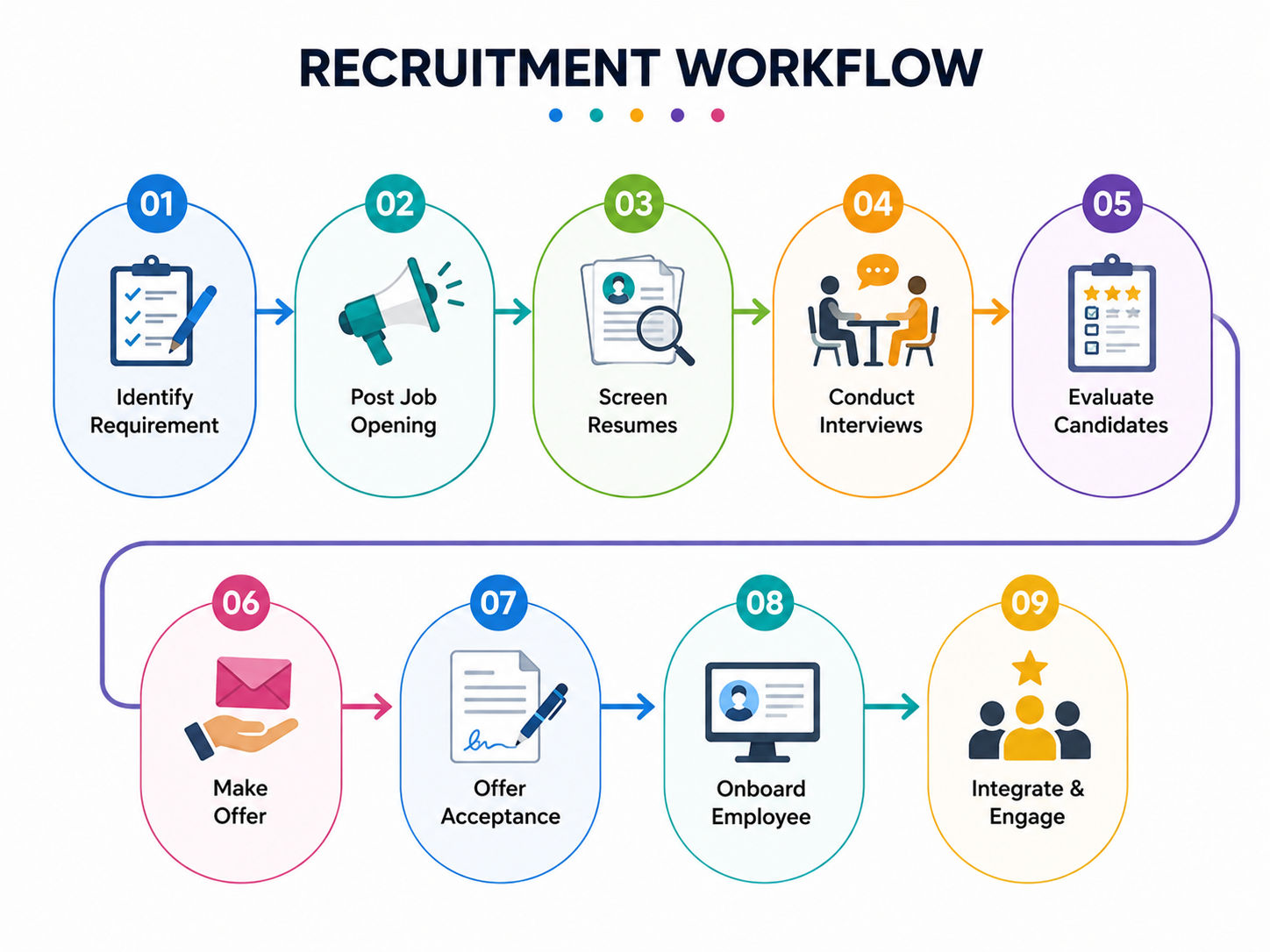
The recruitment process is continuous rather than linear. HR managers regularly review hiring metrics such as time-to-fill, quality of hire, offer acceptance rates, and employee retention to identify opportunities for improvement. By refining each stage of the recruitment workflow, they ensure hiring practices remain efficient, fair, and aligned with organizational objectives.
Also Read: Top 15 Career Options in Business Management in India in 2026
Management Courses to upskill
Explore Management Courses for Career Progression
IIIT-B & IIM, Udaipur
Chief Technology Officer & AI Leadership ProgrammeStrong employee relationships are essential for a productive and positive workplace. One of the key roles and responsibilities of HR manager is creating an environment where employees feel heard, respected, and motivated. By resolving workplace issues, encouraging communication, and promoting engagement, HR managers help improve employee satisfaction and retention.
Employee engagement is a measure of how committed employees are to their work and the organization. HR managers increase engagement by:
Such initiatives boost morale, productivity, and long-term retention.
Workplace disagreements can affect teamwork and performance if left unresolved. HR managers act as neutral mediators by investigating concerns, facilitating discussions, and helping employees reach fair solutions.
Common conflicts include:
Resolving conflicts quickly helps maintain a healthy work environment.
Also Read: What is Strategic Management? Why is it important?
HR managers establish formal grievance procedures so employees can report concerns confidentially. They investigate complaints, gather relevant information, recommend appropriate actions, and maintain proper documentation. A transparent grievance process builds employee trust and supports workplace fairness.
Clear communication keeps employees informed and aligned with organizational goals. HR managers share policy updates, company announcements, benefits information, and workplace changes through meetings, emails, newsletters, and employee handbooks.
Building a positive workplace culture is another important aspect of the duties and responsibilities of HR manager. HR managers promote diversity, inclusion, employee wellness, recognition programs, and flexible work practices that encourage collaboration and improve employee satisfaction.
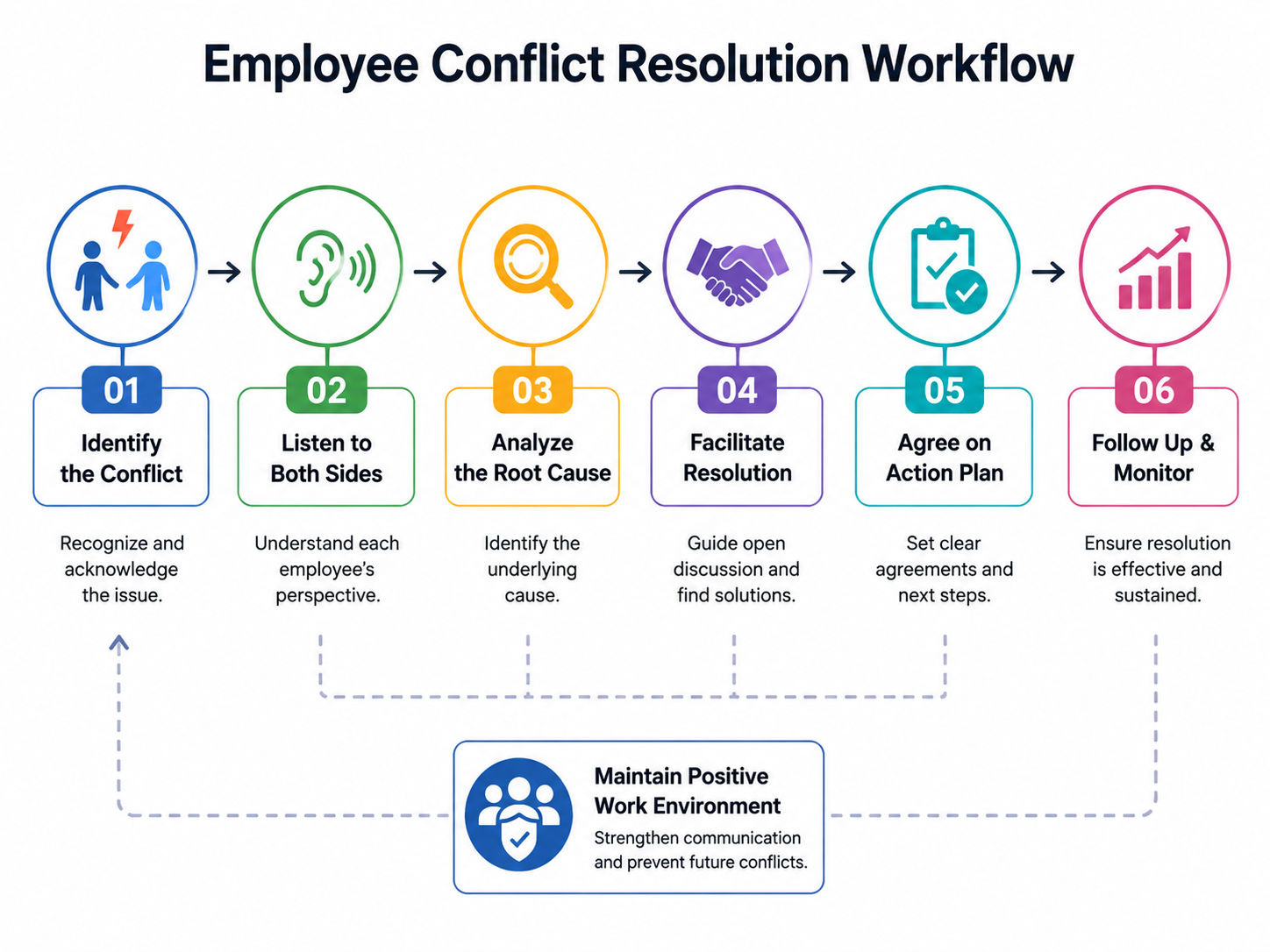
By maintaining positive employee relations, HR managers strengthen workplace culture, improve engagement, and reduce turnover.
Also Read: What is Risk Management Strategies? Top Strategies to Follow
Performance management helps employees understand expectations, improve their skills, and contribute to business goals. If you're wondering what are the duties and responsibilities of HR manager in this area, they include setting performance standards, monitoring progress, providing feedback, and supporting employee development.
Also Read: Master These 25 People Management Skills for Success
HR managers work with department leaders to establish SMART (Specific, Measurable, Achievable, Relevant, and Time-bound) goals. Clear objectives help employees understand expectations and measure success effectively.
KPIs provide measurable benchmarks to evaluate employee performance. HR managers help departments define role-specific metrics that support organizational objectives.
Department |
Sample KPIs |
| Sales | Revenue, Conversion Rate |
| Customer Support | Resolution Time, Customer Satisfaction |
| Marketing | Leads Generated, Campaign ROI |
| Operations | Productivity, Process Efficiency |
| HR | Time-to-Hire, Employee Retention |
Performance reviews allow managers and employees to discuss achievements, challenges, and future goals. HR managers develop appraisal frameworks, ensure consistency, and maintain accurate performance records to support fair evaluations.
Rather than relying only on annual reviews, HR managers encourage regular feedback and coaching. Continuous feedback helps employees improve performance, address challenges early, and stay aligned with business priorities.
Also Read: Transformational Leadership in Diversity and Inclusion
When employees struggle to meet expectations, HR managers develop Performance Improvement Plans (PIPs). These plans outline performance gaps, improvement goals, timelines, and the support needed to help employees succeed.
Performance Management Cycle
Stage |
Purpose |
| Goal Setting | Define clear objectives |
| Continuous Feedback | Monitor and guide performance |
| Mid-Year Review | Evaluate progress |
| Annual Review | Assess overall performance |
| Improvement & Development | Plan future growth |
An effective performance management system increases accountability, supports employee development, and improves overall organizational performance.
Advance your leadership journey with the Certificate Programme in General Management for Young Leaders (YLP) from IIM Bangalore and develop practical business and management skills for future leadership roles.
Continuous learning helps employees adapt to changing business needs and advance their careers. One of the essential roles and responsibilities of HR manager is identifying skill gaps and creating learning opportunities that improve employee performance and prepare future leaders.
Before designing learning programs, HR managers assess skill gaps through:
This ensures training addresses actual organizational needs.
Based on the analysis, HR managers organize learning initiatives such as:
These programs help employees build both technical and soft skills.
HR managers identify high-potential employees and prepare them for leadership roles through mentoring, coaching, leadership workshops, and strategic project assignments. This strengthens the organization's future leadership pipeline.
Supporting career progression is an important part of the duties and responsibilities of HR manager. HR managers create development plans, encourage internal mobility, and provide opportunities for certifications, promotions, and career advancement.
As technology evolves, employees need new skills to remain effective. HR managers organize reskilling and upskilling initiatives in areas such as digital tools, AI, data analytics, cybersecurity, and project management to keep the workforce future-ready.
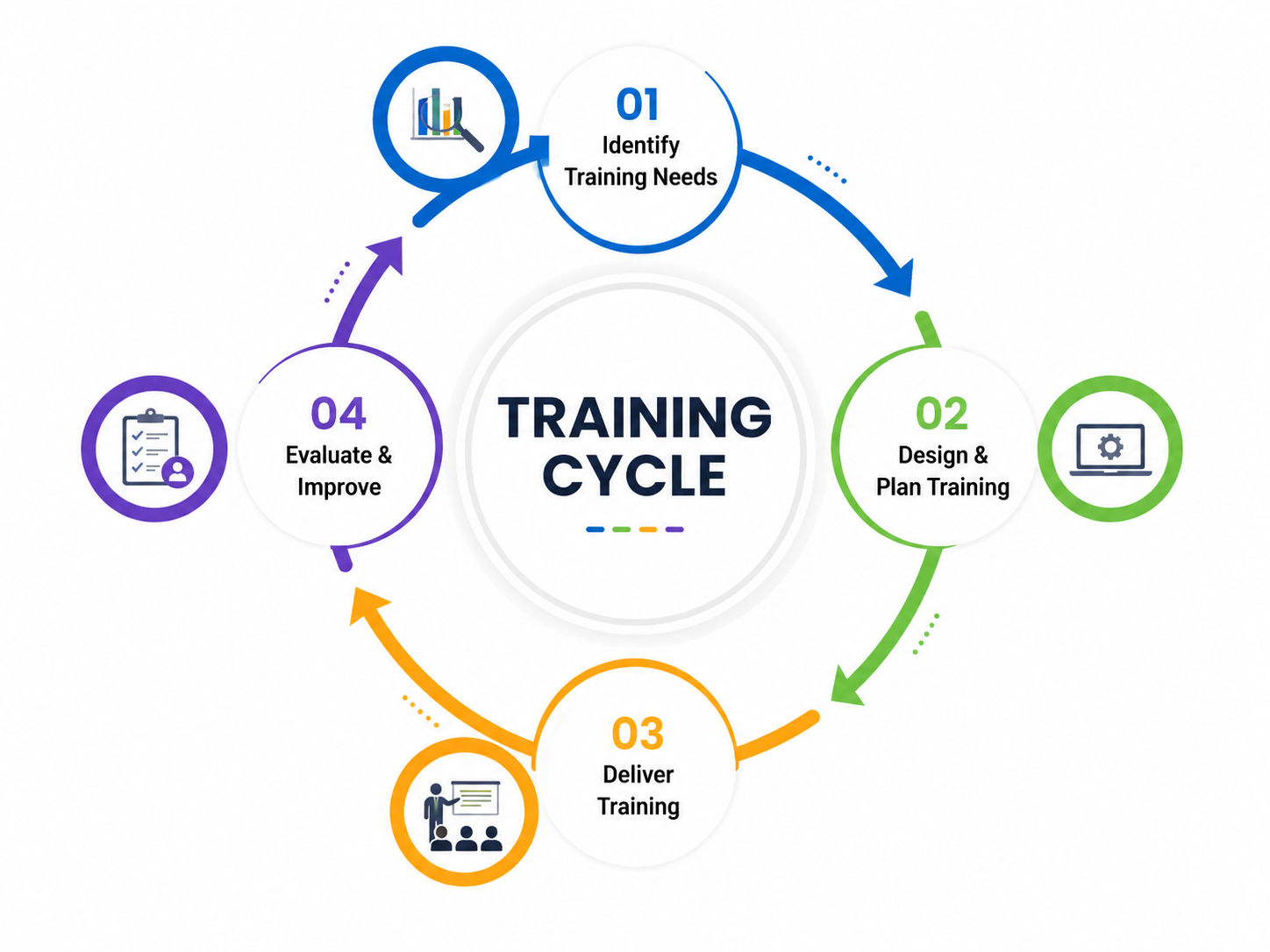
By continuously evaluating training outcomes and refining learning programs, HR managers help employees grow while ensuring the organization has the skills needed to achieve long-term business success.
Also Read: The 5 Best Ways for Employee Engagement!
Fair compensation and meaningful benefits help organizations attract, motivate, and retain talented employees. One of the key roles and responsibilities of HR manager is developing competitive salary structures, managing employee benefits, coordinating payroll, and overseeing recognition programs that enhance the overall employee experience.
HR managers develop competitive salary structures by considering factors such as market trends, industry benchmarks, employee experience, job responsibilities, and internal pay equity.
Regular salary reviews help organizations remain competitive while ensuring employees feel valued and fairly compensated.
Job satisfaction is important and employee benefits have its advantages. HR managers are responsible for administering and communicating benefit programs, and for making sure employees are aware of and can take advantage of the support offered to them.
Typical employee benefits include:
Good benefits package means greater employee satisfaction and retention.
Recognizing employee contributions encourages engagement and reinforces positive performance. HR managers develop recognition programs that celebrate individual and team achievements.
These may include:
Timely recognition boosts morale and motivates employees to perform consistently.
Read: Become a Successful Human Resources Manager: Essential Skills, Career Growth, and How to Get Started
Although payroll processing may be handled by finance or specialized payroll teams, HR managers ensure employee records, attendance, leave data, and salary revisions are accurate before payroll is processed.
Accurate payroll coordination builds employee trust and minimizes payroll-related issues.
Compensation |
Benefits |
| Basic salary | Health insurance |
| Bonuses and incentives | Paid leave |
| Overtime pay | Retirement benefits |
| Commissions | Wellness programs |
| Variable pay | Flexible work arrangements |
By designing fair compensation strategies and meaningful benefits programs, HR managers improve employee satisfaction while supporting the organization's ability to attract and retain skilled professionals.
Also Read: How to Improve Communication Skills: Ultimate 2025 Guide
Every organization needs the right people with the right skills at the right time. Workforce planning helps businesses prepare for growth, manage talent shortages, and adapt to changing business needs. As part of the duties and responsibilities of HR manager, workforce planning ensures that hiring decisions support both current operations and future goals.
HR managers analyze business plans, market trends, and workforce data to predict future hiring requirements. Forecasting helps organizations prepare for expansion, seasonal demand, new projects, or leadership changes.
A proactive approach reduces last-minute hiring and minimizes skill shortages.
Headcount planning involves determining how many employees are needed across different departments based on workload, budgets, and business priorities.
HR managers regularly review workforce capacity to ensure teams are adequately staffed without over- or under-hiring.
Business continuity depends on having capable employees ready to step into critical roles. HR managers identify high-potential employees and prepare them for future leadership positions through mentoring, development plans, and leadership training.
Succession planning reduces disruptions caused by retirements, resignations, or unexpected vacancies.
HR managers work with department leaders to allocate employees based on business priorities, project requirements, and available skills. Effective resource allocation improves productivity while preventing employee burnout or uneven workloads.
Technology, automation, and evolving business models continue to reshape workforce requirements. HR managers monitor these changes and develop hiring and learning strategies that prepare the organization for future skill demands.
Also Read: HR Management Made Easy Using 15 HR Tools and Softwares
Attracting talented employees is only the beginning. HR managers also focus on developing, engaging, and retaining employees to support long-term business success and build a strong leadership pipeline.
HR managers develop recruitment strategies, strengthen employer branding, and create positive candidate experiences to attract qualified talent and build a future-ready workforce.
Retaining skilled employees is just as important as hiring them. HR managers improve retention through career development opportunities, competitive compensation, employee recognition, regular feedback, and a positive workplace culture.
HR managers identify high-potential employees and prepare them for future leadership roles through development plans, mentoring, and leadership training. This ensures business continuity and reduces leadership gaps.
High-performing employees are supported through:
These initiatives help prepare future leaders while keeping top talent engaged.
One of the important roles and responsibilities of HR manager is helping employees grow within the organization. Clear career paths, internal promotions, and continuous learning opportunities encourage long-term career development and improve employee retention.
Effective talent management helps organizations build skilled, engaged, and future-ready teams while supporting sustainable business growth.
The workplace continues to evolve with changing employee expectations, technological advancements, and new business priorities.
If you're exploring what are the duties and responsibilities of HR manager, handling these workplace challenges is an important part of the role.
HR managers must balance employee needs with business objectives while creating practical solutions that support organisational success.
Challenge and Solution:
Challenge |
Solution |
| Employee turnover | Improve engagement, career development, and recognition programs |
| Hiring shortages | Strengthen employer branding, expand sourcing channels, and build talent pipelines |
| Compliance updates | Conduct regular policy reviews and provide compliance training |
| Employee conflicts | Establish transparent grievance procedures and encourage open communication |
| Performance issues | Offer continuous feedback, coaching, and Performance Improvement Plans |
| Hybrid work management | Implement clear communication guidelines and performance expectations |
The roles and responsibilities of HR manager go far beyond hiring and administrative tasks. If you're wondering what the duties and responsibilities of HR manager are, they include recruiting talent, supporting employee development, managing performance, ensuring compliance, and building a positive workplace culture.
The duties and responsibilities of HR manager directly influence employee engagement, retention, productivity, and overall business performance. By aligning people strategies with organizational goals, HR managers help organizations build a skilled, motivated, and future-ready workforce.
Ready to start your journey? Book a free consultation with upGrad today to find the best path for your career.
Most HR managers hold a bachelor's degree in human resource management, Business Administration, Psychology, or a related field. Many professionals also pursue HR certifications or an MBA to strengthen their expertise. Practical experience in recruitment, employee relations, or HR operations is equally valuable for career growth.
The seven core HR functions are recruitment and selection, training and development, performance management, compensation and benefits, employee relations, compliance, and workforce planning. Together, these functions help organizations attract skilled employees, improve workplace productivity, and achieve long-term business objectives.
The five primary responsibilities include recruiting talent, managing employee performance, maintaining employee relations, ensuring legal compliance, and overseeing compensation and benefits. These responsibilities may vary by organization but collectively support employee well-being and organizational success.
The seven widely accepted HR principles include fairness, equity, transparency, confidentiality, diversity and inclusion, compliance, and continuous employee development. Applying these principles helps organizations build trust, promote ethical practices, and create a positive work environment for all employees.
Managers are generally responsible for planning, organizing, leading, staffing, and controlling business activities. While HR managers perform these management functions, they apply them specifically to people management by supporting recruitment, employee development, performance, and organizational culture.
The seven pillars of HR commonly include talent acquisition, onboarding, learning and development, performance management, employee engagement, compensation and benefits, and succession planning. These pillars support the complete employee lifecycle and help organizations develop a capable, future-ready workforce.
An HR manager's role can be demanding because it involves balancing employee expectations with business objectives. Managing recruitment, workplace conflicts, compliance, and organizational changes requires strong communication, problem-solving, and emotional intelligence. However, effective planning and modern HR technology help reduce many day-to-day challenges.
One of the evolving roles and responsibilities of HR manager is leading change management initiatives. HR managers communicate organizational changes, prepare employees through training, address concerns, and help teams adapt to new processes, technologies, or business strategies while minimizing disruption.
The duties and responsibilities of HR manager have expanded beyond administrative work. Today's HR managers use HR analytics, digital HR systems, AI-powered recruitment tools, and workforce planning strategies to make data-driven decisions while improving employee experience and business performance.
If you're wondering what are the duties and responsibilities of HR manager in a small business, the role is often broader than in large organizations. HR managers may handle recruitment, payroll coordination, employee engagement, policy implementation, compliance, training, and performance management with limited resources.
HR managers are in demand across industries such as IT, healthcare, manufacturing, retail, banking, education, consulting, and e-commerce. As businesses continue to prioritize employee experience and talent retention, skilled HR professionals remain essential for building productive and high-performing organizations.
727 articles published
Sriram K is a Senior SEO Executive with a B.Tech in Information Technology from Dr. M.G.R. Educational and Research Institute, Chennai. With over a decade of experience in digital marketing, he specia...
Get Free Consultation
By submitting, I accept the T&C and
Privacy Policy
Top Resources
Certification
3 Months
Certification
6 Months
O.P. Jindal Global University
Masters in International Accounting and Finance (Accredited by ACCA, UK)Master's Degree
12 Months