Kotlin vs Java: Full Comparison Guide For 2026
By Rahul Singh
Updated on Jul 01, 2026 | 11 min read | 2.97K+ views
Share:

All courses
Certifications
More
By Rahul Singh
Updated on Jul 01, 2026 | 11 min read | 2.97K+ views
Share:
Table of Contents
Kotlin and Java are two of the most popular programming languages for JVM development. Both run on the Java Virtual Machine (JVM) and are fully interoperable, allowing developers to use them within the same project. The main difference is that Kotlin offers a modern, concise syntax with built-in safety features, while Java focuses on stability, readability, and long-term enterprise support.
This blog gives you a complete picture of kotlin vs java. You will learn how both languages work, where they are similar, what separates them, and which one makes sense for your specific goals. Whether you are picking your first language or switching from one to the other, this breakdown covers everything.
Want to build a strong foundation in programming, AI, and analytics? Explore upGrad's Data Science Course to develop practical skills in Python, machine learning, and real-world data science projects.
Popular upGrad Programs
Before getting into the details, here is a direct comparison across ten key parameters. This table gives you a quick, honest look at where kotlin vs java differs in practice.
Parameter |
Kotlin |
Java |
| Developed by | JetBrains | Sun Microsystems (now Oracle) |
| Year released | 2011 (stable release in 2016) | 1995 |
| Null safety | Built-in at language level | No built-in null safety; NullPointerException is very common |
| Syntax verbosity | Concise, far less boilerplate | More verbose, requires more lines of code |
| Interoperability | Fully interoperable with Java | Interoperable with Kotlin since Java 8+ |
| Android development | Google's preferred language since 2019 | Supported but secondary to Kotlin for new projects |
| Coroutines and async | Native coroutine support built in | Uses threads or external libraries like RxJava |
| Learning curve | Moderate; easier if you already know Java | Beginner-friendly with extensive documentation |
| Performance | Comparable to Java on the JVM | Slightly faster compile times on large codebases |
| Community and adoption | Fast-growing, dominant in Android | Massive, one of the largest developer communities worldwide |
This table is a useful reference point, but the real picture becomes much clearer once you understand each language on its own terms.
Also Read: Exploring Java Architecture: A Guide to Java's Core, JVM and JDK Architecture
Free Courses
Kotlin is a statically typed programming language created by JetBrains. It runs on the Java Virtual Machine, which means it compiles down to Java bytecode and can run anywhere Java runs. JetBrains released the first stable version in 2016 after several years of development. Google officially endorsed Kotlin as a first-class language for Android in 2017 and declared it the preferred language for Android development in 2019.
The goal from the beginning was to create a language that solved real frustrations developers had with Java while staying fully compatible with the existing Java ecosystem.
Kotlin was built to fix several of the things developers found tedious or risky in Java. It is more concise, more expressive, and safer by design.
Also Read: Types of Exception in Java: Checked, Unchecked, and Errors Explained
Kotlin is most commonly linked to Android development, but its reach has grown well beyond that. Developers use it for:
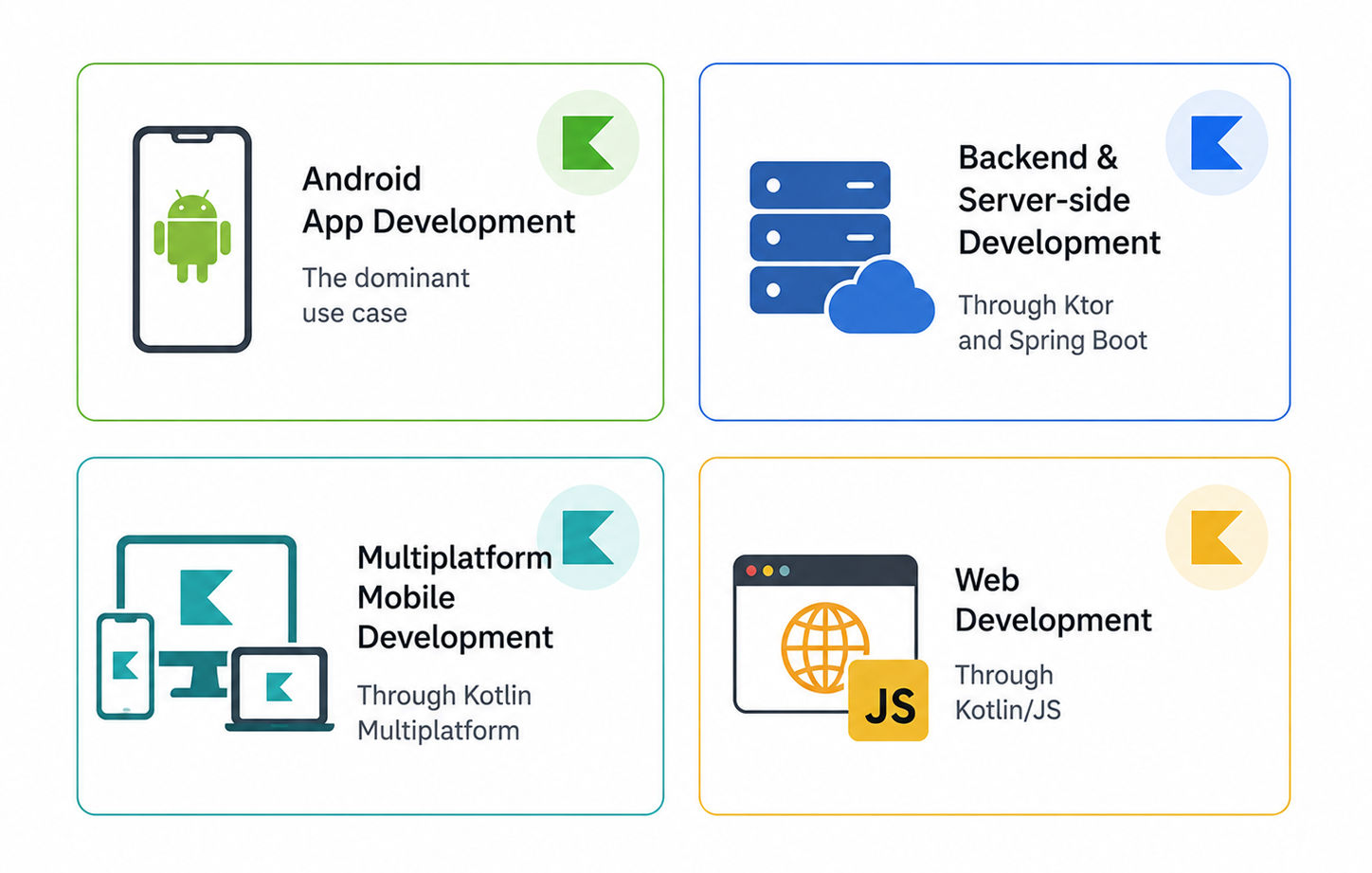
Details |
|
| Pros | Less boilerplate, null safety by default, modern language features, strong Android support |
| Cons | Smaller community than Java overall, compile times can be slower on large projects, fewer beginner tutorials compared to Java |
Recommended Courses to upskill
Explore Our Popular Courses for Career Progression
IIIT Bangalore
Executive Diploma in Machine Learning and AI360° Career Support
O.P.Jindal Global University
MBA from O.P.Jindal Global UniversityLive Case Studies and Projects
Java is one of the most influential programming languages ever built. James Gosling developed it at Sun Microsystems, and it was first released in 1995. The central idea behind Java was "write once, run anywhere." Code compiled to Java bytecode runs on any machine with a Java Virtual Machine installed, regardless of the operating system underneath.
That idea turned Java into one of the most widely deployed languages in history. Today, Oracle maintains Java, and it continues to receive regular updates and improvements.
Java has stayed relevant for thirty years because of its consistency, stability, and enormous ecosystem.
Ready to turn your programming skills into a career in AI and data science? Explore upGrad's Executive Post Graduate Certificate Programme in Data Science & AI from IIITB and Master of Science in Data Science from Liverpool John Moores University to gain industry-ready expertise through hands-on learning.
Java powers a huge portion of the software world. You will find it in:
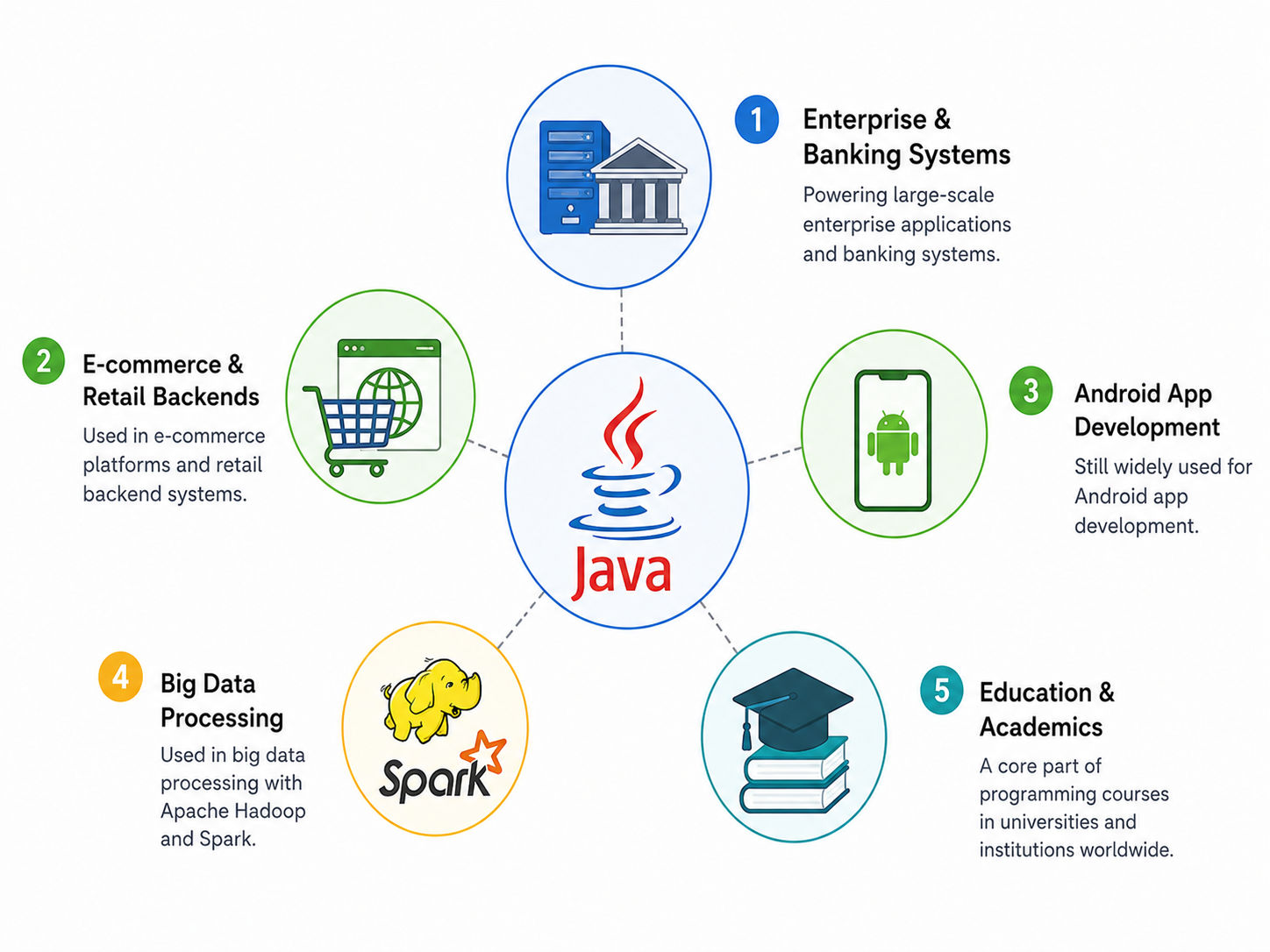
Details |
|
| Pros | Extremely mature and stable, massive job market, huge library ecosystem, best-in-class enterprise support |
| Cons | Verbose syntax that requires more code for the same result, no built-in null safety, slower to adopt modern language patterns |
Also Read: Java Language History: Why Java Is So Popular and Widely Used Today
The kotlin vs java debate often makes these two languages sound like complete opposites. But they share more than people realize, which is part of why so many teams use both.
The most important shared trait is interoperability. Kotlin and Java can live in the same project. You can call Java code from Kotlin files and Kotlin code from Java files without any special setup or wrappers. This means teams do not have to choose one and drop the other overnight. Many Android codebases mix both languages during a gradual migration from Java to Kotlin.
Also Read: 35+ Android Projects with Source Code You MUST Try in 2026 (Beginner to Final-Year)
Choosing between kotlin vs java is less about which language is objectively better and more about what fits your project, your team, and your goals.
Choose Kotlin if:
Choose Java if:
For new Android projects started today, Kotlin is the default choice by a wide margin. For backend enterprise work at scale, Java is still very much in play. And for anyone unsure, learning one makes the other significantly easier to pick up.
Also Read: 18+ Best Android Projects on GitHub for Beginners in 2025 (With Source Code)
A few misconceptions tend to come up when people first look at kotlin vs java.
Also Read: 21 Java Backend Developer Skills to Land High-Paying Roles in 2026
Both Kotlin vs Java are strong, well-supported languages with real careers behind them. Java brings three decades of stability, a massive community, and an almost endless set of frameworks and libraries. Kotlin brings cleaner syntax, built-in null safety, and Google's backing for the world's most popular mobile platform.
If your goal is Android development today, Kotlin is the clear starting point. If you are entering enterprise backend development or starting your programming journey with the broadest range of resources, Java is a solid and very practical choice. Many developers who go deep into one eventually learn the other too.
Want personalized guidance on Data Science and upskilling? Speak with an expert for a free 1:1 counselling session today.
The right choice depends on your goals. Java is a strong starting point for enterprise development and core programming concepts, while Kotlin is ideal for Android and modern JVM applications. Understanding Kotlin vs Java helps you select the language that best matches your career path.
No. Kotlin is a separate programming language developed by JetBrains. Although it runs on the JVM and works seamlessly with Java code, it introduces modern features such as null safety, coroutines, extension functions, and a more concise syntax that Java does not provide by default.
Netflix primarily uses Java for many of its backend systems because of its scalability and mature ecosystem. The company also uses Kotlin in selected services where its concise syntax and interoperability with Java help improve developer productivity and maintainability.
Amazon uses Java extensively across many backend services because of its reliability and scalability. Like many large technology companies, it also uses several other programming languages depending on the application, infrastructure, and engineering team's requirements.
The biggest differences in Kotlin vs Java include syntax, null safety, boilerplate code, asynchronous programming, and developer productivity. Kotlin offers modern language features that reduce code size, while Java provides long-term stability, broad compatibility, and a mature ecosystem.
Yes. Kotlin continues to grow in Android, backend development, and Kotlin Multiplatform projects. Strong support from Google and JetBrains, along with increasing enterprise adoption, makes it one of the most relevant JVM languages for modern software development.
Java is often considered easier for beginners because it introduces programming fundamentals through a structured approach. Kotlin becomes much easier to learn once you understand Java basics, especially since both languages share the same JVM platform.
Yes. One of the biggest advantages highlighted in Kotlin vs Java discussions is full interoperability. Developers can gradually introduce Kotlin into existing Java projects without rewriting the entire application, making migration simpler and less risky.
Runtime performance is nearly identical because both languages compile to JVM bytecode. Java may compile slightly faster in some scenarios, while Kotlin often improves overall development speed by reducing boilerplate code and simplifying common programming tasks.
Yes. Interviewers frequently ask Kotlin vs Java questions to evaluate your understanding of language features, interoperability, null safety, Android development, and practical use cases. Explaining real-world scenarios is often more valuable than simply listing differences.
Both languages offer strong career opportunities. Java remains the preferred choice for enterprise software, banking, and large backend systems, while Kotlin is in high demand for Android development and modern JVM applications. Learning both gives you greater flexibility across different software development roles.
98 articles published
Rahul Singh is an Associate Content Writer at upGrad, with a strong interest in Data Science, Machine Learning, and Artificial Intelligence. He combines technical development skills with data-driven s...
Get Free Consultation
By submitting, I accept the T&C and
Privacy Policy
Top Resources
Certification
3 Months
Certification
6 Months
O.P. Jindal Global University
Masters in International Accounting and Finance (Accredited by ACCA, UK)Master's Degree
12 Months