What Is Data Stewardship? Definition, Principles, Roles & Examples
By upGrad
Updated on Aug 24, 2026 | 8 min read | 4.7K+ views
Share:

All courses
Certifications
More
By upGrad
Updated on Aug 24, 2026 | 8 min read | 4.7K+ views
Share:
Table of Contents
Key Highlights
Looking to build a strong foundation in business administration? Explore the best management courses to develop practical business and leadership skills that can help you grow your career and take on greater responsibilities.
Popular Management Programs
Data stewardship is the practice of managing and maintaining data so it stays accurate, consistent, secure, accessible, and useful throughout its lifecycle.
For example, a bank may have customer information stored across multiple systems. A data steward helps ensure customer names, contact details, account information, and other records follow common standards, remain accurate, and are accessible only to authorised people.
A strong stewardship program generally aims to make organisational data:
Also read: Data Analytics Lifecycle – 8 Stages Explained with Examples!
Free Courses
Data stewardship usually operates as an ongoing process rather than a one-time project. Different teams may handle different stages depending on the organisation, industry and type of data involved.
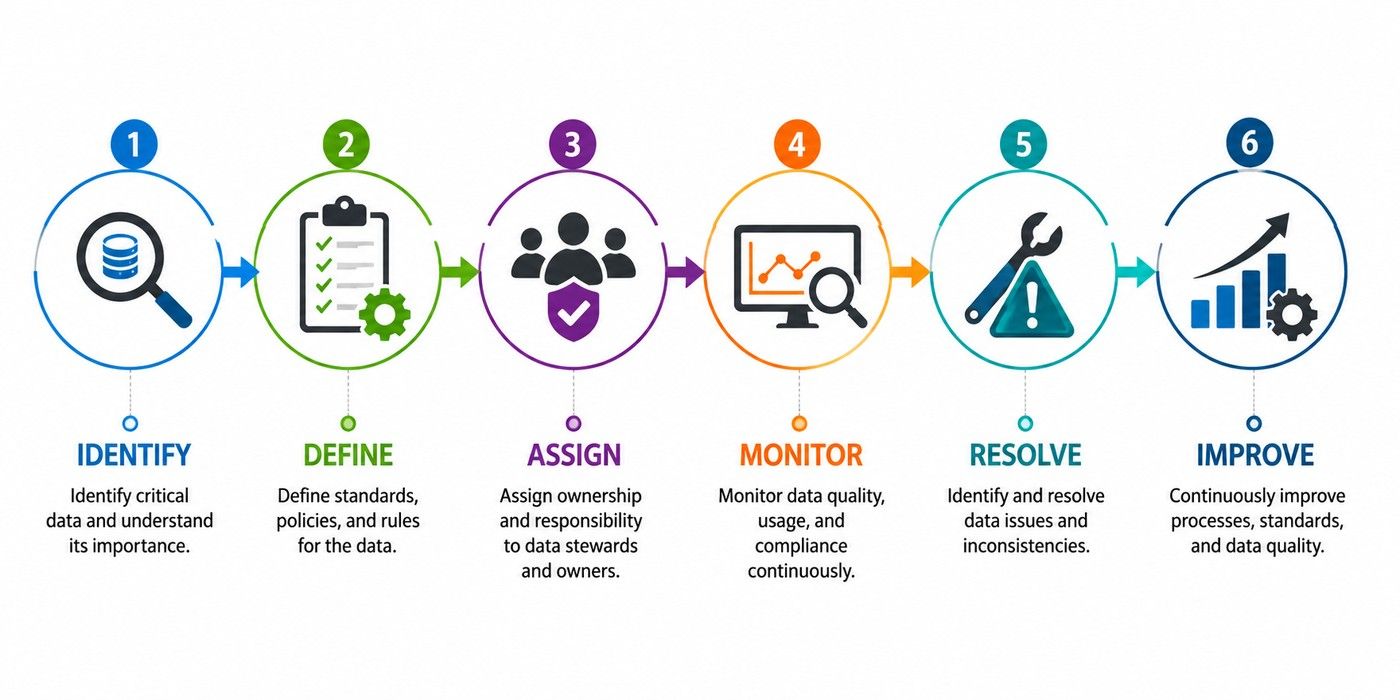
An organisation may have thousands of fields across databases, applications and cloud platforms. Some may have little business impact. Others may directly affect customers, financial reporting, compliance or important decisions.
Data teams first identify critical data assets.
For example, a healthcare organisation may prioritise patient identifiers, medical records, prescription information and insurance details. A retailer may focus on customer profiles, product information, inventory records and transaction data.
Prioritising important data helps teams use their resources effectively.
Once important data has been identified, teams need clear rules for managing it. Standards may define:
A stewardship team can establish one agreed format. Consistent standards make data easier to integrate, search and analyse.
Someone needs to be responsible for maintaining data quality and resolving problems.
A common mistake is assuming that the IT team automatically owns all organisational data. In practice, responsibility may sit with business teams that understand the meaning and purpose of specific information. Data stewards work with these owners and technical teams to maintain agreed standards.
New records are added. Systems change. Employees enter information differently. Integrations fail. Old information becomes outdated. Stewards therefore monitor important quality indicators such as completeness, accuracy, consistency, freshness and duplication.
Automated checks can flag problems quickly. A system might identify customer records missing email addresses or product records containing invalid category codes.
A stewardship process should also explain what happens after an issue is discovered. Teams may need to identify the source, determine who should fix it and document the resolution.
For example, suppose a sales dashboard suddenly shows a large drop in revenue. A data steward may help trace the problem to an incorrect field mapping between a CRM platform and the reporting system.
Teams should review recurring problems and look for ways to prevent them. If employees repeatedly enter incorrect values, the organisation may improve the form, introduce validation rules or provide clearer guidance.
Over time, stewardship becomes part of normal data management rather than a separate clean-up activity.
Management Courses to upskill
Explore Management Courses for Career Progression
IIIT-B & IIM, Udaipur
Chief Technology Officer & AI Leadership ProgrammeSeveral practices work together to keep organisational data accurate, useful and trustworthy. The exact approach can differ from one organisation to another. However, most data stewardship programs cover the areas that are as follows:
Data quality management focuses on whether information is accurate and suitable for its intended use.
Consider a customer database with duplicate profiles, missing addresses and old contact numbers. Such problems can affect customer communication, reports and business decisions. A data steward helps set quality standards, identify gaps and coordinate corrective action.
Common data quality dimensions include accuracy, completeness, consistency, validity, uniqueness, and timeliness.
Metadata provides information about data and helps people understand what a dataset or field actually means. Take a field named Customer_ID. The name alone may not tell a user whether the value is unique, where it comes from or how it should be used.
Metadata fills in those details.
A data steward may document information such as:
For example, metadata for Customer_ID could explain that the field contains a unique identifier generated by the CRM system. A clear description reduces confusion and helps teams use data correctly.
Data lineage explains where data originates, how it changes and where it goes. A simple flow could look like:
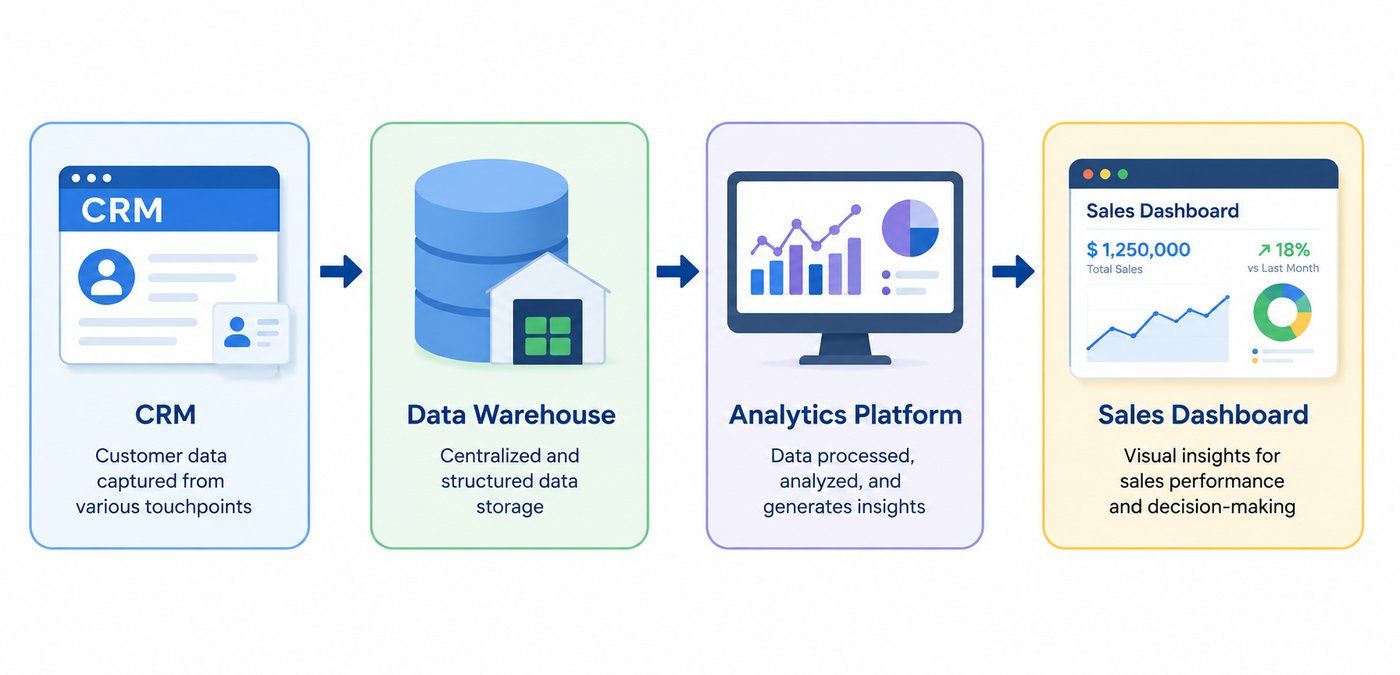
Suppose a sales dashboard suddenly shows an unusual revenue figure. Data lineage allows the team to trace the information through the pipeline and investigate where the error may have occurred.
Lineage also becomes useful when systems change. If a source field is renamed or removed, teams can identify the reports, applications and models that depend on it.
Without lineage, finding the root cause of a data problem can feel like searching for a missing piece in a large puzzle.
Not all information carries the same level of risk. A public product description does not require the same protection as customer financial information. Data classification groups information according to its sensitivity and handling requirements.
An organisation may use categories such as public, internal, confidential, and highly sensitive.
Healthcare records, financial information and personal data may require stronger controls than publicly available information.
Data stewardship also involves ensuring people can access the information they need without receiving unnecessary permissions. Giving every employee access to every dataset can create security and privacy risks. Access should match the person's role and responsibilities.
Data stewards may work with IT and security teams to review permissions, identify suitable access levels and support processes for sensitive information.
Data does not remain in one state forever. It moves through different stages during its existence. A lifecycle may include:
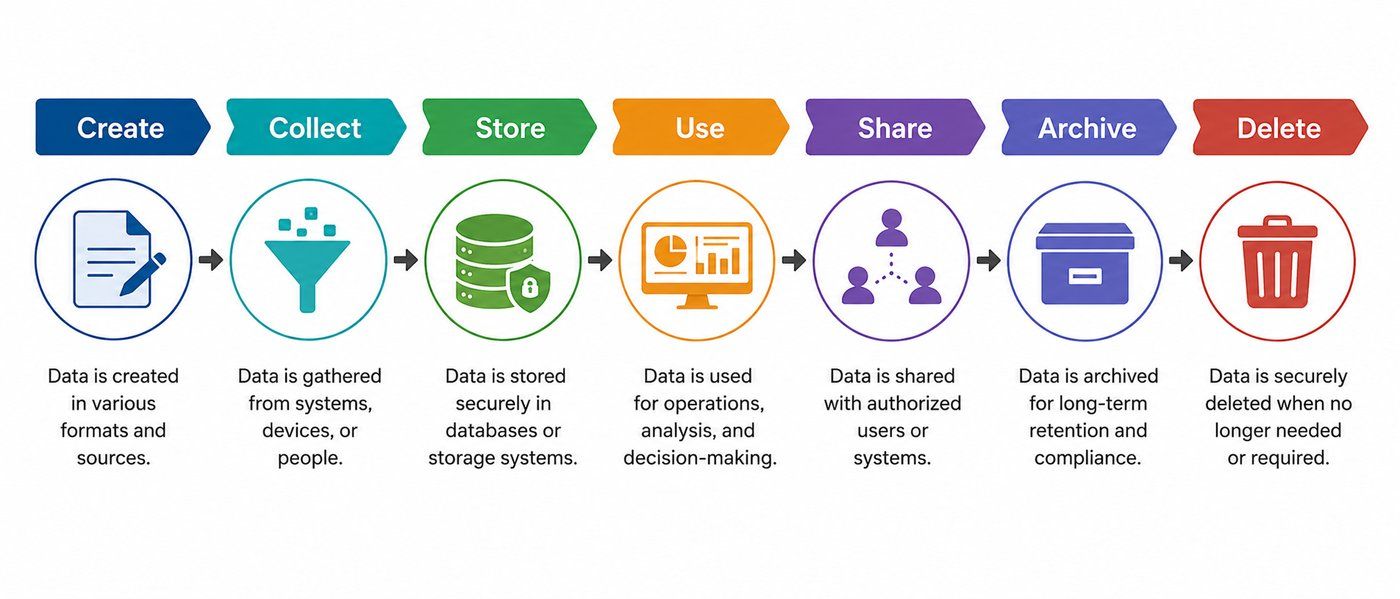
Data stewardship considers what should happen at each stage.
Like, an organisation may decide how long customer records should be retained, when older information should be archived and when data should be securely deleted. Retention decisions can depend on business requirements, legal obligations and internal policies.
Managing the full lifecycle also helps reduce storage costs, limit unnecessary exposure of sensitive information and keep data environments more organised.
Build the skills to lead AI-driven transformation with the IIIT-B & IIMU Chief Data and AI Officer Programme Online, designed for professionals ready to take on strategic data and AI leadership roles.
The role of a data steward changes with the type of data an organisation manages. A hospital may focus on patient records, while a retailer may be more concerned with product and customer information. Here are some practical examples.
Patient information needs careful handling. Medical histories, prescriptions, diagnostic reports and insurance details must be accurate and accessible only to authorised users.
A data steward may standardise patient records across hospitals and laboratories, check missing information and resolve duplicate profiles.
Example: A patient's date of birth appears differently in two hospital systems. The steward can identify the trusted source and help establish one consistent format.
A bank may have customer information spread across its mobile app, branch systems, CRM and transaction platforms. Keeping records consistent can become difficult.
Suppose a customer changes their address through the mobile app, but the branch system still shows the old details. A data steward can help identify the mismatch and coordinate its correction.
Stewards can also establish shared definitions for terms such as:
Common definitions prevent different departments from producing conflicting reports.
Retail data comes from many places, including websites, physical stores, mobile apps and loyalty programs.
Product information is a common problem area. The same product may have different names, categories or descriptions across systems.
A data steward can create standard product attributes and naming rules. For example, a laptop should have one agreed category instead of appearing under several different classifications.
Customer stewardship matters too. Removing duplicate profiles can improve customer counts, segmentation and personalised campaigns.
Research datasets are valuable only when people can understand how the information was collected and processed.
A data steward may maintain metadata, record data sources and document important changes made to a dataset. Access rules can also be established when information contains sensitive or restricted material.
Data stewardship in research becomes particularly useful when universities, research institutions or teams share datasets.
AI models are only as reliable as the data used to develop them. Training datasets can contain duplicate records, missing values, outdated information or inconsistent labels.
Data stewards can help answer important questions:
For example, a customer-support AI may use emails, chat logs and support tickets. Stewardship helps document each source and identify information that requires additional protection.
Cloud platforms allow organisations to store and process information across multiple services. As data spreads across systems, teams can lose track of ownership, definitions and access requirements.
A data steward helps maintain a common understanding of important datasets.
For example, a business might keep customer information in one cloud service, analytical data in another and machine learning datasets somewhere else. Consistent stewardship can connect those environments through shared definitions, ownership and metadata.
Data stewardship in the cloud becomes especially useful in large, distributed data environments.
Also read: Introduction to Classification Algorithm: Concepts & Various Types
Building a stewardship program does not mean creating a huge governance structure from day one. A better approach is to start with important data and expand gradually.
Begin by identifying the datasets and information that matter most to the organisation.
Look at data used for:
Starting with high-value data makes the program easier to manage.
Group related information into data domains.
Examples include customer, product, finance, employee, supplier, healthcare, and marketing. Each domain can have its own business owner and data stewards.
Domain-based management also makes accountability clearer. A marketing team, for example, may understand campaign data better than a central IT team.
A data owner generally has higher-level accountability for a data domain or asset. A data steward handles many of the practical activities needed to maintain that data.
Depending on the organisation, a steward may be a business user, analyst, data professional or subject-matter expert.
Clear responsibilities prevent the common problem of everyone assuming someone else will fix a data issue.
A standard might specify how customer names should be stored, which values are allowed for customer status or how dates should be represented.
Avoid creating rules that are difficult for employees to follow. Standards work best when they fit naturally into existing processes and systems.
Define what good-quality data means for each important dataset. For a customer database, rules could include:
Automated validation can check many of these rules without requiring manual review of every record.
A data catalogue can help teams record information about datasets. Useful details include the dataset owner, business definition, source, update frequency, sensitivity level and downstream uses.
Lineage documentation can show how information moves between systems.
Good documentation reduces dependency on individual employees who may otherwise be the only people who understand a particular dataset.
Data problems need a clear route for resolution. A useful process may look like:
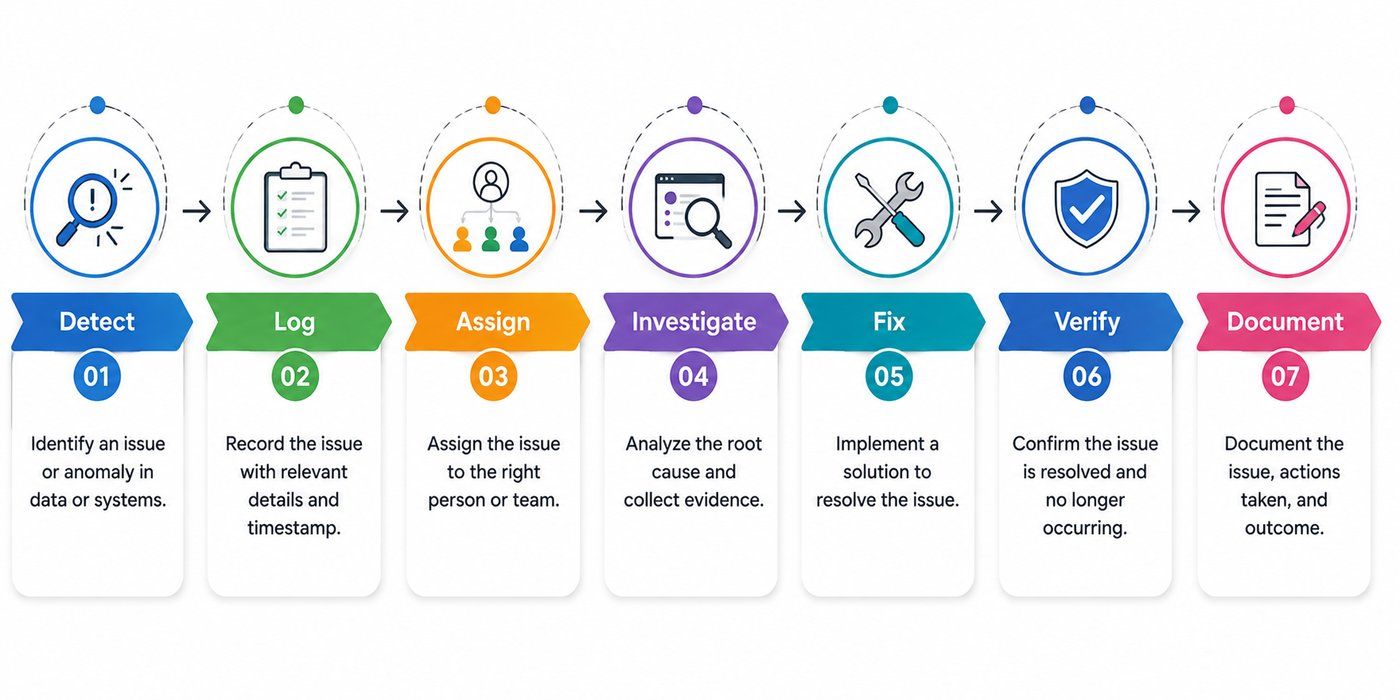
For example, if a dashboard contains incorrect customer numbers, the issue should reach the appropriate steward or owner. The team can then identify the source, correct the problem and record the cause.
Tracking recurring issues can reveal weaknesses in upstream systems.
A stewardship program should evolve as data and business needs change. Teams can review quality metrics regularly, analyse recurring problems and update standards when necessary.
New applications, cloud services, AI systems and regulatory requirements may also require changes to existing stewardship practices.
The goal is continuous improvement rather than achieving a perfect data environment once and stopping there.
Also read: what is nominal data: Definition, Key Types & More
A data stewardship program should have measurable outcomes. Metrics help an organisation see whether its data is becoming more accurate, complete, accessible and reliable over time.
Data quality measures how well information meets the standards defined by an organisation.
For example, a company may check whether customer records contain valid names, contact details and customer IDs. If 97% of records pass all required checks, the organisation has a useful baseline for measuring progress.
Quality scores can be reviewed regularly. A steady increase suggests that stewardship activities are working, while a decline may point to new issues in data collection or processing.
Completeness looks at whether required information is available. Suppose a customer database contains 1 million records, but 80,000 records have no phone number. The organisation can calculate the completeness rate and decide whether the gap needs attention.
The importance of a field depends on its purpose. A phone number may be essential for a customer-support process but optional for another use case.
Freshness measures how current the data is. Different datasets can have very different expectations. A financial dashboard may need updates every few hours, whereas an annual employee report may only need periodic updates.
The key question is simple: Is the data being updated often enough for the way people use it?
If important information regularly becomes outdated before employees can use it, the organisation may need to improve its data pipelines or update schedules.
Duplicate rate shows how often the same entity appears more than once in a dataset.
Consider a retailer with three customer profiles belonging to one person. Customer numbers may appear higher than they actually are. Marketing teams may also send repeated offers or create inaccurate customer segments.
Tracking duplicate rates helps teams evaluate whether record matching, cleansing and deduplication processes are working properly.
Metadata coverage measures how well important datasets are documented. An organisation may track the percentage of critical datasets that have:
Higher metadata coverage makes it easier for employees to discover data and understand what they are working with.
For example, a dataset labelled only as Customer_Data_01 tells users very little. Metadata can explain its purpose, source, fields, owner and update schedule.
Lineage coverage measures how much important data has a documented path from its source to its final destination. A flow may look like:
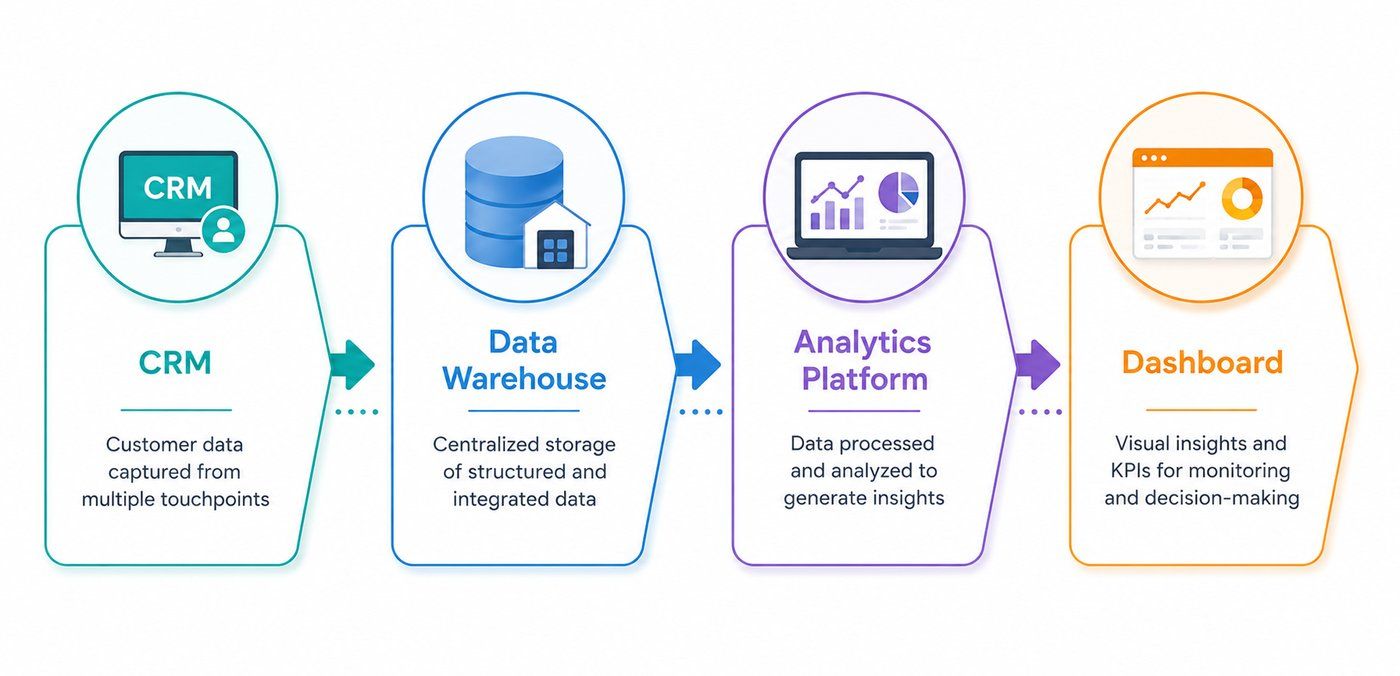
If a dashboard suddenly displays incorrect figures, documented lineage can help teams trace the information back to its source.
Strong lineage coverage also makes system changes easier to manage. Teams can identify which reports, applications or AI models could be affected when a source field changes.
A good stewardship program should not only find data problems. It should also help teams resolve them quickly. Issue resolution time measures how long it takes to investigate and fix a reported data-quality problem.
For example, if a missing-data issue remains unresolved for three months, it may continue affecting reports and business processes. Tracking resolution time can reveal bottlenecks and show whether teams are responding effectively.
Organisations can also separate critical issues from minor ones so urgent problems receive faster attention.
Compliance measures whether data handling follows internal policies and applicable requirements.
Useful indicators may include:
Compliance should not be treated as a box-ticking exercise. Regular measurement can reveal where processes are weak and where additional controls or training may be needed.
Organisations do not need to track every possible metric. A smaller set of relevant KPIs is often more useful.
For example, a healthcare organisation may prioritise completeness, access reviews and issue resolution. A retail company may focus more on duplicate rates, product-data accuracy and freshness.
The purpose of measurement is to turn data stewardship into an ongoing improvement process. Metrics should help teams identify problems, understand their impact and decide where action is needed.
Also read: The Ultimate Guide to Data Mining Techniques for Big Wins!
Data stewardship can improve data reliability, but organisations may face challenges related to ownership, data quality, collaboration and technology.
Also read: What is Structured Data in Big Data Environment?
A strong data stewardship program does not need complicated rules. Clear ownership, simple standards and regular monitoring can create a solid foundation.
Every critical dataset should have a clearly defined owner and steward. Documenting responsibilities prevents confusion when data issues arise.
| Role | Typical responsibility |
| Data owner | Accountable for a data domain or asset |
| Data steward | Maintains data quality, definitions and governance activities |
| Data custodian | Manages technical storage and operational controls |
| Data user | Uses information according to approved rules |
The structure may differ across organisations, but accountability should always be clear.
Create a shared vocabulary for important business terms. A data glossary can record definitions, approved values and related information.
For example, if three departments use different definitions of "revenue", reports may produce conflicting results. A common definition keeps teams aligned.
Manual checks become difficult as data volumes grow. Automated rules can flag:
Automation reduces repetitive work and allows stewards to focus on issues that need human judgement.
Outdated metadata can be almost as confusing as missing metadata. When datasets, fields or processes change, related documentation should change too.
Assign responsibility for maintaining metadata and review important records whenever major system or process changes occur.
Data quality can change over time. New applications, integrations and business processes may introduce errors into previously reliable datasets.
Regular monitoring helps teams spot problems early. Critical data may benefit from automated checks, alerts and dashboards.
Employee roles and responsibilities change. Someone who needed access to sensitive information last year may no longer need it today.
Regular access reviews help ensure permissions match current responsibilities. Users should have the information required for their work without unnecessary exposure to sensitive data.
Choose a small number of meaningful metrics instead of measuring everything.
Useful KPIs may include:
The purpose of KPIs is to show whether stewardship is improving data management and where further action is needed.
Also read: Root Cause Analysis: Definition, Methods & Examples
Data stewardship roles and responsibilities should be defined before a program becomes operational.
A data steward may be responsible for:
The role is often less about controlling data and more about helping people use it correctly.
A good steward needs both domain knowledge and communication skills. Technical expertise can help, but understanding the business context is equally important.
Also read: Data Transformation in Data Mining: Get Best ML Model Tips!
Data stewardship helps organisations keep data accurate, secure and useful. It creates clear ownership, consistent standards and better data quality.
Organisations can start with critical data, assign responsibilities, establish simple rules and track key metrics. As data environments grow, strong stewardship can support better decisions, analytics and AI outcomes.
Ready to advance your career? Book a consultation call with upGrad today.
A data steward helps maintain data quality, clarify business definitions, support documentation and coordinate issue resolution. The role also involves working with data owners, users and technical teams to ensure information is managed appropriately.
Data stewardship becomes especially valuable when organisations manage large volumes of information across multiple teams, systems or platforms. It helps bring consistency when data is used for reporting, operations, analytics, compliance or AI applications.
Common types include business, technical, domain and enterprise data stewards. The structure varies by organisation. Some stewards focus on business meaning and quality, while others handle technical metadata, systems or cross-domain coordination.
Data stewardship is closely related to data management but has a narrower focus. Data management covers the broader handling of data, while stewardship concentrates more on quality, accountability, definitions, documentation and proper day-to-day use.
Data stewardship supports data governance by helping put policies, standards and accountability structures into practice. Stewards work with business and technical teams to maintain agreed rules and address issues affecting important organisational data.
Data stewardship in data protection involves supporting responsible handling of sensitive information. Stewards can help identify relevant data, maintain classifications, support access reviews and ensure handling practices align with organisational privacy and security requirements.
Data stewardship in cloud computing focuses on maintaining ownership, quality, documentation and appropriate access across cloud-based data environments. It becomes useful when information is distributed across multiple platforms, services, applications and teams.
Data stewardship in GCP involves applying consistent practices to data stored and processed through Google Cloud services. Organisations can use stewardship to document datasets, clarify ownership, maintain quality and support appropriate access across cloud environments.
Related terms include data management, data custodianship and data governance, although they do not always mean exactly the same thing. The preferred term depends on an organisation's governance structure, responsibilities and terminology.
AI systems depend on the quality and suitability of their data. Stewardship helps teams understand dataset sources, document changes, identify sensitive information and assess whether data is appropriate for a particular AI application.
Yes. Small organisations can begin with a simple approach by identifying important datasets, assigning responsibility, defining basic standards and monitoring quality. A lightweight program can later expand as data volumes, systems and business requirements increase.
1038 articles published
We are an online education platform providing industry-relevant programs for professionals, designed and delivered in collaboration with world-class faculty and businesses. Merging the latest technolo...
Get Free Consultation
By submitting, I accept the T&C and
Privacy Policy
Top Resources
Certification
3 Months
Certification
6 Months
O.P. Jindal Global University
Masters in International Accounting and Finance (Accredited by ACCA, UK)Master's Degree
12 Months