
All courses
Agentic AI
Agentic AI

IIIT Bangalore
Executive Programme in Generative AI for LeadersArtificial Intelligence
Degree / Exec. PG

IIIT Bangalore
Executive Diploma in Machine Learning and AI
OPJ Global University
Master’s Degree in Artificial Intelligence and Data Science
Liverpool John Moores University
Master of Science in Machine Learning & AI
Golden Gate University
DBA in Emerging Technologies with Concentration in Generative AIExecutive Certificate

IIITB & IIM, Udaipur
Chief Technology Officer & AI Leadership Programme
IIIT-B & IIM, Udaipur
Chief Data and AI Officer ProgrammeOffline Bootcamps

upGrad
Data Science and AI-MLDoctorate
For All Domains
IIITB & IIM, Udaipur
Chief Technology Officer & AI Leadership Programme
Swiss School of Business and Management
Global Doctor of Business Administration from SSBM
Edgewood University
Doctorate in Business Administration by Edgewood UniversityGolden Gate University
Doctor of Business Administration From Golden Gate University
Rushford Business School
Doctor of Business Administration from Rushford Business School, SwitzerlandGolden Gate University
Doctor of Technology in Applied & Agentic AI-d9bdeff6165f4eb1ba2adcebde78e961.svg)
University of Waterloo
Chief Technology and AI Officer ProgramLeadership / AI
Golden Gate University
DBA in Emerging Technologies with a concentration in Generative and Agentic AIMachine Learning
Machine Learning
Data Science
Degree / Exec. PG
O.P Jindal Global University
Master’s Degree in Artificial Intelligence and Data ScienceIIIT Bangalore
Executive Diploma in Data Science & AILiverpool John Moores University
Master of Science in Data ScienceExecutive Certificate

upGrad | Microsoft
Gen AI Foundations Certificate Program from MicrosoftIIIT-B & IIM, Udaipur
Chief Data and AI Officer ProgrammeupGrad | Microsoft
Gen AI Mastery Certificate for Data AnalysisupGrad | Microsoft
Gen AI Mastery Certificate for Software DevelopmentupGrad | Microsoft
Gen AI Mastery Certificate for Managerial ExcellenceupGrad | Microsoft
Gen AI Mastery Certificate for Content CreationBootcamp
Offline Bootcamps
upGrad
Data Science and AI-MLMBA
Masters

Liverpool John Moores University
Master of Business Administration from Liverpool John Moores University (LJMU) with IIM Udaipur CertificationO.P.Jindal Global University
MBA (with Career Acceleration Program by upGrad)Edgewood University
MBA from Edgewood UniversityO.P.Jindal Global University
MBA from O.P.Jindal Global UniversityExecutive Certificate
Marketing
Executive Certificate
upGrad | Microsoft
Gen AI Foundations Certificate Program from MicrosoftupGrad | Microsoft
Gen AI Mastery Certificate for Content CreationOffline Bootcamps
upGrad
Digital MarketingManagement
Degree
O.P Jindal Global University
MSc in International Accounting & Finance (ACCA integrated)
Golden Gate University
Master of Arts in Industrial-Organizational PsychologyExecutive Certificate
IIIT-B & IIM, Udaipur
Chief Technology Officer & AI Leadership ProgrammeIIIT-B & IIM, Udaipur
Chief Data and AI Officer Programme
IIM Kozhikode
Human Resource Analytics Course from IIM-KupGrad | Microsoft
Gen AI Foundations Certificate Program from MicrosoftBootcamp
HDFC Life
Insurance Fundamentals ProgramEducation
Education

Northeastern University
Master of Education (M.Ed.) from Northeastern UniversityEdgewood University
Doctor of Education (Ed.D.)Edgewood University
Master of Education (M.Ed.) from Edgewood UniversityCertifications
Project Management
Certification

Knowledgehut
Leadership And Communications In ProjectsKnowledgehut
Microsoft Project 2007/2010-ae8d039bbd2a41318308f8d26b52ac8f.svg)
Knowledgehut
Financial Management For Project ManagersKnowledgehut
Fundamentals of Earned Value Management (EVM)Knowledgehut
Fundamentals of Portfolio ManagementKnowledgehut
Fundamentals of Program Management-35c169da468a4cc481c6a8505a74826d.webp&w=128&q=75)
Knowledgehut
CAPM® CertificationsKnowledgehut
Microsoft® Project 2016Certifications & Trainings
-7f4b4f34e09d42bfa73b58f4a230cffa.webp&w=128&q=75)
Knowledgehut
PMP® CertificationKnowledgehut
PMI-RMP® CertificationKnowledgehut
PMP Renewal Learning PathKnowledgehut
Oracle Primavera P6 V18.8Knowledgehut
Microsoft® Project 2013Knowledgehut
PfMP® Certification CourseKnowledgehut
Project Planning and MonitoringPrince2 Certifications

Knowledgehut
PRINCE2® FoundationKnowledgehut
PRINCE2® PractitionerKnowledgehut
PRINCE2 Agile Foundation and PractitionerKnowledgehut
PRINCE2 Agile® Foundation CertificationKnowledgehut
PRINCE2 Agile® Practitioner CertificationManagement Certifications
Knowledgehut
Project Management Masters Certification ProgramKnowledgehut
Change ManagementKnowledgehut
Project Management TechniquesKnowledgehut
Product Management Certification ProgramKnowledgehut
Project Risk Management- Study abroad
- Offline centres
- uGSOT - B.Tech
More

%20(2)-db0b6f38da9c485faf76e366793c9b9e.webp&w=128&q=75)



Online Digital Marketing Courses
Learn SEO, social media, PPC, and analytics in Digital Marketing Courses
Understand core marketing strategies and growth frameworks
Work on 6+ live projects for real marketing experience
Use tools like GA4, GTM, Google Ads, Semrush, and ChatGPT
Learner count
16K+
Avg. pay hike
47%
Top pay hike
500%
Download Brochure
By clicking, I accept the T&C and Privacy Policy
Digital Marketing Course from Top Universities
Marketing Courses (34)


bestseller
MICA
Advanced Certificate in AI-Powered Digital Marketing & Communication from MICAMICA Executive Alumni Status
Certification
5 Specialisation
Certification
3 months
Certification
3 Months
Classroom
4 Months
Certification
2 Months
Learn by Doing Digital Marketing Course Projects
6+
Projects


Learn From The Best Digital Marketing Course Instructors
5
Instructors
3
Industry Experts



What Our Learners Have To Say


Latest Digital Marketing Industry Trends
$671.86 billion
GMV of the digital marketing industry
32.1%
Expected CAGR of digital marketing by 2028
28%
Avg. hike upon transition
43%
Average increase in digital marketing spends
How can upGrad support you?
Dedicated student support is available
You can write to us via studentsupport@upgrad.com or for urgent queries use the " Talk to Us" option on the learn platform


Digital Marketing Course Overview
Today, every business is online. From small brands to big companies, everyone wants to reach people through digital channels.
Marketing has changed a lot. It is not just about running ads. You need to understand what people search, what they click, and what makes them take action. Digital Marketing helps you do all this. You learn how to grow a brand, bring traffic, and turn users into customers using platforms like Google, social media, and websites.
upGrad offers Online Digital Marketing Courses for people who want to learn these skills in a practical way. Whether you are a beginner, working professional, or business owner, you can learn how digital marketing actually works in real scenarios.
What Is Digital Marketing?
Digital Marketing refers to promoting products or services through digital means. Rather than utilizing traditional marketing tools, you use mediums such as search engines, social networks, email marketing, and even websites to advertise and market products.
It is not based on guesswork. You can measure clicks, traffic, conversions, and see what is working and what is not.
Some of the most common areas in Digital Marketing include SEO, social media marketing, paid ads, content marketing, and email marketing. These help you attract users, engage them, and convert them into customers.
Real Life Use Cases of Digital Marketing
Digital Marketing works across many industries and helps you reach the right audience and grow business results. Some key uses of Digital Marketing are:
· Product: It helps you promote features, improve user engagement, track user behavior, and increase product adoption.
· Banking: It helps you run targeted campaigns, promote financial services, educate users, and improve customer communication.
· Retail: It helps you promote products, run ads and offers, understand customer behavior, and increase sales.
· Healthcare: It helps you create awareness, share useful content, reach the right audience, and build trust.
· Marketing: It helps you plan campaigns, improve targeting, generate leads, and track performance.
· Operations: It helps you automate emails, track user journeys, improve conversions, and manage campaigns better.
Who Should Take Digital Marketing Courses?
Online Digital Marketing Courses are a good fit if you want to grow your skills and use online channels to promote products, services, or brands.
You learn how digital marketing works in real scenarios and how you can use it to reach the right audience, generate leads, and improve results.
Marketing and Sales Professionals
If you already work in marketing or sales and want to grow, these digital marketing courses help you improve your campaigns. You can:
- Run better campaigns across platforms
- Generate more leads and conversions
- Improve targeting and performance
Business Owners and Entrepreneurs
If you run a business, these online digital marketing courses help you grow your brand online. You can:
- Promote your products or services
- Reach more customers
- Increase sales using digital channels
Content Creators and Social Media Managers
If you create content or manage social media, these best online digital marketing courses help you grow faster. You can:
- Build and engage your audience
- Improve content reach
- Track and improve performance
Students and Freshers
If you are starting your career, these courses help you build a strong foundation. You can:
- Learn digital marketing from scratch
- Work on real campaigns
- Build job-ready skills
Professionals from Non-Marketing Roles
If you work in other fields, these courses help you add a valuable skill. You can:
- Use digital marketing in your role
- Understand customer behavior
- Stay updated with industry trends
Why Choose Digital Marketing Courses in 2026?
Digital Marketing is now a core part of business growth. From small startups to large companies, everyone uses online channels to reach customers and increase sales. When you learn digital marketing, you can directly impact business outcomes.
Here are some reasons why professionals are choosing Digital Marketing Courses in 2026:
- Digital advertising in India is expected to grow between 15% - 30% CAGR in the coming years
- India has over 900 million active internet users, creating huge demand for digital marketing
- Over 70% of businesses are prioritizing digital marketing, with many increasing budgets to drive growth through SEO, social media, and paid ads
- The global digital marketing industry is expected to cross $800 billion by 2026
In simple terms, learning Digital Marketing can help you:
- Build skills that companies need right now
- Work on real campaigns and platforms
- Grow into roles with better opportunities
- Stay relevant in a digital-first world
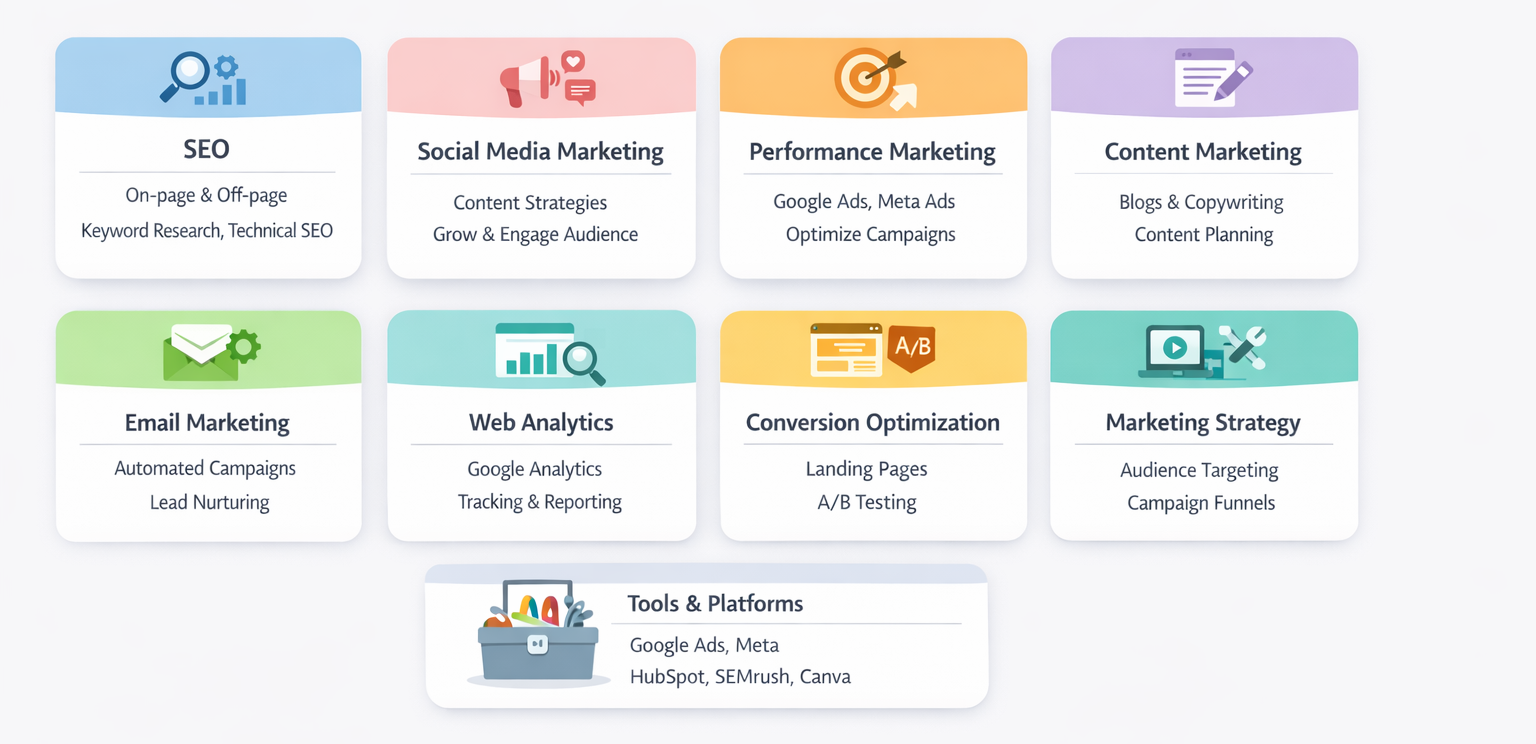
What You Will Learn in Online Digital Marketing Courses?
Digital Marketing Courses help you go from basic understanding to running real campaigns and getting results. You learn how to promote products, bring traffic, generate leads, and improve conversions using different digital channels.
These online digital marketing courses combine core concepts, hands-on practice, and real use cases so you can apply what you learn in actual work.
Here is what you will learn:
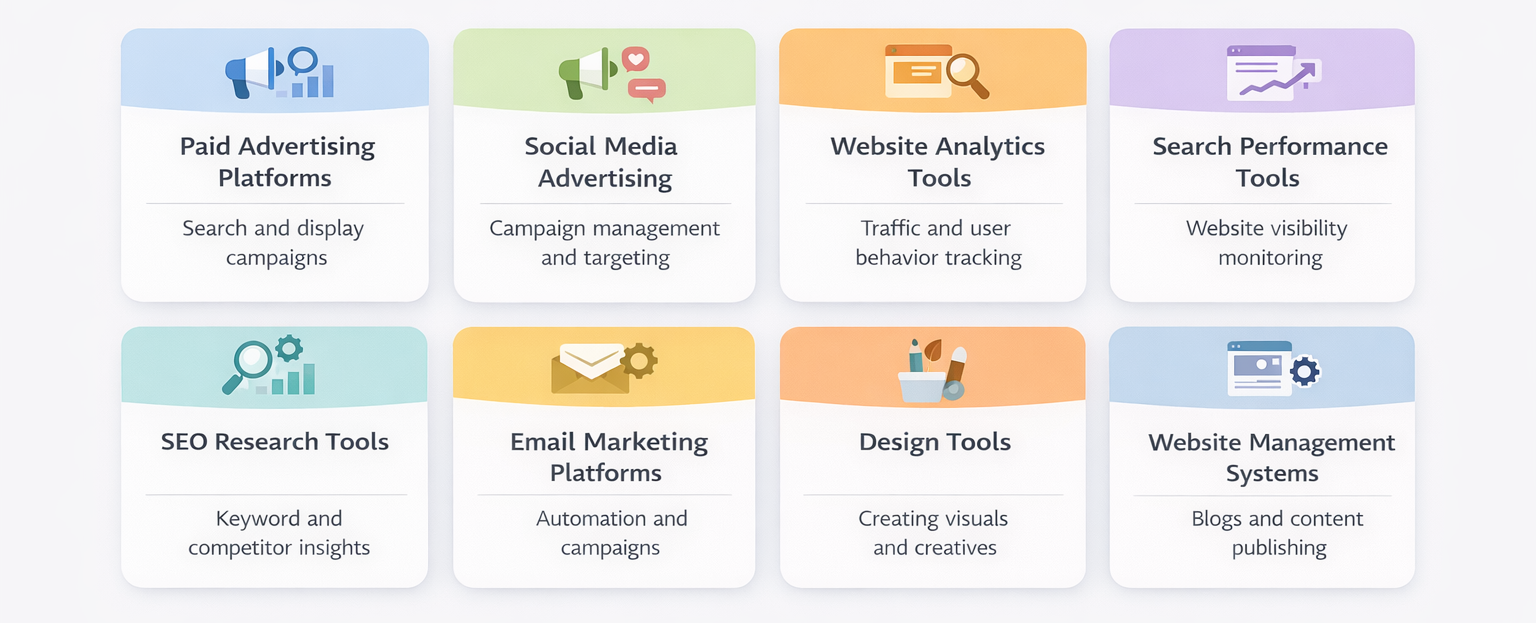
Tools and Technologies Covered in Digital Marketing Courses
From advertising platforms to analytics tools, here are the tools you will learn:
Hands-On Projects in upGrad Digital Marketing Courses
You cannot learn Digital Marketing just by reading concepts. You need to run campaigns, analyze results, and see what actually works. Employers also look at what you have done, not just what you know.
These courses include hands-on projects that help you apply your learning and build a strong portfolio.
1. Blog Creation Project
You will create and manage a blog from scratch. You will learn how to write content, optimize it for SEO, and bring traffic.
Skills you learn: Content writing, SEO basics, keyword usage, on-page optimization
2. Zivame Case Study
You will learn how Zivame used email marketing for user engagement and revenue. You will also create email segments and campaigns.
Skills you learn: Email marketing, segmentation, campaign strategy, conversions
3. Social Media Marketing Live Project
You will run a live campaign using Facebook Ads Manager for 5 days and optimize it based on performance.
Skills you learn: Social media ads, campaign setup, targeting, optimization
4. Mamaearth Case Study
You will build a digital marketing strategy to help Mamaearth enter a new category and grow its presence.
Skills you learn: Marketing strategy, branding, campaign planning, audience targeting
5. SEO Audit Live Project
You will create a complete SEO audit report and suggest improvements for better rankings.
Skills you learn: SEO analysis, technical SEO, keyword research, optimization strategies
Career Outcomes After Online Digital Marketing Courses: Salaries and Roles
The job market for Digital Marketing professionals in India is growing fast. Companies need people who can bring traffic, generate leads, and drive sales online.
Almost every business now depends on digital channels, so the demand for skilled marketers is high. This creates strong job opportunities and good salary growth.
Here are some of the top roles you can explore after completing your course:
Role | What You Will Do | Average Salary in India (₹ LPA) |
Digital Marketing Manager | Plan and manage complete marketing strategies and campaigns | ₹5 – 12 LPA |
Content Marketer | Create blogs, copy, and content strategies to attract and engage users | ₹4 – 9 LPA |
Performance Marketer | Run paid ads on Google and social media to generate leads and sales | ₹4 – 8 LPA |
Email Marketing Specialist | Plan and run email campaigns to nurture leads and improve conversions | ₹3 – 6 LPA |
Social Media Manager | Manage social media pages, create content, and grow audience engagement | ₹2.4 – 4.2 LPA |
SEO Specialist | Improve website rankings and bring organic traffic from search engines | ₹1.8 – 4.2 LPA |
Digital Marketing Executive | Manage campaigns, handle social media, and support marketing activities | ₹1.92 – 3.36 LPA |
Note: These salary figures are based on data from Glassdoor and may vary depending on experience, location, and company.
Industries Hiring Digital Marketing Professionals
Companies across many industries hire professionals with Digital Marketing skills.
- IT Services and Software Products: Promote products online, generate leads, and improve user acquisition.
- Banking, Financial Services, and Insurance: Run campaigns for financial products, improve engagement, and generate quality leads.
- E-commerce and Retail: Promote products, run ads, improve conversions, and retarget users.
- Healthcare and Life Sciences: Build awareness, share useful content, and reach the right audience.
- Consulting and Professional Services: Generate leads, build brand presence, and support business growth.
- Media and Content Platforms: Grow audience, promote content, and improve engagement.
Essential Resources to Navigate Your Digital Marketing Journey
Digital Marketing Course FAQs
1. What is a digital marketing course online?
An online Digital Marketing course is a structured program that teaches how to promote products and services using various digital channels. You will discover how to develop effective marketing strategies and use tools that are typically used in successful marketing campaigns to achieve your goals.
Some examples of what you might find in these types of courses are:
1. Video lectures and guidance;
2. Hands-on assignments and projects regarding Marketing;
3. Training on how to use different tools for Digital Marketing;
4. Case studies and an analysis of marketing campaigns; and
Other topics covered in upGrad's Digital Marketing Programs include AI-Powered Marketing, Content Marketing Strategy, and Brand/Future Communications Framework.
2. What topics are covered in an online digital marketing course?
Most structured programs cover the complete digital marketing ecosystem. Learners commonly study:
- Search engine optimization (SEO)
- Paid advertising and performance marketing
- Social media strategy and management
- Content marketing and brand communication
- Customer value and engagement strategy
- Analytics and campaign performance tracking
- Influencer and public relations marketing
Advanced programs may also include AI-powered marketing, generative content creation, and campaign automation.
3. How long does a digital marketing course take?
Course duration depends on the program type:
- Short free courses → a few hours to a few days
- Certificate programs → a few months
- Advanced professional programs → several months with structured modules
Programs that include live projects, mentorship, and specialization training take longer because they focus on applied learning.
4. Do learners need prior experience to take a digital marketing course?
No. Most digital marketing courses are designed for both beginners and working professionals. You usually do not need prior marketing experience to start learning.
Basic computer skills, interest in business or branding, and willingness to learn new tools can help you understand concepts faster. upGrad digital marketing programs begin with foundational topics before moving to advanced marketing strategies and campaign tools.
5. What are the best free online digital marketing courses with certificates?
Free courses help you learn specific digital marketing skills before joining a full program. upGrad offers several short online courses with certificates that introduce key marketing concepts.
Examples include:
- Celebrity Partnerships and Campaigns
These short courses help you build foundational knowledge and explore different areas of digital marketing.
6. What skills will learners gain in a digital marketing course online?
Online digital marketing classes teach both strategic and technical capabilities for marketing.
Examples of important skills taught in digital marketing classes are:
- Campaign Planning & Execution
- Target Audience Selection & Segmentation\
- Content Creation & Brand Messaging
- Marketing Data Analytics (i.e., measuring your marketing’s performance)
- Advertising Platform Management
- Artificial Intelligence Assisted Marketing Workflows
The courses offered by UpGrad will help learners develop their communication, storytelling, and data-driven decision-making skills.
7. Is an online digital marketing course worth it in 2026?
Yes. Online digital marketing courses is very valuable because businesses rely heavily on digital channels, analytics, and AI-driven campaigns. A structured digital marketing course helps you learn marketing strategies, tools, and campaign management skills used in real business environments. upGrad digital marketing programs also include practical projects and tool training, which help learners build job-ready marketing skills.
8. Will learners get hands-on projects in an online digital marketing course?
Yes. Online digital marketing courses include hands-on projects that focuses on real marketing scenarios. You can apply marketing strategies, work on campaign exercises, and analyze performance results. Programs from upGrad also include practical assignments which help learners to build a portfolio and develop job-ready digital marketing skills.
9. Can learners study digital marketing completely online?
Yes. Many programs offer fully online learning through:
- Recorded lessons
- Live sessions or workshops
- Assignments and projects
- Online assessments
This structure allows learners to gain theoretical understanding and practical experience without attending physical classes.
10. What are the best platforms for digital marketing courses online?
Strong learning platforms provide structured curriculum, practical exposure, and recognized certification.
You should look for platforms that offer:
- Industry-relevant curriculum
- Real campaign or project experience
- AI and marketing analytics training
- Mentorship and career support
upGrad offers structured digital marketing programs with expert guidance, practical projects, and professional certifications designed for industry readiness.
11. Which online digital marketing course offers the best certificate?
A combination of structured learning with real-life marketing application determines the value of a certification. For example, MICA's Advanced Digital Marketing and Communications Certificate is one way to obtain a certification to enhance marketing knowledge and abilities. This program includes assessments and practical hands-on application of digital marketing skills focusing on developing and implementing marketing strategies and communicating effectively with consumers.
12. Should learners choose a paid or free digital marketing course?
The choice of the course depends mostly on your learning goals.
Choose free courses to:
- Explore digital marketing topics
- Build basic understanding
- Test your interest in the field
Choose paid programs to:
- Build a career in digital marketing
- Learn advanced tools and strategies
- Work on real projects
- Earn structured certification
upGrad digital marketing programs focus on deeper learning with practical projects and professional certification.
13. Are industry certifications recognized by employers?
Yes, employers recognize certifications that demonstrate practical marketing ability. They value:
- Hands-on projects
- Tool proficiency
- Campaign strategy knowledge
- Measurable results
Employers evaluate demonstrated skills more than learning format.
14. Which course covers AI tools like ChatGPT for digital marketing?
AI-focused marketing programs teach learners how to apply generative tools in real campaigns. Programs from upGrad provide hands-on training in AI-enabled marketing workflows.
Learners usually use AI for:
- Content creation and copywriting
- Campaign planning
- Data insights and decision-making
- Marketing automation
Programs such as the Generative AI Mastery Certificate for Content Creation by upGrad focus on real-world AI marketing applications.
15. Does a digital marketing course teach SEO and analytics?
Yes. SEO and analytics are important parts of digital marketing training.
Learners study:
- Search visibility strategies
- Keyword research techniques
- Performance tracking using analytics tools
- Data interpretation to improve marketing campaigns
upGrad digital marketing courses include these topics to help learners understand how to measure and optimize campaign performance.
16. Will the course include social media marketing?
Social media marketing plays a very important part in the digital marketing training part of a course.
Typical content for a digital marketing course includes:
- Platform Strategy - Instagram, LinkedIn, Facebook
- Content planning and Scheduling
- Audience Engagement
- Paid Social Media Campaigns
Digital Marketing Program in upGrad also includes a few modules on Social Media Strategy & Campaign Management.
17. How much do learners study Google Ads and Meta Ads?
Programs teach performance advertising through campaign planning, targeting, and optimization. Learners work with tools from Google and Meta to understand:
- Ad setup and structure
- Audience segmentation
- Budget allocation
- Performance monitoring
18. Do online courses teach email marketing strategies?
Yes. Email marketing is an important part of digital marketing training.
You learn how to:
- Plan email marketing campaigns
- Segment audiences for targeted messaging
- Write effective email content
- Track performance metrics such as open rate and conversions
upGrad digital marketing courses also introduce email marketing tools and campaign strategies to help learners build practical skills.
19. Is content marketing covered in digital marketing programs?
Yes. Content strategy remains a foundational marketing skill. Programs teach:
- Brand storytelling
- Content planning
- Multi-platform distribution
- Engagement strategy
Platforms like upGrad also offer beginner-friendly options such as the Best Free Content Marketing Courses Online with Certificates, which help learners build strong content strategy foundations before moving to advanced marketing applications.
20. Will learners use analytics tools like Google Analytics?
Yes. Programs teach campaign measurement using tools such as Google Analytics.
Learners learn to:
- Monitor traffic and engagement
- Measure conversions
- Interpret marketing data
21. How do online courses teach campaign optimization and KPIs?
Online digital marketing courses teach campaign optimization through practical exercises and real campaign scenarios.
Learners practice:
- Defining clear KPIs for marketing campaigns
- Evaluating campaign data and performance metrics
- Improving targeting, messaging, and campaign strategy
upGrad digital marketing programs include project-based learning where learners analyze campaign results and optimize performance.
22. What AI tools should learners learn in a digital marketing course?
Some of the most commonly used AI tools that you will learn to use in upGrad's digital marketing courses:
- Use ChatGPT to generate content ideas and develop your marketing plan.
- Use Canva AI tools to develop ads and create visual assets quickly.
- Google AI capabilities within Ads and Analytics can assist you in optimizing your ad campaigns.
- Use AI writing tools to create blog, email, and ad copy.
- Use AI data analytics tools to measure performance and generate reports.
Incorporating these tools into your marketing efforts will help you automate repetitive tasks, improve the targeting of your marketing campaigns, and develop data-driven marketing strategies.
23. What analytics platforms will learners work with in courses?
Digital marketing courses introduce analytics platforms used to track and improve campaign performance.
Learners work with tools such as:
- Google Analytics for website traffic and user behavior analysis
- Google Ads dashboards for campaign performance tracking
- Social media analytics tools for engagement and reach insights
- Marketing reporting dashboards for data visualization and performance monitoring
upGrad digital marketing programs include practical exercises where learners analyze campaign data and optimize marketing strategies using these tools.
24. What jobs can learners get after completing a digital marketing course?
After completing a digital marketing course from upGrad, learners can pursue roles such as:
- Digital Marketing Executive
- Social Media Manager
- Content Strategist
- Performance Marketing Specialist
- Marketing Analyst
25. What is the average salary after an online digital marketing course?
Entry-level professionals usually earn around ₹4L–₹12L per year after completing a digital marketing course. Salaries grow as you gain experience, specialize in areas such as performance marketing or analytics, and manage larger campaigns.
Skills in marketing analytics, paid advertising, and AI-driven marketing can lead to faster career growth and higher-paying roles. upGrad digital marketing programs help learners build these practical skills through projects and tool-based training.
26. Do employers value online digital marketing certifications?
Yes. Employers value certifications that demonstrate real capabilities.
They prioritize:
- Hands-on project experience
- Tool proficiency
- Campaign execution ability
- Data-driven decision-making
Programs with applied learning improve credibility.
27. How should learners prepare for digital marketing interviews after a course?
To get ready for a digital marketing interview, I suggest you concentrate on real-world experience and understanding campaigns.
These four things will help to prepare you:
- Reviewing campaign projects and case studies
- Knowing what key metrics are used to measure success e.g. CTR, conversions, and ROI
- Knowing how to use certain tools/platforms related to digital marketing
- Have a good portfolio showcasing your campaign strategies/results
Furthermore, learners that complete upGrad’s digital marketing programs receive additional support with their job search via resume writing assistance and interview preparation.
28. Can learners freelance after completing online training?
Yes. Many freelancers begin with structured program skills.
They offer services such as:
- Social media management
- Content creation
- Campaign setup
- Performance tracking
29. Will learners gain skills to start their own agency?
Yes. Programs teach strategy and operations needed to manage client campaigns.
Learners develop skills in:
- Campaign planning
- Brand positioning
- Client communication
- Lead generation
- ROI tracking
30. How will AI integration help a digital marketing career?
AI integration improves productivity and campaign effectiveness by enabling smarter decision-making and faster execution. Marketers use AI to analyse data, personalise communication, and automate repetitive tasks, which leads to better performance and efficiency.
AI supports digital marketing through:
- Content creation and idea generation
- Data analysis for insights and optimisation
- Personalisation of customer experiences
- Automation of campaigns and workflows
Platforms like upGrad also offer specialised training such as the AI-Powered Marketing Strategies course, which helps learners apply AI tools directly to real marketing campaigns and business scenarios.
31. Which tools will a digital marketing course teach?
Digital marketing courses teach tools used for analytics, advertising, SEO, automation, AI content creation, and reporting dashboards. These tools help learners plan campaigns, run advertisements, track performance, and optimize marketing strategies. upGrad digital marketing programs also introduce practical tool usage so learners can manage campaigns and measure results effectively.
32. How can learners use ChatGPT for digital marketing tasks?
Learners can use ChatGPT to:
- Generate content ideas
- Write marketing copy
- Plan campaigns
- Analyze audience response
AI improves speed, planning, and decision-making.
33. Are digital marketing courses teaching voice search and video marketing?
Yes. Most modern digital marketing courses include both voice search and video marketing.
What you learn
- How people use voice assistants and conversational search
- How to optimize content for voice-based queries
- Creating and promoting short-form video content
- Understanding mobile-first and platform-driven content trends
Programs from upGrad also cover these areas, so you can build campaigns that match how users search and consume content today.
34. What analytics platforms learners will work with in courses?
Digital marketing programs provide hands-on experience with performance tracking and reporting tools used in real campaigns. Learners work with analytics dashboards, campaign measurement frameworks, and data reporting systems that help them monitor engagement, evaluate performance, and optimize marketing strategies using data-driven insights.
35. Will learners get hands-on projects?
Yes. Structured digital marketing programs include practical projects that simulate real marketing scenarios. Learners apply strategies, run campaign exercises, and solve real-world marketing problems. These projects help them build confidence, develop practical skills, and create portfolio work that demonstrates job readiness.
36. Do courses include case studies and real business examples?
Yes. Most digital marketing courses include case studies and real business examples to explain how marketing strategies work in real situations. Learners analyze campaign performance, understand marketing decisions, and evaluate results. upGrad digital marketing programs also use case studies and practical examples to help learners apply strategies in projects and real marketing roles.
37. How do learners build a portfolio during the course?
Learners build portfolios by completing practical work throughout the program. This typically includes campaign simulations, strategy presentations, analytics reports, and content planning assignments. These work samples demonstrate real marketing skills and help learners showcase their experience to employers or freelance clients.
38. Can learners run real campaigns during training?
Some programs allow learners to run supervised or simulated campaigns as part of their training. These experiences replicate real marketing environments where learners plan, launch, monitor, and optimize campaigns using actual tools, performance metrics, and data. This practical exposure builds confidence and real-world readiness.
39. What mistakes should beginners avoid?
Beginners should avoid common learning mistakes such as:
- Ignoring analytics and performance data
- Focusing only on theory without practice
- Avoiding hands-on use of marketing tools
- Skipping testing and campaign optimization
Avoiding these habits helps learners develop stronger practical skills and better marketing outcomes.
40. How will digital marketing change in the future?
Digital marketing will continue to become more data-driven, automated, and AI-powered. Businesses will rely more on personalization, predictive insights, and real-time performance tracking. Marketers will need to adapt to intelligent tools, automated workflows, and increasingly personalized customer experiences.
41. Should learners focus on AI in digital marketing for 2026?
Yes. AI is becoming a core part of campaign planning, content generation, customer targeting, and marketing automation. Learners who develop AI-related marketing skills improve productivity, decision-making, and long-term career opportunities in an increasingly technology-driven industry.
42. How does mobile marketing factor into current courses?
Mobile marketing is an important part of modern digital marketing training because most users access content through smartphones.
Courses usually cover:
- Mobile-first campaign design
- App-based marketing strategies
- Responsive content for mobile devices
- Cross-device customer engagement
upGrad digital marketing programs also include mobile marketing concepts to help learners design campaigns that perform well on mobile platforms.
43. Which specialization should learners choose first?
Learners should choose a specialization based on personal interest, strengths, and career goals. Common starting options include:
- Content and branding for creative storytelling and brand building
- Performance marketing for data-driven advertising and optimization
- Social media strategy for audience engagement and platform growth
- Marketing analytics for data analysis and performance measurement
Selecting a specialization aligned with long-term goals supports faster career growth.
44. Can a beginner become a digital marketer through an online course?
Yes. Structured online programs begin with foundational concepts and gradually introduce advanced tools, strategies, and practical projects. This step-by-step learning approach helps beginners build knowledge, develop real skills, and become job-ready digital marketing professionals.
Programs from upGrad support beginners through guided learning paths, hands-on assignments, and real campaign exposure. Courses such as the Advanced Certificate in Digital Marketing and the Advanced Certificate in Digital Marketing & Communication from MICA are designed to help learners start from the basics and progress toward industry-ready marketing skills.
45. Is digital marketing easy to learn online?
Learners can successfully learn digital marketing online when they stay consistent and practice regularly. Guided lessons, structured modules, and hands-on assignments make complex concepts easier to understand. Continuous practice and project work help learners apply knowledge effectively and build confidence.
Structured programs from upGrad, such as the Advanced Certificate in Digital Marketing and the Advanced Certificate in Digital Marketing & Communication from MICA, provide step-by-step learning, practical projects, and expert guidance, which make online digital marketing education more structured and manageable for beginners and working professionals.
46. Are digital marketing courses legitimate?
Digital marketing courses are legitimate when providers offer structured curriculum, practical training, and credible certification. Learners should evaluate program quality carefully by reviewing:
- Curriculum clarity and learning outcomes
- Hands-on projects and real campaign practice
- Industry-relevant tools and skills
- Recognized certification
Choosing a reputable provider ensures meaningful learning and career value.
47. Can learners freelance as a digital marketer with online course training?
Yes. upGrad digital marketing courses help learners build the practical skills needed to start freelancing.
Freelancers often offer services such as:
- Social media management
- Content creation
- Campaign setup and management
- Marketing performance tracking and reporting
With hands-on projects and portfolio work, learners can start offering digital marketing services to businesses and clients.
48. Can a complete beginner become a digital marketer from an online course?
Yes. You can start from scratch and learn digital marketing through an online course.
How beginners learn
- Start with basics like marketing strategy, SEO, social media, and content
- Move step by step into running campaigns and using tools
- Practice with small projects to build real skills
Programs from upGrad guide you through hands-on projects and tools, so you’re ready for entry-level digital marketing roles.
49. How do learners build their portfolio during a digital marketing course?
Learners build their portfolio by working on practical marketing projects during the course. These projects allow them to apply strategies, analyze results, and demonstrate real campaign experience.
Typical portfolio elements include:
- Social media campaign plans
- SEO and content marketing projects
- Paid advertising campaign simulations
- Marketing analytics reports
upGrad digital marketing programs include hands-on assignments and case studies that help learners create portfolio projects to showcase their skills to employers or clients.
upGrad Learner Support
Talk to our experts. We are available 7 days a week, 10 AM to 7 PM

Indian Nationals

Foreign Nationals