Top 10 Emerging Technologies You Must Know in 2025!
Updated on Jul 07, 2026 | 13 min read | 9.34K+ views
Share:

All courses
Certifications
More
Updated on Jul 07, 2026 | 13 min read | 9.34K+ views
Share:
| Did You Know that 36% of Indian enterprises have already allocated budgets and begun investing in Generative AI, with another 24% testing its potential? This shift reflects how emerging technologies are becoming core to enterprise-scale innovation, operational intelligence, and data-driven decision systems. |
In 2025, emerging technologies such as AI, blockchain, and more are changing industries, communication, and global operations. Rapid advancements in artificial intelligence, quantum computing, 5G infrastructure, and blockchain systems are redefining computation, connectivity, and secure digital interactions.
Emerging technologies are changing data infrastructure, service delivery models, predictive systems, and automation across healthcare, mobility, and enterprise operations.
In this blog, we’ll explore the top emerging technologies to watch for in 2025, their applications, and how they are poised to impact our future.
Explore top technologies and upskill with upGrad’s Online Software Development Courses and learn AI, Machine Learning, and Big Data from top universities. Enroll today!

Popular Management Programs
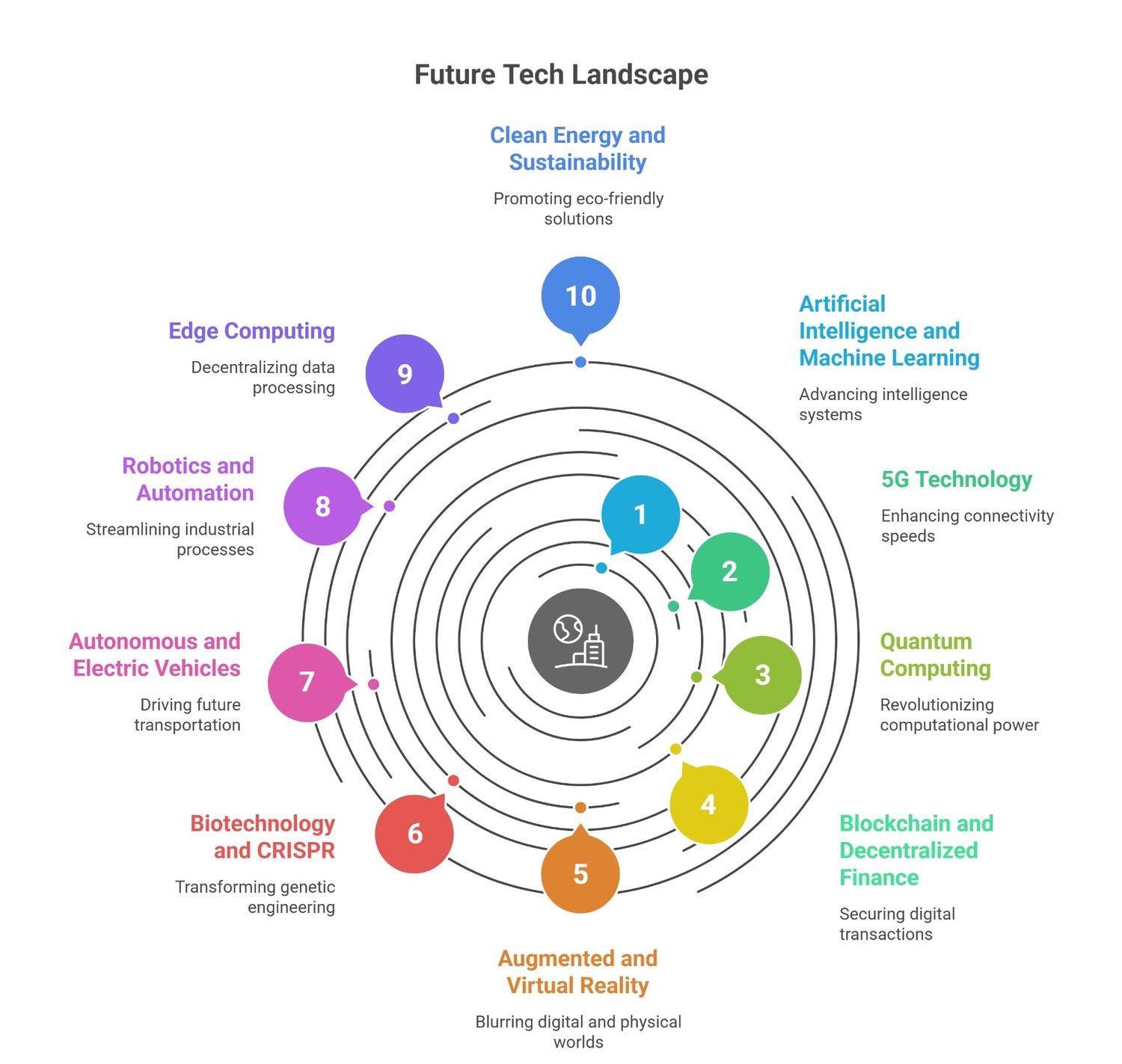
Emerging technologies are redefining system architectures, data processing frameworks, and automation workflows across critical industries. With AI, 5G, and blockchain, these technologies are changing how businesses operate and how we engage with the world in our daily lives.
Equip yourself with knowledge in emerging technologies and business strategies with the following programs from upGrad.
Here are some of the most promising emerging technologies in 2025:
Artificial Intelligence (AI) and Machine Learning (ML) are changing industries by enabling machines to think, learn, and make decisions. AI simulates human intelligence, while ML helps machines learn from data.
These technologies are key drivers of automation, enhanced decision-making, and applications across various sectors, including healthcare, finance, and retail.
Key Trends:
Real-World Applications:
5G Technology is the next-generation mobile network, offering faster speeds, lower latency, and greater capacity compared to previous networks. It is vital in driving digital transformation, enabling practical communication, enhancing components of IoT, and supporting emerging technologies that require high-speed, reliable connections.
Key Trends:
Real-World Applications:
Also read: Computer Networking Basics: Key Concepts, Types, and Benefits Explained
Quantum Computing represents a leap in computing technology, using the principles of quantum mechanics to process information in ways classical computers cannot. Unlike classical computing, which uses bits as the smallest unit of data, quantum computers use qubits, enabling them to solve problems exponentially faster.
Key Trends:
Real-World Applications:
Also read: Difference Between Quantum Computing and Data Mining
Blockchain is a decentralized, distributed ledger system that ensures transparency, security, and immutability. Decentralized Finance (DeFi) uses blockchain technology to offer peer-to-peer financial services, eliminating intermediaries such as banks.
Key Trends:
Real-World Applications:
Augmented Reality (AR) and Virtual Reality (VR) are immersive technologies that blend or completely replace the real world with digital experiences. AR overlays digital content onto the physical world, while VR creates fully immersive, interactive environments.
Key Trends:
Real-World Applications:
Also read: The Future of Augmented Reality: Trends, Applications, and Opportunities
Biotechnology uses biological systems and organisms to create products in fields like medicine, agriculture, and environmental management. CRISPR is a gene-editing technology that enables precise DNA modifications, offering transformative potential for treating genetic disorders, enhancing crops, and improving environmental sustainability.
Key Trends:
Real-World Applications:
The autonomous vehicle and electric vehicle (EV) is reshaping transportation with self-driving capabilities and a shift toward eco-friendly, sustainable solutions. AI in Automotive Industry is enabling EVs to replace traditional fuel engines, reducing emissions and promoting cleaner energy.
Key Trends:
Real-World Applications:
Also read: Use of Big Data in Autonomous Vehicles and Transportation Systems
Robotics and automation refer to the use of machines, robots, and software to perform tasks traditionally done by humans. These technologies are affecting industries by enhancing efficiency, precision, and safety.
Key Trends:
Real-World Applications:
Also read: Applications of Robotics: Industrial & Everyday Use Cases
Edge computing processes data closer to its source, reducing reliance on centralized cloud servers. By bringing computation to the network edge, it enables faster data processing, lower latency, and efficient bandwidth usage.
Key Trends:
Real-World Applications:
Also read: Cloud Computing Vs Edge Computing: Difference Between Cloud Computing & Edge Computing
Clean energy technologies focus on generating power from renewable, environmentally friendly sources such as solar, wind, and hydrogen. These technologies are essential for mitigating climate change by reducing reliance on fossil fuels and minimizing carbon emissions.
Key Trends:
Real-World Applications:
Also read: Big Data for Environmental Sustainability: 8 Key Solutions, Challenges, and Future Trends
To work effectively with emerging technologies, you must build core technical competencies across software development, data processing, and modeling.
In this video, discover how automation is reshaping the job market and what it means for the future of work, straight from upGrad’s Founders' Podcast.
Free Courses
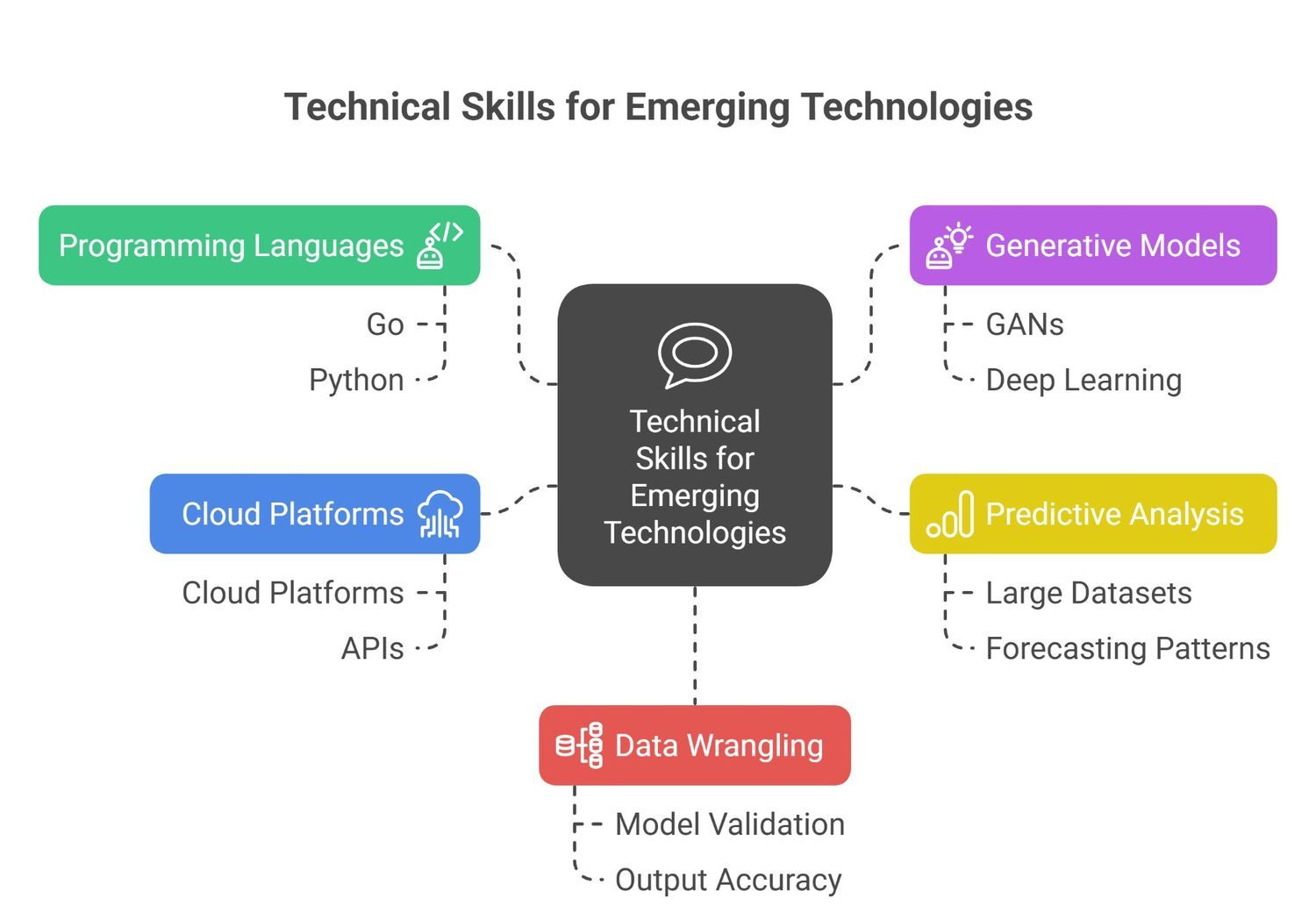
Domain expertise, programming, and analysis skills are necessary for dealing with emerging technologies. Factors like practical knowledge of system architectures and data interpretation are also essential for development and deployment purposes.
Here are some of the technical skills to look for:
Also read: Top Advanced Computer Skills to Learn for Career Growth in 2025

Management Courses to upskill
Explore Management Courses for Career Progression
IIIT-B & IIM, Udaipur
Chief Technology Officer & AI Leadership ProgrammeEmerging technologies, such as edge computing, CRISPR, and AR/VR, are shaping how systems process, interact, and deliver outcomes across various sectors. Focus on building practical skills through structured learning and consistent project-based application.
Professionals often struggle to keep up with cross-domain tools and fast-changing technical requirements. upGrad’s expert-led programs offer hands-on training to help you adapt and grow.
Check out these additional free courses to get started:
Wondering which emerging technology course suits your career goals? For personalized guidance, connect with upGrad Counselling. You can also visit our offline centres to explore the best courses in AI, blockchain, data science, and more.
Elevate your leadership and strategic thinking with our popular management courses, designed to shape you into a dynamic and effective leader in today's competitive business world.
Discover actionable insights and expert strategies in our top management articles, crafted to inspire and empower your journey to leadership excellence.
Reference:
https://www.ey.com/en_in/insights/ai/generative-ai-india-2025-report/gen-ai-2025-trends-india
Quantum computing uses quantum mechanics to process data using qubits, which can exist in multiple states simultaneously, unlike classical bits that are either 0 or 1. This allows quantum computers to solve complex optimization and simulation problems exponentially faster than classical computers. It’s beneficial for applications such as drug discovery, cryptography, and materials science, where the computational complexity of classical systems is prohibitive.
In healthcare, blockchain ensures secure, immutable patient records and facilitates interoperability between different healthcare providers. For supply chains, blockchain improves transparency by providing traceable, real-time tracking of goods from origin to destination, reducing fraud and errors. The decentralized nature of blockchain ensures that data is transparent and verifiable, which builds trust in sectors requiring stringent security measures.
Edge computing processes data closer to the source of generation, allowing for faster, real-time decision-making by reducing latency. For IoT systems, this is critical, especially in applications like autonomous vehicles or industrial automation, where instant feedback from sensors is required to make split-second decisions. By offloading computations from centralized cloud servers, edge computing ensures lower data transmission and quicker responses.
Key challenges in autonomous vehicle development include ensuring the reliability of sensor systems (LIDAR, cameras, radar) under various environmental conditions, achieving real-time processing of data, and addressing ethical concerns in decision-making algorithms. Furthermore, regulatory hurdles and the need for a robust infrastructure to support autonomous vehicles add layers of complexity, limiting widespread adoption.
5G offers higher data transfer speeds, ultra-low latency, and improved connection density, which is critical for large-scale IoT deployments. With 5G, devices can communicate in real-time with minimal delay, enabling applications like remote surgery, smart cities, and autonomous vehicles. Additionally, 5G’s ability to handle a higher number of simultaneous connections ensures that IoT networks are more reliable and efficient than those on 4G networks.
CRISPR uses a guide RNA to target a specific DNA sequence, where the Cas9 protein then cuts the DNA at the targeted site. The cell’s repair mechanisms are then harnessed to either insert or delete genetic material, allowing for precise alterations. This ability to edit genes at the molecular level has significant implications for treating genetic disorders, agriculture, and combating diseases such as cancer.
AI-driven cybersecurity uses machine learning algorithms to analyze vast amounts of network traffic and identify anomalies that may indicate potential threats. By continually learning from new data, AI can locate cyber threats more quickly than traditional security systems. AI-based systems are also used to automate response actions, minimize human intervention, and expedite defense against cyberattacks.
Machine learning algorithms analyze vast datasets to identify patterns and predict which drug compounds are most likely to be effective in treating specific diseases. By using ML models to simulate molecular interactions and predict outcomes, researchers can significantly speed up the drug discovery process, reducing costs and improving the accuracy of results. This has led to breakthroughs in personalized medicine and accelerated the development of vaccines.
AI enhances AR and VR experiences by enabling real-time object recognition, facial tracking, and adaptive interaction. In AR, AI can improve the accuracy of overlaying digital elements onto the physical world, while in VR, AI-driven environments adjust to the user's actions and preferences, creating a more immersive and personalized experience. Machine learning also allows AR/VR applications to evolve and adapt, making them more interactive and lifelike.
Quantum cryptography uses the principles of quantum mechanics, such as quantum entanglement and the uncertainty principle, to secure communication channels. One key technique, Quantum Key Distribution (QKD), enables two parties to exchange encryption keys in a way that any attempt to intercept the communication will alter the system and alert the parties involved. This provides a level of security that classical encryption methods cannot offer.
The ethical implications of AI in decision-making include issues such as bias in AI algorithms, transparency in how decisions are made, and accountability for AI-driven actions. Since AI systems learn from data, they can inadvertently perpetuate societal biases, leading to unfair decisions in critical areas like hiring, criminal justice, and lending. Ensuring that AI systems are transparent, explainable, and monitored for ethical use is critical to preventing negative societal impacts.
10 articles published
Anshuman Agrahari is the Associate Director of Social & Content. Holding an MBA in Strategy & Marketing from IIM Raipur and an Executive Program in Strategic Digital Marketing from Cambridge Judge Bus...
Get Free Consultation
By submitting, I accept the T&C and
Privacy Policy
Top Resources
Certification
3 Months
Certification
6 Months
O.P. Jindal Global University
Masters in International Accounting and Finance (Accredited by ACCA, UK)Master's Degree
12 Months