POEM Framework in Digital Marketing: Paid, Owned & Earned Media Explained
By upGrad
Updated on Sep 04, 2026 | 9 min read | 4.4K+ views
Share:

All courses
Certifications
More
By upGrad
Updated on Sep 04, 2026 | 9 min read | 4.4K+ views
Share:
Table of Contents
Key Highlights
Learn the skills you need to succeed in marketing. Our digital marketing courses cover SEO, content marketing, content strategy, paid ads, and other relevant domains. Take the step and build the skills that employers are looking for.
In the POEM framework, complete marketing is divided into three parts – paid, owned and earned media. Different channels are targeted under each category. The idea behind the POEM framework is simple that no particular media can do all the marketing.
In three categories different channels of marketing are targeted, and these are as follows:
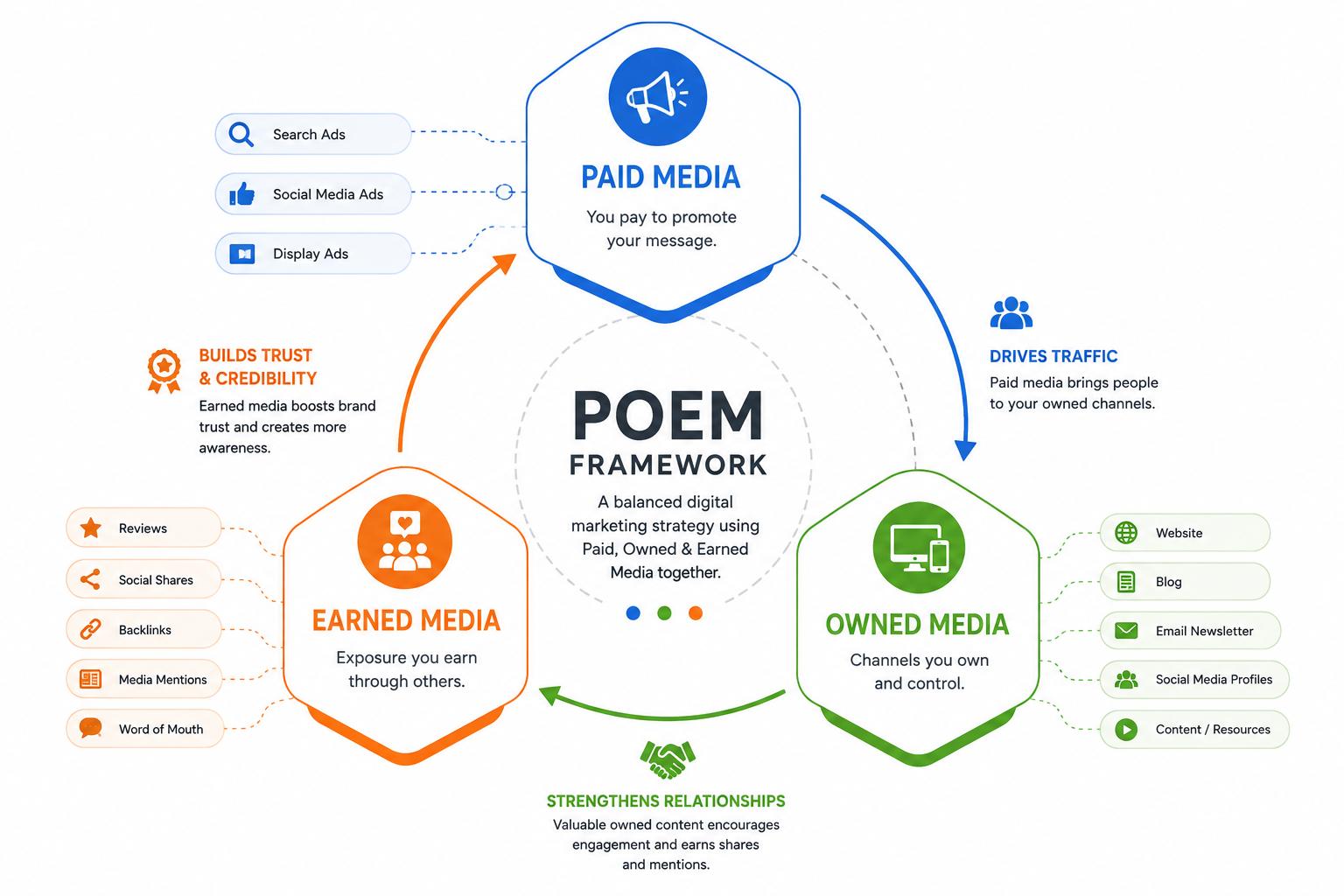
Understand from the table below about how the three media are different from each other:
Factors |
Paid Media |
Owned Media |
Earned Media |
| Control | Medium | High | Low |
| Main Benefit | Quick visibility and targeted reach | Long-term audience building | Trust and credibility |
| Cost | Requires advertising spend | Involves content creation and maintenance costs | No direct payment is required |
| Speed | generate results quickly | Takes time to build an audience | Totally depends on people sharing, reviewing, or mentioning the brand |
Free Courses
With a poem framework in digital marketing, the marketers can create a structured plan that can improve their overall marketing efforts.
They can clearly see which media is contributing more to gaining customers, and accordingly modify their whole strategy based on the data. Also, they can fill the gaps in their current marketing approach; they can change their approach, budget, message, and more.
These are some other pointers that shows the importance of POEM framework in digital marketing:
Also read: What is Content Marketing? How does it help businesses?
Digital Marketing Courses to upskill
Explore Digital Marketing Courses for Career Progression
MICA Executive Alumni Status
In the poem framework, all three media types are considered interconnected and not separate. Each type supports the other and gives marketers the better result from overall marketing efforts.
While running ads, the traffic from those ads come directly to owned media like landing page of a website, email newsletter sign-up page, blog, app download, etc. Instead of considering this traffic as one time visit, the marketers can give reason to visitors to stay connected with brand.
They can give them a useful resource to download, follow the brand on social media, explore more content, etc. This way, customers will keep engaging with the brand after the campaign also.
The Flywheel model shows this customer journey well.
The quality contents a brand share on their own platforms like blog posts, videos, pdfs, tutorials, etc. Users share this content with others if they feel content is worth sharing and engaging. This is a completely organic marketing; users share the brand content on their own social media, share reviews, UGC content, and more.
This shows how a customer moved from owned media to earned media.
Marketers repurpose the earned media content like reviews, user-generated content (UGC), and testimonials in ads. This is the best way to show new customers about the brand and gain trust with social proof.
They also use real customer names, quotes they share, press logo, and news images for authority.
Why This Integration Matters
Approach |
What Can Happen |
| Paid alone | Can become costly and may stop bringing results when the spending stops. |
| Owned alone | May take longer to reach a larger audience. |
| Earned alone | Can be difficult to predict and control. |
| All three together | Creates a more connected approach that combines reach, engagement, and trust. |
Also read: Fundamentals of Digital Marketing - What You Need to Know
With the help of the POEM strategy, you can work toward the same business goals. Instead of creating a plan for each channel separately, use them as connected parts of one marketing plan.
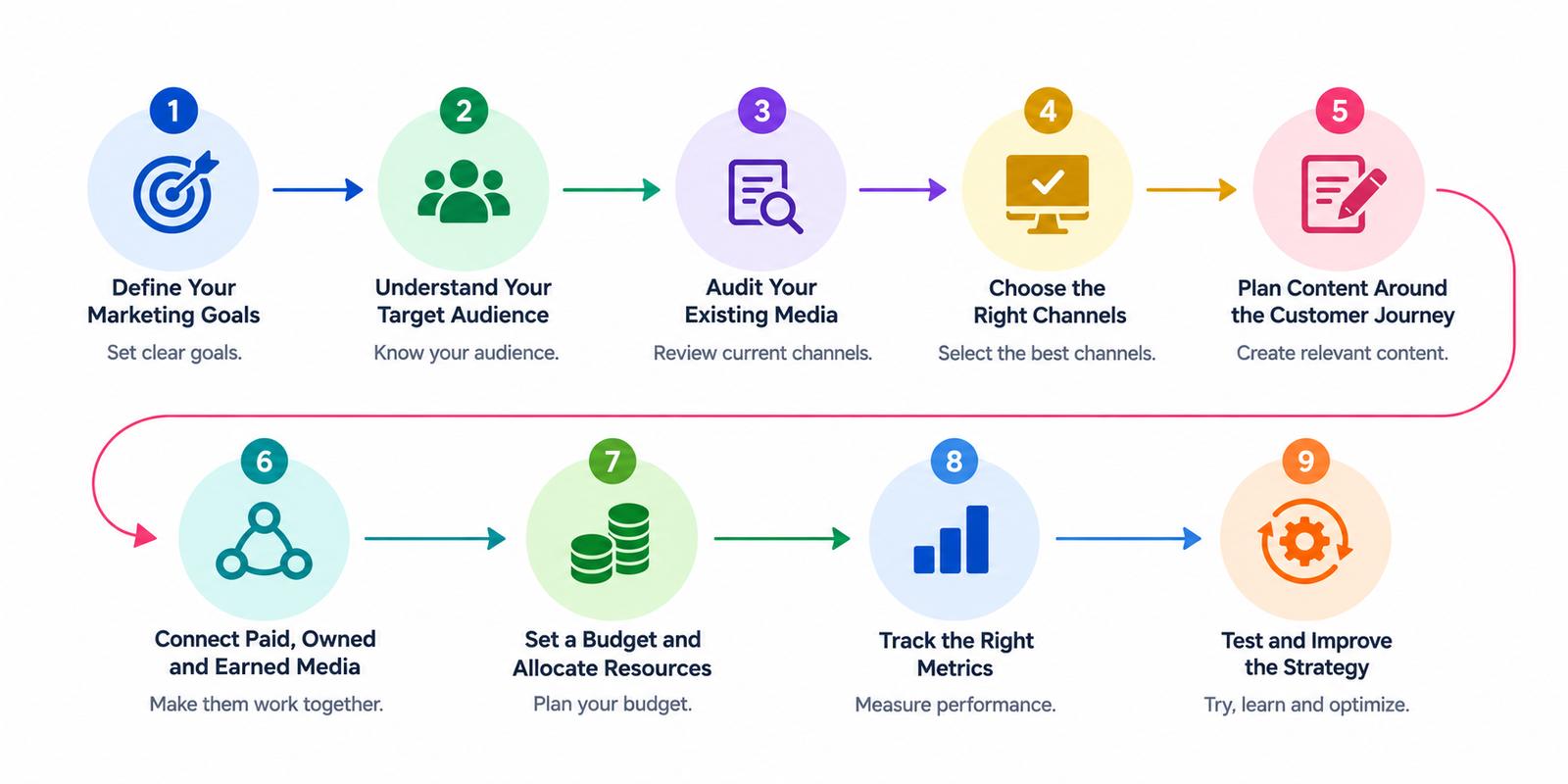
Choose one or two achievable goals. For example, if you launch a new product, your goal should be to create awareness about the product and generate shareable content. Or, if you have a service business then you will focus more on lead generation, using landing pages and paid campaigns.
Write the goal with a number and timeframe, instead of keeping a vague goal. If you have clear goals, you can easily decide which type of media you have to pay more attention to.
Create a list of audiences you want to reach and learn about their needs, interests, online behavior, and buying journeys. Check on which platform they are spending most of the time, what type of content they are responding to, and more of these types of patterns.
You can also pull insights from your existing customer data, email list, or website analytics. All this research will help you decide which channels to use, what content to create, and where to put budget.
Audit all the three medias your business is currently using:
You do not need to use every available platform. Select channels based on where your audience spends time and what you want to achieve.
For instance, search ads may be useful for capturing people actively looking for a product, while a blog can help answer their questions and build long-term organic traffic.
Create content that supports people at different stages of their decision-making process.
The three media types should support each other rather than operate as separate campaigns.
For example, you could promote a blog post through paid ads, attract visitors to your website, and then use useful content or a strong offer to encourage them to share their experience. Those shares, reviews, or mentions can create earned media that brings additional attention to the brand.
7. Set a Budget and Allocate Resources
Decide how much money, time, and people you can dedicate to each part of the strategy. Paid media usually requires direct spending, while owned media may require content creation and maintenance.
Earned media cannot always be purchased directly, so focus resources on creating experiences and content that people have a reason to talk about.
Use different metrics as per the channel, below are some metrics that you can follow to measure all three channels result.
Media Type |
Metrics to Track |
| Paid Media | Click-through rate (CTR), cost per click (CPC), conversions, return on ad spend |
| Owned Media | Website traffic, engagement, email sign-ups, organic rankings |
| Earned Media | Mentions, reviews, shares, backlinks, referral traffic |
Don’t follow a fixed POEM strategy for all your marketing. Test different messages, content formats, audiences, and channels to see from where you are getting better results.
Use this data for your paid campaigns to allocate the right budget and maximize the conversion.
Also read: What Is Search Engine Marketing? -A Beginner’s Guide
These are some benefits of POEM framework that make it better choice for marketing:
Also read: Brand Awareness Strategies for Modern Businesses!
Here are the key challenges of the POEM Framework in digital marketing in India:
Also read: Digital Marketing Types: Top 12 Digital Marketing Types You Should Know
The POEM framework must contribute to your marketing goals. And you can check the contribution by tacking each media type using some metrics. Follow this approach for detailed analysis:
Paid media metrics are easiest to track because businesses can easily measure how much they spend and what results they get. Check these metrics to calculated results:
In owned media, focus on the growth of your own channels, like getting better views, engagement, followers, etc. Check the following metrics in owned media:
These metrics are tough to check, but some part you can track:
This is what makes POEM a strategy instead of three disconnected reports:
Cross-Pillar Question |
What to Track |
| Does paid drive owned engagement? | Email signups or blog visits from paid campaigns |
| Does owned content generate earned coverage? | Press pickups or shares originating from blog/site content |
| Does earned media boost paid performance? | Ad CTR/conversion lift when using testimonials or press mentions in creative |
| Does earned content drive owned growth? | Social follows/email signups from press mentions or reviews |
Earned media is hard to trace, so combine a few methods:
Each pillar moves at a different speed, so your reporting should too:
Add all the paid, owned, and earned KPIs into one dashboard; you can also use a spreadsheet. So, you can see the whole metrics in one place, this way you can clearly see cross-pillar effects.
Also read: Digital Marketing Tutorial: Step-by-Step Guide to Becoming an Expert
For creating a strong digital marketing strategy, choosing one media type over the other. In the POEM framework, all three media connect as one approach. In these medias, there are multiple channels and each channel has a different role.
If you understand how these channels influence each other, businesses can divide their resources in a strategic way. Also, create better relationships with the audience.
Ready to start your journey? Book a free consultation with upGrad today to find the best path for your career.
No. PESO means paid, earned, shared, and owned media. This framework is used mainly in PR. In this shared (social media) is not a part of owned media, it has its own category. POEM keeps social media under owned media.
Most new businesses start with owned media (website, social profiles) because it is the foundation. Every other marketing depends on owned media.
Yes. Small businesses can focus more on owned and earned media. Like creating consistent content, community engagement, and asking customers for reviews.
It depends on the arrangement. A sponsored influencer post is paid media; an influencer organic, unprompted mention is earned media, and content posted on the brand's own influencer-run channel would count as owned.
Paid media can show results within days or weeks. Owned media usually takes a few months to gain traction. Earned media is the slowest, often taking six months to a year of consistent effort before it compounds.
Google Analytics and ad platforms (Google Ads, Meta Ads Manager) for paid, CMS and email tools (WordPress, Mailchimp) for owned, and social listening tools (Google Alerts, Mention, Brandwatch) for earned.
It applies to both. B2B businesses often lean more on owned media (LinkedIn, whitepapers, case studies) and earned media (client testimonials, industry recognition), while B2C tends to use paid media more heavily for direct sales.
Treating the three pillars as separate campaigns instead of connecting them. For example, running paid ads without a plan to convert that traffic into email subscribers or reviews wastes the compounding effect POEM is designed for.
Yes, negative reviews or viral complaints are also earned media. Businesses should monitor mentions regularly, respond professionally and quickly, and use owned channels to address concerns transparently rather than ignoring them.
It varies by company size. Smaller businesses often have one marketing generalist overseeing all three, while larger companies split it across teams, paid media specialists, content/social teams, and PR, with a marketing lead coordinating between them.
SEO overlaps mainly with owned and earned media. Owned content (blogs, website pages) is optimized to rank organically, while backlinks and mentions from earned media directly boost search authority, making SEO a natural connector between the two pillars.
1277 articles published
We are an online education platform providing industry-relevant programs for professionals, designed and delivered in collaboration with world-class faculty and businesses. Merging the latest technolo...
Get Free Consultation
By submitting, I accept the T&C and
Privacy Policy
Level Up Your Digital Marketing Career Today!
Top Resources
MICA
Advanced Certificate in AI-Powered Digital Marketing & Communication from MICAMICA Executive Alumni Status
Certification
5 Specialisation
Classroom
4 Months
Certification
2 Months