Customer Loyalty: What It Really Means and How to Build It
By upGrad
Updated on May 08, 2026 | 7 min read | 2.23K+ views
Share:

All courses
Certifications
More
By upGrad
Updated on May 08, 2026 | 7 min read | 2.23K+ views
Share:
Table of Contents
Customer loyalty refers to a customer’s ongoing emotional and behavioural commitment to a brand, reflected in repeated purchases over competitors. It is built through trust, satisfaction, and personalized experiences. Loyal customers not only spend more but also act as brand advocates, driving referrals and long-term value. Businesses cultivate loyalty through consistent quality, exceptional service, and well-designed loyalty programs.
This blog breaks down the meaning of customer loyalty, what drives it, how loyalty programs work, and what you can actually do to build it. Whether you're a student, a marketer, or just someone curious about how businesses retain customers, you'll find clear answers here.
Explore upGrad’s Marketing programs to build practical skills in customer retention, customer loyalty strategies, and campaign automation. Learn how to create loyalty-driven campaigns, improve customer engagement, and make data-driven marketing decisions with confidence.
Customer loyalty means customers continue buying from the same business over time because they trust the experience, value, and consistency they receive. It isn't limited to repeat purchases. Real loyalty includes emotional connection, satisfaction, and preference.
A customer who buys from you once may have responded to an ad or discount. A loyal customer returns because the relationship already exists. That changes everything for a business trying to grow sustainably.
Also Read: Customer Retention Strategies: A Complete Guide for 2026
Retaining a customer costs far less than acquiring a new one. Studies suggest that acquiring a new customer can cost five times more than keeping an existing one. That number alone explains why loyalty is a priority for most businesses.
Loyal customers also spend more. They buy more frequently, try new products, and refer others. They're not just buyers; they become brand advocates.
Here's a quick snapshot of what loyal customers do differently:
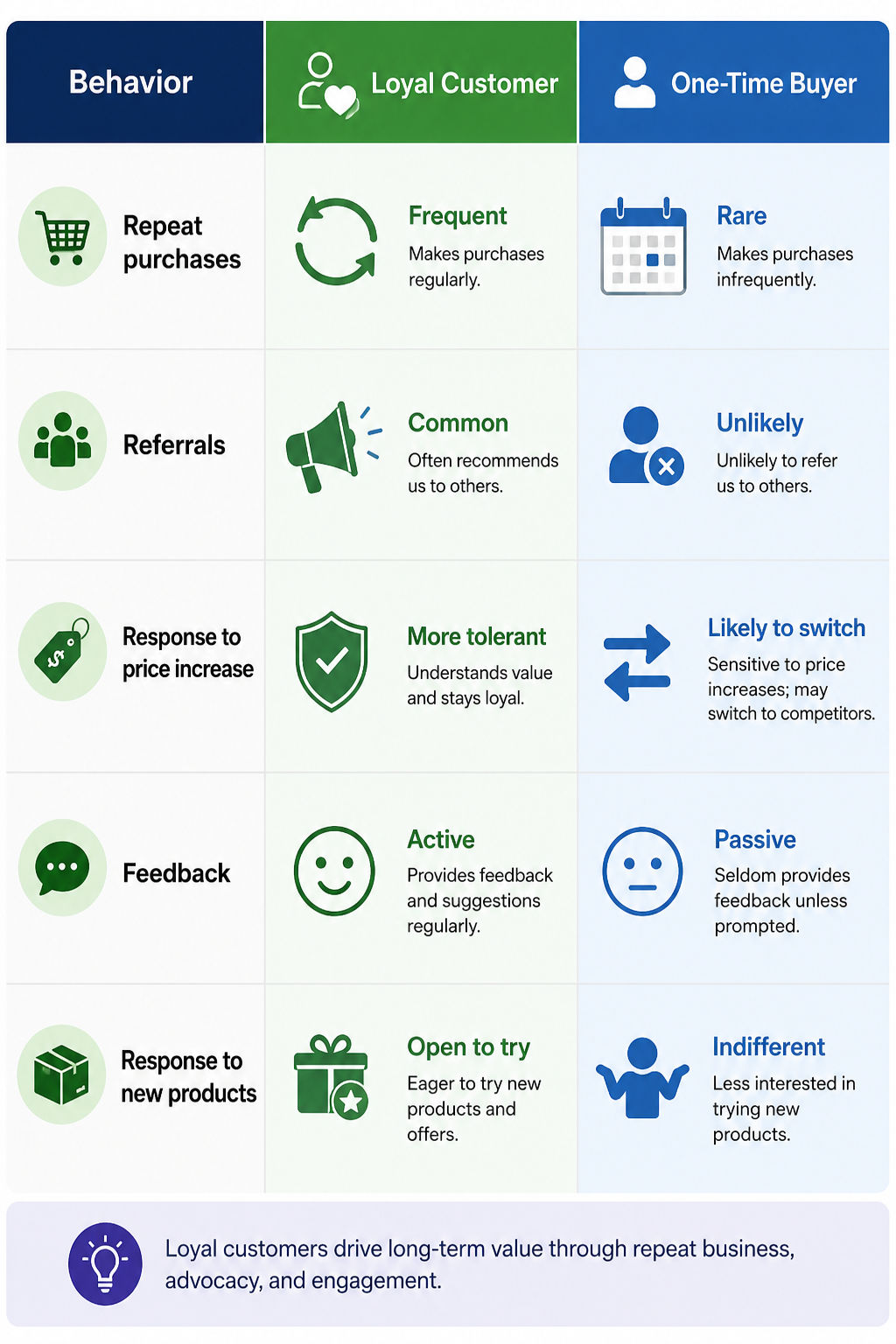
Customer loyalty isn't just a metric. It's a business outcome that shows up in revenue, retention, and growth.
Do Read: What is Consumer Behaviour in Marketing? Patterns, Types and Segmentation
Free Courses
Some customers stay because they genuinely love the brand. Others stay out of habit, price sensitivity, or lack better options. Understanding the type of loyalty your customers have helps you make smarter decisions. Why does this matter? Because a business that only has behavioral or inertia-based loyalty is sitting on shaky ground. If you're building a retention strategy, you want to push customers toward attitudinal loyalty.
This is the strongest form. The customer has a genuine emotional connection with the brand. They'd recommend it unprompted and feel disappointed if it disappeared.
The customer keeps buying but doesn't have a deep attachment. Switch their favorite product's price, and they might leave. This type of loyalty is fragile without reinforcement.
The customer is loyal only in certain conditions. They use your brand when it's convenient, but don't actively seek it out.
Pure habit. They're with you because switching feels like effort. Don't mistake this for real loyalty. A single bad experience can break it.
Must Read: What is Customer Relationship Management? A Complete Guide
Digital Marketing Courses to upskill
Explore Digital Marketing Courses for Career Progression
MICA Executive Alumni Status
Customer loyalty is shaped by a combination of experience, value, and convenience rather than a single factor. While businesses often prioritize acquisition, long-term loyalty is built through consistent everyday interactions that strengthen trust over time.
Several key factors play a critical role:
Ultimately, businesses that consistently deliver quality, relevance, and ease are far more likely to build sustainable customer loyalty.
Also Read: 15 Ways Big Data and Customer Experience Drive Better Engagement
Customer loyalty programs are structured systems designed to reward customers for repeatedly engaging with a brand. From airline miles to retail points and app-based rewards, these programs are widely used across industries.
The idea is simple: encourage repeat behavior, track customer activity, and offer meaningful incentives that keep people coming back.
Here are the most common types of loyalty programs:
Effective loyalty programs go beyond rewards,they create habits, strengthen relationships, and turn occasional buyers into long-term customers.
Must Read: Brand Awareness Explained: What It Is and How to Improve It?
Building loyalty is a deliberate process. It doesn't happen by accident, and it doesn't happen overnight.
Here's a clear framework to get started:
Step 1: Understand your customers
You can't build loyalty without knowing what your customers value. Use surveys, feedback forms, purchase data, and support interactions to build a real picture.
Step 2: Deliver on your core promise, every time
Whatever your brand promises, deliver it consistently. Inconsistency is one of the fastest ways to lose trust.
Step 3: Build a loyalty program that fits your audience
Don't copy a competitor's program blindly. Design one based on what your customers actually want. A B2B software company's loyalty strategy looks nothing like a grocery chain's.
Step 4: Invest in customer service
Support teams are the frontline of loyalty. Customers forgive mistakes when they're handled well. They don't forgive being ignored.
Step 5: Recognize and reward your best customers
Acknowledge long-term customers. Offer early access, exclusive deals, or just a direct thank-you. People notice when they feel valued.
Step 6: Ask for feedback and act on it
Customers who see their feedback implemented feel invested in the brand. That investment turns into loyalty.
Step 7: Personalize where possible
Use the data you have to make interactions feel relevant. A generic email to a customer who's bought from you 20 times is a missed opportunity.
Must Read: Top 32 Tools Every Successful Digital Marketer Uses
You can't manage what you don't measure. These are the metrics that tell you how loyal your customer base actually is.
In simple words:
Metric |
What It Measures |
Why It Matters |
| NPS | Likelihood to recommend | Signals advocacy potential |
| Retention Rate | Customers who stay | Core health indicator |
| CLV | Long-term revenue per customer | Shows true loyalty value |
| Repeat Purchase Rate | Return buying behavior | Measures behavioral loyalty |
| Churn Rate | Customer loss | Early warning system |
Track these regularly. They tell a story your revenue numbers alone won't reveal.
Customer loyalty isn't built through one campaign, one rewards program, or one viral moment. It develops through repeated positive experiences that make customers feel confident returning again and again.
Businesses that focus on trust, consistency, customer experience, and meaningful rewards usually build stronger retention over time. Customer loyalty programs help, but long-term loyalty depends more on how customers feel after every interaction.
Retention drives stability. Loyalty drives growth. And in crowded markets filled with endless choices, businesses that earn genuine customer loyalty often stay ahead longer than businesses chasing temporary attention.
Ready to start your journey? Book a free consultation with upGrad today to find the best path for your career.
Customer loyalty means customers repeatedly choose the same brand because they trust the experience, quality, or value offered. Companies care because loyal customers usually spend more over time, recommend brands to others, and reduce the need for constant customer acquisition spending.
Customer loyalty focuses on repeat buying behavior and satisfaction with a company’s products or services. Brand loyalty goes deeper into emotional connection and identity. For example, people may stay loyal to a smartphone brand because it reflects their lifestyle preferences and personal image.
Yes, but only when rewards feel useful and easy to access. Customers lose interest in programs with confusing rules or weak benefits. Simple rewards, personalized offers, and quick redemption systems usually improve repeat purchases and encourage customers to stay connected with the brand longer.
Most customers leave because of poor experiences, inconsistent quality, delayed support, or better alternatives from competitors. Sometimes the issue isn’t pricing. It’s frustration. A single unresolved problem can damage trust quickly, especially when customers feel ignored after raising concerns publicly or privately.
Small businesses can build customer loyalty through fast communication, personalized service, reliable product quality, and simple reward systems. Customers often remember human interactions more than polished marketing campaigns. Even small gestures like follow-up messages or personalized recommendations can increase repeat business significantly.
Businesses commonly track Net Promoter Score, repeat purchase rate, customer lifetime value, churn rate, and retention rate. These metrics help brands understand whether customers continue engaging with the business over time or slowly drift toward competitors offering similar products or experiences.
Many customer loyalty programs fail because customers don’t see immediate value. Complicated signup steps, delayed rewards, excessive emails, and intrusive data collection often discourage participation. Customers want convenience and meaningful benefits, not another app or account they’ll eventually stop using.
Customer service strongly shapes how customers remember a business. Quick responses, helpful support, and transparent communication can repair negative experiences before customers leave permanently. Research also shows customers sometimes become more loyal after businesses resolve problems effectively and respectfully.
Yes. Many customers stay loyal because they value reliability, convenience, product quality, or emotional trust more than lower prices. Businesses with strong customer experiences often retain customers even during aggressive competitor discounting because familiarity reduces decision fatigue and perceived buying risk.
Customers now expect personalized rewards, mobile-friendly experiences, faster redemption systems, and benefits that feel relevant to their actual behavior. Generic discounts no longer impress people consistently. Customers also expect brands to respect privacy and avoid collecting unnecessary personal information.
Customer feedback helps businesses identify recurring frustrations, improve products, and fix weak points in the customer experience. When brands actively respond to feedback and implement visible changes, customers feel heard. That emotional recognition often strengthens trust and increases long-term customer loyalty naturally.
1011 articles published
We are an online education platform providing industry-relevant programs for professionals, designed and delivered in collaboration with world-class faculty and businesses. Merging the latest technolo...
Get Free Consultation
By submitting, I accept the T&C and
Privacy Policy
Level Up Your Digital Marketing Career Today!
Top Resources
MICA
Advanced Certificate in AI-Powered Digital Marketing & Communication from MICAMICA Executive Alumni Status
Certification
5 Specialisation
Classroom
4 Months
Certification
2 Months