Crisis Management: Meaning, Process, Strategies, Benefits, and Career Scope
By Faheem Ahmad
Updated on May 08, 2026 | 9 min read | 2.54K+ views
Share:

All courses
Certifications
More
By Faheem Ahmad
Updated on May 08, 2026 | 9 min read | 2.54K+ views
Share:
Table of Contents
Crisis management is the process organizations use to prepare for, respond to, and recover from unexpected events that can affect business operations, safety, or reputation. It includes planning ahead, making quick decisions, and maintaining clear communication to reduce damage, protect stakeholders, and ensure business continuity during challenging situations.
In this guide, you will learn the crisis management definition, importance, stages, process, crisis management plan, benefits, challenges, tools, and career opportunities in 2026.
Looking to apply workplace efficiency concepts like crisis management in real business settings? Explore upGrad’s management programs to build practical leadership, operations, and process improvement skills.
Popular Management Programs
Crisis management refers to the process of identifying threats, preparing response strategies, managing emergencies, and restoring normal operations after disruptions.
When understanding what is crisis management, it is important to know that it is not only about solving problems after they happen. It also includes preparation, planning, employee safety, communication management, and operational recovery.
The crisis management definition focuses on reducing damage and helping organizations continue operations during difficult situations.
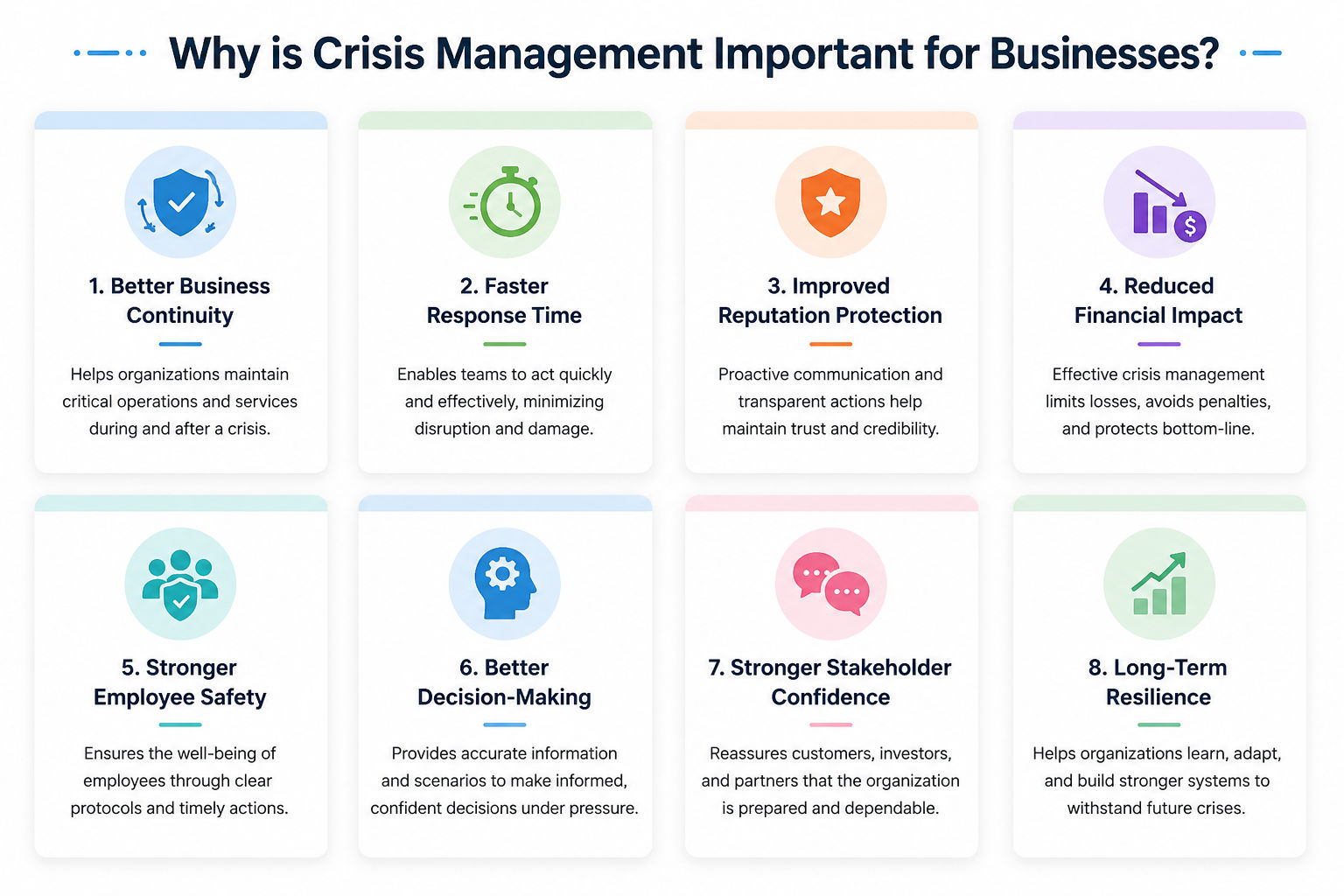
Businesses use crisis management to:
Organizations operate in uncertain environments. Crises can happen suddenly and affect every part of a business.
Free Courses
Different businesses face different types of crises depending on their industry and operations.
Financial crises include revenue loss, economic downturns, debt problems, or sudden market instability.
Businesses use financial crisis management to:
Cybersecurity crises involve ransomware attacks, data breaches, hacking attempts, or system failures.
Key focus areas include:
Negative publicity, social media backlash, customer complaints, or public controversies can damage a company’s reputation and reduce customer trust. Crisis communication becomes important in such situations.
Businesses must respond quickly, provide accurate information, address public concerns, and maintain transparency to protect their brand image and credibility.
Operational crises affect production, logistics, supply chains, technology systems, or daily business activities. These disruptions can delay services, reduce efficiency, and impact customer satisfaction.
Businesses use operational crisis management to restore workflows quickly, reduce downtime, and maintain continuity during unexpected disruptions.
Businesses prepare for floods, earthquakes, fires, pandemics, and severe weather events through emergency response planning and safety protocols.
This type of crisis management focuses on protecting employees, maintaining essential operations, reducing physical damage, and ensuring faster recovery after natural disasters occur.
Workplace conflicts, employee misconduct, harassment claims, or labor disputes can create internal crises that affect productivity and workplace culture.
Human resource crisis management helps organizations handle sensitive situations professionally, maintain employee trust, ensure legal compliance, and restore a healthy work environment.
Also Read: Techniques of Decision-Making: 15+ Tools & Methods for Success in 2026
Management Courses to upskill
Explore Management Courses for Career Progression
IIIT-B & IIM, Udaipur
Chief Technology Officer & AI Leadership ProgrammeSuccessful crisis management depends on multiple components working together properly.
Also Read: Top 21+ Risk Management Projects: The 2026 Master List
Most businesses follow structured stages to handle crises effectively.
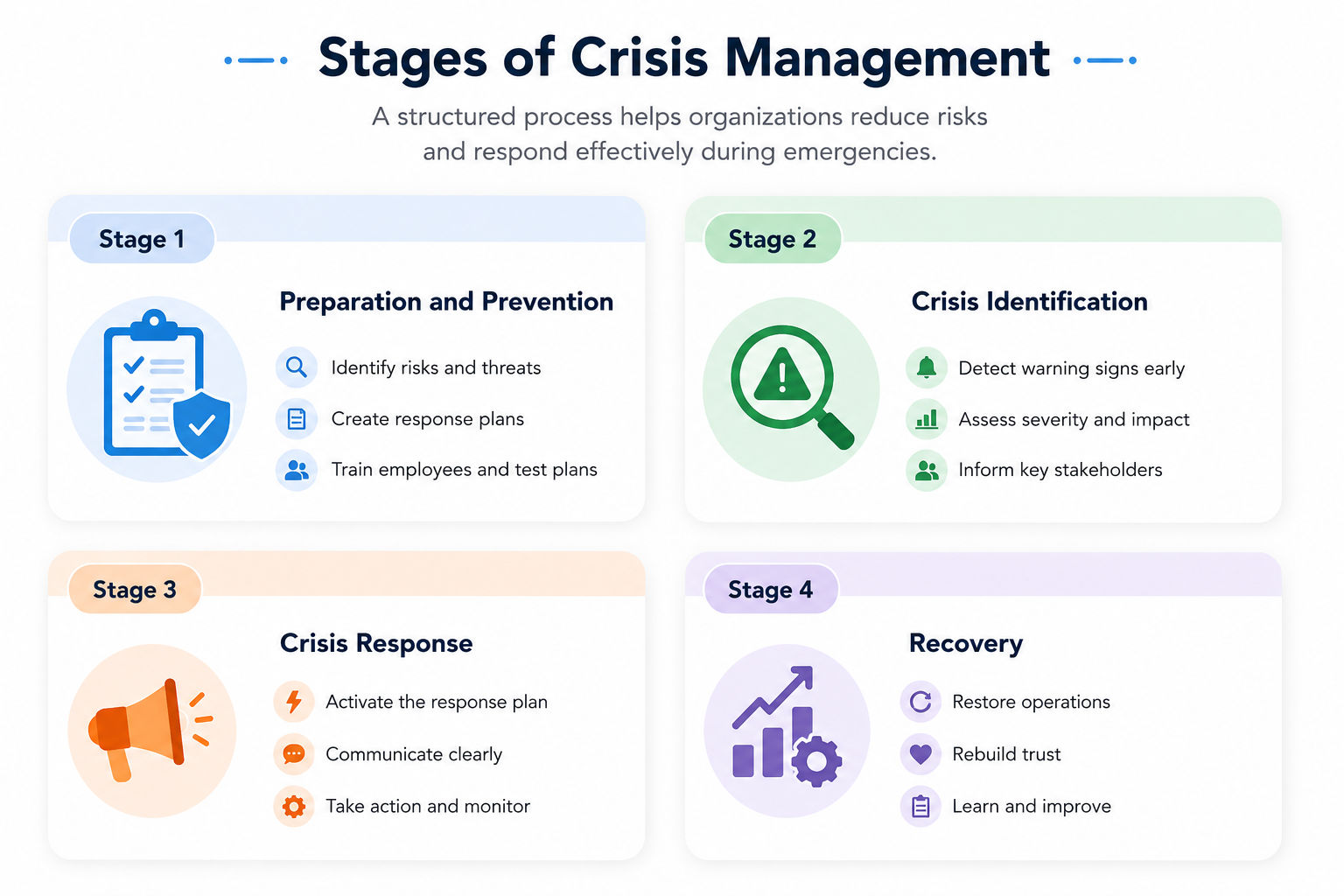
Most organizations follow a step-by-step process to improve crisis readiness and response efficiency.
Also Read: Resource Management: Meaning, Importance, Types, Process, and Career
Organizations use different strategies to reduce risks and improve emergency response.
Area |
Purpose |
Proactive Risk Monitoring |
Identify operational, financial, and cybersecurity risks early |
Clear Communication Strategy |
Reduce confusion and build stakeholder trust during crises |
Scenario Planning |
Prepare for potential crises through simulations and backup plans |
Employee Training Programs |
Improve awareness and emergency response readiness |
Technology‑Based Monitoring |
Track operational and reputational risks in real time |
Cross‑Department Coordination |
Enable faster, more effective crisis response |
Also Read: What is Stakeholder Management? A Complete Guide
Modern businesses use digital tools to improve crisis preparedness and communication.
Tool |
Best Used For |
Key Features |
| Everbridge | Emergency communication | Mass notifications, incident management |
| AlertMedia | Employee safety alerts | Real-time emergency communication |
| Resolver | Risk management | Threat tracking and reporting |
| Noggin | Business continuity | Incident workflows and planning |
| Crises Control | Crisis communication | Emergency coordination systems |
| Fusion Framework | Enterprise resilience | Risk analysis and recovery planning |
These tools help organizations improve coordination, automate communication, and manage emergencies more effectively.
Also Read: Facility Management: Meaning, Types, Roles, Benefits, and Career Scope
Strong crisis management systems provide long-term business advantages.
Also Read: What Are the Levels of Management: A Comprehensive Guide
Despite its benefits, organizations often face several crisis management challenges.
Also Read: Talent Management: Meaning, Strategies, Process and Career Scope
Crisis management offers strong career opportunities across industries such as healthcare, finance, IT, consulting, aviation, manufacturing, and government. As businesses focus more on risk reduction, emergency preparedness, and operational continuity, the demand for crisis management professionals continues increasing across sectors.
The salary of a Crisis Management Lead in India depends on factors such as experience, location, industry, and company size. On average, professionals with around 5 years of experience earn approximately ₹7.8 Lakhs per year or nearly ₹65,000 per month.
Entry-level salaries generally start around ₹7.8 Lakhs annually, while experienced professionals in specialized industries or leadership positions can earn up to ₹9.5 Lakhs per year. The top 10% of Crisis Management Leads in India earn more than ₹13 Lakhs annually.
Also Read: Management by Objectives (MBO): Meaning, Process, Advantages & Complete Guide
Crisis management helps organizations prepare for unexpected events, respond effectively during emergencies, and recover with minimal operational or reputational damage. It improves business continuity, communication, employee safety, and organizational resilience.
As cybersecurity threats, global disruptions, and digital risks continue growing, businesses will increasingly depend on structured crisis management systems and strong crisis management plans in 2026 and beyond. Organizations that invest in preparedness and response strategies will remain more stable, adaptable, and competitive in changing business environments.
Ready to start your journey? Book a free consultation with upGrad today to find the best path for your career.
Crisis management helps small businesses respond quickly to unexpected disruptions such as financial issues, cyber threats, or operational failures. It improves preparedness, reduces confusion during emergencies, protects customer trust, and helps businesses recover faster with minimal financial or reputational damage.
A crisis management plan should include emergency procedures, communication workflows, crisis response roles, escalation processes, recovery strategies, and contact information for key stakeholders. Regular updates and employee training are also important to ensure the plan remains effective during real emergencies.
Risk management focuses on identifying and reducing potential threats before they occur, while crisis management deals with responding to and recovering from emergencies after they happen. Both processes work together to improve organizational safety, stability, and long-term resilience.
Organizations should review and update crisis management strategies regularly, especially after major operational changes, technology upgrades, or real crisis situations. Many businesses conduct annual reviews and emergency drills to ensure systems remain effective and employees stay prepared.
Social media spreads information very quickly during emergencies. Businesses must monitor online discussions, respond accurately, and address public concerns in real time. Poor handling of social media communication can increase reputational damage and reduce customer trust significantly.
Industries such as healthcare, aviation, finance, IT, manufacturing, government, energy, and logistics require strong crisis management systems because disruptions in these sectors can affect public safety, operations, customer trust, and regulatory compliance on a large scale.
When understanding what is crisis management, it is important to know that it helps organizations maintain essential operations during emergencies. Effective response systems reduce downtime, improve coordination, protect employees, and help businesses recover faster after disruptions occur.
Common mistakes include delayed communication, lack of preparation, poor leadership coordination, ignoring employee concerns, and sharing inaccurate information. These issues can increase operational confusion, damage reputation, and make recovery more difficult for organizations during emergencies.
Organizations train employees through emergency drills, workshops, simulations, and awareness programs. These activities help staff understand response procedures, communication systems, evacuation protocols, and their responsibilities during different types of crisis situations.
Communication plays a critical role during emergencies because it helps reduce panic, share accurate information, and maintain trust among employees, customers, and stakeholders. Clear communication also improves coordination and supports faster decision-making during high-pressure situations.
The crisis management meaning in modern organizations goes beyond emergency response. It now includes proactive planning, digital risk monitoring, cybersecurity preparedness, business continuity strategies, employee safety measures, and long-term organizational resilience planning to handle evolving business risks effectively.
79 articles published
Faheem Ahmad is an Associate Content Writer with a specialized background in MBA (Marketing & Operations). With a professional journey spanning around a year, Faheem has quickly carved a niche in the ...
Get Free Consultation
By submitting, I accept the T&C and
Privacy Policy
Top Resources
Certification
3 Months
Certification
6 Months
O.P. Jindal Global University
Masters in International Accounting and Finance (Accredited by ACCA, UK)Master's Degree
12 Months