Business Etiquette: Unspoken Rules Every Professional Must Know
By upGrad
Updated on May 11, 2026 | 7 min read | 2.32K+ views
Share:

All courses
Certifications
More
By upGrad
Updated on May 11, 2026 | 7 min read | 2.32K+ views
Share:
Table of Contents
Business etiquette refers to the unspoken guidelines of professional behavior that promote respect, productivity, and a strong corporate image. It includes being punctual, dressing appropriately, communicating respectfully, and maintaining shared spaces. As a soft skill, it strengthens credibility, teamwork, and client relationships.
This blog covers the definition of business etiquette, how it looks across different settings, the types of business etiquette you'll encounter, and the specific rules that matter. Whether you're stepping into your first job or moving into a senior role, this guide gives you a clear, practical picture of what professional behavior looks like and why it shapes your career.
Explore upGrad’s Management and MBA programs to understand business etiquette in modern workplaces, build practical professional communication skills, and develop the confidence to handle meetings, networking, workplace interactions, and client relationships effectively.
Popular Management Programs
Business etiquette meaning goes beyond saying "please" and "thank you." It's about how you carry yourself in a professional environment, how you communicate, how you treat people's time, and how you show up in both in-person and digital spaces.
Think of it as a shared code. Everyone in a workplace operates on it, even if no one has written it down.
Why does it matter so much? Because Clients choose to work with people they find reliable and respectful. Managers promote people who handle themselves well. Teams function better when everyone follows a common standard of behaviour.
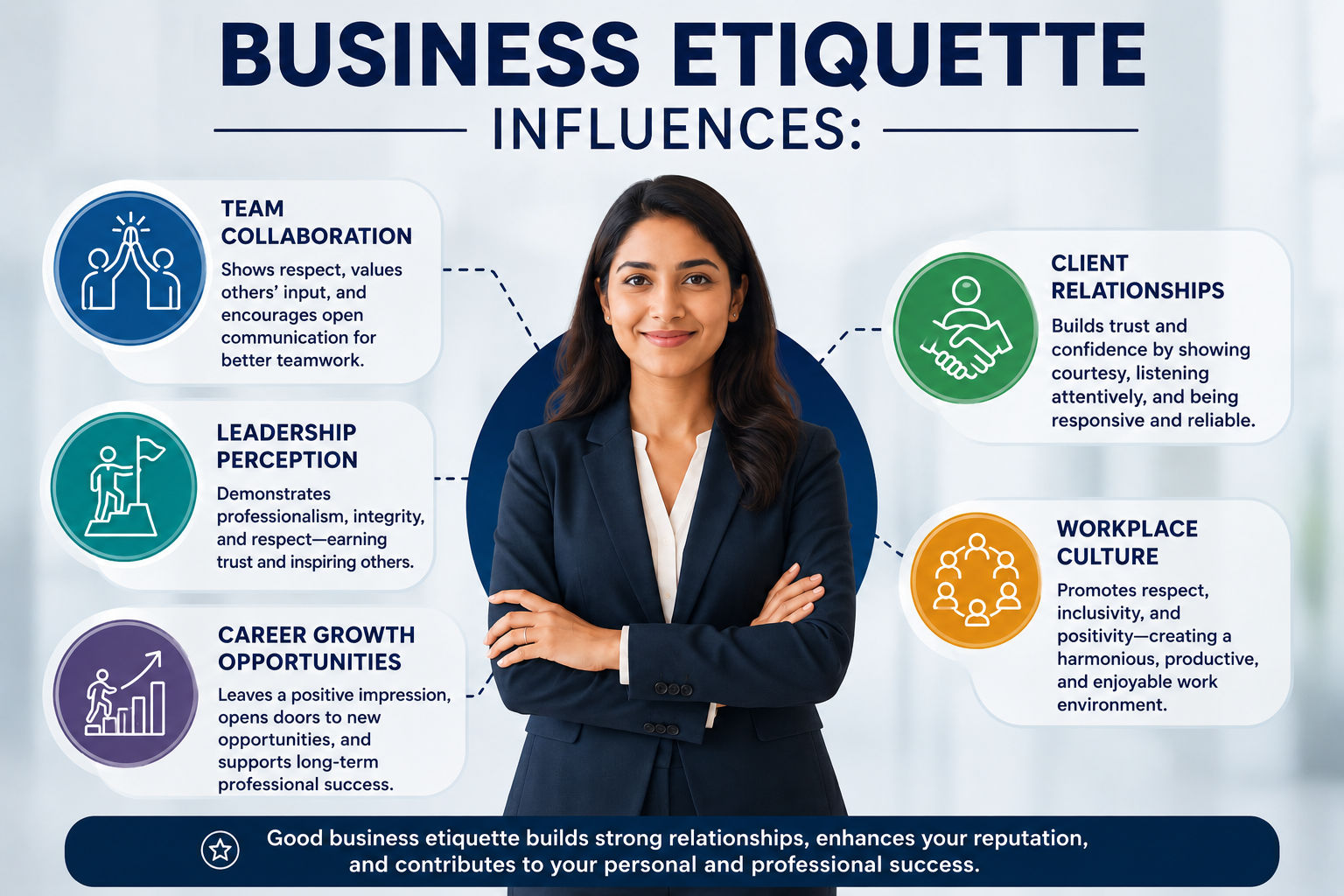
A LinkedIn Workplace Learning report found that communication and interpersonal skills remain among the most valued professional skills across industries. Technical expertise helps people enter a role, but workplace behaviour often determines who grows faster.
Do read: Soft Skills to Improve Your Career in 2025
People often confuse manners and etiquette. Here’s the difference between them:
Manners |
Business Etiquette |
| Personal social behavior | Professional conduct |
| Used everywhere | Specific to workplace settings |
| Includes politeness | Includes workplace communication and professionalism |
| Informal in nature | Structured and expectation-driven |
Must Read: Key Meeting Etiquette Rules Every Professional Must Know!
Free Courses
Business etiquette covers several distinct areas, each with its own set of norms. Knowing the types of business etiquette helps you navigate each one with confidence.
This covers your day-to-day behaviour in an office or shared work environment.
It's not about being formal all day. It's about being considerate and predictable, so people know what to expect from you.
How you communicate defines how people experience working with you. This applies to both spoken and written communication.
Situation |
What Good Etiquette Looks Like |
| Clear subject line, correct greeting, no spelling errors | |
| Meetings | Listen actively, don't cut people off, stay on topic |
| Feedback | Be direct but respectful, focus on the issue, not the person |
| Messaging apps | Keep it professional, don't over-message outside hours |
Don't assume the tone comes through in text. Read your message before you send it.
Meetings are where a lot of professional impressions get made or broken.
People notice who's engaged and who's distracted. It's that simple.
Remote work hasn't removed the need for professionalism. It's changed where it shows up.
A lot of professionals underestimate how much remote etiquette affects how they're perceived. Your home setup is now your office in the eyes of your colleagues and clients.
Business lunches, dinners, or client events have their own set of expectations.
These situations test your social awareness. They're part of business etiquette in a way that goes beyond the desk.
Also Read: The Importance of Business Ethics: Why It Matters Today?
Management Courses to upskill
Explore Management Courses for Career Progression
IIIT-B & IIM, Udaipur
Chief Technology Officer & AI Leadership ProgrammeCertain rules consistently appear across industries and roles. They may not seem obvious, but they are the habits that distinguish professionals who grow from those who remain stagnant.
The rules that matter most aren't the ones about which fork to use. They're the ones about how you treat people.
Do Read: The Ultimate List of 19 Email Etiquette Rules You Should Follow
Even experienced professionals slip into bad workplace habits. Some mistakes appear small initially but gradually damage trust, collaboration, and professional reputation over time. Here’s what you should always remember to avoid:
Business etiquette isn't a personality trait. It's a skill. And like any skill, you build it through awareness and practice. Here is what you should do to build this skill:
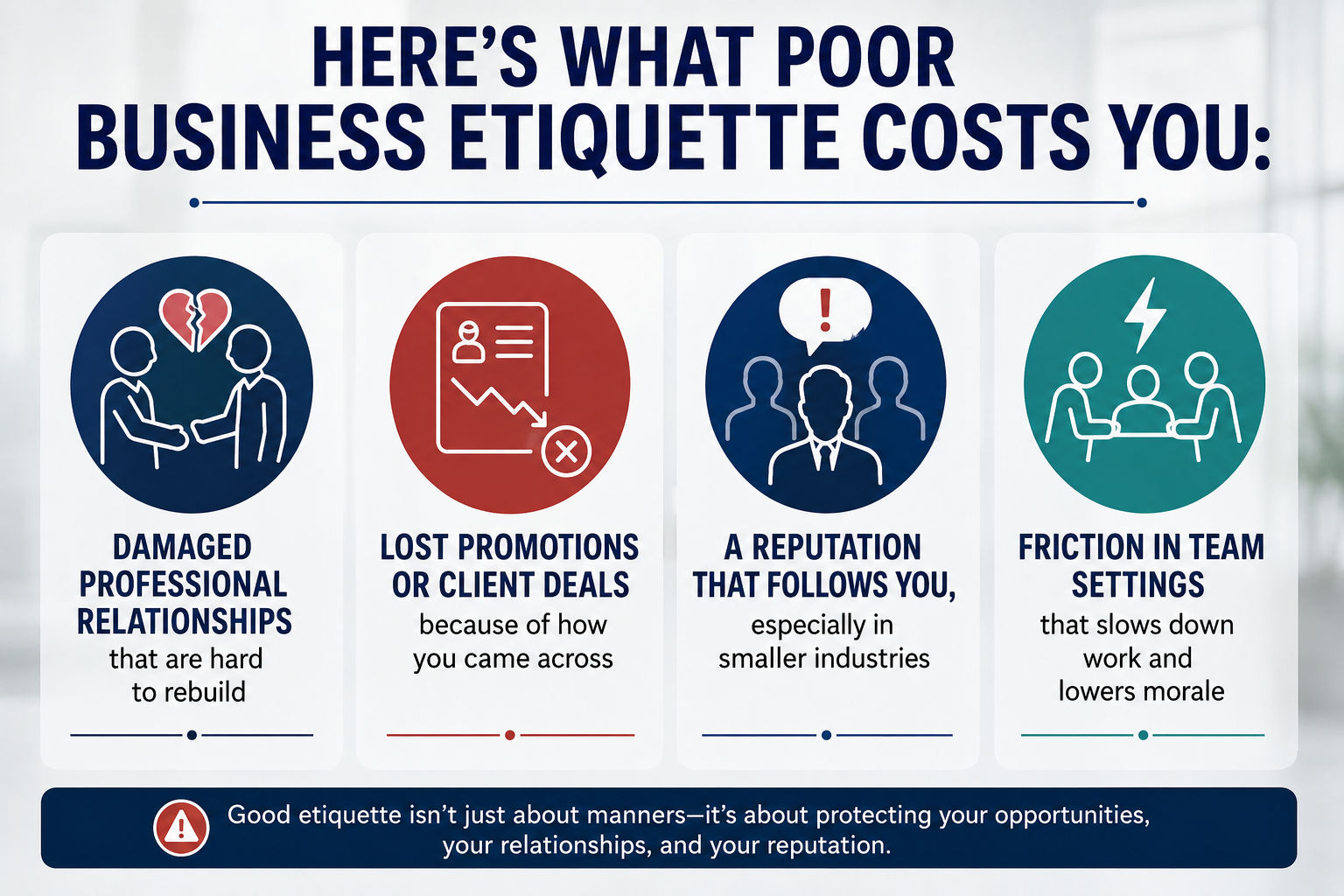
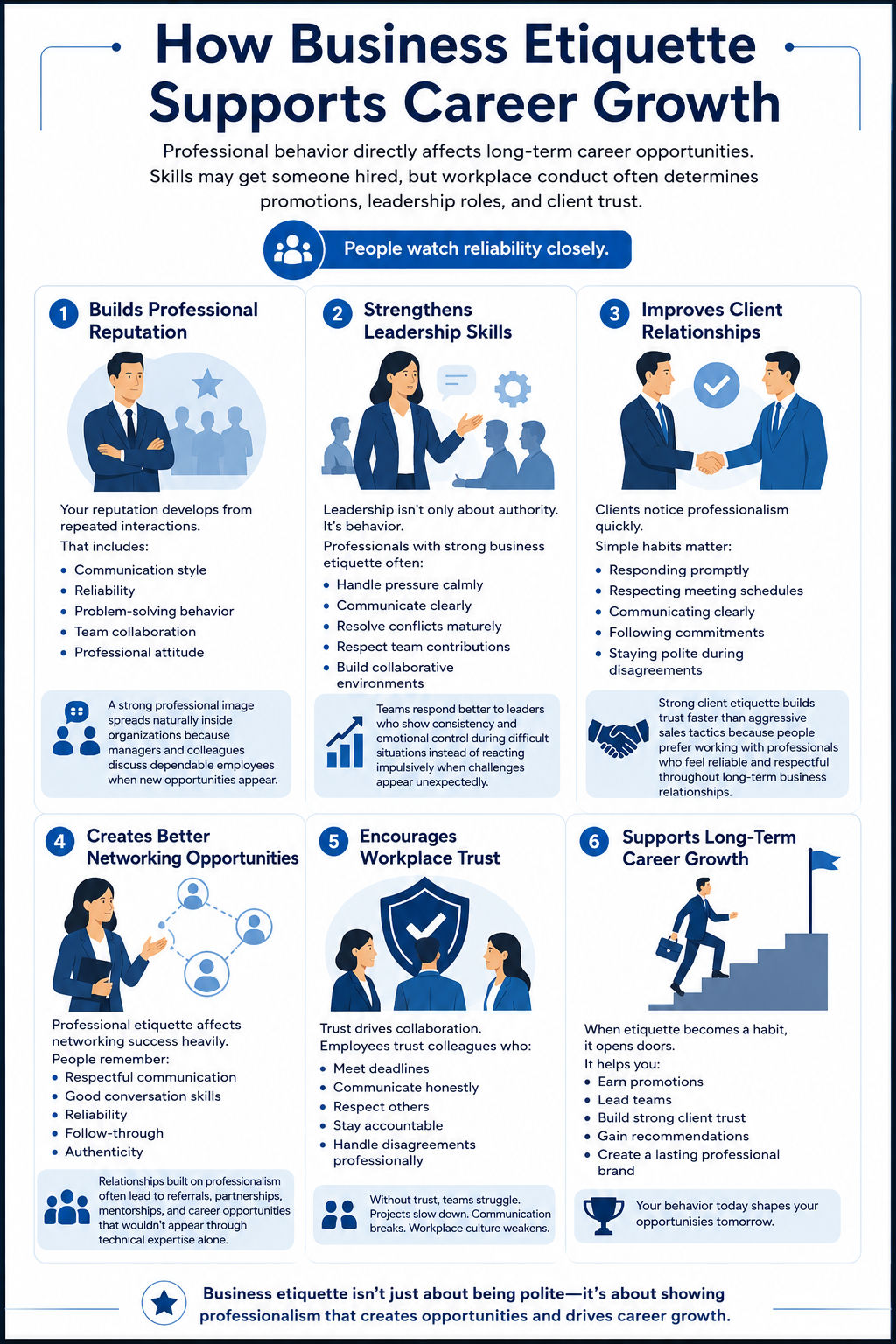
Here's a direct truth. Two professionals with similar skills and experience will often be separated by how they carry themselves. That's business etiquette in action.
It shows up during promotions, when managers assess not just what you delivered but how you worked with others. It shows up during hiring, when a final decision comes down to cultural fit. It shows up with clients, who choose to renew contracts partly because they enjoy working with you.
Also read: Remote Work: A Win-Win for Employer and Employees
This is where things get more complex. What's polite in one country can come across as rude in another.
Country/Region |
Key Etiquette Difference |
| Japan | Bowing, exchanging business cards with both hands, avoiding direct “no” |
| Germany | Punctuality is critical, directness in communication is the norm |
| India | Hierarchy matters, greetings vary by region and religion |
| USA | First-name basis is common, directness is valued |
| Middle East | Relationship-building before business, avoid left hand for handshakes |
| China | Formal introductions matter, public disagreement is avoided |
| United Kingdom | Politeness and restrained communication are valued |
| South Korea | Respect for seniority and titles is expected |
| Singapore | Professionalism, punctuality, and efficiency are highly valued |
| France | Formal communication and structured discussions are preferred |
| UAE | Hospitality matters, business discussions often begin with personal rapport |
| Canada | Polite communication and respect for personal space are important |
If you're working internationally or with global teams, spend time researching the specific norms of that culture. Don't assume your default approach will work everywhere.
Cross-cultural business etiquette isn't about memorising rules. It's about showing respect by doing your homework before you show up.
Also read: What is International Business Management? Key Concepts and Career Insights in 2025
Business etiquette is not about being formal or following rigid rules. It's about being someone that others can trust, rely on, and work with comfortably. The fundamentals aren't hard: be on time, communicate clearly, treat people with respect, and stay consistent. What makes the difference is applying them without needing to be reminded.
Start with one area you know needs work. Communication, meetings, follow-through. Improve it deliberately. Then move to the next. That's how professionals who are known for their conduct actually got there.
Ready to start your journey? Book a free consultation with upGrad today to find the best path for your career.
Business etiquette focuses on workplace behavior, communication, and social conduct. Professional ethics deal with moral principles such as honesty, confidentiality, and fairness. One shapes how you interact professionally, while the other guides what decisions you make at work, especially during conflicts, leadership situations, or client relationships.
Hiring managers often assess communication style, punctuality, listening skills, and professionalism during interviews because these traits affect team dynamics and client interactions later. Technical skills can be taught internally, but poor workplace behavior usually creates long-term problems that affect collaboration, trust, and workplace culture across teams.
Remote work changed how professionalism appears in daily interactions. Delayed responses, poor video call behavior, multitasking during meetings, and unclear messaging can damage workplace perception quickly. Strong digital etiquette helps employees stay visible, reliable, and collaborative even when teams work across locations and time zones.
Freshers should focus on punctuality, respectful communication, listening carefully, meeting deadlines, and maintaining professional email etiquette. Asking thoughtful questions also matters. Many early-career professionals underestimate how quickly workplace habits shape reputation, especially during the first few months when managers observe reliability and attitude closely.
Yes. Workplace behavior strongly influences performance reviews, leadership opportunities, and client-facing responsibilities. Employees who communicate poorly, miss deadlines repeatedly, or struggle with collaboration may lose growth opportunities even when their technical work is strong because organizations value professionalism alongside skill and execution.
Common examples include vague subject lines, delayed replies, careless grammar, overly casual language, missing attachments, and sending long unreadable paragraphs. Writing emotionally charged emails without reviewing tone is another major issue. Professional email etiquette improves clarity, reduces confusion, and creates a more reliable workplace communication style.
Introverts don't need to become overly social to build strong professional etiquette. Simple habits work well. Listen actively, prepare conversation starters before meetings, maintain eye contact, and follow up thoughtfully after networking events. Consistency and professionalism usually matter more than being the loudest person in the room.
Yes. Corporate firms, startups, creative agencies, and global companies often follow different communication styles and workplace expectations. Some workplaces encourage informal interactions, while others maintain stricter hierarchy and formal behavior. Still, respect, punctuality, accountability, and professional communication remain important across nearly every industry and role.
Professional behavior varies widely across countries. Direct communication may feel normal in the United States but seem aggressive in parts of Asia. In countries like Japan, formal introductions and respectful communication hold significant importance. Understanding local workplace norms helps professionals avoid misunderstandings in global business environments.
Active listening shows professionalism, respect, and emotional awareness during workplace conversations. People notice when someone interrupts constantly, ignores feedback, or responds without understanding the discussion fully. Strong listening habits improve teamwork, reduce communication errors, and help professionals build stronger working relationships with colleagues and clients.
Improving business etiquette is usually a gradual process built through repetition and self-awareness. Small habits like arriving on time, responding professionally, and communicating clearly become natural with practice. Most professionals improve steadily once they actively observe workplace behavior and apply feedback consistently in daily interactions.
972 articles published
We are an online education platform providing industry-relevant programs for professionals, designed and delivered in collaboration with world-class faculty and businesses. Merging the latest technolo...
Get Free Consultation
By submitting, I accept the T&C and
Privacy Policy
Top Resources
Certification
3 Months
Certification
6 Months
O.P. Jindal Global University
Masters in International Accounting and Finance (Accredited by ACCA, UK)Master's Degree
12 Months