Compliance Management
By upGrad
Updated on May 11, 2026 | 8 min read | 2.36K+ views
Share:

All courses
Certifications
More
By upGrad
Updated on May 11, 2026 | 8 min read | 2.36K+ views
Share:
Table of Contents
Compliance management is the continuous practice of identifying and adhering to legal, regulatory, and internal standards. By establishing a structured framework, organizations effectively mitigate operational risks, avoid costly legal penalties, and safeguard their professional reputation.
This blog explains the meaning of compliance management, its importance, core processes, benefits, challenges, and best practices. You will also learn how organizations build effective compliance systems to improve accountability, protect reputation, and maintain long-term business stability.
Explore Management Courses from upGrad to build essential compliance management skills to gain the strategic mindset needed to manage compliance challenges with confidence, accuracy, and long-term business impact.
Popular Management Programs
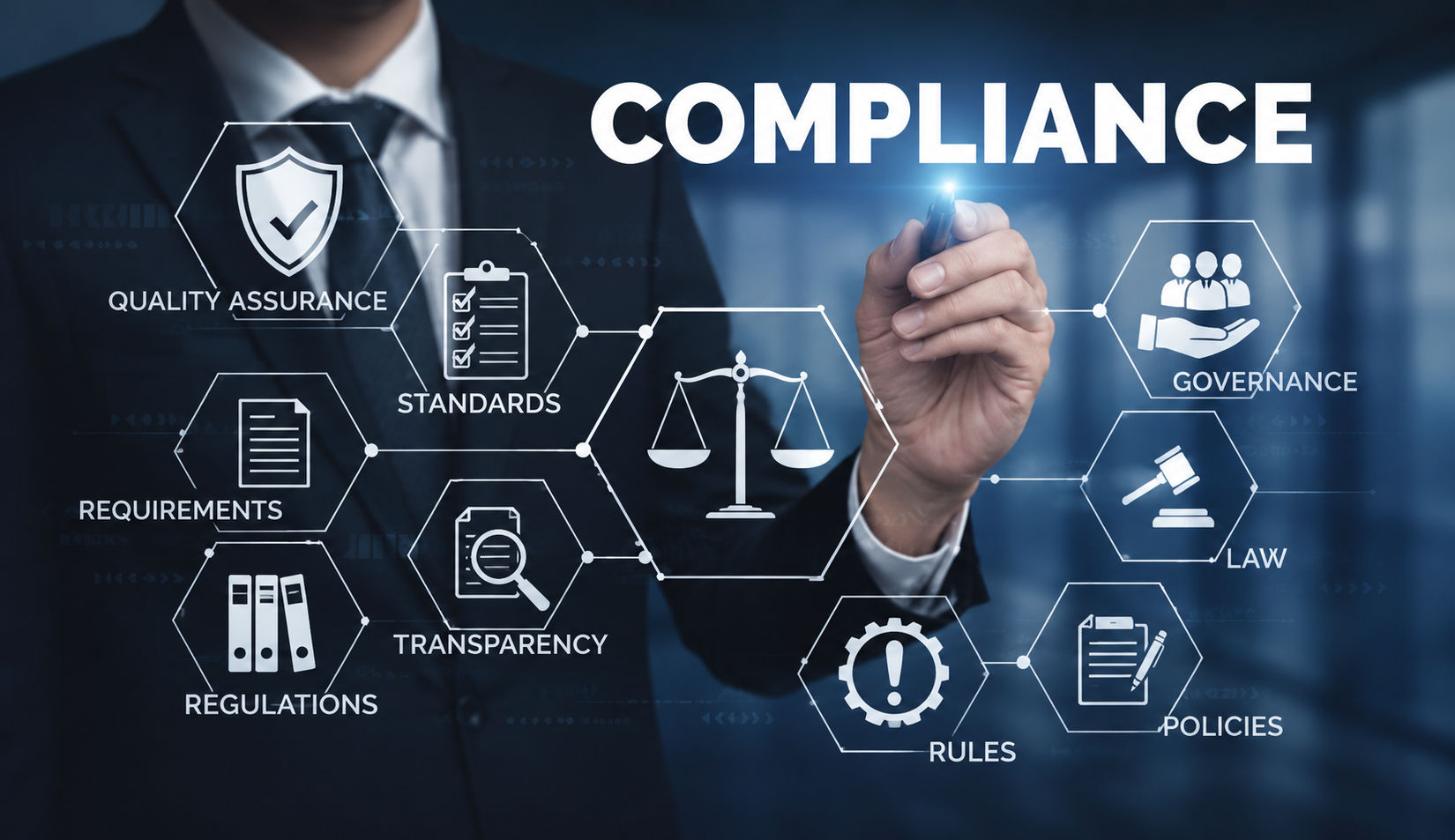
Compliance management is the process organizations use to follow laws, regulations, policies, and industry standards. It helps businesses reduce risks, avoid penalties, and maintain ethical operations. Companies across industries rely on compliance management to ensure employees, systems, and business practices align with legal and internal requirements.
A robust Compliance Management System (CMS) streamlines this process by automating essential controls and facilitating regular audits. Furthermore, it ensures that employees are properly trained to uphold these standards, creating a resilient culture of accountability that supports long-term business integrity and stability.
Every organization operates under specific laws and regulations. These may relate to:
Free Courses
Compliance management ensures organizations follow legal, regulatory, and internal standards while reducing risks and protecting reputation. These elements create a structured framework that supports credibility and operational efficiency. Its core components include:
Management Courses to upskill
Explore Management Courses for Career Progression
IIIT-B & IIM, Udaipur
Chief Technology Officer & AI Leadership ProgrammeOrganizations may adopt different forms of compliance depending on their industry and priorities:
While all businesses benefit from oversight, certain industries operate under heavy regulatory scrutiny due to significant legal and operational risks.
Also Read: GDPR Compliance and Why You Should Know About it as a Marketer?
Compliance management transcends mere "rule-following" to avoid fines; it serves as the foundation for an ethical corporate culture. When an organization prioritizes integrity, it reaps several long-term benefits:
Compliance management provides a structured approach that helps organizations monitor risks, meet legal standards, and maintain credibility.
The first step is to understand all applicable laws, regulations, and internal policies. Since compliance requirements evolve, businesses must stay updated regularly.
Organizations must identify requirements related to:
Risk assessment helps organizations identify areas where non-compliance may occur. This step ensures high-risk areas are prioritized. Common risk areas include:
Organizations establish policies to guide employee behavior and operational processes. Policies that are easy to understand and implement make compliance more effective.
Strong policies should be:
Training ensures employees understand company policies and legal responsibilities. Regular training reduces the risk of accidental violations.
Training programs often cover:
Continuous monitoring helps organizations detect problems early. Audits strengthen controls and reduce future risks
Methods include:
Employees should have safe ways to report compliance concerns. Corrective actions resolve issues quickly and prevent recurrence. Effective systems include:
Compliance management is ongoing. Organizations must regularly refine policies and systems. Consistent monitoring and adaptation ensure long-term compliance success. Continuous improvement involves:
Also Read: AI Compliance Manager job description
Compliance management offers long-term advantages for businesses across industries. It helps organizations stay legally compliant while improving transparency, operational control, and stakeholder trust.
One of the main advantages of compliance management is lowering business risk.
Organizations that follow regulations consistently can avoid:
Businesses with strong compliance practices are often viewed as more trustworthy by customers, investors, and business partners.
Also Read: Compliance Officer Job Description: Salary, Top Companies, and Future
A positive reputation can improve customer loyalty and attract future business opportunities.
Compliance Practice |
Business Impact |
| Ethical business conduct | Builds public confidence |
| Data privacy measures | Strengthens customer trust |
| Transparent reporting | Improves credibility |
| Workplace safety standards | Enhances employee confidence |
Compliance management helps streamline internal operations and improve accountability across teams.
Organizations often benefit from:
Employees perform more responsibly when expectations and policies are clearly defined.
Compliance management encourages:
As data privacy regulations continue to evolve, businesses must take stronger steps to secure sensitive information. This is especially important for organizations handling customer, employee, or financial information.
Compliance management helps reduce risks associated with:
Customers prefer companies that operate ethically and handle data responsibly. Strong compliance management supports businesses in:
While compliance management offers many benefits, organizations may also face several implementation challenges.
Businesses need continuous monitoring, regular updates, and leadership support to manage these challenges effectively. Common Compliance Challenges:
Also Read: Top 10 Risk Management Strategies You Need to Follow for Success!
Compliance management helps organizations follow laws, regulations, and internal policies while reducing risks and protecting reputation. It improves accountability, operational efficiency, customer trust, and ethical business practices.
The ongoing process of identifying, monitoring, and adhering to legal, regulatory, and internal standards to mitigate risks, avoid penalties, and protecting reputation is essential for long-term business stability and success.
Organizations that invest in strong compliance management systems can better manage risks, improve workplace culture, and maintain stronger relationships with customers, employees, and stakeholders.
Compliance management is the process businesses use to follow laws, regulations, and internal company policies. It helps organizations reduce risks, avoid penalties, and ensure employees and operations follow legal and ethical standards.
Compliance management protects businesses from legal issues, financial penalties, and reputational damage. It also improves accountability, builds customer trust, and helps organizations maintain ethical and transparent business operations.
The key elements include policies, risk assessments, employee training, audits, monitoring systems, and corrective actions. Together, these components help organizations identify and manage compliance-related risks effectively.
Industries such as healthcare, banking, finance, technology, manufacturing, and retail require strong compliance management because they handle sensitive data, financial transactions, or safety regulations that must follow strict legal standards.
Compliance management helps organizations identify legal and operational risks early. Regular monitoring, audits, and employee training reduce the chances of violations, lawsuits, penalties, and operational disruptions.
Employee training helps staff understand company policies, ethical responsibilities, and legal requirements. Well-trained employees are less likely to violate regulations or make compliance-related mistakes during daily operations.
Businesses should review compliance policies regularly, especially when regulations change or new risks emerge. Frequent reviews help organizations stay updated and ensure policies remain effective and legally accurate.
Common challenges include changing regulations, employee resistance, implementation costs, and managing global compliance requirements. Organizations need continuous monitoring and strong leadership support to overcome these challenges effectively.
Technology helps automate monitoring, reporting, audits, and risk tracking. Compliance software improves efficiency, reduces human errors, and helps organizations respond faster to regulatory changes and compliance issues.
Non-compliance can result in legal penalties, financial losses, damaged reputation, customer distrust, and operational disruptions. In serious cases, businesses may face lawsuits or government investigations.
Examples include employee ethics training, cybersecurity policies, workplace safety programs, internal audits, financial reporting controls, and data privacy protection measures. These practices help businesses maintain legal and ethical standards.
1008 articles published
We are an online education platform providing industry-relevant programs for professionals, designed and delivered in collaboration with world-class faculty and businesses. Merging the latest technolo...
Get Free Consultation
By submitting, I accept the T&C and
Privacy Policy
Top Resources
Certification
3 Months
Certification
6 Months
O.P. Jindal Global University
Masters in International Accounting and Finance (Accredited by ACCA, UK)Master's Degree
12 Months