What is Situational Leadership? Theory, Examples, and Benefits
By Faheem Ahmad
Updated on May 07, 2026 | 9 min read | 1.92K+ views
Share:

All courses
Certifications
More
By Faheem Ahmad
Updated on May 07, 2026 | 9 min read | 1.92K+ views
Share:
Table of Contents
Situational leadership is a flexible leadership approach where managers change their style based on an employee’s skill level, confidence, and ability to handle a task. Leaders may choose to direct, coach, support, or delegate depending on what the situation requires.
Developed by Paul Hersey and Ken Blanchard, this model focuses on adapting leadership methods to meet the changing needs of individuals and teams instead of following one fixed management style.
In this guide, you will learn what situational leadership means, how the situational leadership model works, the four situational leadership styles, real workplace examples, advantages, disadvantages, and practical ways to apply this leadership method successfully.
Looking to apply workplace efficiency concepts like situational leadership in real business settings? Explore upGrad’s management programs to build practical leadership, operations, and process improvement skills.
Popular Management Programs
Situational leadership is a management theory developed by Paul Hersey and Ken Blanchard in 1969. The idea behind the model is straightforward. There is no single leadership style that works perfectly in every situation. Effective leaders adjust their behavior depending on employee capability and workplace conditions.
The situational leadership model focuses on two major areas:
Some employees may need detailed instructions and constant supervision. Others may only need occasional guidance and trust. Situational leadership helps managers identify the right balance.
The foundation of situational leadership is adaptability. Leaders must observe employees carefully and decide how much direction or support they need at a specific moment.
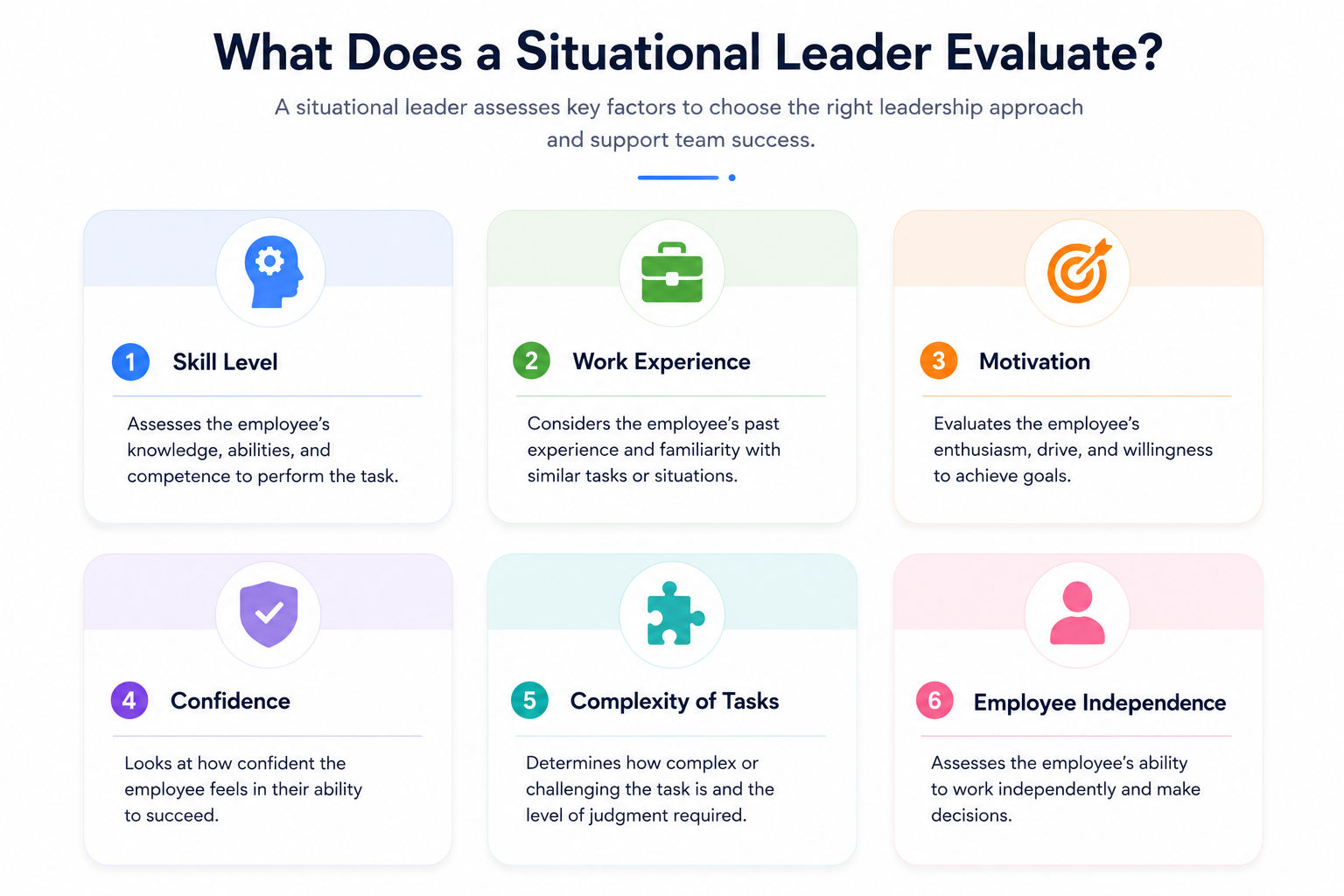
Based on these factors, the leader changes their leadership style.
Every employee learns differently. A newly hired employee may require step-by-step instructions, while an experienced professional may prefer freedom and autonomy.
Situational leadership allows managers to respond to these differences effectively.
Also Read: Techniques of Decision-Making: 15+ Tools & Methods for Success in 2026
Free Courses
Situational leadership focuses heavily on flexibility and employee-centered management.
Also Read: Top Skills Required for Leadership & Management in 2025
Management Courses to upskill
Explore Management Courses for Career Progression
IIIT-B & IIM, Udaipur
Chief Technology Officer & AI Leadership ProgrammeThe situational leadership model includes four leadership styles. Each style works best for employees at different development levels. Leaders must understand when and how to use each approach.
The directing style is used for employees who are new, inexperienced, or unfamiliar with a task. In this stage, employees may be enthusiastic but still lack the required skills.
Leaders using the directing style:
Communication is usually one-way because employees need structure and clarity.
A customer service manager training a newly hired executive may explain every process step, monitor calls closely, and provide detailed instructions daily.
The coaching style combines direction with emotional support. Employees may have basic knowledge but still need encouragement and guidance.
In this leadership style, managers:
Unlike the directing style, communication becomes more collaborative.
A sales manager helping a junior executive improve negotiation skills while encouraging independent problem-solving is using situational leadership through coaching.
The supporting style works best for employees who are capable but may lack confidence, motivation, or engagement.
At this stage, leaders reduce direct supervision and focus more on emotional support and collaboration.
Managers using the supporting style:
A project manager allowing experienced designers to decide workflows while remaining available for guidance demonstrates the supporting style.
The delegating style is used when employees are highly skilled, confident, and capable of working independently.
In this stage, leaders trust employees to manage responsibilities with minimal supervision.
Leaders using the delegating style:
An experienced marketing strategist independently managing campaigns with minimal manager involvement is an example of the delegating style.
Also Read: An Introduction to Principles of Management
Understanding situational leadership is important, but applying it correctly matters even more. Effective leaders must continuously observe employees, communicate clearly, and adjust their leadership approach when needed.
The first step in situational leadership is understanding employee readiness.
Leaders should evaluate:
Once employee development levels are identified, leaders can choose the most suitable situational leadership style.
| Employee Condition | Recommended Leadership Style |
| Low skill but motivated | Directing |
| Learning and developing | Coaching |
| Skilled but hesitant | Supporting |
| Highly capable and confident | Delegating |
Strong communication is essential for successful situational leadership.
Leaders should:
Situational leadership is not a one-time process. Employees grow and change over time.
Managers should regularly track:
One major goal of situational leadership is employee development.
Leaders should gradually reduce supervision as employees gain competence and confidence. This helps employees become more independent and accountable.
Do Read: Best Business Management Courses in India [2026]
The situational leadership theory was developed by Paul Hersey and Ken Blanchard. The model explains that there is no single leadership style that works in every situation. Instead, leaders should adjust their approach based on employee skills, confidence, and experience.
The Hersey Blanchard situational leadership model focuses on two key areas:
According to Hersey and Blanchard's situational leadership theory, employees need different levels of guidance at different stages of development. New employees may require close supervision, while experienced employees often perform better with greater independence.
The Hersey and Blanchard situational leadership framework includes four leadership styles:
Leadership Style |
Best For |
| Directing | Inexperienced employees |
| Coaching | Employees learning new skills |
| Supporting | Skilled employees needing motivation |
| Delegating | Highly experienced employees |
Today, hersey and blanchard situational leadership is widely used in modern organizations because it improves flexibility, employee development, communication, and overall team performance.
Also Read: SWOT Analysis: Meaning, Examples, and Complete Guide (2026)
| Situational Leadership | Traditional Leadership |
| Flexible leadership approach | Fixed management style |
| Changes based on employee needs | Same approach for everyone |
| Encourages adaptability | Follows rigid structure |
| Employee-centered | Leader-centered |
| Supports employee growth | Focuses mainly on control |
Modern organizations prefer situational leadership because workplaces today require flexibility, collaboration, and continuous learning.
Situational leadership offers several benefits for organizations and employees. At the same time, it also comes with a few challenges that leaders should understand before applying the model.
Situational leadership is a flexible leadership approach where managers adapt their style based on employee needs and work situations. Instead of using one fixed method, leaders adjust how much guidance and support they provide as employees grow.
By using directing, coaching, supporting, and delegating styles, organizations can improve communication, team performance, and employee development. As workplaces become more dynamic, leaders who adapt effectively are better equipped to build strong teams, boost engagement, and achieve long‑term success.
Ready to start your journey? Book a free consultation with upGrad today to find the best path for your career.
Yes, situational leadership works well in remote and hybrid teams because managers can adjust communication, supervision, and support levels based on employee experience and work style. This flexibility reflects the core idea behind the situational approach to leadership, where leaders adapt according to team needs and work conditions.
Situational leadership is highly effective for small businesses because teams often handle multiple responsibilities and changing priorities. Flexible leadership helps managers respond quickly to employee needs, operational challenges, and growth opportunities.
Situational leadership is widely used in industries like IT, healthcare, education, consulting, finance, retail, manufacturing, and startups. These industries require managers to work with employees having different skill levels, responsibilities, and learning needs.
Situational leadership improves communication by encouraging leaders to provide feedback, guidance, and support based on employee requirements. This management flexibility is a key part of what is situational leadership, as it helps create clearer expectations and stronger workplace relationships.
Yes, employees are more likely to stay in organizations where managers understand their needs and provide appropriate support. Situational leadership helps improve employee satisfaction, engagement, motivation, and long-term retention.
Common mistakes include misjudging employee skill levels, using the wrong leadership style, providing too much supervision, or failing to adapt when employee needs change. Effective leadership requires continuous observation, communication, and flexibility.
Formal training is not always necessary, but leadership development programs can help managers better understand employee behavior, communication styles, and decision-making techniques. Many organizations also introduce managers to the situational leadership theory to improve leadership effectiveness.
Situational leadership encourages collaboration, flexibility, and employee participation, which creates an environment where teams feel comfortable sharing ideas and experimenting with new solutions. Supportive leadership often improves creativity and problem-solving across departments.
Yes, situational leadership is especially useful during organizational change because leaders can adjust their management style depending on how employees respond to uncertainty, pressure, or new responsibilities. This adaptability is one reason why the hersey and blanchard situational leadership framework remains popular in modern workplaces.
Fresh managers can successfully apply situational leadership if they focus on communication, observation, and employee support. Understanding team strengths and adapting leadership styles gradually improves management effectiveness and confidence.
Situational leadership is considered modern because it supports flexibility, employee development, collaboration, and adaptability, which are essential in today’s fast-changing workplaces. Concepts from the hersey blanchard situational leadership model and hersey and blanchard's situational leadership theory continue to influence modern leadership training and people management practices.
79 articles published
Faheem Ahmad is an Associate Content Writer with a specialized background in MBA (Marketing & Operations). With a professional journey spanning around a year, Faheem has quickly carved a niche in the ...
Get Free Consultation
By submitting, I accept the T&C and
Privacy Policy
Top Resources
Certification
3 Months
Certification
6 Months
O.P. Jindal Global University
Masters in International Accounting and Finance (Accredited by ACCA, UK)Master's Degree
12 Months