Servant Leadership
By upGrad
Updated on May 11, 2026 | 9 min read | 2.36K+ views
Share:

All courses
Certifications
More
By upGrad
Updated on May 11, 2026 | 9 min read | 2.36K+ views
Share:
Table of Contents
Servant leadership is a philosophy where leaders prioritize serving their employees, customers, and community over personal power or profit. Rather than seeking authority, servant leaders focus on the growth, well-being, and autonomy of those around them.
Coined by Robert K. Greenleaf in 1970, this approach challenges the traditional top-down hierarchy. Instead of commanding from above, servant leaders empower their teams to become more capable, confident, and self-sufficient fostering a healthier and more collaborative workplace.
This blog explains the meaning of servant leadership, its core principles, benefits, challenges, examples, and practical ways to apply it at work. You will also learn why many modern organizations prefer this leadership approach and how it improves employee engagement, team culture, and long-term business success.
Explore Management Courses from upGrad to develop essential servant leadership skills, cultivate empathy, active listening, and humility, empower your team's growth and well-being, foster trust and collaboration across all organizational levels, and build the people-first mindset needed to lead with purpose, integrity, and lasting impact.
Popular Management Programs
Servant leadership is a leadership style where leaders focus on helping people grow before focusing on authority, control, or personal success. Instead of leading through fear or hierarchy, servant leaders support employees, customers, and communities. The goal is to create trust, improve collaboration, and help people perform their best.
Unlike traditional top-down leadership models that emphasize control and hierarchical decision-making, servant leadership champions collaboration, empathy, and mutual trust shifting the focus from managing people to genuinely uplifting them.
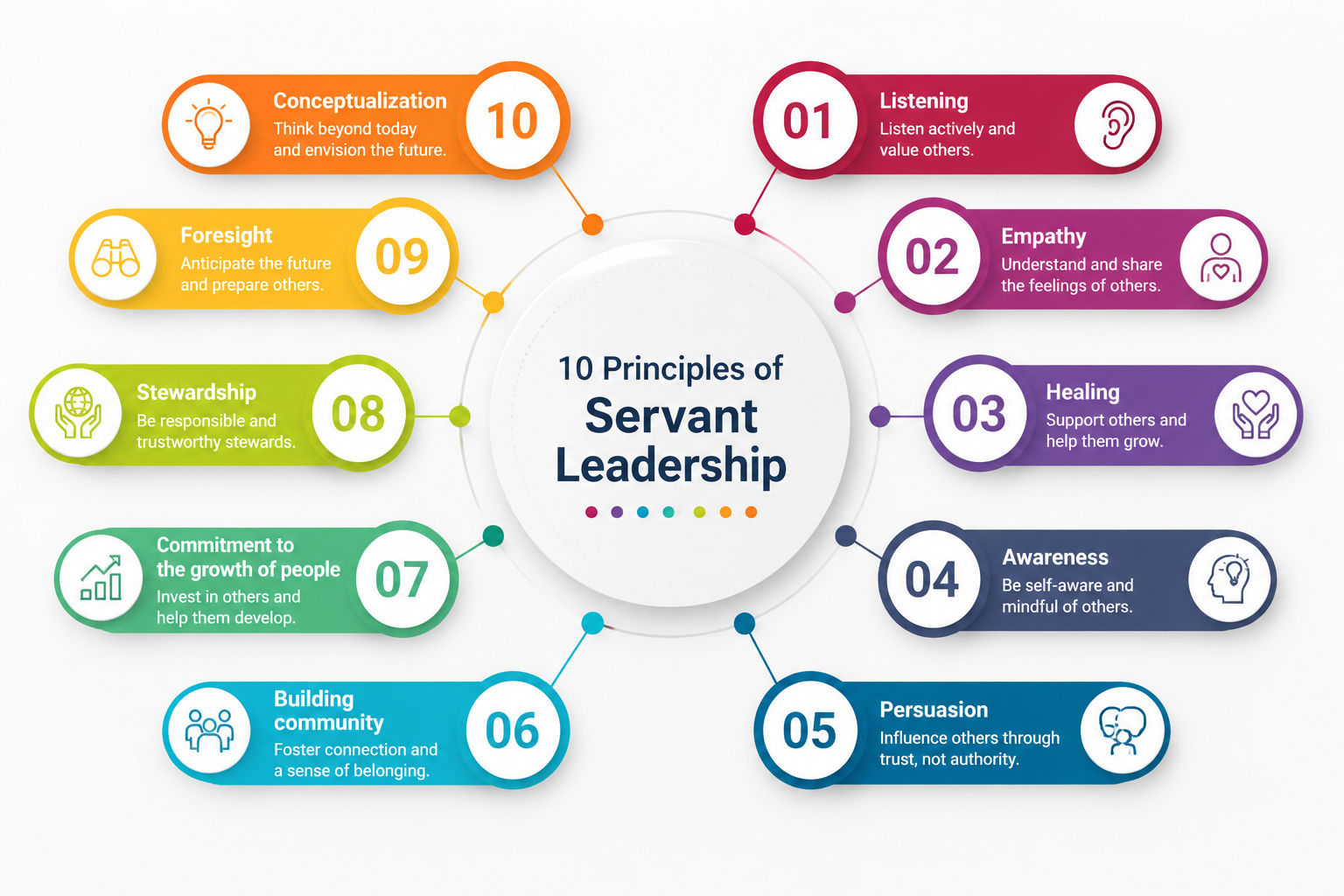
Empathy allows servant leaders to understand employee emotions, challenges, and perspectives. By showing genuine care and compassion, leaders build trust and stronger workplace relationships. Employees feel valued, supported, and motivated, which improves teamwork, communication, and overall job satisfaction while creating a positive and inclusive work culture.
Active listening is a key trait of servant leadership. Leaders carefully consider employee feedback, ideas, and concerns before making decisions. This approach encourages open communication, boosts employee confidence, and creates a collaborative environment where team members feel respected, heard, and more engaged in achieving organizational goals.
Stewardship in servant leadership means taking responsibility for both organizational success and employee well-being. Leaders focus on ethical decision-making, accountability, and long-term sustainability. By prioritizing the interests of the team and organization, servant leaders create trust, encourage loyalty, and ensure a supportive and productive work environment.
Self-awareness helps servant leaders understand their strengths, weaknesses, behaviors, and impact on others. Leaders who practice self-awareness can improve communication, manage emotions effectively, and make balanced decisions. This quality also encourages personal growth, strengthens leadership effectiveness, and helps build healthier workplace relationships and team dynamics.
Servant leaders focus on creating a sense of community and belonging within the workplace. They encourage teamwork, collaboration, and mutual respect among employees. Strong workplace relationships improve morale, increase employee engagement, and foster a supportive culture where individuals work together toward shared organizational success and long-term growth.
A growth mindset in servant leadership emphasizes continuous learning and employee development. Leaders support training, mentorship, and skill enhancement opportunities to help employees grow professionally and personally. This commitment to development boosts employee confidence, improves performance, and creates a motivated workforce prepared to adapt to future challenges.
Also Read: Scrum Master Roles and Responsibilities: The Secret to Agile Success!
Free Courses
Modern workplaces are evolving fast, and employees now expect more than just a paycheck. They seek respectful leadership, meaningful work, and genuine support. Servant leadership directly meets these expectations by creating environments where people feel valued, heard, and empowered to thrive personally and professionally.
What Employees Expect Today:
Where Servant Leadership Works Best:
Key Benefits Organizations Experience:
Management Courses to upskill
Explore Management Courses for Career Progression
IIIT-B & IIM, Udaipur
Chief Technology Officer & AI Leadership ProgrammeServant leadership flips the traditional power dynamic by prioritizing the needs of the team over the leader's ego. This philosophy fosters a culture of mutual respect and long-term success, transforming the workplace into a supportive community where individual growth directly drives organizational excellence and sustainable, ethical impact.
Also Read: Leadership Styles Cheat Sheet: When to Use Transformational, Servant, or Authoritative Leadership
Implementing a servant leadership model transforms organizational dynamics by shifting the focus from top-down control to bottom-up support. This approach cultivates a high-trust environment where employees feel valued, leading to enhanced loyalty, superior performance, and a resilient corporate culture that thrives on collaboration and ethical excellence across all levels.
Servant leadership is not exclusive to CEOs or senior executives. Professionals at every level from managers to team leads can embrace its principles. Practicing servant leadership consistently requires intentional habits, genuine empathy, and a daily commitment to putting people's needs before personal agendas.
Listening is the foundation of servant leadership. Leaders should avoid interrupting employees, ask thoughtful questions, encourage open feedback, and always respond respectfully. Employees naturally gravitate toward leaders who genuinely value their voices and opinions.
Servant leaders are deeply invested in helping others reach their full potential. Supporting growth is not occasional, it is a core leadership responsibility practiced through consistent, structured effort.
Method |
Purpose |
| Mentorship | Career guidance |
| Training programs | Skill development |
| Regular feedback | Performance improvement |
| Goal setting | Career planning |
| Learning opportunities | Professional growth |
Trust is the cornerstone of effective servant leadership. Leaders who communicate honestly, admit mistakes openly, share updates regularly, and follow through on commitments to create stronger, more resilient teams.
Servant leaders deliberately foster team-oriented environments where every voice matters. By promoting cross-functional teamwork, inclusive discussions, and collective problem-solving, they drive stronger employee engagement and fuel workplace innovation.
Empathy is not a one-time gesture it is a consistent leadership behavior. Simple daily actions such as checking on employee well-being, acknowledging workload pressures, supporting flexible arrangements, and recognizing personal challenges make servant leadership truly impactful.
Despite its many strengths, servant leadership comes with real challenges leaders must navigate thoughtfully. Balancing empathy with accountability remains the most critical ongoing responsibility.
Challenge |
Explanation |
| Slow decision-making | Collaboration may take more time |
| Misuse of kindness | Some employees may take advantage |
| Balancing authority | Leaders still need accountability |
| Organizational resistance | Traditional cultures may resist change |
Becoming an effective servant leader is a continuous journey rooted in authenticity, humility, and consistency. The most impactful servant leaders lead by example every single day.
Also Read: 10 Most Popular Type of Management Style: Understanding and Choosing the Right Approach
Servant leadership is a people-focused leadership style that prioritizes employee growth, trust, collaboration, and long-term success. Instead of focusing only on authority or profits, servant leaders support employees, customers, and communities.
The philosophy where a leader's primary goal is to serve employees, customers, and the community, prioritizing their growth and well-being over personal power or profit helps organizations create healthier workplace cultures and stronger teams.
As workplaces continue to evolve, servant leadership is becoming increasingly important. Organizations that invest in supportive and empathetic leadership often experience better employee engagement, higher retention, stronger customer relationships, and sustainable growth.
Leaders who practice servant leadership create environments where people feel valued, motivated, and empowered to succeed.
Servant leadership is a leadership style where leaders focus on helping and supporting employees first. Instead of controlling people through authority, servant leaders guide teams through empathy, trust, and collaboration. The goal is to help employees grow while improving organizational success.
The concept of servant leadership was introduced by Robert K. Greenleaf in 1970. He believed that great leaders begin by serving others. His ideas changed how many organizations think about leadership, employee well-being, and workplace culture.
Servant leadership helps organizations build trust, improve communication, and support employee growth. Modern employees expect supportive leadership and healthy work environments. This approach improves engagement, teamwork, innovation, and employee retention across different industries.
Key characteristics include empathy, listening, self-awareness, stewardship, ethical behavior, and commitment to employee development. Servant leaders focus on helping people succeed rather than using authority for personal power or recognition.
Employees perform better when they feel respected and supported. Servant leadership creates trust, encourages collaboration, and provides opportunities for growth. This increases motivation, confidence, and overall workplace productivity over time.
Traditional leadership often focuses on hierarchy and authority, while servant leadership focuses on people and collaboration. Servant leaders prioritize employee well-being and long-term growth instead of only focusing on short-term business outcomes.
Yes, servant leadership can work effectively in both small and large organizations. Many global companies use servant leadership principles to improve employee engagement, workplace culture, and customer satisfaction while maintaining strong business performance.
Some challenges include slower decision-making, balancing empathy with accountability, and resistance from traditional workplace cultures. Leaders must ensure they remain supportive while still maintaining performance standards and organizational discipline.
Managers can practice servant leadership by listening actively, supporting employee growth, encouraging teamwork, and communicating honestly. Small actions like regular feedback, mentorship, and empathy can significantly improve team relationships and morale.
Yes, servant leadership works well for remote teams because it encourages trust, communication, and employee support. Remote employees often need empathetic leadership to stay connected, motivated, and engaged in virtual work environments.
Industries that rely heavily on teamwork and customer relationships benefit greatly from servant leadership. This includes healthcare, education, technology, hospitality, and customer service sectors where employee engagement directly affects performance and customer satisfaction.
972 articles published
We are an online education platform providing industry-relevant programs for professionals, designed and delivered in collaboration with world-class faculty and businesses. Merging the latest technolo...
Get Free Consultation
By submitting, I accept the T&C and
Privacy Policy
Top Resources
Certification
3 Months
Certification
6 Months
O.P. Jindal Global University
Masters in International Accounting and Finance (Accredited by ACCA, UK)Master's Degree
12 Months