Change Management: Meaning, Process & Models (2026)
By Faheem Ahmad
Updated on May 05, 2026 | 9 min read | 2.41K+ views
Share:

All courses
Certifications
More
By Faheem Ahmad
Updated on May 05, 2026 | 9 min read | 2.41K+ views
Share:
Table of Contents
Change management is a structured way of preparing, supporting, and guiding individuals and organizations through changes, such as new technology or restructuring, so the transition is smooth and disruption is kept low. It mainly focuses on the people side of change, making sure employees are aligned, involved, and have the tools they need to adapt.
It helps organizations handle change in a smooth and structured way, without confusion or resistance.
In this guide, you’ll learn the change management definition, process, models, and real examples, explained in a simple and practical way.
Looking to apply workplace efficiency concepts like change management in real business settings? Explore upGrad’s management programs to build practical leadership, operations, and process improvement skills.
Popular Management Programs
Change management is a structured approach used to plan, implement, and manage change within an organization.
If you’re wondering what is change management, it simply means helping people and systems move from the current state to a new and better state.
The change management definition focuses on:
Change sounds simple, but in reality, people often resist it. That’s why proper change management is needed.
Without a clear approach, even good changes can fail.
Also Read: What is Project Management Process: Phases and Life Cycle
Free Courses
Different organizational situations require different approaches to managing change.
Organizational change management deals with large‑scale changes across the entire organization. This includes restructuring departments, mergers and acquisitions, leadership changes, or shifts in company culture. The main goal is to ensure that employees understand the change, accept it, and continue working effectively during the transition.
Technological change focuses on introducing new technology or upgrading existing systems, such as new software, automation tools, or IT platforms. Since technology can disrupt daily work, this type of change management emphasizes training, technical support, and helping employees feel comfortable using new tools.
Strategic change occurs when an organization changes its long‑term goals or direction. Examples include entering new markets, launching new products, or changing the business model. This type of change usually involves top management and requires clear communication so employees understand how the new strategy affects the organization’s future.
People‑centric change focuses on employee behavior, attitudes, and skills. It involves managing emotional responses to change, providing training, encouraging employee engagement, and building a positive mindset. This type is crucial because successful change depends largely on how well people adapt and accept new ways of working.
Also Read: What is Agile Project Management? Everything You Need to Know
Management Courses to upskill
Explore Management Courses for Career Progression
IIIT-B & IIM, Udaipur
Chief Technology Officer & AI Leadership ProgrammeThe change management process helps organizations introduce changes smoothly, reduce resistance, and achieve better results.
Step 1: Identify the Need for Change
Begin by clearly understanding what needs to change and why. This could be due to market competition, new technology, customer demands, or internal problems like low efficiency. Identifying the reason helps justify the change and gain leadership support.
Step 2: Plan the Change
Create a structured plan that outlines what actions will be taken. Set clear goals, define roles and responsibilities, estimate timelines, and allocate resources. A good plan reduces risks and prepares the organization for challenges.
Step 3: Communicate the Change
Inform employees about what is changing, why it matters, and how it affects them. Transparent and consistent communication helps reduce fear, manage expectations, and encourage employee involvement.
Step 4: Implement the Change
Execute the plan by putting new processes, systems, or behaviors into action. Provide training, tools, and ongoing support to help employees adapt and perform confidently during the transition.
Step 5: Monitor and Review
After implementation, regularly track progress and outcomes. Gather feedback, measure results against goals, and make adjustments if needed. This step ensures the change delivers long‑term benefits and becomes part of normal operations.
Also Read: 16 Top Time Management Techniques And Tools: Features And Benefits
Using proven models makes change management more effective.
Here’s a deeper look at these popular frameworks:
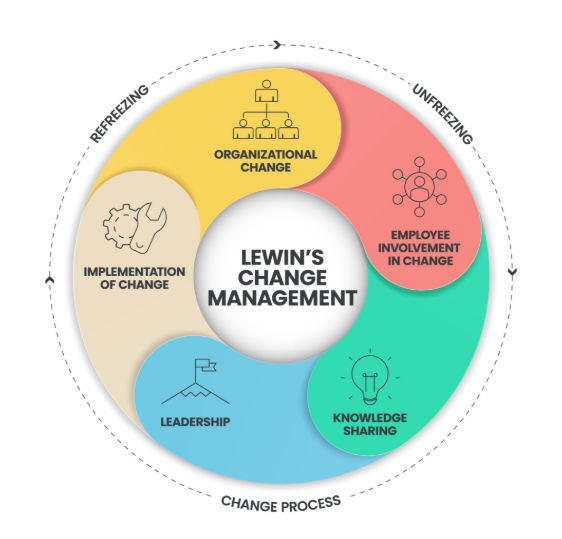
Kurt Lewin’s change management model is one of the simplest ways to visualize what is change management. Imagine you have a cube of ice, but you want a cone shape.
Developed by Harvard Professor John Kotter, this is a heavy-duty change management process often used for big, top-down corporate overhauls. It focuses on building massive momentum so the change doesn't stall out.
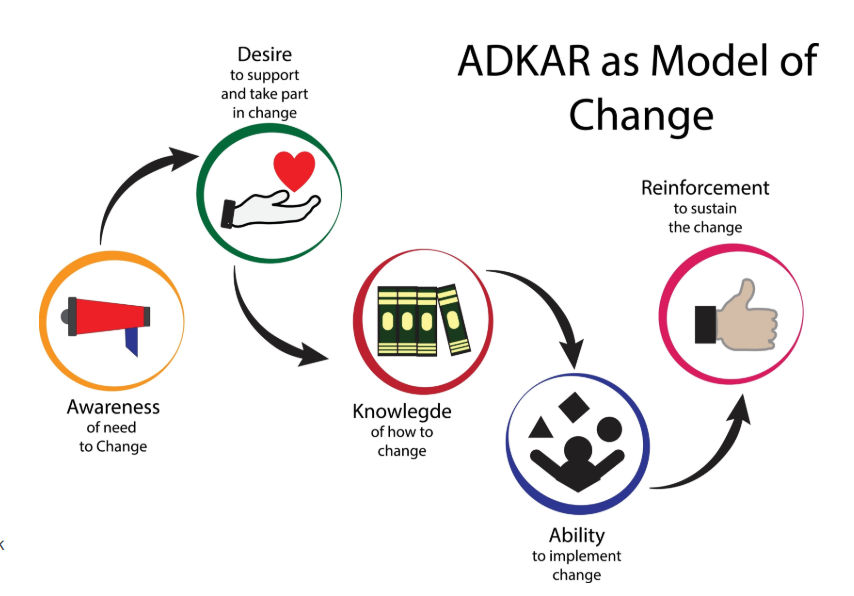
Created by Prosci, the ADKAR model is unique because it focuses entirely on the individual. It recognizes that organizational change management only works if every single person goes through their own internal transition.
Also Read: Top 10 Management Skills Required to Become a Successful Manager
Looking at real-life situations makes it easier to understand how change management actually works. The difference between success and failure often comes down to how well the change is handled, not just what the change is.
A company decides to introduce a new software system to improve efficiency. Instead of rushing, they follow a proper change management process. They first explain why the change is needed, how it will help, and what employees can expect.
Training sessions are arranged, and support is available during the transition. Employees get time to learn and adjust, so they don’t feel overwhelmed.
Because communication is clear and support is strong, employees accept the change more easily. Over time, work becomes faster, errors reduce, and overall productivity improves.
Now imagine another company making a similar change but without proper planning. They suddenly switch to a new system without informing employees or giving any training.
People feel confused and frustrated because they don’t understand how to use the new process. Some resist the change, while others make mistakes due to lack of clarity.
As a result, productivity drops instead of improving. Work slows down, errors increase, and employees lose trust in management.
Also Read: Techniques of Decision-Making: 15+ Tools & Methods for Success in 2026
Effective change management helps organizations handle transitions in a structured and people‑focused way. It ensures that changes are accepted smoothly, business operations remain stable, and employees stay motivated throughout the process.
1. Smooth transition during change
Change management helps ensure changes are implemented in an organized way, reducing confusion and stress for employees during the transition.
2. Better employee engagement
When employees understand the purpose of change and feel involved, they are more motivated and supportive, leading to higher engagement levels.
3. Higher success rate of projects
Proper planning, communication, and monitoring increase the chances that change initiatives and projects will meet their goals successfully.
4. Reduced risks and disruptions
Identifying potential issues early helps minimize operational disruptions, errors, and resistance during change.
5. Improved overall performance
Effective change leads to better processes, improved teamwork, and stronger organizational performance in the long run.
Also Read: Difference Between Quality Control and Quality Assurance
Despite its benefits, change management can be difficult to execute. Organizations often face human, structural, and resource‑related obstacles that can slow down or derail change efforts if not managed carefully.
1. Resistance from employees
Employees may fear losing their jobs, status, or comfort with existing methods, leading to resistance toward change.
2. Poor communication
If changes are not clearly explained, employees may feel confused, anxious, or misinformed, affecting acceptance.
3. Lack of leadership support
Without strong support and commitment from top management, change initiatives may lose direction and credibility.
4. Inadequate planning
Poor planning can cause delays, cost overruns, or failure to meet objectives, making change ineffective.
5. Limited resources
Insufficient budget, time, or skilled personnel can slow down implementation and reduce the effectiveness of change efforts.
Also Read: Project Quality Management: Cost of Quality Concept Explained
Change management is not just about introducing new ideas or systems, it’s about making sure those changes actually work in day-to-day operations. The real focus is on helping people adapt, reducing confusion, and ensuring a smooth transition.
When done properly, it helps organizations stay flexible, improve performance, and handle challenges more confidently. By understanding the change management process, models, and strategies, businesses can manage change in a more structured way and achieve better, long-term results.
Ready to start your journey? Book a free consultation with upGrad today to find the best path for your career.
The key elements include clear communication, strong leadership support, employee involvement, proper planning, and regular monitoring. These parts work together to ensure the change management process runs smoothly and people feel more comfortable accepting new ways of working.
Change management is mainly led by senior leaders and managers, but it’s not just their job. HR teams, project leads, and employees all contribute. Successful organizational change management happens when everyone understands their role and works together.
There’s no fixed timeline. Small changes may take a few weeks, while bigger ones can take months or longer. It depends on complexity, company size, and how well people adapt. Good planning usually helps speed things up a bit.
Key skills include communication, leadership, problem-solving, adaptability, and emotional intelligence. These help in handling people’s reactions and keeping things on track. Understanding basic frameworks like the Kurt Lewin change management model can also make the process more structured.
Success is measured by how well people adopt the change, improvements in performance, and overall feedback. If the goals are achieved and operations run smoothly, it shows the change worked as expected without major disruption.
Resistance to change happens when people feel unsure or uncomfortable about new ways of working. It usually comes from fear, confusion, or habit. Understanding what is change management helps in addressing these concerns more effectively.
You can reduce resistance by communicating clearly, involving employees early, and offering proper training. When people understand the reason behind change and feel supported, they are more likely to accept it without much pushback.
Communication is very important during change. It helps explain what’s happening, why it matters, and what people should expect. Clear messaging reduces confusion and builds trust, making the overall transition smoother for everyone involved.
Yes, it can still fail if execution is weak. Even with a good plan, poor communication or lack of support can cause issues. That’s why both planning and implementation are equally important in any change effort.
No, it’s not a one-time thing. Organizations keep evolving, so change happens regularly. Having a clear change management definition helps teams treat it as an ongoing effort rather than a one-off activity.
Common tools include communication plans, training sessions, feedback systems, and performance tracking methods. Some teams also use structured approaches like Lewin's change management model to guide each stage and keep the process more organized.
79 articles published
Faheem Ahmad is an Associate Content Writer with a specialized background in MBA (Marketing & Operations). With a professional journey spanning around a year, Faheem has quickly carved a niche in the ...
Get Free Consultation
By submitting, I accept the T&C and
Privacy Policy
Top Resources
Certification
3 Months
Certification
6 Months
O.P. Jindal Global University
Masters in International Accounting and Finance (Accredited by ACCA, UK)Master's Degree
12 Months