Native Advertising: Paid Media That Feels Organic
By upGrad
Updated on May 13, 2026 | 9 min read | 2.79K+ views
Share:

All courses
Certifications
More
By upGrad
Updated on May 13, 2026 | 9 min read | 2.79K+ views
Share:
Table of Contents
Native advertising is paid media designed to match the look, feel, and function of the platform it appears on making ads feel like a natural part of the user's experience rather than an interruption.
Unlike traditional banner ads, native formats like sponsored social posts and recommended articles earn higher engagement and far less user resistance, making them one of the most effective tools in modern digital marketing.
For example, when you scroll through Instagram and see a sponsored post that looks like regular posts, that is native advertising. The same applies to promoted articles on news websites or sponsored videos on YouTube.
Navigating organizational change requires more than good intentions; it demands structured frameworks and proven leadership skills. Explore Management Courses to learn how to plan, implement, and sustain successful transitions that stick to.
Understanding native advertising starts with the right foundation. Explore Online Digital Marketing Courses from upGrad can equip you with the strategies to create content that engages, converts, and blends seamlessly.
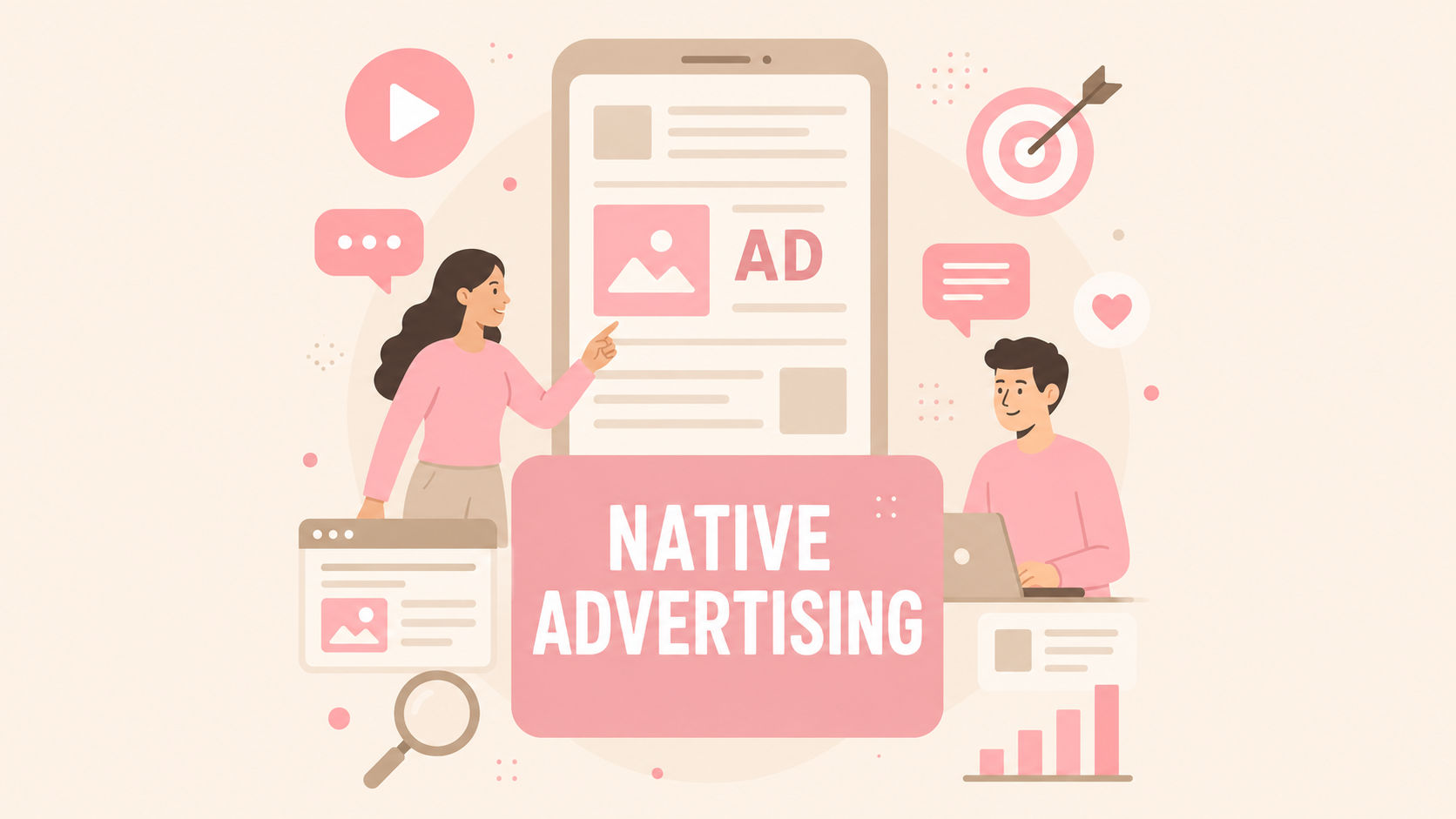
Unlike traditional ads that interrupt browsing, native ads blend naturally into the platform where they appear. Below are the key features that make native advertising effective for brands, publishers, and audiences.
Whether it appears on a news website, social media feed, or mobile app, the ad looks like surrounding content. It is created to match the style, layout, and appearance of the platform where it is displayed. This makes the experience feel more natural and less promotional to users.
One of the biggest strengths of native advertising is that it does not interrupt the user's journey. Unlike pop-ups or autoplay ads, native ads fit smoothly within the browsing experience. Users can engage with the content without feeling distracted, which often leads to better engagement and improved user satisfaction.
Native advertising involves paid partnerships between brands and publishers or platforms. Businesses pay to place their content in strategic positions where they can reach the right audience. Even though the placement is sponsored, the content is designed to feel relevant, useful, and aligned with the platform experience.
Native advertising focuses heavily on valuable and informative content instead of direct promotion. Brands often use articles, videos, guides, or social posts to educate or entertain users. This approach helps build trust and encourages audiences to engage with the content more naturally compared to traditional advertisements.
Most native advertising formats are optimized for mobile devices and apps. Since users spend significant time on smartphones, native ads are designed to fit smaller screens and scrolling behavior. This improves readability, user interaction, and overall campaign performance across mobile platforms.
Also Read: Best Digital Marketing Ads: Top Campaigns That Nailed Online Engagement
Free Courses
Users today ignore many traditional ads. This behavior is known as “banner blindness.” Native advertising solves this problem because the content appears more relevant and less intrusive. Businesses use native advertising to connect with audiences in environments where users are already actively engaged.
Here are a few reasons why businesses use native advertising:
Native advertising appears across a wide range of digital platforms where users regularly consume content.
You can commonly find native advertising on:
Also Read: A 7-Step Guide to Google Advertising
Digital Marketing Courses to upskill
Explore Digital Marketing Courses for Career Progression
MICA Executive Alumni Status
In this process, advertisers develop the message; publishers provide the placement, and users engage with the content through clicks, views, or other actions. The format, style, and tone are designed to match the platform, making the content feel more relevant and engaging for users.
Native advertising usually involves three main participants:
Content plays a central role in the success of native advertising. Instead of using aggressive sales messages, brands focus on creating content that informs, entertains, or solves a problem for the audience. The goal is to provide value first while naturally introducing the brand or product within the experience.
This approach is why native advertising is widely known as a form of paid media; the content is designed to feel relevant and natural rather than overly promotional.
Native advertising content can appear in several formats, including:
Also Read: Creative Marketing Plan Examples That Actually Worked!
One of the biggest advantages of native advertising is its ability to reach highly specific audiences. Brands can deliver content to users who are more likely to engage with their message, making campaigns more relevant and effective.
Native advertising platforms use audience data and behavior insights to improve targeting accuracy. This helps businesses connect with the right users at the right time while reducing unnecessary advertising costs.
Brands can target audiences based on several factors, including:
Businesses measure native advertising performance using metrics like:
Also Read: Digital Marketing Scope in India – The Perfect Career Move
Subscribe to upGrad's Newsletter
Join thousands of learners who receive useful tips
Traditional ads often interrupt users. Native advertising works differently because it aligns with the browsing experience.
Users engage more because:
Native advertising has become a popular marketing strategy because it creates a more natural advertising experience for users. It helps brands connect with audiences without interrupting their browsing journey. However, while native advertising offers many advantages, it also comes with certain challenges that marketers should carefully manage for better campaign performance.
Even though native advertising offers several benefits, it also presents certain limitations that marketers should understand before launching campaigns.
Disclosure Concerns: Native ads should always be labeled clearly. If users cannot easily identify sponsored content, it may create confusion and reduce trust in the brand or publisher.
High Content Quality Requirements: Successful native advertising depends heavily on quality content. Poorly written or irrelevant material can reduce engagement and negatively affect campaign performance.
Time-Intensive Content Creation: Creating platform-specific native advertising content requires research, planning, and creativity. Brands often need to customize content for different platforms, which can increase production time and effort.
Complex Performance Measurement: Tracking the long-term impact of native advertising can sometimes be challenging. Metrics like brand awareness, audience trust, and customer loyalty may take longer to measure accurately.
Many native advertising campaigns fail because they focus too heavily on selling instead of providing value to users. To improve results, brands should avoid these common mistakes:
Transparency is extremely important. Even though native advertising allows ads to blend seamlessly with organic content, users should always know they are viewing sponsored material. When done correctly, native advertising creates value for both brands and audiences.
Ethical native advertising includes:
Native advertising is widely used across different industries because it helps brands connect with audiences in a more natural and engaging way. Educational platforms often benefit the most because users actively engage with informative and skill-based content before making decisions.
Some of the major industries using native advertising include:
Artificial intelligence is changing the way native advertising campaigns are planned, managed, and optimized. AI helps marketers improve targeting, personalize user experiences, and increase campaign efficiency using data-driven insights. Modern AI tools can also determine which native advertising formats perform best for different types of users, helping brands create more effective and personalized campaigns.
AI is transforming native advertising through:
Also Read: Programmatic Advertising: What It Is and How It Actually Works
Native advertising has become an essential part of modern digital marketing. Instead of interrupting users, it creates smoother and more engaging experiences. Businesses use native advertising to improve visibility, build trust, and connect with audiences more naturally.
The biggest strength of native advertising is that it blends into the platform experience while still delivering promotional value. Since it is a form of paid media that matches the look, feel, and function of the platform on which it appears, allowing ads to blend seamlessly with organic content, it often performs better than traditional display ads.
For beginners, the key takeaway is simple: successful native advertising focuses on relevance, quality, transparency, and user value. Brands that prioritize these elements can create campaigns that users actually enjoy engaging with.
The word native refers to the coherence of the content with the other media that appears on the platform. These ads reduce a consumer's ad recognition by blending the ad into the native content of the platform, even if it is labeled as "sponsored" or "branded" content.
Native advertising often performs better because users find it less disruptive. Traditional display ads can feel intrusive, while native ads blend into the platform naturally. Since it is a form of paid media that matches the look, feel, and function of the platform on which it appears, users are more likely to engage with it.
Sponsored content is one type of native advertising, but the two are not exactly the same. Native advertising includes several formats like in-feed ads, search ads, and recommendation widgets. Sponsored articles are simply one popular format used within native campaigns.
Businesses can run native advertising campaigns on social media platforms, search engines, publisher websites, news portals, and video platforms. Popular options include Instagram, Facebook, LinkedIn, Google, YouTube, and content discovery platforms like Taboola and Outbrain.
Most platforms use labels like “Sponsored,” “Promoted,” or “Paid Partnership” to identify native advertising. These disclosures help users understand that the content is promotional while still allowing the ad to blend naturally into the browsing experience.
Yes, native advertising can work very well for small businesses because it allows targeted audiences to reach engaging content. Small brands can create informative blogs, social posts, or videos that connect with users naturally without requiring extremely large advertising budgets.
Native advertising can become expensive if content production quality is poor or targeting is ineffective. Some users may also lose trust if ads are not clearly disclosed. Successful campaigns require good storytelling, transparency, and continuous performance optimization.
AI improves native advertising by helping brands target the right audience, personalize content, and optimize campaign performance. AI tools analyze user behavior and engagement data to improve ad placements and increase conversion opportunities over time.
Industries like education, technology, healthcare, finance, travel, and e-commerce benefit strongly from native advertising. These sectors rely heavily on content-driven marketing, making native formats ideal for educating audiences and building trust gradually.
The ideal campaign length depends on goals, audience behavior, and platform performance. Some native advertising campaigns run for a few weeks, while others continue for months. Long-term campaigns usually perform better for brand awareness and audience engagement.
A successful native advertising strategy focuses on valuable content, platform relevance, proper targeting, and clear disclosure. Since native advertising is designed to blend with organic content, brands should prioritize user experience rather than aggressive promotional messaging.
1011 articles published
We are an online education platform providing industry-relevant programs for professionals, designed and delivered in collaboration with world-class faculty and businesses. Merging the latest technolo...
Get Free Consultation
By submitting, I accept the T&C and
Privacy Policy
Level Up Your Digital Marketing Career Today!
Top Resources
MICA
Advanced Certificate in AI-Powered Digital Marketing & Communication from MICAMICA Executive Alumni Status
Certification
5 Specialisation
Classroom
4 Months
Certification
2 Months