Top 25+ DBMS Project Ideas for Students in 2026 [With Source Code]
By Rohan Vats
Updated on Sep 23, 2026 | 41 min read | 298.96K+ views
Share:

All courses
Certifications
More
By Rohan Vats
Updated on Sep 23, 2026 | 41 min read | 298.96K+ views
Share:
Table of Contents
Quick Overview:
Turn your database knowledge into job-ready skills with upGrad's Data Science Course. Learn SQL, Python, machine learning, and analytics through hands-on projects and expert mentorship.
Popular Data Science Programs
Choosing the right DBMS project depends on your skill level, database knowledge, and the complexity of the system you want to build. The table below compares all the projects covered in this guide to help you find one that matches your learning goals.
| Project | Level | Database | Difficulty |
| Student Database Management System | Beginner | MySQL / SQLite | Easy |
| Cooking Recipe Database | Beginner | MySQL / MongoDB | Easy |
| Task Management Application | Beginner | PostgreSQL / SQLite | Easy |
| Blood Donation Database | Beginner | MySQL / PostgreSQL | Easy |
| Event Ticket Booking System | Beginner | MySQL / PostgreSQL | Easy |
| Library Management System | Beginner | MySQL / SQLite | Easy |
| Restaurant Management System | Beginner | MySQL / SQLite | Easy |
| Carbon Emission Calculator | Beginner | SQLite / MySQL | Easy |
| Inventory Management System | Intermediate | MySQL / PostgreSQL | Medium |
| Electricity Bill Management System | Intermediate | PostgreSQL / Oracle | Medium |
| Railway System Database | Intermediate | PostgreSQL / MySQL | Medium |
| Hotel Management System | Intermediate | MySQL / SQLite | Medium |
| Online Retail Application Database | Intermediate | MySQL / MongoDB | Medium |
| Customer Feedback Management System | Intermediate | MySQL / MariaDB | Medium |
| Employee Management System | Intermediate | PostgreSQL / MySQL | Medium |
| Gym Management System | Intermediate | MySQL / PostgreSQL | Medium |
| Bank Database Management System | Advanced | MySQL / PostgreSQL | High |
| Hospital Data Management System | Advanced | MySQL / PostgreSQL | High |
| Voice-Based Transport Enquiry System | Advanced | PostgreSQL / MySQL | High |
| SMS-Based Remote Server Monitoring System | Advanced | PostgreSQL / MySQL | High |
| Multi-Vendor E-commerce Database Platform | Advanced | MySQL / PostgreSQL | High |
| Finance Management System | Advanced | MySQL / PostgreSQL | High |
| Customer Relationship Management (CRM) System | Advanced | MySQL / MariaDB | High |
| Real-Time Traffic Management System | Advanced | PostgreSQL / MongoDB | High |
| Payroll Management System | Advanced | PostgreSQL / SQL Server | High |
| Blogging Platform | Advanced | MongoDB / MySQL / SQLite | High |
Now you will explore each project in detail with tools and technologies used to make each.
Do read: Database vs Database Management System: Key Differences Explained
Free Courses
Let’s explore these nine real-world DBMS projects that will challenge you and provide valuable experience for your career.
An Inventory Management system helps users keep track of incoming and outgoing stock across various products or categories. Through this project, you built a neat database application that adjusts real-time stock levels.
It’s one of the most practical DBMS projects, allowing you to get hands-on practice structuring product data and handling updates of low stocks.
What Will You Learn?
Suggested Tech Stack & Tools:
Component |
Recommendation |
Why This Matters |
| Backend | Django, Python, or Node.js | Lets you build simple routes that handle stock changes in real time. |
| Database | MySQL/PostgreSQL | Stores product records reliably with easy queries for reporting. |
| Testing | Jest (Node) or PyTest | Checks that your stock updates and alert logic work as expected. |
| Build & Dependency | npm or pip | Helps you install libraries and share your project easily. |
| Version Control | Git | Keeps track of changes and merges in your code. |
| Optional | Docker | Provides a consistent environment to run your app anywhere. |
Key Project Features:
Real-World Use Cases & Impact:
Use Case |
Impact |
| Managing Hostel Canteen Supplies | Prevents shortages by updating stock data in real time |
| Tracking Merchandise for College Events | Provides clarity on which items need reordering |
| Small Shop or Online Store | Cuts down on manual errors and missed updates |
| Student Clubs with Product Sales | Lets your team view current inventory without constant manual checks |
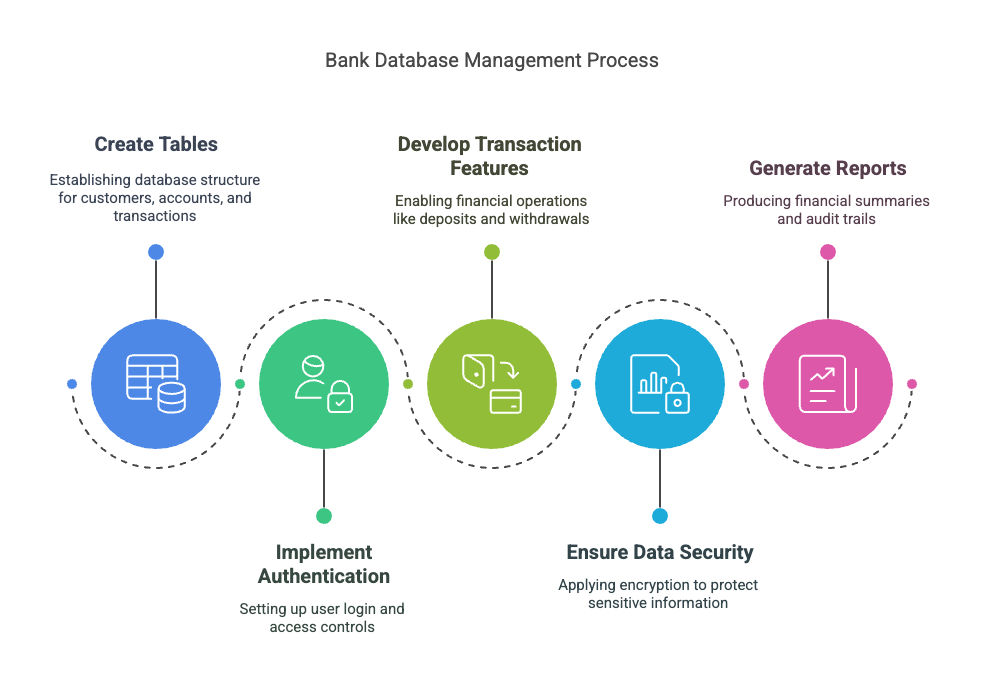
A Bank Database Management system helps users record and access account details, process deposits or withdrawals, and ensure secure money transfers.
By creating this DBMS project, you build a database where each transaction is logged correctly. This helps prevent errors or unauthorized changes. It can be adapted for college clubs managing funds or any setup that requires a protected record of financial actions.
Also Read: 30 Data Science Project Ideas for Beginners in 2026
What Will You Learn?
Suggested Tech Stack & Tools:
Component |
Recommendation |
Why This Matters |
| Backend | Java Spring Boot or Node.js | Offers a stable environment for transaction processing. |
| Database | MySQL or PostgreSQL | Simplifies ACID transactions and ensures consistency in banking operations. |
| Testing | JUnit or Jest | Helps confirm that money transfers, deposits, and withdrawals work correctly. |
| Version Control | Git | Protects your code and lets you revert to a safe state if an update goes wrong. |
| Optional | Docker | Lets you deploy the application consistently across different setups. |
Key Project Features:
Real-World Use Cases & Impact:
Use Case |
Impact |
| Managing Student Group Savings | Keeps transparent records when multiple users deposit money |
| Tracking Scholarship Funds | Ensures accurate allocations and prevents mix-ups |
| Small Credit Unions | Minimizes errors in manual bookkeeping |
| Personal Finance Club | Encourages accountability by logging every transaction |
Also Read: What is a Data Model in DBMS? What is RDBMS?
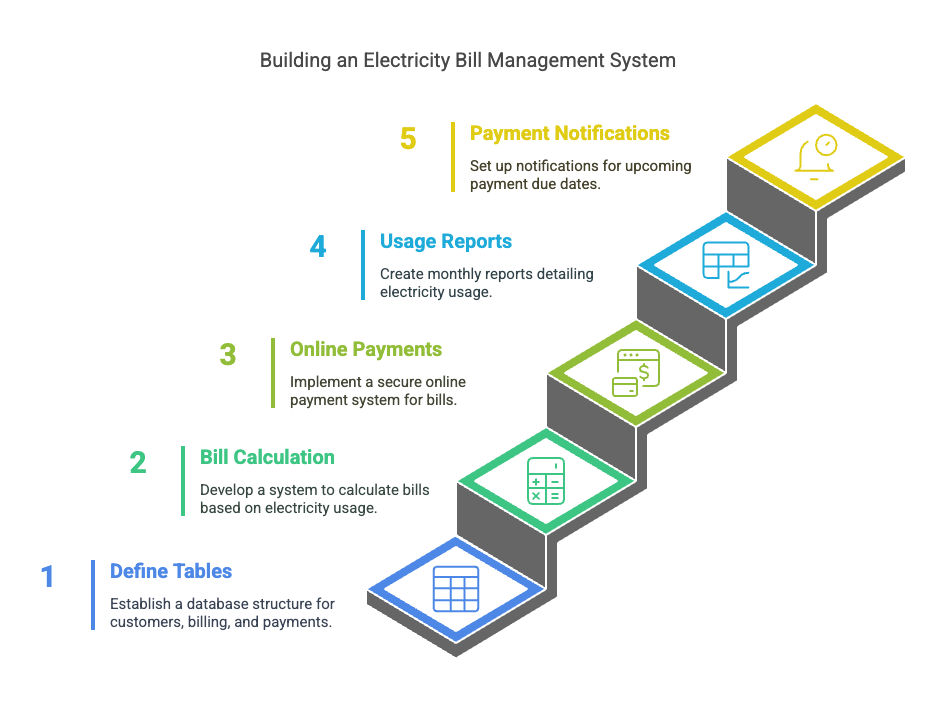
An Electricity Bill Management System helps utility services or local communities automate billing and track consumption. In this project, you design tables for user details, usage history, and bill generation. This cuts down manual calculations and makes it easier to manage late payments or plan future consumption.
What Will You Learn?
Suggested Tech Stack & Tools:
Component |
Recommendation |
Why This Matters |
| Backend | Node.js Express | Allows quick endpoints for billing and payment updates. |
| Database | Oracle or PostgreSQL | Facilitates robust transactions and stores large sets of usage data. |
| Testing | Postman or Jest | Ensures your billing logic and alerts are accurate. |
| Version Control | Git | Helps you track changes and roll back if a billing issue appears. |
| Optional | Docker | Lets you run your project in a stable environment everywhere. |
Key Project Features:
Real-World Use Cases & Impact:
Use Case |
Impact |
| College Hostel Electricity Bills | Gives clear monthly statements to each resident |
| Rural Community Billing | Simplifies record-keeping where manual methods fail |
| Apartment Complexes | Prevents disputes by logging each unit’s usage |
| Payment Installment Tracking | Allows scheduled or partial payments |
Also Read: From Messy Code to Clean Projects: Git Basics That Keep You on Track
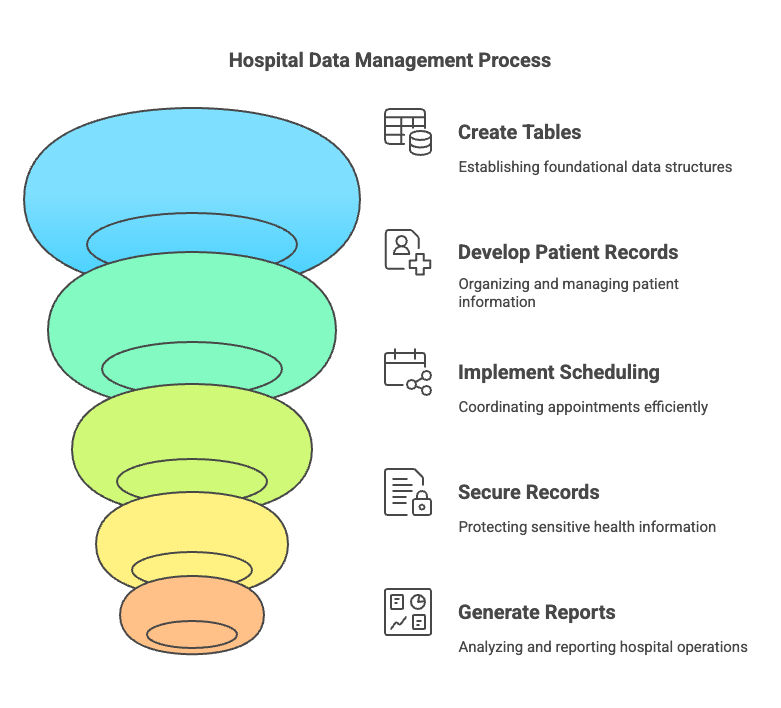
A Hospital Data Management system helps staff handle patient records, doctor schedules, and appointment slots more efficiently. While building this, you learn to design secure tables for sensitive data and set up queries. This helps connect patients to doctors, bills, or prescribed treatments.
What Will You Learn?
Suggested Tech Stack & Tools:
Component |
Recommendation |
Why This Matters |
| Backend | Django (Python) | Offers built-in admin panel and easy data validation. |
| Database | MySQL or PostgreSQL | Lets you handle multiple relationships with minimal complexity. |
| Testing | PyTest | Verifies that appointment clashes or duplicate patient entries don’t happen. |
| Version Control | Git | Secures your progress and simplifies working in teams. |
| Optional | Docker | Ensures consistent deployment across development and production settings. |
Key Project Features:
Real-World Use Cases & Impact:
Use Case |
Impact |
| Campus Medical Center | Streamlines scheduling for check-ups and referrals |
| Community Health Clinic | Minimizes mix-ups in patient data and visit history |
| Telemedicine Services | Stores online consultation details securely |
| Student Health Camp or Blood Drive | Logs participant details without manual errors |
Also Read: What is Natural Join in SQL? Key Features, Implementation, and Best Practices
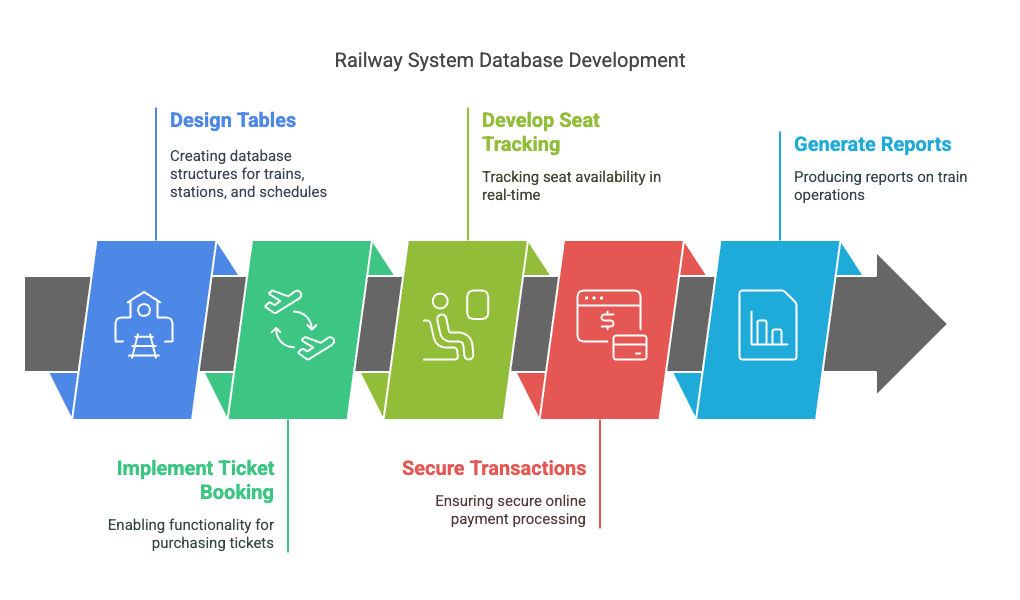
A Railway System Database streamlines train schedules, seat availability, and route details. By undertaking this idea, you learn to manage a network of routes, keep track of passenger bookings, and ensure that no double bookings slip through. You also practice building queries that can filter trains by date, station, or seat class.
What Will You Learn?
Suggested Tech Stack & Tools:
Component |
Recommendation |
Why This Matters |
| Backend | Java Spring Boot | Provides reliable transaction management for seat reservations. |
| Database | PostgreSQL or MySQL | Supports complex joins for routes and station data. |
| Testing | JUnit or Postman | Ensures your booking logic works under various scenarios. |
| Version Control | Git | Keeps code organized and supports collaboration. |
| Optional | Docker | Lets you deploy the entire system consistently across machines. |
Key Project Features:
Real-World Use Cases & Impact:
Use Case |
Impact |
| College Excursion Trips | Manages group reservations without missing seat counts |
| City-to-City Commuter Rails | Lowers errors caused by last-minute bookings |
| Community Festival Train Bookings | Helps block seats for large groups in advance |
| Student-Led Travel Groups | Simplifies bulk ticket management and updates |
Also Read: Relational DBMS
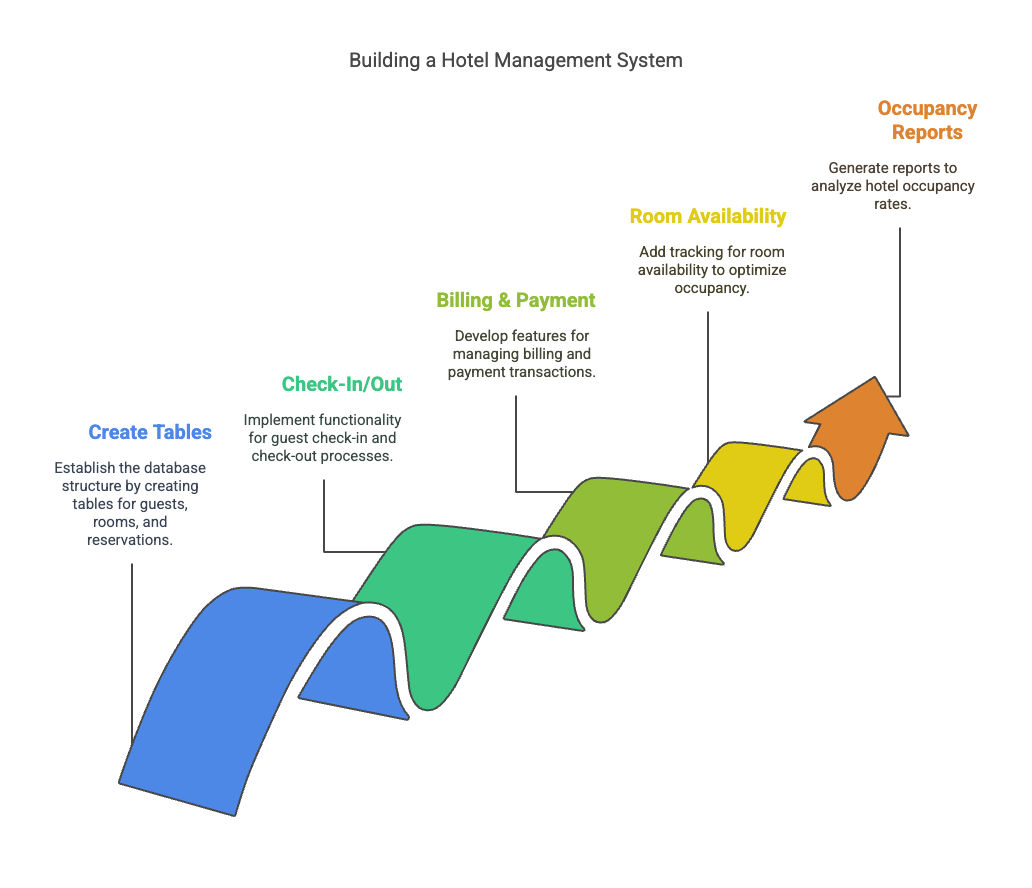
A Hotel Management System keeps track of room bookings, guest details, and billing. By taking on this project, you learn to build a database that prevents overlapping reservations and automates check-in or check-out records. You also set up queries to pull room availability at a glance, generate bills, and store guest information.
What Will You Learn?
Suggested Tech Stack & Tools:
Component |
Recommendation |
Why This Matters |
| Backend | Node.js Express or Django | Handles routing and booking logic without confusion. |
| Database | MySQL or SQLite | Stores reservation data reliably and is simple to set up. |
| Testing | Jest or PyTest | Checks for reservation or billing logic mistakes. |
| Version Control | Git | Keeps your progress safe if you experiment with new features. |
| Optional | Docker | Lets you run the same app setup on different devices seamlessly. |
Key Project Features:
Real-World Use Cases & Impact:
Use Case |
Impact |
| College Event Hosting (Workshops, Seminars) | Tracks participants and ensures smooth room allocation |
| Family Functions | Minimizes confusion on who has checked in or out |
| Student-Run Hostel Management | Updates occupancy details in real time to avoid overbooking |
| Small Guest House or Homestay | Eases the burden of manual ledger entries |
Also Read: SQL For Data Science: Why Or How To Master Sql For Data Science
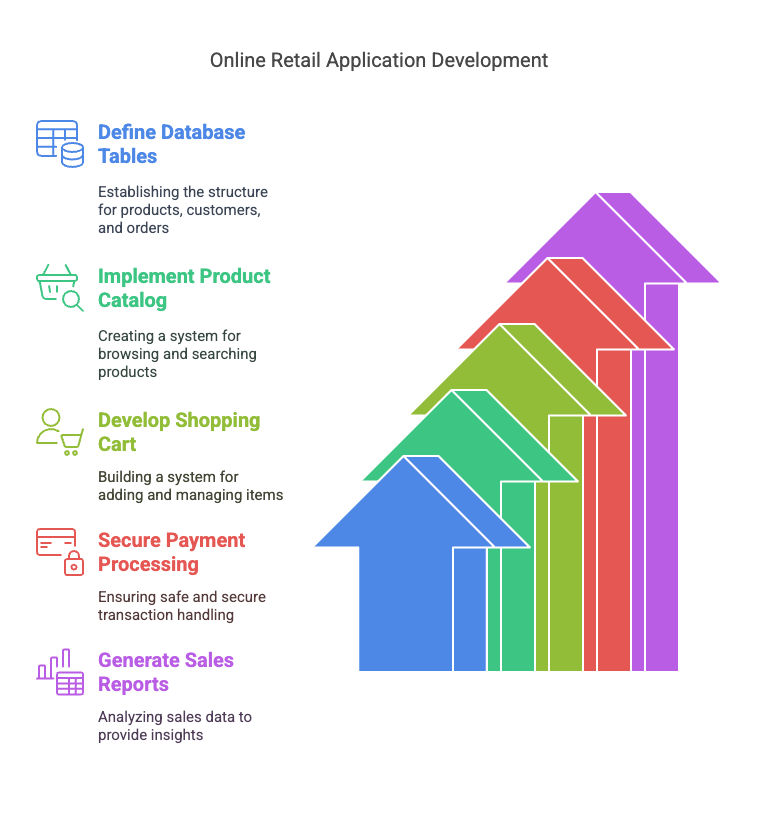
This project focuses on building a backend for an online store with product listings, customer carts, and orders. You explore ways to keep inventory synced, handle user sign-ins, and maintain order records. It mimics real online shops, letting you practice crucial ideas like concurrency and transaction safety.
What Will You Learn?
Suggested Tech Stack & Tools:
Component |
Recommendation |
Why This Matters |
| Backend | Node.js Express | Offers a quick way to set up cart and order routes. |
| Database | MySQL or MongoDB | Stores product and user info, easy to scale if the store grows. |
| Testing | Postman, Jest | Confirms that checkout and inventory updates run smoothly. |
| Version Control | Git | Maintains your changes in case you want to branch into new features. |
| Optional | Docker | Lets you deploy the store consistently in different environments. |
Key Project Features:
Real-World Use Cases & Impact:
Use Case |
Impact |
| Student-Led Online Merchandise Store | Provides an easy way to sell club t-shirts or accessories |
| Local Business Digital Expansion | Lowers the cost and effort of building a real-time sales platform |
| College Fest Ticket Shop | Manages registrations and payments for events and workshops |
| Craft or Art Side Business | Automates inventory checks and keeps customer data organized |
A Customer Feedback Management System gathers and organizes user responses about products or services. You learn to build tables that store ratings, reviews, and suggestions. You also determine how to run quick searches or generate trend summary reports.
What Will You Learn?
Suggested Tech Stack & Tools:
Component |
Recommendation |
Why This Matters |
| Backend | Node.js Express or Flask | Helps you build simple APIs to collect feedback data. |
| Database | MySQL or MariaDB | Stores reviews with sorting and filtering capabilities. |
| Testing | Jest or PyTest | Ensures your feedback submission logic and summaries work properly. |
| Version Control | Git | Lets you track changes in case you want to add or remove features. |
| Optional | Docker | Runs the entire app uniformly in any environment. |
Key Project Features:

Real-World Use Cases & Impact:
Use Case |
Impact |
| Rating Campus Events | Lets organizers measure session quality and speaker impact |
| Food Stall Feedback in College Fests | Helps stall owners tweak menus based on popular opinions |
| Suggestion Box for Student Clubs | Aggregates ideas to plan upcoming activities |
| Local Business Service Reviews | Gives owners a direction for improvement and new services |
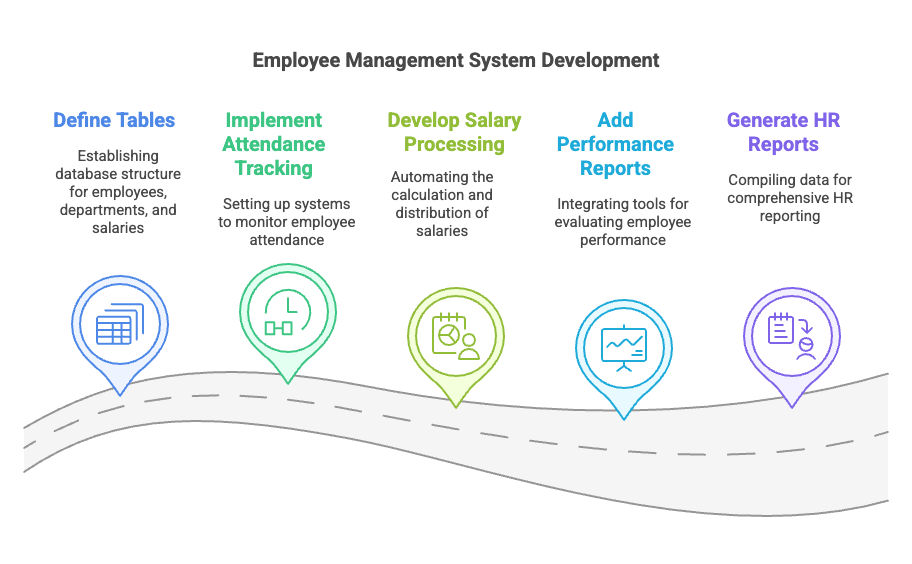
An Employee Management System handles staff records, roles, and pay details in one place. By building it, you focus on how to store personal information without error, set roles or departments, and generate performance or payroll reports. This can be scaled for clubs or part-time teams.
What Will You Learn?
Suggested Tech Stack & Tools:
Component |
Recommendation |
Why This Matters |
| Backend | Java Spring Boot or Flask | Simplifies creation of API endpoints for HR or admin tasks. |
| Database | PostgreSQL or MySQL | Stores structured records for employees and departments. |
| Testing | JUnit or PyTest | Makes sure updates to roles or salaries don’t conflict with data. |
| Version Control | Git | Lets you revert changes in case a wrong update is pushed. |
| Optional | Docker | Helps you run the same setup on multiple devices. |
Key Project Features:
Real-World Use Cases & Impact:
Use Case |
Impact |
| Managing Part-Time Staff in a Student Startup | Prevents confusion on roles, pay, or hours worked |
| University Admin Office | Organizes data for professors, support staff, or interns |
| Small Businesses with Growing Teams | Avoids manual tracking and speeds up payroll operations |
| Student Society Committee Roles | Clarifies responsibilities across multiple committees |
Also Read: 10 Must-Know Data Visualization Tips for Beginners in 2026
Data Science Courses to upskill
Explore Data Science Courses for Career Progression
IIIT Bangalore
Executive Post Graduate Certificate in Data Science & AIPlacement Assistance
Here are 8 DBMS mini projects with source code that provide practical learning while being easy to implement for students and beginners.
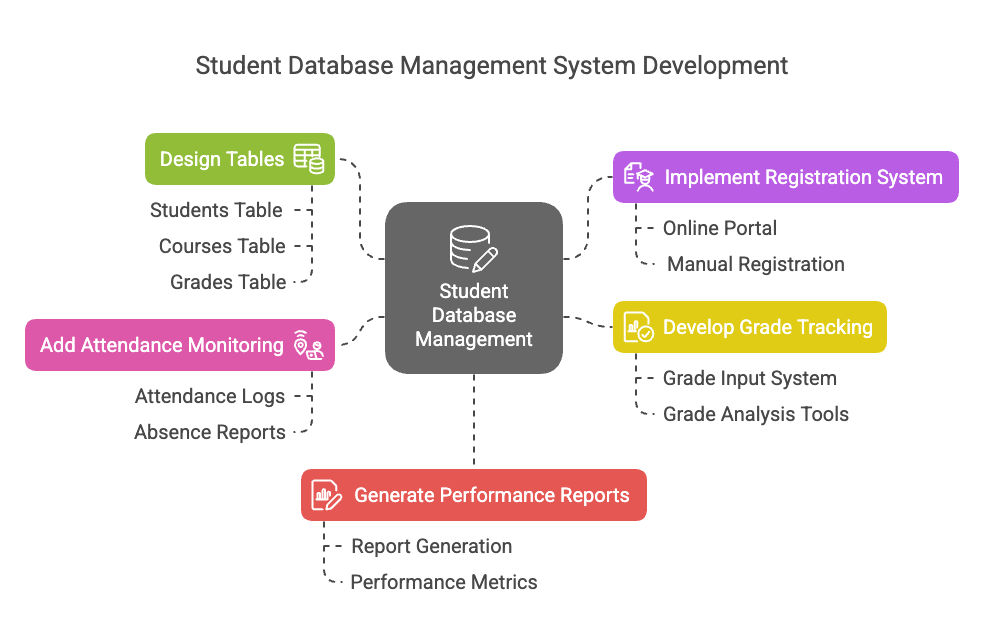
A Student Database Management system stores and retrieves details on enrolled learners, including personal data, courses, and attendance. The DBMS mini project helps you track academic records efficiently while linking them to various classes and departments for better organisation.
What Will You Learn?
Suggested Tech Stack & Tools:
Component |
Recommendation |
Why This Matters |
| Backend | Python (Flask) or PHP | Allows you to build forms for easy data entry and retrieval. |
| Database | MySQL or SQLite | Stores student profiles and attendance logs in relational tables. |
| Testing | PyTest or PHPUnit | Checks whether your queries and validations work reliably. |
| Version Control | Git | Keeps track of the code base and any updates to table structures. |
Key Project Features:
Real-World Use Cases & Impact:
Use Case |
Impact |
| College Enrollment Management | Keeps profiles organized for each semester |
| Department Attendance Tracking | Minimizes manual errors in tallying presence or absence |
| Small Coaching Institutes | Helps tutors record results and categorize students by performance |
| Alumni Records | Maintains a list of past students for future reference or outreach |
Also Read: Data Validation in Excel
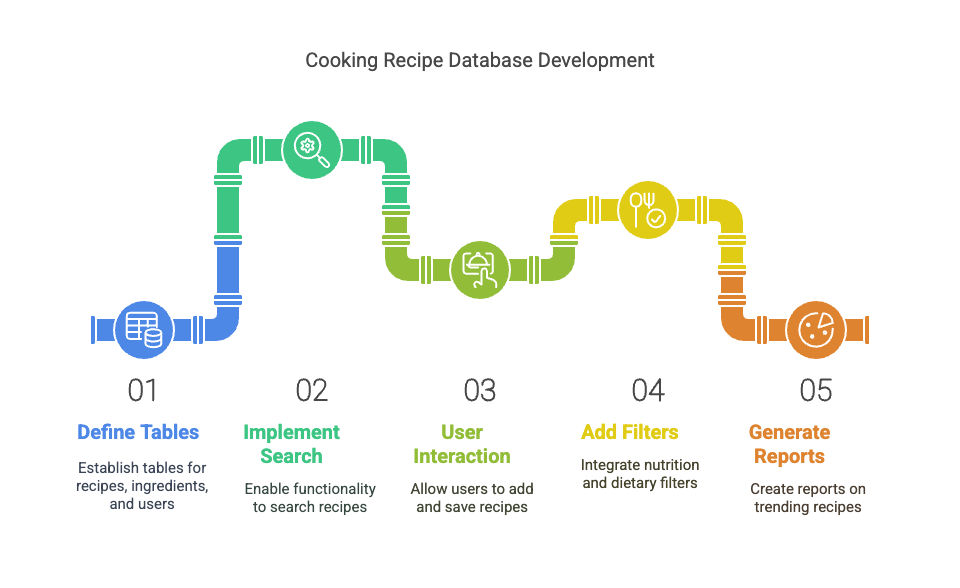
A Cooking Recipe Database collects instructions, ingredients, and nutritional data under one umbrella. When you build this system, you focus on structuring recipe details so that queries like “Recipes with mushrooms but no dairy” become easy.
What Will You Learn?
Suggested Tech Stack & Tools:
Component |
Recommendation |
Why This Matters |
| Backend | Django (Python) or Node.js | Provides routes for adding recipes and searching by ingredients. |
| Database | MongoDB or MySQL | Stores recipes and ingredients in a flexible or relational format. |
| Testing | PyTest or Jest | Ensures that filters and searches return the correct results. |
| Version Control | Git | Lets you manage revisions to your recipe schema and search logic. |
Key Project Features:
Real-World Use Cases & Impact:
Use Case |
Impact |
| Shared Hostel Kitchen Recipes | Organizes meals by ingredients and encourages variety |
| Student-Run Cafés | Keeps a quick reference to standard dishes for daily use |
| Family Recipe Collections | Preserves beloved meals in a structured digital library |
| Community Cooking Events | Lets organizers gather various recipes for cooking sessions |
Also Read: How to Create Index in MySQL? A Complete Guide
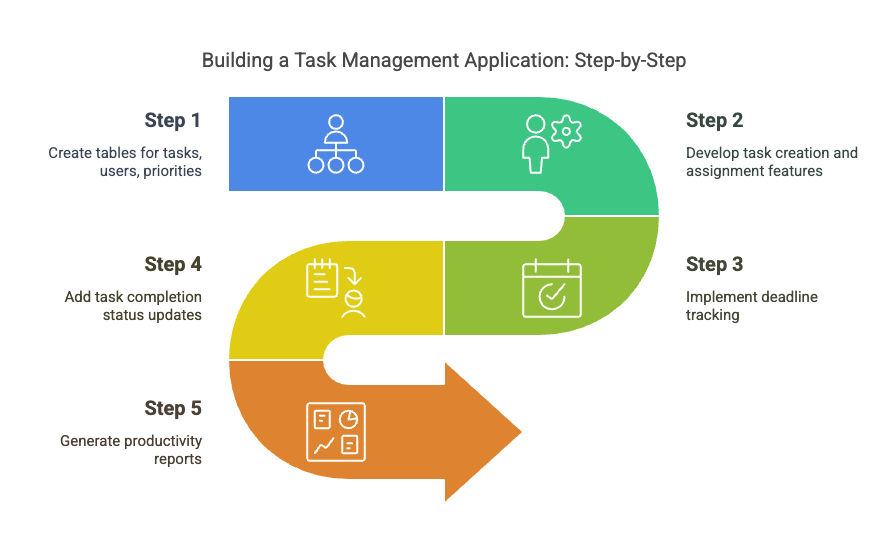
A Task Management app tracks to-dos, deadlines, and user priorities. You learn to build a database that records each task, its deadline, and its owner. This helps you see how to handle multiple users while ensuring concurrency and simple progress tracking.
What Will You Learn?
Suggested Tech Stack & Tools:
Component |
Recommendation |
Why This Matters |
| Backend | Node.js (Express) or Flask | Lets you make simple endpoints for adding tasks and updating status. |
| Database | PostgreSQL or SQLite | Stores user info and tasks with minimal overhead. |
| Testing | Jest or PyTest | Ensures task additions or edits function without data loss. |
| Version Control | Git | Records incremental changes to how tasks are organized. |
Key Project Features:
Real-World Use Cases & Impact:
Use Case |
Impact |
| Group Assignments in College | Helps coordinate who’s responsible for each part of a project |
| Personal To-Do Lists | Tracks day-to-day responsibilities in a central place |
| On-Campus Event Planning | Structures tasks like venue booking, promotion, and budget |
| Student-Run Startups | Coordinates tasks among multiple team members effectively |
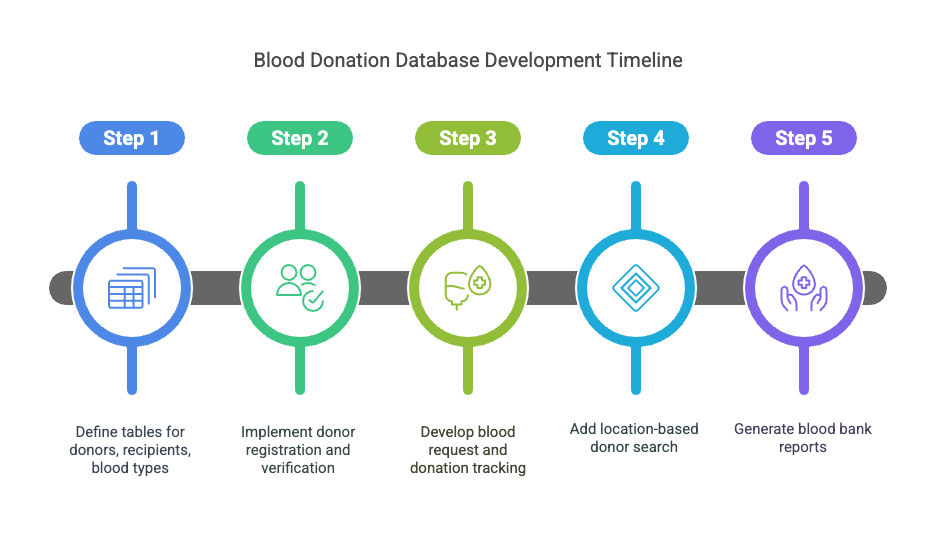
This is a system that keeps donor details, blood type info, and availability records. It addresses real challenges like ensuring quick lookup for a certain blood type during emergencies. You design a well-linked schema for donors, recipients, and blood banks.
What Will You Learn?
Suggested Tech Stack & Tools:
Component |
Recommendation |
Why This Matters |
| Backend | Django (Python) or Node.js | Processes donor sign-ups, availability checks, and inventory updates. |
| Database | PostgreSQL or MySQL | Stores donor data with relationships between blood types and locations. |
| Testing | PyTest or Jest | Ensures that donor records and stock updates work accurately. |
| Version Control | Git | Keeps revisions of your donor-matching logic and DB schema. |
Key Project Features:
Real-World Use Cases & Impact:
Use Case |
Impact |
| College Blood Drives | Maintains clear records of donors and needed types |
| Small Clinics or NGOs | Coordinates donation storage and distribution for local hospitals |
| Rural Health Camps | Lets you track specific blood needs in remote locations |
| Emergency Response for Accidents | Helps staff locate exact blood types more quickly |
Also Read: Selenium with Python
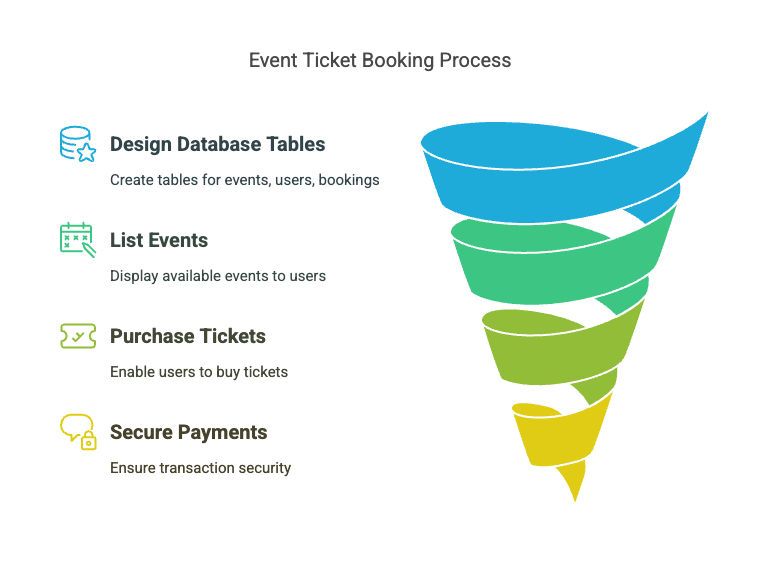
This system helps you manage tickets for small events, college fests, or workshops. By creating tables for event listings, seat categories, and user bookings, you see how to maintain concurrency when multiple individuals try to book the same spot.
What Will You Learn?
Suggested Tech Stack & Tools:
Component |
Recommendation |
Why This Matters |
| Backend | Node.js (Express) or PHP | Builds endpoints for seat searches and ticket confirmations. |
| Database | MySQL or PostgreSQL | Manages user info, seat reservations, and event categories. |
| Testing | Jest or PHPUnit | Tests booking flows to avoid seat over-allocation. |
| Version Control | Git | Logs changes in booking logic and new event additions. |
Key Project Features:
Real-World Use Cases & Impact:
Use Case |
Impact |
| College Fests or Workshops | Lets students grab seats swiftly without manual counters |
| Small Concerts or Shows | Tracks different pricing tiers and seat availability |
| Campus Sports Events | Manages entries for tournaments or matches |
| Community Fundraisers | Simplifies seat booking for charity events |
Also Read: Python Pandas Tutorial: Everything Beginners Need to Know about Python Pandas
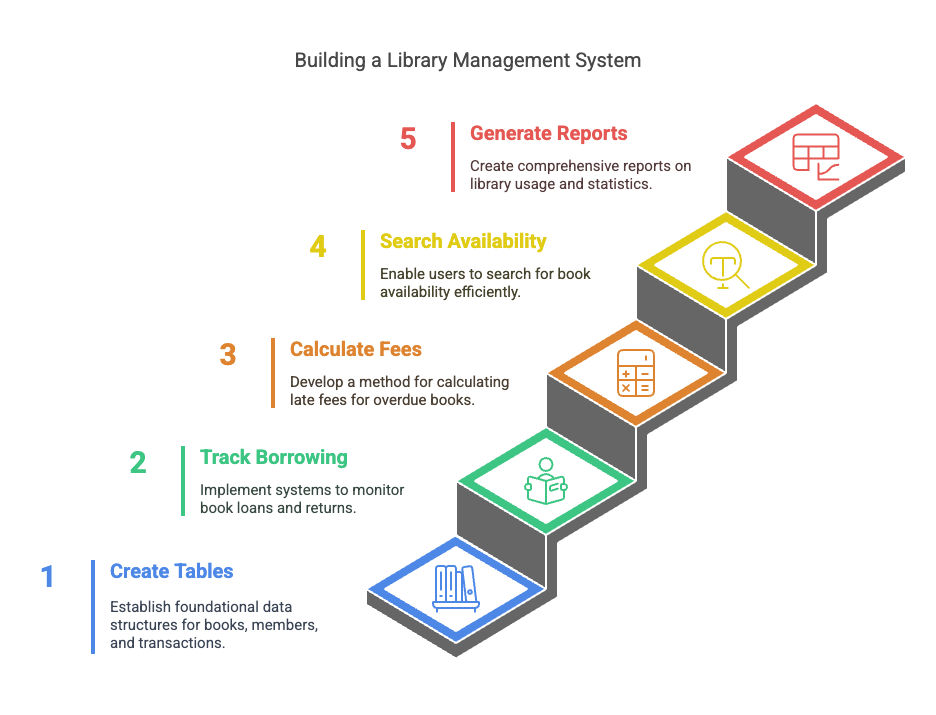
A Library Management System records book details, borrower info, and transaction logs. In this database management system mini project, you learn to handle check-outs, returns, and due dates while preventing someone from hogging all the best books with overlapping borrow times.
What Will You Learn?
Suggested Tech Stack & Tools:
Component |
Recommendation |
Why This Matters |
| Backend | Django (Python) or Node.js | Offers simple routes for borrowing, returning, and searching. |
| Database | MySQL or SQLite | Maintains relational records for titles, users, and ongoing loans. |
| Testing | PyTest or Jest | Makes sure all borrow/return operations are error-free. |
| Version Control | Git | Saves adjustments to your library structure or new features. |
Key Project Features:
Real-World Use Cases & Impact:
Use Case |
Impact |
| College Libraries | Digitizes manual records, speeding up search and check-outs |
| Book Clubs or Reading Communities | Tracks who has which book and for how long |
| Personal Digital Library | Organizes personal collections more efficiently |
| Department Book Resources | Maintains multiple copies for student reference in labs or classes |
This database management system mini project idea ties menu data, orders, and bills under one database. You learn to design a system that keeps real-time updates of what is being ordered while showing revenue or total sales figures. It can be tweaked for college canteens or small pop-up food stalls.
What Will You Learn?
Suggested Tech Stack & Tools:
Component |
Recommendation |
Why This Matters |
| Backend | Node.js (Express) or PHP | Provides an easy way to handle orders, checks, and user sessions |
| Database | MySQL or SQLite | Organizes menu, orders, and transactions with minimal overhead |
| Testing | Jest or PHPUnit | Validates that ordering and billing logic work under load |
| Version Control | Git | Tracks changes in menu structures or price calculations |
Key Project Features:

Real-World Use Cases & Impact:
Use Case |
Impact |
| College Canteens | Speeds up orders and keeps simple logs for total sales |
| Small Eateries or Food Trucks | Organizes receipts and tracks popular dishes in real time |
| Pop-Up Cafés During College Fests | Handles rush hours more systematically |
| Personal Projects to Learn Database Handling | Helps you practice CRUD operations with a tangible use case |
Also Read: CRUD Operations in MongoDB: Tutorial with Examples
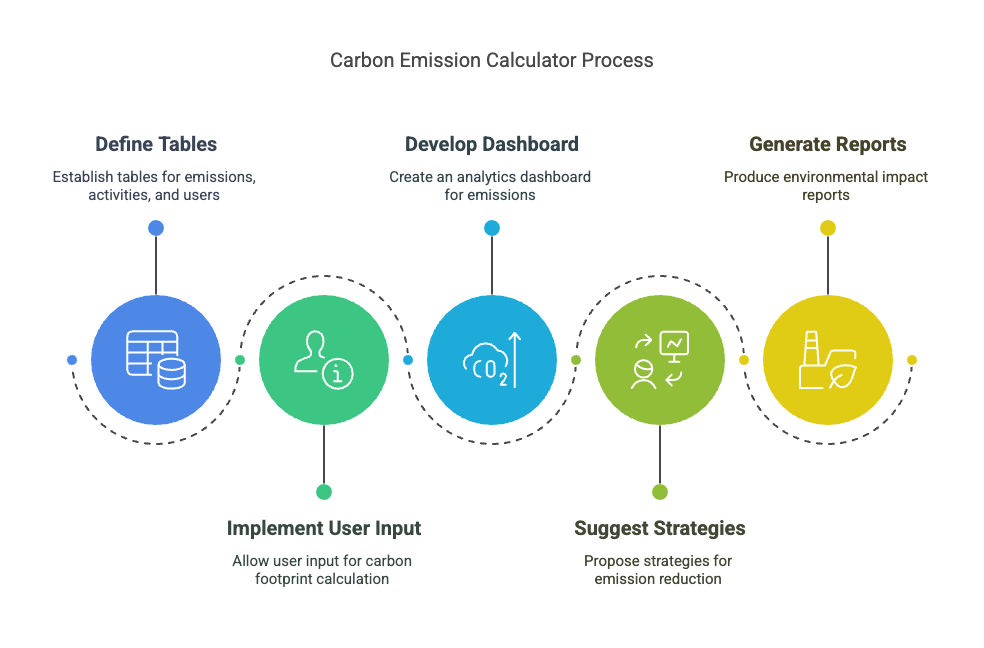
A Carbon Emission Calculator stores data on activities like travel and energy consumption and then estimates the resulting emissions. This project teaches you about handling varied input formats, from commute details to home electricity usage.
What Will You Learn?
Suggested Tech Stack & Tools:
Component |
Recommendation |
Why This Matters |
| Backend | Django (Python) or Node.js | Processes different user inputs (flight distance, car usage, etc.). |
| Database | SQLite or MySQL | Stores diverse activity records and handles calculations on the fly. |
| Testing | PyTest or Jest | Ensures your emission formulas produce correct estimates. |
| Version Control | Git | Keeps a record of formula or factor updates in the code. |
Key Project Features:
Real-World Use Cases & Impact:
Use Case |
Impact |
| Students Tracking Personal Footprint | Raises awareness of daily habits and potential changes |
| College Sustainability Clubs | Records group-level emissions and plans green initiatives |
| Small Offices or Startups | Encourages collective efforts to reduce carbon-intensive activities |
| Academic Projects on Environmental Studies | Offers a practical tool for data collection and analysis |
Prepare for executive technology leadership with the Chief Technology Officer & AI Leadership Programme. Build expertise in AI strategy, digital transformation, and technology management through industry-focused learning.
Exploring innovative DBMS projects helps you enhance database design, optimisation, and querying skills. Here are unique DBMS project ideas that will allow you to take your database skills to the next level.
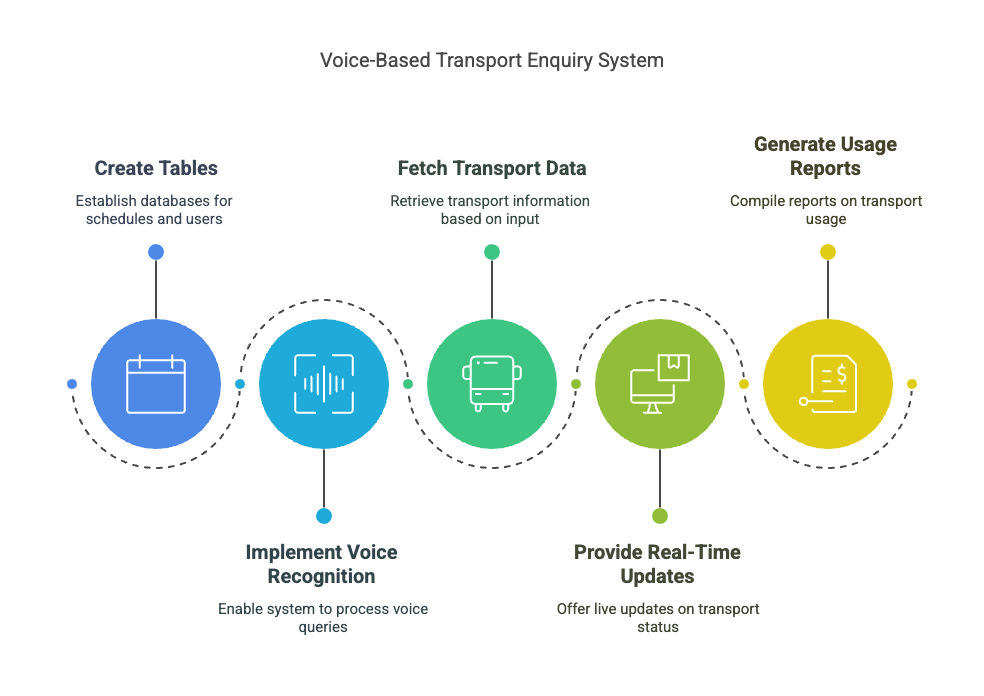
A Voice-Based Transport Enquiry System lets travelers request schedules or routes using voice commands. You store data for routes, timings, and stations in a database, then integrate a speech-to-text service that converts voice queries into commands. This project shows how to map complex queries in real time and respond with timely route details.
What Will You Learn?
Suggested Tech Stack & Tools:
Component |
Recommendation |
Why This Matters |
| Backend | Python (Flask) or Node.js | Handles incoming voice transcripts and converts them into DB queries. |
| Database | PostgreSQL or MySQL | Stores complex schedules and station details with fast lookups. |
| Voice API | Google Speech-to-Text or Azure Speech | Captures spoken queries and returns text for further processing. |
| Testing | PyTest or Jest | Verifies schedules, route queries, and concurrency issues. |
| Version Control | Git | Logs changes in your approach to handling voice inputs and schedules. |
Key Project Features:
Real-World Use Cases & Impact:
Use Case |
Impact |
| Campus Shuttle Voice Assistant | Lets students ask about next bus or shuttle without typing |
| City Suburban Transit | Improves accessibility for users who prefer voice queries |
| Tourist Information Booths | Simplifies how travelers find train or bus info in unfamiliar places |
| College Tech Projects with AI Components | Demonstrates a combination of database, speech API, and real-time updates |
Also Read: How To Convert Speech to Text with Python [Step-by-Step Process]
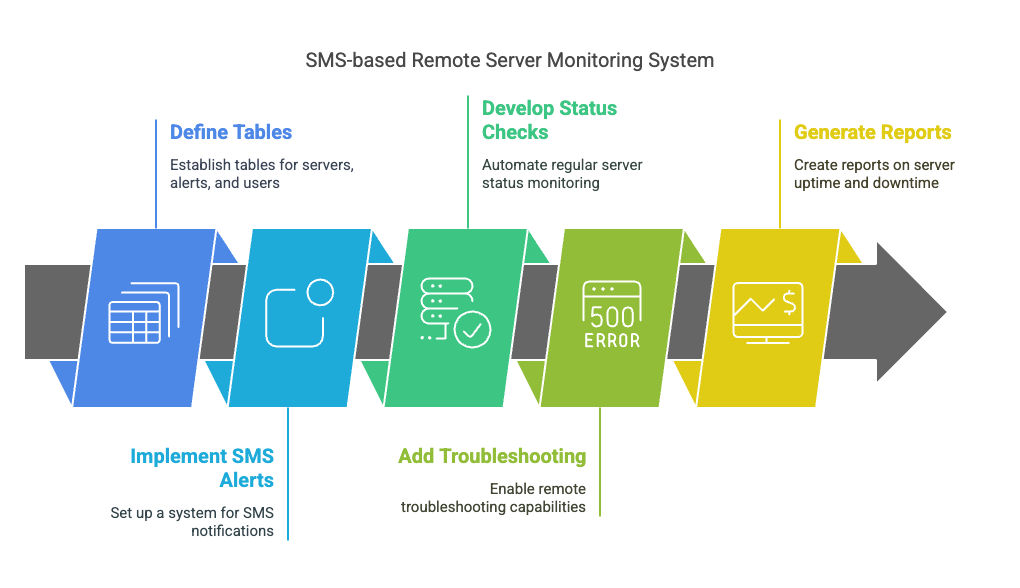
It's one of the most innovative DBMS projects that help you learn how to keep track of server performance metrics and send alerts via text messages if anything goes wrong. You design tables for logs, error events, and system stats, then set triggers that notify the right people when CPU or memory usage exceeds a threshold.
What Will You Learn?
Suggested Tech Stack & Tools:
Component |
Recommendation |
Why This Matters |
| Backend | Node.js (Express) or Java (Spring) | Collects server metrics and inserts them into the database. |
| Database | PostgreSQL or MySQL | Handles large volumes of logs efficiently. |
| SMS API | Twilio or Nexmo | Sends text notifications to relevant personnel. |
| Testing | Jest or JUnit | Ensures logs trigger correct alerts without duplicates. |
| Version Control | Git | Tracks changes in your error detection and SMS logic. |
Key Project Features:
Real-World Use Cases & Impact:
Use Case |
Impact |
| College Computer Labs Monitoring | Keeps staff informed of unexpected CPU spikes or network outages |
| Student-Run Web Projects | Maintains server uptime for personal websites or test platforms |
| Small IT Firms | Lowers downtime with quick notifications during system overloads |
| Local Nonprofit Servers | Minimizes data loss risk by promptly alerting volunteers |
Also Read: Top 27 SQL Projects in 2026 With Source Code: For All Levels
A multi-vendor e-commerce database allows multiple sellers to list products, track inventory, and handle payments in a unified system. You design tables for vendors, orders, and product listings while implementing concurrency controls. This maintains accurate stock counts during high-order volumes.
What Will You Learn?:
Suggested Tech Stack & Tools:
Component |
Recommendation |
Why This Matters |
| Backend | Node.js or Django (Python) | Coordinates multiple sellers, orders, and payment flows. |
| Database | MySQL or PostgreSQL | Maintains vendor data and product listings with transactional safety. |
| Testing | Jest or PyTest | Checks multi-vendor ordering and inventory updates. |
| Version Control | Git | Logs feature additions like vendor dashboards or product categories. |
Key Project Features:

Real-World Use Cases & Impact:
Use Case |
Impact |
| Campus E-commerce for Different Clubs | Lets each club sell merchandise on a shared platform. |
| Marketplace Startups | Creates a base for multiple sellers without writing separate code. |
| Community-Based Online Store | Gathers local vendors in one virtual marketplace. |
| College Fests with Various Stalls | Manages multiple stall inventories under one system. |
This system brings personal or organizational finance data under one roof, displaying spending patterns and potential savings. You design tables for accounts, ledgers, and payment logs, then handle monthly budgets or expense forecasts.
What Will You Learn?:
Suggested Tech Stack & Tools:
Component |
Recommendation |
Why This Matters |
| Backend | Java (Spring Boot) or Node.js | Manages inputs for expenses, incomes, and budget projections. |
| Database | MySQL or PostgreSQL | Stores recurring transactions, account records, and ledger tables. |
| Testing | JUnit or Jest | Ensures financial calculations are correct. |
| Version Control | Git | Logs new features like scheduled bill payments. |
Key Project Features:
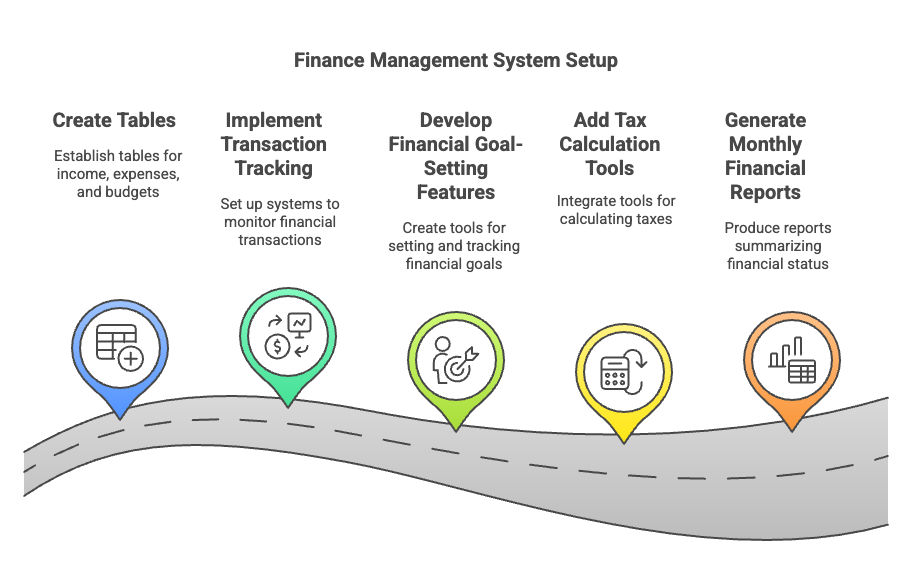
Real-World Use Cases & Impact:
Use Case |
Impact |
| Student Clubs with Budgets | Keeps event expenses organized |
| Startups in Early Stages | Manages limited finances and investor contributions |
| Household Finances | Logs bills and monthly costs for better planning |
| Campus Projects with Limited Funding | Ensures each transaction is properly tracked |
Also Read: Top Data Modeling Tools in 2026
A CRM database organizes leads, customer interactions, and sales data. You link contact details to follow-ups, deals, or support tickets. This is a common industry tool, so building one shows you can handle dynamic user and transaction data.
What Will You Learn?
Suggested Tech Stack & Tools:
Component |
Recommendation |
Why This Matters |
| Backend | Node.js (Express) or Java (Spring) | Manages lead entries, updates, and simple analytics. |
| Database | MySQL or MariaDB | Keeps all customer data, deals, and interactions in relational tables. |
| Testing | Jest or JUnit | Ensures deals update properly and avoids messy data. |
| Version Control | Git | Tracks changes to lead management or user roles. |
Key Project Features:
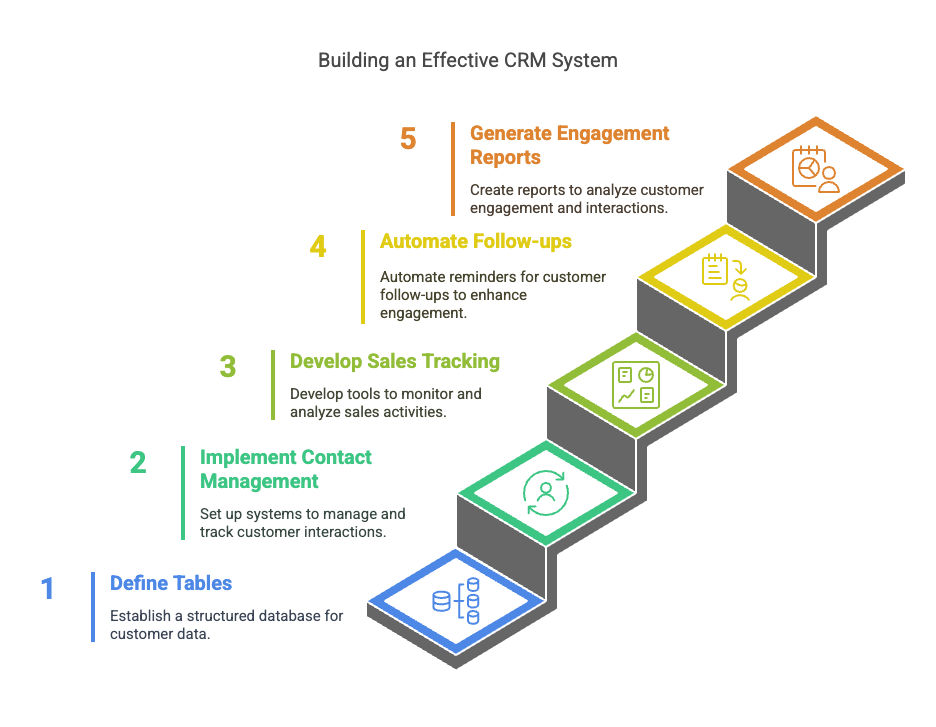
Real-World Use Cases & Impact:
Use Case |
Impact |
| Small Sales Teams in Colleges | Tracks potential sponsors, donors, or participants for events |
| Startup Enterprises | Coordinates customer outreach among multiple sales reps |
| Student Projects for Tech Fests | Manages sponsor follow-ups and logs calls or emails |
| Departments Seeking Internships | Tracks companies contacted and communication details |
Also Read: Top 25+ SQL Projects on GitHub You Should Explore in 2026
This system collects live data from sensors or user submissions and updates route congestion statuses. You design a schema for road segments, traffic flow, and accidents, then use indexing to handle multiple quick updates.
What Will You Learn?:
Suggested Tech Stack & Tools:
Component |
Recommendation |
Why This Matters |
| Backend | Node.js (Express) or Python (Flask) | Receives data from sensors and stores them in the DB. |
| Database | PostgreSQL or MongoDB | Handles frequent writes and large, unstructured data if needed. |
| Testing | Jest or PyTest | Ensures updates don’t conflict and data stays consistent. |
| Version Control | Git | Tracks how you refine data collection or display methods. |
Key Project Features:
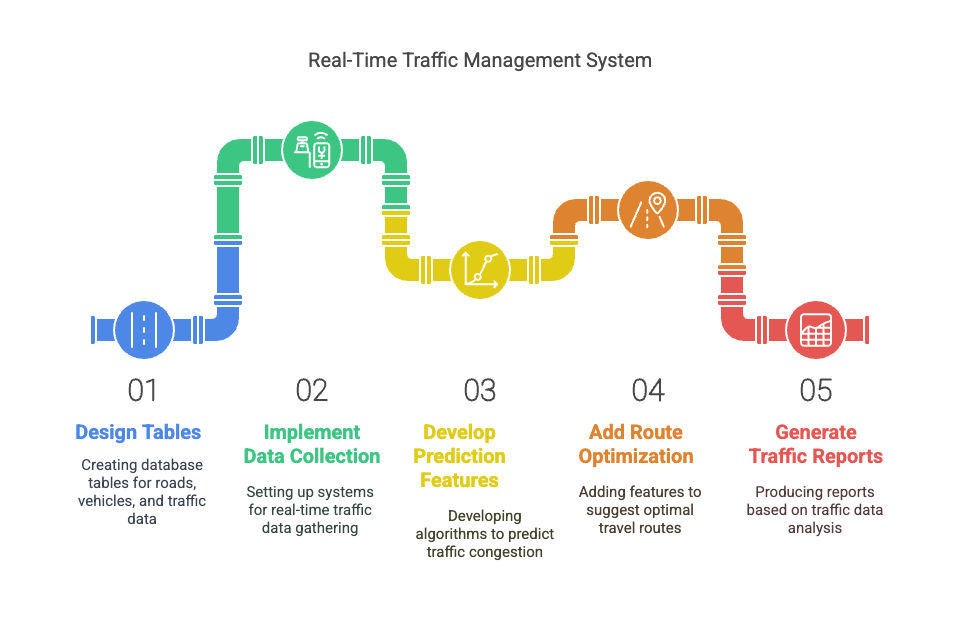
Real-World Use Cases & Impact:
Use Case |
Impact |
| Smart Campus Navigation | Guides students away from crowded walkways |
| Small Town Traffic Updates | Informs drivers quickly if main roads are blocked |
| City Commuter Apps | Feeds live data into apps for public route planning |
| Research in Urban Planning | Builds large datasets to inform infrastructure decisions |
Also Read: The Essential Guide To Understanding SQL In DBMS
A Payroll Management System handles employee salaries, deductions, and final payments with a transparent audit trail. It is ideal if you want to build a deeper knowledge of database integrity, especially for financial data that changes every pay cycle.
What Will You Learn?:
Suggested Tech Stack & Tools:
Component |
Recommendation |
Why This Matters |
| Backend | Java (Spring Boot) or Node.js | Manages pay records, deductions, and final calculations |
| Database | PostgreSQL or SQL Server | Safely handles complex payroll queries for multiple roles |
| Testing | JUnit or Mocha | Checks if pay increments or after-tax amounts are correct |
| Version Control | Git | Tracks changes in salary structures or bonus logic |
Key Project Features:
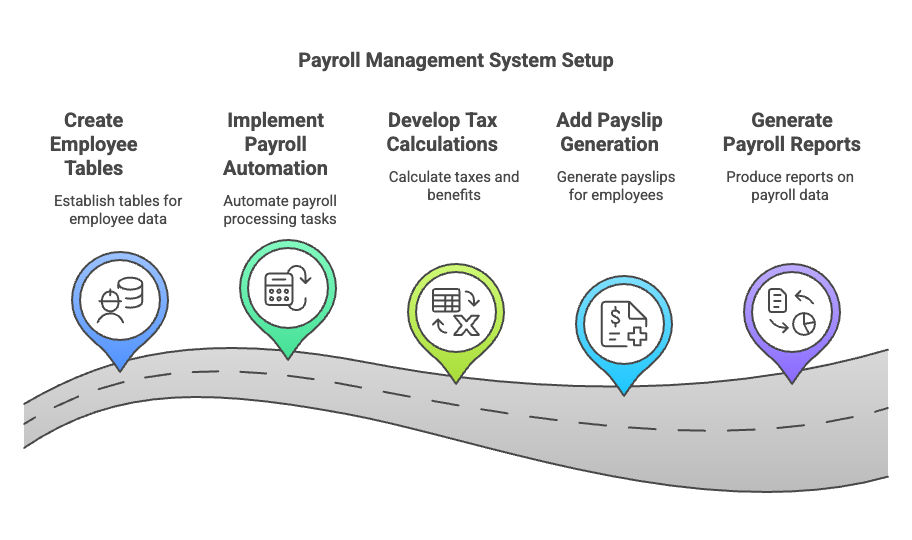
Real-World Use Cases & Impact:
Use Case |
Impact |
| University Departments | Manages payroll for teachers or support staff |
| Small Offices or Startups | Processes monthly payouts without manual spreadsheets |
| Student Projects in HR | Shows how to handle salaries for part-time roles |
| Fellowship or Scholarship Programs | Tracks stipends, allowances, or special bonus distribution |
Also Read: Integrity Constraints in DBMS: Types, Benefits, and Challenges Explained
A Blogging Platform stores user accounts, posts, comments, and tags in a structured manner. It is a great chance to discover how relational or document-based systems handle relationships between authors, articles, and readers.
What Will You Learn?
Suggested Tech Stack & Tools:
Component |
Recommendation |
Why This Matters |
| Backend | Node.js (Express) or Django (Python) | Handles post publishing, editing, and comment management. |
| Database | MongoDB, SQLite, MySQL | Supports either document or relational structures for posts/comments. |
| Testing | Jest or PyTest | Verifies post creation, commenting, and searches work properly. |
| Version Control | Git | Logs changes to your schema and blog features. |
Key Project Features:

Real-World Use Cases & Impact:
Use Case |
Impact |
| Personal Tech or Lifestyle Blogs | Lets you share content and engage with an online audience |
| College Clubs or Departments | Broadcasts updates, events, or announcements in one place |
| Student Writing Portfolios | Stores articles as proof of creative or technical skills |
| Community Newsletters | Publishes group highlights and collects reader feedback |
Also Read: Top 10 Real-Time SQL Project Ideas: For Beginners & Advanced
A Gym Management System helps you store member details, track subscriptions, record daily check-ins, and manage trainer schedules. You build tables for members, plans, payments, trainers, and attendance. You also set clear rules for renewals and plan expiry.
What Will You Learn?
Suggested Tech Stack and Tools
Component |
Recommendation |
Why This Matters |
| Backend | Python (Flask) or PHP | Simple for beginners building member flows |
| Database | MySQL or PostgreSQL | Good for handling structured user and plan data |
| Frontend | HTML, CSS, JavaScript | Enough for forms and dashboards |
| Testing | PyTest or PHPUnit | Helps you confirm plan expiry and check-in logic |
| Version Control | Git | Keeps your updates clean and trackable |
Key Project Features
Real-World Use Cases and Impact
Use Case |
Impact |
| Local gyms | Easy handling of daily member flow |
| Fitness studios | Better control over trainer slots |
| College gyms | Smooth tracking of student access |
| Corporate fitness centers | Clear record of participation and plan usage |
Also Read: Best SQL Free Online Course with Certification [2026 Guide]
What Is a DBMS Project?
A DBMS project is a practical application that uses a Database Management System (DBMS) to store, organize, retrieve, and manage data efficiently. These projects help learners understand how databases support real-world applications such as banking systems, hospital management, e-commerce platforms, and library management systems.
Why Build a DBMS Project?
Building DBMS project topics helps you move beyond theory and apply database concepts to real applications.
Characteristics of a Good DBMS Project
Well-designed DBMS project topics should demonstrate practical database knowledge and solve a real-world problem.
Essential Components of a DBMS Project
Every successful DBMS projects using SQL is built on a strong database design and a well-planned structure. Understanding these essential components helps you create scalable, organized, and efficient database applications while following industry best practices.
1. DBMS Project Database Schema
A DBMS project database schema defines the overall structure of the database, including tables, columns, relationships, constraints, and data types. A well-designed schema keeps data organized, reduces redundancy, and improves query performance.
Key elements include:
2. DBMS Project ER Diagram
A DBMS project ER diagram visually represents entities, attributes, and relationships before database development begins. It serves as a blueprint for creating a structured and scalable database.
An ER diagram typically includes:
3. DBMS Project Normalization
DBMS project normalization organizes data into multiple related tables to eliminate redundancy and maintain data consistency. It also improves database maintenance and minimizes update anomalies.
Common normalization levels include:
4. DBMS Project Architecture
A DBMS project architecture explains how different components of the application interact to process and manage data efficiently.
The architecture generally consists of:
5. DBMS Project Modules
DBMS project modules divide the application into independent functional units, making development, testing, and maintenance easier.
Common modules include:
6. DBMS Project SQL Queries
DBMS project SQL queries perform operations such as inserting, retrieving, updating, and deleting records from the database in DBMS projects using SQL. They form the core of every database-driven application.
Frequently used SQL queries include:
Choosing the right tools and project scope can make your DBMS project easier to build and present. This section covers the tech stack, project selection, and common mistakes to help you plan your project effectively.
You work with a mix of database tools, programming languages, and simple interfaces when building DBMS projects. Each part plays a different role. A beginner can start with a very small setup and grow it as the project becomes bigger.
Common databases used in student projects
Also Read: Top 20 Essential SQL Tools for Data Analysts and Engineers
Programming languages that pair well with DBMS
Frontend options
Sample comparison table
Component |
Beginner Option |
Advanced Option |
| Database | MySQL | PostgreSQL or Oracle |
| Backend | Python | Java or Node |
| Frontend | HTML and CSS | React |
You can mix these tools based on your project goal. A small student record system works well with Python and MySQL, while larger DBMS project ideas like hospital systems or billing platforms may need stronger setups such as Java and PostgreSQL.
Also Read: Top 25+ HTML Project Ideas for Beginners in 2026: Source Code, Career Insights, and More
You pick the right project by matching your skills with the size of the work. Start small if you are still learning SQL. Move to deeper ideas when you feel comfortable with tables, joins, and basic queries. The goal is to choose something you can finish without feeling stuck. Many DBMS project ideas look interesting, but the best one is the one you can complete.
What to check before you decide
Beginner pick
Choose projects with clear inputs and outputs. These teach you table design and simple workflows.
Examples: student records, library tools, basic inventory.
Growing learner pick
Pick something that needs more tables, user actions, and simple logic.
Examples: billing tools, attendance systems, small booking systems.
Advanced pick
Choose ideas that involve multiple modules, user roles, or real time data. These projects help you build confidence for bigger tasks.
Examples include hospital systems, parking tools, or unique dbms project ideas like incident tracking.
Skill level |
Best fit |
Why |
| Beginner | Simple record tools | Easy tables |
| Mid level | Multi table apps | More practice |
| Advanced | Multi module systems | Better depth |
Pick a project you can handle now and grow from there.
Building a DBMS project is not just about creating tables and writing queries. Many students make avoidable mistakes that affect performance, data consistency, and project evaluation. Paying attention to these areas will help you create a cleaner, more scalable, and professional database application.
| Mistake | Why It Matters |
|---|---|
| Skipping Normalization | Creates duplicate data and makes updates difficult |
| Not Defining Primary Keys | Leads to duplicate records and poor data integrity |
| Missing Foreign Key Relationships | Breaks links between related tables |
| Overusing Tables | Makes the database unnecessarily complex |
| Poor Naming Conventions | Reduces readability and maintainability |
| Ignoring Indexing | Slows down searches and query performance |
| Storing Redundant Data | Wastes storage and increases inconsistency risks |
| Not Validating User Input | Allows invalid or incorrect data to enter the database |
| Missing Backup Strategy | Risks data loss during failures or testing |
| Lack of Documentation | Makes the project difficult to understand and maintain |
| Hard-Coding Values | Reduces flexibility and scalability |
| Insufficient Testing | Can lead to unexpected errors and broken workflows |
Conclusion
Choosing the right DBMS project ideas helps you build practical database skills while preparing for academic projects and technical interviews. Whether you start with a simple DBMS mini project, explore different DBMS mini project topics, or work on advanced DBMS project topics, focus on solving real-world problems with a well-designed database.
As your skills grow, challenge yourself with DBMS projects using SQL that include efficient queries, normalization, and scalable database design. A well-executed project not only strengthens your portfolio but also demonstrates your ability to build reliable database-driven applications.
upGrad offers free counselling sessions and offline centres to help you select the right course and project to achieve your academic goals.
Source Codes:
Beginner DBMS project ideas include student records, library tools, and simple inventory systems. These projects teach you how to create tables, write basic queries, and manage small datasets. They are easy to build and help you understand core database concepts.
Exploring DBMS mini project topics helps you master table design, data types, and simple joins. You begin to understand how data moves through a system and how CRUD operations work, providing a solid foundation before you attempt more complex, multi-table architectures.
An RDBMS project like a billing systems, attendance tools, and course registration apps help you write stronger SQL queries. You practice joins, filters, indexing, and stored procedures. These tasks give you hands on experience with real workflows and structured data.
Some unique DBMS project topics looking ahead to 2026 include incident tracking, fraud monitoring, waste management data, and smart identity storage. These involve deeper logic and real-world data needs, making them ideal for advanced students.
Pick a DBMS project based on time, tools, and confidence. Beginners should choose simple record systems. Mid level users can try booking or billing tools. Advanced students can explore multi module projects. Choose something you can finish with steady progress.
Start by identifying the entities, attributes, and relationships your application needs. Create an ER diagram, define primary and foreign keys, and normalize the tables before implementation. A well-planned database design improves data consistency, reduces redundancy, and makes your DBMS project easier to maintain.
Yes, database management system micro project topics fit most academic guidelines perfectly. They usually require clear structure, ER diagrams, and functional queries, allowing students to present complete workflows of how data is stored and accessed.
A basic database project takes one to two weeks. A mid level app may take three to four weeks. Large projects with multiple roles or dashboards can take over a month. Time depends on your comfort with SQL, logic flow, and testing.
Yes. Most database management system projects for students focus on SQL queries and logic rather than complex coding. You can create forms to insert and update records easily. As you progress, you can add automation and more advanced features.
Yes. These projects show you understand real data flow, schema design, and SQL. Recruiters value hands on work because it demonstrates problem solving. Strong dbms project ideas for students give you confidence in interviews.
Optimize your database by creating indexes on frequently searched columns, avoiding duplicate data, and writing efficient SQL queries. Regularly review query performance, normalize tables where appropriate, and remove unnecessary operations to keep the DBMS project fast as the database grows.
Building projects on DBMS sharpens skills in table creation, indexing, normalization, and data validation. You also learn to handle user queries and present data effectively, which are critical skills for backend and full-stack development roles.
Yes, even DBMS micro project topics can feature clean forms for registration and data entry using HTML and CSS. A simple, user-friendly layout makes your project easier to demonstrate during reviews or viva sessions.
Begin with CRUD operations using SELECT, INSERT, UPDATE, and DELETE. As your project becomes more advanced, use joins, aggregate functions, subqueries, views, and stored procedures to retrieve and manage data efficiently while keeping your SQL code readable and organized.
Yes. Unique projects stand out because they show your ability to solve deeper data problems. Employers often look for creativity and clarity. Strong unique DBMS project ideas can help your portfolio look more mature.
Yes. You can take your DBMS project ideas live by hosting the backend on a cloud platform and using managed SQL services. Showcasing a live demo during interviews is a powerful way to explain features and functionality.
Test every feature by verifying CRUD operations, validating user inputs, checking table relationships, and confirming that constraints work correctly. Also test edge cases, invalid data, duplicate records, and performance to ensure your DBMS project functions reliably under different conditions.
Students often skip normalization, forget proper indexing, or create unnecessary tables. Avoid hard coding values, missing validations, and leaving gaps in documentation. Keep your structure simple and clean.
Yes. You can expand DBMS mini project topics by adding reports on daily users, sales, or attendance trends. These insights help you practice SQL aggregation and filtering, adding significant value to even small applications.
A good DBMS project should include user authentication, complete CRUD functionality, search and filtering, report generation, input validation, role-based access control, proper error handling, and database backup. These features demonstrate practical database management skills and improve the overall quality of the application.
418 articles published
Rohan Vats is a Senior Engineering Manager with over a decade of experience in building scalable frontend architectures and leading high-performing engineering teams. Holding a B.Tech in Computer Scie...
Speak with Data Science Expert
By submitting, I accept the T&C and
Privacy Policy
Start Your Career in Data Science Today
Top Resources
Executive Diploma
12 Months
Master's Degree
18 Months
Bootcamp
6 Months