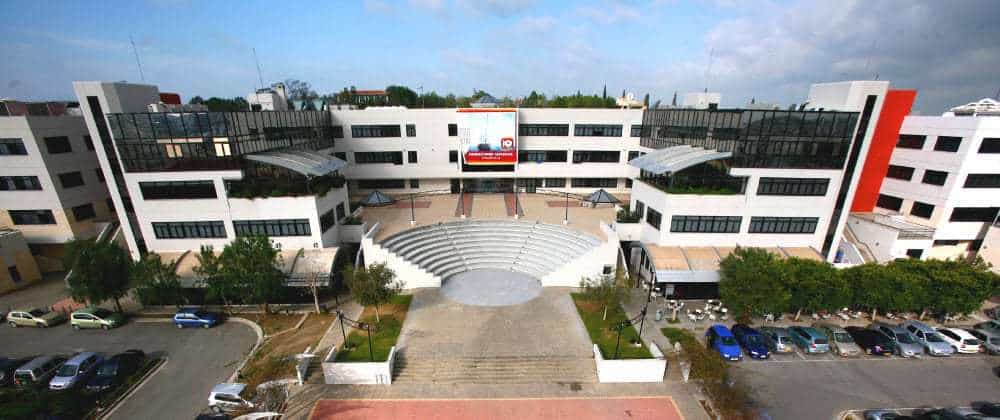
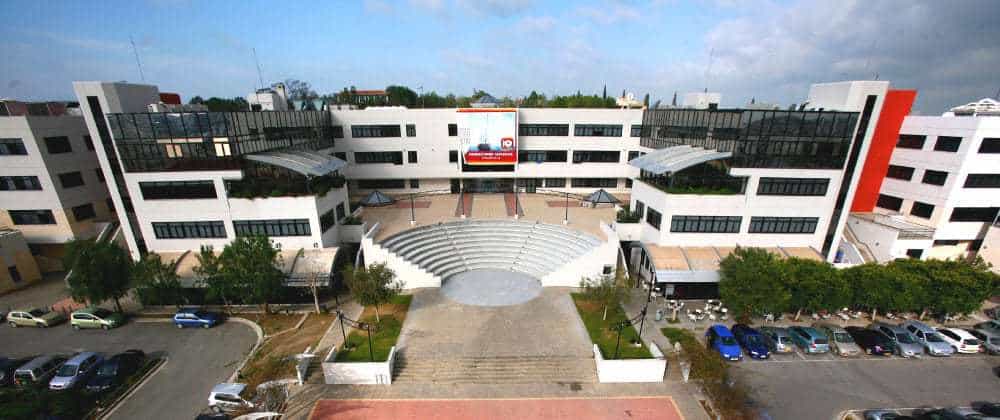
Why Cyprus is the Right Study Abroad Destination for You?
Study in Cyprus has emerged as a strong choice for international students, including Indians, with nearly 50,000 total enrollments in 2025–26, marking an 83% rise compared to a decade earlier. Affordable tuition, EU-recognized degrees, and generous scholarships make Cyprus a competitive alternative to Western Europe.
Key Reasons Why Choose Cyprus:
Growing universities like the University of Cyprus, Cyprus University of Technology, University of Nicosia, and Cyprus International University attract thousands of international students.
Diverse institution types: public universities (low tuition), private universities (flexible admissions, scholarships up to 75%), and specialized colleges.
Popular courses include Medicine, Dentistry, Engineering, Business Administration, Computer Science, and Tourism & Hospitality.
EU-recognized degrees under the Bologna Process ensure global acceptance and mobility.
Part-time work permits allow 20 hours/week during semesters and up to 38 hours/week during breaks.
Straightforward admissions: secondary school completion (minimum 50%), English proficiency (IELTS/TOEFL), passport, academic transcripts, proof of funds, police clearance, SOP.
Recent Updates in Cyprus (2026):
Visa process: Students must obtain a long-stay study visa (Category D) before arrival, then apply for a Temporary Residence Permit within one week.
Work rules: International students can work part-time after six months of study, primarily in hospitality, retail, and services.
Rising demand: Cyprus continues to expand its higher education sector, with international student numbers steadily increasing.
Education System in Cyprus
The education system in Cyprus for international students includes bachelor’s, master’s, and PhD programs, offered by both public and private universities. Students can choose institutions based on budget, academic background, and career goals. Since 2025, public universities have expanded English-taught undergraduate programs, making Cyprus more accessible to Indian students.
The higher education system is aligned with the European Higher Education Area (Bologna Process), ensuring EU-recognized qualifications. Bachelor’s degrees typically last 4 years, master’s programs 1–2 years, and PhDs 3–6 years, blending coursework with research and dissertation.
Education Levels: Key Duration & Outcomes
Higher education levels in Cyprus build progressively from foundational knowledge to advanced research leadership.
Credits in Cyprus follow the ECTS (European Credit Transfer System), quantifying workload (1 ECTS ≈ 25–30 study hours). GPA is calculated on a 0–4.0 scale, with grading adapted from the 0–20 national scale.
Aspect
Details
Credit Hours
1 ECTS ≈ 25–30 study hours; bachelor’s requires 240 ECTS
GPA Scale
4.0 (Excellent, 19–20/20) to 0.0 (Fail, <10/20)
Full Load
30 ECTS per semester for full-time compliance
Types of Institutions: Key Features and Examples
Cyprus institutions vary by funding and focus, offering diverse pathways for international students.
University of Cyprus, Cyprus University of Technology
Private Universities
Tuitionfunded, flexible admissions, scholarships up to 75%
University of Nicosia, European University Cyprus, Frederick University
Public Non-University Institutions
Specialized vocational/technical training
Higher Hotel Institute of Cyprus
Private Colleges
Applied focus, diplomas, and professional pathways
Cyprus International Institute of Management
Top Universities to Study in Cyprus for Indian Students
Cyprus offers a mix of public and private universities, all aligned with the European Higher Education Area (Bologna Process), such as the University of Cyprus, Cyprus University of Technology, University of Nicosia, and European University Cyprus, which consistently attract talent across diverse fields. These universities combine academic excellence with affordable tuition, scholarships up to 75%, and strong industry connections in tourism, healthcare, IT, and finance.
Top 10 Universities in Cyprus (2026) for Indian Students:
Cyprus International Institute of Management (CIIM)
€7,960–€8,500 (₹7–7.5L)
American University of Cyprus
€4,800–€8,500 (₹4.2–7.5L)
Cyprus International University (CIU)
€8,000–€9,000 (₹7–7.9L)
Acceptance Rate in Cyprus Universities for Indian Students (2026)
Acceptance rates in Cyprus are driven by flexible admission policies and the country’s goal of attracting more international students. With over 50,000 foreign enrollees in 2026, Indian applicants benefit from high approval rates and simplified entry requirements.
Rate Breakdown by Tier:
Tier
Rate Range
Examples (Indian-Friendly)
Top
65–75%
University of Cyprus (~70%), Cyprus University of Technology (~68%)
Mid
75–85%
University of Nicosia (~80%), European University Cyprus (~78%)
Base
85–95%
Frederick University (~90%), Neapolis University Pafos (~88%), UCLan Cyprus (~92%)
Key Influencing Factors:
Academic Metrics: Minimum 50% in 12th grade; IELTS 6.0 or TOEFL 70+ (waivers possible).
Holistic Review: SOP, recommendation letters, and proof of funds are required but less competitive.
Indian Competition: No strict country caps; Indian students form one of the largest groups.
Application Timing: Early applications (March–May) improve scholarship chances.
Popular Courses to Study in Cyprus for Indian Students
Popular courses to study in Cyprus for Indian students span medicine, engineering, business, and public health, with strong offerings at the University of Cyprus, European University Cyprus (EUC), the University of Nicosia, and Cyprus International University. These programs balance affordability with EU-recognized career returns.
Top 10 Courses & Universities (2026):
Course
University Examples
Tuition (Total)
MS Computer Science
University of Cyprus, University of Nicosia
€4,000–€6,000 (₹4.2–6.3L)
MS Data Science / AI
University of Nicosia, EUC
€5,000–€7,500 (₹5.2–7.8L)
MS Engineering Management
Cyprus International University
€4,500–€6,500 (₹4.7–6.8L)
MS Business Analytics / Economics
University of Nicosia, EUC
€4,000–€6,500 (₹4.2–6.8L)
MBA / International Business
EUC, University of Nicosia
€8,000–€12,000 (₹8.4–12.6L)
MS Mechanical Engineering
University of Cyprus
€4,500–€7,000 (₹4.7–7.3L)
MS Electrical Engineering
University of Cyprus, CIU
€4,500–€7,500 (₹4.7–7.8L)
MS Finance / Accounting
University of Nicosia, EUC
€5,000–€7,500 (₹5.2–7.8L)
Public Health MPH
EUC, University of Nicosia
€6,000–€9,000 (₹6.3–9.5L)
Biotechnology / Biomedical Sciences
University of Cyprus, EUC
€5,000–€8,000 (₹5.2–8.4L)
Note: The amounts mentioned are approximate and may vary depending on exchange rates.
Admission Requirements for Study in Cyprus (2026)
Studying in Cyprus mandates academic qualifications, English skills, and a student visa via recognized institutions. Applications are typically direct to universities, with streamlined online portals for international students.
Eligibility by Degree Level
Requirements scale with degree level, with undergraduate needing secondary completion and postgraduate requiring bachelor’s credentials.
Cyprus student visa follows admission, proving genuine student status and funding at interview via structured steps.
Step
Requirement
Details
1
Secure Admission Letter
From recognized Cyprus university
2
Apply for Category D Visa
€60–€85 fee; submit documents via embassy
3
Pay Visa Integrity Fee
€250 (₹21,250) + €160 (₹13,600) application fee
4
Arrive & Apply for TRP
Temporary Residence Permit within 1 week
5
Compliance
Part-time work capped at 20 hrs/week; SEVIS-like monitoring
Cost of Studying in Cyprus for Indian Students (2026)
The cost of studying in Cyprus for Indian students is significantly lower than in the USA or UK, while still offering EU-recognized degrees. On average, tuition fees range from €7,000–€12,500 per year (₹6.2–11.1L), with Medicine programs higher at €18,000–€22,500 (₹15.9–19.9L). Living expenses are also affordable, averaging €700–€1,200 per month (₹62K–1.06L). Visa and residence permit fees are modest compared to Western destinations, making Cyprus a cost-effective choice for Indian students.
Total Annual Cost Breakdown:
The following table outlines the typical annual expenses for Indian students in Cyprus, covering tuition, living, and mandatory fees.
Category
Annual Cost (EUR)
Annual Cost (INR)
Tuition
€7,000–€12,500
₹6.2–11.1L
Rent
€3,600–€6,000
₹3.2–5.3L
Insurance
€300–€500
₹26K–44K
Services/Amenities
€1,000–€2,000
₹88K–1.7L
Study Materials
€300–€600
₹26K–53K
Visa/Residence Permit
€60–€85 + €70
₹5.3K–7.5K
Tuition Fees (Semester Wise)
Public universities in Cyprus bill per semester (30 ECTS), while private universities charge annual flat fees. Medicine programs are priced separately due to their higher costs.
Type
Per Semester (EUR)
Annual (EUR / INR)
Public Universities
€3,500–€4,500
€7,000–€9,000 (₹6.2–7.9L)
Private Universities
€4,500–€6,250
€9,000–€12,500 (₹7.9–11.1L)
Medicine Programs
€9,000–€11,250
€18,000–€22,500 (₹15.9–19.9L)
Tuition Fees (Course Wise)
Different courses carry different tuition ranges. Medicine is the most expensive, while Computer Science and Engineering remain affordable compared to global averages.
Course
Annual Tuition (EUR)
Annual Tuition (INR)
MS Computer Science
€7,000–€9,500
₹6.2–8.4L
MS Engineering
€8,534–€9,910
₹7.6–8.8L
MBA / Management
€9,500–€12,000
₹8.4–10.6L
MS Data Science / AI
€8,500–€10,140
₹7.5–9L
Medicine (MBBS)
€18,000–€22,500
₹15.9–19.9L
LLM (Law)
€7,500–€10,000
₹6.6–8.8L
Hospitality & Tourism
€9,000–€12,575
₹7.9–11.1L
Cost of Living in Cyprus for Indian Students (2026)
Monthly living costs in Cyprus are relatively affordable compared to Western Europe. Students typically spend between €700 and €1,200 (₹62K and ₹1.06L) per month, depending on city, lifestyle, and housing choice. Rent is the largest expense, followed by groceries and utilities. Sharing accommodation significantly reduces costs, while student halls offer budget options starting at €180 per month.
Breakdown reflects shared/single options for realistic budgeting across regions.
Expense
Monthly Cost (EUR)
Monthly Cost (INR)
Housing (1BR apartment)
€500–€800
₹44K–70K
Housing (shared/student halls)
€180–€400
₹16K–35K
Utilities
€100–€150
₹8.8K–13K
Groceries
€200–€300
₹17.6K–26K
Transportation
€40–€60
₹3.5K–5.3K
Health Insurance
€25–€50
₹2.2K–4.4K
Dining Out
€80–€120
₹7K–10.6K
Internet/Phone
€30–€50
₹2.6K–4.4K
Entertainment
€50–€100
₹4.4K–8.8K
Total Monthly: ~€700 shared (₹62K) to €1,200 single (₹1.06L).
Most Preferred Cities for Indian Students in Cyprus (2026)
Cyprus attracts thousands of international students annually, with Indian students choosing cities that balance academics, affordability, and career opportunities.
Nicosia: Academic & Cultural Capital Nicosia hosts the University of Cyprus, University of Nicosia, and European University Cyprus, making it the country’s top academic hub. It offers rich cultural experiences, networking opportunities, and affordable student housing.
Limassol: Business & Finance Hub Limassol is Cyprus’s financial and shipping capital, ideal for students in business, finance, and law. It combines modern infrastructure with a Mediterranean lifestyle, though living costs are slightly higher.
Larnaca: Affordable Coastal City Larnaca offers lower living costs compared to Nicosia and Limassol, with access to hospitality, tourism, and business programs. Its coastal setting makes it attractive for students seeking a balance between academics and lifestyle.
Paphos: Tourism & Hospitality Hub Paphos is known for hospitality and tourism programs, supported by its thriving tourism industry. Living costs are moderate, and the city offers a relaxed environment for students.
Famagusta: Student-Friendly & Affordable Famagusta hosts Eastern Mediterranean University (EMU) and offers some of the most affordable living costs in Cyprus. It is popular among Indian students for engineering, IT, and business programs.
Scholarships in Cyprus for Indian Students (2026)
For Indian students, scholarships to study in Cyprus play a crucial role in reducing costs. Tuition fees in Cyprus range from €7,000–€12,500 annually (₹6.2–11.1L), with Medicine programs higher at €18,000–€22,500 (₹15.9–19.9L). Scholarships can offset up to 75% of tuition, making Cyprus one of the most affordable EU destinations. According to the 2026 Cyprus Scholarship Calendar, most private universities allocate funds months before the September intake.
Popular options include government-funded Erasmus+ programs, university-specific merit scholarships, and private foundation awards.
Major Scholarships for Indian Students Studying in Cyprus:
Name
Main Eligibility
Scholarship Amount & Duration
University of Nicosia Merit Scholarships
High academic performance (≥70% in 12th / UG)
25–75% tuition waiver; full program duration
European University Cyprus Scholarships
Merit + extracurriculars
25–50% tuition waiver; renewable annually
Frederick University Scholarships
Academic excellence + financial need
30–50% tuition waiver; renewable annually
UCLan Cyprus Scholarships
Meritbased for UG/PG
25–50% tuition waiver; renewable annually
Neapolis University Pafos Scholarships
Merit + programspecific
25–50% tuition waiver; renewable annually
Cyprus International Institute of Management (CIIM) MBA Scholarships
Strong academic + professional profile
€2,000–€5,000 (₹1.7–4.4L); one year
Erasmus+ Mobility Grants
Enrolled in EUrecognized programs
Covers travel + living allowance; 3–12 months
Cyprus State Scholarships (limited)
Research students in public universities
€2,000–€4,000 (₹1.7–3.5L); annual
Private Foundation Awards (A.G. Leventis, etc.)
Merit + financial need
Variable; partial tuition support
UNIC Blockchain & FinTech Scholarships
Students in Data Science/Blockchain programs
25–50% tuition waiver; program duration
How to Apply to Scholarships for Indian Students
Scholarship applications in Cyprus follow structured timelines. Most universities open applications 6–12 months before September intake, while Erasmus+ deadlines align with EU cycles (Jan–Mar).
Application Steps:
Step
Action
Timeline
1. Research
University websites + Erasmus+ portals
12 months before intake
2. Gather Docs
Transcripts, SOP, 2–3 LORs, CV, proof of funds
6–9 months before
3. Submit Online
University portals / Erasmus+ application
Deadlines vary
4. Interviews
University scholarship committee
Shortlisted only
Key Deadlines (2026 Cycle):
University Merit Scholarships: Nov–Jan (Fall intake)
Erasmus+ Grants: Jan–Mar annually
Private Foundation Awards: Feb–Apr annually
Student Visa Process for Cyprus (2026)
Getting a Cyprus student visa is a key step if you want to study in Cyprus as an Indian student. While it may seem complex, the process becomes simple when broken into four stages: preparing documents, paying fees and booking a slot, interview preparation, and completing postarrival requirements.
Knowing each step helps you meet all requirements to study in Cyprus and increases your chances of approval.
1. Before the Interview: Documents You Need
Make sure you have these ready before booking your visa interview:
Admission letter from a Cyprus university (public or private)
Valid passport (at least six months beyond intended stay)
Visa application form + appointment confirmation
Recent passport-size photos (Cyprus visa specifications)
Proof of funds: bank statements showing €7,000–€15,000 (₹6.2–13.2 lakh), sponsor letter, or scholarship award
Academic transcripts and certificates (12th grade, bachelor’s, or master’s, depending on level)
Police clearance certificate (mandatory for non-EU students)
Health insurance certificate covering Cyprus duration
2. Visa Fee Payment & Slot Booking
Pay the student visa application fee (€60–€85 / ₹5,300–7,500)
Pay the residence permit fee (€70 / ₹6,200) after arrival
Book your visa interview slot through the Cyprus embassy/VFS portal
Keep the receipt, as it must be presented on the interview day
3. Preparing for the Visa Interview
Research your university and program to explain why Cyprus is the best fit
Be ready to talk about your study plan, career goals, and ties to India
Organize your financial documents, including scholarships or sponsor letters
Keep all documents neatly arranged for easy access
Prepare to answer questions about living costs, accommodation, and plans
4. On the Visa Interview Day & After Arrival
Arrive at the Cyprus embassy/consulate early
Dress professionally and stay confident
Answer questions clearly and honestly; avoid over-explaining
Submit all required documents when asked
Biometrics and photos will be taken onsite
After arrival in Cyprus, apply for a Temporary Residence Permit (TRP) within one week at the local migration office
Carry proof of accommodation, medical tests, and insurance for TRP approval
PR and Settlement in Cyprus (2026)
For Indian students, Cyprus offers a clear pathway from a student visa to permanent residency (PR) and eventual settlement. The process is simpler compared to larger EU countries, with flexible work rights after graduation and eligibility for long-term residence permits. By 2026, Cyprus will have aligned its immigration framework with EU directives, making it easier for international graduates to transition into the workforce and secure residency.
Pathway from Student to PR
The settlement process in Cyprus typically follows these stages:
Student Visa & Temporary Residence Permit (TRP)
Issued upon arrival for the duration of studies.
Renewable annually with proof of enrollment and accommodation.
2. Post-Study Work Opportunities
Graduates can apply for a work permit if they secure employment in Cyprus.
Popular sectors: IT, Business, Hospitality, Medicine.
Work permits are usually valid for 1–2 years and are renewable.
3. Permanent Residency (PR) Eligibility
After 5 years of continuous legal residence (including study + work), students can apply for PR.
Requires proof of stable income, accommodation, and health insurance.
Fast-track PR option exists for investors and highly skilled professionals.
4. Citizenship Pathway
After 7 years of residence (or 5 years if married to a Cypriot citizen), individuals may apply for citizenship.
Citizenship grants full EU rights, including free movement and work across Europe.
Key Requirements for PR in Cyprus (2026):
Valid residence permits throughout the study and work period.
Employment contract or proof of self-employment.
Minimum annual income (€15,000 (₹13.2 lakh) for singles, €20,000 (₹17.6 lakh) + for families).
Clean criminal record and health insurance coverage.
Proof of accommodation (rental contract or property ownership).
Job Opportunities in Cyprus for Indian Students (2026)
Studying in Cyprus opens diverse career paths for Indian students. With access to EU-recognized degrees, internships, and growing industries, students can gain hands-on experience while building a strong international profile. Cyprus is strengthening its position as a hub for technology, finance, shipping, and tourism, creating demand for skilled graduates. Average annual salaries for graduate job roles range approximately between €18,000–€40,000 (₹15.8–35.2L) depending on sector and experience.
In-Demand Domains as per the Current Market Scenario
The jobs in Cyprus for Indians are constantly evolving. Currently, the sectors with high demand for skilled professionals include:
Technology & IT: Software Development, Data Science, Cybersecurity, FinTech, Gaming
Business & Finance: Accounting, Consulting, Banking, Shipping Management
Healthcare & Life Sciences: Nursing, Medical Research, Pharmaceuticals
Tourism & Hospitality: Hotel Management, Travel Services, Culinary Arts
Engineering: Civil, Mechanical, Electrical, Renewable Energy
Top Job Roles and Salary
Indian students who graduate in these fields often land roles with competitive packages:
Job Role / Title
Approximate Annual Salary (EUR)
Approximate Annual Salary (INR)
Software Developer
€24,700–€31,500
₹21.7–27.7L
Data Scientist
€25,000–€40,000
₹22–35.2L
Data Analyst
€22,000–€28,000
₹19.3–24.6L
Finance / Accountant
€22,000–€26,000
₹19.3–22.9L
Civil / Mechanical Engineer
€25,000–€32,000
₹22–28.1L
Nurse / Healthcare Professional
€18,000–€24,000
₹15.8–21.1L
Hospitality Manager
€20,000–€26,000
₹17.6–22.9L
Note: Salaries are approximate and may vary depending on employer, experience, and exchange rates.
Future Trends
Looking ahead, certain domains are projected to see rapid growth in Cyprus:
Artificial Intelligence & FinTech: Expanding IT and blockchain sectors.
Green Technology & Sustainability: Renewable energy and environmental engineering.
Healthcare & Biotech: Rising demand due to EU healthcare integration.
Tourism & Hospitality: Continued growth as Cyprus remains a top EU tourist destination.
Work While Studying in Cyprus
International students can work part-time while studying, but regulations apply:
Waiting Period: Students must complete 6 months of study before being eligible to work.
Work Hour Limits: Up to 20 hours per week during term time, and 38–40 hours per week during semester breaks.
Eligible Sectors: Hospitality, retail, agriculture, and certain service roles.
Permit Requirement: Students must apply for a work permit through the Ministry of Labour.
Challenges Indian Students Face in Cyprus (2026)
While Cyprus offers affordable tuition, EU-recognized degrees, and a safe environment, Indian students encounter some practical challenges during their stay:
Limited Part-Time Job Opportunities: Jobs are mainly in hospitality, retail, or seasonal services. Competition among international students is high, and wages are modest.
Visa & Residence Permit Delays: Processing times for student visas and Temporary Residence Permits (TRP) can be longer than expected, especially during peak intake seasons.
Language Barriers: Although most programs are taught in English, daily life often requires basic Greek or Turkish, which can be difficult for newcomers.
Cultural Adjustment: Adapting to the Mediterranean lifestyle, food habits, and slower bureaucratic processes can be challenging for Indian students.
Financial Planning: While tuition is affordable, living costs (~€700–€1,200 per month) (₹62K–₹1.06L) can strain budgets if not planned carefully.
Tips for Indian Students Planning to Study in Cyprus (2026)
To overcome these challenges, Indian students should prepare strategically:
Apply Early: Submit university and visa applications 6–12 months before intake to avoid delays.
Budget Realistically: Plan for €700–€1,200 (₹62K–₹1.06L) monthly living costs; consider shared housing and student halls to save money.
Strengthen English & Learn Basic Greek: English proficiency is essential for academics, while basic Greek helps with daily life.
Leverage Scholarships: Many private universities offer 25–75% tuition waivers; apply early to maximize chances.
Prepare for Limited Work Options: Do not rely solely on part-time jobs; secure funds before arrival and explore internships through your university.
Engage with the Indian Community: Cyprus has a growing Indian student network; connecting with peers helps with cultural adjustment and support.
Want to Study in Cyprus
Country Guide
Why Study in Cyprus?
Top Courses in Cyprus
Here are some of the top courses to study in Cyprus as per Cyprus News.
Nishchay from Delhi-NCR carries the quiet intensity of a storyteller and the soul of a dreamer. Currently he is pursuing a BS in Information Technology at Northeastern University, Boston, he chose meaning over comfort, a...Read more
Nishchay Malik
BSc in Information Technology, Northeastern University, USA
Aditi is boldly rewriting what it means to be a multi-passionate learner. A Bharatanatyam dancer, design thinker, and proud dog-mom, she’s now pursuing an MBA at Drexel University, USA. She’s not just chasing opportuniti...Read more
Aditi Mehra
Masters of Business Administration, Drexel University, USA
From Belgaum to Berlin, Sanat turned a childhood dream into reality. Now pursuing a Master’s in Data Science at the University of Europe for Applied Sciences. Fuelled by purpose, Sanat’s story is proof that when your vis...Read more
Sanat Kumar
MS in Data Science, University of Europe for Applied Sciences
Manjot from Hoshiarpur, is pursuing a BSc in Computer Science at IU, Germany. With curiosity and unstoppable Punjabi spirit, she is ready to turn her dreams into reality. Thoughtful and fearless, Manjot embraces every ch...Read more
Manjot Kaur
BSc Computer Science, IU, Berlin
Hailing from Bhilwara, Rajasthan, Nirbhay Pal is currently pursuing his Master’s in International Management at ISM, Germany. His journey from a small town to the heart of Europe reflects quiet determination, fearless am...Read more
Nirbhay Pal
Masters in International Management, ISM, Germany
‘The Lighthouse by upGrad’ brings you the journeys of 6 learners who stepped into global opportunities through upGrad’s effort to make studying abroad more accessible and affordable. This series reflects upGrad’s core mi...Read more
The Lighthouse
A Podcast Series by upGrad Study Abroad
I have been working as a software engineer for 4 years now and was looking for a Master's course in Data Science and I came across this upGrad Abroad program. I contacted the team and they explained the whole process an...Read more
Prabhat Kumar Singh
MS Data Science, IU Germany
I was very much interested in studying abroad and looked into a lot of agents and programs. That's when I came across an advertisement upGrad on social Media page. That's when my journey began. And in no time I saw mysel...Read more
Kirti Rao
MBA Finance, IU Germany
The course curriculum is good. Moving to the US after completing the online course back in India, it was a good journey. We are still exploring, meeting new people, making connections everyday and looking forward to new ...Read more
Hritike Singh Rawat
MS Data Analytics, Clark University
I always wanted to study abroad so I decided to apply for my Masters program but it did not work out somehow due to budget, proper guidance. One day while scrolling through Facebook, I saw an ad from upGrad and I immedia...Read more
Anurag Singh
MBA 90 ECTS, IU Germany
I'm very thrilled to pursue my Masters in Data Analytics at Clark University USA. It was my dream & through upGrad I was able to fulfill it. If you ask me why I chose this program it is because I got 2 courses waived off...Read more
Varshitha M
MS Data Analytics, Clark University
I received an email from upGrad mentioning some foreign universities, I was immediately excited and decided to trust upGrad with my application to the University. I got the advantage of not preparing for competitive exam...Read more
The cost of living in Cyprus is typically lower than in many other European countries, providing a more affordable lifestyle. A single person can expect to spend between €1,800 and €2,000 per month, including rent.
What is the average monthly living expense for Indian students in Cyprus?
Living costs range between €700 and €1,200 per month (₹62K–₹1.06L). Shared housing and student halls are the most affordable options, while private apartments cost more. Groceries, transport, and utilities are relatively cheaper compared to Western Europe, making Cyprus budget-friendly.
What cultural challenges might Indian students face in Cyprus?
Indian students may face language barriers since Greek is widely spoken outside classrooms. Adjusting to Mediterranean food habits and slower bureaucratic processes can also be challenging. Joining student communities and learning basic Greek phrases helps ease the transition.
What is the average monthly living expense for Indian students in Cyprus?
Living costs range between €700 and €1,200 per month (₹62K–₹1.06L). Shared housing and student halls are the most affordable options, while private apartments cost more. Groceries, transport, and utilities are relatively cheaper compared to Western Europe, making Cyprus budget-friendly.
What cultural challenges might Indian students face in Cyprus?
Indian students may face language barriers since Greek is widely spoken outside classrooms. Adjusting to Mediterranean food habits and slower bureaucratic processes can also be challenging. Joining student communities and learning basic Greek phrases helps ease the transition.



 CGPA to GPA Calculator
 Expense Calculator
 IELTS Band Calculator
 Education Loan Calculator
 SGPA to Percentage Calculator
 University partner
 ACCOMMODATION
 experience-center