All courses
Agentic AI
Agentic AI

IIIT Bangalore
Executive Programme in Generative AI for LeadersArtificial Intelligence
Degree / Exec. PG

IIIT Bangalore
Executive Diploma in Machine Learning and AI
OPJ Global University
Master’s Degree in Artificial Intelligence and Data Science
Liverpool John Moores University
Master of Science in Machine Learning & AI
Golden Gate University
DBA in Emerging Technologies with Concentration in Generative AIExecutive Certificate

IIITB & IIM, Udaipur
Chief Technology Officer & AI Leadership ProgrammeIIIT Bangalore
Executive Programme in Generative AI for Leaders
upGrad | Microsoft
Gen AI Foundations Certificate Program from MicrosoftupGrad | Microsoft
Gen AI Mastery Certificate for Data AnalysisupGrad | Microsoft
Gen AI Mastery Certificate for Software DevelopmentupGrad | Microsoft
Gen AI Mastery Certificate for Managerial ExcellenceOffline Bootcamps

upGrad
Data Science and AI-MLDoctorate
For All Domains
IIITB & IIM, Udaipur
Chief Technology Officer & AI Leadership Programme
Swiss School of Business and Management
Global Doctor of Business Administration from SSBM
Edgewood University
Doctorate in Business Administration by Edgewood UniversityGolden Gate University
Doctor of Business Administration From Golden Gate University
Rushford Business School
Doctor of Business Administration from Rushford Business School, SwitzerlandGolden Gate University
Master + Doctor of Business Administration (MBA+DBA)-d9bdeff6165f4eb1ba2adcebde78e961.svg)
University of Waterloo
Chief Technology and AI Officer ProgramLeadership / AI
Golden Gate University
DBA in Emerging Technologies with Concentration in Generative AIMachine Learning
Machine Learning
Data Science
Degree / Exec. PG
O.P Jindal Global University
Master’s Degree in Artificial Intelligence and Data ScienceIIIT Bangalore
Executive Diploma in Data Science & AILiverpool John Moores University
Master of Science in Data ScienceExecutive Certificate
upGrad | Microsoft
Gen AI Foundations Certificate Program from MicrosoftupGrad | Microsoft
Gen AI Mastery Certificate for Data AnalysisupGrad | Microsoft
Gen AI Mastery Certificate for Software DevelopmentupGrad | Microsoft
Gen AI Mastery Certificate for Managerial ExcellenceupGrad | Microsoft
Gen AI Mastery Certificate for Content CreationOffline Bootcamps
upGrad
Data Science and AI-MLupGrad
Data AnalyticsMBA
Masters
Paris School of Business
Master of Science in Business Management and TechnologyO.P.Jindal Global University
MBA (with Career Acceleration Program by upGrad)Edgewood University
MBA from Edgewood UniversityO.P.Jindal Global University
MBA from O.P.Jindal Global UniversityGolden Gate University
Master + Doctor of Business Administration (MBA+DBA)Executive Certificate
IMT, Ghaziabad
Advanced General Management ProgramMarketing
Executive Certificate
Offline Bootcamps
upGrad
Digital MarketingManagement
Degree
O.P Jindal Global University
MSc in International Accounting & Finance (ACCA integrated)Paris School of Business
Master of Science in Business Management and Technology
Golden Gate University
Master of Arts in Industrial-Organizational PsychologyExecutive Certificate

IIM Kozhikode
Human Resource Analytics Course from IIM-KupGrad | Microsoft
Gen AI Foundations Certificate Program from MicrosoftEducation
Education

Northeastern University
Master of Education (M.Ed.) from Northeastern UniversityEdgewood University
Doctor of Education (Ed.D.)Edgewood University
Master of Education (M.Ed.) from Edgewood UniversityCertifications
Project Management
Certification

Knowledgehut
Leadership And Communications In ProjectsKnowledgehut
Microsoft Project 2007/2010-ae8d039bbd2a41318308f8d26b52ac8f.svg)
Knowledgehut
Financial Management For Project ManagersKnowledgehut
Fundamentals of Earned Value Management (EVM)Knowledgehut
Fundamentals of Portfolio ManagementKnowledgehut
Fundamentals of Program Management-35c169da468a4cc481c6a8505a74826d.webp&w=128&q=75)
Knowledgehut
CAPM® CertificationsKnowledgehut
Microsoft® Project 2016Certifications & Trainings
-7f4b4f34e09d42bfa73b58f4a230cffa.webp&w=128&q=75)
Knowledgehut
PMP® CertificationKnowledgehut
PMI-RMP® CertificationKnowledgehut
PMP Renewal Learning PathKnowledgehut
Oracle Primavera P6 V18.8Knowledgehut
Microsoft® Project 2013Knowledgehut
PfMP® Certification CourseKnowledgehut
Project Planning and MonitoringPrince2 Certifications

Knowledgehut
PRINCE2® FoundationKnowledgehut
PRINCE2® PractitionerKnowledgehut
PRINCE2 Agile Foundation and PractitionerKnowledgehut
PRINCE2 Agile® Foundation CertificationKnowledgehut
PRINCE2 Agile® Practitioner CertificationManagement Certifications
Knowledgehut
Project Management Masters Certification ProgramKnowledgehut
Change ManagementKnowledgehut
Project Management TechniquesKnowledgehut
Product Management Certification ProgramKnowledgehut
Project Risk Management- Study abroad
- Offline centres
- uGSOT - B.Tech
More
%20(1)-d5498f0f972b4c99be680c2ee3b792d7.svg)


Python Courses
Learn Python basics and core programming concepts.
Build skills in logic, data structures, and functions.
Practice real coding tasks and problem-solving workflows.
Work with Python tools for automation and data tasks.
Talk to a Counsellor
By clicking, I accept the T&C and Privacy Policy
Learn From The Best
8
Instructors
10
Industry Experts



















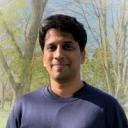

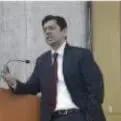




-39a9e7a7278a441ea08a60a1f45b4913.png&w=128&q=75)
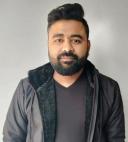

Learn by Doing
Our data science online certification programs have projects to apply theoretical knowledge in practical scenarios, helps you to tackle real-world problems.
16+
Industry projects to choose from


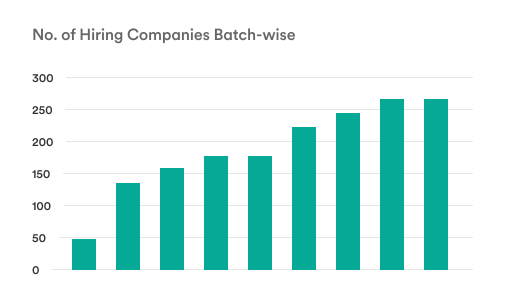
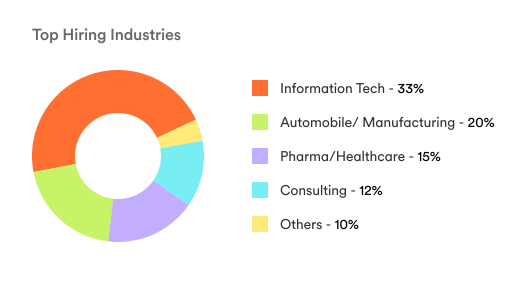
Our Placement Numbers
Excel in data-driven careers with our certification in Data Science, boasting a high rate of successful student placements. Get hired by top companies.
Top Recruiters









What Our Learners Have To Say












-f76598bd0be347138a7a742ac19fa7bc.webp&w=3840&q=75)







You Might Like To Watch


-98e41100725448ef90d7da58ec3c852a.webp&w=828&q=75)



How Will upGrad Supports You
Receive unparalleled guidance from industry mentors, teaching assistants, and graders
Receive one-on-one feedback from our seasoned data science faculty on submissions and personalized feedback to improvement
Our Data Science Syllabus is designed to provide you with ample of industry relevant knowledge with examples
Python Courses Overview
Frequently Asked Questions
1. What are Python courses and who should enroll?
Python courses teach programming basics and applied skills for real tasks. They suit students, working professionals, and beginners with no coding background. You learn logic, syntax, and practical problem solving used across tech, data, automation, and business roles.
2. Are Python courses suitable for beginners with no experience?
Yes. Most programs start from scratch and explain concepts step by step. You practice coding from day one, which helps build confidence. Regular exercises and examples make learning approachable even if you have never written code before.
3. How long do Python courses usually take to complete?
Duration depends on depth and practice time. Short programs run a few weeks, while structured learning may take several months. Progress improves when you code daily and revisit concepts through assignments and small projects.
4. What skills do you gain from Python courses?
You learn programming logic, data handling, automation basics, and problem solving. These skills help you write clean scripts, work with files and data, and prepare for advanced areas like analytics, web development, or machine learning.
5. Can Python courses help with job opportunities?
Yes. Python is widely used across industries. Practical projects and consistent coding practice help you show real ability. Employers value candidates who can solve problems and apply code to tasks rather than only knowing theory.
6. Which course is best for Python?
The best option depends on your goal. Choose a course that starts with fundamentals, includes hands-on coding, offers feedback, and provides real projects. Programs with clear structure and practice help you learn faster and apply skills confidently.
7. What is the 5 day Python course?
A 5 day course is usually a short crash program. It introduces syntax, basic logic, and simple scripts. It works as an overview but is not enough for mastery. Continued practice is needed after completion.
8. Can I learn Python in 20 days?
You can learn basic syntax and simple programs in 20 days with daily practice. You may not become job-ready, but you can build a strong foundation. Consistent coding and small projects make learning more effective.
9. Do Python courses include projects and practice?
Good programs include assignments and projects. These tasks help you apply concepts, fix errors, and improve logic. Projects also help you understand how Python is used to solve real problems beyond examples.
10. Are Python courses better than self-learning?
Courses provide structure, guided practice, and feedback. Self-learning works but often takes longer due to trial and error. A course helps you stay focused, avoid confusion, and follow a clear learning path.
11. Who should take Python courses in 2026?
Students, professionals, analysts, and founders benefit from learning Python. It suits anyone looking to automate tasks, work with data, or move into tech roles. The language remains relevant across many industries.
upGrad Learner Support
Talk to our experts. We are available 7 days a week, 10 AM to 7 PM

Indian Nationals

Foreign Nationals
Disclaimer
The above statistics depend on various factors and individual results may vary. Past performance is no guarantee of future results.
The student assumes full responsibility for all expenses associated with visas, travel, & related costs. upGrad does not .