
All courses
Agentic AI
Agentic AI

IIIT Bangalore
Executive Programme in Generative AI for LeadersArtificial Intelligence
Degree / Exec. PG

IIIT Bangalore
Executive Diploma in Machine Learning and AI
OPJ Global University
Master’s Degree in Artificial Intelligence and Data Science
Liverpool John Moores University
Master of Science in Machine Learning & AI
Golden Gate University
DBA in Emerging Technologies with Concentration in Generative AIExecutive Certificate

IIITB & IIM, Udaipur
Chief Technology Officer & AI Leadership Programme
IIIT-B & IIM, Udaipur
Chief Data and AI Officer ProgrammeOffline Bootcamps

upGrad
Data Science and AI-MLDoctorate
For All Domains
IIITB & IIM, Udaipur
Chief Technology Officer & AI Leadership Programme
Swiss School of Business and Management
Global Doctor of Business Administration from SSBM
Edgewood University
Doctorate in Business Administration by Edgewood UniversityGolden Gate University
Doctor of Business Administration From Golden Gate University
Rushford Business School
Doctor of Business Administration from Rushford Business School, SwitzerlandGolden Gate University
Doctor of Technology in Applied & Agentic AI-d9bdeff6165f4eb1ba2adcebde78e961.svg)
University of Waterloo
Chief Technology and AI Officer ProgramLeadership / AI
Golden Gate University
DBA in Emerging Technologies with a concentration in Generative and Agentic AIMachine Learning
Machine Learning
Data Science
Degree / Exec. PG
O.P Jindal Global University
Master’s Degree in Artificial Intelligence and Data ScienceIIIT Bangalore
Executive Diploma in Data Science & AILiverpool John Moores University
Master of Science in Data ScienceExecutive Certificate

upGrad | Microsoft
Gen AI Foundations Certificate Program from MicrosoftIIIT-B & IIM, Udaipur
Chief Data and AI Officer ProgrammeupGrad | Microsoft
Gen AI Mastery Certificate for Data AnalysisupGrad | Microsoft
Gen AI Mastery Certificate for Software DevelopmentupGrad | Microsoft
Gen AI Mastery Certificate for Managerial ExcellenceupGrad | Microsoft
Gen AI Mastery Certificate for Content CreationBootcamp
Offline Bootcamps
upGrad
Data Science and AI-MLMBA
Masters

Liverpool John Moores University
Master of Business Administration from Liverpool John Moores University (LJMU) with IIM Udaipur CertificationO.P.Jindal Global University
MBA (with Career Acceleration Program by upGrad)Edgewood University
MBA from Edgewood UniversityO.P.Jindal Global University
MBA from O.P.Jindal Global UniversityExecutive Certificate
Marketing
Executive Certificate
upGrad | Microsoft
Gen AI Foundations Certificate Program from MicrosoftupGrad | Microsoft
Gen AI Mastery Certificate for Content CreationOffline Bootcamps
upGrad
Digital MarketingManagement
Degree
O.P Jindal Global University
MSc in International Accounting & Finance (ACCA integrated)
Golden Gate University
Master of Arts in Industrial-Organizational PsychologyExecutive Certificate
IIIT-B & IIM, Udaipur
Chief Technology Officer & AI Leadership ProgrammeIIIT-B & IIM, Udaipur
Chief Data and AI Officer Programme
IIM Kozhikode
Human Resource Analytics Course from IIM-KupGrad | Microsoft
Gen AI Foundations Certificate Program from MicrosoftBootcamp
HDFC Life
Insurance Fundamentals ProgramEducation
Education

Northeastern University
Master of Education (M.Ed.) from Northeastern UniversityEdgewood University
Doctor of Education (Ed.D.)Edgewood University
Master of Education (M.Ed.) from Edgewood UniversityCertifications
Project Management
Certification

Knowledgehut
Leadership And Communications In ProjectsKnowledgehut
Microsoft Project 2007/2010-ae8d039bbd2a41318308f8d26b52ac8f.svg)
Knowledgehut
Financial Management For Project ManagersKnowledgehut
Fundamentals of Earned Value Management (EVM)Knowledgehut
Fundamentals of Portfolio ManagementKnowledgehut
Fundamentals of Program Management-35c169da468a4cc481c6a8505a74826d.webp&w=128&q=75)
Knowledgehut
CAPM® CertificationsKnowledgehut
Microsoft® Project 2016Certifications & Trainings
-7f4b4f34e09d42bfa73b58f4a230cffa.webp&w=128&q=75)
Knowledgehut
PMP® CertificationKnowledgehut
PMI-RMP® CertificationKnowledgehut
PMP Renewal Learning PathKnowledgehut
Oracle Primavera P6 V18.8Knowledgehut
Microsoft® Project 2013Knowledgehut
PfMP® Certification CourseKnowledgehut
Project Planning and MonitoringPrince2 Certifications

Knowledgehut
PRINCE2® FoundationKnowledgehut
PRINCE2® PractitionerKnowledgehut
PRINCE2 Agile Foundation and PractitionerKnowledgehut
PRINCE2 Agile® Foundation CertificationKnowledgehut
PRINCE2 Agile® Practitioner CertificationManagement Certifications
Knowledgehut
Project Management Masters Certification ProgramKnowledgehut
Change ManagementKnowledgehut
Project Management TechniquesKnowledgehut
Product Management Certification ProgramKnowledgehut
Project Risk Management- Study abroad
- Offline centres
- uGSOT - B.Tech
More

%20(2)-db0b6f38da9c485faf76e366793c9b9e.webp&w=128&q=75)



India’s #1 Tech University
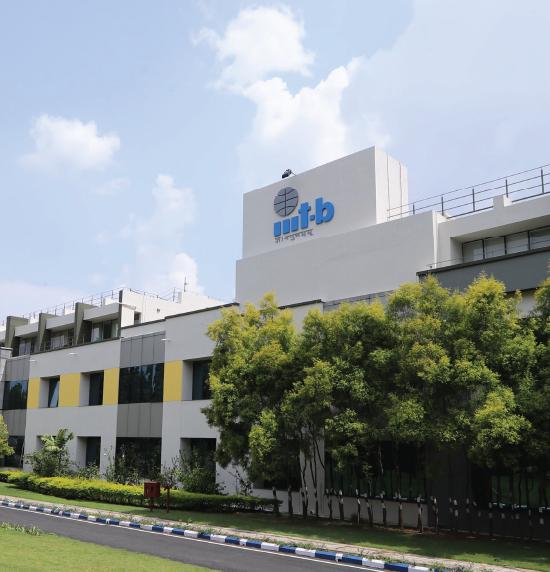
Executive Programme in Generative AI & Agentic AI for Leaders
Architect, Govern & Scale Enterprise-Ready GenAI and Agentic AI Systems in your organization. Join IIIT Bangalore alumni network of AI Experts at Amazon, HSBC, ICICI, Kotak, Microsoft, Jio, Swiggy, and more.
Enterprise AI Strategy
Agentic AI & Execution

Designed to Build Enterprise-Ready AI Leaders
Built for Leaders Driving the AI Strategy
20+
Case Studies
6
Phase-based workshops
1
Board Ready AI-Dossier
Six-Phase Architecture. Frame, Orchestrate, Resource, Guard, Earn, Deploy
Decision-Forcing Cases. 20 anchor cases across Indian and global enterprises
India Regulation Built In. DPDP Act, RBI, SEBI, CERT-In - not an appendix
Agentic AI at the Core. Copilot, task, workflow, and decision agent taxonomy
Vendor and Economics Rigour. Token economics, vendor scorecard, sovereign AI evaluation
No Coding Required. Built for business and functional leaders with 4+ years of experience
AI Economics & the ROI Behind Every AI Model: From Tokens Spent to Value Earned
Need to know more?
Get to know the course in depth by downloading the course brochure
Your AI Leadership Certification
On completion of this programme, you will receive a prestigious certificate from IIIT-Bangalore


-f236e80305d1436583ebbeb5e5225e57.webp&w=3840&q=75)
Enterprise GenAI & Agentic AI Curriculum
Landscape, Data, Opportunity, Portfolio Prioritisation: Frame
Module 1
3 weeks
Key Topics
Three waves of enterprise AI: predictive, generative, and agentic
AI maturity diagnostic and organisational readiness assessment
Porter's Five Forces through an AI lens
AI as efficiency play, competitive weapon, or new business model
Data Readiness Scorecard: quality, accessibility, governance, sovereignty
Portfolio Prioritisation Heatmap: impact vs. feasibility vs. governance complexity
Minimum Viable Governance Canvas and ethics decision screen
Indian enterprise AI maturity clusters and Nasscom benchmarks
Deliverable
Opportunity Thesis with Data Readiness Scorecard and Portfolio Prioritisation Heatmap
Competitive Strategy, Agents, Indian Sector Deep-Dives: Orchestrate
Module 2
Key Topics
Four agent archetypes: copilot, task, workflow, and decision agent
Governance tier assignment per archetype
Multi-agent systems, orchestration patterns, and Model Context Protocol
Three strategic AI plays and competitive positioning
AI applications across CX, operations, finance, HR, and healthcare
Multilingual and voice-first AI for Indian enterprise: Bhashini, Sarvam AI, BharatGen
India Stack as AI-ready infrastructure: Aadhaar, UPI, DigiLocker GCC positioning: AI innovation hub vs. cost centre
GCC positioning: AI innovation hub vs. cost centre
Deliverable
Use-Case Blueprint with Agent Classification Matrix and stakeholder map
Operating Models, Talent, Vendors, Platform, Token Economics: Resource
Module 3
Key Topics
Four AI operating models: COE, federated, infrastructure, GCC-as-AI-hub
Leader as AI product owner: stage gates and decision rights
AI talent strategy in the Indian market: reskilling vs. Hiring
Vendor evaluation framework: 7 questions for any AI vendor
Agent platform market: Copilot Studio, Bedrock Agents, Vertex AI, open-source
Token economics: cost-per-task, monthly run rate, break-even vs. FTE
Build vs. buy vs. partner vs. self-host decision framework
POC design: go/no-go gates, kill criteria, and staged validation
Deliverable
Operating Model Memo with Vendor Evaluation Scorecard and Token Economics Calculator
Governance, Risk, Cyber/IP, Ethics, Indian + Global Regulation: Guard
Module 4
Key Topics
Full enterprise AI governance stack: risk taxonomy, controls, policy, monitoring, incident response
Agentic-specific risks: tool misuse, looping, supervision gap, hallucination at scale
AI cybersecurity: prompt injection, data poisoning, model theft, adversarial attacks
Ethics instrument: five-question screen covering fairness and explainability
DPDP Act, RBI, SEBI, CERT-In, MeitY, IRDAI, TRAI, and NMC - with enforcement realism
AI Governance Passport methodology for Indian regulatory mapping
Global regulatory mapping: GDPR, EU AI Act, NIST AI RMF, ISO/IEC 42001
GCC compliance architecture: satisfying HQ, Indian, and client-country regulators simultaneously
Deliverable
Governance Framework with AI Governance Passport covering India and one global jurisdiction
AI Economics, Board Narrative, Change Leadership, Stakeholder Mobilisation
Module 5
Key Topics
Board-level ROI model: value hypothesis, NPV, sensitivity analysis, payback period
Token economics at 30/60/90-day horizons for agentic workflows
AI sustainability and ESG: compute carbon footprint and SEBI BRSR disclosure
Change leadership for Indian enterprises: hierarchical culture and the frozen middle
ADKAR change management framework applied to AI adoption
Board-level AI communication: structure, objection handling, Indian board dynamics
Three-message communication cascade: board, leadership, and all-hands
Stakeholder mobilisation and building internal AI champions
Deliverable
Board Investment Case with ROI Model, Board Investment Memo, and Change Adoption Plan
90-Day Roadmap, Measurement, Personal AI Architecture, Dossier: Deploy
Module 6
Key Topics
90-day deployment playbook: Days 1–30 mandate, 31–60 pilot, 61–90 measure and iterate
30/60/90 Measurement Protocol: leading indicators, lagging indicators, scale/kill gates
Domain-specific AI KPIs across CX, Finance, HR, Operations, and Sales
Emerging AI frontiers: capability shifts, regulatory developments, new agent capabilities
Personal AI workflow architecture: delegation boundaries and team guardrails
AI Leadership Execution Dossier assembly: narrative coherence and executive summary
Capstone defence preparation: evidence-based objection handling under adversarial Q&A
Post-programme: 90-day check-in, alumni community, and dossier progress tracking
Deliverable - 90-Day Deployment Roadmap, Measurement Protocol, and complete AI Leadership Execution Dossier defended before faculty and industry practitioners
Tools
Meet the Team That Is Invested in Your Success
2
Instructors
4
Industry Experts









Where Strategy Met Reality: Enterprise AI Cases That Matter
Gain industry exposure with relevant projects taught by leading faculty and industry leaders
8
Case Studies

-e5a7e4a9611d42b7a8c07126bb22d164.svg)


-98cba5b9342a4f088506714539ebdfa8.svg)



Your Journey to Enterprise AI Leadership
Assess AI readiness and prioritise investments using the Data Readiness Scorecard and Portfolio Heatmap
Apply competitive analysis through an AI lens to identify the most disrupted force in your industry
Build your Opportunity Thesis with data rationale, governance screen, and portfolio prioritisation
Evaluate AI operating models and design stage gates for explore, pilot, scale, and operate
Run a structured vendor war-room with token economics analysis and sovereign AI evaluation
Design a proof-of-concept with explicit go/no-go gates and kill criteria
Construct a board-level ROI model with NPV, sensitivity analysis, and sustainability consideration
Build a change adoption plan designed for Indian organisational culture and the frozen middle
Defend a four-minute board presentation under live CFO and Chairman challenge

Classify AI deployments across four archetypes: copilot, task, workflow, and decision agent
Evaluate your strategic AI play: efficiency, competitive weapon, or new business model
Design use cases with functional mapping, stakeholder dependencies, and language requirements
Design a full governance stack: risk register, ethics screen, controls, and incident response
Map your initiative against Indian regulatory obligations - DPDP Act, RBI, SEBI, CERT-In, MeitY
Build an AI Governance Passport for India plus one additional global jurisdiction
Design a 90-day roadmap with 30/60/90 measurement gates and kill/scale criteria
Assemble all six artefacts into a single board-ready AI Leadership Execution Dossier
Present and defend your dossier before faculty and industry practitioners in a live capstone defence
The upGrad Enterprise AI Advantage
Certifications
Curriculum
Tools & Techniques
Practical Applications
Immersion
Career Support
Opportunities within upGrad
Thought Leadership and Personal Brand
6-Phase Decision Architecture
upGrad
Dual certification from IIIT Bangalore and Microsoft
Enterprise-ready Generative & Agentic AI system design: from RAG to multi-agent architectures
Includes ChatGPT, DALL-E 2, LangChain, and Pinecone
Industry-aligned capstone with mentoring to ship a working AI prototype
On-campus immersion at IIIT-Bangalore
AI leadership positioning and career strategy support
Opportunity to contribute and teach within the upGrad ecosystem
Access to academicians and industry leaders in AI
A structured executive blueprint to frame, govern, and deploy enterprise AI strategy, built on your organisation's real context
Competitors
Often limited or single certification
Primarily theoretical
Basic exposure
Minimal hands-on focus
Rarely included
Limited career resources
Lack of teaching or networking opportunities
Few opportunities to network with AI industry leaders
No structured methodology to lead AI initiatives end-to-end
How will upGrad support you?
Dedicated Student Support available
For urgent queries, use the Call Back option on the platform.
Executive GenAI & AgenticAI Leadership Course Fees
Inclusions

GenAI & AgenticAI Leadership Programme Eligibility
The admissions process for Executive Programme in GenAI & Agentic AI for Leaders is very easy, and can be done completely online.
Eligibility
Bachelors or Master’s Degree or its equivalent in any discipline with minimum 50% aggregate mark or equivalent CGPA. 4+ Years of work experience mandatory




What is the Executive Programme in Generative AI & Agentic AI for Leaders?
FAQs on Executive GenAI for Business Leaders
1. What is the Executive Programme in Generative AI & Agentic AI for Leaders?
The Executive Programme in Generative AI & Agentic AI for Leaders is a leadership-focused certification designed for professionals who want to understand, evaluate, govern, and scale AI initiatives within their organizations.
Rather than teaching participants how to build AI models from scratch, the program focuses on helping leaders identify AI opportunities, develop implementation roadmaps, assess business impact, and create AI-driven transformation strategies.
2. Who should enroll in this Generative AI and Agentic AI leadership program?
The program is best suited for professionals responsible for business growth, innovation, digital transformation, operations, technology strategy, and organizational change.
Typical participants include business leaders, functional heads, consultants, transformation managers, product leaders, entrepreneurs, and senior professionals who want to leverage AI for strategic decision-making.
3. Do I need coding or programming experience to join this program?
No. The curriculum is designed specifically for business and functional leaders. The focus is on AI strategy, governance, adoption, and business implementation rather than software development or machine learning engineering.
Professionals from non-technical backgrounds can comfortably participate and apply the concepts within their organizations.
4. What will I learn in the Executive Programme in Generative AI & Agentic AI for Leaders?
The learning journey is structured around six stages of enterprise AI adoption: Frame, Orchestrate, Resource, Guard, Earn, and Deploy.
You'll learn how to:
- Assess AI readiness
- Identify high-impact AI opportunities
- Design AI operating models
- Evaluate AI vendors and platforms
- Build governance frameworks
- Measure AI ROI
- Develop deployment roadmaps
- Create board-level AI investment proposals
5. How is this program different from a regular Generative AI course?
Most Generative AI courses focus on tools, prompt engineering, or model development.
This program takes a leadership-oriented approach by focusing on enterprise AI strategy, Agentic AI adoption, governance, compliance, change management, and business outcomes.
It is designed to help professionals make informed AI decisions rather than simply learn how AI tools work.
6. What is Agentic AI and why is it included in the curriculum?
Agentic AI refers to AI systems that can plan, reason, make decisions, and execute tasks with minimal human intervention.
As organizations move beyond content generation toward intelligent automation, understanding Agentic AI is becoming increasingly important for leaders.
The program introduces participants to agent architectures, multi-agent systems, orchestration frameworks, and real-world enterprise applications of Agentic AI.
7. Which AI tools and platforms are covered in the program?
Participants gain exposure to several leading AI platforms and enterprise technologies, including ChatGPT, Claude, Gemini, Microsoft Copilot, AWS Bedrock Agents, Google Vertex AI, CrewAI, AutoGen, LangGraph, Pinecone, Power BI, and Looker.
The objective is not just tool familiarity but understanding where these technologies fit within an enterprise AI strategy.
8. What kind of projects or practical work will I complete during the program?
Unlike traditional programs that rely heavily on theoretical assignments, this program focuses on real business deliverables.
Throughout the learning journey, participants build six graded artefacts based on their own organization, culminating in an AI Leadership Execution Dossier that can serve as a practical implementation roadmap.
9. What is the AI Leadership Execution Dossier?
The AI Leadership Execution Dossier is the program's capstone deliverable.
It brings together all the frameworks, assessments, governance plans, ROI models, deployment roadmaps, and strategic recommendations developed during the course into a single board-ready document.
By the end of the program, participants have a practical blueprint for AI adoption rather than just theoretical knowledge.
10. Does the program cover AI governance and regulatory compliance?
Yes. Governance is a major component of the curriculum. Participants learn how to manage AI-related risks, establish governance frameworks, and navigate regulations relevant to enterprise AI adoption.
The program also explores topics such as AI ethics, cybersecurity, data privacy, compliance frameworks, and risk management strategies.
11. Why is AI governance becoming important for business leaders?
As AI adoption grows, organizations face increasing scrutiny around transparency, accountability, security, and responsible AI use.
Leaders who understand governance can help their organizations reduce risk, build stakeholder trust, comply with regulations, and scale AI initiatives more effectively.
This is why governance is often considered just as important as AI implementation itself.
12. What industries can benefit from the concepts taught in this program?
The frameworks covered in the program are applicable across industries.
Professionals from banking, financial services, insurance, healthcare, retail, manufacturing, telecom, consulting, logistics, technology, and energy sectors can use the concepts to evaluate and implement AI initiatives relevant to their business environments.
13. How can business leaders use Generative AI beyond content creation?
While content generation is one of the most visible use cases, Generative AI can also support customer service, knowledge management, market research, reporting, decision support, process automation, and employee productivity.
Business leaders who understand these applications can identify opportunities to create both operational and strategic value.
14. What skills can professionals develop through this AI leadership program?
Participants can strengthen several high-value capabilities, including:
- AI strategy development
- AI opportunity assessment
- Technology evaluation
- Governance and compliance planning
- Change management
- Business case development
- ROI measurement
- Stakeholder communication
- Enterprise AI deployment planning
15. Is this program suitable for professionals looking to lead AI transformation initiatives?
Yes. The curriculum is designed around the real-world challenges leaders face when introducing AI into an organization. From identifying opportunities and securing stakeholder buy-in to measuring ROI and managing governance, the program provides a structured approach to leading AI transformation initiatives with confidence.
upGrad Learner Support
Talk to our experts. We are available 7 days a week, 10 AM to 7 PM

Indian Nationals

Foreign Nationals