Destinations
Exams
Resources
More
Destinations
Exams
Resources
More
Join top-ranked universities, study in-demand courses and explore high-paying jobs with our Pathway Programs in the USA.
-a1b09d27a74440af9c1fee50ad71b09b.webp&w=3840&q=75)
Quick facts, key domains and top programs.
MBA, Supply Chain, Marketing, Project Management
Analytics, AI/ML, Informatics
Computer Science, IT, Cybersecurity
Robotics, IoT, Civil, Industrial
Public Health, Biotechnology, MBA HCM
Most students take the traditional path but what if you can earn the same degree, only faster and flexibly?
Lesser cost, shorter duration and greater flexibility.
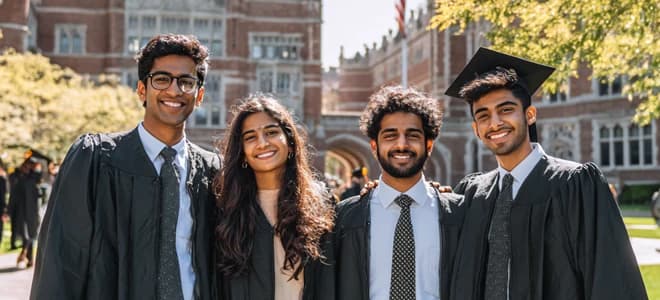
98% admit rate because of established credit-record. No requirement of GRE/GMAT/SAT.
Higher on-campus scholarships, shorter on-campus duration, early internships, same degree.
Earn the same PSW Visa with faster career outcomes and easier career transition.
University and program selection.
Online cohort starts with IELTS prep.
Submit application to the university.
Receive your I-20 and apply for Visa.
Transfer on-campus to the USA.
Explore globally coveted programs designed to empower your success. Start online, complete your degree on-campus abroad.
Select your ideal city and institution for your on-campus transfer.

New York

Boston
-b63abf2795b94391ab379b89ca574901.webp&w=1080&q=75)
San Francisco

Philadelphia

Seattle
Get ahead with exam waivers, top scholarships, savings & internships.
Total Expense
Over 2 years
₹64.5 L
Total Earnings
In 3 years
₹3.92 Cr
When on-campus, immerse in research, internships & global community.
Research-driven learning, internships & co-ops.
Clubs, networking events & top-notch facilities.
Affordable housing, diversity and inclusivity.
Hear from our learners who turned their study-abroad dreams into reality.
Read expert guides, blogs, FAQs, and resources for every step.

Cost of Living in USA

Cost of Studying in USA

Why Study in USA

Fully Funded Scholarship in USA

Exams Required to Study in USA
USA Study Visa
%20(1)-3dd0034113bf41b087b4ac1db807d357.webp&w=1080&q=75)
Loan Refinancing Option
Pivot to other study destinations flexibly with upGrad.
Everything you need to know about studying in USA
Indian students in the USA can earn a decent income through part-time jobs and internships, which helps cover living expenses while studying. Earnings depend on the job type, location, and skill level.
Here’s what you can expect:
Students are allowed to work 20 hours/week during semesters and full-time during breaks, which increases earning potential.
Yes, international students must apply for an F-1 student visa to study in the USA. You’ll need a valid passport, Form I-20 from a SEVP-approved school, SEVIS fee payment proof, visa application form (DS-160), and a visa interview.
CPT (Curricular Practical Training) allows students to work while studying if the opportunity is inline with their curricular program - subject to authorization from the university administration, while an OPT (Optional Practical Training) allows students to work full-time in the U.S. for 12 months after graduation for Non-STEM designated programs and up to 36 months after graduation for STEM -designated programs.
Yes, international students in the USA on an F-1 visa can work part-time on-campus for up to 20 hours per week during the academic year, and full-time during holidays or scheduled breaks. Off-campus work is allowed only after one year, upon due authorization from the university administration and provided it is inline with the curricular outline.
To apply for Graduate Assistantship (GA), Research Assistantship (RA), or Teaching Assistantship (TA) roles in the USA, you will need to be admitted to a graduate program. Then, you must contact professors whose work matches your interests, share your resume, and express interest in assistantships. We suggest you apply early and network within your department for better chances. upGrad students are more likely to be picked for these roles owing to their advanced academic standing in the discipline.
A STEM-designated program in the USA refers to designated degrees in Science, Technology, Engineering, and Mathematics - to advance certain disciplines with pioneering innovation, research and development. These programs allow international students to work in the US for up to 36 months under OPT (Optional Practical Training) after graduation.
The USA has two main intakes for international students who operate on semester-wise basis: Fall (August/September), Spring (January). In universities that operate on quarter terms, there is an additional intake - Summer (May). Spring and Fall are the most popular, offering the widest range of courses, while Summer intake has fewer program options.
The SEVIS (Student and Exchange Visitor Information System) is a U.S. government database that tracks international students. After you are admitted into a university, you are issued an I-20 and asked to pay the SEVIS fee, both of which are required to apply for an F-1 visa.
It’s smart to begin your planning at least 12–15 months before your intake. Most US universities receive thousands of international applications each cycle, and early applicants genuinely stand out. Starting early also gives you time to prepare for tests, arrange funding, gather documents, and secure a visa slot all of which take longer now because Indian applications to US have surged by nearly 35% in the last three years.
Yes, and the numbers back this up. US hosts over 2.7 lakh Indian students, the highest ever recorded. Students benefit from flexible programs, industry-driven curriculum, and exposure to global companies. US also produces 17 of the world’s top 25 universities, which means the academic and research quality is unmatched. That’s why graduates often see higher earning potential and faster career mobility.
To increase your chances of getting admitted to a top US university as an Indian student, you need a strong and well-rounded profile. Top universities follow a holistic admission process, so focusing on multiple areas can improve your chances significantly.
Here’s what you should focus on:
With upGrad study abroad, students can build strong profiles, shortlist the right universities, and receive end-to-end support with applications and admissions.
Planning finances for studying in the USA requires a clear understanding of tuition, living costs, and funding options. With the right strategy, Indian students can manage expenses efficiently and reduce financial stress.
Here’s how to plan smartly:
With upGrad study abroad, students get support with financial planning, loan guidance, and choosing cost-effective study pathways in the USA.
Yes. F-1 students can work up to 20 hours per week on campus during classes and full-time during breaks. Beyond that, CPT and OPT allow students to work in their field of study, and STEM students get up to 36 months of OPT. Most graduates rely on OPT to gain experience and build their professional network in US.
US universities take safety seriously. Most campuses have 24/7 security, emergency call boxes, student shuttle services, and real-time alert apps. According to the latest Open Doors data, over 2.5 lakh Indian students study in US each year without major safety concerns. The key is to follow local guidelines and stay aware of your surroundings, just as you would in any major city.
Admission to top US universities is highly competitive for Indian students, as these institutions receive applications from across the world. Acceptance rates at leading universities can range from 5% to 20%, depending on the program and university.
Here’s what makes the process competitive:
With upGrad study abroad, students can build strong profiles, shortlist universities, and improve their chances of admission to US universities.
Scholarship competition in the USA is high, so Indian students need a strong and well-rounded profile to stand out. Universities and funding bodies evaluate multiple factors beyond just academics.
Here are the key factors that influence scholarship chances:
Yes, Indian students can switch majors or programs after starting in the USA, but it depends on university policies and visa rules. Many universities allow flexibility, especially in the early stages of your course.
Here’s how it works:
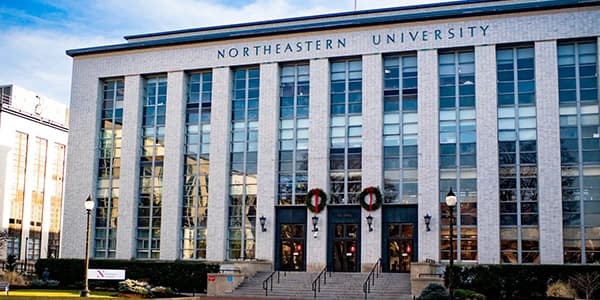
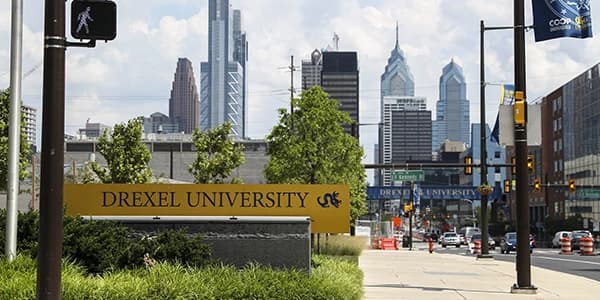
Some universities like Northeastern University, Drexel University, and Clark University offer flexible pathways that make transitions smoother.
You can reapply without any waiting period. Visa rejections are often due to unclear intent, financial inconsistencies, or weak interview answers. India’s F-1 visa approvals have improved significantly in recent years, with lakhs of students getting visas annually. If you fix the gaps and prepare better, many students get approved in their second attempt.
Yes. You must show funds that cover at least one year of tuition plus living expenses. For many students, this means demonstrating around USD 30,000–60,000 (₹27–54 lakh) depending on the university. You can show savings, sanctioned education loans, fixed deposits, or scholarship letters. The officer simply needs to trust that you won’t face financial trouble after arriving.
Keep your answers simple, honest, and connected to your academic goals. Visa interviews usually last 2–3 minutes, so clarity matters more than scripted lines. Officers mainly check three things: your intent to study, your academic plan, and your financial readiness. Students who stay calm and confident generally handle it well.
Several US universities offer faster pathways to an MBA or STEM degree, especially through accelerated formats, co-op programs, and STEM-designated courses. These options help students complete their degree quicker and gain early industry exposure.
Here are some universities known for faster or flexible pathways:
Many accelerated MBA programs in the US can be completed in 12–18 months, helping students reduce costs and enter the workforce sooner.
With upGrad study abroad, students can explore fast-track MBA and STEM programs in the USA and receive support with university selection and applications.
The cost of studying in the USA for Indian students usually ranges between $35,000–$65,000 per year (₹30–55L), including tuition and living expenses.
Here’s a clear breakdown of expenses:
Indian students can apply for several scholarships in the USA, which can cover partial to full tuition, living expenses, or both. These scholarships are offered by US universities, government programs, and merit-based funding schemes.
Here are some popular scholarship options:
How to apply:
With upGrad study abroad, students can identify suitable scholarships, prepare strong applications, and get support throughout the admission process.
Yes, it is possible to study in the USA without GRE, GMAT, or SAT for programs like MBA or MS. Many universities now offer test-optional or test-waiver admissions, especially if you have a strong academic and professional profile.
Here’s how it works:
Examples of universities offering flexible test requirements include:
With upGrad study abroad, students can explore test-optional universities in the USA and receive support with applications and profile building.
The ROI of studying in the USA for courses like Data Science, Engineering, or MBA is generally strong due to high salary potential, global job opportunities, and career growth. While the initial investment is high, many students recover their costs within a few years of working.
Here’s how ROI typically looks:
Several US cities offer strong job opportunities for Indian students after graduation, especially in industries like technology, finance, consulting, and healthcare. Choosing the right city can improve your chances of finding jobs and internships quickly.
Here are some top cities for job opportunities:
With upGrad study abroad guidance, students can choose universities in top US cities and receive support with career planning and job search strategies.
Starting your degree online and then transferring on-campus in the USA is a flexible and cost-effective pathway for Indian students. Programs like the MBA from Clark University (11 months online + 12 months on-campus) or MS in Internet of Things from Drexel University (online + on-campus) are designed to make studying abroad more accessible.
Here are the key benefits:
With upGrad study abroad programs, students get a structured pathway combining online learning and on-campus experience, along with support for applications and transitions
After completing a degree in the USA, Indian students can stay and work through post-study work visa options like OPT and STEM OPT extension. These options allow students to gain valuable international work experience.
Here’s how it works:
Choosing a STEM-designated program increases your work duration and job opportunities in the US.
Tuition fees in the USA vary significantly between public and private universities, and this directly impacts the total cost for Indian students. Public universities are generally more affordable, while private universities tend to have higher tuition but may offer better funding options.
Here’s how they differ:
Check out articles on IELTS, TOEFL, PTE, Duolingo, GRE, GMAT & SAT

Advance your career with our expert guidance & global programs.





.svg)












-ba88bd26fcd94211b2206646ea1eae57.webp&w=1080&q=75)