Destinations
Exams
Resources
More
Destinations
Exams
Resources
More
Pursue high‑quality programs & build your career in EU's only English‑speaking country with our pathway programs.
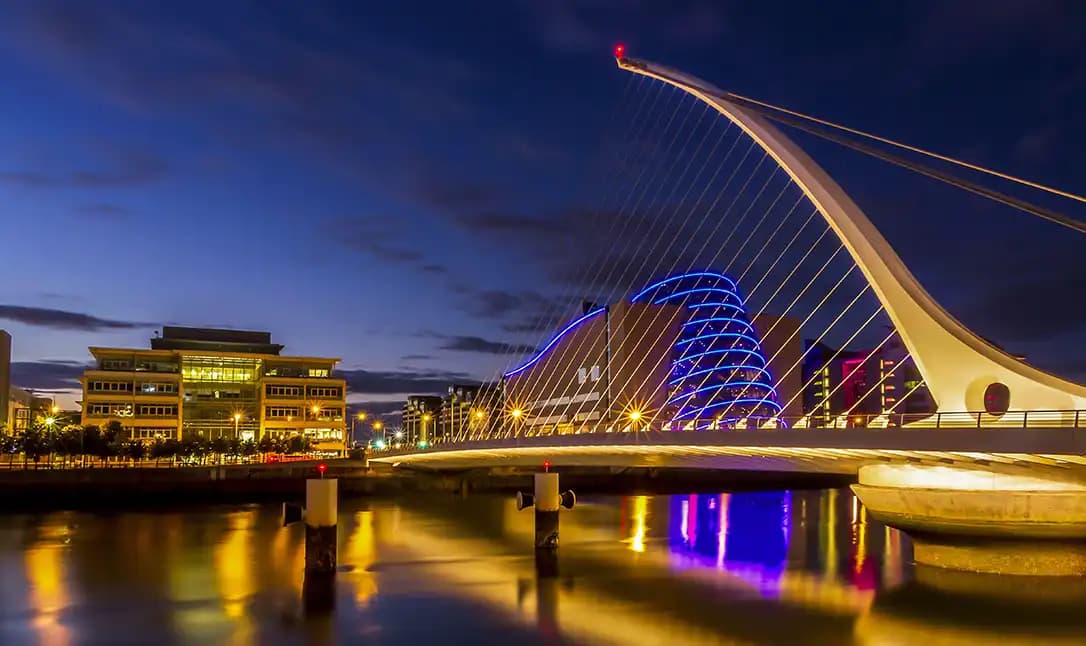
Quick facts, key domains and top programs.
Analytics, AI/ML, Informatics
Supply Chain Management, Investment Banking & Finance, Marketing
Cloud Computing, Cybersecurity, Software Developement
Medicine, Pharmacy, Biomedical Sciences
Most students take the traditional path but what if you can earn the same degree, only faster and flexibly?
Lesser cost, shorter duration and greater flexibility.

98% admit rate because of established credit-record. No requirement of GRE/GMAT/SAT.
Higher on-campus scholarships, shorter on-campus duration, early internships, same degree.
Earn the same PSW Visa with faster career outcomes and easier career transition.
University & program selection
Online cohort starts with IELTS prep
Secure university admit and pay deposit.
LOA and apply for visa with AVATS.
Transfer on-campus to Ireland
Explore globally coveted programs designed to empower your success. Start online, complete your degree on-campus abroad.
Select your ideal city and institution for your on-campus transfer.

Dublin
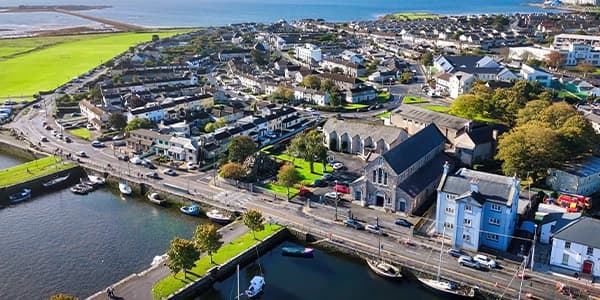
Galway

Cork
Get ahead with exam waivers, top scholarships, savings & internships.
Total Expense
Over 2 years
₹25.2 Lac
Total Earnings
In 2 years
₹90 Lac
Disclaimers
When on-campus, immerse in research, internships & global community.
Research-driven learning, internships & co-ops.
Clubs, networking events & top-notch facilities.
Affordable housing, diversity and inclusivity.
Hear from our learners who turned their study-abroad dreams into reality.
Read expert guides, blogs, FAQs, and resources for every step.

Cost of Living in Ireland
Cost of Studying in Ireland

Scholarships in Ireland

Cheap Universities in Ireland

Jobs in Ireland

Packing List for Indian Students Going to Ireland
Pivot to other study destinations flexibly with upGrad.
#1 Economy with 3.5M STEM Jobs

Europe’s #1 Economy with 1M Jobs

Up to 5 Years of PSW Visa

Europe's #1 Tech & Gaming Hub
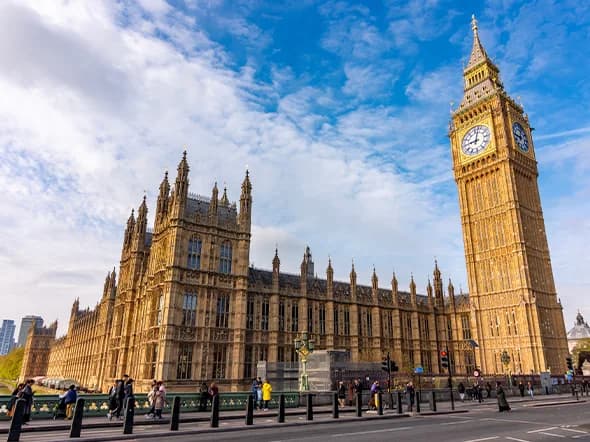
1 year Masters at Top Universities
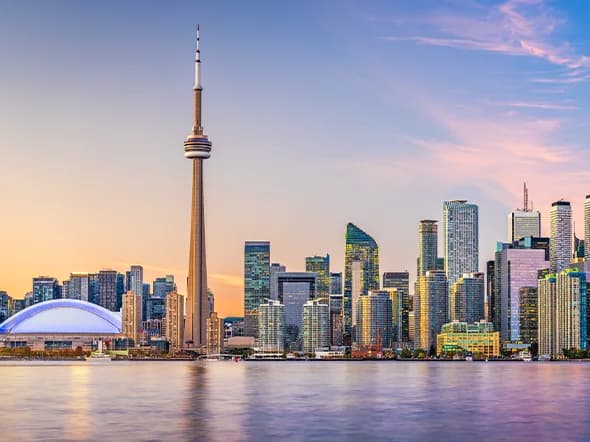
Top Study Hub with 3 Year PGWP
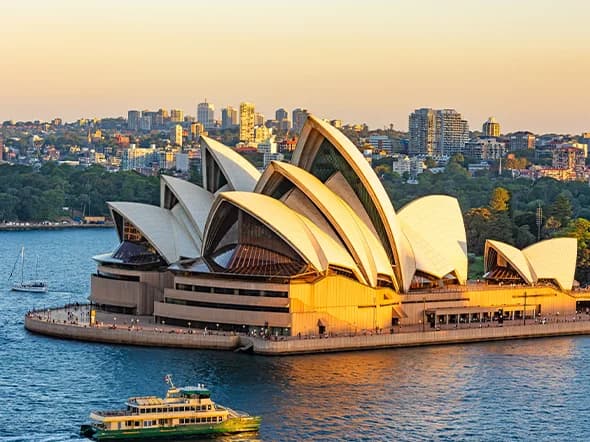
Up to 5 Years of PSW Visa
Everything you need to know about studying in Ireland
In Ireland, international students can work 20 hours/week during term and 40 during holidays. Wages range from €10–€15/hour (INR 900–1,350). Skilled part-time roles may offer more based on experience and employer.
Yes, Indian students must apply for a long-stay ‘D’ visa through AVATS. You’ll need proof of admission, finances (€10,000+), health insurance, and paid tuition receipt. Extra documents may be required depending on your profile and course.
Irish universities offer two major intakes: September (main) and January (secondary). Most undergraduate and postgraduate programs are available in the September intake, with limited courses open for January.
No, Ireland doesn’t require a blocked account. But students must show proof of at least €10,000 (~₹9,00,000) for yearly living expenses through recent bank statements or an education loan sanction letter from a recognized bank.
Yes, Indian students can apply for Government of Ireland International Education Scholarships and university-specific awards. These are mostly merit-based and offer tuition waivers or living cost support.
The Third Level Graduate Scheme allows international students who complete a Level 8 (honours bachelor's) or higher degree from an Irish institution to stay in Ireland for up to 2 years to seek employment and gain work experience.
Generally, students on a long-stay ‘D’ visa can’t bring dependents unless studying a PhD or are part of a recognized program. Spouses and children may apply later based on immigration rules.
Yes, having private health insurance is mandatory for your Ireland study visa. It must cover your full duration of stay and meet the standards set by Irish immigration. Basic college insurance often doesn’t meet these requirements, so a separate policy is recommended.
Tuition fees for international students range between €9,000–€25,000 (₹8.1–22.5L) annually. Living expenses add another €10,000–€12,000 (₹9–10.8L) per year. Dublin is more expensive compared to regional cities like Galway or Limerick, so budgeting smartly is key.
Indian students must secure admission first, then apply for a D Study Visa (€60 ≈ ₹5,400). Proof of funds of at least €10,000 (₹9L) per year and valid health insurance are required. Once approved, students register with immigration within 90 days of arrival.
Yes, PR is possible after 5 years of continuous legal residence (study + work combined). Students on Critical Skills Employment Permits may qualify faster. Stable income (around €30,000–€40,000 annually; ₹27–36L) and tax compliance strengthen applications.
ICT, Data Science, Business, and Healthcare are among the most popular. Tech programs cost €20,000–€23,000 (₹18–20.7L), while business and finance average €17,000–€22,000 (₹15.3–19.8L). The “best” course depends on your career goals and sector demand.
Ireland offers English-medium education, affordable tuition compared to the UK/US, and strong EU career pathways. With living costs around €900–€1,500/month (₹81K–1.35L), it balances affordability and opportunity. The high visa success rate adds to its appeal.
Ireland maintains one of the highest visa approval rates globally, averaging 90–95% for Indian applicants. Success depends on complete documentation, proof of funds (~€10,000; ₹9L), and genuine study intent. Early applications improve chances.
Yes, students can work 20 hours per week during term and 40 hours during holidays. Typical part-time jobs pay €10–€12/hour (₹900–1,080) in hospitality or retail. Internships linked to your program may pay higher depending on the sector.
Entry-level graduate salaries average €28,000–€41,000 (₹25–37L) annually. ICT graduates often earn €35,000–€45,000 (₹31–40L), while finance and business roles start closer to €28,000–€35,000 (₹25–31L). Dublin offers higher pay but also higher living costs.
Yes, scholarships reduce tuition significantly. The Government of Ireland International Education Scholarship offers €10,000 (₹9L) plus a tuition waiver. Universities like Trinity and UCD provide merit-based awards worth €5,000–€10,000 (₹4.5–9L) annually.
Ireland is considered one of the safest countries in Europe. Monthly living costs average €900–€1,500 (₹81K–1.35L), and students benefit from strong support services. Indian associations and multicultural communities help newcomers settle comfortably.
Life in Ireland blends academics with cultural richness. Students enjoy vibrant cities, friendly communities, and career opportunities with salaries averaging €30,000–€40,000 (₹27–36L). Challenges include housing shortages and higher costs in Dublin, but overall, the experience is rewarding.
Check out articles on IELTS, TOEFL, PTE, Duolingo, GRE & GMAT

Advance your career with our expert guidance & global programs.
Study in Ireland for Indian students offers a world-class education in English, strong research opportunities, and excellent career prospects. Ireland attracts international students with its rich culture, globally ranked universities, and lower costs compared to the US or UK. Popular programs include Technology, Biotechnology, and Business, with leading institutions such as Trinity College Dublin, University College Dublin (UCD), and University College Cork (UCC).
Key steps for Indian applicants include securing an acceptance letter, proving funds of at least €10,000/year (₹9L+) for living expenses, obtaining a Stamp 2 visa that allows 20 hours of work per week during term time, and demonstrating English proficiency through IELTS/TOEFL.
Key Highlights (2026):
Category | Key Stats |
Universities | 9 public universities + multiple Institutes of Technology and private colleges |
Top Universities | Trinity College Dublin, University College Dublin (UCD), University College Cork (UCC), University of Galway |
Top Courses | Computer Science, Data Science, Engineering, Business, Medicine, Biotechnology |
Approx. Tuition/Year | €9,000–€25,000 (₹8.1–22.5 lakh) for non-EU students |
Living Costs/Year | €10,000–€12,000 (₹9–10.8 lakh) proof of funds required |
Visa Fees | €60 (₹5,400) for a study visa application |
Post-Study Work Permit | 2-year stay-back option for master’s graduates under the Third Level Graduate Scheme |
Part-Time Work | Up to 20 hrs/week during term; 40 hrs/week during holidays (June–Sept & Dec–Jan) |
Study in Ireland for Indian students has emerged as a trusted choice due to its world-class education system, Englishmedium programs, and strong career opportunities across Europe. According to Education in Ireland, over 35,000 international students are enrolled, with Indian enrolments steadily increasing.
Key Reasons Why Choose Ireland:
Recent Updates in Ireland (2026)
Ireland’s higher education system is globally respected, offering English-medium programs, strong industry links, and pathways to EU careers. According to the Department of Further and Higher Education’s Statement of Strategy 2025–2028, Ireland aims to be a world-leading hub for research, innovation, and skills.
Bachelor’s, master’s, and doctoral programs follow the ECTS framework, ensuring international recognition.
Level | Duration | Credits (ECTS) |
Bachelor’s | 3–4 years | 180–240 |
Master’s | 1–2 years | 60–120 |
Doctorate (PhD) | 3–4 years | Coursework + dissertation |
Credits measure workload, while grades follow the Irish National Framework of Qualifications aligned with ECTS.
Aspect | Details |
Credit Hours | 1 year = 60 ECTS (~1,500–1,800 study hours) |
Grading Scale | Percentage system (40% pass, 70%+ first class honours) |
Full Load | 30 credits/semester for visa compliance |
Ireland offers a mix of universities, technological universities, and institutes of technology, each serving different academic and career needs.
Type | Key Features | Examples |
Universities | Research focus, postgraduate studies | Trinity College Dublin, University College Dublin, University College Cork |
Technological Universities (TU) | Applied research, career-oriented | Technological University Dublin, Munster Technological University |
Institutes of Technology (IoT) | Practical training, industry partnerships | Dundalk Institute of Technology, Athlone Institute of Technology |
Further Education Colleges | Vocational training, pathways to higher education | Regional FE colleges |
Ireland offers over 5,000 English-taught programs across bachelor’s, master’s, and doctoral levels. Leading institutions such as Trinity College Dublin (#75 QS 2026), University College Dublin (#118), University College Cork (#246), and University of Galway (#462) attract Indian students in STEM, business, law, and management. Tuition fees for non-EU students range from €9,000–€25,000/year (₹8.1–22.5L) depending on program and university.
Engineering programs in Ireland are globally recognized, especially in ICT, civil, and biomedical engineering, with strong industry links to EU companies.
Rank (QS 2026) | University | Annual Tuition (Range) |
75 | €22,000–€25,000 (₹19.8–22.5L) | |
118 | €20,000–€24,000 (₹18–21.6L) | |
246 | €18,000–€22,000 (₹16.2–19.8L) | |
462 | €17,000–€20,000 (₹15.3–18L) | |
508 | €16,000–€19,000 (₹14.4–17.1L) |
Ireland’s MBA programs emphasize leadership, innovation, and EU business networks, with tuition lower than US schools.
Rank (QS 2026) | University | Annual Tuition (Range) |
75 | Trinity College Dublin– Trinity Business School | €37,300 (₹33.6L) |
118 | University College Dublin– Smurfit Business School | €21,000–€23,000 (₹18.9–20.7L) |
246 | University College Cork (UCC) | €17,000–€18,000 (₹15.3–16.2L) |
436 | Dublin City University (DCU) | €13,000–€15,000 (₹11.7–13.5L) |
531 | University of Limerick | €16,000–€17,000 (₹14.4–15.3L) |
Ireland is a hub for ICT, AI, and data science, with programs linked to Google, Intel, and EU tech clusters.
Rank (QS 2026) | University | Annual Tuition (Range) |
75 | Trinity College Dublin | €22,000–€23,000 (₹19.8–20.7L) |
118 | University College Dublin (UCD) | €21,750 (₹19.6L) |
246 | University College Cork (UCC) | €17,000–€18,000 (₹15.3–16.2L) |
436 | €13,000–€14,000 (₹11.7–12.6L) | |
531 | University of Limerick | €16,000–€17,000 (₹14.4–15.3L) |
LLM programs in Ireland focus on EU law, international business law, and human rights, preparing graduates for global practice.
Rank (QS 2026) | University | Annual Tuition (Range) |
75 | Trinity College Dublin – School of Law | €21,780 (₹19.6L) |
246 | University College Cork (UCC) | €19,700 (₹17.7L) |
462 | University of Galway | €17,000–€18,000 (₹15.3–16.2L) |
436 | Dublin City University (DCU) | €13,000–€14,000 (₹11.7–12.6L) |
771 | Maynooth University | €12,000–€13,000 (₹10.8–11.7L) |
MIM programs in Ireland build analytics, leadership, and sustainability skills, ideal for young professionals.
Rank (QS 2026) | University | Annual Tuition (Range) |
75 | Trinity College Dublin – MSc in Management | €24,000 (₹21.6L) |
118 | University College Dublin (UCD) | €21,000–€22,000 (₹18.9–19.8L) |
246 | University College Cork (UCC) | €17,000–€18,000 (₹15.3–16.2L) |
436 | Dublin City University (DCU) | €13,000–€14,000 (₹11.7–12.6L) |
531 | University of Limerick | €16,000–€17,000 (₹14.4–15.3L) |
Ireland’s higher education system is competitive yet accessible, with over 5,000 Englishtaught programs available in 2026. International students, including Indians, benefit from transparent admissions and a strong visa approval rate (most study visas processed via the New Delhi Visa Office have success rates above 90%, per ISD).
Rate Breakdown by Tier:
Tier | Rate Range | Examples (Indian Friendly) |
Top | 20–30% | Trinity College Dublin (~25%), University College Dublin (~22%), University College Cork (~28%) |
Mid | 40–55% | Dublin City University (~45%), University of Galway (~50%), University of Limerick (~48%) |
Base | 65–80% | Technological University Dublin (~70%), Munster Technological University (~75%), Dundalk Institute of Technology (~72%) |
Key Influencing Factors:
Popular courses to study in Ireland for Indian students span STEM, business, healthcare, and law, with strong offerings at Trinity College Dublin, University College Dublin (UCD), University College Cork (UCC), Dublin City University (DCU), and University of Galway. Tuition fees for nonEU students range from €9,000–€25,000/year (₹8.1–22.5L), with strong career pathways in tech, pharmaceuticals, and finance.
Top 10 Courses & Universities (2026):
Course | University Examples | Tuition (Total) |
MS Computer Science | Trinity College Dublin, UCD | €20,000–€23,000 (₹18–20.7L) |
MS Data Science / AI | UCD, Dublin City University | €18,000–€22,000 (₹16.2–19.8L) |
MS Engineering Management | University of Limerick, UCC | €17,000–€20,000 (₹15.3–18L) |
MS Business Analytics / Economics | Trinity College Dublin, UCC | €19,000–€22,000 (₹17.1–19.8L) |
MBA / International Business | Trinity Business School, UCD Smurfit | €21,000–€37,300 (₹18.9–33.6L) |
MS Mechanical Engineering | University of Galway, University of Limerick | €16,000–€19,000 (₹14.4–17.1L) |
MS Electrical Engineering | UCD, Dublin City University | €18,000–€21,000 (₹16.2–18.9L) |
MS Finance / Accounting | Trinity College Dublin, UCC | €19,000–€22,000 (₹17.1–19.8L) |
Public Health MPH | UCC, University of Galway | €17,000–€20,000 (₹15.3–18L) |
Biotechnology / Life Sciences MS | Trinity College Dublin, UCD | €18,000–€22,000 (₹16.2–19.8L) |
Note: The amounts mentioned in the table are approximate and may vary depending on the currency exchange rates.
Study in Ireland for Indian students requires academic credentials, English proficiency, and compliance with immigration rules. Applications are made directly to universities or via the Central Applications Office (CAO) for undergraduate programs.
For postgraduate programs, applications are submitted through university portals. Students must also show proof of funds (€10,000 ≈ ₹9L per year), health insurance, and an acceptance letter from a recognized institution.
Requirements scale with degree level, with bachelor’s needing high school completion and master’s requiring a recognized bachelor’s degree.
Level | GPA Equivalent | Key Requirements |
Bachelor’s | 2.5–3.0 (≈ 60%+) | High school diploma + CAO application; some programs may require entrance exams |
Master’s | 3.0+ (≈ 65%+) | Recognized bachelor’s degree (3–4 years) |
Doctorate (PhD) | 3.5+ (≈ 70%+) | Master’s degree + research proposal approved by supervisor |
Applicants must provide academic, personal, and financial documents for both admission and visa stages.
Category | Items Needed |
Academic | academic transcripts , diplomas, degree certificates |
Personal | Passport, Statement of Purpose (SOP), 2–3 Letters of Recommendation |
Financial | Proof of funds (~€10,000/year; ₹9L), health insurance, bank statements |
Ireland does not mandate GRE or GMAT for most programs. Admissions rely on transcripts, motivation letters, and sometimes aptitude tests.
Exam | Level | Notes |
SAT/ACT | UG (few programs) | Optional, some bachelor’s programs may accept |
GRE or GMAT | MS/MBA | Rarely required; waived for most programs |
Entrance Exams | UG/PG | Conducted by universities for select fields (e.g., medicine, law) |
English proficiency is mandatory for all English taught programs.
Test | Competitive Scores (2026) |
TOEFL iBT | 90–100 |
IELTS Academic | 6.5–7.0 |
PTE Academic | 63+ |
Indian students must apply for a D Study Visa if their course lasts longer than 90 days.
Step | Requirement | Details |
1 | Admission Letter | From an Irish university/college listed on the Interim List of Eligible Programmes (ILEP) |
2 | Proof of Funds | €10,000/year (₹9L) minimum |
3 | Health Insurance | Private medical insurance covering the duration of stay |
4 | Application Fee | €60 (₹5,400) |
5 | Processing | 6–12 weeks via ISD; registration with immigration required after arrival |
Ireland offers globally ranked universities with English-medium programs. The cost of studying in Ireland for Indian students averages €9,000–€25,000/year (₹8.1–22.5L) for tuition, depending on program and university. Living expenses add €10,000–€12,000/year (₹9–10.8L). Visa fees are fixed at €60 (₹5,400), and doctoral programs may be partially funded through research grants.
Breakdown covers tuition, housing, and daily expenses; Dublin is ~20–25% higher than mid-sized cities like Galway or Limerick.
Category | Annual Cost (EUR/INR) |
Tuition | €9,000–€25,000 (₹8.1–22.5L) |
Rent | €5,000–€8,000 (₹4.5–7.2L) |
Insurance | €500–€1,000 (₹45K–90K) |
Services/Amenities | €1,500–€2,500 (₹1.35–2.25L) |
Study Materials | €500–€1,000 (₹45K–90K) |
Visa Fee | €60 (₹5,400) |
Note: The amounts are approximate and may vary depending on exchange rates and city.
Universities bill per semester; fulltime load is 30 ECTS credits/semester for visa compliance.
Type | Per Semester (EUR/INR) | Annual (EUR/INR) |
Research Universities | €4,500–€12,500 (₹4–11.25L) | €9,000–€25,000 (₹8.1–22.5L) |
Technological Universities (TU) | €4,000–€7,000 (₹3.6–6.3L) | €8,000–€14,000 (₹7.2–12.6L) |
Institutes of Technology (IoT) | €3,500–€6,000 (₹3.15–5.4L) | €7,000–€12,000 (₹6.3–10.8L) |
STEM and MBA programs command higher tuition; humanities and social sciences are more affordable.
Course | Annual Tuition (EUR/INR) |
MS Computer Science | €20,000–€23,000 (₹18–20.7L) |
MS Engineering | €17,000–€20,000 (₹15.3–18L) |
MBA / Management | €21,000–€37,300 (₹18.9–33.6L) |
MS Data Science / AI | €18,000–€22,000 (₹16.2–19.8L) |
Public Health / Life Sciences | €17,000–€20,000 (₹15.3–18L) |
Medicine & Health Sciences | €50,000–€62,500 (₹45–56L) |
Arts & Humanities | €13,500–€28,200 (₹12.1–25.4L) |
Note: The amounts are approximate and may vary depending on exchange rates and city.
The cost of living in Ireland varies by city and accommodation type. According to TU Dublin Cost of Living Guide 2025/26 and DCU Cost of Attending University 2025/26, students spend between €10,000–€20,000 per academic year (₹9–18L) on living expenses, excluding tuition. Dublin is ~20–25% higher than regional cities like Galway or Limerick. Housing dominates expenses, with shared student housing reducing costs by 30–40%.
Expense Breakdown (2026):
Expense | Monthly Cost (EUR/INR) |
Housing (1BR private in Dublin) | €750–€1,200 (₹67.5K–1.08L) |
Housing (Shared student housing) | €400–€700 (₹36K–63K) |
Utilities | €100–€150 (₹9K–13.5K) |
Groceries | €200–€300 (₹18K–27K) |
Transportation (student Leap Card) | €50–€60 (₹4.5K–5.4K) |
Health Insurance | €50–€70 (₹4.5K–6.3K) |
Dining Out | €80–€120 (₹7.2K–10.8K) |
Internet/Phone | €40–€60 (₹3.6K–5.4K) |
Entertainment | €60–€100 (₹5.4K–9K) |
Total Monthly: ~€900 (₹81K) shared; ~€1,500 (₹1.35L) private. Note: Costs are approximate and vary by city; Dublin is ~25% higher than Galway, Limerick, or Cork.
The best cities for Indian students in Ireland attract the majority of international enrolments due to strong universities, affordability, and cultural diversity.
1. Dublin: Capital & Business Hub
Dublin is home to Trinity College Dublin, University College Dublin (UCD), and Technological University Dublin (TU Dublin). It is Ireland’s financial and tech capital, hosting companies like Google, Microsoft, and Pfizer. Living costs are the highest (~€1,200/month; ₹1.08L), but students benefit from internships, networking, and career opportunities in multinational firms.
2. Cork: Education & Innovation Cluster
Cork hosts University College Cork (UCC), known for strong programs in biotechnology, pharmaceuticals, and business. The city offers a vibrant student community and cultural life, with living costs averaging ~€1,000/month (₹90K). Cork is also a hub for research and industry partnerships, making it attractive for STEM and life sciences students.
3. Galway: Affordable Student City Galway is home to the University of Galway, offering programs in medicine, arts, and engineering. Living costs are lower (~€900/month; ₹81K), and the city is known for its cultural festivals, coastal beauty, and studentfriendly environment. It is especially popular among Indian students seeking a balance of affordability and quality education.
4. Limerick: Residential & Student Friendly
Limerick hosts the University of Limerick (UL), with strong programs in engineering, business, and applied sciences. Housing is more affordable (~€850/month; ₹76K), and the city offers a quieter lifestyle compared to Dublin. Its strong industry links and cooperative education programs make it appealing for career-focused students.
5. Maynooth: Cultural & Academic Hub
Maynooth University is located just outside Dublin, offering programs in humanities, law, and science. Living costs average ~€950/month (₹85K). The town is safe, culturally rich, and provides easy access to Dublin’s opportunities while maintaining a smaller, closeknit student community.
Ireland offers Indian students a mix of fully funded scholarships, government-funded scholarships, and university-specific tuition waivers to offset tuition and living costs. The flagship program is the Government of Ireland International Education Scholarship (GOIIES), alongside institutional awards at Trinity College Dublin, UCD, UCC, and other universities.
Major Scholarships in Ireland for Indian Students (2026):
Name | Main Eligibility | Scholarship Amount & Duration |
Government of Ireland International Education Scholarship (GOIIES) 2026 | High-achieving international students (Master’s/PhD, NFQ Level 9–10) | €10,000 (₹9L) stipend + full tuition waiver; 1 year |
Trinity College Dublin Scholarships | Non-EU bachelor’s/master’s applicants | €5,000–€10,000 (₹4.5–9L) tuition reduction; annual |
UCD Global Scholarships | Master’s applicants in STEM/Business | €5,000–€10,000 (₹4.5–9L) tuition reduction; 1–2 years |
University College Cork (UCC) International Scholarships | Bachelor’s/Master’s applicants | €3,000–€5,000 (₹2.7–4.5L) tuition reduction; annual |
University of Galway International Scholarships | Master’s applicants | €2,000–€5,000 (₹1.8–4.5L) tuition reduction; annual |
Dublin City University (DCU) Merit Scholarships | Bachelor’s/Master’s applicants | €2,000–€4,000 (₹1.8–3.6L) tuition reduction; annual |
Maynooth University Scholarships | Master’s applicants | €2,000–€5,000 (₹1.8–4.5L) tuition reduction; annual |
Scholarship applications in Ireland are integrated into the university admission process or through the Higher Education Authority (HEA) for government awards.
Step | Action | Timeline |
1. Research | Education in Ireland + university websites | 12–15 months before intake |
2. Gather Docs | Transcripts, SOP, 2–3 LORs, CV, proof of English (IELTS/TOEFL) | 6–9 months before |
3. Submit Online | Via university portals or HEA (for GOIIES) | Jan–March 2026 |
4. Scholarship Decision | Issued with an admission offer | March–April 2026 |
Key Deadlines (2026 Cycle):
For Indian students planning long-term careers in Ireland, understanding the Permanent Residency (PR) and settlement pathway is crucial. Ireland provides structured routes from student immigration permission to work permits, PR, and citizenship, regulated by the Irish Immigration Service Delivery (ISD).
The key requirement is 5 years of legal residence (study + work combined) before applying for PR, with proof of stable income, accommodation, and integration.
Students begin with a D Study Visa and register for Stamp 2 permission, valid for the duration of their program. After graduation, they can apply for the Third Level Graduate Programme (Stamp 1G), which allows them to stay back for up to 2 years (Master’s) or 1 year (Bachelor’s) to seek employment. Continuous residence leads to PR eligibility.
Key Requirements for PR (2026 Update):
Studying in Ireland opens diverse career paths for Indian students. Ireland offers Indian students strong job opportunities in ICT, pharmaceuticals, finance, and engineering. Average graduate salaries range from €35,000 to €60,000 annually (₹31–54L), with higher packages in ICT and business. Students on Stamp 2 permission can work 20 hours/week during term and 40 hours/week during holidays, while graduates benefit from the Third Level Graduate Programme (Stamp 1G) for up to 2 years of post-study work.
The jobs in Ireland for Indians are evolving with the country’s focus on technology, healthcare, and sustainability. Current high-demand sectors include:
Indian students graduating in these fields often secure competitive packages:
Job Role / Title | Approximate Annual Salary (EUR) | Approximate Annual Salary (INR) |
Software Engineer / Developer | €45,000–€60,000 | ₹40–54L |
Data Scientist | €50,000–€65,000 | ₹45–58L |
AI / Machine Learning Engineer | €55,000–€70,000 | ₹49–63L |
Mechanical / Electrical Engineer | €40,000–€55,000 | ₹36–49L |
Healthcare Professional (Nurse/Researcher) | €35,000–€50,000 | ₹31–45L |
Business Analyst / Consultant | €45,000–€60,000 | ₹40–54L |
Note: Salaries are approximate and may vary depending on employer, experience, and exchange rates.
Looking ahead, certain domains are projected to see rapid growth in Ireland:
According to Education in Ireland and Irish Immigration Service Delivery (ISD):
While Ireland is known for its English-speaking environment, globally ranked universities, and welcoming culture, Indian students may encounter certain challenges when adapting to life and studies there. Understanding these in advance helps in planning better and settling smoothly.
1. Language & Communication
Most degree programs are offered in English, which reduces barriers compared to non-English countries. However, accents, colloquial Irish English, and cultural expressions may take time to adjust to. Learning to adapt to local communication styles is important for integration and employability.
2. Cost of Living
Tuition fees are moderate compared to the US/UK, but living costs in Dublin average €1,200–€1,500/month (₹1.08–1.35L). Housing, transport, and groceries are more expensive in the capital. Budgeting carefully and considering regional cities like Galway or Limerick can reduce expenses.
3. Housing Shortage
Ireland faces a student housing shortage, especially in Dublin. Affordable accommodation is limited, and private rentals can be costly. Shared student housing or university-managed residences are often the best options, but competition is high.
4. Limited Part-Time Jobs
Students can work 20 hours per week during term and 40 hours per week during holidays under Stamp 2 rules. However, part-time jobs are concentrated in hospitality, retail, and customer service. Securing roles aligned with academic fields may be challenging without prior experience.
5. Integration & Social Life
Irish culture is friendly and community-oriented, but international students may initially feel isolated. Building networks through student unions, Indian associations, and university clubs is essential. Participation in local events and volunteering helps with integration.
Studying in Ireland offers world-class education and strong career opportunities, but success depends on careful preparation. Indian students can ease their transition by planning for academics, finances, and cultural integration.