Destinations
Exams
Resources
More
Destinations
Exams
Resources
More
Join top-ranked universities and pursue in-demand courses with our Pathway Programs in Europe’s innovation hub.

Quick facts, key domains and top programs.
MBA, Finance, Logistics & Supply Chain, Marketing
Fashion Management, Luxury Retail Management & Creative Industries
Tourism Management, Wine & Hospitality Management
Analytics, Data Engineering, AI Engineering
Computer Science, IT, Cybersecurity
Most students take the traditional path but what if you can earn the same degree, only faster and flexibly?
Lesser cost, shorter duration and greater flexibility.

98% admit rate because of established credit-record. No requirement of GRE/GMAT/SAT.
Higher on-campus scholarships, shorter on-campus duration, early internships, same degree.
Earn the same PSW Visa with faster career outcomes and easier career transition.
University and program selection.
Online cohort starts.
Submit application to the university.
Apply for Campus France & Visa.
Transfer on-campus to France.
Explore globally coveted programs designed to empower your success. Start online, complete your degree on-campus abroad.
Select your ideal city and institution for your on-campus transfer.
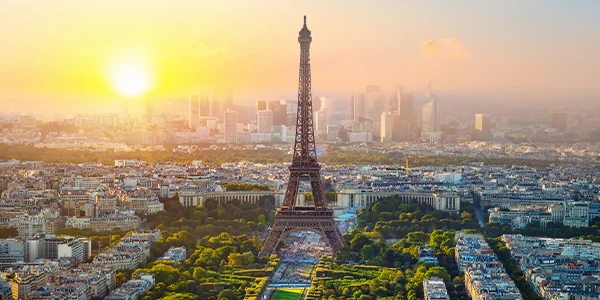
Paris
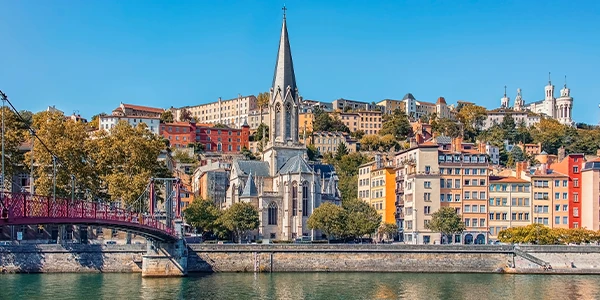
Lyon
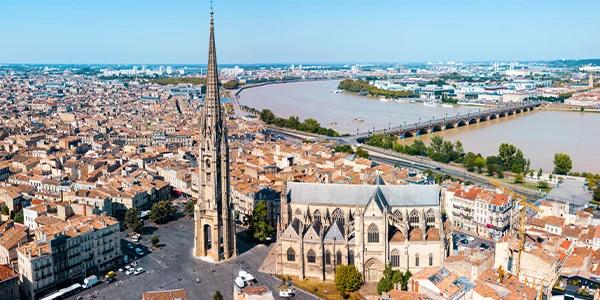
Bordeaux
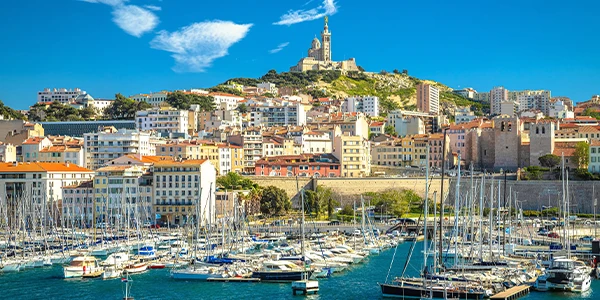
Marseille
Get ahead with exam waivers, top scholarships, savings & internships.
Total Expense
Over 2 years
₹25 Lakhs
Total Earnings
In 3 years
₹1.12 Cr
Disclaimers
When on-campus, immerse in research, internships & global community.
Research-driven learning, internships & co-ops.
Clubs, networking events & top-notch facilities.
Affordable housing, diversity and inclusivity.
Hear from our learners who turned their study-abroad dreams into reality.
Read expert guides, blogs, FAQs, and resources for every step.

Cost of Living in France

Top Reasons to Study in France

France Scholarship for Indian Students

SOP for France
-1a704ec1ebf14fd6b17c02c4faadd2cf.webp)
Education System in France

Checklist for Indian Students Going to France
Pivot to other study destinations flexibly with upGrad.
#1 Economy with 3.5M STEM Jobs

Europe’s #1 Economy with 1M Jobs

Europe's #1 Tech & Gaming Hub
1 year Masters at Top Universities

Top Study Hub with 3 Year PGWP
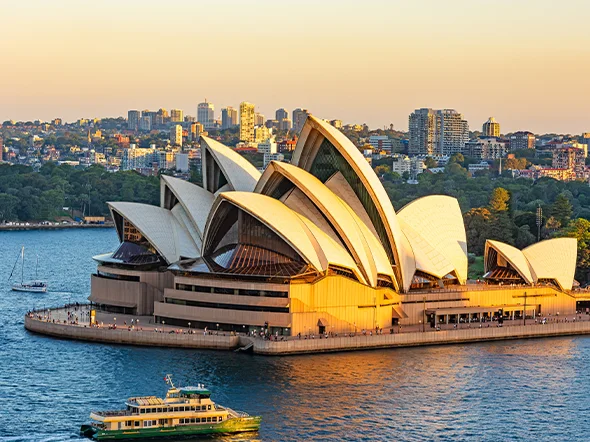
Up to 5 Years of PSW Visa
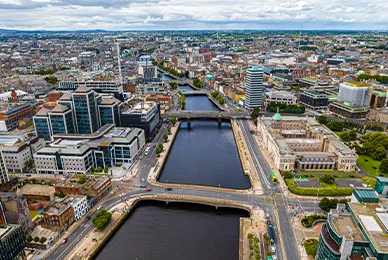
Thriving $19B+ ICT market
Everything you need to know about studying in France
International students in France can work up to 964 hours per year, which averages about 20 hours per week during the academic year. The minimum wage is €11.65 per hour (1050 INR) before taxes. Your actual earnings may vary depending on the job and employer.
Yes, Indian students need a long-stay student visa (VLS-TS) to study in France for over 90 days. You must show admission proof, funds of at least €7,380/year (approx. 6,65,000 INR), valid passport, accommodation proof, and medical insurance. The visa also requires Campus France authorization.
French is not always required for part-time jobs in France, but it improves your chances of landing a good part-time opportunity. However, in major cities, English-speaking students can comfortably find jobs in international businesses, hospitality, tourism or retail.
Yes, the Campus France authorization certificate is mandatory for Indian students applying to French institutions. It is part of the official “CEF procedure” and is required before booking a visa appointment through VFS. You must complete your Campus France application and pay the processing fee to secure the certificate.
Some of the most popular degree programs in France for international students include Business, Engineering, Fashion, Hospitality, and Data Science. Paris is especially known for fashion, arts, and design courses due to its global industry presence and career exposure.
French universities generally offer two main intakes every year: the Fall intake (September/October) and the less popular Spring intake (January/February). The Fall intake is the primary one, offering a wider range of courses and more scholarship opportunities. Most upGrad programs offer both intakes for students.
Triple accreditation means a business school is accredited by AACSB, AMBA, and EQUIS which are the top three global accreditation bodies for business education. It reflects global recognition, strong academics, and employer trust. Only 1% of all Business-schools worldwide hold all three seals of academic excellence.
To secure scholarships in France, you must explore government-funded options like the Eiffel Excellence Scholarship, Erasmus+ programs, or university-specific grants. Apply early, with strong academics, a clear study plan, and all required documents. Most scholarships are competitive and merit-based. Most upGrad programs in France offer up to 30% scholarship.
Yes, Indian students can legally work up to 964 hours per year (~20 hours/week). This helps cover living costs, though most part-time jobs require at least basic French. Common roles include hospitality, retail, and university research assistance.
French universities usually have two intakes: Fall (September/October) and Spring (January/February). The Fall intake is the main one, offering the widest range of programs, while Spring has fewer but still valuable options.
Yes, scholarships like the Eiffel Excellence Scholarship and Charpak Scholarship are offered by the French government and universities. These cover tuition, living costs, and sometimes travel, making France more affordable for Indian students.
Visa processing usually takes 8–12 weeks after submitting documents via Campus France and FranceVisas. Applying early ensures smoother approval, and students must validate their visa online upon arrival in France.
No, many programs are taught in English, especially at the Master’s level. However, learning French is strongly recommended for internships, part-time jobs, and long-term settlement, as daily life often requires it.
In cities like Lyon, Toulouse, and Montpellier, living costs average €750–€900/month (₹78K–95K). This is significantly cheaper than Paris, where costs can exceed €1,200/month (₹1.26L), making smaller cities more budget-friendly.
Yes, Master’s graduates can apply for the APS (Autorisation Provisoire de Séjour), which allows them to stay for 12–24 months to find a job or start a business. This is a key pathway to permanent residency.
Students need transcripts, degree certificates, SOP, recommendation letters, CV, proof of funds, and language test scores (IELTS/TOEFL or DELF/DALF for French programs). These are submitted via the Campus France portal.
Admission to Grandes Écoles like HEC Paris or École Polytechnique is highly competitive, with acceptance rates around 15–25%. Strong academics, test scores, and motivation letters are essential for success.
Yes, after completing studies and securing employment, students can apply for PR after 5 years of continuous residence. Citizenship is possible after 5–8 years, depending on integration and language proficiency.
France offers strong opportunities in ICT, aerospace, fashion, business, and healthcare. Average graduate salaries range from €35,000–€70,000 annually (₹36–74L) depending on role and experience, according to Glassdoor France.
Check out articles on IELTS, TOEFL, PTE, Duolingo, GRE & GMAT

Advance your career with our expert guidance & global programs.
Studying in France for Indian students offers a unique combination of high-quality education, affordable tuition, and global career opportunities. With world-ranked universities and Grandes Écoles excelling in Business, Engineering, Arts, and Fashion, France is a leading destination for study abroad in France. Admissions require a long-stay student visa (VLSTS) through the official Campus France (Études en France) procedure, ensuring a streamlined process for international applicants.
Indian students benefit from part-time work rights, post-study work permits, and scholarships such as Charpak and Eiffel Excellence, making higher studies in France for Indian students more accessible. The cost of studying in France for Indian students remains lower than in many countries, with public universities in France charging €2,770–€3,770/year (₹2,91,600–₹3,96,700) and private institutions ranging from €8,000–€20,000/year (₹8,40,700–₹21,01,800).
Key Highlights (2026):
Category | Key Stats |
Universities | ~3,500 total; 35+ globally ranked (QS/THE) |
Top Universities | Sorbonne University, PSL University, University of Paris-Saclay, École Polytechnique, HEC Paris, INSEAD |
Top Courses | Business & Management, Engineering, Computer Science/Data Science, Fashion & Luxury, Arts & Humanities |
Approx. Tuition/Year | Public: €2,770–€3,770 (≈ ₹2,91,600–₹3,96,700); Private: €8,000–€20,000 (≈ ₹8,40,700–₹21,01,800) |
Living Costs/Year | €10,800–€14,400 per year (approx. ₹11.8L–₹15.7L) |
Visa Fees | Long-stay student visa (VLS-TS): €99 (≈ ₹10,400); Campus France fee: ₹16,500 (fixed by the French Embassy in India) |
Post-Study Work Permit (APS) | 2 years for Master’s graduates; extendable for STEM/business programs |
Part-Time Work | 20 hrs/week (964 hrs/year) allowed during studies |
Study in France has become one of the fastest-growing choices for Indian students, with France aiming to welcome 30,000 Indian students by 2030 under the Choose France initiative. In 2026, France expanded its Classes Internationales program to India, streamlining admissions and offering preparatory courses in language and academics. With affordable tuition, globally ranked universities, and strong post-study work pathways, France is a premier destination for higher studies in France for Indian students.
Key Reasons Why Choose France
Recent Updates in France (2026)
The education system in France for international students follows the LMD model: Licence (Bachelor’s), Master’s, and Doctorat (PhD). Students can choose between public universities, Grandes Écoles, and specialized schools, depending on their academic background, career goals, and budget.
French higher education emphasizes skill development through electives, internships, and research, with strong pathways for study in France after 12th or postgraduate studies. Master’s programs (2 years, 120 ECTS) blend coursework and thesis, while Doctorates (3–6 years) combine advanced courses with original research/dissertation.
Higher education levels in France build progressively from foundational knowledge to advanced research leadership.
Level | Duration | Credits Required |
Licence (Bachelor’s) | 3 years | 180 ECTS |
Master’s | 2 years | 120 ECTS |
Doctorat (PhD) | 3–6 years | Varies (coursework + research) |
DU (Diplôme d’Université) | 1 year | 60 ECTS (specialized certificate) |
Credits quantify workload (1 ECTS ≈ 25–30 study hours). Full-time loads ensure visa compliance. France uses a 20-point grading scale, with 10/20 as the minimum pass mark.
Aspect | Details |
Credit Hours (ECTS) | 1 ECTS ≈ 25–30 study hours; full-time: 30 ECTS/semester; Licence needs 180 total |
Grading Scale | 20 (Excellent) to 0 (Fail); 10/20 minimum pass; 12–14 “Good”, 15–16 “Very Good”, 17+ “Excellent” |
Full Load | 30 ECTS/semester for visa compliance |
French institutions vary by funding and focus, from large public universities to elite Grandes Écoles. Each suits different goals, budgets, and career paths for international students.
Type | Key Features | Examples |
Public Universities | State-funded, large enrollment, affordable tuition, broad programs | Sorbonne University, University of Paris-Saclay |
Grandes Écoles | Highly selective, elite training in engineering, business, and public administration | École Polytechnique, HEC Paris, Sciences Po |
Specialized Schools | Focused on arts, fashion, culinary, or applied sciences | Institut Français de la Mode, Le Cordon Bleu |
Private Institutions | Tuition-funded, smaller classes, specialized programs | INSEAD, ESSEC Business School |
France offers over 1,500 English-taught programs in 2026, with leading institutions such as Université PSL (#24 QS 2026), Institut Polytechnique de Paris (#38), Université Paris-Saclay (#60), and Sorbonne University (#65) attracting Indian students across STEM, business, law, and management.
Tuition fees for non-EU students are officially set at €2,770–€3,770/year (≈ ₹2,91,600–₹3,96,700) for public universities, while private Grandes Écoles and business schools range from €8,000–€20,000/year (≈ ₹8,40,700–₹21,01,800).
Engineering programs in France are globally recognized, especially in aerospace, renewable energy, and ICT, with strong ties to EU industries.
Rank (QS Global 2026) | University | Annual Tuition (Range) |
38 | Institut Polytechnique de Paris | €12,000–€15,000 (≈ ₹12.6–15.7L) |
60 | Université Paris-Saclay | €3,770 (≈ ₹3.96L) |
65 | Sorbonne University | €3,770 (≈ ₹3.96L) |
138 | Grenoble Alpes University | €3,770 (≈ ₹3.96L) |
155 | École Centrale de Lyon | €3,770 (≈ ₹3.96L) |
France is a global hub for MBAs, with HEC Paris ranked #5 worldwide in QS Global MBA 2026.
Rank (QS Global MBA 2026) | University | Annual Tuition (Range) |
5 | HEC Paris | €78,000 (≈ ₹82L) |
7 | INSEAD | €89,000 (≈ ₹93.5L) |
12 | ESSEC Business School | €45,000–€50,000 (≈ ₹47–52.5L) |
15 | ESCP Business School | €45,000–€50,000 (≈ ₹47–52.5L) |
Top 50 | emlyon Business School | €42,000–€48,000 (≈ ₹44–50.5L) |
France is a hub for AI, machine learning, and data science, with programs linked to EU tech clusters.
Rank (QS Global 2026) | University | Annual Tuition (Range) |
24 | Université PSL | €3,770 (≈ ₹3.96L) |
38 | Institut Polytechnique de Paris | €12,000–€15,000 (≈ ₹12.6–15.7L) |
60 | Université Paris-Saclay | €3,770 (≈ ₹3.96L) |
65 | Sorbonne University | €3,770 (≈ ₹3.96L) |
155 | Université Grenoble Alpes | €3,770 (≈ ₹3.96L) |
LLM programs in France focus on European Union law, international business law, and human rights.
Rank (QS Global 2026) | University | Annual Tuition (Range) |
65 | Sorbonne University | €3,770 (≈ ₹3.96L) |
155 | Université Grenoble Alpes | €3,770 (≈ ₹3.96L) |
Top 200 | Université de Strasbourg | €3,770 (≈ ₹3.96L) |
Top 250 | Université de Bordeaux | €3,770 (≈ ₹3.96L) |
Top 300 | Université de Rennes 1 | €3,770 (≈ ₹3.96L) |
France dominates the QS Business Masters Rankings 2026, with HEC Paris ranked #1 globally for MIM.
Rank (QS MIM 2026) | University | Annual Tuition (Range) |
1 | HEC Paris | €45,000–€50,000 (≈ ₹47–52.5L) |
3 | ESSEC Business School | €42,000–€48,000 (≈ ₹44–50.5L) |
5 | INSEAD | €48,000–€52,000 (≈ ₹50.5–54.6L) |
6 | ESCP Business School | €42,000–€48,000 (≈ ₹44–50.5L) |
Top 20 | emlyon Business School | €40,000–€45,000 (≈ ₹42–47.3L) |
Note: Public university tuition remains fixed at €2,770/year (Licence) and €3,770/year (Master’s), set by the French Ministry of Higher Education. Private institutions and Grandes Écoles (like HEC Paris, INSEAD, ESSEC) are different, as they set their own tuition fees independently.
France’s higher education system offers over 1,500 English-taught programs in 2026. International students, including those from India, benefit from transparent admissions through Campus France and a high visa approval rate of 85–95% for well-documented applications.
Rate Breakdown by Tier:
Tier | Rate Range | Examples (Indian Friendly) |
Top | 15–25% | HEC Paris (~18%), INSEAD (~20%), Sciences Po (~22%) |
Mid | 40–60% | Sorbonne University (~45%), Université ParisSaclay (~50%), Université Grenoble Alpes (~48%) |
Base | 70–85% | Public universities like Université de Strasbourg (~75%), Université de Bordeaux (~80%), Université de Rennes 1 (~78%) |
Key Influencing Factors:
Study in France requires academic qualifications, proof of language proficiency (English or French), and a long-stay student visa (VLS-TS) validated upon arrival. Applications are handled through Campus France India, which manages the process for all major programs. Understanding intakes in France is equally important, with Fall (September/October) as the primary intake and Spring (January/February) offering limited options.
Requirements scale with degree level, with a bachelor’s degree requiring high school completion and a master’s degree requiring a recognized bachelor’s degree.
Level | GPA Equivalent | Key Requirements |
Licence (Bachelor’s) | 2.5–3.0 (≈ 60%+) | High school diploma + Campus France application |
Master’s | 3.0+ (≈ 65%+) | Recognized bachelor’s degree (3–4 years) |
Doctorat (PhD) | 3.5+ (≈ 70%+) | Master’s degree + research proposal + supervisor acceptance |
Applicants must provide academic, personal, and financial documents for both admission and visa stages.
Category | Items Needed |
Academic | Academic Transcripts, diplomas, and degree certificates |
Personal | Passport, Statement of Purpose (SOP), 2–3 Letters of Recommendation |
Financial | Proof of funds (~€7,380/year ≈ ₹7.75 lakh), health insurance, and recent bank statements |
Standardized Tests
France does not mandate GRE or GMAT for most programs. Admissions rely on transcripts, SOP, and sometimes entrance exams (especially Grandes Écoles).
Exam | Level | Notes |
SAT/ACT | UG (few programs) | Optional, rarely required |
GRE / GMAT | MS/MBA | Required only by select business schools (HEC, INSEAD, ESSEC) |
Entrance Exams | UG/PG | Conducted by Grandes Écoles for engineering/business |
English proficiency is mandatory for English-taught programs; French proficiency is required for French-taught courses.
Test | Competitive Scores (2026) |
TOEFL iBT | 90–100 |
IELTS Academic | 6.5–7.0 |
PTE Academic | 62+ |
DELF/DALF (French) | B2 minimum; C1 for law/social sciences |
Indian students must apply for a long-stay student visa (VLS-TS) after securing admission.
Step | Requirement | Details |
1 | Admission Letter | From a French university via Campus France |
2 | Proof of Funds | €7,380/year (≈ ₹7.75 lakh) minimum |
3 | Health Insurance | Coverage of €30,000 (≈ ₹3.15 lakh) minimum |
4 | Application Fee | €99 (≈ ₹10,400) + Campus France fee ₹16,500 |
5 | Processing | 8–12 weeks via France-Visas; visa validated online on arrival (ANEF platform) |
Also read:
The cost of studying in France for Indian students averages €2,770–€3,770/year (≈ ₹2.91–3.96L) for public universities, while private institutions and Grandes Écoles range from €8,000–€20,000/year (≈ ₹8.40–21.01L). Doctoral programs remain highly subsidized, with tuition fixed at €380/year (≈ ₹39,900). Visa fees are officially €99 (≈ ₹10,400) plus a Campus France application fee of ₹16,500.
Breakdown covers tuition, housing, and daily expenses; Paris is ~25–30% higher than mid-sized cities like Lyon or Toulouse.
Category | Annual Cost (EUR/INR) |
Tuition (Public) | €2,770–€3,770 (₹2.91–3.96L) |
Tuition (Private/Grandes Écoles) | €8,000–€20,000 (₹8.40–21.01L) |
Rent | €4,800–€7,200 (₹5.05–7.56L) |
Insurance | €300–€600 (₹31.5K–63K) |
Services/Amenities | €1,200–€2,400 (₹1.26–2.52L) |
Study Materials | €500–€1,000 (₹52.5K–1.05L) |
Visa/Residence Permit | €99 (₹10,400) + Campus France fee (₹16,500) |
French universities bill per semester; full-time load is 30 ECTS credits/semester for visa compliance.
Type | Per Semester (EUR/INR) | Annual (EUR/INR) |
Public Universities (Licence/Master) | €1,385–€1,885 (₹1.45–1.98L) | €2,770–€3,770 (₹2.91–3.96L) |
Doctorate (PhD) | €190 (₹19,950) | €380 (₹39,900) |
Grandes Écoles / Private Institutions | €4,000–€10,000 (₹4.20–10.5L) | €8,000–€20,000 (₹8.40–21.01L) |
STEM and MBA programs command higher tuition; humanities and social sciences are more affordable.
Course | Annual Tuition (EUR/INR) |
MS Computer Science | €3,770 (₹3.96L, public) – €12,000 (₹12.61L, private) |
MS Engineering | €3,770 (₹3.96L, public) – €15,000 (₹15.76L, Grandes Écoles) |
MBA / Management | €40,000–€89,000 (₹42–93.5L, HEC/INSEAD/ESSEC) |
MS Data Science / AI | €3,770 (₹3.96L, public) – €12,000 (₹12.61L, private) |
Public Health / Life Sciences | €2,770–€3,770 (₹2.91–3.96L, public) |
The monthly cost of living in France for Indian students averages €800–€1,200 (₹84K–₹1.26L) excluding tuition, varying by city. Housing dominates expenses, with CROUS student housing reducing costs by 30–40%. Residence permits require proof of funds (~€7,380/year ≈ ₹7.75L) and valid health insurance.
Breakdown of Monthly Expenses:
Expense | Monthly Cost (EUR/INR) |
Housing (Private studio) | €500–€800 (₹52.5K–84K) |
Housing (CROUS student residence/shared) | €200–€450 (₹21K–47K) |
Utilities | €80–€150 (₹8.4K–15.7K) |
Groceries | €200–€350 (₹21K–37K) |
Transportation (student pass) | €40–€70 (₹4.2K–7.3K) |
Health Insurance | €30–€60 (₹3.1K–6.3K) |
Dining Out | €60–€120 (₹6.3K–12.6K) |
Internet/Phone | €20–€50 (₹2.1K–5.2K) |
Entertainment | €50–€100 (₹5.2K–10.5K) |
Total Monthly: ~€800 (₹84K) shared; ~€1,200 (₹1.26L) private.
The best cities for Indian students in France attract the majority of international enrolments due to strong universities, job hubs, and affordability.
France offers generous fully funded scholarship in France options for Indian students in 2026, officially managed by Campus France and the French Ministry for Europe and Foreign Affairs. The most notable programs include the Eiffel Excellence Scholarship and the Charpak Scholarship, along with university-specific tuition waivers. In 2026, over 500 Indian students were awarded scholarships annually through the French Embassy in India and Campus France.
Major Scholarships for Indian Students Studying in France (2026):
Name | Main Eligibility | Scholarship Amount & Duration |
France Excellence Eiffel Scholarship 2026 | High-achieving international students (Master’s/PhD) | Monthly allowance €1,181 (Master’s) or €1,700 (PhD); plus travel, insurance, housing; duration 12–36 months |
France Excellence Charpak Scholarship 2026 | Indian students (Bachelor’s/Master’s) | Monthly stipend €860 (≈ ₹90K), visa fee waiver, Campus France fee waiver, health insurance, priority CROUS housing; duration 1–2 years |
Campus Bourses Directory | All international students | Centralized portal listing French government, regional, and institutional scholarships |
Université PSL / Paris-Saclay Scholarships | Non-EU Master’s applicants | Tuition waiver + monthly stipend €10,000/year (≈ ₹10.5L); 2 years |
HEC Paris / INSEAD MBA Scholarships | MBA applicants | Merit-based awards €20,000–€40,000 (≈ ₹21–42L); duration 1 year |
Regional Scholarships (Auvergne-Rhône-Alpes, Occitanie) | International Master’s/PhD students | Tuition waiver + monthly stipend €500–€1,000 (≈ ₹52K–₹1.05L); duration varies |
Scholarship applications in France are integrated into the Campus France Études en France admission process. Students apply for scholarships either through their university or directly via Campus France.
Step | Action | Timeline |
1. Research | Campus France India + Campus Bourses directory | 12–15 months before intake |
2. Gather Docs | Transcripts, SOP, 2–3 LORs, CV, proof of English/French (IELTS/TOEFL/DELF/DALF) | 6–9 months before |
3. Submit Online | Via the Campus France portal or university websites | Oct 2025–Jan 2026 (Eiffel deadline: Jan 8, 2026) |
4. Scholarship Decision | Issued with an admission offer | March–April 2026 |
Key Deadlines (2026 Cycle):
For Indian students planning long-term careers in France, understanding the Permanent Residency (PR) and settlement pathway is crucial. France offers clear routes from student visas to post-study work permits, permanent residency, and eventually citizenship.
Students begin with a long-stay student visa (VLSTS), valid for the duration of their program. After graduation, they can apply for a post-study work permit (APS) or transition directly to a work visa if employed. Continuous residence leads to PR eligibility.
1. Student Visa & Residence Permit for Studies
2. PostStudy Work Opportunities
3. Permanent Residency (PR) Eligibility
4. Citizenship Pathway
Key Requirements for PR (2026 Update):
Studying in France opens diverse career paths for Indian students. With access to global companies, research institutes, and innovation hubs, students gain hands-on experience while building a strong European profile. Average graduate salaries range between €35,000–€75,000 annually (₹36–79L) depending on role and experience.
The French job market in 2026 reflects the country’s focus on technology, sustainability, and global business. Current high-demand sectors include:
Indian students graduating in these fields often secure competitive packages:
Job Role / Title | Approximate Annual Salary (EUR) | Approximate Annual Salary (INR) |
Software Engineer / Developer | €42,000–€56,000 | ₹44–59L |
Data Scientist | €40,000–€50,000 | ₹42–53L |
AI / Machine Learning Engineer | €50,000–€70,000 | ₹53–74L |
Data Engineer | €45,000–€60,000 | ₹47–63L |
Mechanical / Electrical Engineer | €38,000–€55,000 | ₹40–58L |
Healthcare Professional (Nurse/Researcher) | €35,000–€48,000 | ₹36–50L |
Business Analyst / Consultant | €45,000–€65,000 | ₹47–68L |
Note: Salaries are approximate averages from Glassdoor France and may vary depending on employer, experience, and region.
Looking ahead, certain domains are projected to see rapid growth in France:
According to Campus France (2026 update):
While France is known for its world-class universities and cultural richness, Indian students may encounter certain challenges when adapting to life and studies there. Understanding these in advance helps in planning better and settling smoothly.









-9ddd3e02feb4415c8bec326b93778b2b.webp)