
Destinations
Exams
Resources
More
Destinations
Exams
Resources
More


Universal AI is a dynamic online learning experience built by MIT faculty and researchers to help you understand, evaluate, and work confidently with AI.
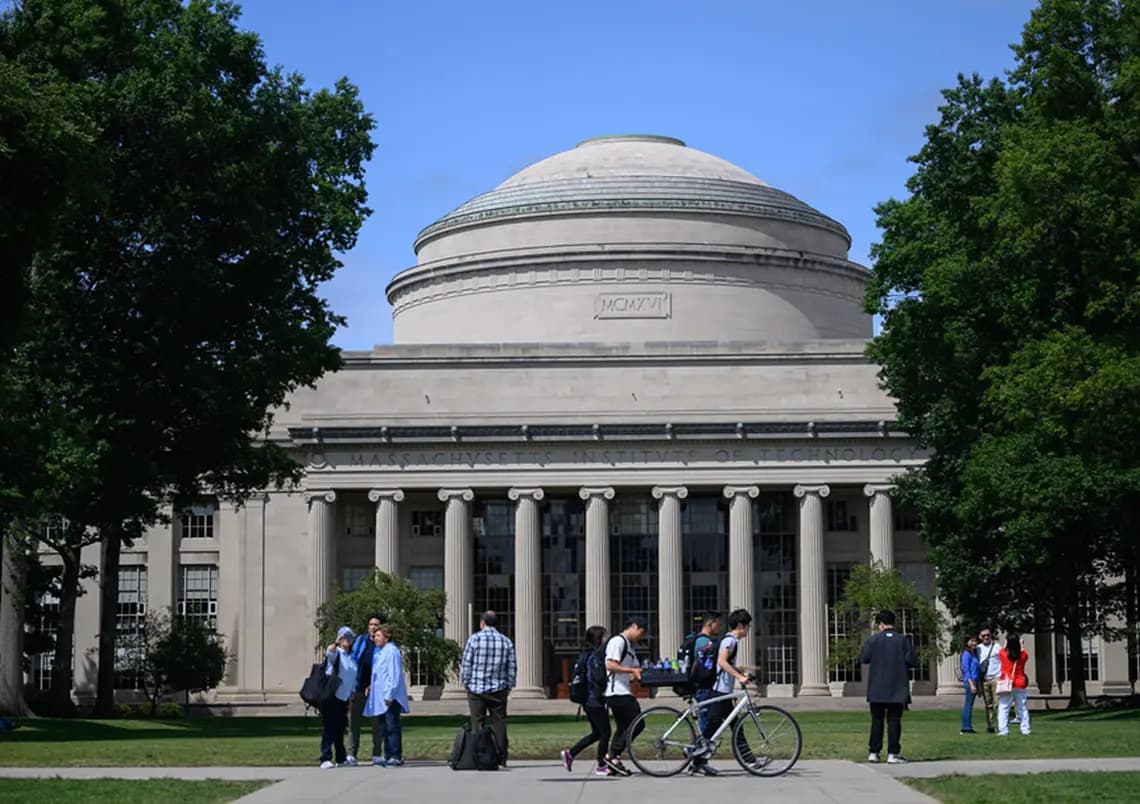
Why choose this Universal AI by MIT Open Learning?

Founded in 1861, MIT is consistently ranked the #1 university in the world. Its Open Learning division brings MIT's rigorous research and faculty expertise to learners everywhere — through digital technology designed to make advanced AI education accessible to all. With Universal AI, you gain the knowledge to use, apply, and interpret AI.
Online Duration
12 Months
Domain Verticals
10
Mode
Self-paced
Certificate
18+ Stackable Certificates
What makes Universal AI Program stand out?

Stack up domain-specific vertical modules once you complete your Universal AI foundations.
AI and Sustainability: Energy
AI for Transportation: From Concepts to Implementation
AI and Precision Medicine
AI and Sustainability: Transportation
AI and Entrepreneurship
Holistic AI in Medicine
Turn Prerequisites into an Strong Differentiator.
1. Introduction to Python Coding, Part 1
2. Introduction to Python Coding, Part 2
3. Introduction to Data Analytics & Machine Learning
Introduction to Data Analytics & Machine Learning
L2. Categorical & Time Series Data
L3. Descriptive Statistics
L4. Spatial Data and Mapping
L5. Reproducibility and Data Management
L6. Effective Data Visualization
L7. Machine Learning Fundamentals
4. Supervised Learning Fundamentals
L1. The Statistical Sommelier
S1. Introduction
S2. Linear Regression Model
L2. The Framingham Heart Study
S1. Background
S2. Model Implementation
S3. Model Strength
L3. The Supreme Court
S1. Introduction
S2. Cross Validation
S3. Decision Tree Results
L4. Predicting Quality in Healthcare
S1. Logistic Regression
S2. Threshold Values
L5. Moneyball
S1. Background
S2. Moneyball Data
S3. Moneyball Impact
Guided Exercises
R1. Supreme Court Exercise 1
R2. Supreme Court Exercise 2
R3. Supreme Court Exercise 3
R4. Supreme Court Exercise 4
5. Clustering and Descriptive AI
L1. Customer Segmentation
L2. Interpretable Clustering
Guided Exercises
R1. Clustering
6. Deep Learning
L1. Introduction to Deep Learning
S1. Introduction to Deep Learning
S2. How Does Deep Learning Work?
S3. Fundamentals of Neural Networks - Perceptron
S4. Creating Neural Networks
S5. Training Neural Networks
S6. Training Techniques - Overfitting
L2. Fundamentals of Deep Learning
S1. Computer Vision vs Human Vision
S2. Applications of Computer Vision
S3. Computer Vision and Images
S4. Fundamentals of Convolutional Neural Networks
S5. Convolutional Operation in Practice
S6. Key CNN Components and Architecture
S7. Transfer Learning and Insect Identification
S8. Feature and Transfer Learning
L3. Neural networks for structured data
S1. Introduction/Creating Quality Data Sets
S2. Finding Good Neural Network Predictors
S3. Perceptrons
S4. Multi-layer Perceptrons
S5. Training Neural Networks from Structured Data
L4. Neural networks for unstructured data
S1. Introduction/Structured and Unstructured Data
S2. Predictors for unstructured data
S3. Deep Neural Networks
S4. Representation Learning
S5. Neural Network Embeddings
7. Hands on Deep Learning
L1. Introduction to Neural Networks
L2. Introduction to Deep Learning
L3. Training Deep Neural Networks Part 1
L4. Training Deep Neural Networks Part 2
L5. Tabular Data Prediction & Hyperparameter
8. Data Driven Prescriptive AI
L1. From Predictions to Prescriptions
L2. Policy Trees
L3. Policy Trees for Predictive ML
S1. Evolution of Predictive Models & Selection
S2. Optimal Policy Trees
S3. Real-life Application: Hurricane Prediction
Real-life Application: Compressive Strength
Real-life Application: Recidivism Predictions
L4. Prescriptive Neural Networks
9. Model Driven Prescriptive AI, Part 1
L1. Planning a Large Scale Vaccine Campaign
L2. Public-school Bus Routing
L3. Fitting Data with non-linear optimization
L4. Fitting Neural Networks models for predictive
10. Model Driven Prescriptive AI, Part 2
L1. Introduction to Optimization
L2. Revenue Management Analytics
L3. The Analytics of Network Platforms
L4. The Analytics of Zero Hunger
11. Large Language Models
L1. Introduction to Large Language Models
S1. Introduction to Large Language Models
S2. LLMs: Architecture and Functioning
S3. Tokenization in Detail
S4. Contextual Understanding
S5. Applications of LLMs
S6. Practical Challenges
Note: Please refer to the upGrad brochure for full course roadmap.
1. Generative AI the Future of Work and Human
L1. AI and the Future of Work
S1: Introduction to Generative AI
S2: AI & The Future of Work
S3: AI Technologies & Their Applications
S4: AI & Economic Potential
S5: Ethical and Practical Considerations
S6: Deploying AI Models
L2. Gen AI and Creative Problem Solving
S1: Augmenting Innovation with Generative AI
S2: AI & Creative Problem Solving
S3: Evaluating Creativity and Novelty
S4: Human AI Collaboration
Techniques
L3. Gen AI and Human-AI Balance in Decision Making
S1: AI Innovation in Decision Making
S2: Case Study: MIT Solve & AI
S3: Methodology for AI Assisted Screening
S4: Human AI Interaction Expertise
L4. Diffusion Models for Text-to-Image Generation
S1: Text to Image Generation
S2: Demonstrations and Examples
S3: Iterative Image Denoising
S4: Text Conditioning & Embedding
S5: Text and Image Embedding
S6: Conclusion and Future Outlook
Guided Exercises
R1. Website Creation Exercise
R2. Diffusion and GenAI Fireworks Exercise
2. Multimodal AI
L1. Introduction to Multimodal AI
L2. HAIM: Holistic AI for Medicine
L3. Multimodal Generative AI
L4. A case study with Hurricane Forecasting
S1. Introduction to Multimodality
S2. Multimodal Application - Weather
S3. Case Study – Hurricane Forecasting
S4. Multimodal Framework
S5. Multimodality & Opportunities with AI
L5. Multimodal Multitasking Learning
3. Explanation, Reasoning, and AI Ethics
L1. Explainable AI
S1. Why Should AI Be Explainable
S2. Providing Meaningful Explanations
S3. Providing Accurate Explanations
S4. Methods for Explaining AI Predictions
S5. Epilogue
L2. Symbolic AI Engines
S1. Introduction
S2. Modern Symbolic AI Engines
S3. Data-intensive Symbolic AI Services
S4. Web data & Knowledge Representation
L3. Beyond Monolithic AI Systems
S1. Combining AI Models
S2. Search and Retrieval
S3. Prompt Engineering
S4. AI Reasoning
S5. Key Challenges of Multiple Component AI
L4. AI & Ethics
Note: Please refer to the upGrad brochure for full course roadmap.
Every module you complete brings you closer to full program certificate from MIT Open Learning.
AI tutors and guides to help you chart your learning journey, answer questions about concepts in the videos, and help with homework and assessments.
A conversational assistant that allows students to ask questions and receive answers based on course content.
An assistant that helps guide students as they work through problem sets by providing hints and next steps (without giving away the solutions).
Understand what learning pathways make sense for your learning goals.
Auto-graded knowledge checks and homework are integrated in each module.

Here are some of the Leading MIT faculty you'll be learning from.

Vice Provost- MIT
Doctor of Philosophy (Ph.D.)
Applied Mathematics and Operations Research

Lecturer- MIT
Doctor of Philosophy (Ph.D.)
Computer Science

Research Scientist- MIT
Doctor of Philosophy (Ph.D.)
Computer Engineering

Affiliated Faculty- Harvard
Doctor of Philosophy (Ph.D.)
Laboratory for Innovation Science, Machine Learning, Operations Research

Associate Professor- MIT
Doctor of Philosophy (Ph.D.)
Operations Research and Statistics, Engineering Systems
Everything you need to know about Universal AI by MIT Open Learning.
1.What makes upGrad a trusted platform for leadership and AI education?
upGrad focuses on industry-relevant, learning by combining leadership development, real-world projects, and emerging technologies like Generative AI, ensuring learners build skills that remain relevant in a rapidly changing global landscape.
2.How does upGrad ensure industry relevance in its programs?
upGrad integrates practical projects, case studies, digital portfolios, and hands-on exposure to AI tools, along with certificate backed by global technology leaders, bridging the gap between academic knowledge and industry expectations.
3.Why does upGrad emphasize AI and digital skills in leadership programs?
The brochure highlights that AI fluency is now essential for future growth, with most global business leaders considering it critical. upGrad addresses this by embedding AI, data analytics, and Generative AI into leadership training.
4.How does upGrad support long-term career and academic growth?
upGrad follows a holistic, structured approach that builds leadership mindset, communication, digital credibility, and adaptive skills, helping learners remain competitive for global universities and evolving career roles.
5.How does upGrad help learners stand out in competitive environments?
upGrad focuses on transforming academic capital into measurable impact by strengthening personal branding, digital presence, certified portfolios, and leadership narratives that differentiate learners beyond grades alone.
1.What is the time commitment expected for the program?
At least 2-4 hours per week of time commitment is expected to be able to complete from the online program.
2.How will my doubts/questions be addressed in an online program?
Peer-to-peer discussion forum where you can post your queries, and your peers/faculty/teaching assistants answer your queries within a day. Regular Q&A sessions with faculty to get clarification on conceptual doubts.
1. upGrad is not a college/University. Views expressed are solely those of the speaker and are not verified or endorsed by upGrad; the outcomes depend on various factors and individual results may vary. Past performance is no guarantee of future results.
2.Please note that the financial support provided by a third-party credit facility provider for the online component of the program is in the form of a Personal Loan, not an Educational Loan. This distinction means that this loan does not come with tax benefits or other amenities. Finance, No Cost EMI and Credit Card EMI options are provided by third-party credit facility providers/financial institutions. Terms and conditions are subject to change at their discretion. Please verify details with the respective service provider before proceeding. We strongly advise all learners to carefully consider this information before proceeding with enrolment. (To be added only if Loan facility is being provided)
3.Information regarding program timelines may vary. For the most accurate and updated details, please consult your designated upGrad counsellor.
4. Participation in the program does not guarantee admission to any university, institution, scholarship, internship, job placement, or specific career outcome.
5. Any certificates issued upon completion of the program are recognitions of participation and completion and should not be construed as professional licenses, degrees, or guarantees of employability.
6. Any references to skill acceleration, efficiency, productivity, or performance improvement are indicative, based on general research or industry observations.

Advance your career with our expert guidance & global programs.