














<img height="1" width="1" style="display:none" src="https://www.facebook.com/tr?id={your-pixel-id-goes-here}&amp;ev=PageView&amp;noscript=1">
Programs

Master of Science and Doctor of Technology in Applied and Agentic AI

  • Type
    Master’s and Doctorate
  • Start Date
    September 30, 2026
  • Duration
    30 Months
Apply NowDownload Brochure
GGU
GGU (1)

Why This Pathway. Why Now

As AI transforms the way organizations work, the need for AI-savvy leaders has never been greater.

Across industries, organizations are expanding their AI capabilities, creating sustained demand for professionals who can design and manage production AI systems.

    Why This Pathway. Why Now

    As AI transforms the way organizations work, the need for AI-savvy leaders has never been greater.

    Across industries, organizations are expanding their AI capabilities, creating sustained demand for professionals who can design and manage production AI systems.

    WHO THIS IS FOR

    For practitioners who already know they're going the distance

    If you're choosing between "get the master’s now, doctorate later" and "just go straight for the doctoral credential," this is built for you.

    The Builder Without the Credential Yet

    SENIOR ML ENGINEER · AI ARCHITECT
    You have the technical depth. You don't yet have a graduate AI credential, and earning it in two separate steps means paying and applying twice.

    The Executive Playing the Long Game

    VP Engineering · CTO · Head of AI · CAIO
    You know a terminal doctoral credential is where this ends. The combined track locks in the full sequence at today's terms.

    The Committed Career-Changer

    CAREER-CHANGER INTO AI LEADERSHIP
    You're not testing the waters with a master's and deciding later. You're committing to the doctorate now, with the MS on the way, not a separate purchase.

    Transform your leadership

    OLET 3 (1)

    Release your doctoral dissertation as a book

    KEDL 3

    Prototype and pilot your ideas with no-code platforms

    CSLS 4 (1)

    Protect your ideas with solid IPs in 155 countries

    HEDL 4

    Pitch your ideas to real VCs with chequebooks

    icons (3) 1

    Step into academia as Adjunct Faculty or Professor of Practice

    Block Your Seat 5

    Enroll in the PwC Directorship & Board Advisory Certification

    Curriculum

    72 Total Units
    30 Months
    100% Online

    This course develops the programming, statistical, and mathematical foundations required to understand how intelligent systems learn, generalize, optimize, and make decisions under uncertainty. Learners use Python, NumPy, Pandas, SciPy, and visualization tools to prepare and analyze data, apply descriptive and inferential statistics, model uncertainty through probability and Bayesian reasoning, and understand the linear algebra, calculus, optimization, information theory, and learning-theory concepts that underpin machine learning, deep learning, and foundation-model training. The emphasis is on connecting mathematical ideas to data, executable code, model behavior, assumptions, and limitations.

      This course develops the computational thinking and algorithmic foundations required for intelligent systems. Learners study data structures, complexity, search, sorting, dynamic programming, graph algorithms, constraint satisfaction, symbolic reasoning, planning, and sequential decision-making. Classical algorithms are connected to contemporary applications such as retrieval, recommendation, constrained generation, routing, planning, and agent decision loops.

        This course develops the core discipline of predictive machine learning. Learners frame business and scientific problems, prepare reliable datasets, build regression and classification models, engineer features, compare statistical and machine-learning approaches, and evaluate generalization. The course emphasizes leakage prevention, imbalance handling, calibration, uncertainty, bias-variance diagnosis, error analysis, and reliable model handoff.

          This course extends machine learning into advanced representation, recommendation, temporal, probabilistic, causal, and sequential-decision systems. Learners apply clustering, dimensionality reduction, anomaly detection, recommender systems, ranking, time-series forecasting, causal reasoning, probabilistic modelling, and reinforcement-learning foundations to complex applied problems. The reinforcement-learning and decision-theoretic foundations developed here provide the basis for the alignment techniques covered in course TECH 501 Generative AI & LLM Engineering and the agentic decision-making covered in TECH 502 Agentic AI, Multi-Agent Systems and Orchestration.

            This course develops learners’ ability to design, train, and evaluate advanced neural systems. It covers neural-network foundations, backpropagation, optimization, regularization, convolutional networks, sequence models, attention, transformers, representation learning, multimodal learning, graph neural networks, transfer learning, and efficient inference. Learners apply these architectures to vision, language, temporal, recommendation, multimodal, and connected data problems.

              This course examines how contemporary foundation models and Generative AI systems are designed, trained, aligned, adapted, and evaluated. Learners study tokenization, embeddings, transformer internals, pre-training, scaling laws, mixture-of-experts architectures, context windows, instruction tuning, fine-tuning, PEFT, preference optimization, multimodal models, reasoning systems, and test-time compute. The emphasis is on understanding and engineering model behaviour rather than merely consuming hosted APIs.

                This course develops learners’ ability to design reliable agentic and AI-native systems. It integrates agent harness design, planning, tool use, structured outputs, memory, reflection, workflow orchestration, human oversight, multi-agent collaboration, interoperability, non-deterministic testing, maintainability, and controlled autonomy. The emphasis is on framework-independent design and robust integration with enterprise systems. Retrieval and memory are addressed here as design patterns the agent reasons over; the underlying retrieval and memory infrastructure is engineered in TECH 503 AI Data Infrastructure: Pipelines, Retrieval & Knowledge Graphs.

                  This course develops the data infrastructure required for machine learning, deep learning, foundation models, retrieval systems, and agents. Learners design batch, distributed, streaming, feature, training data, retrieval, RAG, knowledge-graph, and memory pipelines. The course emphasizes data quality, provenance, labelling, synthetic data, contamination control, metadata, lineage, privacy, governance, and scalable knowledge access. Building on the agent memory and retrieval design patterns introduced in TECH 502 Agentic AI, Multi-Agent Systems and Orchestration, this course engineers the underlying retrieval, knowledge-graph, and memory systems that production agentic applications depend on.

                    This course develops the engineering capabilities required to train, deploy, scale, secure, monitor, and operate production AI systems. Learners study distributed training, GPU and accelerator systems, model serving, high-performance inference, containers, orchestration, MLOps, LLMOps, observability, reliability, security, cost engineering, capacity planning, and governance. The course treats AI as critical infrastructure rather than a standalone software feature.

                      This course provides significant emerging areas of AI that do not yet warrant dedicated core courses or that extend core program content into specialized domains. Because the AI field evolves rapidly, the topics offered are reviewed and refreshed regularly to reflect current research, industry, and policy developments. Learners engage with one or more thematic modules selected from a rotating set of offerings — spanning emerging technical paradigms (e.g., sovereign AI, edge AI/TinyML, causal AI, federated learning, quantum AI) and responsible AI governance (e.g., regulation, algorithmic auditing, and responsible scaling).

                        The capstone course requires learners to design, build, train or adapt, evaluate, deploy, scale, secure, and defend a complete AI system. Projects may involve predictive machine learning, recommender systems, deep learning, foundation models, multimodal AI, retrieval, agents, or AI infrastructure. A submission based only on calling an external API, creating prompts, or presenting a conceptual architecture is not sufficient.

                          This course bridges the transition from graduate level competency to doctoral-level inquiry. Learners develop doctoral reading, critical synthesis, and scholarly communication skills through structured engagement with frontier AI research, including applied AI, generative AI, agentic systems, and responsible AI governance. They identify a significant doctoral problem, justify a knowledge or practice gap, design a contribution framework, align an evidence and evaluation strategy, and address ethical, governance, security, and impact considerations. The course culminates in a doctoral seminar that provides a structured forum for presenting, defending, and refining research ideas before peers and faculty, building the presentation and scholarly argumentation skills required for doctoral candidacy, conference participation, and dissertation defense.

                            After the foundation and advanced graduate curriculum coursework or after completion of the MS in Applied and Agentic AI, students must successfully pass a qualifying examination prior to proceeding to the dissertation phase. TECH 810 is the integrative qualifying examination that tests the student’s mastery of the skills and disciplines of doctoral-level research methods and analysis acquired across the complete foundation and advanced curriculum sequence.

                              This course introduces doctoral-level research design, qualitative and quantitative methods, mixed methods, literature synthesis, data analysis, and research ethics. The course focuses on applying research methods to investigate and solve real-world problems of practice in AI, technology, and organizational contexts. Learners develop the ability to evaluate research designs, select appropriate methods, analyze data responsibly, and connect research evidence with practical technology implementation. The course also prepares learners to develop a rigorous and defensible dissertation proposal.

                                This course develops doctoral-level competency in both qualitative and quantitative analysis methods as applied to research in the AI domain, equipping learners with the analytical toolkit required to investigate significant problems of applied and agentic AI practice. Building on the research design foundations of TECH 805, learners develop proficiency in selecting, applying, and critically evaluating analysis methods appropriate to their doctoral research question and contribution type — spanning quantitative methods (statistical inference, effect size, uncertainty quantification, benchmark analysis, reproducibility validation), qualitative methods (thematic analysis, grounded theory, case study, expert interview, discourse analysis), mixed-method designs, and AI-specific evaluation approaches (LLM-as-judge, human evaluation, automated metrics, red-teaming). The course emphasizes methodological fit, analytical validity, and the responsible and defensible interpretation of results in the context of doctoral AI research.

                                  This course guides learners through the development of a formal Dissertation Topic Proposal. Learners refine the research direction established in TECH 809 into a fully developed, academically defensible proposal that establishes the precise research problem and its significance, synthesises the relevant literature and identifies the research gap, defines research questions or objectives, articulates the proposed methodology, and provides an initial ethical, responsible AI, and governance assessment. The topic proposal demonstrates that the intended dissertation is relevant, feasible, ethical, and grounded in both professional practice and applied scholarship — and establishes the foundation for moving toward the full Dissertation Proposal Defense in TECH 891.

                                    Learners expand the Dissertation Topic Proposal approved in TECH 890 into a comprehensive Dissertation in Practice Proposal covering the research problem, complete literature foundation and theoretical framework, full methodology design, data sources, ethical governance, analytical approach, and expected contribution to practice. The defense emphasizes feasibility, defensibility, methodological rigor, and practical impact. Learners are expected to demonstrate that their proposed research is sufficiently developed, appropriately scoped, and capable of producing meaningful insights, interventions, or recommendations for real-world AI and technology practice. Successful defense grants doctoral candidacy. Prerequisite(s): TECH 890.

                                      Students execute and complete their doctoral research as a Dissertation in Practice. This stage involves conducting the approved study, analysing findings using the approved analytical approach, developing or evaluating an applied solution or improvement pathway, and communicating the practical and scholarly implications in a completed Dissertation in Practice document. The final dissertation submission and public defense demonstrate the learner’s ability to investigate a real-world problem of practice, use appropriate research methods, generate evidence-based insights, and contribute to applied AI or technology practice at doctoral level.

                                        Download Brochure

                                        Projects

                                        Each one builds a core capability behind today's AI systems, from first principles through to a working product.

                                        Projects Modelled on Billion-Dollar Companies

                                        Five projects, each modelled on a company that built this exact capability into a business worth billion.

                                        Build an LLM Router. Modelled on Martian and OpenRouter, valued above $1.3 billion. A classifier that sends each query to the right model to cut cost.

                                        Build a Reinforcement Learning Game Agent. Modelled on Google DeepMind's AlphaGo. An agent that learns to win from reward alone.

                                        Build an Answer Engine. Modelled on Perplexity, valued above $20 billion. A system that retrieves real sources and cites every sentence.

                                        Build a Coding Agent Team. Modelled on Cursor, valued above $60 billion. A planner, coder, and reviewer working together to write, review, and fix code.

                                        Build a Grounded Research Assistant. Modelled on Google NotebookLM. An assistant that answers only from a user's own source material.

                                        *The projects above are subject to change. The final projects will be communicated and decided by faculty.

                                        Why Now

                                        Organizations are increasingly looking for leaders who can bridge advanced technical expertise with the practical realities of governing and deploying AI.

                                        3,200+

                                        New CAIO roles created globally (2024–26)
                                        42% are external hires. Doctoral credentials are increasingly appearing in the job spec.

                                        Source: IBM CEO Study 2026

                                        28–45%

                                        AI leadership roles that list a doctorate
                                        28% require it. 45% list it as preferred. That gap is exactly where the DTech sits.

                                        Source: AI Strategy Course / 2024 Job Posting Data

                                        $280K–420K

                                        Average CAIO salary (US)
                                        The credential ROI plays out over decades.


                                        Source: Glassdoor / CAIO Salary Guide

                                        +34%

                                        Growth in professional doctorate enrolments (US, 2019–24)
                                        Professional doctorates are the fastest-growing segment of doctoral education. The DTech enters a rising tide.

                                        Source: NSF/NCSES

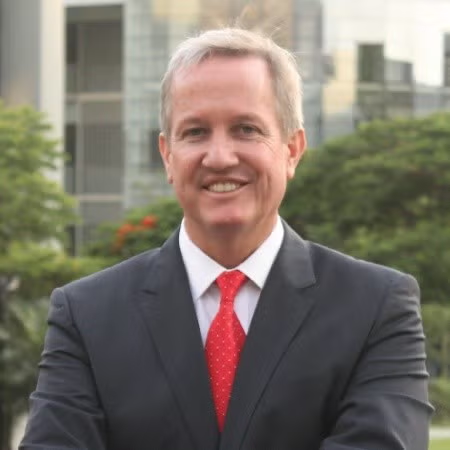
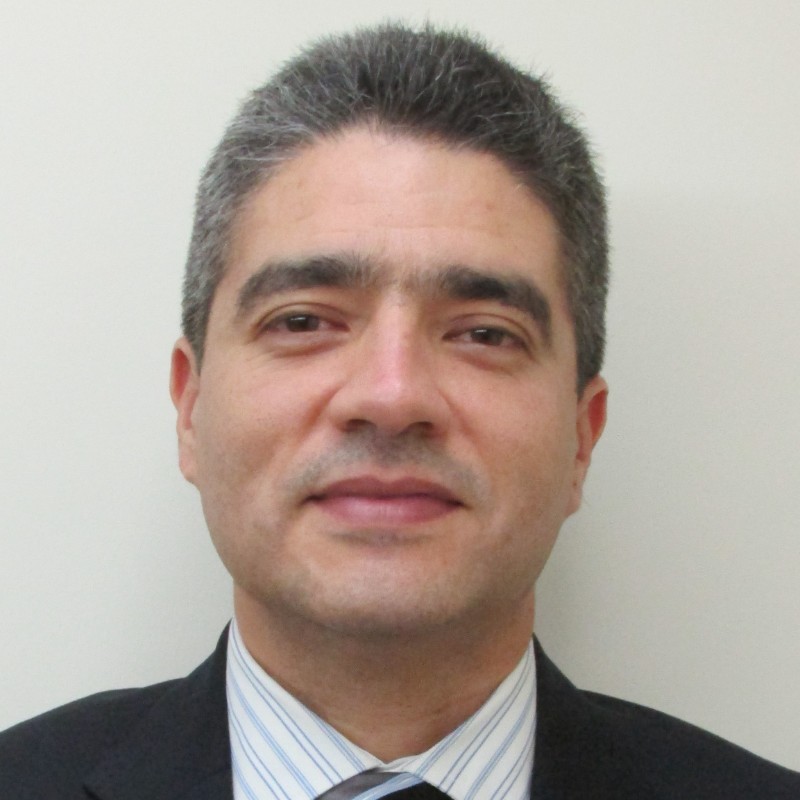
                                        Program Faculty

                                        What the Credential Carries

                                        The DTech's authority comes from a specific combination of accreditation, institutional standing, and location. Here's what each piece means in practice.

                                        What the Credential Carries

                                        The DTech's authority comes from a specific combination of accreditation, institutional standing, and location. Here's what each piece means in practice.

                                        icons (7)

                                        WASC Regional Accreditation

                                        GGU has been WASC-accredited since 1959, the same body that accredits Stanford and Berkeley. That's the standard that unlocks employer reimbursement, credit transferability, and doctoral hiring eligibility globally.
                                        icons (8)

                                        WES Recognition

                                        For professionals worldwide, WES recognition smooths degree evaluation for employment, immigration, and professional licensing.
                                        icons (6)

                                        San Francisco AI Ecosystem

                                        GGU is based in San Francisco. Faculty include practitioners working at Bay Area AI companies. The location isn't incidental, it's part of what the credential signals.
                                        icons (10)

                                        Practitioner Faculty

                                        GGU emphasises faculty who work in industry. Instruction is grounded in deployment, governance, and real AI systems, not just research labs.
                                        icons (11)

                                        Publication Pathway

                                        DTech students have access to co-authorship support with faculty for applied AI research. Target journals include IEEE Transactions on AI, AI & Society, and Harvard Business Review AI. Published work is the most durable form of credentialling.

                                        Your Cohort & Alumni Network

                                        You Won't Be Studying Alone

                                        The program is cohort-based. You'll study alongside a group of engineers and leaders at similar career stages, meet weekly in learning pods, and stay connected through the alumni network long after you graduate.

                                        Founding Alumni Program

                                        If you enroll in Cohort 1, you'll graduate as a Founding Alumnus or Founding Alumna of the program, with a named distinction, early access to the faculty network, and a priority speaking opportunity at the annual Symposium.

                                        Annual Golden Gate Technology Symposium

                                        Five days in San Francisco. You'll present your capstone in front of people who work in AI, not just academics. It's also when your cohort comes together in person for the first time.

                                        • • Industry-specific capstone presentations
                                        • • Fireside chats with AI practitioners and investors
                                        • • Industry tours - AI labs, cloud providers, startups
                                        • • City program - San Francisco
                                        • • Network meetup

                                        Accreditation & Recognition

                                        Your Degree Is Recognized Globally

                                        Before you look at curriculum or tuition, it's worth knowing your degree will hold up, with employers, immigration authorities, and licensing bodies, wherever you're building your career.

                                        icons (4)

                                        WASC / WSCUC Accredited

                                        Golden Gate University has been regionally accredited by WASC since 1959. This affects how employers verify your degree, how your units transfer, and your academic standing for visa and immigration purposes.

                                        5-Jan-12-2026-10-45-24-5720-AM

                                        WES Recognized Globally

                                        WES recognition means your degree can be evaluated for employment, immigration, professional licensing, and further study in Canada, the GCC, the Asia-Pacific region, and Africa. If you're planning a career across borders, this recognition matters.

                                        icons (2)

                                        Based in San Francisco

                                        Golden Gate University is located at the center of the global AI industry, close to the startups, cloud companies, and practitioners who are actually building what you'll learn to build. That proximity shapes who teaches here.

                                        icons (3)

                                        Faculty Working in AI Today

                                        Every instructor is an active AI practitioner, bringing current industry expertise into every course.

                                        Your Cohort and Alumni Network
                                        The Golden Gate Technology Symposium

                                        Five days in San Francisco. You present your applied AI research to industry leaders, faculty, and peers from across the world.

                                        • Present your capstone research to an industry audience
                                        • Fireside chats with AI leaders and CXOs
                                        • Industry tours of Bay Area AI companies
                                        • Masterclasses with CXOs of leading AI and tech companies
                                        • Access to a global alumni community

                                        Transparent pricing, no surprises on the call

                                        Fees and payment

                                        JPY 144567 / month after merit scholarship
                                        Pay as You Progress
                                        JPY 144567 / month

                                        27 equal monthly installments · no interest
                                        Tuition Fees
                                        JPY 4,337,000

                                        One-time · up to 10% additional fee waiver

                                        Disclaimer: Adjustments might apply due to exchange rate changes.

                                        TUITION FEE
                                        Program Tuition
                                        $768 USD/month after merit scholarship
                                        Pay as You Progress
                                        $768/month
                                        30 equal monthly installments • no interest
                                        Upfront Payment
                                        $20,727
                                        One-time • up to 10% additional fee waiver
                                        Most candidates receive a merit scholarship on the $65,800 program fee — you'll know your exact amount before you commit. Less than one year's tuition at a traditional MBA, for a terminal doctoral degree.

                                        Program Fee

                                        YEN 4,337,000

                                        How to Apply?

                                        There are 4 simple steps in the Admission Process which are detailed below:

                                        Apply Now
                                        Minimum Eligibility 4 (1)
                                        Eligibility

                                        Master's degree in any field or a Bachelor’s degree and a minimum of 5 years of work experience.

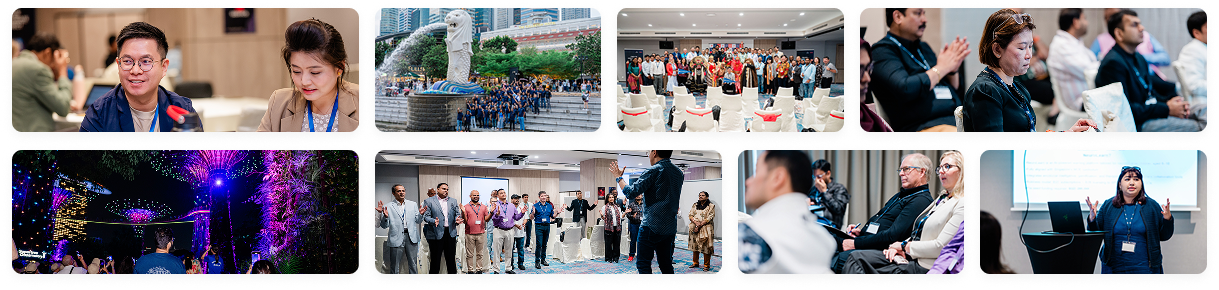
                                        Global Immersion Program

                                        The two immersive programs facilitate student engagement with industry stalwarts in prominent global innovation centers, fostering experiential learning and expansive networking opportunities.

                                        collage
                                        collage

                                        Frequently Asked Questions

                                        1. What is the minimum eligibility for this program?

                                        Valid Bachelor’s degree with minimum 10 years of experience. Candidates with less than 10 years of experience but with exceptional profiles and outstanding leadership background may also apply.

                                        The admissions process is completely online. The following are the key steps in the application process:

                                        Step 1: Complete Application
                                        Fill in details of your education, work-experience and submit your Statement of Purpose

                                        Step 2: Application Review
                                        Admission panel reviews the SOP and candidate profile to assess fitment

                                        Step 3: Receive the Offer Letter
                                        Shortlisted candidates are sent the Offer Letter

                                        Step 4: Reserve Your Seat
                                        Pay a block amount to reserve your seat, pay the balance amount subsequently

                                        Post successful completion of this program, you will be awarded a DBA in Emerging Technologies with Concentration in Generative AI degree from Golden Gate University.
                                        Earning a DBA from GGU can lead to career opportunities in corporate leadership, academia, consulting, entrepreneurship, research, the public sector, and more.
                                        DIGITAL DIPLOMA & CERTIFICATE

                                        Golden Gate University (GGU) offers certified electronic diplomas and certificates, known as CeDiploma or CeCertificate, featuring a unique 12-digit Certified Electronic Document Identifier (CeDID). Unlike traditional transcripts, graduates may share these digital diplomas an unlimited number of times due to the unique CeDID and validation services. Graduates may also print copies of their electronic diploma, to use when an official diploma or certificate is not required. Each CeDiploma and CeCertificate is highly secure, digitally signed, and encrypted, ensuring validation by employers, licensing agencies, and other entities that need to verify a graduate's authenticity.

                                        OFFICIAL HARDCOPY DIPLOMA

                                        The learners will also receive an Golden Gate University’s Official Hardcopy of the diploma upon graduation. This hardcopy diploma does not include a serial number because it is not an “official” academic record as aligned with standard practice in U.S. universities. The hardcopy is only meant for display.

                                        NOTARIZED DIPLOMA

                                        If a learner requires, a notarized diploma can also be issued to them. This hardcopy of the diploma would have a notarized letter stapled to it. These are typically necessary only for students from European Union countries to obtain the Apostille from the California Secretary of State. There is more information available at https://www.sos.ca.gov/notary/request-apostille and here https://www.sos.ca.gov/notary/apostille-faqs/.

                                        1. Will I be able to complete this program being a busy working professional?

                                        The program is specially designed for working professionals to enable effective learning while they continue their jobs. Recorded content can be consumed on the website or mobile application on the go while the Live classes are scheduled on weekends at convenient times so you can attend them easily.

                                        • Dedicated Student Support:

                                          1. Email: studentsupport@upgrad.com

                                          2. For urgent queries, use the "Talk to us" option on the Learn platform.

                                        • Extensive academic support through the Discussion Forum, TA-Sessions. Just like in a university, your batchmates will help you with any academic queries. This will happen via the Discussion Forum.

                                        • Other than your peers, you also have TAs (Teaching Associates) for academic queries.

                                        1. What are the Inclusions & Exclusions of the Immersion part in the program?

                                        As part of the DBA in Generative AI, you will have two Global Immersions.

                                        1. The Total Program fee covers tuition, course materials, lunches on immersion days, and any opening and closing dinners. It does not include travel, accommodation and other incidentals. You are responsible for making your own travel and accommodation arrangements for the immersion programs.


                                        2. Getting a visa prior to the travel shall be your responsibility which shall be done solely at your own cost. Also, please make sure you have all relevant documents available with you to undertake this travel including but not limited to passport having validity of at least 6 months and any other document that may be required as per the embassy requirements of each of the countries in which the Immersion will be held.


                                        3. Any charges incurred during the visa approval process shall be borne solely by the learner. upGrad shall, in no manner, be liable for rejection of your visa application and/or any cancellation/modification of your flights, including any additional expenses incurred due to visa re-application and/or flight cancellation/modification. You will not be eligible for refund of any amount paid resulting from the occurrence of any such events.


                                        4. Getting tickets prior to your Immersions shall be your responsibility which shall be done solely at your own cost. 


                                        5. Your dedicated programme coordinator will get in touch around 3 months before your immersion programme start date to communicate information so that you have ample time to make arrangements. The approximate cost of accommodation in India is 150 USD per day, in Singapore 200 USD per day and in San Francisco 200 USD per day. 


                                        Exclusions:

                                        1. Airfare and airport transfers

                                        2. VISA applications and processing 

                                        3. Transportation to and from campus

                                        4. Accommodations

                                        5. Travel health and accident insurance 

                                        1. What is the refund policy for this program?

                                        Refund Policy:

                                        1. You can claim a refund for the amount paid towards the Program within the duration mentioned on the Offer Letter, by visiting www.upgrad.com and submitting your refund form via the "My Application" section under your profile. You can request your Admissions Counsellor to help you in applying and withdrawing for a refund by sending them an email with reasons listed. There shall be no refund applicable once the program has started. This is applicable even for those students who could not complete their payment, and could not be enrolled in the batch opted for. However, the student can avail pre-deferral as per the policy defined below for the same.

                                        2. Student must pay the full fee within seven (7) days of payment of the deposit amount or batch start date, whichever is earlier; otherwise, the admission letter will be rescinded.

                                        3. Request for refund as per point no. 1 of the refund policy must be sent via email in the prescribed refund request form. The refund will be processed within 30 working days of submitting the duly signed refund form, after being duly approved by the Academic Committee.

                                        Eligibility & Admissions

                                        There are 4 simple steps in the admission process which are detailed below:

                                        Apply Now
                                        Minimum Eligibility 4 (1)
                                        Eligibility

                                        Applicants must have a bachelor's degree from a regionally accredited institution or its equivalent. Experience in STEM fields is preferred, but not required.

                                        Student Support

                                        Monday - Friday | 9:30 AM to 7:30 PM SGT

                                        Phone Number
                                        Email us
                                        *All telephone calls will be recorded for training and quality purposes.
                                         
                                        By proceeding, you agree to receive communication from and on behalf of Golden Gate University and upGrad (or its affiliates) about this program and other relevant programs. 

                                        Disclaimer

                                        1. upGrad is not currently associated with Douglas Business School in any capacity. The prior commercial arrangement between upGrad and Douglas Business School concluded on 31 March 2025, and Douglas Business School is no longer authorized to market, represent, enroll students into, collect payments for, or otherwise promote upGrad programs in any territory.
                                        2. Students, partners, and members of the public are advised to rely solely on upGrad’s official website and communication channels for accurate information regarding its programs, authorized partners, payment details, and processes. For any queries or verification requests, please contact upGrad directly through its official support channels.