Programs
Paris School of Business
Master of Business Administration
Liverpool John Moores University
Master of Business Administration
Edgewood University
Master of Business Administration
Golden Gate University
Master of Business AdministrationGolden Gate University
Master + Doctor of Business Administration (MBA + DBA)
O.P.Jindal Global University
Master of Business Administration (MBA)Edgewood University
Dual Degree MBA and DBAGolden Gate University
Master of Science and Doctor of Technology in Applied and Agentic AIGolden Gate University
Doctor of Technology in Applied and Agentic AIGolden Gate University
Doctor of Business AdministrationGolden Gate University
Master + Doctor of Business Administration (MBA + DBA)Golden Gate University
DBA in Emerging Technologies with a Concentration in Generative & Agentic AIEdgewood University
Doctorate in Business AdministrationEdgewood University
Dual Degree MBA and DBA
Rushford Business School
Doctor of Business AdministrationEducation

University of Massachusetts Lowell
Master of Education (M.Ed.)Edgewood University
Doctor of Education (Ed.D)Edgewood University
Master of Education (M.Ed.)Data Science
Liverpool John Moores University
Master of Science in Data Science
IIIT Bangalore
Executive Diploma in Data Science and AISkills
Machine Learning and AI
Golden Gate University
Master of Science in Applied & Agentic AIGolden Gate University
Master of Science and Doctor of Technology in Applied and Agentic AIGolden Gate University
Doctor of Technology in Applied and Agentic AI
IIT Kharagpur
Executive Programme in Technology & AI LeadershipLiverpool John Moores University
Master of Science in Machine Learning & AIGenerative AI
Golden Gate University
Master of Science in Applied & Agentic AIGolden Gate University
Master of Science and Doctor of Technology in Applied and Agentic AIGolden Gate University
Doctor of Technology in Applied and Agentic AIGolden Gate University
DBA in Emerging Technologies with a Concentration in Generative & Agentic AILiverpool John Moores University
Master of Science in Data ScienceIIIT Bangalore
Executive Diploma in Data Science and AILiverpool John Moores University
Master of Science in Machine Learning & AIAgentic AI
Golden Gate University
Master of Science in Applied & Agentic AIGolden Gate University
Master of Science and Doctor of Technology in Applied and Agentic AIGolden Gate University
Doctor of Technology in Applied and Agentic AIGolden Gate University
DBA in Emerging Technologies with a Concentration in Generative & Agentic AIIIT Kharagpur
Executive Programme in Technology & AI LeadershipManagement
Golden Gate University
MA in Industrial Organizational PsychologyO.P. Jindal Global University
Master of Science in International Accounting and Finance
University of Waterloo
Chief Technology and AI Officer ProgramGolden Gate University
Doctor of Business Administration
IIM-U and IIIT-B
Chief Technology and AI Officer ProgramGolden Gate University
Master + Doctor of Business Administration (MBA + DBA)Golden Gate University
DBA in Emerging Technologies with a Concentration in Generative & Agentic AIIIT Kharagpur
Executive Programme in Technology & AI LeadershipEdgewood University
Doctorate in Business AdministrationEdgewood University
Dual Degree MBA and DBAPhD Alternative
Golden Gate University
Doctor of Technology in Applied and Agentic AIGolden Gate University
Doctor of Business AdministrationEdgewood University
Doctor of Education (Ed.D)Golden Gate University
DBA in Emerging Technologies with a Concentration in Generative & Agentic AIEdgewood University
Doctorate in Business AdministrationRushford Business School
Doctor of Business Administration- Refer & Earn
- Testimonials
More





100% Live Online ✦ Limited Seats Available
Executive Post Graduate Certificate in Quantum Computing & AI
Centre for Computational & Data Sciences (CCDS), IIT Kharagpur
- #215 globally in the QS World University Rankings 2026
- #5 Engineering in India (NIRF)
- Type
- PG Certificate
- Admission Deadline
- TBD
- Duration
- 6 Months

About Applied Quantum & AI programme led by IIT Kharagpur
The Executive Post Graduate Certificate in Quantum Computing & AI is a six-month, 100% live online program which is offered by the Centre for Computational & Data Sciences (CCDS) at IIT Kharagpur.
This Quantum Computing and AI course is for professionals who want to know the ways in which quantum methods can benefit optimization, simulation, machine learning, and security. Besides theoretical content, the program also offers practical components dealing with quantum circuits, algorithms, and computing platforms.
This IIT Kharagpur AI and quantum computing course includes a foundational module that introduces candidates to mathematics, Python, machine learning, optimization, and cryptography. IIT Kharagpur professors conduct live online classes covering quantum states, circuits, gates, algorithms, and real quantum devices through practical training. Participants gain hands-on experience using simulators and real quantum hardware, along with software packages such as Python, Qiskit, PennyLane, PyTorch, and NVIDIA CUDA-Q. After completion, participants can attend an on-campus award ceremony and access the IIT Kharagpur Executive Education Alumni Network.
A production-first quantum programme, taught from the science up
-537afb75dfab4af2b59b30f72480c862.webp)
100% Live, Faculty-Led Sessions
Delivered entirely through live instruction - no outsourced instructors, only IIT Kharagpur faculty.

Led by CCDS, IIT Kharagpur
Led by the Centre for Computational & Data Sciences, IIT Kharagpur, and taught by faculty, with research in condensed-matter physics, quantum chemistry and atomic & many-body physics.
-5facf3259e2a406983e32deef3fa5986.webp)
Real quantum hardware
Execute circuits on real quantum processors via IBM Quantum, qBraid and Qniverse - not just simulators.

Curriculum progression
Foundations → Circuits → Hybrid Computation → Hardware → QML → Post-Quantum Security → Strategy.

Portfolio & capstone
Ship working artefacts across the programme, culminating in an individual applied capstone with viva.
 1-5ca67efffc174548991753f6aceba1b8.webp)
Executive alumni status
Join the IIT Kharagpur Executive Education Alumni Network on completion.
Where quantum computing meets AI
AI is transforming what we compute; quantum is changing how we may compute it. This programme is built at that intersection - as much for AI and ML engineers as for quantum specialists.
Quantum machine learning
Quantum feature maps, kernels, QSVMs and variational classifiers - built in PennyLane and PyTorch, benchmarked against classical ML.
Quantum + Generative AI
Quantum generative models, hybrid AI/quantum workflows, and an honest view of where quantum helps modern GenAI - and where it doesn't yet.
LLM-assisted quantum dev
Use LLMs for quantum-code generation, parameter sweeps and backend selection - with human supervision built into the workflow.
Hybrid quantum-classical AI
Combine classical deep learning with quantum components in hybrid CPU/GPU/QPU pipelines across the major cloud platforms.
Optimisation for AI/ML
Formulate feature selection, scheduling and portfolio problems as QUBO/QAOA - the optimisation layer under many AI systems.
Evidence-led evaluation
Matched parameter counts, ablations, dequantisation and classical baselines - the rigour AI practitioners already expect, applied to quantum.
Programme Faculty
Whom will you learn from?
3 Instructors
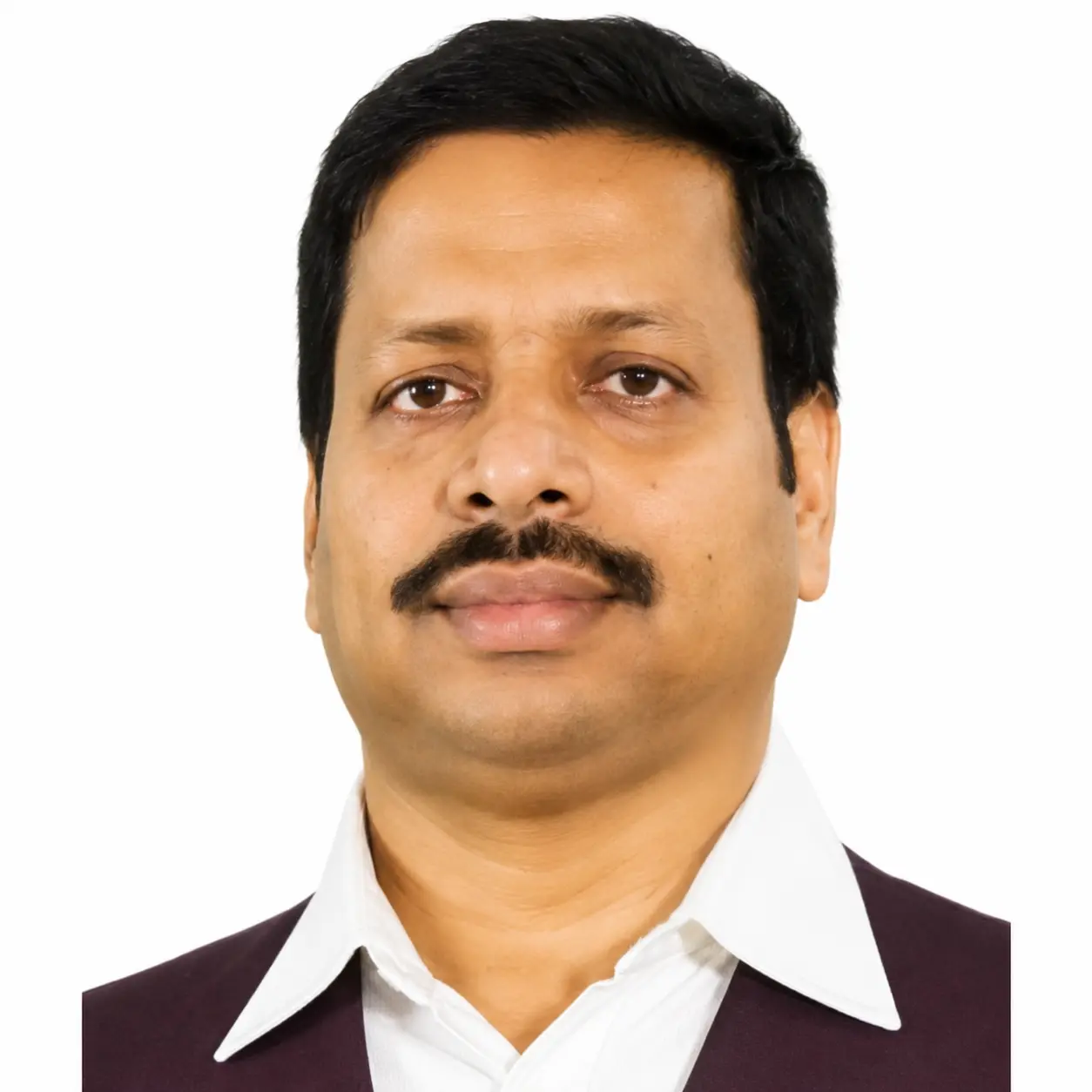
Prof. Sonjoy Majumder
Professor - Department of Physics, IIT Kharagpur
Research Areas: Atomic & molecular physics, relativistic atomic structure, quantum many-body systems - the foundations behind qubit behaviour.
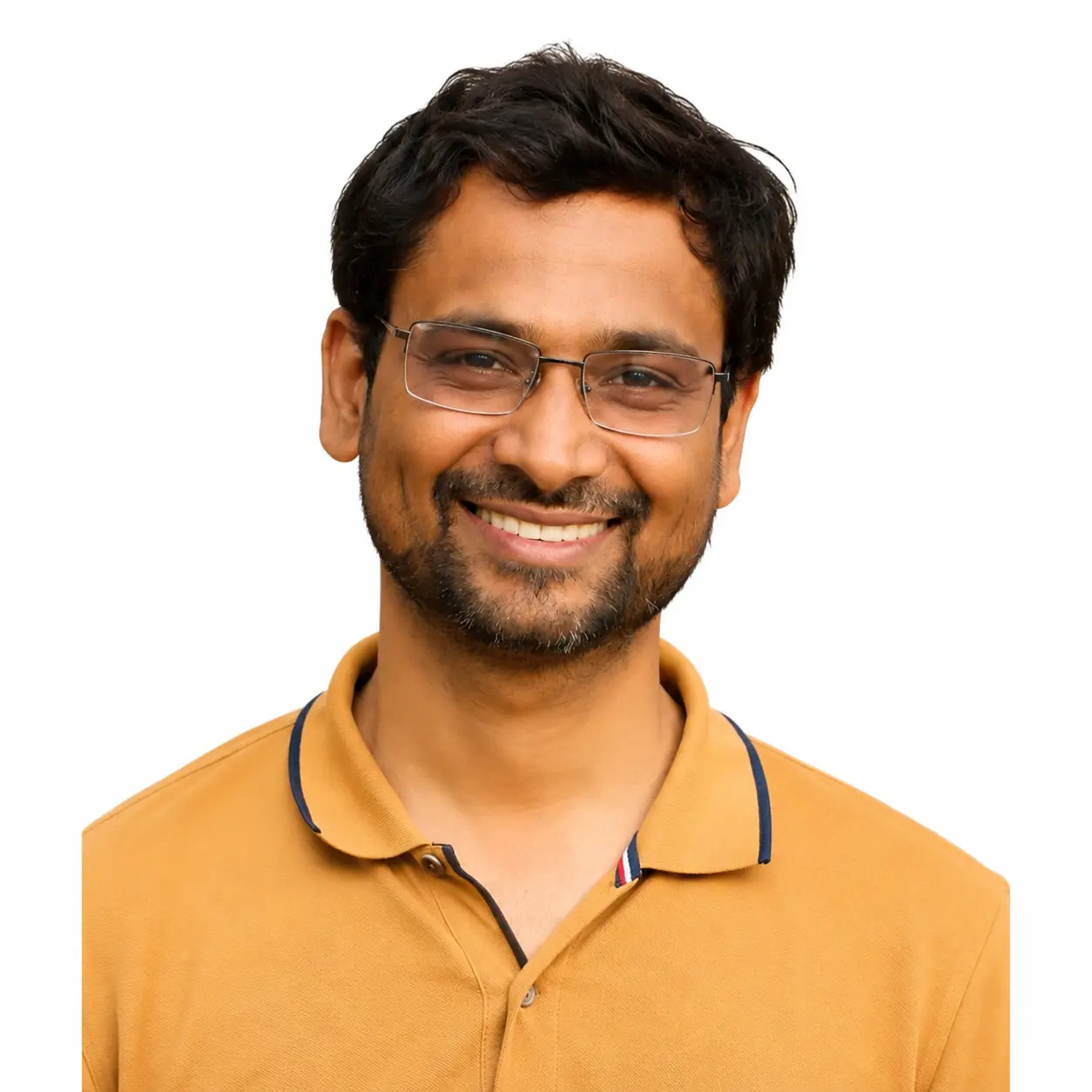
Prof. Sabyashachi Mishra
Professor - Department of Chemistry, IIT Kharagpur
Research Areas: Theoretical & computational quantum chemistry - directly relevant to quantum simulation and VQE.

Prof. Tamoghna Das
Asst. Professor - Department of Physics, IIT Kharagpur
Research Areas: Statistical & condensed-matter physics - grounding the programme in the principles behind quantum hardware and noise.
The Complete Curriculum - A structured path from your first qubit to strategy
Topics Covered
- Maths, Python, ML & crypto basics
- Linear algebra, probability, complex numbers
- NumPy/Jupyter/Git; ML & optimisation
- Crypto fundamentals
Topics Covered
- States, circuits & entanglement
- Bloch sphere & measurement
- Multi-qubit systems & entanglement
- QFT & phase estimation
- Deutsch–Jozsa & Grover
- Qiskit & real hardware
Topics Covered
- QUBO/Ising formulation of real problems
- QAOA construction
- Approximation ratio, depth vs classical baselines
- VQE & hybrid workflows
- Variational principle, ansatz design
- Hybrid CPU/GPU/QPU workflows on Braket
- Azure Quantum & CUDA-Q
Topics Covered
- Qubit technologies
- Superconducting, trapped-ion, photonic
- Neutral-atom, spin & topological qubits
- Connectivity, routing, native gates
- Noise & error mitigation
- Decoherence, fidelity, quantum channels
- Zero-noise extrapolation
- Probabilistic error cancellation & their costs
- Quantum error correction
- Bit/phase-flip & Shor codes, stabiliser formalism
- CSS & surface codes, thresholds, fault tolerance
- Physical vs logical qubits
Topics Covered
- Encoding, kernels & classifiers
- Data encoding, quantum feature maps
- Quantum kernels, QSVMs and variational classifiers in PennyLane & PyTorch
- Trainability & honest evaluation
- Barren plateaus, generative models
- Data leakage, matched parameters
- Ablations, dequantisation, negative results
Topics Covered
- Quantum threats to crypto & A
- Shor's algorithm; what quantum does & doesn't break
- Harvest-now-decrypt-later
- Securing AI assets
- PQC in practice
- NIST FIPS 203/204/205 — ML-KEM, ML-DSA, SLH-DSA; hybrid crypto
- Protecting data & model artefacts
- Migration & Indian landscape
- Crypto-agility, staged migration
- India's quantum-safe roadmap
- QKD & BB84 with practical limits
Topics Covered
- Use-case & vendor evaluation
- Evaluating applications vs classical alternatives
- Cost, risk, resources; platform/vendor comparison; build/buy/partner
- Individual capstone
- Problem → classical baseline → quantum formulation → implementation → comparison → presentation & viva.
Program Fees: CAD 3,000
Develop and evaluate production - oriented quantum systems
You graduate with a portfolio of real, benchmarked quantum-AI artefacts you can demonstrate and extend.
Quantum Circuit + Grover
Entangled-state construction and a search algorithm run on real IBM Quantum hardware, with noise analysis.
QAOA vs Classical
A real combinatorial problem solved with QAOA and honestly compared against a classical optimiser.
Noise & Mitigation Study
Quantified comparison of noiseless, noisy and error-mitigated runs of the same circuit.
Quantum Kernel + ML Hybrid
A quantum-kernel classifier on a real dataset, benchmarked against a classical baseline.
PQC Migration Audit
Assess a system's quantum-vulnerable crypto and draft a staged, crypto-agile migration plan.
Individual Applied Capstone
Your signature end-to-end project - problem to benchmarked solution - defended in a viva.
Capstone
One Problem. Run on Real Hardware
Take a real problem from formulation to a working, benchmarked quantum solution – executed on real quantum processors where supported, not just simulators – and defend it. Real-QPU execution is woven through the curriculum from Course 1 onward, so by the capstone you are fluent in it – graduating with quantum programs run on actual processors and results analysed honestly.
-7a1461ecdc744c298d0b93afed1a7952.webp)
FRAME : Problem → Baseline
BUILD : Run on real QPUs
BENCHMARK : Quantum vs. Classical
DEFEND : Present. Report. Viva
Disclaimer
upGrad does not grant credit; credits are granted, accepted or transferred at the sole discretion of an educational institution. upGrad does not make any representations regarding the recognition or equivalence of the credits or credentials awarded, unless otherwise expressly stated. If you intend to pursue a post graduate or doctorate degree upon completion of this course or apply for employment which requires specific credits, we advise you to enquire further regarding the suitability of this degree for your academic and/or professional requirements before enrolling.
Device requirements: This program's learning platform is not supported on iPads or tablets. Proctored assessments can only be taken on a laptop or desktop, not on a mobile phone, tablet or the mobile app. Please ensure you have access to a laptop or desktop meeting our technical requirements before enrolling.
Probable Tools & Frameworks






Beyond a Certificate — Built for Career Impact
Earn recognised credentials and academic recognition.
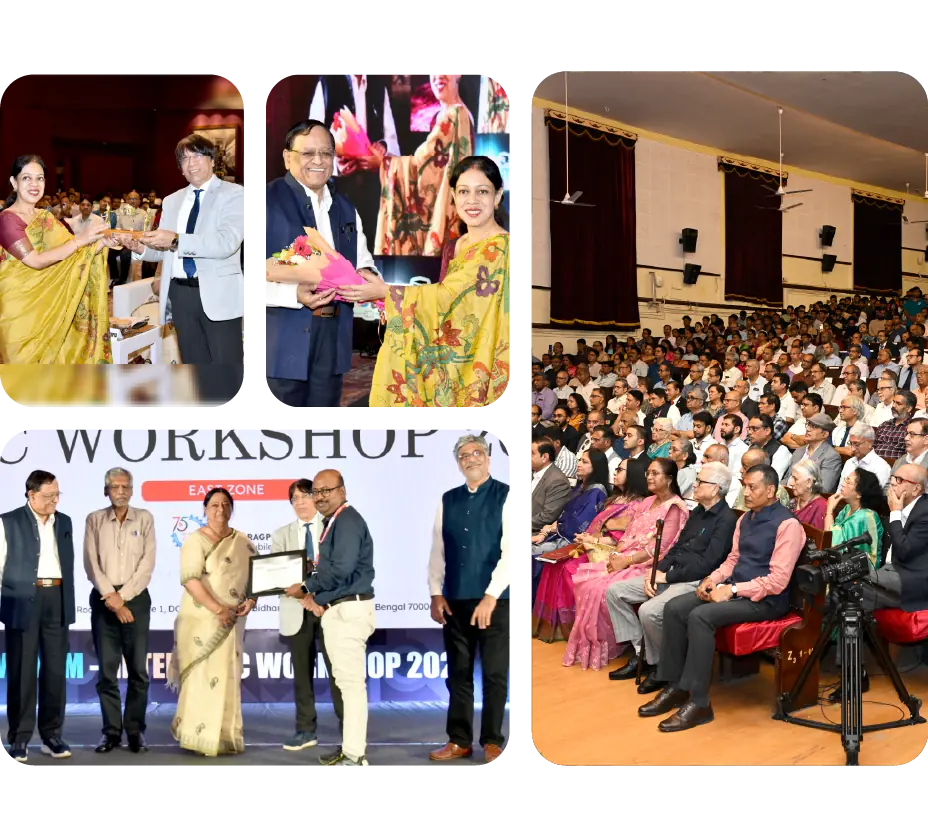
On-Campus Graduation Ceremony at IIT Kharagpur
The programme concludes with an on-campus award ceremony at IIT Kharagpur, where participants receive their certificates from the Programme Director and Institute leadership.
Our Admission Process
Complete your application and enrol in the program with four easy steps!
EligibilityGraduation with a minimum of 50% marks. B.Tech/ M. Tech, B.E/M.E (CS, IT, AI, ECE preferred), B.Sc/M.Sc (CS/Mathematics/Statistics), MCA/BCA. Candidates from other disciplines must have a minimum of 2 years of experience in the technology field Prerequisite: Comfortable writing Python functions and working with basic data structures; familiar with undergraduate-level mathematics (linear algebra, probability) and statistics behind common ML concepts. Prior quantum-computing knowledge is not required.

Complete the Application
Fill your details and complete your application
Step 01

Receive the Offer Letter
Get shortlisted and Provisional Offer Letter.
Step 02
 (1)-317c18ec2ea34bb6b042d13701c4cb4d.webp)
Reserve your Seat
Block your seat and submit the required documents.
Step 03
Pay the Block Amount
Post verification, complete the balance payment to confirm enrolment.
Step 04
What is the Executive Post Graduate Certificate in Quantum Computing & AI?
Key Highlights: Executive Post Graduate Certificate in Quantum Computing & AI
Fact | Value |
Programme | Executive Post Graduate Certificate in Quantum Computing & AI |
Offered by | Centre for Computational & Data Sciences (CCDS), IIT Kharagpur |
Duration | 6 months |
Format | 100% live online classes taught by IIT Kharagpur faculty; weekend sessions, 3 hours per week |
Eligibility | Graduation with a minimum of 50% marks. B.Tech/M.Tech, B.E/M.E (CS, IT, AI, ECE preferred), B.Sc/M.Sc (CS, Mathematics or Statistics), MCA/BCA. Other disciplines require at least 2 years of technology experience |
Prerequisites | Python functions, basic data structures, linear algebra, probability, and ML statistics |
Curriculum | Foundations; quantum circuits and algorithms; hybrid computation; hardware and NISQ systems; quantum machine learning; post-quantum cryptography and AI security; quantum strategy and capstone |
Capstone | Individual applied project with classical benchmarking, final presentation, and viva |
Certificate | Executive Post Graduate Certificate awarded by IIT Kharagpur at an on-campus award ceremony upon successful programme completion |
Course Instructors | Prof. Sonjoy Majumder, Prof. Sabyashachi Mishra, and Prof. Tamoghna Das, IIT Kharagpur |
Weekly time commitment | Weekend classes, with 3 live hours per week across 24 weeks |
Why Choose the IIT Kharagpur Quantum Computing & AI Course?
This Executive Post Graduate Certificate in Quantum Computing & AI program helps you to apply quantum computing principles to AI and ML by making a good understanding of algorithms, hardware limitations, and the problems these methods can solve.
Some key features of this program among other IIT Kharagpur online courses are:
- Credibility of IIT Kharagpur: Being the first Indian Institute of Technology in India, IIT Kharagpur ranks fifth in Engineering according to NIRF 2025 owing to a legacy of 75 years of academic excellence.
- Faculty from IIT Kharagpur: The course includes expertise of faculty members in quantum physics and computational quantum chemistry.
- Practice in Quantum Hardware: The course covers practical knowledge about quantum circuits hardware as well as simulators.
- Quantum Computing & AI: The course covers quantum algorithms, hybrid quantum computing, and quantum machine learning.
- Individual Capstone: You will come up with an idea, try it out, check the results, and give your feedback.
- Executive Alumni Status: Once you complete the program, you will become a part of the IIT Kharagpur Executive Education Alumni Network.
What Will You Learn In This Quantum Computing and AI Course?
This Executive Post Graduate Certificate in Quantum Computing & AI is of total 24 weeks and begins with a 3 week foundational bridge component, which helps you to build your basics, if you are new to this field.
This IIT Kharagpur AI course have these modules:
Bridge: Foundations
Weeks -3 to 0 | Asynchronous learning with optional live support
Topics Covered:
- Linear algebra, complex numbers, and probability
- Python, NumPy, SciPy, Matplotlib, Jupyter, and Git
- Machine learning and optimization basics
- Cryptography, digital signatures, key exchange, and TLS
Skills Acquired:
- Using Python for scientific computing
- Applying mathematical foundations used in quantum computing
- Understanding machine learning, optimization, and cryptography basics
Course 1: Quantum Foundations and Circuit Engineering
Weeks 1–4
Topics Covered:
- Quantum states, measurement, gates, circuits, and entanglement
- Qiskit, circuit simulation, and real quantum hardware
- Quantum algorithms, including Deutsch–Jozsa and Grover's search
- Qubit technologies, circuit transpilation, and noise
Skills Acquired:
- Building and analysing quantum circuits
- Using Qiskit to simulate and run circuits
- Implementing basic quantum algorithms
Course 2: Hybrid Quantum Computation
Weeks 5–8
Topics Covered:
- QUBO and Ising models for optimization problems
- QAOA, VQE, and quantum simulation
- Quantum and classical optimization methods
- Hybrid CPU, GPU, and quantum workflows with cloud platforms
Skills Acquired:
- Formulating optimization problems for quantum methods
- Building and evaluating QAOA and VQE workflows
- Comparing quantum results with classical approaches
Course 3: Quantum Hardware and NISQ Computing
Weeks 9–11
Topics Covered:
- Qubit technologies, hardware connectivity, and circuit mapping
- Decoherence, noise, fidelity, and quantum channels
- Error mitigation methods
- Quantum error-correction codes and fault-tolerant computing
Skills Acquired:
- Understanding qubit technologies and hardware constraints
- Assessing noise and error-mitigation methods
- Understanding physical and logical qubits
Course 4: Applied Quantum Machine Learning
Weeks 12–15
Topics Covered:
- Data encoding and quantum feature maps
- Quantum kernels, variational classifiers, and quantum neural networks
- PennyLane, PyTorch, trainability, and quantum generative models
- Model evaluation against classical baselines
Skills Acquired:
- Encoding data for quantum machine learning
- Building quantum machine learning models
- Evaluating results against classical methods
Course 5: Post-Quantum Cryptography and AI Security
Weeks 16–18
Topics Covered:
- Quantum threats to public-key cryptography and AI data
- NIST standards: ML-KEM, ML-DSA, and SLH-DSA
- Hybrid cryptography and security of AI systems
- Cryptographic migration and Quantum Key Distribution
Skills Acquired:
- Understanding quantum-related security risks
- Identifying systems that may need quantum-resistant protection
- Understanding post-quantum methods and migration planning
Course 6: Quantum Strategy and Individual Capstone
Weeks 19–24
Topics Covered:
- Quantum applications and use-case evaluation
- Comparison with classical methods, including cost and resource needs
- Platform and vendor assessment
- Capstone development and final presentation
Skills Acquired:
- Identifying suitable quantum-computing problems
- Comparing quantum approaches with classical baselines
- Presenting technical findings and limitations
Capstone: Design and Implement a Quantum Computing Solution
The individual capstone project encourages participants to identify a problem, come up with a solution that uses quantum mechanics principles, and perform a benchmark with a classical solution. Participants report their experiments together with the identified challenges. They present the paper and do a viva individually.
Capstone Focus:
- Select and formulate a problem
- Build and test a quantum prototype
- Compare results, resources, and costs
- Document findings and limitations
- Present the project and complete a viva
Tools and Frameworks Covered in Executive Post Graduate Certificate in Quantum Computing & AI
1. Quantum Circuit Design and Execution
Quantum circuits are built, the quantum computers are simulated and finally quantum circuits are executed as quantum circuits.
- Qiskit and OpenQASM 3
- IBM Quantum
- qBraid and Qniverse
2. Quantum Machine Learning and Scientific Computing
Data is being prepared, experiments are conducted and models in machine learning and scientific computing fields are developed by quantum technologies.
- Python, NumPy, and SciPy
- Matplotlib, Jupyter, and Git
- PennyLane and PyTorch
3. Hybrid Computing and Cloud Platforms
Focus on researching and developing computing workflows that utilize both classical (traditional) processors and quantum resources.
- NVIDIA CUDA-Q
- IBM Quantum Runtime
- AWS Braket and Azure Quantum
- Quantum annealing platforms; CPUs and GPUs
4. Optimization and Quantum Algorithms
Working with methods for optimization and simulation.
- QUBO and Ising models
- QAOA and VQE
- Quantum kernels and variational classifiers
- MILP, CP-SAT, and metaheuristics
5. Post-Quantum Cryptography
Understanding standards used in quantum-resistant security planning.
- ML-KEM (FIPS 203)
- ML-DSA (FIPS 204)
- SLH-DSA (FIPS 205)
- Cryptographic libraries, hybrid cryptography, and migration planning
Who Should Enrol in the Executive Post Graduate Certificate in Quantum Computing & AI from IIT Kharagpur?
This program falls among the best IIT kharagpur courses for working professionals. It is suitable for you if you are a:
AI and Machine Learning Professionals
If you are currently working with machine learning models and want to learn about quantum kernels, variational classifiers, hybrid workflows, and comparison with classical baselines.
Software and Data Engineers
If you are working in software or data engineering, this IIT Kharagpur AI course will help you learn the basics of programming a quantum computer, circuit design, algorithms, and various quantum platforms.
Science and Engineering Professionals
If your current work involves modelling, simulation or computational problems, this course will help you to explore the quantum algorithms, optimization, and hardware limitations.
Researchers and R&D Professionals
If you work in research or technology development, this course will help you to evaluate quantum simulation, machine learning, hardware, and its potential applications.
Cybersecurity Professionals
If you are currently working in cybersecurity or cryptography, this course will help you to study quantum threats, post-quantum standards, and migration planning.
Eligibility Criteria for the IIT Kharagpur Executive Post Graduate Certificate in Quantum Computing & AI
Applicants should meet the following academic and technical requirements for the IIT Kharagpur Quantum Computing and AI course:
- Graduation with a minimum of 50% marks
- B.Tech/M.Tech or B.E/M.E in CS, IT, AI, or ECE are preferred
- B.Sc/M.Sc in Computer Science, Mathematics, or Statistics
- MCA/BCA
- Candidates from other disciplines must have a minimum of 2 years of experience in the technology field
Prerequisite:
Before enrolling, candidates should be comfortable with:
- Writing Python functions and using basic data structures
- Undergraduate mathematics, including linear algebra and probability
- Basic statistics used in machine learning
Prior quantum-computing knowledge is not required.
If you are looking for a best course which cover quantum computing along with AI among the IIT Kharagpur courses online, this course combines both in a single fee structure.
How To Apply For This IIT Kharagpur Quantum Computing And AI Course?
The process for applying in this Executive Post Graduate Certificate in Quantum Computing & AI is simple and can be completed only in three steps:
- Fill in your details and complete the application: Submit the required information to apply for the program.
- Get shortlisted and receive the offer letter: Shortlisted applicants receive an offer letter with the next steps.
- Block your seat: To finalize your enrollment and get a confirmed seat, pay the seat-blocking amount and that's it you are in.
Frequently Asked Questions
This is a six-month program, which is entirely conducted through live online mode by the Centre for Computational and Data Sciences at IIT Kharagpur. This program covers topics such as fundamental quantum computing, quantum-classical computation, quantum machine learning, quantum hardware, post-quantum cryptography, and AI security.
The Quantum Computing and AI course at IIT Kharagpur has a duration of 6 months. It starts with a foundational bridge course then cover six core modules from quantum foundations and circuit engineering to quantum strategy and the individual capstone project.
Candidates applying for the program must have a bachelor’s degree with a minimum of 50% marks. The preferred candidate background is CS, IT, AI ECE, Mathematics and Statistics. Candidates from other backgrounds should have at least 2 years of experience in field of technology.
No, enrolling in this program doesn't require you having any knowledge of quantum computing. The basic foundation module will help you to make your basics and cover mathematics, Python, machine learning, optimization, and cryptography before starting the core modules.
Yes. The applicants should comfortable writing Python functions & working with basic data structures. They should understand undergraduate maths, including linear algebra and probability and have basic familiarity with statistics used in machine learning.
Yes. This IIT kharagpur AI course is 100% live program. This allows working professionals to study quantum computing alongside their working commitments and make this as one of the best IIT kharagpur courses for working professionals.
Yes. Participants will learn to design and run their quantum circuits on actual quantum hardware using the platforms such as IBM Quantum, qBraid, and Qniverse. The course includes simulation, noise analysis, and comparison between the quantum and the classical approaches.
The course will cover topic such as quantum states, quantum circuits, quantum algorithms, hybrid quantum-classical computation, QAOA, VQE, quantum hardware, error mitigation, quantum error correction, quantum machine learning, post-quantum cryptography, and AI security, along with an individual capstone project.
The program cover tools and frameworks such as Python, Qiskit, PennyLane, PyTorch, NVIDIA CUDA-Q, and such scientific computing tools as NumPy, SciPy, Matplotlib, Jupyter, and Git.
The program include exercises in quantum circuit design, Grover's search, QAOA-based optimization, noise and error mitigation, quantum-kernel classification, and post-quantum cryptography migration. You will also complete an individual capstone that involves building and evaluating a quantum-computing solution against a classical baseline.
Yes. The program is designed for working professionals and researchers in AI and machine learning, software and data engineering, scientific computing, engineering, research and development, and cybersecurity
Visit the official program page and complete the online application. Shortlisted candidates receive an offer letter and can then block their seat by following the admission instructions.
Learner Support
Monday - Saturday | 24 Hours
Phone Number
Mail us
*All telephone calls will be recorded for training and quality purposes.
*If we are unavailable to attend to your call, it is deemed that we have your consent to contact you in response.
By proceeding, you agree to receive communication from and on behalf of Golden Gate University and upGrad (or its affiliates) about this program and other relevant programs.